Feeds:
Posts
Comments

Archive for the ‘Film & TV’ Category

SOUNDTRACK: NEIL YOUNG-Trans (1982).

By most standards this Neil Young album is a disaster.  It’s so bad that despite updating his entire catalog and releasing all kinds of bootleg concerts, he has never issued this disc on CD in the States.  So, just what’s so awful about this disc?

Well, mostly it’s awful as a Neil Young disc.  Meaning, if you like Neil Young (either flavor: country/folk or hard rock/grunge) this disc is a big fat HUH??  Neil Young has gone all synthy?  And not just synth but computerized synthy–sometimes his voice is utterly like a computer.  It’s a travesty, it’s a shame, it’s an incredible surprise.  Unless you listen to it without thinking of it as a Neil Young record.

But after all that introduction, the biggest surprise is the first song.  You’ve been prepped for this weird album full of computer nonsense and you get the fairly standard (if a little dull) rockabilly type music of “A Little Thing Called Love.”  It’s a pretty standard Neil Young song for the time.  Hmm, maybe the album isn’t that weird.

Well, then comes “Computer Age” and the keyboards kick in.  Interestingly, to me anyhow, this is the year that Rush released Signals.  Signals was the album where Rush fans said Woah, what’s with the keyboards guys.  Similarly, “Computer Age” makes you say, geez, was there a sale on keyboards in Canada?  The keyboards are kind of thin and wheedly, but the real surprise comes in the processed vocals (Rush never went that far).  The vocals are basically the 1980s equivalent of auto-tune (no idea how they did this back then).  Because the song is all about the computer age it kind of makes sense that he would use this weird robotic voice.  Sometimes it’s the only voice, although he also uses the computer voice as a high-pitched harmony over his normal singing voice.

“We R in Control” sounds like it might be a heavy rocker (anemic production notwithstanding) until we get more computer vocals.  Again, conceptually it works (its all about the dominance of CCTV), but it is pretty weird as a Neil Young song.

And then comes yet another shock, “Transformer Man.”  Yes, THAT “Transformer Man,” except not.  This original version of the song is sung entirely in a processed super high pitched computer voice that is almost hard to understand).  The only “normal’ part of the song is the occasional chorus and the “do do do dos.”  It sounds like a weird cover.  Sarah, who loves Neil Young, practically ran out of the room when she heard this version.

“Computer Cowboy (aka Syscrusher)” continues in that same vein.  Musically it’s a bit more experimental (and the computer vocals are in a much lower register).  Although I think it’s probably the least interesting of these songs.

Just to confuse the listener further, “Hold On to Your Love” is a conventional poppy song–no computer anything (aside from occasional keyboard notes).  Then comes the 8 minute “Sample and Hold” the most computerized song of the bunch and one of the weirder, cooler songs on the disc.  It really feels like a complete song–all vocodered out with multiple layers of vocals, not thin and lacking substance like some of the tracks.  It opens with personal stats (hair: blonde, eyes: blue) and proceeds through a litany of repeated “new design, new design” motifs.

This is followed by a remake of “Mr Soul” previously only on Decade.  This is a new vocodered-harmonies version of the song.

The biggest failure of the disc to me is “Like an Inca” it’s nine minutes of virtually the same guitar riff.  The chorus is pretty wonderful, but it’s a very minor part of the song itself.  It is fairly traditional Neil song, I just wish it were much shorter.

So, this travesty of a disc is actually pretty interesting and, for me, pretty enjoyable.  Most of these synthy songs sound kind of weak but I think that has more to do with the production of the time. I’d love to hear newly recorded versions of these songs (with or without the vocoder) to see what he could do with a great production team behind him.

Trans is not a Neil Young disc in any conventional sense, but as an experiment, as a document of early 80s synth music, it not only holds up, it actually pushes a lot of envelopes.   I’m not saying he was trying to out Kraftwerk Kraftwerk or anything like that, but for a folk/rock singer to take chances like this was pretty admirable.  Shame everybody hated it.

[READ: July 5, 2011] Five Dials 19

Five Dials 19 is the Parenting Issue.  But rather than offering parenting advice, the writers simply talk about what it’s like to be a parent, or to have a parent.  It was one of the most enjoyable Five Dials issues I have read so far.

CRAIG TAYLOR & DIEDRE DOLAN-On Foreign Bureuas and Parenting Issues
I enjoyed Taylor’s introduction, in which he explains that he is not very useful for a parenting issue   That most of the duties will be taken on by Diedre Dolan in NYC.  They are currently in her house working while her daughter plays in the next room.  His ending comment was hilarious:

Also, as is traditional at most newsweeklies, someone just put a plastic tiara on my head and then ran away laughing at me.

I resist Parenting magazines, from Parents to Parenting to Fretful Mother, they all offer some sound advice but only after they offer heaps and heaps of guilt and impossible standards.  So I was delighted to see that Five Dials would take an approach to parenting that I fully approve of.  Dolan writes:

Nobody knows what works. Most people just make some choices and defend them for the next 18 to 50 years – claiming nurture (good manners) or nature (crippling shyness) when it suits them best.

And indeed, the magazine made me feel a lot better about my skills (or lack) as a parent. (more…)

Read Full Post »

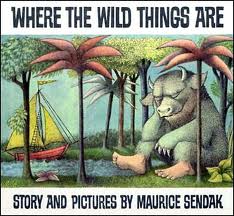
SOUNDTRACK: President Obama reading Where the Wild Things Are (2009).

A President who is literate!

Apparently my video won’t fit here unless I space this section out better.

I don’t really have anything to say, except that I enjoyed hearing him read this.

And it’s fun to watch the Secret Service pretend to be invisible.

One more line should do the trick.

See the video here.

[READ: August 24, 2011] Wild Things

Okay, so this is a novel.  It is based on Where the Wild Things Are, the film by Spike Jonze and Where the Wild Things Are, the book by Maurice Sendak.  Obviously, Sendak’s book came first.  But, it’s only got about 60 words in it.  So, how do you make a film based on it?  Eggers and Jonze worked together for a long time to craft a screenplay and then (as Egger’s Acknowledgments explain) Jonze more or less took over the film and Eggers went off to write this book.

Hence, the book is fully titled:

The Wild Things: A Novel by Dave Eggers Adapted from the Illustrated Book “Where the Wild Things Are” by Maurice Sendak and Based on the Screenplay “Where the Wild Things Are” co-written by D.E. and Spike Jonze

I had read Egger’s except “Max” that was printed in the New Yorker ages ago and I liked it well enough, but it seemed so much like WTWTA, that I wasn’t sure what the point was (I didn’t realize it was an excerpt and, strangely enough, it’s an excerpt from several sections).  And since I had seen the film not too long ago (and honestly was kind of bored by it) I wasn’t really that excited about reading this.

But since I loved Zeitoun and this fur-covered book has been sitting near my bed for a couple of years now, I decided it was time.  And I really enjoyed it.

Well, here’s the thing.  This book is not a novelization of the film.  You notice that right away because the first chapter (which is awesome) is not in the film at all.  In it, Max rides his bike to his neighbor’s house.  His friend is not home but his mother is and when she sees Max all by himself and on his bike without a helmet she freaks out (even though they live about four houses apart).  His reaction and her overreactions are really very funny.

There are scenes from the movie in the book, of course.  It is adapted after all.  Indeed, it is more or less the same as the book, but there are many scenes which Eggers has added that really help to flesh out the story and give depth to everyone involved.  As a matter of fact, Max doesn’t reach the Wild Things’ Island until page 100 (out of 285 pages). (more…)

Read Full Post »

[WATCHED: August 22, 2011] “The Calamity Song”

I woke yesterday to the news that one of my favorite bands had made a music video which was a tribute to one of my favorite books, Infinite Jest. Colin Meloy was a reader during the Infinite Summer project (one of the more high profile readers, although he didn’t really contribute beyond the first week).  When I saw him at BEA, I asked him if he finished the book and he said that indeed he had. Weill according to this story from The New York Times, Colin liked the book so much that he wanted to use one of the great scenes from the book as the basis of a music video.  And since The Calamity Song has the line “In the Year of the Chewable Ambien Tab” which is an allusion to Infinite Jest‘s Subsidized Time, well why not use that as the song.

The video was directed by Michael Schur (a huge Infinite Jest fan) who is a major figure behind Parks and Recreation. The video is a bare-bones retelling of the Eschaton sequence from the novel. For those who have not gotten to that scene yet, Eschaton is a game of global annihilation played on a tennis court. There are strategic places you are supposed to hit from across the court (so it’s a physical game, not just an academic one) with your 5 megaton tennis balls.   The scene is challenging to read because there’s so much going on, but the video does a very good job of giving you the essence.

Sure, diehards will have lots to quibble about (it’s raining, not snowing; Ann Kittenplan (the girl who gets hit with the ball) is totally hot–not so much in the book; and the scene doesn’t end with someone’s head crashing through a computer monitor).  Most of the quibbles are addressed in the Times article but some are easily answered anyhow–it was filmed in two days, it’s a flat screen monitor (you can’t put your head through that), and why not have a hot Ann Kittenplan, it’s a music video, right?   (more…)

Read Full Post »

SOUNDTRACK: THE SWELL SEASON-Tiny Desk Concert #24 (August 10, 2009).

I was going through the NPR recordings that I’ve downloaded and discovered that I had four from The Swell Season.  This Tiny Desk concert is the shortest of the four recordings (although it’s one of the longest Tint Desk concerts–most are about 10-15 minutes, this one is over 33 and has an encore!).  Glen Hansard is charismatic and funny as he says he feels foolish playing just a few songs and would they mind if he played one or two more.

I usually prefer the louder Swell Season songs, but the quieter songs work well in this situation (especially when the NPR staff helps out with backing vocals).  He plays the same songs that you’ll hear a lot on these NPR recordings (“In These Arms,” “Low Rising,” ‘Feeling the Pull” and the highlight of the show: “When Your Mind’s Made Up.”

I’ve liked this song from the first time I heard it in Once.  Every live version I’ve heard is great.  And this one is no exception.  He brings so much emotion to the end of this song as it gets louder and louder and his voice (man he can hold a note) gets louder and more strained.  It’s truly a great musical moment.

And, of course, Markéta Irglová is there as well.  She only sings one song, but her gorgeous harmonies are all over the session (no piano, though).

This is the most subdued of the four concerts, but it’s a good one.  (The NPR halls must have been ringing with his voice during this one!)

[READ: August 21, 2011] JPod

JPod holds a special distinction on this blog.  It is the first book that I have read twice during my time of writing this blog.  It’s also the only book that now follows this pattern:  I read the book, I watched the TV show based on the book, I reread the book.  So now I have the actors from the show in my head as I re-read what happened to them (hi Alan Thicke!).

I’ve been on this Coupland kick (which will now come to a halt for a bit, but will pick up again in the not too distant future) and since I just read Microserfs, I wanted to read this book right on its heels as it is seen as kind of a sequel (but not really at all) possibly because it, like Microserfs has Lego people on the cover.

So let’s get things out of the way first.  This book is not related to Microserfs in any way (except that there’s a (different) character named Ethan, it’s set in a techie world of computer programmers and there are huge swaths of pages that are, if not wasted, then certainly not very practical in terms of reading–more on that).  But there are no overlapping characters, it’s not set in the same country and there’s lots more violence.

The book starts off with a series of pages that tell you the book is not going to be terribly conventional. There’s a series of super large-font words (like in Microserfs) of random ideas.  They’re followed by a break-free four-page rant (in a  different font from the rest of the book) about modern life and technology.  It’s hard to read, but it really conveys a sense of the world we’re entering.

When the book proper starts, Douglas Coupland is mentioned in the first few pages (in a very disparaging way).

“Oh God. I feel like a refugee from a Douglas Coupland novel.”
That asshole?”
“Who does he think he is?”

Then the story kicks into gear. (more…)

Read Full Post »

SOUNDTRACK: RA RA RIOT-Live at the Black Cat, Washington DC,  October 12, 2008 (2008).

I really like Ra Ra Riot’s album The Rhumb Line, and this concert is basically a showcase for that album.  There’ s an interview at the end of the show (all downloadable from NPR), in which the  band says that critics raved about their live show as much as their album.

I don’t really hear that the show is more energetic than the album (maybe visually they are wild), but it did sound fantastic.  It’s amazing to hear a rock band that is dominated by strings–the cello and violin are often louder than the guitar (but not in a competing/drown you out kind of way,  more of a strings do the melodies and the guitar adds bulk to the sound).

I always enjoy hearing a band that is grateful to their audience for showing up (this is most evident in young bands, who seem so much more genuine about their love of the audience) and Ra Ra Riot are certainly that .  They seem genuinely surprised at the turn out, and they play a great set accordingly.

There are two songs that aren’t on the album here “A Manner to Act” and the encore “Everest.”  They both feel like they came off the album, which bodes well for their second album, Orchard, which just came out in May.  Ra Ra Riot also do a great cover of the obscure Kate Bush song “Suspended in Gaffa.”  At the end of the show they tack on a cover of “Hounds of Love.”  Lead singer Wesley Miles has a wonderfully strong voice and he can reach some pretty high notes–not soprano or anything like that, just strong enough to be able to pull off a Kate Bush cover.

This is a great show.  And when you read about the tragedy they suffered just as they were starting to take off, their obsession with death may not be so surprising.  I’m looking forward to Orchard.

[READ: 1995 and August 18, 2011] Microserfs

After reading Life After God and thinking about Microserfs, I looked up Coupland’s bibliography and saw that indeed Microserfs came next.  And I was really excited to read it.  I have recently watched the JPod TV show and I knew that JPod was a kind of follow-up to Microserfs, so I wanted to see how much of it rang true.  And I’ve got to say that I really rather enjoyed this book.

While I was reading this, I started taking notes about what was happening in the book.  Not the plot, which is fairly straightforward, but about the zeitgeisty elements in the book.  And, since I’m a big fan of David Foster Wallace, I was also noting how many zeitgeisty things this book had in common with Infinite Jest.  I’m thinking of tying it all together in a separate post, maybe next week.  But I’ll mention a few things here.

My son also loved the cover of this book because it has a Lego dude on it and he has been really getting into Lego lately.

So Microserfs is the story of a bunch of underpaid, overworked coders who work for Microsoft.  The book is written as the journal of Daniel Underwood (Coupland still hadn’t really branched out of the first person narrative style, but the journal does allow for some interesting insights).  The story begins in Fall 1993.  I felt compelled to look up some ancient history to see what was happening in the computer world circa 1993 just for context.  In 1991, Apple released System 7.   In 1993, Windows introduced Windows NT, Intel released the first Pentium chip, Myst was released and Wired magazine launched.  In 1994, Al Gore coined the term Information Superhighway.  Yahoo is created.  The Netscape browser is introduced.  So we’re still in computer infancy here.  It’s pretty far-seeing of DC to write about this.

Daniel works at Microsoft with several friends.  Daniel is a bug tester, Michael (who has an office, not a cube) is a coder, Todd (a bodybuilder) is a bug tester.  There’s also Susan (smart and independent), Abe (secret millionaire) and Bug Barbecue (an old man–he’s like 35).  The five of them live in a house on “campus.”  There’s also Karla (a type A bossyboots who doesn’t like seeing time wasted) who works with them but lives up the street.

As the story opens, Michael has just received a flame email from Bill Gates himself and has locked himself in his office.  This leads to a very funny scene and ongoing joke in which the office mates feed slide two-dimensional food under his door and he vows to eat only things that are flat. (more…)

Read Full Post »

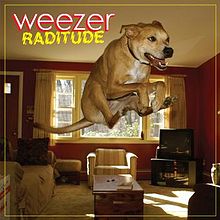
SOUNDTRACK: WEEZER-Raditude (2009).

I didn’t buy this Weezer album when it came out because I had heard really bad things about it (like the “guests”), but when I saw it cheap I decided to check it out.  This has to be the most polarizing Weezer album of them all.  I listened to it twice yesterday.  The first time I thought I had been too harsh on it.  The second time I thought it was godawful.  It’s amazing what a couple of hours can do.

It opens with a wonderful bit of poppy wordplay ala Cheap Trick: “(If You’re Wondering If I Want You To) I Want You To.”  It’s catchy as anything and is a wonderful start to the album, even if it is probably their poppiest song ever.  From there though, the album really degenerates.  And mostly it’s because it’s so dumb.  I mean the album title should tell you what you’re in for, but who would have expected the moronic sub-pop-metal of “The Girl Got Hot” or even the reprehensible lyrics of “I’m Your Daddy” “You are my baby tonight And I’m your daddy.”  It’s just creepy.  Or gah, a song about the mall?  “In the Mall.”  It’s not even worth mocking.  And really, try to picture Rivers Cuomo in a mall.  Any mall.

But nothing could prepare anyone for “Can’t Stop Partying.”  Unlike Andrew WK’s ouvre, which is so sincere about partying that you can’t take it seriously, this song really seems to be about the guys partying.  It’s laughable.  The anemic rap but Li’l Wayne certainly doesn’t help.

Even the collaboration with Indian musicians on “Love is the Answer” (yes, seriously) doesn’t really work.  It feels like they wrote the song and then said, “Hey let’s throw some sitar on it.”  It’s not enough to be exciting but too much to ignore.

This is not to say that these songs aren’t catchy.  I mean, geez, I still have “Can’t Stop Partying” in my head while I’m listening to something else.   Rivers knows how to write a pop trifle.  And the more he writes songs like this, it makes me thing that Pinkerton was the fluke.  Which is fine. The music world needs poppy songs, right?

[READ: early August 2011] various nonfictions

I thought about doing individual posts for all of Arthur Bradford’s non-fiction that’s available on his website (that’s right,  yet another author that I have read short uncollected pieces by without having read any of his bigger works–I’m looking at you Wells Tower).  Bradford has links to all of his nonfiction ( I assume) on his website.  There are 12 links in total.  One is to his blog (which I’m not reviewing).  The rest are for articles covering a pretty broad array of topics from a pretty broad variety of sources.  (more…)

Read Full Post »

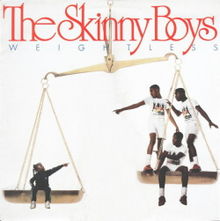
SOUNDTRACK: THE SKINNY BOYS-“Jockbox” (1986).

I didn’t realize that the theme song from Workaholics was from a real song.  I loved the “I’m fresh” bit in the show, but I thought it sounded like it might actually be from something.  Sure enough, the internet led me to this.  The Skinny Boys (evidently a response to The Fat Boys) from the hip hop mecca of Bridgeport, CT put out this beatbox song (with that cool sci-fi keybaord) as a shocase for their member: The Human Jock Box.

This is a pretty bizarre track.  And I’m not even sure what they’re talking about.  But I love the hiccups around the three minute mark.  Note also how by the end of the song, the keyboard plays the riff from Herbie Hancock’s “Rockit” and then a little later “America the Beautiful” (with accompanying beatbox).  Wha??

The Workaholics bit is from 1:13 to 1:23.  You gotta be fresh!

[READ: July 25, 2011] “Matinée

I’m not going to say how I just don’t get Coover.  Every time I read one of his stories I think the same thing: it’s clever but, well, so wha?  I know that Coover is an experimental fiction writer, but I just feel that there’s no emotional resonance to his stories.  Perhaps I like experiemntal art and music but not fiction.

There were some really cool tricks with this story.  All of the (unnamed–don’t get attached to them) characters are watching movies or are in the movies.  And so, in a series of what, infinite regresses? chance encounters? something, new characters are introduced, they watch a film (possibly of the people who were watching them?) they may or may not have sex and then the “camera” shifts to a new couple. (more…)

Read Full Post »

SOUNDTRACKSUPERCHUNK-Superchunk (1990).

Some time ago, I reviewed all of the Superchunk EPs.  After progresing to their most current music, returning to their first album is a bit of a shock.  Superchunk’s first full length album is incredibly raw, with lots of screaming (two vocalists at once, even) and a very grungy attitude.  It has a DIY aestethic, in keeping with the undeground scene at the time.

The first four songs fly past in a pretty quick blur of adrenaline (the longest is just over 3 minutes).  The fifth song, the aptly named “Slow” slows things down and strecthes things out with a five minute track of slow distorted chords and a long solo.

Of course, the pinnacle comes with the next song “Slack Motherfucker” one of the best grunge anthems of all time. 

The last four tracks speed things up again with the bratty attitude that Superchunk is so good at (see especially “Down the Hall”).  But it’s not all just blistering speed.  The band has some dynamics down and there are a couple of tempo changes as well.

The album is a lot of fun to listen to, especially if you’re lookig for grunge before it became Grunge.  Although there’s very little indication that they would become the indie superstars that they eventually became you can clearly hear proto-Superchunk chunks–Mac’s voice is as it ever was and the noise is present but not overpowering.  There are even hints of melody (although nothing as catchy as later albums).  And yet for all that it sounds like a criticism, the album is really quite solid.

[READ: June 15, 2011] The Hollow Planet

Yes, THAT Scott Thompson, from The Kids in the Hall.  I found out about this comic book from my good friend Jessee Thorne at The Grid.

The backstory is that Scott Thompson had been working on this story for years and years.  He imagined it as a movie (starring him, of course).  When that didn’t pan out, he decided to sell it is a comic book.  And while he was recovering from cancer, he worked on it extensively with Kyle Morton–character likenesses and whatnot.  And now we have a cartoon rendering of Scott Thompson!

This story focuses on Scott’s character Danny Husk…

The book opens with Danny and his wife and kids at a carnival.  After a few moments, Danny’s son gets lost on the merry-go-round.  In the next scene we see just how much his wife is estranged from him (she may even be cheating on him), and how little his daughter thinks of him.  Soon after, Danny goes to work, inserts a disc into his laptop and more or less brings down his company.

So far nothing out of the oridnary for this type of  story–henpecked husband on a quest for revenge that he doesn’t know he wants yet.

Then Danny visits with his old friend Steve.  They talk, they bond over Danny’s concern about his wife.  And Danny feels better.  Until he gets home.  After a scene which I won’t spoil, the story suddenly takes off with a high speed car chase (no kidding) and with Danny entering the titular hollowness of the planet. (more…)

Read Full Post »

SOUNDTRACK: THE DEARS-Degeneration Street (2011).

I’ve loved The Dears for a long time now.  And yet with every new album I feel like I have to prepare myself for what’s to come.  And with every release I’m a little disappointed when I first play it.  Maybe for the next release I’ll realize what my problem is–The Dears do not stand up to cursory, casual listening.  They demand attention.  If you put them on as background music, you miss everything.  So when I finally gave Degeneration Street some attention, I realized how great it is.

The Dears write emotional songs that are fairly straightforward.  But the magic of their music comes in the layers of ideas and sounds that they put on each track.  And of course, there’s Murray Lightburn’s voice.  He sounds like Damon Albarn if Damon Albarn could sustain a note for a long time–could emote with his voice.  Now I happen to like Damon Albarn quite a lot, but Lightburn can really just out-sing him.  It’s wonderful.

“Omega Dog” opens with an electronic drumbeat, eerie keyboards and skittery guitars.  When the vocals come in–falsettoed and earnest, you don’t anticipate the full harmonies in the forthcoming chorus that lead to an almost R&B sound.  Not bad for the first 80 seconds of a song.  That the song is actually 5 minutes long and by minute 3, it sounds like an entirely different song is even more testament to the versatility of The Dears (check out the harpsichord solo that more or less ends the song).

“5 Chords” is a chugging anthem, a song with potential to be a hit (but which of course never will).  I find myself constantly singing the infectious chorus of “Blood”: “Since I was a baby I have always been this way; I could see you coming from a million miles away.”  Or the excellent chorus of “Thrones” “Plucking our eyes out, turning to stone, give up on heaven, give up the throne.”

“Lamentation” mixes things up with a slower pace and backing vocals that come straight out of Pink Floyd (any era really, but probably more of their later albums).  It adds an amazing amount of depth.  “Galactic Tides” has more Floydian stuff–the guitar solo (and the instrumental break) are really out of mid 70s Floyd–more backing vocals again).

Follow all of this intensity with the super poppy “Yesteryear”. It’s got an upbeat swing to it: happy bouncy chords and an inscrutable chorus: “What’s the word I’m looking for; It starts with ‘M’ and ends with ‘Y'”  It’s followed by the more sinister “Stick w/Me Kid,” in which Lightburn shows off his bass range.  There’s an awesome guitar riff in “Tiny Man,” simple and mournful that sticks with you long after it’s over.

The last couple of songs don’t really live up to the excitement of the first ten or so.  But the final song brings back the drama, with a swelling chorus and soaring vocals.  The Dears have managed to do it again, an emotional album that comes really close to being a concept album yet with none of the pretensions that that implies. 

[READ: July 13, 2011] Five Dials Number 16

Five Dials Number 16 is a brief Christmas Present from Five Dials.  The issue even seems longer than it is because the last ten pages are photos from the Five Dials launch party in Montreal.  The photo essay, titled In Montreal, includes local scenery and (unnamed) people photographed by ANNIKA WADDELL and SIMON PROSSER.

That leaves only 7 pages of text: The Editor’s Note, a look at London, a Christmas Poem and a short story from Anton Chekov.  And there’s another cool illustration from JULIE DOUCET

CRAIG TAYLOR-Letter from the Editor
Taylor thanks Montreal for their warm welcome (despite the crash course in what Wind Chill actually means).  He also hopes we enjoy the Christmas offerings contained within: the traditional Christmas poem and the Chekov story. (more…)

Read Full Post »

SOUNDTRACK: PARTS & LABOR-“Runaway” (2011).

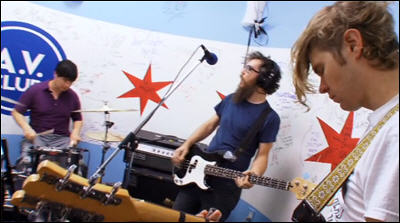
Parts & Labor cover Kanye West’s “Runaway” at the AV Club

I didn’t know Parts & Labor when I played this, but I was really curious to see how any band of non-rappers would perform this awesome Kanye West track.  It’s a testament to how great the song is that Parts & Labor (who totally kick ass) can play around with it as much as they do (they wisely don’t rap) and retain the greatness of the song. 

Parts & Labor seem like a pretty standard punk-type outfit: guitars, bass, drums and keys (although some of their studio albums belie that simplicity).  But the keyboardist (who opens the song) is playing notes while manipulating effects pedals on top of the keyboard.  It’s a great introduction.  The bassist (with his amazing beard) sings in a couple of different registers that work out the angst of the song wonderfully. 

But for me the guy I can’t stop watching is the drummer. He opens the track with his snare drum on his lap.  While keeping the beat with one finger on a floor tom he is clearly playing the snares of his snare drum with a guitar pick.   When the song breaks half way through and he puts his snare back, he is a maniac of intensity and cacophony. It is amazing.  The second half of the song is a cathartic release for the noisy beginning. 

This is a wonderful cover.  And I’ll be checking out Parts & Labor on Spotify to see what I’ve been missing.  Watch it here.

[READ: July 20, 2011] “High School Confidential”

Continuing with the New Yorker’s Fiction Issue, we get this Starting Out essay from Téa Obreht.  Now, Obreht’s story was the least believable of the five for me.  As you can see by this photo, Obreht is adorable.  Now we all know people who blossomed from an ugly childhood or had a youthful gangly phase or grew into beauty or whatever.  But the introduction of her essay, when she describes herself in quite unflattering terms seems like it may be, if not over the top, then at least wishful thinking.

Téa

She claims she was awkward, tall, gangly with coke bottle glasses a huge gap in her teeth from one that never came in.  In reading it again I guess it’s not as dramatic as I though the first time, and corrective work could fix those things, but still.  It seemed a bit like that MTV show Awkward (second mention in a few days–it’s been a slow summer, TVwise), in which the main character is way too cute to be considered an outcast.

Too cute to be that awkward

But hey, maybe cute people have problems too. 

It’s when Obreht moves past that and talks about being made fun of for what she wanted to be that things get interesting.  

Obreht has always wanted to be a writer and when she let her classmates known that, they picked on her (oh are you going to write about that).  But she pressed on.  She was most devastated when the stories she gave to a boy in confidence were soon being read, aloud, by a girl who hated her.

Maybe cute girls are unpopular too. (more…)

Read Full Post »

« Newer Posts - Older Posts »