Feeds:
Posts
Comments

Archive for the ‘Film & TV’ Category

SOUNDTRACK: THE DEARS-Degeneration Street (2011).

I’ve loved The Dears for a long time now.  And yet with every new album I feel like I have to prepare myself for what’s to come.  And with every release I’m a little disappointed when I first play it.  Maybe for the next release I’ll realize what my problem is–The Dears do not stand up to cursory, casual listening.  They demand attention.  If you put them on as background music, you miss everything.  So when I finally gave Degeneration Street some attention, I realized how great it is.

The Dears write emotional songs that are fairly straightforward.  But the magic of their music comes in the layers of ideas and sounds that they put on each track.  And of course, there’s Murray Lightburn’s voice.  He sounds like Damon Albarn if Damon Albarn could sustain a note for a long time–could emote with his voice.  Now I happen to like Damon Albarn quite a lot, but Lightburn can really just out-sing him.  It’s wonderful.

“Omega Dog” opens with an electronic drumbeat, eerie keyboards and skittery guitars.  When the vocals come in–falsettoed and earnest, you don’t anticipate the full harmonies in the forthcoming chorus that lead to an almost R&B sound.  Not bad for the first 80 seconds of a song.  That the song is actually 5 minutes long and by minute 3, it sounds like an entirely different song is even more testament to the versatility of The Dears (check out the harpsichord solo that more or less ends the song).

“5 Chords” is a chugging anthem, a song with potential to be a hit (but which of course never will).  I find myself constantly singing the infectious chorus of “Blood”: “Since I was a baby I have always been this way; I could see you coming from a million miles away.”  Or the excellent chorus of “Thrones” “Plucking our eyes out, turning to stone, give up on heaven, give up the throne.”

“Lamentation” mixes things up with a slower pace and backing vocals that come straight out of Pink Floyd (any era really, but probably more of their later albums).  It adds an amazing amount of depth.  “Galactic Tides” has more Floydian stuff–the guitar solo (and the instrumental break) are really out of mid 70s Floyd–more backing vocals again).

Follow all of this intensity with the super poppy “Yesteryear”. It’s got an upbeat swing to it: happy bouncy chords and an inscrutable chorus: “What’s the word I’m looking for; It starts with ‘M’ and ends with ‘Y'”  It’s followed by the more sinister “Stick w/Me Kid,” in which Lightburn shows off his bass range.  There’s an awesome guitar riff in “Tiny Man,” simple and mournful that sticks with you long after it’s over.

The last couple of songs don’t really live up to the excitement of the first ten or so.  But the final song brings back the drama, with a swelling chorus and soaring vocals.  The Dears have managed to do it again, an emotional album that comes really close to being a concept album yet with none of the pretensions that that implies. 

[READ: July 13, 2011] Five Dials Number 16

Five Dials Number 16 is a brief Christmas Present from Five Dials.  The issue even seems longer than it is because the last ten pages are photos from the Five Dials launch party in Montreal.  The photo essay, titled In Montreal, includes local scenery and (unnamed) people photographed by ANNIKA WADDELL and SIMON PROSSER.

That leaves only 7 pages of text: The Editor’s Note, a look at London, a Christmas Poem and a short story from Anton Chekov.  And there’s another cool illustration from JULIE DOUCET

CRAIG TAYLOR-Letter from the Editor
Taylor thanks Montreal for their warm welcome (despite the crash course in what Wind Chill actually means).  He also hopes we enjoy the Christmas offerings contained within: the traditional Christmas poem and the Chekov story. (more…)

Read Full Post »

SOUNDTRACK: PARTS & LABOR-“Runaway” (2011).

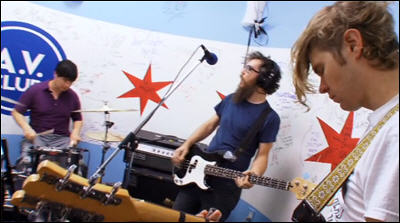
Parts & Labor cover Kanye West’s “Runaway” at the AV Club

I didn’t know Parts & Labor when I played this, but I was really curious to see how any band of non-rappers would perform this awesome Kanye West track.  It’s a testament to how great the song is that Parts & Labor (who totally kick ass) can play around with it as much as they do (they wisely don’t rap) and retain the greatness of the song. 

Parts & Labor seem like a pretty standard punk-type outfit: guitars, bass, drums and keys (although some of their studio albums belie that simplicity).  But the keyboardist (who opens the song) is playing notes while manipulating effects pedals on top of the keyboard.  It’s a great introduction.  The bassist (with his amazing beard) sings in a couple of different registers that work out the angst of the song wonderfully. 

But for me the guy I can’t stop watching is the drummer. He opens the track with his snare drum on his lap.  While keeping the beat with one finger on a floor tom he is clearly playing the snares of his snare drum with a guitar pick.   When the song breaks half way through and he puts his snare back, he is a maniac of intensity and cacophony. It is amazing.  The second half of the song is a cathartic release for the noisy beginning. 

This is a wonderful cover.  And I’ll be checking out Parts & Labor on Spotify to see what I’ve been missing.  Watch it here.

[READ: July 20, 2011] “High School Confidential”

Continuing with the New Yorker’s Fiction Issue, we get this Starting Out essay from Téa Obreht.  Now, Obreht’s story was the least believable of the five for me.  As you can see by this photo, Obreht is adorable.  Now we all know people who blossomed from an ugly childhood or had a youthful gangly phase or grew into beauty or whatever.  But the introduction of her essay, when she describes herself in quite unflattering terms seems like it may be, if not over the top, then at least wishful thinking.

Téa

She claims she was awkward, tall, gangly with coke bottle glasses a huge gap in her teeth from one that never came in.  In reading it again I guess it’s not as dramatic as I though the first time, and corrective work could fix those things, but still.  It seemed a bit like that MTV show Awkward (second mention in a few days–it’s been a slow summer, TVwise), in which the main character is way too cute to be considered an outcast.

Too cute to be that awkward

But hey, maybe cute people have problems too. 

It’s when Obreht moves past that and talks about being made fun of for what she wanted to be that things get interesting.  

Obreht has always wanted to be a writer and when she let her classmates known that, they picked on her (oh are you going to write about that).  But she pressed on.  She was most devastated when the stories she gave to a boy in confidence were soon being read, aloud, by a girl who hated her.

Maybe cute girls are unpopular too. (more…)

Read Full Post »

SOUNDTRACK: FOO FIGHTERS-Wasting Light (2011).

The Foo Fighters are huge.  Duh.  But when I think of that, it amazes me that a) the Foo Fighters are the band from “the drummer from Nirvana” and that b) while Dave Grohl knows his way around a melody, he is a metal dude at heart, and some of his most popular songs are really heavy.  He can scream with the best of them.

I’ve enjoyed the Foos for many years, but I didn’t listen to their previous discs all that much (or at least I didn’t listen to the mellow disc from In Your Honor and I don’t remember anything off of Echoes…), but this new one is fantastic.  There’s not a dull song on the disc, and Grohl has hit new heights of catchiness and singalong-ness. 

I also like how noisy the disc is.  It opens with some great discord before turning in a majorly heavy rifftastic scream fest in “Bridge Burning.”  Despite the screaming and noise of the opening, the chorus is super catchy.  “Rope” was said to be inspired by Rush.  Knowing that, I can hear a lot of little Rush-isms in the track: The main riff is very Rush-like, there’s a cymbal tapping that reminds me of Neil Peart in the verses, as well as a little drum solo in the middle (with a cowbell!) and the solo is very Alex Lifeson. (It also feels longer than 4 minutes).

“Dear Rosemary” features Bob Mould on backing vocals (but you can hardly tell it’s him).  It’s got a great chorus as well.  “White Limo” is a wonderful punk song, completely incomprehensible lyrics and all.  Meanwhile “Arlandria” (whatever that means) is another totally catchy track (I find myself singing it a lot).

“These Days” should be the next single: catchy and easy on the ears.  I wonder why it hasn’t been released yet.  “Back and Forth” has another great noisy riff.  One thing that I like a lot about the Foos is that they put different things in the same song:  so “A Matter of Time” has a very simple verse and a catchy chorus, but there’s some really buzzing heavy guitars too.  “Miss the Misery” has a kind of sleazy feel which I think is new for the Foos.  And “I Should Have Known” is a kind of angry ballad (I’d like to see Richard Thompson cover it). 

The final track, “Walk” is a fast rocker that sums up the album really well.  Bravo Dave Grohl.  I can’t get enough of this disc, regardless of how popular it is.

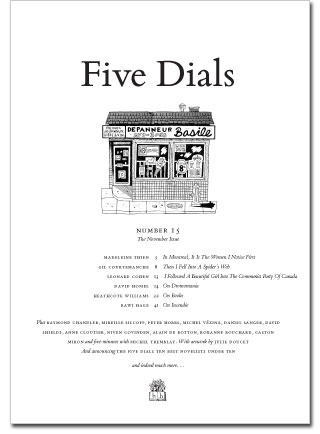
[READ: July 2, 2011] Five Dials Number 15

After the brevity of Number 14, Five Dials Number 15 comes back to a fuller size.  It’s strange to me that the issue is titled The November Issue, in part because they never tell us when the issues were published, but even more because this is actually the Québec Issue.  Most of the authors are Quécbecers and the issue release party was in Québec as well.

I’d like to point out that while I was looking something up about this issue (more later) I discovered the Five Dials News Page.  There are currently 43 pages worth of posts.  But most of them are short.  If there are any especially noteworthy ones, I’ll add them to reviews of future issues, but for the most part so far they’re just announcements of how well received their books are (I’ve already made notes to read two of them).  They also give release dates for the issues, which is how I have been able to retroactively attach dates to some of them.

There are many Québecois writers included in this issue (thoughtfully translated into English), as well as some standard features by Alain De Botton and frequent contributors David Shields and Raymond Chandler.

CRAIG TAYLOR-On Our Québec Issue, and Young Novelists
Taylor’s introduction discusses many Canadian’s attitudes about Québec and their (seemingly perennial) vote concerning separation from the country (“so, let them go”).

creepy beard

The confusing thing here is that it appears that Taylor is Canadian (or at least lived there in 1995/6).   But surely he is British, no?

There’s lots of information about Québec in here but no grand statement (except that Celine Dion’s husband’s beard is still creepy).

He also introduces a new section called “Our Town” which is all about London.  The final section of the note says that

we are releasing our second Five Dials list of Top Ten Novelists Under Ten (or ‘Ten Under Ten’,or ‘Ten-Ten’, or as some of the writers themselves call the list: ‘Tintin.’) As you know, many of the writers we chose for our first Ten Under Ten list went on to things such as high school.

This is how I discovered the Five Dials News page, because there certainly was no Ten Under Ten section in a previous issue of the magazine.  Of course, nor is there any mention in the news that I have seen.  So I can’t decide if the whole thing is just a big joke or what.  I assume it is (but I’d hate to not give credit to the waaaay precocious kids at the end of the issue). (more…)

Read Full Post »

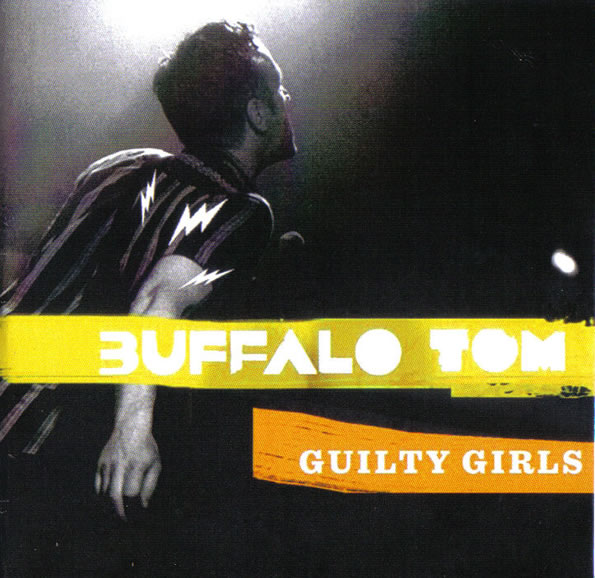
SOUNDTRACK: BUFFALO TOM: “Guilty Girls” (2011).

Holy cow, Buffalo Tom!  I more or less forgot about these guys (who I really liked back in the 90s).  Some of their songs from that period are fantastic.  They never had any major success, but they had a series of great releases.  Evidently they reformed a few years ago and released a reunion album.  And now, in 2011, they have a brand new record.  Wow.

I haven’t listened to them in a few years, (although their albums covers are still very fresh in my head).  But I listened to a few older songs for comparison’s sake.  To me the biggest difference between Tom in 1999 and Tom in 2011 is that the singer now sounds even more like Elvis Costello.  Bill Janovitz has always had a strong baritone voice, but with a few extra years thrown on, it has maturity that it lacked back then (not that it needed it, but the songs are more mature lyrically now, and the voice fits it well). 

This song is a kind of punky (poppy punk, but still punky) rocking anthem.  It’s under three minutes and it aims for mega catchiness.

[READ: July 18, 2011] “The Orderly

Having read the brief story by Arthur Bradford in Five Dials, I realized that I knew the name and decided to see what else I had read by him. It wasnt much, but I enjoyed what I’d read.  I decided to look him up and discovered that he really only wrote one book, a short story collection called Dogwalker, before switching media to TV (and a show called How’s Your News?).

On his website, he has links to a number of published stories (fiction and non-); since the Esquire pieces have been collected in his book, there’s really only three unique fiction stories available here.  So i decided to read them all.

Now Nerve.com was a site for “literate smut.”  I remember when it came out and it was somewhat revolutionary in the sex world because it tried to raise the bar of quality and to include some decent writers.  I didn’t actually know that nerve.com was still active (it is, and there’s some really good stuff there).  As such, I feel like perhaps the stories at nerve aren’t entirely top-notch.  Not Penthouse forum, mind you, but not Hemingway either. (more…)

Read Full Post »

SOUNDTRACK: BRENDAN PERRY-Live at KEXP, July 26, 2011 (2011).

Brendan Perry was the mastermind behind Dead Can Dance, one of the more influential bands on the 4AD label.  I really haven’t listened to them in ages (goth is so 1990s), but I was delighted to see that Robin Guthrie and Brendan Perry performed a live set at KEXP.

There’s an interview explaining what Perry has been up to since his last solo album (in 1999)–he has a new one from 2010 that was just released in the States.  He explains a lot about his early musical career and his interests (and living in New Zealand).  But the magic really comes when he starts singing.  And sadly his set has only two songs: “Song to the Siren” and “The Carnival is Over.”

Indeed, I had forgotten what a great, resonant voice Perry has.  It is instantly recognizable and brought me back to Dead Can Dance immediately.  “Song to the Siren” is a Tim Buckley cover, which he (and others) recorded for This Mortal Coil’s It’ll End in Tears album.  This version has Robin Guthrie on guitar. 

The other song, “The Carnival is Over” is a Dead Can Dance song (from Into the Labyrinth).  This song is piano and strings and is immediately recognizable as a Dead Can Dance song.  I admit it’s not as moving as the Tim Buckley song but that would be hard to accomplish (what is it about Guthrie’s echo pedal that is so amazing?).  Nevertheless, it’s a great reunion and wonderful to hear his voice again.

[READ:  July 19, 2011] Modelland

When I was at BEA, there was a lengthy line forming at one of the publisher’s tables.  I found out that it was for Tyra Banks, who was making a “surprise” appearance.  I certainly wasn’t going to wait for her, but after a few minutes, I heard people saying that she would be coming momentarily.  So I hung out and when she arrived with her entourage, I snapped a few pictures and left.

A few days ago, my former co-worker Sandy came to work and left me a [signed!] copy of this excerpt (she had waited for Tyra and got her autograph).  I really had no intention of reading the book, but I was delighted to have a copy of it.  In the interest of embarrassing full disclosure, Sarah and I watch ANTM.  However, in our defense, we FF just about every time someone speaks.  We basically like it for the photo shoots and the final pictures.  But we both feel that Tyra is a looney-tunes egomaniac. 

But seeing the book on our table made me have to read it. 

So how good could this book possible be, especially when the main character is named (seriously) Tookie de la Crème (and her sister is named Myrracle).  Oh and holy cow Tyra’s own introduction says that this is the first book in a trilogy!  Good grief.  

The summary of the story is:

Welcome to Modelland, where every girl dreams of the beauty and glamour of the Land on the top of the mountain. Every girl but one.

Right.

Well, surprise, surpise…the story is actually quite interesting. (more…)

Read Full Post »

SOUNDTRACKS. CAREY-Live at Sasquatch Music Festival, May 29, 2011 (2011).

I learned about S. Carey through NPR.  S. Carey is the drummer for Bon Iver and he set out on his own playing these cool, atmospheric songs.  What I like best about them is that they feature the vibes.

The whole set has a cool, chilled out sound.  The vocals are slow and dream-like (I’m sure there are lyrics, but I don’t know them) and at times he sounds not unlike Dallas Green from City and Colour.

When Sean (he is the S.) Carey banters with the crowd, he’s very friendly and relaxed.  I especially like the anecdote about going to the Twin Peaks Cafe and hearing Audrey’s music from the show (which the band then plays).  The Twin Peaks sounds melds perfectly with their own sound, which should give you an idea of what the band sounds like.

The songs are about 4 or five minutes except for “Mothers” which tops out at over 8 minutes and actually gets pretty raucous by the end.  For this band it’s a wild song ending.  It’s a good set.  And the surprise cover of Björk’s “Unravel,” which melds perfectly with “All We Grow” is a nice treat.

I don’t know if I’d want to see them live (I like my shows a bit more uptempo) but it’s a great relaxing set.  Of course, having said that, the final track, “Leave” is the most conventional-sounding with a really catchy chorus and a somewhat faster pace.  It’s my favorite song of theirs.

[READ: July 13, 2011] “Homage to Hemingway”

Like the students in this story, I was initially put off by the title of this book because I have grown to dislike Hemingway (probably unfairly, more of a decades-long, knee-jerk reaction to him). But I’m glad I read it because of a couple of things.  One: it was a good story.  Two: it is actually an homage to one of Hemingway’s stories (called “Homage to Switzerland”) so it’s doubly meta-.

In “Homage to Switzerland,” there are three brief stories.  In each one an American man waits for a train in a Swiss station.  Each man follows the same basic trajectory in the story, meeting a waitress but having no real resolution.  Perhaps the men, even though they had different names, were maybe the same person.

Barnes’ story also has three parts, although it is pretty clear that the man is the same in each part, despite their different section titles.  In 1. The Novelist in the Countryside he helps students with their fiction (I rather like reading stories about fiction writing classes, as odd as that sounds). (more…)

Read Full Post »

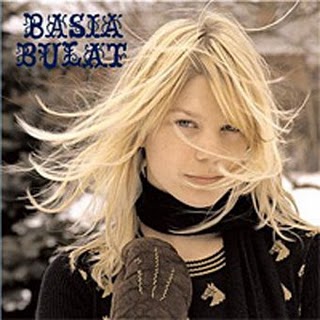
SOUNDTRACK: BASIA BULAT-“In the Night” (2008).

I recently came across Basia Bulat via NPR.  She played a Tiny Desk concert and I discovered that she had several other entries in the NPR canon.

Basia is Canadian (of Polish descent); she has a beautiful strong mid-range/throaty voice and a great sense of melody.  She also has a bit of a gimmick: she plays all kinds of instruments (guitar, piano, sax, etc) including some really weird and unexpected instruments: Zither, pianoette (!) and autoharp–a couple of years before PJ Harvey brought it back to the mainstream.

pianoette

“In the Night” is a wonderfully chipper poppy song.  And that autoharp gives it just a tinge of “huh?’ that makes it more than just a simple pop song.  The beat is fast and energetic, the harmonies are wonderful and the melody is top-notch.

I really like this song a lot, and the other snippets of songs that I’ve heard from her are equally wonderful.   I’ve even noticed that lately she’s been singing a song in Polish!

[READ: July 12, 2011] “Gastronomania”

I’m not going to go crazy reviewing all of the book reviews in Harper’s (that way lies madness), but occasionally an author I like writes a bit that I want to mention.  So Will Self, who I like but have not read a lot of, wrote this essay/book review about food.  He reviews three books, but what I especially liked about it was his introduction, which uses Luis Buñuel’s Le fantôme de la liberté [The Phantom of Liberty] as its starting point.  In the film (which I have not seen), the house’s dining room is actually a well…watch this clip:

It’s a wonderfully bizarre introduction to an essay about food.

It was unclear to me what made Will Self suitable to review three books about cooking.  And then (news to me) he revealed that he used to be a food critic (columns are collected in his book Junk Mail) and that Anton Ego in Ratatouille (yes that Ratatouille) bears “an uncanny, if not legally actionable” resemblance to him.

This essay was so much fun.  Self is as viciously negative about these books as he apparently was about food back in the day.  But he’s not dismissive of them as cookbooks per se, he’s more about trashing the current worship of food (and many other things too of course). (more…)

Read Full Post »

SOUNDTRACKTINDERSTICKS-Claire Denis Film Scores 1996-2009: White Material [CST077] (2009).

White Material is the most recent soundtrack that the Tindersticks created for Claire Denis.  It was recorded between their “reunion” album The Hungry Saw and their latest album Falling Down a Mountain.

This is a very moody soundtrack.  The guitars set a brisk but desperate-sounding pace.  There are feedback squalls that echo for even more tension.  The feedback could be any number of things as well: squeaky machines, industrial noise, or simply disconcerting sounds.

There is a repeated motif throughout the score that morphs and blends with the tone.  The overall feel of the soundtrack is unified but it never sounds like you’re listening to the same few notes repeated (which is actually what it is, the songs use a very limited palette).

For such a limited palette of music, they really manage to give a diverse picture of the movie.  The way “Andre’s Death” builds, using those same few notes and feedback is truly amazing.  The tension that has been building throughout the score really comes to a head in those 2 minutes.  Contrarily, the flute that plays over those same notes in “Children’s Theme 2” is a haunting exploration of the theme.

This soundtrack isn’t as industrial/weird as L’intrus, but it is probably more intense and spooky.  It’s amazing how evocative these guys are.

[READ: June 22, 2011] Merit Badges

Sarah brought this book home, but she didn’t read it.  It sounded pretty good (I mean it won the 2009 AWP Award for the Novel), so I decided to give it a go.

The book seemed strange to me in the way it was set up: it seemed to have a very specific structure but it didn’t always follow it exactly. So, there are four main protagonists who write chapters of the book.  But they don’t each get a turn, in fact one, Barbara doesn’t really have much to say until much later when her story becomes very compelling.  It also advanced over the years with no real explanation of pacing or even of when a new narrator has jumped ahead several years.

I assumed this was going to be a story of four people looking back on their high school years.  But indeed, it’s about four people looking back on their whole lives, as they grow together, drift apart, come back into each others lives and then disappear again.  In that way, it was also a bit hard to get my bearings.  It was also hard for me to keep all of the characters straight.  Because even though there are four narrators there are many many more kids introduced in the beginning of the story.

Each chapter opens by stating who the narrator is.  The first few narrators are Chimes Sanborn (Prologue), Quint (Woodwork), Slow Slocum (Cooking), Chimes (Drafting), Barb Carimona (Music), Quint (Mammals), Quint (Crime Prevention) etc.  So it’s not consistent.

But also, as you can see, all of the chapter titles are named after Merit badges (which I liked quite a bit).  The subtitle describes what you have to do to achieve the badge (and the chapter does indeed kind of work within that stricture).

So far so good, but we’re also introduced to ancillary characters who appear quite often: Dickie Burpee, Pooch Labrador, Smash Sarnia, and a psychopath named Tulep.  With all of the nicknames and rotating narrators, I admit to losing track of who was who, which I fear lessened the impact of some of the events.

Of course, that’s all structural.  And while I felt like I probably missed out on moments of impact, the overall storyline was not hard to follow.  And, indeed, complaints aside, the story was pretty intriguing.  It is set in the (fictional) small suburb of Minnisapa, Minnesota.  It feels very true to me (having lived in a small town, myself) as do the choices (bad and good) that the kids make. (more…)

Read Full Post »

SOUNDTRACK: TINDERSTICKS-35 Rhums (2008).

This is a charming and very French sounding soundtrack. A delightful melody runs throughout the disc (which totals just over 25 minutes).

When Sarah first heard it, she said, “What’s this French music you’re listening to?”  And indeed, it is very French-sounding. There are very simple instruments: melodica, acoustic guitars, piano.  And that melodica is a prominent sound–giving it a sense of intrigue as well as a sense of solitude (the melodica can sound so yearning).  But it’s not all melodica and intrigue; for instance, there’s some delicate xylophone on “Night Time Apartments.”

There are also several snippets from the movie online.  Here’s one clip (with Tindersticks score underneath):

Of the new soundtracks releases this one is my favorite.  And it’s one that I could see listening to for fun.

[READ: June 16, 2011] “The Rules of Engagement”

This is the final story in The Walrus‘ Summer Reading issue.  As I mentioned, the intro states: “We asked five celebrated writers to devise five guidelines for composing a short story or poem. They all traded lists–and played by the rules.”  Alexi Zenther was given rules by Sarah Selecky (which I posted below).

I really enjoyed this story, despite the immoral behavior.  Susan and her friends from high school (it’s ten years after high school now) are enjoying a foreign vacation for a week.  The first thing we see is a man seducing Susan.  They call him “Fork” because after a few hours of flirting, he asked, “And now we fork?”  Amusingly, for someone who made a living seducing women, he was bad in bed.

The other women also meet and bed these professional gigilos.  After sex, one of them simply walked over to the woman’s wallet and took money when he was ready to leave.  She notes that he took “probably less than I would have given him if he had asked.”

The women are in various stages of relationships, one woman is divorced, another is serially monogamous and a third is married (that’s the immoral part).

There’s a wonderful diversion in the story that flashes back to Susan’s grandfather Bert.  Bert had a U-pick apple stand and the girls worked there for many summers.  There’s an especially tender moment in which Susan and Bert are wandering the island and they see a wild horse.  And the scene fills Susan (and the reader) with a sense of wonder at her grandfather. (more…)

Read Full Post »

SOUNDTRACK: TINDERSTICKS-Claire Denis Film Scores 1996-2009: L’Intrus [CST077] (2004).

This score comes from Claire Denis’ 2004 film L’Intrus.  The soundtrack was done by Stuart Staples.  In the booklet he talks about how conventional scoring just didn’t seem appropriate for the film, so he chose this rather noise-filled style.

It is a noisy, menacing work (L’Intrus means The Intruder, so that makes sense).  The sounds are clanky and squeaking, creating an ominous atmosphere.

But what’s most interesting about the score is that despite this limited collection of sounds, he creates a musical work out of it that is interesting to listen to on its own.  The track “Horse Dreams” is full of discordant notes and screeches.  While “The Black Mountain” features a solo horn over the noises.  It’s not easy listening, but it is certainly evocative.

This score is also very short about 25 minutes or so).  The movie is 130 minutes.  I wonder what other sounds are in the film?

[READ: June 15 2011] “Madame Poirer’s Dog”

This is the second story in The Walrus’ Summer Reading issue.  As I mentioned, the intro states: “We asked five celebrated writers to devise five guidelines for composing a short story or poem. They all traded lists–and played by the rules.”  Kathleen Winter was given rules by Alexi Zenther (which I posted below).

I didn’t enjoy this story all that much.  More specifically, I enjoyed the story within the story, but the full, proper story was a little too indistinct to me: It felt kind of all over the place.  In some ways this is appropriate as the story is set in an old folks’ home.  The titular dog comes into play throughout the story and the hard and fast facts of the dog’s tale give some grounding to the story.

The dog’s story is told in a just-the-facts, not-the-details style.  And the dog’s story is a funny story.  It involves a chastity belt (for the dog), and another dog’s skill at the belt’s removal.  But  the funniest part came at the end when the narrator criticized her son’s wife because she would be the kind of person who would ask for details “that no one cares to remember: what exactly does it look like, a chastity belt for digs, and of what material is such a thing made?”

The bookend parts that surrounded the story just kind of fade from my memory.

The five rules from Alexi Zenther: (more…)

Read Full Post »

« Newer Posts - Older Posts »