Feeds:
Posts
Comments

Archive for the ‘Film & TV’ Category

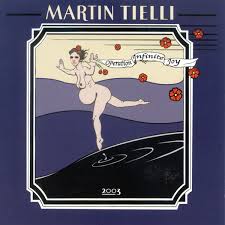
academiaSOUNDTRACK: MARTIN TIELLI-“We didn’t even suspect that he was the poppy salesman.” (2001).

popptI wrote about this album once before, and while I made notes about it after listening to it again, I found out that they were pretty much exactly what I thought of the record four years ago.  So I’m going to simply repost the review here, but I’m going to add some new notes seamlessly intermingled.

Martin Tielli’s first solo disc is a proper solo release: it’s almost all him on acoustic guitar and his gorgeous alto voice.  I hadn’t listened to this disc in a while and I was delighted by how much of the disc I knew so well.

The opening track, “I’ll Never Tear Your Apart” is deceptively simple: beautiful harmonic’d guitars and his gentle voice.  There’s a great video to go with it here.  That is followed by the wonderful “My Sweet Relief” which sounds like a great Neil Young folk song: great verses an a strong chorus.  Lyrically, though, it is all Tielli.  “Double X” highlights Tielli’s beautiful acoustic guitar work.  It’s another great story song, this one about a destitute person hanging under a superstore with a K and an M.

“Voices in the Wilderness” is a simply beautiful song, a lovely guitar melody and Tielli’s high voice singing along.. I also love that the lyric  (mis)quotes Rush very nicely: “‘If you choose not to be free you still have made a choice,’ said a high and squeaky voice.”

“Farmer in the City” is the only track that Tielli didn’t write.  It’s a nearly 8-minute song by Scott Walker.  I had never listened to the original, but having now done so, I find the Walker version to be far superior.  Walker’s voice is so eccentric and wonderful.  So even though I love Martin’s voice, he just can’t compare to the original.   Also find Martin’s version to be just a little spare (the Walker version has lovely strings. Kevin Hearn plays celeste and Selina Martin plays wine glasses on the track.

It’s followed by the delightful “World in a Wall” which uses mice in the wall as a metaphor for a broken relationship (with wonderful detailed lines like: She’s like a mouse, I know she’s around It’s a gnawing sound. Leaves little brown poohs from a little pink bum.”

This is followed by “That’s How They Do It in Warsaw” which is the first really rocking song (it has bass and drums) and a voiceover in Polish by Kasia Zaton.

It’s coupled with a slightly less rocky but still loud track “How Can You Sleep?” (which makes another fun musical allusion, this time about Guided by Voices). It has a co-songwriting credit from Dave Bidini and has a kind of vocal allusion to Bob Dylan, although I doubt it is about him.

“She Said ‘We’re On Our Way Down’” is a song that I really want to enjoy more.  But It is so spare and Martin’s vocal line is so abstract, that I can never really get int it. But the guitar riff is really powerful and cool.  And yet, the song seems to eschew melody but then a gorgeous guitar or vocal line shines through and really sounds brilliant.  “From the Reel” is a beautiful, aching acoustic ballad.

The disc ends with the odd, seven minute “Wetbrain/Your War.”  The first part (wet brain) is kind of slow but it builds into a beautiful dark song about addiction.

This is a really beautiful album, although there are moments when I fell like Martin gets too delicate, it’s amazing to hear just what he can do when he’s on his own.

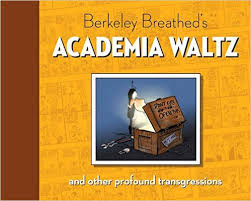
[READ: October 19, 2015] Academia Waltz

Way back a long time ago I was pretty excited to read all of the Bloom County reissue books.  Somehow I only got through Books 1 and 2, although I see now that five volumes were released in total.

Presumably at the end of that run, (which technically ended in 2011) comes this volume.  Academia Waltz is the strip that Breathed wrote back in college.  This book collects some (but apparently not all) of the strips.  It’s odd to not collect them all since there is also an art gallery with all kinds of original pieces (complete with edits and scribbled notes) that duplicate many of the earlier strips.

The first part collects pieces from Academia Waltz the 1979 collection.  The second part comes from Bowing Out, the 1980 Collection. (more…)

Read Full Post »

tokyoSOUNDTRACK: THE MOPS-“Goiken Muyo (Ilja Naika)” (1971)

mopsThe Mops were a Japanese psychedelic band who were inspired by American psychedelia.  They appear in one of the films below (Stray Cat Rock: Wild Jumbo from 1971) in a really weird scene in which the band is playing on the back of a flatbed truck (in the middle of another scene that has nothing to do with them).  They play their song and then drive away.  Weird.

Anyway, the song is pretty great.  There’s all kinds of interesting percussion (the film clip shows them playing stuff which most likely is not what they are playing).  But the studio version (linked to below) has great audio quality and a lot of depth in the bass and cool screaming guitars.

The band released possibly 9 albums (it’s a little hard to tell from their Wikipedia page).  With their first album being pretty psychedelic and this one (I assume their third) being much heavier and fuller sounding.

I had found a clip of the band from the movie.  Then I lost it and cannot find it anywhere.  But here’s the studio version dubbed over the movie clip

But really, check out the whole album, it’s pretty great.

[READ: October 10, 2015] Tokyo Grindhouse

The life cycle of a book at my work is pretty straightforward.  If I see it at all, I usually catalog it or send it on its way to someone else.  But for some reason this book came back to my desk three times.

I didn’t know a thing about Tokyo Grindhouse, I’d never heard of pinky movies, but if something keeps coming back you gotta check it out.  So it turns out that this book has about ten pages of text and the rest is pictures.

And the book is about “classic” exploitation films made in Tokyo from 1960-1970 (or so).  The text by Jack Hunter explains that women and violence have been in Japanese exploitation films since the 1950s.  Evidently there were some landmark films in the mid-fifties about topless pearl divers that set off a craze for topless women in films.  This morphed into movies where women were the victims of violence with translated titles such as Nude Actress Murder Case: Five Criminals. (more…)

Read Full Post »

1955SOUNDTRACK: BUILT TO SPILL-Perfect from Now On (1997).

330px-Perfect_From_Now_OnBuilt to Spill moved to the major labels and everything changed. No that’s not true. The band (well, Doug mostly) just sounds more serious about their music. What’s impressive is that there are no obvious  singles since each song is over 5 minutes long (except for one).

This is considered a classic 90s album but fans of the band and others.  And while I like it, it’s not my favorite.  A few of the songs are a little too drifty and anticlimactic.  But at he same time there’s some really amazing stuff here.

It opens with “Randy Describing Eternity” a cool song with a great riff and an interesting lyrics.  My favorite song (most days) on this record is “I would Hurt a Fly.” It has a fairly quiet intro with more intriguing lyrics: “I can’t get that sound you make out of my head/ I can’t even figure out what’s making it.”  The song waxes and wanes and even adds some cello. And then at 4 minutes, the song shifts gears entirely, stopping to add a brand new fast section with some great guitar work and wild noisy soloing.

“Stop the Show” is another favorite.  It opens with a slow meandering guitar section and then jumps to a great, frenetic set of verses. After about 5 and a half minutes the song turns into a crazy noisy fest and then switches to an amazingly catchy guitar instrumental solo outro, which could frankly go for five more hours. “Made Up Dreams” has several different elements in it. And even though it’s only 4:52, it still packs in a lot of music.

“Velvet Waltz” is over 8 minutes long. It has slow parts, and a lengthy middle section with strings (in waltz time of course). It builds slowly adding some cool guitar sections and a great long solo at the end. “Out of Site” is one of the shorter songs on the disc.  It has an immediate, fast section that is very catchy. It then mellows out to a slow cello-filled section. “Kicked it in the Sun” is kind of trippy.  At four and a half minutes a noisy section overtakes the music, but behind the noise is a beautiful, pretty guitar/keyboard melody.  Then it shifts out of the noise into a more rocking catchy section.

The final song is the nearly 9 minute “Untrustable/Part 2.”  It begins loud with great lyrics “You can’t trust anyone because you’re untrustable.”  Like the other songs it has several parts.  Around 4 minutes it turns into another song altogether. This continues for a bit and then at 7 minutes it shifts gears entirely into a keyboard dominated romp.

There’s so many interesting melodies and changes in this album, and it clear that it was completely influential on late 90s indie rock.  But I think what’s even more impressive is that each album get a little bit better.

[READ: September 29, 2015] The Complete Peanuts 1955-1956

Moving on to volume 3 of the Complete Peanuts.  Stylistically things are advancing towards the Peanuts characters we know now.  Yet they haven’t quite gotten there.  I think the kids’ faces (not their heads, just features) are still much smaller.  And Snoopy still looks like a real dog, although his nose grows year by year.

In the beginning of the year, there’s a funny line from Lucy, attacking commericalism. Charlie is reading her a book.  He says “Once upon a time they lived happily ever after.  The end”  And Lucy says “What’s on the rest of these pages, Advertising?”  Much later there a joke in which Lucy asks Schroeder how much a musician makes, and he relies “Money?  Who cares about money?  This is art. You Blockhead.”  It is ironic of course that Schulz went on to become so staggeringly wealthy–but maybe that just shows what good art can achieve.

Another one of my favorite sophisticated jokes comes when Lucy is flying a kite.  The joke is all about perspective. It’s hilarious. (more…)

Read Full Post »

jup[iterSOUNDTRACK: BUILT TO SPILL-The Normal Years (1996).

btsnormalIn 1996, Built to Spill signed with a major label.  In the meantime, K Records, released this collection of early singles and rarities (not bad for a band with two albums out).

It’s not a bad collection, but it’s also not terribly essential.”So & So So & So from Wherever Wherever” is a very good song, with a weird almost seasick guitar intro and then some big heavy guitars in the chorus.  It, like most of the songs here, is pretty lo-fi.

“Shortcut” is a fast and simple song and is only 90 seconds long.  “Car” is the original version of the song from Love.  This one has no strings and is “Some Things Last a Long Time” is a Daniel Johnston song.  It opens slow with “ah ah” backing vocals and slow guitars although at 90 seconds the guitars kick in and pick up the noise.

“Girl” is done on an acoustic guitar song.  It seems very honest and confessional with the lyric that he would like “someone I can talk to; someone I don’t have to talk to.”

“Joyride” is like the opposite of “Girl.”  It’s probably my favorite song here–sloppy and funny, with a great line: “I screwed her and she screwed me but we never once had sex.”  And the whole second verse talks about the structure of the song, including which chords are being played.  It even includes a car crash.   “Some” is a live recording that opens with slow pounding drums and a long solo to start.  It mellows out by the end.

“Sick & Wrong” is an early single with a surprisingly funky bassline.  “Still Flat” comes from the Red Hot & Bothered collection, so it sounds better recorded than the other songs.  It also has a trombone.  The final song, “”Terrible/Perfect” starts slow but builds big and ends with a long mellow instrumental section.

While there are certainly some good songs here, it’s really for the die hard fan.

[READ: September 29, 2015] Jupiter’s Legacy

Jupiter’s Legacy Book One collects books 1-5 of the Jupiter’s Legacy series.

I didn’t love the artwork of this story.  There was something about it that I found disagreeable.  And it made my initial impression of the story less than great, too.  There is a bunch happening all at once that needs to be unpacked and I was a little distracted by the art.

But the story is so good.  It takes ideas that have been bandied about recently–What do superheroes do if there are no more super villains?  What do the children of superheroes do?  And what would happen if superpowers become illegal–and adds a personal drama (and a very elliptical storytelling style).

The story opens in 1932.  A group of people are requesting transportation to an island which the ship’s captain says simply isn’t there.  The leader, Sheldon, has had a dream about it being there and everyone (including his brother William) trusts his visions completely.  And they do find the island just as Sheldon imagined.

Then we flash forward to 2013.  We see two young people who look a bit like the earlier men and women.  It turns out that they are the son and daughter of the 1932 folks.  They are celebrities living in Los Angeles, and they looks somewhat the worse for wear.  Meanwhile in Vermont actual superheroes are battling Blackstar.  And that’s when we see Sheldon is one of those superheroes.  He has gray hair but, well, he’s a superhero–in tights a cape and he is known as Utopian.  He is super string and has a cool ability of removing a person’s mind from their body and putting it in a safe place while that person’s body is getting pummeled.  This prevents them from fighting back. (more…)

Read Full Post »

kickassSOUNDTRACK: BUILT TO SPILL CAUSTIC RESIN (1995).

caustic This is one of those CDs that I used to see all the time back when I shopped at Tower Records in Boston.  Either they had a lot of copies of it or it was always at the front, or something.  But I never forgot the title of this EP, which I only purchased a few years ago.

The title is funny because it is indeed a merging of Built to Spill and Caustic Resin.  But it’s not a split single with the two bands playing.  Rather, it is Doug Martsch from Built to Spill playing with the three guys from Caustic Resin James Dillion on drums, Tom Romich on bass and Brett Netson on guitar and vocals on “Shit Brown Eyes.”  (Remember how Doug was planning to have different musicians on each album?).

The EP has four songs totaling about 25 minutes.

“When Not Being Stupid Is Not Enough” is over 9 minutes long.  It opens with a lot of instrumental stuff until about 3 and half minutes when the title lyrics come in as does the organ.  By 5 and half minutes the song doubles in speed and builds with some great soloing.

“One Thing” has loud and screamed vocals from Martsch (probably the only BtS song like that). There’s a lot of wild psychedelic keyboard work in the middle of the song which alternates with a lengthy guitar solo.  They pack a lot of jamming into five minutes.

“Shit Brown Eyes” was written by Caustic Resin.  It’s a fairly conventional sounding song.  There’s lots of guitar work and dual vocals.  It’s a little chaotic, but there’s more beautiful soloing toward the end.

The final song is a cover of Kicking Giant’s “She’s Real.” The song is also fairly conventional (I don’t know the original) but they stretch it out to 8 minutes.  It has a slow and mellow opening.  There’s a lengthy fairly quiet guitar soloing section and then the end has a rocking section repeating “be my, be my baby” (but not a cover of the original).

This is an interesting EP, and might serve as an introduction to Caustic Resin (who I don’t really know) more that Built to Spill.  It’s certainly not their best album, but “When Not Being Stupid Is Not Enough” is really fantastic.

[READ: July 20, 2015] Kick-Ass

I really enjoyed the movie of Kick-Ass.  I knew it was from a comic book but I’d never seen the book before.  And then I walked right past it in the library and had to check it out.  This book collects issues 1-8 of the first series.

The movie is changed in different ways (made more “upbeat” mostly) but the story line is pretty consistent.  Dave Lizewski is a fairly  normal kid.  He’s not a jock, but he’s not picked on either.  He likes comic books but isn’t a major geek.  He crushes on a hot girl and she won’t give him the time of day–pretty standard fare.  But he wants something more.  And he wonders why no one has ever tried to become a super hero for real.  Obviously there’s no magic or superpowers involved, just a costumed avenger helping people?  Why not?

So he decides to do it.  He puts on a scuba suit an and a mask and heads out. Now, unlike every superhero, he has no major back story.  His mother is dead, but from an aneurysm, so there’s no revenge.  And his dad is pretty cool, so there’s no struggle there.  He just wants some excitement.  And he finds it.  He runs into some kids spray painting on a wall.  He has no fighting skills, and he gets the crap beat out of him.  And as he flees, he is hit by a car.   He winds up in the hospital, barely alive. (more…)

Read Full Post »

dfwSOUNDTRACK: BUILT TO SPILL-Ultimate Alternative Wavers (1993).

Bts I am going to see Built to Spill this Friday.  I was supposed to see them back in 2001, but then some bad things happened in New York City and their show was cancelled (or I opted not to go–I see on Setlist that they did play that night).  Since then, I have enjoyed each new album more than the previous one, so I am really excited to see them.

I thought it would be interesting to revisit their earlier records.  In reading about the band I learned that Doug Martsch was in Treepeople (which I didn’t know and who I don’t really know at all).  I also learned that his plan for BtS was to have just him with a different line up for each album.  That didn’t quite work out, but there has been a bit of change over the years.

Their debut album is surprisingly cohesive and right in line with their newer material.  It’s not to say that they haven’t changed or grown, but there’s a few songs on here that with a little better production could easily appear on a newer album.  Martsch’s voice sounds more or less the same, and the catchiness is already present (even if it sometimes buried under all kinds of things).  And of course, Marstch’s guitar skill is apparent throughout.  The album (released on the tiny C/Z label) also plays around a lot with experimental sounds and multitracking.  When listening closely, it gives the album a kind of lurching quality, with backing vocals and guitars at different levels of volume throughout the disc.

But “The First Song” sounds like a fully formed BtS song–the voice and guitar and catchy chorus are all there..  The only real difference is the presence of the organ in the background.  “Three Years Ago Today” feels a bit more slackery–it sounds very 90s (like the irony of the cover), which isn’t a bad thing.  The song switches between slow and fast and a completely new section later in the song.  “Revolution” opens with acoustic guitars and then an occasional really heavy electric guitar riff that seems to come from nowhere.  The end of the song is experimental with weird sounds and doubled voices and even a cough used as a kind of percussion.

“Shameful Dread” is an 8 minute song.   There’s a slow section, a fast section, a big noisy section and a coda that features the guys singing “la la la la la”.  Of course the most fun is that the song ends and then Nelson from The Simpsons says “ha ha” and a distorted kind of acoustic outro completes the last two minutes.

“Nowhere Nuthin’ Fuckup” is one of my favorite songs on the record.  There’s a sound in the background that is probably guitar but sounds like harbor seals barking.  I recently learned that the lyrics are an interpretation of the Velvet Underground’s “Oh! Sweet Nuthin.”  They aren’t exactly the same but are very close for some verses.  The rest of the music is not VU at all.  In fact the chorus gets really loud and angular.  I love the way the guitars build and then stop dramatically.

“Get a Life” opens with a wild riff that reminds me of Modest Mouse (who cite BtS as an influence), but the song quickly settles down (with more multitracked voices).  I love how at around 4 minutes a big swath of noise takes over and it is resolved with a really catchy noisy end section.  “Built to Spill” starts out slow and quiet, and grows louder with a catchy chorus.  In the background there’s all kinds of noisy guitars and superfuzzed bass.

“Lie for a Lie” is pretty much a simple song with s constant riff running throughout.  The verses are catchy, but the middle section is just crazy–with snippets of guitars, out of tune piano, a cowbell and random guitar squawking and even shouts and screams throughout the “solo” section.  “Hazy” is a slow song with many a lot of soloing.  The disc ends with the nine minute “Built Too Long, Pts 1,2 and 3”  Part 1 is a slow rumbling take on a riff (with slide guitar and piano).  It last about 90 seconds before Part 2 comes in.  It has a big fuzzy bass (with a similar if not identical riff) and wailing guitar solos.  Over the course of its five or so minutes it get twisted and morphed in various bizarre ways.  With about 30 seconds left, Chuck D shouts “Bring that beat back” and the song returns, sort of, to the opening acoustic section.

While the album definitely has a lot of “immature” moments (and why shouldn’t the band have fun?) there’s a lot of really great stuff here.

btstix

[READ: September 26, 2015] Critical Insights: David Foster Wallace

It’s unlikely that a non-academic would read a book of critical insights about an author.  Of course, if you really like an author you might be persuaded to read some dry academic prose about that author’s work.  But as it turns out, this book is not dry at all.  In fact, I found it really enjoyable (well, all but one or two articles).

One of the things that makes a book like this enjoyable (and perhaps questionable in terms of honest scholarship) is that everyone who writes essays for this collection is basically a fan of DFW’s work.  (Who wants to spend years thoroughly researching an author only to say means things about him or her anyway?).  So while there are certainly criticisms, it’s not going to be a book that bashes the author.  This is of course good for the fan of DFW and brings a pleasant tone to the book overall.

For the most part the authors of this collection were good writers who avoided a lot of jargon and made compelling arguments about either the book in question or about how it connected to something else.  I didn’t realize until after I looked at the biographies of the authors that nearly everyone writing in this book was from England or Ireland.  I don’t think that makes any difference to anything but it was unexpected to have such an Anglocentric collection about such an American writer (although one of the essays in this book is about how DFW writes globally).

Philip Coleman is the editor and he write three more or less introductory pieces.  Then there are two primary sections: Critical Insights and Critical Essays. (more…)

Read Full Post »

myopSOUNDTRACK: DEVO-“Satisfaction” (1977).

devoThis has to be the most audacious cover of its time.  Devo took one of The Rolling Stones’ more beloved song and turned it into a weird, angular piece of art.

The original has a simple riff, a surprisingly slow pace an a slinky, sexy groove.  Devo has sped it up and, most importantly, made it angular and complete unsexy.  I have been listening to this song over and over trying to figure out what is going on.

The drums are consistent but there’s all kinds of interesting sounds in the drums.  The guitar and bass are doing one or two repetitive riffs that don’t quite make sense individually, but work well together.  The bass line itself is just fascinating–how did anyone think of that?

Lyrically, the song is the same, but instead of sounding like a guy who is trying to score, he sounds insane.  And the babybabybabybabybabybaby section is hilarious and weird.  Then they throw in a modified “Satisfaction” riff loud on the guitar at the end with the band chanting “Satisfaction.”  Talk about deconstruction.

No Devo song would be complete without the visual element.  All five of them wearing their plastic hazmat suits, moving in stiff/jerky motions, more robot than human.  And of course, Mothersbaugh himself looks crazy with swim goggles on and mussy hair.  Then they show his modified guitar–the first item in close up.  There’s duct tape all over it, and extra knobs and some kind of square bottom section.  It seems impossible that it is making the sounds that he is shown playing on it since the strings (or is it just one string?) seem so loose.

There’s the guy doing flips (Wikipedia tells me he is dancer Craig Allen Rothwell, known as Spazz Attack, whose signature dance move was a forward flip onto his back).  And of course, there’s an appearance by Booji Boy sticking a fork in a toaster.

What on earth did Mick and the boys think of this?

This cover was done in 1977 and it is still remarkable today.

[READ: September 1, 2015] Myopia

We saw Mothersbaugh’s Myopia show at the Museum of Contemporary Art Denver.  In retrospect I would have loved to spend more time there (although the kids probably wouldn’t have).  So when I saw that there was a book for the show, it seemed like a worthwhile investment.

And this book is a fascinating and comprehensive look at Mothersbaugh’s life and output as a visual artist and a founder of Devo.

Mark was a quiet kid and he was legally blind when he was born.  It wasn’t until he was around 5 that he got a pair of glasses which totally changed his world.  He was always artistic and rebelled against convention.  His world was greatly expanded when he went to college.  But he was at Kent State when the four students were killed by the National Guard. This affected him profoundly and send him investigating the world of devolution.

Of course most people know of Mothersbaugh from Devo–who were huge in their own way in the 1980s.  I was a young lad at the time and while I liked “Whip It,” I never thought they were cool (if only I knew).  But before creating Devo, Mothersbaugh was creating all kinds of visual arts.  He was doing print making at college, he was doing postcard mailers to people. It was only when he realized how much cheaper it would be to make music than to constantly be making print items that he devote some energy to Devo instead. (more…)

Read Full Post »

vol6 bones SOUNDTRACK: LAWRENCE ARABIA-Tiny Desk Concert #75 (August 23, 2010).

lawLawrence Arabia are from New Zealand.  I don’t know what their album sound is like, but in this Tiny Desk, they play a sort of country folk.  With outstanding harmonies.

“I’ve Smoked Too Much” has some lovely “Do Do Doo’s” and the “ooohs” behind the second verse are just perfect.  I also like the way the bridge ratchets up the songs from the early country vibe to a more rocking feel.  Of course, with percussion provided by a shaker egg and tambourine, it’s impressive that they can get as rocking as they do.

The blurb only gives me the name of the lead singer (as the band is his and he says it is “his” album), so for everyone else I have to resort to instruments.  Thus Lead singer/guitarist James Milne and tambourine player have nice beards, but the shaker player has an amazingly thick beard.

“The Beautiful Young Crew” opens with Milne saying he had a morning voice problem and it isn’t as deep as it should be.  But he overcomes that with some nice humming.  The lyrics are amusing: “They love each other, but they hate each other, they’re afraid of each other because they want to screw each other.”   There’s some more lovely harmonies (dah dah dahs).  And then the electric guitarist now plays a gentle trumpet solo (thoughtfully facing away from the microphone).  At the end of the song, Bob thanks him for dropping the spit on the floor.  The trumpeter says it is condensation which makes Bob laugh.  And then the trumpeter delicately wipes it up with a tissue.

Before the third song, Bob asks about the album title, Chant Darling.  Milne says that he was in a covers band called The Chant Darlings.  He likes how it sounds so different in America (in New Zealand ChAHnt DAHrling) in America ChEHnt darlin’ (with a southern accent).

“Apple Pie Bed” has a more conventional structure–very rock and roll.  But the harmonies (ahhs and ahhs and the repeating of the lyrics) elevate everything.

The harmonies on the final song “Like a Fool” are the best yet with multiple parts.  And this song is just Milne on guitar and lead vocals.  But the three other guys really flesh out the song.  I’m curious to hear what these sound like on record–is there more to them?

[READ: May 29, 2015] Wonder Woman: Volume 6: Bones

After reading the Sensation Comics book of Wonder Woman short stories I was intrigued to read this book.  I actually assumed it was Vol. 6 of the same series, but indeed it is not.  This is Volume 6 of another series that I don’t know.  I’m not sure if the previous volumes are different story arcs or not.  The back of the book suggests that this is the end of the series (it collects Wonder Woman 30-35 and Secret Origins 6).  So at least I know how it all ends.

This series was written by Brian Azzarello and illustrated by Cliff Chiang and Goran Sudzuka.

The previous volumes have set up that Wonder Woman is an Amazonian named Diana.  She is the daughter of Hephaestus.  The Greek gods play a huge part in this story.

They live on Paradise Island, where only women are permitted.  The crux of this story concerns the birth of a baby boy (named Zeke) to, I assume, a human-only mother (there’s some backstory alluded to which I don’t really know). (more…)

Read Full Post »

wwSOUNDTRACK: PETER WOLF CRIER-Tiny Desk Concert #74 (August 17, 2010).

pwcWhen I saw the name of this band, I assumed it was Peter Wolf, the former lead singer of the J. Giels Band.  But indeed it is not (confusing much?).  Rather, it is a singer named Peter Paisano and his drummer Brian Moen.

They play three songs.  Paisano has a good voice.  But to me the highlight of this show is the drums.  Moen uses this really heavy-looking set of “brushes” that bring a deep resonance to his drums.

“Untitled 101” is short (all the songs are short with no guitar solos).  I like the breakdown when it’s just the drums.  “Saturday Night” he dedicates specifically to Bob Boilen.  It is a bit more dramatic in delivery.  The end has some nice hummed parts, but I find the sounds that Peter makes to be unsettling (more of a grunt than a hum), especially compared to the normal hums of Moen.  “Crutch & Cane” has a bit more of that unusual pronunciation, which I think I find more upsetting than interesting.

This was a short set, but I’m not likely to track down more from them.

[READ: May 26, 2015] Sensation Comics featuring Wonder Woman

I was never a big fan of Wonder Woman when I was growing up (I was a boy after all).  I never watched the show, really.  As it turns out, I had no idea about Wonder Woman’s origin story, which is totally fascinating (I also don’t know if it was ever introduced in the TV show).  Turns out that Wonder Woman’s real name is Diana.  She was a Princess on the Amazonian island of Paradise.  An island where only women lived.  And, most interestingly, she was made from clay when her mother could not bear a child of her own. Whoa!

So this book is a collection of short stories by different artists with very different styles. (more…)

Read Full Post »

ayoade SOUNDTRACK: MAVIS STAPLES-Tiny Desk Concert #72 (August 9, 2010).

mavisMavis Staples is a legend.  She has been singing for decades.  And her voice still sounds amazing.

For this Tiny Desk Concert, it’s just her singing and Rick Holmstrom playing guitar.  Staples sings two songs from her then new album (recorded at Wilco’s studio).  In fact, the first song she sings “Only the Lord Knows” was written by Jeff Tweedy.  It’s a great bluesy number.  And Staples hits notes all over the place–it’s great.

Before the second song, she calls Rick Holmstrom “Pops Jr.” and he says “I wish.”

Next she plays “You’re Not Alone.”  There’s a funny moment after the first verse where she forgets the words–she shouts “don’t tell nobody.”  She says she was busy looking at all the friendly faces and got lost.  But she comes back and knocks the song out.

For a brief encore she does a few verses and a chorus of “I’ll Take You There.”  And you can hear the disappointment in the audience when she sings, “And that’s all for today” after a chorus.  She is happy and claps and does apologize saying “you all will make me hurt myself.”

It’s amazing how good Mavis sounds after all these years, and how she wins over the crowd in an instant.

[READ: July 15, 2015] Ayoade on Ayoade

Richard Ayoade is best known by me as Moss on The It Crowd.  Probably the most frequently asked question by me about him is how the Rhell you say his last name.  The book does not help with that, although online searches reveal eye-oo-WAH-dee to be pretty accurate.

Ayoade cracks me up whenever I see him.  And he even starts the funny before you open the cover of the book.  The cover sticker notes: “Once in every generation, a man writes a book.  This is that book. I am a man.”

I knew that Ayoade had recently released The Double (I read the screenplay), but I wasn’t aware of his previous film, Submarine.  (I have subsequently watched it and enjoyed it very much–it’s an unusually dark comedy about young love).  And these facts, along with maybe one or two others are what I gleaned from this book.  The rest is pure nonsense–a right silly lark, full of Ayoade’s outrageously self-deprecating wit and scathing comments about his own writing, acting and directing skills. (more…)

Read Full Post »

« Newer Posts - Older Posts »