Feeds:
Posts
Comments

Archive for the ‘Film & TV’ Category

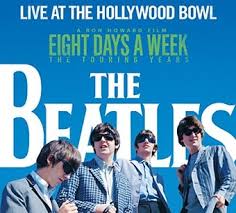
bibSOUNDTRACK: THE BEATLES-Live at the Hollywood Bowl (2016).

beatlesThis disc was released this year.  It is technically the soundtrack to the film Eight Days a Week: The Touring Years.  But regardless of the film, these are newly mastered recordings from two Beatles concerts at the Hollywood Bowl in 1964 and 1965 (which were released in 1977).  This disc has 7 songs from 1965 and 6 from 1964 (not including the four bonus songs).

The concerts were legendary for the shrill screams that the audience made during these shows–so loud that the recordings were practically inaudible and, apparently, even the band members had a hard time hearing each other.  Sounds like a nightmare, frankly.

Well, George Martin’s son has used some technology to make these recordings listenable.  They have reduced the shrill screams to a kind of low-level, high-pitched sound and, even better, they have fleshed out the band so they don’t sound like they are playing in a tin can.

Here’s some fascinating things about that Hollywood Bowl Concerts. Tickets cost $5.50 in 1964 and $3 in 1965.  WHAT?  In 1965, the band played for 33 minutes.  That’s it–not sure how long they played in 1964.

The band had no monitors on stage–those things that musician are always pointing at and asking the mixer to turn up.  So on many shows they couldn’t even hear themselves.  The fact that their harmonies are so good is really impressive.  The notes suggest that the open roof of this show meant that the shrill crowd noise was somewhat dissipated allowing them to hear each other a little better for these shows.

Evidently the track listing for this disc consists of the best original recordings from the two shows.  I’m not sure why they’re not played in sequential order, but whatever.  Perhaps the energy of the opening “Twist and Shout” (all 90 seconds of it) is a pretty great way to start.  While the band is spot on in their playing (sometimes it’s easy to forget that they are laying instruments as well as singing, since the voices are the big thing) you can hear Paul’s voice straining on “Can’t Buy Me Love” (which is cool).  Or John saying he thinks the next song “Things She Said Today” is on the new album over here.  This song–quieter and less dancey sounds pretty great and you can kind of hear the audience paying attention to it, so that when the band gets to the loud part the crowd really erupts.

I’m surprised at how many covers the band plays.  I realize these songs are picked from two set lists, but there are dozens of serious hits that they could have played instead of say “Roll Over Beethoven” or, and this is the most surprising thing to me, ending their 1964 set with “Long Tall Sally” rather than one of their huge hits.

It’s funny how crazy the crowd goes for Ringo when he sings lead on “Boys.”

I enjoy hearing them talk about their films–one we made in black and white, the other in color.  “Hard Days Night” sounds great but even more impressive is “Help!”.  John intros the song by saying, “we’d like to do another film song from a different film–coz we’ve made two.”  “Help!” is really impressive the way the band launches right into their harmonies on that first note–it sounds incredible all the way through the song.  Even when John strains hard at the end.

There’s not a lot of stage banter, but I did enjoy this one from 1964: “This next song is an oldie, some of you older people might remember it.  It’s from last year.  It’s called “She Loves you.”  I like hearing the rocking guitar line more prominently and the fact that they don’t go “ooooh” during the first time it’s supposed to appear, but when they do the next time, the crowd goes nuts.

As the disc ends, Paul asks, “We all hope you enjoyed the show.  Have you enjoyed the show?”  Apparently they have.

I’m not sure why the final four songs are listed as “bonus tracks.”  The inclusion of “I Want to Hold Your Hand” can’t be a bonus!  But the four songs (two from 1964 and two from 1965) also sound great.  The harmonies on “Baby’s in Black” are fantastic.

John Lennon said the fans didn’t come to listen, they came to love.  Regardless, the band played wonderfully and gave a great performance.  It’s nice to be able to hear it.

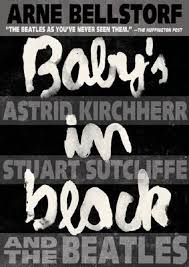
[READ: March 10, 2016] Baby’s in Black

This story is about The Beatles before they became THE BEATLES.

I didn’t know all that much about the early Beatles.  I knew that they were in Germany (although I don’t really know why, and I still don’t). But I didn’t know about all of the trials and excitements that happened to them there.

What I loved about this story is that while it is about The Beatles, it’s actually about Stuart Sutcliffe and his girlfriend Astrid Kirchherr and their impact on the nascent Beatles.

The story begins with Astrid’s ex boyfriend Klaus Voormann running to Astrid to tell her about this band that he just heard down at the Reeperbahn.  He said they all dressed the same and they really rocked (or whatever they would have called it back then).

The Reeperbahn was sketchy place at the best of times, so it was unlikely that anyone other than sailors and thugs would have seen this band iinitially.  But Klaus was so insistent that Astrid agreed to go.  And she was mesmerized by them.  She was especially taken with bassist Stuart Sutcliffe (although none of the fans knows their names at this point).  The band consisted of John, Paul, George, Pete Best on guitar and Stuart on bass. (more…)

Read Full Post »

sardine6SOUNDTRACK0 Tonne Seize [CST bonus] (2016).

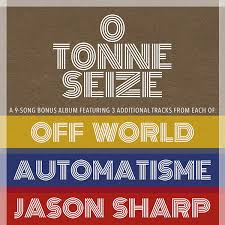
tonne0 Tonne Seize is a bonus compilation of three tracks each from Off World, Automatiste and Jason Sharp.  The collection is 41 minutes of music (not too shabby) and came with a pre-order of the three records (and is available on Soundcloud as well).

The first three songs are by Off World and the first two of those are remixes.  The original “Wonder Farm” is dominated by popping drum sounds.  There are some other sounds that go through the track but the base is mostly a kind of slow Asian melody.  The “Wonder Farm (Summer Crop)” mix removes those snaps and percussion entirely.  It focuses just on the music, which I have to say is far more enjoyable without the bangs.  “Primitive Streak” is a slow droning piece, while this compilation’s “Primitive Streak (Silver Mix)” doesn’t sound all that different.  It also removes the drums, and highlights the squeaky synth sounds and the overall drone tone.  It seems to emphasize and de-emphasize different instruments but otherwise sounds pretty similar. The final track  “Lost Meadow” is a pretty, delicate piano based piece with some twinkling of spacey synth notes.  It’s easily the prettiest piece.

The three Automatiste tracks do not quite follow the same naming convention as the actual disc, although the first track is called “Simultanéité 5.” It has slow beats and is basically two-note washes building on top of each other.  “Fragments continus” is a noisy piece with layered thudding drums (like heartbeats especially around the 1 minute mark) and drone noises that wash in and out.   About half way through what sounds like a melody appears amid the din, but it feels like it formed organically around the synths and drums which is pretty cool.   “Le Silence 3” opens with some jackhammer sounding drums and then almost easy listening synths.  The juxtaposition is interesting and by the end the song feels nicely dancey.

The final three songs are from Jason Sharp.  These three are quite different from his album because they really feature the saxophone to a larger degree.  “Plummeting Veins” opens with a heartbeat and some rumbling sax (that sounds like the opening of the Speed Racer TV show).   This track is under 2 minutes, the shortest he’s done by far, and the way the heartbeat speeds up as the sax plays some low rumbling notes is pretty cool. “Hear a Fading Cry” is a much longer number.  The heartbeat is quieter but the sax is much louder.  It sounds a lot like Colin Stetson in the low rumbling and noisy barking that the bass sax can produce.  It ends with some rather high-pitched squeaky sounds that I assume come from the sax, but which I can’t imagine coming from such a bass instrument.  It’s 7 minutes long although it takes almost 2 minutes to really get going.  And it swerves between loud and rumbling and then sort of menacing by the end,  “Ride On Into the Sweetening Dark” is perhaps the most conventional of Sharp’s songs.  It is a series of sax solo lines over a gentle tinkling backing drone.  Some of the solos lead to noisy wailing, but for the most part the line are pretty and jazzy.

It’s interesting how different these bonus tracks tend to be from the actual releases.  I enjoyed listening to these variants to see what else these artists are capable of.

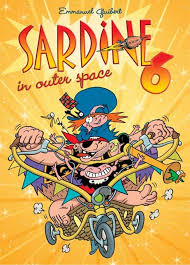
[READ: April 9, 2016] Sardine in Outer Space 6

Sardine is a children’s book published by First Second.  It was originally published in France (and in French) and was translated by Sasha Watson.  There are six Sardine books out.

The inner flap says “No Grownups Allowed (Unless they’re pirates or space adventurers).”  This is the final Sardine book.  And while I didn’t enjoy the first book much, by now I’m sorry to see the series end.

This book also has the fewest stories in it (only 9). (more…)

Read Full Post »

sardine5SOUNDTRACK: JASON SHARP-A Boat Upon Its Blood [CST119] (2016).

Layout 1Constellation records had been rather quiet this year in terms of new releases.  And then back in August they announced three new discs with this intriguing blurb:

Constellation’s three new fall releases by Off World, Automatisme and Jason Sharp are dropping on September 30th…  These new releases are wildly different yet satisfyingly leftfield albums that share an electric thread of sorts.  Electronic music strategies, technologies, histories and sensibilities come into play, in very diverse ways, with each of these debut records – making them stand out a little differently in the context of the Constellation catalogue perhaps, but also informing one another and making a lot of sense to our ears as an album trio (somewhat in the spirit of our Musique Fragile series).

This is the third of those three.

Jason Sharp has written this disc as “music written for amplified heart & breath,” and Sharp is credited with “playing” amplified heart, feedback, synthesizers and bass saxophone.  Other instruments listed are Pedal Steel Guitar, Violin and various percussive instruments.

From the Constellation site: “Using custom-built equipment to translate breath and heart rate into variegated sonic triggers, along with other modes of signal processing and in tandem with traditional instrumentation…[the album] deploys the human metronome of amplified pulse as a recurring undercurrent, with compositions that incorporate electro-acoustic and musique concrète strategies, drone, noise, electronics, methodical dissonance, tone poem, layered rhythmic and melodic figures, and improvisation.”

The disc opens with a trio of songs: “A Boat Upon Its Blood Pt.s 1, 2 & 3”  Part 1 begins with some quiet drones and pulses and what sounds (if you think about it) like water running through pipes or blood through veins.  It also like plectrum hitting strings or a musical rain stick.  The songs build in intensity until a pulse that sounds a lot like a heart beat (which it should) ends the track. This heart beat segues into Part 2 which is dominated by violins.  The violins seem to alternate between drones and dissonance with the pulses seeming to beat a bit faster in parts.  As this track ends, a martial beat takes over the drums, and that segues into Part 3 which has more drone sounds.   About midway through, new percussive sounds come in, changing the tone of the piece entirely.

Track 4 is “In the construction of the chest, there is a heart” is the most interesting of the bunch.  It has what I assume are several different heart beat sounds modified to create different percussion under various droning sounds. It really exemplifies the “heartbeat” aspect of the piece, which I thought would be more prominent in the disc overall.  The second half of the song is full of swishes and scratchy sounds which I certainly hope are the sounds of his blood pulsing through his veins.

“A blast at best” is a noise piece which sounds almost like the heart beats have been put through an autotune.  Midway through the song comes the bass sax playing some farting and pulsing sounds that add an interesting  melody to the sloshy noises.

Tracks 6 and 7 are another multi-part song “Still I sit
with you inside me Parts 1 and 2.”  Part 1 opens with a much more pleasant, albeit somber violin.  Slowly the heartbeats grow louder and more prominent.  The pulses increase and decrease although not necessarily with the intensity of the music.  The violins swirl and ebb, growing louder and more intense and then fading and seguing into the last track which opens with pretty guitars and accompanying violin.  About halfway through the song, the heartbeat resumes.  It come pulsing into the song louder and louder, dominating the whole thing.  And then with a few seconds left it builds a wall of feedback and noise that gives way to a cathartic echo.

This would be another string candidate for NPR’s Echoes.  Have you heard this, John Diliberto?

The disc notes that the piece was inspired by the Robert Creeley poem, “The Heart,” which I have included at the end of the post.

[READ: April 9, 2016] Sardine in Outer Space 5

Sardine is a children’s book published by First Second.  It was originally published in France (and in French) and was translated by Sasha Watson.  There are six Sardine books out.

The inner flap says “No Grownups Allowed (Unless they’re pirates or space adventurers).”  For the first time, Sardine was created without the help of Joann Sfar.  And I found this one to be my favorite one yet!

It seems like Sardine has really hits its stride with Book 5.  The author is having a ton of fun playing around with pop culture and with the idea that the characters know that there are books about them. It’s still a little weird that Supermuscleman is really the only bad guy and that he is always coincidentally where they show up, but that’s clearly not the point of the comic, right? (more…)

Read Full Post »

sardine4 SOUNDTRACK: AUTOMATISME-Momentform Accumulations [CST118] (2016).

Layout 1Constellation records had been rather quiet this year in terms of new releases.  And then back in August they announced three new discs with this intriguing blurb:

Constellation’s three new fall releases by Off World, Automatisme and Jason Sharp are dropping on September 30th…  These new releases are wildly different yet satisfyingly leftfield albums that share an electric thread of sorts.  Electronic music strategies, technologies, histories and sensibilities come into play, in very diverse ways, with each of these debut records – making them stand out a little differently in the context of the Constellation catalogue perhaps, but also informing one another and making a lot of sense to our ears as an album trio (somewhat in the spirit of our Musique Fragile series).

This is the second of those three.

From the Constellation site: “Automatisme is the electronic music project of Quebec-based producer William Jourdain, who has been self-releasing a brilliant series of albums and tracks under this moniker since 2013, exploring various intersections of drone, dub techno, electronica, ambient, electro-acoustic, and noise.”

This album is, indeed, very drone, dub techno, electronica, ambient, electro-acoustic, and noise.  There are six tracks: Transport 1, 2, and 3 and Simultanéité 3, 1, and 4.  The Transport tracks are all about 5 minutes and the Simultanéité tracks are all about 9 and they are interfiled on the record.

“Transport 1” seems to be all about the thumping drums. The synth lines are fairly simple and serve to propel the song along as almost an ambient dance track.  “Simultanéité 3” opens with some mechanical drone sounds and a beeping almost like a heart monitor.  The beeps change and then a new drum beat is added while fiddling synths tickle along the top of the song.  Things slow down and speed up and the track reminds me a lot of something you’d heard on NPRs awesome Echoes program.

“Transport 2” is more about drums. There are several different percussion themes going on–fat repeated drums, the main steady beat and then some low synth that runs through pretty much the whole thing.  “Simultanéité 1” is a drone song with a drum sound that is like a heart beat.  About a minute in the note changes and 30 second later the song takes on a different texture and pulse.  It remains largely ambient for most of the song.

“Transport 3” has more percussive sounds that make this track much faster than the others. The final track “Simultanéité 4” has what sounds like voices (although I assume they are not) echoing underneath the slow pulsing rhythms.

While the track listing alternates between drum heavy tracks and more mellow tracks, the whole disc has a very chill vibe.

[READ: December 5, 2014] Sardine in Outer Space 4

Sardine is a children’s book published by First Second.  It was originally published in France (and in French) and was translated by Sasha Watson.  There are six Sardine books out.

This time the inner flap says “No Grownups Allowed (Unless they’re pirates or space adventurers),” and this book had some of my favorite cartoons yet.

“Under the Bed” has the kids getting lost under Little Louie’s bed and finding all the monsters that hide there.  But Sardine’s adventures are so scary that the monsters don’t stand a chance trying to frighten him–they’re even a little afraid of Sardine, too.  Of course the kids have someone who they can go frighten. (more…)

Read Full Post »

dfwreadSOUNDTRACK: CHRISTIAN SCOTT aTUNDE ADJUAH-Tiny Desk Concert #477 (October 9, 2015).

aacsChristian Scott aTunde Adjuah and his septet play what he calls stretch music: “the particular type of jazz fusion he’s up to: something more seamless than a simple collision of genre signifiers.”

They note that even his appearance stretches traditional jazz: “You may note that he showed up in a Joy Division sleeveless T-shirt and gold chain.” It’s sleek and clearly modern, awash in guitar riffs, but also bold and emotionally naked.

Christian Scott aTunde Adjuah (not sure how to abbreviate that) is a trumpeter and he can hit some loud powerful and long –held notes.   It’s funny that when he bends over the trumpet grows quieter—those ic really are direction-based.

For the first song “TWIN” he does some impressive soloing over a simple and cool beat—piano and delicate guitar riffs (there’s also an upright bass and drummer).   After his lengthy solo there’s a flute solo that also works perfectly (if less dramatically) with the background music.  (Christian plays tambourine during her solo).  He says that this song is about being a twin.  His brother, Kyle Scott is a film director and for whom Christians scores the music.  Christian also explains that he comes from an African-American and Native-American background and that this song has rhythms as a sort of history of his family that touches on Mali, Senegal Gambia and The Ivory Coast and makes its way to the Caribbean, Cuba and into New Orleans.

He’s pleased to play the Tiny Desk Concert for an audience that appreciates “Music that has nutritional value.”

For the second song, “West of the West” he brings on a young alto-saxophonist who plays with his drummer in a different band. The song opens with a rocking electric guitar solo and then the jazzy band kicks in behind it.  The instrumental features a couple of solos by the saxophonist, the pianist and the bassist.

“K.K.P.D.” is a dramatic song for which he gives a lengthy back story.  Many years ago in his home of New Orleans, he was stopped by New Orleans police late at night for no reason other than to harass and intimidate him.  he was coming back from a gig.  He resisted and was in a serious situation and was seriously threatened—the story is long and very affecting, especially given how articulate (I know, terrible word, but true) and calm he is about retelling this horrifying story.  His pride almost made him do something ill-advised, but instead he channeled that pent-up frustration into a piece of music whose long-form title is “Ku Klux Police Department.”

He adds that we see things on TV about inner cities or the ninth ward and we believe them to be true.  Like that the neighborhood is happy that the police are clearing out the youth there.  We begin to think that the narrative is true, although the people who live there can tell you otherwise.  Despite the title and the origin, the is song is designed to reach a consensus to move forward –not to build derision or hate.  He says that we have to start working on that now, because if it doesn’t start now then our children will continue to inherit this situation.

It opens with a noisy guitar wash and fast drums.  It’s quite noisy and chaotic although it resolves very nicely into an almost sweet piano-based song with slow horns.  The middle of the song ramps up with some intense soloing from Christian.  I love how that segues into a very different section with an electronic drum and delicate piano.  Chritsian’s next solo is much more optimistic.  The final section is just wonderfully catchy.

When he introduces the band, he points out just how young some of his newest members are: Drummer Corey Fonville (another new member) used a djembe as a bass drum, and also brought a MIDI pad so he could emulate the sound of a drum machine; Lawrence Fields, piano; Kris Funn, bass; Dominic Minix , guitar (21 years old); Braxton Cook, saxophone (24 years-old) and Elena Pinderhughes, flute: 20 years old!

I don’t listen to a ton of jazz, but I really liked this Tiny Desk Concert a lot.

[READ: July-October 2016] The David Foster Wallace Reader

I’ve had this book since Sarah bought it for me for Christmas in 2014.  I haven’t been in a huge hurry to read it because I have read almost everything in it already.  And some of that I have even read recently.  But this summer I decided to read some of my bigger books, so this was a good time as any.

One of the fascinating things about reading this book is the excerpting in the fiction section.  I have never really read excerpts from DFWs longer books before.  And once you decontextualize the parts, you can really appreciate them for themselves rather than as a means to the end of the story.  This is especially true of the excerpts from Broom of the System and Infinite Jest.  But also just reading some of these sections as a short story makes for an interesting experience.

It was also very interesting to read the non-fiction all together like that.  These pieces come from difference anthologies, but they have thematic similarities  So, placing them together like that allows for really comparing the stories.

And of course, the selling point for most DFW fans is the teaching materials in the center of the book–an opportunity to look into the man’s mind at work shaping younger minds.

I have written about virtually everything in this book already (title links refer back to previous posts), so mostly these are thoughts about the pieces themselves and not a part of a whole. (more…)

Read Full Post »

SOUNDTRACK: action LIANNE LA HAVAS-Tiny Desk Concert #475 (October 2, 2015).

lianneLianne La Havas has a lovely, soulful voice. I didn’t think I knew her at all, although her song “What You Don’t Do” sounds really familiar. The chorus is a bouncy “It’s what you don’t do…it’s what you don’t say.”  But it’s the fast pre-chorus “I know what I got / and I know where were going / You don’t need to show it / I already know it all” that is really catchy.

I feel like the original is big and orchestrated.  But for this Tiny Desk it’s just her and a backing singer accompanied by a pianist who also sings backing vocals.

For song two “Unstoppable,” Lianne straps on a guitar and when she finally speaks–she has British accent!  “Unstoppable” is a gentle song with a cyclical guitar riff playing through the gentle pianos while all three voices soar.

It’s amazing how British she sounds after the second song–remarkable because of how unaccented her singing voice is.

On “Forget,” she plays guitar and there’s no other instrumentation.  This song sounds quite different from the others–the scratchy guitar isn’t really louder than the other songs, just much faster and more intense.  The real hook though comes in the chorus when all three sing a big loud “Forget!” in a memorable melody.

La Havas’ music veers towards R&B but never falls into the trappings of the genre.  She has some rock elements sand soul elements and her delivery is just charming.

[READ: July 8, 2016] Adventures in Cartooning Characters in Action

This is the fourth and (presumably) final book in the AIC series is called Characters in Action!  And as you see on the cover, the man screaming Action is a film director.  So this book is gong to take us on flights of (even more) fancy.

The book starts with the knight riding his faithful horse, Edward.  A fly goes by.  Sigh, it’s boring.

But as he rides off, he runs into a band of scoundrels–a viking, a wicked wizard an evil owl and an evil king and they are all there to do… evil!  And as they are talking about how evil they are, the real king (in rags) comes and says that he is the king.  The fake king says he looks like a beggar, then a real beggar says that the king is not a real beggar.  And then a big strong-looking knight looks at our favorite knight and says the he is no knight, either.  Egads, what is happening? (more…)

Read Full Post »

1987  SOUNDTRACK: GINA CHAVEZ-Tiny Desk Concert #472 (September 22, 2015 ).

ginaChavez’ voice is poppy but a little deep, almost muscular which I rather like. Or perhaps its just confidence, the blurb notes “the intense openness and warmth of her performances.”

“Fire Water” is primarily a capella and percussion (with interesting clicks and shakers and even a guy whispering “ahhh” ). A few bass notes enter near the end, but other wise it is a very stark song.

“Miles Da Millas” is dedicated to a fiend of a friend who died recently.  He loved Tiny Desk Concerts.  Whenever someone mentioned a new band he would say “But do they have a Tiny Desk?”  So this makes Gina feel like she’s made it  This song, a cumbia, is bilingual with the chorus in Spanish.  And her voice is just as strong if not more so in Spanish.   It’s fun when the percussionist yells and whoops and overall it’s a nice groovy song.  It’s a little weird that she hums a trumpet (quite well, admittedly) when there is an actual trumpet player in the band.  They take turns so I guess it’s kind of duet.

When introducing the final song, she says spent 8 months in El Salvador doing mission work teaching English in an all girls’ school.  Things are really bad down there, so she started a college scholarship fund called Niñas Arriba.  This song “Siete-D” is about a wild ride on the 7D bus from Soyapongo to San Salvador.  Soyapongo is the home of the MS13 gang, the place where guide books tell you not to go.

It’s a fun song (sung entirely in Spanish) with a cool “Sube! Hey! ho!” chant.  It’s a bouncy song with some great trumpet work.  There’s even a rap in Spanish

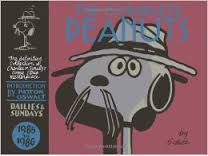
[READ: September 9, 2016] The Complete Peanuts 1987-1988

I felt like after the major highs of the last few books, this one fell into a bit of a repetitive pattern.  This is not to say there weren’t memorable moments in the book, but there were a lot of variations on a similar jokes (especially with Spike in the desert–how many different ways can you make a joke about a cactus looking like a person with his arms up?  About fifty, I guess).

But perhaps it seems like things have changed because On 1-11 1987, that heading that has been there for so long–the hand-drawn looking “Peanuts featuring Good Ol’ Charlie Brown” had been replaced by a computer-generated font that just says “Peanuts.”  It also felt like the drawings looked different somehow–thicker lines, somewhat less polished?  And in July of 1988 it seems like Snoopy looks rather different. His ears are much smaller for one thing.  That seems to go away though.  But it’s some time round here or maybe even in a previous book that Schulz started drawing circles for eyes on Snoopy from time to time–mostly to express distress or angry.  But Snoopy is meant to have dots or sixes for eyes–the circles always look weird.  And sometime they look poorly drawn, if I may say so.   Especially on October 12 1988 (he’s supposed to look aggrieved, but they still look sloppy for Schulz).

And then, a huge shock to the system!  The daily strips go from 4 panels to 3.  Three panels!  What gives?  Is it because many of his fourth panels didn’t really have a punchline so much as a commentary on the punchline?  It’s mind blowing!  After thirty some years, he is finally messing with the format! (more…)

Read Full Post »

1985SOUNDTRACK: JOAN SHELLEY-Tiny Desk Concert #473 (September 25, 2015).

joan When I first started listening to this Tiny Desk Concert, I thought Shelley was going to be singing more of a country music style.  But more careful listening revealed an early British Folk songwriting style.  Because I’d heard Richard Thompson talking about Sandy Denny recently, I  thought of her.  So I was pleased to see that the blurb (and Shelley herself) references Sandy Denny as well.

The Concert is Joan on acoustic guitar and Nathan Salsburg (she describes him: “my band, we are Joan Shelley”) on the second guitar.  They play beautifully together.

The songs, like “Easy Now,” are really pretty with a delicate finger-picking style from Shelley and fairly complex finger-picking soloing/accents from Salsburg.  But the best thing is her voice.  Clear and powerful–no warbling or hesitation, just clear beautiful singing.

I didn’t think I knew Joan Shelley, but “Stay on These Shores” sounds incredibly familiar to me.  She says that she is from Louisville Kentucky so it doesn’t make sense to her that she would write songs about the ocean.  She attributes it to the Sandy Denny lineage.  The way she sings the first line of this song is just hauntingly beautiful.  I really love this song a lot.

In “Not Over By Half” it is almost uncanny how much she sounds like a 1960s British folksinger.  Her delivery and phrasings are just amazing.  This is another beautiful song, all three of which came from her album Over and Even.

Shelley is an amazing force in folk music.

[READ: August 31, 2016] The Complete Peanuts 1985-1986

Schulz had been writing Peanuts for about 35 years when these strips came out.  Wow. It’s interesting to see how many themes have stuck around and how many have gone away or come back and been updated. I also love seeing the few pop culture references that he deigns to throw into his strips–things that he assumed would be eternal, I guess, or maybe things so ubiquitous he had to mention them?

Snoopy’s brother Spike is on the cover of this book.  I am somewhat surprised at how much attention he gets (especially since I don’t remember him at all).  The problem is that almost all of his jokes are about cactus.  I feel like Schulz was going for a loneliness angle, but it all seems to involved cactus “arms” or thorns.

The year starts off great for Patty because she won an essay contest on what she did during her Christmas vacation (she got a D- on the paper in school, however).  She even gets to read it out loud (where things don’t go so well).  Of course, she continues to get D miuses and in July 1986 she even get a tutor. He is quite snarky with her and she calls him Joe Sarcasm.  (There have been dozens of Joe ____ characters, although almost all of them have been aliases of Snoopy, this is one of the few for someone else).  Then she calls him Captain Tutor.  He shouts that his name is Maynard.  So Patty calls up Marcie to say she should meet him–he’s just her type…weird.  It turns out that Maynard is Marcie’s cousin (ha). Eventually Patty just throws him out.

For Valentine’s Day in 1985, Charlie has Snoopy pretend to be the little red-haired girl and Snoopy puts on a curly wig–is that the first insight into the girl’s appearance?  That week people are all hit by lost love.  It seems like an unusual and very specific emotion for Schulz to deal with–something he never really talked about before.  He’s certainly talked about lost loves, but never so directly.

Marcie continues to be one of my favorite characters.  Especially the way she picks on Patty.  Patty is still falling asleep in school all the time.  In Feb 1985, Marcie puts a binder on the back of her head, walks her up in front of the class and then shows off a “full-scale model of the human head” to the class.  Genius.  Patty doesn’t even wake up.

Linus decides that building a rock wall is good therapy.  It is suggested that he can do this instead of needing his blanket.  But let’s not go crazy.  Later, Linus tries to do his own laundry and Lucy catches him trying to stuff his shirt into the laundry detergent bottom

Every once in a while there’s a really wordy strip that I find very funny.  In March of 1985, Charlie is telling Sally a story from his grandpa about WII: “all the enlisted men were issued two pairs of shoes, but a lot of them men wore only one pairs so they could keep the other pair shined and looking nice under their bunks.  Battalion headquarters decided that the men should alternate shoes each day and to make to sure they did, the men had to lace their shoes on a certain way.  One day they had to wear the shoes which had the laces crossed and the next day they to wear the shoes which had the laces going straight across.”  Sally sensibly asks,. “How did they ever win the war?”

Sally is always asking her big brother for homework help, which he tends to refuse.  In March she says if he helps, he’ll get her everlasting gratitude.  When he doubts she knows what that mean she says “’til I ask you again.”

Sally has also been doing a lot of handwriting practice over the last few years.  Mostly it’s different pieces of punctuation (with funny comments about them).  In May 1985 she works on commas and possessives and quotation marks.  After telling Charlie all about it she says “stay tuned for the inside story of what goes on in the glamorous world of punctuation.”

And in some wonderful Sally mistakes that make me laugh: “behind the barn the farmer had a pastor” or “the walls were covered with naughty pine.”  For this one, she looks at Charlie and says “You looked like you were going to say something” and he wisely says, “not for anything in the world.”

In the realm of deliberate puns, Snoopy tells Woodstock to get a  job in a tree “you could be a branch manager.”  Sigh.

Pop culture: in May 1985 it is revealed that Woodstock has a satellite dish.  In August 1985 Patty reveals that she and Marcie are “mallies” :  They go to the mall to hang out.  But Patty is distraught that Marcie actually buys something there.  They even meet “a punker” which is snoopy with a kind of mohawk.  In October 1985, Sally does a presentation on Halley’s Comet saying that the next time it comes by will be in 2062–we’ll all be 80 years old when that happens.  [It passed by us in Feb 1986].  In May of 1986, Lucy starts a “swimsuit issue” campaign for the school paper.  She gets all the boys to wear swimsuits.  And in June 1986 Charlie’s desk comes equipped with an airbag.

In August of 1986, Linus asks Snoopy (the attorney) is he thinks cameras should be allowed in the courtroom.

August 1986 has Sally saying “I’ve decided to embark on a program of serious discipline. I’m going to eat properly, sleep properly and exercise properly.”  Charlie asks, “Then what?”  She replies, “You’re right, forget it.”

April 1985 sees an Easter Beagle strip (not as many of these as you might think).

There’s always baseball, and in April 1985 Charles mentions the new commissioner of baseball Peter Uberrroth (he took over in 1984).

There’s a lot fewer hockey references these days although Rerun is riding on his mother’s bike with a helmet and says people confuse him with Wayne Gretzky.  A few months later in March 1986 he has a Baby on Bike sticker on his helmet (That was a huge fad in 1985).

There’s not that much about football this year, although Sally wants to know why the guy is always holding up John 3:16 and then says she assumed it had something to do with John Madden.

There’s some tennis but not as much.  In March 1986 Molly Volley returns for a brief run with Snoopy.

Schulz must have been displeased about technological advances: Charlie tells Sally “if we watch TV all the time, we won’t have to learn to read.  if we use word processors and calculators we wont have to learn to write or do math.  Pretty soon we wont have to know anything.”  Sally replies “That’s when I’ll fit in.”

On the environmental front, in November Sally does a paper that she ends with “This report was written on recycled paper… no trees were destroyed to make this report.”

Summer camp in June of 1985 is all rain all the time. The only thing worse than all the rain is the prospect of a sing-along.  Ha  In 1986, the kids go to a survival camp which is pretty funny: “there are people out there who want to destroy our way of life.”

In August of 1985 Charlie and Sally are told that they are going to start taking the bus to school.  I love the way the joke plays out that they decide to walk instead, but the computer says they are on the bus, so they get in trouble.

Last book, Patty an Marcie went to a lot of Tiny Tots concert (Patty hates being called that). They always see Peter and the Wolf.  I wish that my kids went to Tiny Tots concerts.  But anyhow, in June 1985, Patty saves her ticket stub in hopes they will have raffle at the end–maybe she’ll win a violin.  Later in August 1986, Patty shows off her musical knowledge by asking why it is called Mostly Mozart, why not “Regularly Rachmaninoff, Principally Prokofiev, Frequently Franck, Largely Lehar, Chiefly Tchaikovsky [my favorite joke],  Mainly Mussorgsky, Essentially Elgar, Supremely Schubert or Generally Gershwin”.

Every once in a while Charlie gets a small victory.  Like when Linus tells him that he knows Charlie would like to cry but that he’s too macho.   Charlie gets excited “I am?!”

There’s few jokes of Woodstock getting attacked by a can of worms.  And even though i like Woodstock as a character a lot, for some reason, it’s always funny seeing him getting beaten up.

The World War I flying Ace continues to appear.  In a new twist he often speaks to Marcie in French.  Although in 1985, instead of the ace, he pretends to be Charles Lindbergh, the “Lone Beagle.”

Lucy continues to be a voice for women’s rights.  When Snoopy is flying over No Mans Land she asks what about No Woman’s Land.  So he changes it to “No Person’s Land.”

In February of 1986 Sally believes that the LL on the elevator button in the library stands for Louis L’Amour “that’s pretty neat having your initials on an elevator button.”

Schulz also taught me something new.  A ganglion cyst is also called a bible bump.  It is a cyst that forms on your wrists and they say you should hit it with a bible.  I’d never heard of this, but apparently it is a thing and quite common.  Of course Schulz uses it as an excuse to make a joke about the different translations of the Bible.

In another funny sequence, Snoopy and his scouts get a cannon.  And they fire it!  But it destroys not only his dog house but also Lucy’s doctor booth and even Schroeder’s piano (over the course of several strips).

In May of 1986 they elect a May Queen.  In Charlie’s school, Lucy is elected (which makes Patty say that the school has low standards).  In Patty’s school… Patty is elected!

Sally gets a great joke in.  A speed limit sign says 25 When Children are Present.  She says, “I never realized we had so much influence.”

And the best one liner of all: Sally has to go to the dentist “I have to go have my teeth criticized.”

Two new characters arrive in 1986.  One is a girl who is unnamed.  The joke with her is that Linus is two months older than her but she keeps referring to him as if he is an old man.

And in September 1986 we meet Tapioca Pudding.  Her dad is in licensing and she always talks about how her face is going to be everywhere.  Every time she talks to someone she introduces herself by her full name and everyone says “I know.”  Linus asks her out on a date (which makes Sally really jealous), but all she can talk about it herself and her licensing.  She asks Linus if she is boring him “No I always like to rest my face in a marshmallow sundae.”  Finally Snoopy the agent gets her a gig appearing at the Opening Ceremonies in the Olympic Game in L.A. (which were two years earlier).

In October 1986, Sally develops a new philosophy “Who Cares.”  From now on nothing bothers me.

When Patty wants to organize a football team, Marcie says the costumes aren’t feminine enough.  Then she wraps the football in a bow.  Patty gets mad and says she won’t kick a ball that’s wrapped in a bow, but Marcie says “The Icebox would”  Patty: “Refrigerator” Marcie: “Whatever.”

Lucy didn’t pull the ball away in 1985 (there was no mention of it).  But she does in 1986 with the excuse that it is a special moment to look forward to every year.  Then she pulls it away and sighs “it’s over before you know it.”  There’ also a Great Pumpkin joke in 1986.  Patty says she believes him about the Great Pumpkin.  And then jokes that “On Secretary’s Day the Great Secretary rises from her desk and rides through the city in a taxicab with notepads for all the secretaries everywhere.  And on Grandparents Day the Great Grandmother rises out of her condominium with cookies for all the grandchildren in the world.”

As 1986 draws to a close, Charlie gets up the nerve to wink at the red-haired girl. There is no reaction because she wasn’t in school that day.

And the musical jokes continue in December 19896 with Patty saying the enjoyed the concert because Marcie spent the whole time “Flauting with the flirtist.”

Patton Oswalt wrote the introduction.

He mentions how he bought the third Calvin and Hobbes treasury in 1988 and Schulz wrote the introduction to that.  Schulz’ introduction was full of praise for Watterson’s technical skill and all the wonderful details he put s into his strips.

Oswalt talks about how over the 35 years the strip went from kids writing with desktop inkwells and now he’s talking about answering machines.   Oswalt is dismayed that Schulz had to include an attorney as an imaginary Snoopy character–a sad reflection on our world

Read Full Post »
[ATTENDED: October 26, 20162016-10-26-19-47-23] The Monkees

Like most people of my age I used to watch The Monkees on TV.  I was never a huge fan, but I liked the show a bunch and used to sing the theme (and pretend to be The Monkees when at the beach).  But I never really gave them much thought as a musical act (especially when I got older and learned that *gasp* they didn’t even play on the songs!).

Then I learned that there are some people who really really like The Monkees.  My college roommate was a huge fan, and a fellow I’ve met through another friend is an even bigger one–Craig, good luck on that book, man!  I also found out that Sarah and her fried Joanna used to watch the show all the time and were mega Monkees fans (without the album buying).

So when the band announced their 50th (FIFTIETH!) Anniversary tour, I thought it would be fun to go and thought Sarah would really enjoy it.  Sarah saw them on a previous anniversary tour (25, maybe?), where Peter, Micky and Davy were presence (Mike doesn’t typically do this sort of thing).  Of course, with Davy passed on, we wondered just how much of a Monkees show this would be.

Well, I never realized that Mickey sang most of the songs.  It makes sense now that I think of it, he is the voice of the Monkees after all, but I’d assumed it was a bit more democratic.  So as long as Mickey’s there it is still a Monkees gig.  Having Peter there lends it some credibility (Mike did perform a couple of shows when the tour went through California). (more…)

Read Full Post »

19893 SOUNDTRACK: TEDDY ABRAMS-Tiny Desk Concert #491 (November 30, 2015).

teddyTeddy Abrams is a young piano player (he was 28 in 2015) and he was recently made conductor of the Louisville Orchestra.  Here’s some fun details from the Tiny Desk blurb:

For his first week on the job in Louisville, Abrams played jazz piano in the streets and took his orchestra players into nightclubs and African-American churches. PBS made a web series on his first season.  Earlier this year, he put two first symphonies on the same program — Brahms’ First and a debut symphony by Sebastian Chang, a composer still in his 20s — just to gauge audience reaction. Abrams filled the hall by giving out free tickets to first-time symphonygoers. He was happy to hear that many of them liked the new piece best, saying they appreciated hearing the composer introduce it onstage.

Abrams plays three pieces.  Two originals and one from Beethoven.  The first, “Big Band,” [from the blurb: swirls with jazz history. Hints of Thelonious Monk fly by, along with tips of the hat to the stride style from the early 20th century] is a fun and fast piece with Abrams playing fun and bouncy rhythms and very fast solo runs.  It’s infectious.

Abrams decided to begin the opening movement of Beethoven: Sonata No. 30 in E, Op. 109, I. Vivace, ma non troppo with a short improvisation, noting that the great composer was known for riffing at the piano for hours on end and was often getting into improvisation battles.  At he end, he says that we shouldn’t have been able to tell where the improv ended and the song properly began (although fans of the song could probably tell).  By the end of his life Beethoven was experimenting and some of his later stuff is pretty out there and modern.  That may be true if you know classical music, but it just sounded pretty to me.

He ends the set with a bluesy number, “The Long Goodbye,” [from the blurb: describing it as a slow ballad halfway between “My Funny Valentine” and “Somewhere Over the Rainbow”].  It is indeed a wonderful conglomeration of jazzy melodies.  A lovely and fun piece that is familiar but new at the same time.

[READ: July 26, 2016] The Complete Peanuts 1983-1984

As 1983 opens, Schroeder finally goes on the attack against Lucy “I have resolved not to be so serious..I’m going to try to laugh more” and then he pulls the piano out from under her and laughs like crazy.

For the past few books there have been a lot of jokes with Schroeder’s musical staves like Snoopy crawling through them.  Most have invoked Woodstock interacting with them.  As Schulz tends to do he will go on tears were he makes similar jokes every day for a week and then drops the joke for a while.  There’s also been some strips with Woodstock singing .  In one of my favorite, he is singing and the rain comes and actually washes the notes away from the stave. Even funnier is in Nov 1984 whee the rain comes and makes the notes droop really low.

For Valentine’s Day this year, Linus did not send Sally a card and she is very upset. Charlie says he should punch Linus in the nose.  But he says instead that Linus should just walk into his fist.  Charlie holds out his fist but Lucy walks into it instead.  That’s pretty funny.

More abuse for Lucy comes from Linus.  he gets a small bit of revenge by using Snoopy as a strange catapult and launching a snowball at her.

In the summer of 1983 while Snoopy is on a hike with the troops, the birds Bill and Harriet run off and get married and they stay in Point Lobos. (more…)

Read Full Post »

« Newer Posts - Older Posts »