Feeds:
Posts
Comments

Archive for the ‘Film & TV’ Category

SOUNDTRACK: BUILT TO SPILL-There is No Ememy (2009).

I’ve liked Built to Spill for quite a few years (I first encountered them on Perfect from Now On), but they always hang just below my radar when I think about great albums.  Nevertheless, many of their songs have landed on compilations I’ve made.

I listened to this disc a few times when it came out and when I popped it in again today I couldn’t believe how well I knew the whole album and how much I really, really liked everything on it.

This may in fact turn out to be my favorite BtS disc.  It isn’t radically different from other releases of theirs, but there’s some ineffable quality that seems to raise the whole disc above the fray.  The total package is fantastic.  The first few songs are quite short, just over three minutes each (which is surprising after the release of the live album which had so many extended songs and solos (a 20 minute cover of Neil Young’s “Cortez the Killer”).

Of course there are a few extended jams as well.  Four songs are over six minutes long (and three of them make up the last four tracks, so the disc does to tend feel a little heavy at the end–although “Things Fall Apart” has a horn solo (!) and “Tomorrow” has some unexpected time changes).  But the first long song, “Good Ol’ Boredom” has a great chugging riff that hold ups to the six minutes very well.  The nearly seven minute “Done” has a wonderfully effects-laden end section. The solo is pretty lengthy, but the backing music/sounds keep the whole thing interesting.  Of course, there’s also “Pat” a two and a half-minute blast of punk abandon.

Doug Marsch has a pretty high voice, but it never grows whiny or annoying, and in fact, it has a kind of gravitas to it.  And it is more than matched by the full band sound on the disc.  Martsch’s lyrics are also wonderfully unexpected [“Is the grass just greener because it’s fake?”].

BTS has made a great album and I’m going to have to revisit their back catalog too.

[READ: November 14, 2010] “Twilight of the Vampires”

This was a banner issue of Harper’s (I’ve felt kind of down on the magazine lately, but it made up for itself this month).  We have the Lydia Davis/Flaubert stories, a lengthy piece by William T. Vollmann and the cover story about Rupert Murdoch (which I won’t be posting about).  In fact, normally I don’t post too much about non-fiction (recent obsessions notwithstanding), but this particular piece was by Téa Obreht, one of this year’s New Yorker 20 Under 40.  Obreht had barely had anything published when they selected her, and so I figured it would be easy to keep tabs on her.  So here’s a nonfiction to add to her two stories.  (And it’s about vampires!)

Obreht is originally from Russia (her family is apparently still there).  As the essay opens, she is going to meet her mother in Belgrade for their trip to Serbia.  Their ostensible reason to travel to the Balkans is to find out about vampires.   (But when her mother injuries herself before the trip is about to commence, it convinces her mother that the whole trip is possessed by devils).

But why travel to the Balkans in search of vampires when her adopted homeland of America is overrun by vampires right now?  Because as she relates, our vampires are rather different from theirs. (more…)

Read Full Post »

SOUNDTRACK: DAVID CROSS-Bigger and Blackerer (2010).

I’ve liked David Cross for years, both in Mr. Show and everywhere else he’s been (I love comparing his nebbish character in Arrested Development to his obnoxious hippie in Running Wilde). And his standup is just fantastic.

This new(ish) CD (which has the same name but different content as the DVD) is wonderfully obscene and profane and all around hilarious.  What’s particularly fun is the nonsensical “titles” he gives to his bits (although these are more accurate than on his previous disc): “REALLY Silly Religious Crazies, I mean, Double, Triple Crazy!!” and “Random Goofabouts”

The disc opens with a song(!), a swinging song ala Tom Jones which Cross sings (his voice isn’t very good, but he’s never off key, which is something) which actually features some cool time changes and a bit of pathos.  But the jokes are very funny.  He opens with an extended bit about drugs (mostly about drugs he has taken).  It’s a bit long, but the details are hilarious and the payoffs at the end are wonderful.  I also enjoyed that the drug bits are a cautionary tale, yet he never turns preachy, in fact, he inverts expectations throughout.

The race jokes are really great too, especially the MLK license plate bit.  But indeed, Cross really shines when it comes to religion.  I’ve never really heard a riff on Orthodox Jews before, and his dismissal of Catholicism is brutal and short, but it’s the Mormons who get the bulk of his abuse (mostly because of the awesome power they wield), especially since the religion is a sham.

He’s also not afraid to make observations that will offend some (although no one who listens to him) but are spot on.  There’s an excellent bit about Obama haters who bemoan the state of the country but who will immediately fight any “elitist” who bemoans other aspects of the country.  And it very funny, indeed.

Cross has spent some time in England (filming The Increasingly Poor Decisions of Todd Margaret) and his British accent is quite good now (it’s used to excellent effect in heaven).  He also has great rapport with the crowd, who are exuberantly noisy.

This CD is an excellent introduction to Cross’ standup.  The jokes aren’t really timely (although the health care yelling bit will date it somewhat, except that the debate itself will go one for years to come, so maybe it won’t), so even if it’s five years from now, the jokes will still be funny.

Cross is not a delicate comedian and his jokes are not for the faint of heart, but, man, is he funny.

[READ: November 9, 2010] It is Right to Draw Their Fur

Polymath Dave Eggers is back with another fascinating (and fascinatingly bound) title.  This time, the collection contains a series of drawings.  Most of the drawings are of animals and they all feature words on them.  (This sort of thing: Picture + words + humor (from many different artists) is presented in a book that I am currently enjoying called More Things Like This).  Similar items also appeared in McSweeney’s 27 (you can see my Post about that issue here)).

Eggers explains in the introduction that he went to art school.  He was an aspiring painter and then a cartoonist and illustrator.  And in his down time, he spent a lot of time drawing animals.  And they are quite good.  Eggers’ art has an odd quality to it that I can’t quite put my finger on.  All of his pictures seem off in a small way.  It doesn’t make them bad at all, in fact, it actually makes you want to look at them more to see what is off about them.  (I think some people call that “compelling”).

The project comes in a hugely oversized cardboard sleeve (14 inches x 19 inches).  There are 26 large sized posters (they are folded and their unfolded size reaches something like 27″ x 37″).  There’s also a booklet which features even more of these drawings.  The booklet has an appendix with some drawings that are not animals (well, they are humans, so yes, they are animals).  And, the most peculiar part, there’s a bibliography.  The bibliography goes on for four pages and includes all manner of things from Sartre’s Being and Nothingness to Auel’s Clan of the Cave Bear to Gara’s The Presidency of Franklin Pierce to The Collected Poems of William Carlos Williams to Saint-Saens’ Le carnaval des animaux.

You can see two examples here.  In my opinion these are not the best combination art/words in the book (although the drawings are very good).  There are some other ones where the juxtaposition appealed to me much more.

The package is quite expensive (and justified–it is a lot of stuff and beautifully put together), but I have a hard time believing someone would spend $42 on it.  (I received mine as part of the McSweeney’s book club, so that’s nice.)

Read Full Post »

SOUNDTRACK: PATTI SMITH: “You Light Up My Life” (Live on Kids Are People Too) (1979).

While browsing YouTube, I found a bunch of fun videos from the kids’ programs Wonderama and Kids Are People Too.  And that’s where I found this video of Patti Smith, of all people, singing this dainty pop confection.

Her introduction to the kids is weirdly wonderful (she says she wanted to be a missionary).  And the kids ask some pretty good questions (I would think she was too scary to be on this show back then, but no one says anything remotely risqué).  And she seems to genuinely want to inspire the kids.  It’s really quite cool.

I listened to the original just now for the first time since the 70s, I’m sure.   Although the first verse doesn’t sound drastically different from Patti’s version, once the chorus kicks in, Patti transforms this song into an angst-filled song of loss.  And man, can Patti sing.

Check it out here.

[READ: November 7, 2010] “Boys Town”

When I first saw this author’s name I thought it was Jean Shepherd author of In God We Trust…All Others Pay Cash (otherwise known as A Christmas Story).  And  I thought that maybe it was going to be a quaint look at growing up.

It isn’t. (more…)

Read Full Post »

SOUNDTRACK: BELLE AND SEBASTIAN-World Cafe Live [downloaded from NPR] (2006).

This is a live in-studio session promoting The Life Pursuit.  David Dye conducts an interview between songs (we learn what “Funny Little Frog” is about and how “Seymour Stein” came to be).

Stuart and Stevie are animated and in good form and the band sounds excellent.  On “Funny Little Frog” in particular they sound like they’re really enjoying themselves.

The session is only 25 minutes long, but they play 4 songs: “Funny Little Frog”, “Meat and Potatoes,” “Seymour Stein” and “Sukie in the Graveyard.”  It’s worth a listen and it’s available here.

[READ: November 6, 2010] “What Separates Us from the Animals”

For some reason I always put off reading T.C. Boyle stories, even though I invariably enjoy them.  And this was no exception.  I saw that it was a fairly long story and I waited to read other things in this issue of Harper’s (Susan Faludi–where has she been all these years? and another NASCAR article–my second one in a few months after the article in McSweeney’s, which is pretty surprising since I’ve never seen more than a second of a race).

But back to Boyle.  I loved the technique involved in this story.  The narrator is a critical woman who makes claims towards being reasonable about her criticisms.  And the thing is, her criticisms are entirely justified and yet her attitude makes you want to disagree with her. It’s a very cool conceit–an unlikable narrator whose opinions happened to be your own.

What she’s critical of is the new doctor who arrives on their island (I’m gathering it’s Nantucket).  He was picked out of a couple of applicants to be the island’s only doctor, handling basic problems and issues (especially during the summer tourism season) but always with the understanding that serious problems would have to go to the mainland.  In addition to his salary he would receive free lodging in an older, historic house.

She met him on the night of his arrival in order to get him set up in the house.  She immediately invited him to dinner. He accepted for the following night and arrived at their own beautiful house in paint-spattered jeans and dirty work boots.  He ate well and then fell asleep on their couch.  Obviously, this did not set things off on the right foot.  But what was worse was that this dirty demeanor spilled over into the rest of his life: his car has a flat tire for two months and worse, his examination office is filthy too (something I’m totally on board with criticizing).  They’re also concerned with the state of the historic house, which no one has seen yet–what no invitations to cocktails? (more…)

Read Full Post »

SOUNDTRACK: GWAR on The Joan Rivers Show (1991).

Because this story is pretty, nay, really gross, I wanted to find a suitably gross song to attach to it. I considered Cannibal Corpse and Carcass, but I found that most of the lyrics were too hard to understand.  And then I hit upon Gwar.

I was trying to pick my favorite Gwar song (actually I only know their first two albums), and then YouTube pointed me to this absurd interview.

I always enjoyed the premise of Gwar, and I think that Scumdogs is a wonderfully hilarious album.  This interview (around the time of the release of Scumdogs) is really funny.  They actually make Joan Rivers speechless, and they play their act wonderfully straight.  I’d never watched a second of Joan’s show, and won’t watch any more than this clip, but seeing Oderus Urungus and Beefcake the Mighty on a talk show is pretty awesome.

Check it out here.  Sadly, there is no song played live.

[READ: November 5, 2010] “Guts”

My coworker suggested I read this story.  And I know from past experience that if he suggests something it will be slightly, shall we say, askew.  When a fellow coworker who had also read it overheard the suggestion she groaned in a way that confirmed my suspicions.

I’m not exactly sure what’s going on in Haunted.  My coworker said it was a short story collection and yet the book clearly says Haunted: A Novel.  I browsed the back and I get the sense that the book is a whole bunch of people writing /telling stories, but I didn’t investigate too thoroughly (I will likely read the whole book one of these days just to find out).

So, anyway, yeah, “Guts” is pretty disturbing.  It begins with a guy telling stories about the creepy/weird things people do to get off.  More specifically it talks about the injuries people sustain while trying to get off. (more…)

Read Full Post »

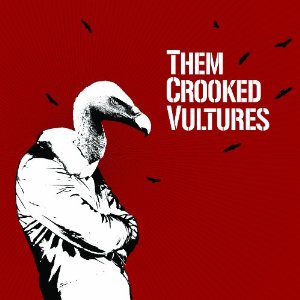
SOUNDTRACK: THEM CROOKED VULTURES-Them Crooked Vultures (2010).

So whose group is this?  Dave Grohl’s? Josh Homme’s? John Paul Jones’? (This question is kind of answered in the excellent Austin City Limits episode).  But while the question is a but silly, it’s also not.  This band sounds like Josh Homme (who pretty much makes into gold whatever he does) playing his own blend of rock over what is undeniably Led Zeppelin’s bassist.

There are times when it is so evident that JPJ played classic Led Zep riffs that you almost think Vultures are just ripping off Led Zeppelin.  Until you realize it’s the same guy and therefore it’s totally okay.  And Dave Grohl…after years away from the drums, it’s like he has a new vengeance to beat the crap out them.  I don’t know if his style is unmistakable, but once you know it’s Grohl, it’s very obvious that it’s him.

And the songs are really great.  A cool mixture of Homme’s Queens of the Stone Age sleaze within a solid, classic rock framework.  Many of the songs have monster, stomping riffs that are catchy and fantastic.  The longer songs (5 are over 5 minutes) loosen the band up a bit, with some jamming and fun middle sections.  But when they’re not jamming, the music is tight and fast and loud, and they play off of each other wonderfully.  There’s not a bad song in the bunch.

A few times while listening to the disc, I’ve felt that maybe it was a tad long (66 minutes of non-stop music).  But since this is ostensibly a one-off project, why shouldn’t they pack the disc full of everything they can?  Of course, if they can make a second album, that is as cool and interesting as this, I’ll welcome it right away too.

[READ: November 23, 2010] Scott Pilgrim’s Finest Hour

I have yet to see the movie of Scott Pilgrim (primarily because I never get to the movies anymore, but also because the DVD hasn’t come back at my library yet).  But I’m pretty psyched that I was able to read the final volume before seeing the movie. [I’m also hugely embarrassed to be so out of the loop that I didn’t realize the book came out BEFORE the movie–come on!]

But now, behold, the climax of this excellent series.

To summarize: Scott Pilgrim (the guy with the sword up on the cover) is in love with Ramona Flowers.  But in order to win her completely he must battle her seven evil exes.  The battles are video-game inspired (and are consequently surreal and funny).  And the revelation of the individual exes is also amusing.

This final volume is somewhat surprising in its contemplativeness.  While longing and depression are par for the course in the series, this volume was surprising for its early lack of action (leading up to the final showdown of course). The great news is that O’Malley handles this non-action with skill, and scenes of Scott moping and slouching around are amusing, not dull.  There’s also a great deal of introspection (again, handled deftly).  All of this navel gazing makes sense because at the end of Vol. 5 Ramona disappeared with neither explanation nor clue. (more…)

Read Full Post »

SOUNDTRACK: TRACY BONHAM-Live on Mountain Stage, September 29, 2010 (2010).

I loved Tracy Bonham when she first came out.  Her EP and first LP were amazing explorations of controlled anger with great bursts of violin.

As with many angry songwriters from the 90s, Bonham seems to have become, shall we say, happier.  She has a new album out this year called Masts of Manhatta.

I haven’t heard the album, so I don’t know if this Mountain Stage performance represents it well or not.  I’m guessing that the Mountain Stage setting has made it somewhat more mellow than the original (steel guitars and fiddle solos?), but that may not be the case.

Regardless of the tone of the album, the songwriting tricks that Bonham has always employed are still in evidence here.  In fact, even though I’d never heard these songs before, the chord progressions (and of course, her voice) make these songs sound distinctly hers.  And lyrically she’s still clever as anything–witness most of the lyrics to “We Moved Our City to the Country”  which also features a very conventional fiddle (no, not violin) solo.

It seems like Bonham has grown as an artist and is exploring lots of different styles. And although I really love her early rocking stuff, and I was a little concerned that she had gone soft, it’s clear she’s just channeled her hardness in a different direction.  She’s also got great stage presence.

Manhatta here I come.  The show is available here.

[READ: October 12, 2010] “The Third and Final Continent”

Jhumpa Lahiri was the final writer in the 1999 New Yorker 20 Under 4o issue.

I have heard such wonderful things about Jhumpa Lahiri, and I have been intending to read her novels and short story collections for quite some time.  I’m a bit saddened that this is the first fiction by her that I’ve read.  But it was an excellent place to start.

The story is a masterful telling of what, even the main character admits, is “quite ordinary.”  And yet it is touching and moving and a wholly realized experience.  [DIGRESSION: I have been listening to old interviews with David Foster Wallace and in most of his interviews he argues that good writing should be “real” as opposed to ironic and sarcastic.  He worries that hipster irony has eroded people’s ability to tell real stories.]  Well, this is a very real story.  It is simple and honest and wholly believable–just what the doctor ordered].

The story opens with an Indian man leaving India for London in 1964.  In 1969 he gets a job offer to work in the library at M.I.T.  Before leaving though, he confirms his arranged marriage, meets his bride and officially weds.  But days later he has left for America with the intention of her following in about six weeks.  He lands in Massachusetts on the day of the moon landing.

After staying at the YMCA, and adjusting to American life, he finds an apartment at an old woman’s house.  He tells the old woman that he is married bit she is insistent  that he has no female visitors.  The old lady is strict and a little crazy (she makes him marvel about the moon landing on a nightly basis).  And yet, despite herself, it is clear that she approves of this polite man. (I was a little surprised that she would be so approving of a foreigner, but maybe she was more progressive than I give her credit).

And the bulk of the story is made up of his life in this small apartment with this ever-present landlady who he feels somewhat indebted to, even though all he really owes her is $8 a week. (more…)

Read Full Post »

SOUNDTRACK: WEEZER-Hurley (2010).

In my head, no band garners as much debate as Weezer.  According to this article, a man offered them $10 million to break up.  Even I go back and forth about whether they are great pop song writers or incredible sell outs.  I mean, look at one of the items on their thanks list for Hurley: “Dodge–makers of the timeless Challenger.”  Is this ironic or not and if not, does it matter?  I’m also torn by Rivers Cuomo’s Harvard degree, which I would think means he would write intellectually rigorous songs–and yet he never does.

But what of it?  Let’s talk about the music.  It has dawned on me that the closest band to compare them to is Cheap Trick.  They write poppy songs with often heavy guitars that are completely sing along-y but are in no way alternative to anything.  And yet everyone loves Cheap Trick, so why not love Weezer, too?

Hurley is no different.  Each song is 3 minutes of pure pop (for crying out loud Desmond Child is on one track–put one in the sell out column).  But they also have some odd fans on this disc: the crew from Jackass sings backing vocals on “Memories” and Michael Cera plays mandolin and sings backing vocals on “Hang On” (although you can’t hear any of them really).  “Hang On,” by the way is their most Cheap Trick-y song to date.

“Unspoken” features a flute and acoustic guitars until about two minutes into a three-minute song.  Then it bursts out of acousticland and into heavy rocking guitars.  The one song I don’t get is “Where My Sex?” which I suppose is the controversial song on the disc.  He’s clearly talking about socks but he keeps saying sex.  I really have no idea why.  It’s not funny, even remotely.  It’s just an odd decision.  And I would say I rather dislike the song, but the chorus is great, as is the totally unexpected third section (which is like  pop song unto itself) that comes in 2 and a half minutes out of nowhere.

“Smart Girls” has to be ironic, but who knows anymore.  To me the most interesting song is “Brave New World.”  It eschews the standard big-chords-for-choruses format they’ve been using with a much heavier guitar and single guitar notes in the verses.  (Although the chorus is, once again super catchy).

My version of Hurley has bonus tracks which are separated by an interesting 10 seconds of string music.  The bonus tracks include a cover of a song from Yo Gabba Gabba ( I really must watch that show some time).  There’s also a great cover of Coldplay’s “Viva La Vida” (in many ways Weezer is like a harder rocking version of Coldplay in terms of success and obvious sellout possibilities).  Although this live version shows that Rivers’ voice is no match for Chris Martin’s.

“I want to Be Someone” is an earnest acoustic solo track while “Represent” (Rocked Out Mix) is one of the heaviest things they’ve done.  I assumed the original was on Raditude, but it’s not.  Evidently it’s the unofficial song of the U.S. World Cup soccer team.  Huh, who knew?

So yes, it seems that they’re pretty much sell outs.  And yet for thirty minutes (all of their discs are so nicely short) it’s easy to stop worrying about “indie or not” and just sing along.

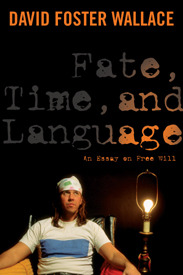
[READ: November 7, 2010] Fate, Time and Language: An Essay on Free Will

First I wanted to thank Columbia University Press for sending me an Uncorrected Proof of this book. I was pretty excited to read it, but to get it a few weeks early was even cooler (and, no, this won’t have any impact on my review).

Second, I wanted to state exactly what this book IS (because I wasn’t entirely sure myself).  The book is a reprinting of David Foster Wallace’s philosophy graduate undergrad thesis.  However, rather than just publishing the thesis (and giving us a short book or a long book with one sentence per page), Columbia University Press has packed the book with a great many essays that help to contextualize the thesis.  The Preface by Steven H. Cahn & Maureen Eckert explains this quite neatly.

So, my (briefer) version of the background: DFW’s thesis is about Richard Taylor’s article “Fatalism” (1962).  CUP has also included Taylor’s initial article (so we can see what DFW is talking about).  And even more than that, when Taylor’s article was initially published, it caused a bit of controversy and a lot of responses.  So, to get a sense of everything that DFW was working with (and against), this book also includes the intellectual dialogue: articles that range from four to ten pages (and also include a dense of Taylor by Steven H. Cahn himself (published in 1964).

Part II of the book includes an introduction by Maureen Eckhart and DFW’s essay.

Part III is a brief look at DFW as a student written by a former professor, Jay Garfield.

Before I get to the meat of the book itself, I wanted to say that I didn’t know anything about this essay.  And I’d thought about this thesis as possibly an interesting piece of philosophy from an author whose work I greatly admired.    Well the introduction to this book states in pretty certain terms that my thinking about this thesis is a massive understatement.  For, in fact, DFW’s thesis undermined Taylor’s argument in ways that no other argument had been able to do before.  His thesis more or less repudiated Taylor’s original essay.  The thesis also won the Amherst University Gail Kennedy Memorial Prize in Philosophy (and a wonderful piece of trivia: DFW’s father James won the same prize in 1959).  So, yes, this isn’t just a graduate undergrad thesis, this is real philosophy.

On to the book: (more…)

Read Full Post »

[LISTENED TO: End of October 2010] Brief Interviews with Hideous Men

There are three options for listening to Brief Interviews.

The first version is the original audio cassette which is read entirely by DFW (1999).  It’s out of print but you can download the audio for free at the David Foster Wallace Audio Project. The second version is the newly released audio book that coincides with John Krasinski’s film (2009).  This CD features some of the readings by DFW although most of the actual interviews are read by the actors from the film (see below for all details).  The third option is a collection of staged readings which were created by The Howling Fantods Brief Interviews Project.  They are available at the site and at the David Foster Wallace Audio Project.  [UPDATE Nov. 8: For the sake of accuracy, I wanted to state that George Carr is responsible for all of the work down for these recordings.  The Howling Fantods site simply hosted the results].

None of these recordings include all of the stories from the book.  Although the stories that they do include are unedited (this is officially listed as “unedited selections from the book”).  The stories that are not included in any of these recordings are:  creepy organ music

  • “The Depressed Person”  [this would have been a tour de force to read]
  • “The Devil Is a Busy Man”
  • “Think”
  • “Signifying Nothing”
  • Datum Centurio” [I can’t imagine trying to read this out loud]
  • “Octet”
  • “Adult World (I)”
  • “Adult World (II)” [I would have liked to hear how these were handled]
  • “The Devil Is a Busy Man”
  • “Church Not Made with Hands”
  • “Yet Another Example of the Porousness of Certain Borders (XI)”
  • “Tri-Stan: I Sold Sissee Nar to Ecko” [this is my least favorite bit of DFW work and I would have really liked to have heard it read aloud to see if I could get anything more out of it].
  • “On His Deathbed, Holding Your Hand, the Acclaimed New Young Off-Broadway Playwright’s Father Begs a Boon” (more…)

Read Full Post »

SOUNDTRACK: BROKEN BELLS-Broken Bells (2010).
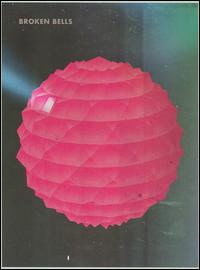
When I first played this disc I was really disappointed by it.  I’ve grown to expect crazy magic from Danger Mouse, and I assumed that this collaboration with James Mercer of The Shins would be crazy awesome.  But it seemed very mellow to me.  Mellow in a way that just kind of sat there.  So I put it aside for a while.

Then I listened to it again a little later and I found that I really liked it this time.  In fact, it rapidly grew into one of my favorite releases of 2010.

The disc is a wonderfully paced mixture of acoustic guitars, interesting keyboard sounds and, often, downright bizarre electronic choices (subtle, yet bizarre).  The weird sounds that open the disc, a kind of backwards keyboard, are disorienting but also very catchy.  And the song itself is instantly familiar.  It’s followed by “Vaporize” a simple acoustic number that bursts out with some great organ and (very) distorted drums.  It also features a fascinating horn solo!

“Your Head is on Fire” settles things down a bit with a mellow track which, after some cool introduction, sounds like a  pretty typical sounding Shins track (ie, very nice indeed–and more on this in a moment).

“The Ghost Inside” feels like a ubiquitous single.  I’m not sure if it is or if it’s just so catchy (with dancey bits and hand claps and a great falsetto) that it should be everywhere.  “Sailing to Nowhere” reminds me, I think, of Air.  And the great weird drums/cymbals that punctuate each verse are weird and cool.

One of the best songs is “Mongrel Heart” it opens with a western-inspired sound, but quickly shifts to a quiet verse.  The bridge picks up the electronics to add a sinister air (and all of this is accompanied by nice backing vocals, too).  But it’s the mid section of the song that’s really a surprise: it suddenly breaks into a Western movie soundtrack (ala Morricone) with a lone trumpet playing a melancholy solo.  And this surprise is, paradoxically, somewhat typical of the disc: lots of songs have quirky surprises in them, which is pretty cool.

Having said all this, there are a few tracks where it feels like the two aren’t so much collaborating as just playing with each other.  And that may have been my initial disappointment.  I was expecting a great work from a combined powerhouse, and I think what we get is two artists writing great stuff while seemingly respecting each other too much to step on each others toes.

There is another Broken Bells disc in the works.  And I have to assume that they’ll feel more comfortable with each other and simply knock our socks off next time.  But in the meantime we have this really wonderful disc to enjoy.

[READ: October 21, 2010] The Broom of the System

It dawned on me sometime last summer that I had never read DFW’s first novel.  I bought it not long after reading Infinite Jest and then for some reason, never read it.  And by around this time I had a not very convincing reason for not reading it.  DFW seemed to dismiss his “earlier work” as not very good.  I now assume that he’s referring to his pre-Broom writings, but I was a little nervous that maybe this book was just not very good.

Well I need not have worried.

It’s hard not to talk about this book in the context of his other books, but I’m going to try.  Broom is set in the (then) future of 1990.  But the past of the book is not the same past that we inhabited.  While the world that we know is not radically different, there is one huge difference in the United States: the Great Ohio Desert.  The scene in which the desert comes about (in 1972) is one of the many outstanding set pieces of the book, so I’ll refrain from revealing the details of it.  Suffice it to say that the desert is important for many reasons in the book, and its origin is fascinating and rather funny. (more…)

Read Full Post »

« Newer Posts - Older Posts »