Feeds:
Posts
Comments

Archive for the ‘Fears’ Category

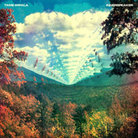
SOUNDTRACK: TAME IMPALA-“Lucidity” (2010).

I heard this song on the NPR’s 5 Artists You Should Have Known in 2010.  The album, Innerspace, is only available in Australia (imported on Amazon for big bucks) but I guess that’s why people download music.

This song is really cool. It feels very My Bloody Valentine to me.  However, inevitable comparisons to The Beatles abound, but that’s mostly in the vocals (which is kind of funny since they are Australian).  But it’s really a very sixties British vocal sound–not unlike early Who).

The big difference comes in the music which is psychedelic and wild in ways that The Beatles never quite managed.  There are great big washes of noise, and the sound quality sounds retro, even though it obviously isn’t.  Comparisons to the great Swedish band Dungen are not misplaced either.

I’ve listened to a few more tracks by them on YouTube, and I think this album could easily be one of the best of 2010 if only more people could hear it!

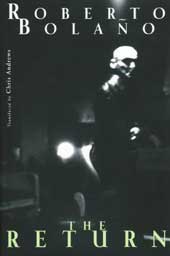
[READ: January 3, 2010] The Return

With the completion of this collection of short stories, I have now caught up with all of the published works of Roberto Bolaño (in English of course).  [The next book, Between Parentheses, a collection of nonfiction, is slated for June].

So The Return contains the 13 short stories that were not published in Last Evenings on Earth.  That collection inexplicably took shorts stories from his two Spanish collections Llamadas telefónicas (1997) and Putas asesinas (2001) and combined them into one collection in English.  It wasn’t quite as evident in Last Evenings, but it seems more obvious here that the stories in Putas asesinas are grouped together for a stylistic reason.  So, to have them split up is a bit of a bummer.  And yet, having them all translated is really the important thing.  And, again, Chris Andrews does an amazing job in the translation

This collection of stories was very strong.  I had read a few pieces in Harper’s and the New Yorker, but the majority were new to me.  Bolaño is an excellent short story writer.  Even if his stories don’t go anywhere (like his novels that never quite reach their destination), it’s his writing that is compelling and absorbing.

This collection also had some different subject matter for Bolaño (it wasn’t all poets on searches). (more…)

Read Full Post »

SOUNDTRACK: RADIOHEAD-OK Computer (1998).

The Bends showed amazing maturation for Radiohead, but OK Computer was like going from black and white to color.  It opens with “Airbag” a blast of music, oddly off kilter and unsettling but which immediately brings you into a great riff.  About midway through, the song splits in stereo with two competing solos vying for attention.   It ends with a loud stretched out chord.  And then comes one of the most bizarre singles around.  A nearly 7 minute multi-segmented song which, the first time I heard it, I couldn’t even find a melody.  I rather wish I could go back to that naive time, because my mind was blown away by the outlandishness of the song.  Now I know all the melodies and I think it’s just brilliant.

The minor chords of “Subterranean Homesick Alien” are accented with outer space sounds and yet despite its subject (alien abduction), the song is pretty well grounded: a simple, easy rocking track.  It’s followed by “Exit Music (for a Film)”, a gorgeous building minor chord song that opens with simple acoustic guitars and slowly builds to a scorching rocker (when the drums kick in at nearly 3 minutes, it’s like a wake up call).

“Let Down” is another slow builder, although it features a much more singable verse and chorus structure (it’s incredibly catchy).  It’s followed by “Karma Police” another catchy monster of a song.  It starts with a pleasant enough piano riff and features the politely sung threat: “this is what you get when you mess with us” and the beautiful falsettoed apology: “for a minute there I lost myself.”

It segues into the odd 2 minute computer-voice-recited (and barely listed as a track) “Fitter, Happier.”  This song foreshadows future Radiohead experiments.  It seems like a blow-off track, a filler, and yet like so many of the newer Radiohead songs, it works like glue holding the big hits together.  Check out how weird, wild and intricate the music behind the voice is.

“Electioneering” is one of the noisiest, most raucous songs in the Radiohead catalog.  It opens with this steel guitar sounding riff and crashes in with loud, distorted guitars and all kinds of drums.  Thom Yorke’s vocals are really loud in the mix, so when he gets to the bridge it’s practically a wall of noise, but listen to the great ascending and descending guitar riffs behind his vocals.  They’re really intriguing.  As is the skronking noisy guitar solo.

“Climbing Up the Walls” has all kinds of insane sound effects going on in the background of one ear (as befitting the title).  It’s a drum-heavy track with eerie almost unadorned vocals (until the very end when Yorke goes berserk).  It segues into the most delicate track on the disc, “No Surprises.”  The chorus of “no alarms and no surprises, please,” has always been very affecting.  And the delicate bells that adorn the verses are a very nice touch.  The penultimate track, “Lucky” is a sort of optimistic track, despite its mellow music and, I suspect, really not very optimistic ending. But the utterly uplifting scream of “it’s going to be a glorious day, I feel my luck could change” is spine tingling.

I feel like “Lucky” is such a great ending song that I tend to forget the final track, “The Tourist”.  It’s a slow, drawn out  track…”idiot, slow down.”  It’s probably my least favorite song on the disc, but it’s kind of a good ending after all of the high points of the disc.

And with the final bell of the final song, Radiohead became untouchable.

[READ: December 29, 2010] “Escape from Spiderhead”

George Saunders must live in a dark, dark world.  His comedy is dark (but very funny) yet I feel he is often quite under-served when people refer to his as a funny storyteller.  This story, which actually has many funny elements, is incredibly dark.  And even though I laughed out loud at a few things, no one comes away from this story happy.

One of the great things about Saunders is his almost obsessive mockery of corporate/medical culture.  He has more trademarks in his story than anyone I’ve ever read (even if they are all for things he has made up).  Now to me, that’s funny in itself (especially the names he gives them), but it serves a much more telling purpose: a portent of a very dark future.

This story is set in a lab, where the main character, Jeff, is being communicated with by Mr Abnesti (a very hard name to keep straight).  Jeff is in a room with Heather, and both are being fed the experimental drug ED556, a shame inhibitor.  And so they rip off their clothes and have at it (he was obviously given some Visistif™ because they do it three times).  They are also given some Verbaluce™ which helps them elucidate their experience (from more than just grunts and moans).  This Verbaluce™ is essential to all of their experiments because without their comments, the proceedings are undocumented. (more…)

Read Full Post »

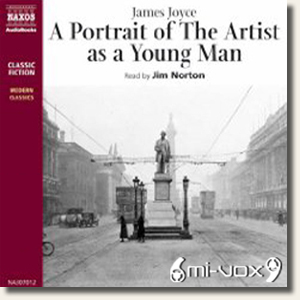
[LISTENED TO: November through December 2010] A Portrait of the Artist as a Young Man

I initially ended this post with: “Even though this audio was unabridged, it felt a bit like hearing an abridged version.  I suspect I shall have to actually read the novel again in 2011 to see what I missed.”  Well, I assumed that the audio was unabridged.  But now I see that there is another recording which is 7 discs as opposed to my copy’s 3 discs.  Gadzooks!  In tiny print on the back of the box, I see now that this is abridged.  NO WONDER I felt like so much was left out of the story.  It actually made me think that the story wasn’t all that coherent.  As such, you can kind of disregard this post until I listen to the unabridged version (which is available free for download here).

So, back to my initial review:

I was listening to this audio book while exercising.  The fact that it took me as long as it did to finish the audio book is more of a testament to my lack of exercising than the book itself.  Although I will say that unlike Dubliners, I found that listening to this book (and again, perhaps it was the distance between listenings) to be somewhat unsatisfying.  And of course, as with all of these Naxos CDs, the vocals are recorded so quietly (except when he starts screaming–the hellfire sermon is so loud it scared my family upstairs) that you really have to try to listen hard to hear the whispers.  The final chapter–Stephen’s diary–is read so quietly it was hard to hear over the exercise machine, even with the sound up all the way.

So this is the story of Stephen Daedalus before Ulysses, when he was, as the title states, a Young Man.  My favorite memory of reading this book was when I read the opening aloud to a sick friend who thought that I was messing with her:

Once upon a time and a very good time it was there was a moocow coming down along the road and this moocow that was down along the road met a nicens little boy named baby tuckoo….

Stephen is of course, baby tuckoo, so this novel is more than just the young man days.   But from this baby story, we quickly jump to Stephen at school and we see an episode that impacted his whole life: boys who were teasing him pushed him into a stagnant pool of water. (more…)

Read Full Post »

SOUNDTRACK: All Songs Considered Year End Music Roundup (2010).

Every year, I like to check various sources to see if there were any albums that I missed.  My definition of good resources: allmusic, amazon, pitchfork.  (There’s another fascinating list available here at Best Albums Ever, a site I’ve never seen before, and I have a large portion of the Top 50 albums.  I didn’t buy a lot of music this year, but evidently I chose wisely!).  I don’t necessarily agree with these lists, but if I see the same album on a few lists, I know it’s worth at least listening to.

This year, since I spent so much time on All Songs Considered, I thought I’d see their Best of Lists.  What’s awesome about the site is that you can hear not only selected songs in their entirety, you can also download the audio of the original show…where the DJs talk about their selections and play excerpts from them.   There are many different lists to investigate.

The most obvious one to star with is 50 Favorite Albums of 2010.  This shows the staff’s 50 favorite albums in all genres.  I admit that there’s going to be a lot on this list that I won’t bother exploring (I’m not really that interested in new classical or jazz and I’m not too excited by most pop music, although I was pleasantly surprised by how much I enjoyed the Kanye West songs here).

But some albums did stand out that I hadn’t heard, and I will investigate them further in 2011:

Buke And Gass, ‘Riposte’
Deerhunter, ‘Halcyon Digest’ (I know, this is on many best of lists)
The National, ‘High Violet’ (This is also on everyone’s list)

Bob Boilen, All Songs Considered’s most awesome host, picks his Top 9 of the year.  I’m on board with about 1/2 of his list (haven’t heard the other half).  Sufjan Stevens is his #1.

Robin Hilton, Boilen’s partner in crime, has a Top Ten which is remarkably similar to Boilen’s.  It has most of the same albums just appearing in a slightly different order.  Lower Dens is #1. (I’ve never heard of them).

Carrie Brownstein (of beloved Sleater-Kinney and now evidently a permanent member of the NPR team) has a Top Ten (Plus One)–funny that she liked more than ten when Boilen liked less than ten.  I’m really surprised by her selection of albums because her own music is so punk and abrasive, but her top ten features R&B and some folky bands.  Her top album is by Royal Baths, a band I’ve never heard of.

Stephen Thompson also picked his Top Ten.  He has an interesting mix of alt rock and jazz.  His number one is by Jonsi from Sigur Rós. (A great album).

Perhaps the best list comes from 5 Artists You Should Have Known in 2010.  I didn’t know any of the 5.  Sarah bought me two CDs for Christmas (and she was pleased to have gotten me good music that I hadn’t heard of!).  The Head and the Heart hasn’t arrived yet, but The Capstan Shafts is great.  I’m also really excited by Tame Impala.

Another great list is Viking’s Choice: Best Metal and Outer Sound (stay tuned for much more from this list).  It is dominated by black metal, but there are a few surprises in there as well.

Even the All Songs Considered Top 25 Listener’s List was great.  I had most of the list (except for The Black Keys who I simply cannot get into).

Although I enjoyed a lot of new music this year, it’s always nice to see that there is some new (to me) stuff to investigate.  Who knows maybe some day I’ll even have listened to enough new music in a year to make my own Top Ten.

[READ: December 31, 2010] McSweeney’s #36

With McSweeney’s #36, it’s like they made my conceptual ideal.  Its weird packaging is fantastic and the contents are simply wonderful.  But let’s start with the obvious: this issue comes in a box.  And the box is drawn to look like a head.  You open up the man’s head to get to the contents.  Brilliant.  The head is drawn by Matt Furie (with interior from Jules de Balincourt’s Power Flower.

Inside the box are eleven items.  The largest are smallish books (postcard sized) running between 32 and 144 pages.  The smaller items are a 12 page comic strip, a nineteenth century mediation (8 pages) and 4 postcards that create a whole picture.  The final item is a scroll of fortune cookie papers.   The scroll is forty inches long with cut lines for inserting them into your own fortunes (I wonder if they will sell this item separately?)

Aside from the bizarre head/box gimmick (and the fact that there is ample room in the box for more items), the contents are really top-notch.  For while many of the books included are individual titles, there is also an actual “issue” of McSweeney’s (with letter column and shorter stories) as well.  So let’s begin there

ISSUE #36: New Stories and Letters.  The resurrected letters page continues with more nonsense.  I’ve often wondered if these are really written like letters or if they are just short pieces that have no other place to reside.  (Oh, and the back of this booklet contains the bios for everyone in here as well as assorted other folks who don’t have room for a bio on their items).

LETTERS (more…)

Read Full Post »

SOUNDTRACK: DUDLEY MOORE & PETER COOK-“Bedazzled” (1967).

I learned about this song when John Lydon was a DJ on NPR’s All Songs Considered.   His collection of songs included Black Sabbath’s “Paranoid,” Jimi Hendrix’ “All Along the Watchtower” and Planxty’s “The Well Below the Valley.”  The other song was this Dudley Moore/Peter Cook number from the movie Bedazzled (the Brendan Frasier movie was a remake which Lydon says was a travesty compared to the original).

This song is wonderfully bizarre.  It’s got a groovy 60’s beat with female singers seducing Peter with their come on lines.  And after each line from the women, Peter deadpans a line about how disinterested he is.  As Lydon says, the best couplet is:

THE GIRLS: You drive me wiiiiild
PETER: You fill me with inertia.

Obviously the song is comic, but the music is cool and slinky and fun in a completely retro sort of way.   I’m only disappointed that I’ve never heard it before.  Thanks Mr. Rotten.  Oh, and I see the soundtrack just got a reissue!

Hear the song (and all of Lydon’s) DJing here. http://www.npr.org/templates/story/story.php?storyId=126559893

[READ: December 9, 2010] “On the Show”

I don’t really care about carny stories (and yet I’m surprised by just how many there are).  But this story was interesting because of the twist that sucked me into the carny.

The story opens with the narrator describing his carny boss.  And what I loved about this set up is that the carny boss is a tough-guy, braggart, asshole.  [He knocked out Steve Martin on the set of one of his movies].  And the stories are wonderful precisely because we hear them through the ears of the narrator who thinks this guy is full of shit.  I realize that I dislike tough guy stories in general, but you could tell me a tough guy story and have the guy he’ talking to say he’s a jerk and I’ll think it’s okay.  Call me the anti-Hemingway.

We flashback to how this narrator, who we don’t know all that much about, got here.  Turns out the flashback is about twelve hours ago (which is also pretty funny).  The narrator is a young college kid who was home for the summer.  His stepfather really doesn’t like him and they have a huge fight (which gets physical) so he runs off and, yes, joins the circus. (more…)

Read Full Post »

SOUNDTRACK: SPOON-Transference (2010).

The first thing I think of when I think of this disc is staccato.  I’ve read that the disc sounds like a demo, which I don’t quite agree with, although it does sound very raw and spare (in the way the Peter, Bjorn and John’s Living Thing does).

Although the opener “Before Destruction” has a lot of guitars washing around, the dominant sound is a loud short chord and drum combination.  And from the second song on pretty much, things get very chunky.

“Is Love Forever?” has a riff based on tight military beat with guitar chords that match.  There’s very little in the way of extended notes or washes of sound.  “Mystery Zone,” an insanely catchy little ditty, has a similar staccato/spare sound.  Britt Daniel’s voice is pretty much the only instrument that holds a note for more than a beat.  (That’s not literally true, but it seems like it).  Meanwhile, “Who Makes  Your Money” is all drum beats and single keyboard notes.

It’s surprising that this spare musical accompaniment works so effectively, but it does.  Especially on “Written in Reverse” a predominantly pizzicato piano track that rocks in a maniacally-echoed fashion.  Or even more so on the 5 minute “I Saw the Light” which is basically drums and a propulsive bass.  There’s occasional guitar chords which build until the 2 minute mark, when a  3 minute minor chord piano & drum coda takes over.

“Good Night Laura” is a simple piano ballad (again with pizzicato piano chords), while the final song “Nobody Gets Me But You” is full of cacophonous piano runs, most of which sounding precariously on the verge of being random and out of tune, but which always manage to be weird and cool.

Spoon’s last album had a pretty big hit with “Don’t Make Me a Target” which was similar in style to these songs but which had more orchestration.  These songs feel like an attempt to strip away as much as possible and see what remains.  And I guess it’s a testament to the quality of the songs that it works.

[READ: December 1, 2010] This Isn’t What It Looks Like

Is it the nature of children’s books in the 21st century that they are all parts of a series?  Do authors write singular books with no plan of a sequel?  I don’t know.  And I’m not sure that I mind all that much.

This is the fourth book in the “Secret” series, and Bosch hasn’t lost any steam or quality for this part of the saga.  When we last left our heroes, Cass was in a “coma,” induced from eating a time traveling chocolate bar.  Max-Ernest has more or less given up speaking (which is impossible for him) because he feels so guilty about encouraging Cass to eat the chocolate.  And, Yo-Yoji, their erstwhile third member, is off in Japan with his family.  What is M-E to do?

Luckily for M-E, an old friend has returned to school, and he’s causing quite a stir.  Benjamin Blake (the awkward synesthetic artist from the first book) has returned from his finishing school.  He is polished and refined, he uses words like “chum,” and people seem to be well, interested, in him.  And most interesting of all (as only M-E knows), he seems to be able to read people’s minds!  And that’s just what M-E was hoping to do with Cass while she’s in the coma.

For Cass, you see, is “living” in the past.  In our time, she is in the coma, but her mind has traveled back in time to meet The Jester, the man who holds “The Secret” and the man who is her great- great- great- (etc) grandfather.  She is fully conscious in Renaissance times.  The big difference, though, is that she is invisible!  And, in a wonderful publishing joke (the kind of thing that Bosch does so well) all of the chapters that are about Cass are listed as negative (so the book starts with Chapter “-Ten”).  M-E’s chapters start at one, mind you, so you have positive and negative chapters which all converge at a hilarious interlude called Chapter Zero.

The bit about the Renaissance also works very well because their school is having its annual Renaissance Faire (I wish I went to THAT school!) which is sponsored by a theme restaurant which features jousting and medieval times (but which is not Medieval Times, ha ha–I love that everyone says how bad the burgers are but they love the experience).  The Ren Faire is a wonderful plot set-up because with Cass lost in “real” Renaissance, the parallels to the Ren Faire are very clever and often very funny.  (I also love that M-E keeps trying to explain that there is a big difference between Renaissance and Medieval but no one will listen).

And, indeed, cleverness is the word of the book (and the series).  Bosch is having continued great fun with word play (and footnotes!).  He also has some clever puzzles to solve.  The biggest one is the “Hint to the Secret” that the Jester leaves for Cass (and which even a fortune teller tells her about).  I was convinced I had the puzzle sorted out but I was wrong (and it was so obvious when it was revealed!).  And, there’s also a revelation as to the true identity of Pseudonymous Bosch (not the real life author, but the “author” of the books).  I had put a little of this together myself when reading the dialogue in M-E’s head.  But I won’t spoil the revelation of that.

The only secret I will reveal is to say that this is not the final book in the series.  For awhile it seemed like it was heading towards a conclusion.  But as we dramatically learn, there will be more adventures to come.  And that’s pretty cool.

I love an exciting series, but I especially love an exciting series that doesn’t talk down to its readers.  The footnotes and clever games are very fun and thought-provoking (there’s even two emails that are written in code that you need to decipher (unless you cheat and look in the appendix).  And speaking of the Appendix, there’s also a one-way staring contest and directions on how to make a camera obscura (which features in the book and seems like a fun project).

I honestly have no idea how nay books Bosch plans to write in this series (and I have no idea who Pseudonymous Bosch (the author) is for real.  It’s all part of the mystery that I enjoy quite a lot.

Read Full Post »
SOUNDTRACK: BAD BRAINS-I Against I (1983).

I don’t remember buying this album, but I remember getting it because of the connection to SST records (not because Bad Brains were an amazing hardcore band–I didn’t know that yet).

All of these years later, this album is still pretty astonishing.  The heavy punk blends so well with the reggae-inspired jams.  Perhaps the biggest band where Bad Brains influence is evident is Fishbone (especially their later metal songs).  But you can hear t hem in Faith No More and many other mid 90’s bands as well.

The disc opens with a great off-beat instrumental (“Intro”) which leads into the amazing yell-along “I Against I.”  “House of Suffering” follows with some more speedy hardcore.  Then it all slows down with “Re-Ignition,” the first indication that this is an album unafraid to take risks.  Although the thumpy riff and heavy beats are still there, the vocals are more of a reggae style (especially towards the end).  “Secret 77” follows with a kind of funk experiment (but those drums are still loud and stark–Earl is a maniac!).

Darryl’s bass work is tremendous throughout the disc, and Dr. Know’s guitar is amazing–speeding fast soloing, heavy punk riffs and delicate intricate reggae sections intermingle with ease.  And, of course, we can’t forget about H.R.’s vocals.  He has several different delivery styles from the speedy punk to the reggae deliveries and the all over the place (including high-pitched shrieks on “Return to Heaven”).

The second half of the disc experiments with more diversity, and it is somewhat less punk sounding (although not by much).

Historically, it’s hard (for me) to place exactly how influential they were.  Listening to  the disc today (which doesn’t sound dated in any way) it sounds utterly contemporary in stylistic choices.  Did they come up with the mosh break?  They certainly are the first punk band the embrace Jah (that’s a trend that never really took off though, eh?), but their funk metal sound predates the popular Faith No More style by over a decade.

[READ: November 21, 2010] “The Kids Are Far-Right”

I know I subscribed to Harper’s when this article was published (I distinctly remember the jelly bean portraits of Reagan), but I’m pretty sure I didn’t read it then because the whole idea of it sounded depressing (the subtitle: “Hippie hunting, bunny bashing, and the new conservatism”) was just too much for me in 2006 (and was almost too much for me in 2010).

And so our correspondent (not long after his trip through the Bush/Cheney volunteer minefield) heads out to the twenty-eighth National Conservative Student Conference.  He meets exactly what you would expect: right-wing campus types (several from ultra-religious schools) who are there to learn to hate liberals even more than they already do (and boy do they).

Wells’ article is full of details about all of the speeches and programs, as well as biographical information about some of the attendees.  Most of them just want to get rid of liberals on campus, but some want to go into politics themselves someday (they are viewed with suspicion here).  Many also hate George W. Bush because he raised taxes.  In hindsight what we have here is the origins of the tea party.

The only comforting news to come from the article is that only 400 people attended (but they were willing to spend a few hundred dollars and give up a week of their summer vacation, so it’s still a pretty high number). (more…)

Read Full Post »

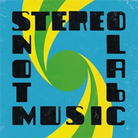
SOUNDTRACK: STEREOLAB-“Everybody’s Weird Except Me” (2010).

I was able to listen to another track from the upcoming Stereolab album Not Music.  This song is just fantastic.  It’s a faster, uptempo track.   Laetitia’s voice is backed by some other female singers (I wonder who they are, is it just Laetitia multitracked?).  And the propulsive beat is infectious.  The backing track of the music sounds like their earlier experiments with “space age” sounds.  Yet the guitar over the top is warm and inviting.

The song drops out at about the 90 second mark and offers a very cool respite from the bopping around that the song is doing.  After the break, the song seems to jump back and forth between this new mellow bit and the bouncy earlier part.  It’s a great track and a welcome opening to their last CD before going on hiatus.  Because, yes, according to the information on the NPR page, Stereolab is going on hiatus.

This CD is full of songs that were created around the time of their previous disc Chemical Chords, and it’s also packed with mixes, remixes and seemingly alternate version of some of those songs.  I haven’t heard the whole disc but it sounds like they’re going out with a winner.

[READ: November 15, 2010] “A Good Death: Exit Strategies”

I’ve mentioned before about my reader-relationship with Vollmann–I feel that I ought to read a lot more of him, yet I haven’t brought myself to do it (those books are huge!).  Nevertheless, I’ll keep reading the new pieces that I stumble upon.

So this piece is a nonfiction essay.  I’m tempted to say it’s more personal than the other pieces that I’ve read because it concerns the death of his father.  Yet from the little Vollmann I have read, it feels like he takes all of his writings very personally and invests himself pretty much bodily into them.

So, this piece, as I said, is sort of about the death of his father.  He died just a few months ago and Vollmann wants to find out a number of answers about death: should he be afraid of it, will he suffer, what should he expect?  So he interviews several “experts” in different fields:  coroners, funeral directors and many religious people of different faiths (Vollmann and his companion/translator are agnostic).  He’s given a vast array of answers, some of which are comforting to him and others just kind of piss him off. (more…)

Read Full Post »

SOUNDTRACK: PREFAB SPROUT-Let’s Change the World with Music (2009).

This album was unreleased back in 1992 (it was supposed to be the follow-up to the wonderful Jordan: The Comeback).  Record label confusion left it shelved for many years.  It’s been released now because lead Sprout Paddy McAloon has been having health issues and won’t be releasing any new Sprout music anytime soon.  So he has released this album in what is essentially demo form.

Unlike many demos, though, this one is pretty fully realized.  It’s full of keyboards (where there might be strings for instance) and there are no backing vocals (or any other musicians), and yet for all of that, it doesn’t sound like a scratched out demo or a home-recorded cassette (and Paddy sings his heart out).  There are certainly moments (most evident in the drums at the beginning and end of songs) that sound kind of sparse, but the bulk of the disc is fully formed and quite well realized.

The opening is pretty odd, with Paddy (who normally has a soaring tenor voice) speaking a deep almost rap over a funky beat.  In fact, as the song continues, with Paddy’s voice returning to “normal,” that funky beat continues.  Nevertheless, but the time the sweeping dreamy chorus kicks in we’re back to less funky, more smooth sounding Sprout that I know and love.

Like Steely Dan, Prefab Sprout is not really meant to be enjoyed by the young.  It’s borderline treacly, it’s very sweet and earnest, an my high school self would have scoffed at my enjoying them at all.  And yet for all of that, the songwriting is really magical.  There is religious imagery all over the disc, but it’s there to convey the magical power of music.  And it’s entirely authentic.

And when you combine that with Paddy’s voice its adult contemporary music that is still interesting (certainly too interesting to be played on pop radio).  I think the real key to the success of the disc is the unpretentious, unforced and completely unironic joy that Paddy gets from music.  And there’s nothing wrong with that.

[READ: November 14, 2010] “Five Stories from Flaubert”

I really enjoyed Madame Bovary many many years ago when I read it.  Recently, writer Lydia Davis translated Madame Bovary and her translation is supposed to be exceptional, light years above the translation that I read.  One of these days I plan to read her version.  In the meantime, I’ve got these little short short stories.

I had a hard time deciphering what these little stories were, exactly.  The introduction says that they are “adapted from letters Flaubert wrote to his lover.”  So I guess Flaubert gets a co-writing credit?  There’s a couple more stories online at The Paris Review (but you need to buy the issue to get all ten). (more…)

Read Full Post »

SOUNDTRACK: “WEIRD AL” YANKOVIC-Tiny Desk Concert #65 (June 22, 2010).

I can remember when Weird Al’s first album came out.  I heard about it on the radio (but hadn’t actually heard the song…I think they just talked about it being very funny) and went to my local Pathmark (which sold LPs) and asked the clueless clerk where the album with “Another One Rides the Bus” is.  Of course, he brought me to Queen.  I think I learned how to be sarcastic that day.  That was back in 1983.  Here it is 27 years later and Al is still popular enough to be invited to do an acoustic show on NPR (well, actually, the number of links about Al indicate that he may just be a perennial guest).

The Tiny Desk series is a 15 minute (or so) concert that’s all acoustic and appears to be in front of an audience of about ten (how lucky!).

This set is a fascinating look at three of Al’s songs.  The first song is “You Don’t Love Me Anymore.”  This was the ballad whose video was a parody of Extreme’s “More Than Words” video.  It is perfectly appropriate in this setting and still gets a number of laughs even though it’s from 1992.  I was astonished to hear the next song, “Good Old Days” (from 1988!).  It’s not one of my favorite songs by him, but it works well in this context.  I just can’t believe they dusted it off for the set.

The final song is a new one (he says it’s from “The Leaked Project,” ha ha) called “CNR” which is about Charles Nelson Riley.  What’s especially amusing about this performance is that the original is a style parody of The White Stripes.  Now, an acoustic version of a White Stripes song completely undermines the parodic nature of the song.  And yet it still shows the songcraft (it is an original tune after all) but also that his vocal skills are still top-notch.

These three songs aren’t his best songs, but this is a fun (albeit brief) tour through some of his more esoteric tracks.  You can listen (and download) and watch the video of it!! here.  There’s also a leaked copy of an Al song that never made it to an album.  “You’re Pitiful,” a parody of James Blunt’s “You’re Beautiful” can be streamed here.

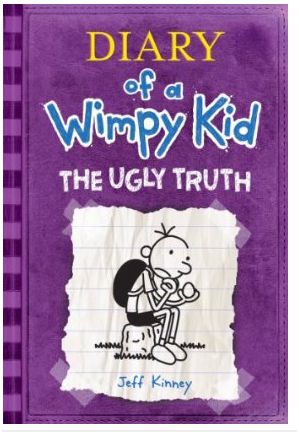
[READ: November 25, 2010] The Ugly Truth

As I’ve said before, I love the Diary of a Wimpy Kid series.  It never fails to make me laugh.  I’m kind of impressed at how many knock-offs it has spawned.  And all for simple line drawings and really funny pre-teen observations.

I was a little down on the previous book because it was about the summer, and I think the really funny bits are school related.  This book returns to school, and within the first few pages it had me laughing really hard again.

The “Ugly Truth” of the title is alluded to on the cover (Greg holding an egg); it’s that time for the girls and boys to have their own separate talks.  And there’s very little that is funnier than kids and “the talk.”  Unless of course, you’re having a kids overnight lock down at the school. (more…)

Read Full Post »

« Newer Posts - Older Posts »