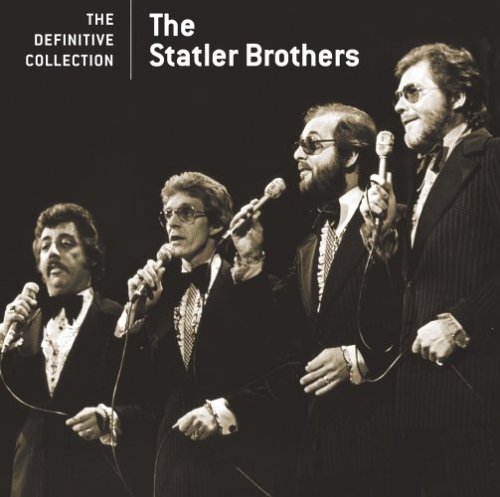
SOUNDTRACK: THE STATLER BROTHERS-“Flowers on the Wall” (1965).
Vonnegut mentions this Statler Brothers song in Palm Sunday as well. I know this from Pulp Fiction–a song that I found very amusing and never would have guessed was a classic country song. Country music was very different in 1965 than it is now. I don’t even know if there was a folk or bluegrass category back then, and this song, with its banjo and bouncey acoustic guitar is a great example of the kind of country music I like. And those harmonies!
This song certainly seems to be about insanity–about a man counting flowers on the wall, playing solitaire with a deck of 51 cards, smoking cigarettes and watching Captain KAN Kangaroo. Don’t tell him he’s nothing to do. What a weird little song. And man is it catchy. No wonder it was a #1 hit.
[READ: May 31, 2013] Fates Worse Than Death
After reading Palm Sunday I learned that Fates Worse Than Death was a kind of autobiographical sequel to that non fiction book. I also learned that the two essays that make up Nothing is Lost Save Honor which is impossible to find (and for which I can’t even find a cover) are available in FwtD. However, since there is no real contents or index, you do have to read the whole thing to find out which chapters contain the essays. Or you can just look here and see that “The Worst Addiction of Them All” (which was published in The Nation) is in Chapter XIV and “Fates Worse Than Death” appears in Chapter XV.
The last time I read a bunch of Vonnegut together I got a bit burnt out on him and the same thing happened here. The problem with Vonnegut’s nonfiction is that he tends to repeat himself. A lot. And while this book is ostensibly about the 1980s, he talks an awful lot about his family and his friends from the war and his other literary acquaintances., like he did in Palm Sunday. In a number of places, he says that he doesn’t like to read himself in English, and it would seem that he doesn’t proofread to see if he said something already either.
This is not to say that the book is not worth reading. Indeed, if you read Palm Sunday in the 80s and then this one in the 90s, you might not remember all of the details that pop up again, but when you read them days apart…well. (more…)
SOUNDTRACK: THE STATLER BROTHERS-“Class of ’57” (1972).
I don’t know much about The Statler Brothers. They are considered country, although this song is hardly country–it’s more folk with some bluegrass and, the real selling point–great harmonies (especially the bass singer with the big mustache).
The song is a wonderful coming of age song, sad and funny with a list of what happened to everyone in the class of ’57. Like:
Betty runs a trailer park, Jan sells Tupperware,
Randy’s on an insane ward, Mary’s on welfare.
Charlie took a job with Ford, Joe took Freddie’s wife,
Charlotte took a millionaire, and Freddie took his life.
John is big in cattle, Ray is deep in debt,
Where Mavis finally wound up is anybody’s bet.
But the kicker comes at the chorus:
And the class of ’57 had its dreams,
Oh, we all thought we’d change the world with our great words and deeds.
Or maybe we just thought the world would change to fit our needs,
The class of ’57 had its dreams.
And then at the end:
And the class of ’57 had its dreams,
But living life from day to day is never like it seems.
Things get complicated when you get past eighteen,
But the class of ’57 had its dreams.
Vonnegut quotes the entirety of this song in the book and I’m glad he did, it’s a very moving song and really captures American life.
[READ: May 26, 2013] Palm Sunday
After writing several successful novels, Vonnegut paused to collect his thoughts. And Palm Sunday begins: “This is a very great book by an American genius.” It is also a “marvelous new literary form which combines the tidal power of a major novel with the bone-rattling immediacy of front-line journalism.” After all the self praise, he decides that this collage–a collection of essays and speeches as well as a short story and a play which is all tied together with new pieces (in TV they would call this a clip show)–this new idea of a book should have a new name and he chooses: blivit (during his adolescence, this word was defined as “two pounds of shit in a one-pound bag.” He proposes that all books combining facts and fiction be called blivits (which would even lead to a new category on the best seller list). Until then, this great book should go on both lists.
This book is a collection of all manner of speeches and essays, but they are not arranged chronologically. rather they are given a kind of narrative context. What’s nice is that the table of contents lists what each of the items in the book is (or more specifically, what each small piece is when gathered under a certain topic).
Chapter 1 is The First Amendment in which he talks about Slaughterhouse Five being burned and how outraged he was by that–especially since the people so anxious to burn it hadn’t even read it (and the only “bad” thing is the word motherfucker). The first speeches included are “Dear Mr. McCarthy” to the head of the school board where his books were burned and “Un-American Nonsense” an essay for the New York Times about his book being banned in New York State. The next two are “God’s Law” for an A.C.L.U. fund raiser–it includes his confusion as to why people don’t support the A.C.L.U. which is working for all of our own civil liberties. (more…)
I loved that first Sugar album and even bought the single for “Helpless” (back then singles were ways for record labels to get more money out of fans of a band rather than for people to pay for one song). In addition to “Helpless,” the single contains three songs. “Needle Hits E” is a poppy song–very Mould, very Sugar. The song is a bright and vibrant addition and would fit nicely on Copper Blue.
The second track is an acoustic version of “If I Can’t Change Your Mind” which sounds wonderful. Mould really knows how to record a 12 string guitar to make it sound huge. “Try Again” is the final track. It reminds me of The Who, especially the bass line at the end of each verse. It’s a darker song (especially for his single which is so up). But I love the way the acoustic guitar seems to make it build and build. Then, some time around the two and a half minute mark, a feedback squall starts building. It’s way in the background (and actually sounds a bit like squealing balloons). It continues until the last thirty seconds just degenerate into full blown feedback noise–just so you know Sugar aren’t all pop sweetness. All three songs were later released on Sugar’s Besides collection.
[READ: May 10, 2013] The Art of McSweeney’s
Sarah got this book for me for my birthday and I devoured it. It answers every question I’ve had about McSweeney’s and many more that I didn’t. It provides behind the scenes information, previously unseen pieces and all kinds of interviews with the authors and creators of the issues as well as The Believer, Wholphin and some of the novels.
The real treasure troves come from the earliest issues, when there was very little information available about the journal. So there’s some great stories about how those early covers were designed (ostensibly the book is about the artwork, but it talks about a lot more), how the content was acquired and how the books were publicized (book parties where Arthur Bradford smashed his guitar after singing songs!).
The cover of the book has a very elaborate series of very short stories by Eggers (these same stories appeared on the inside cover of McSweeney’s 23). For reasons I’m unclear about, the rings of stories have been rotated somewhat so it is does not look exactly the same–although the stories are the same. The inside photo of the book also gives the origin of the phrase “Impossible, you say? Nothing is impossible when you work for the circus.”
The opening pages show the original letters that Dave Eggers sent out to various writers seeking stories and ideas that were rejected by other publications (and interesting idea for a journal). (more…)
My sister-in-law Karen got me this audio book for Christmas. I had never read any Oliver Sacks before although I have always been amused/intrigued by his stuff (The Man Who Mistook His Wife for a Hat is such a great title). So this book, as one might guess, is all about how music impacts our lives. Music is more than just an enjoyable set of melodies, it is a more primordial form of communication. The key thing for any fan of music to know about this book is that about 97% of the music he talks about is classical. Which is fine, but you’re not going to get any kind of insight into rock. The reason for this is twofold. One–he likes classical (and doesn’t seem to like rock–although he did take one of his patients to a Grateful Dead show) and two–he wants to talk more about music and not so much about lyrics (although again, that’s not entirely true).
I have to admit that while I enjoyed the stories in the book and will certainly talk about it a lot, I found the book a little overwhelming–it was exhaustive and exhausting. Sacks really tries to cover ever aspect of music (and many I never would have guessed) and so I found the nine hours of story a bit tiring by the end.
Part of that may also have been John Lee, the reader, who spoke very clearly and a little slowly and gave the book something of a lecture-feel. Which was fine for much of the book, although again, it was a little exhausting sometimes.
The thing that is most exhausting about the book is that virtually every person he talks to or about has had some kind of trauma which makes their appreciation of music different from the norm. If you are in any way a hypochondriac, this book will make you go insane I’m not, but even I found myself worrying about having a stroke at any second or experiencing some kind of weird brain thing where I no longer like music or god forbid get some kind of long term amnesia. Jesus, I was getting a little spooked by the end. (more…)
SOUNDTRACK: GIRAFFES? GIRAFFES!-“Fucking Ants Man! Where They Coming From? (Let’s Hang The Carroll Footnoteitsists)” (2005).
I just learned that there is a band named Giraffes? Giraffes!, which is the name of a silly book published by McSweeney’s. I was so delighted to find out about this band, that I immediately went to their band camp site, where I was further delighted to find out that they are an instrumental post-rock kind of band with some great tunes. And, of course, when your songs are instrumental, you get to make up the best titles. Like this one.
There’s only two guys in the band which must mean overdubs (I hope so, otherwise they defy physics). This song starts out with a riff in what I think is 5/4 time which discombobulates for a while until it becomes a wild guitar riff (and the drums come more to the fore). While that speedy riff is going on, another more pleasant solo plays over the top. Then the song plays some really fast drums with chords that sound like mid 70s Who, which is followed by another pretty guitar solo. The end resorts back to some mild chaos and fun until it ends very prettily.
If you like post rock, give Giraffes? Giraffes! a try.
This song comes from their debut album, Superbass!!!! (Black Death Greatest Hits Vol. 1). Which you can hear here.
[READ May 5, 2013] Places, Strange and Quiet
This is a book of photographs by Wim Wenders, filmmaker extraordinaire. What I fouond very interesting about this book is that it is not a book of art (as far as I define it). It is rather a book of documentation. These pictures are not beautiful, they are not artistically arranged, they are not profound. Rather, it is the combination of picture and text that really makes the story. In some ways this becomes a book of stills from a never-to-be-made film. And as such, it’s very cool.
The first one is a picture of a family in front of a dinosaur (which looks like it is from the 1970s—huh turns out to be 1983). It is under-lit and not very impressive. Until you read the sidebar: “A picture is defined twice. When you see the whole at first glance: “A dinosaur! A family!” And then when you find a detail that changes everything…Mom reading in the backseat. He’s absolutely right.
I loved “Sun Bather” with a crazy scene of polka dotted sun benches in Palermo. Wender’s text: “Nothing exists without its opposite…But what could the opposite of this be?” To me the most profound pictures are the series Ferris Wheel from two different angles. His comment “Sometimes only the reverse angle tells the truth” is really powerful, because from one angle the Ferris Wheel shows one scene and yet from the other the background is entirely different.
I loved the wall with sink and the Armenian alphabet—although the Armenian cemetery was even more impressive. And the gorgeous gorgeous (this one is art) pictures of the islands off of Japan is simply beautiful. (more…)
Before releasing Diamond Eyes, Deftones had two band crises. The first was that they didn’t really seem to like each other anymore. The previous album was fraught with tension and they barely toured. After deciding that they wanted to remain as a band, they were invigorated and made an album called Eros. But during the recording, bassist Chi Cheng was in a car accident and was in a coma. As of yet he has not fully recovered. So they shelved Eros, hired a temporary bass player Sergio Vega and set about recording Diamond Eyes. And for whatever reason, it proved to be one of their best releases so far.
“Diamond Eyes” opens with a heavy down-tuned guitar–very abrasive–until the chorus come in and it’s their most beautiful ones yet–with soaring keyboards and harmonies. And then the heavy guitars come back–it’s what Deftones do so well–beauty and ugly together. Stephen Carpenter really shines, as always. “Royal” is a fast song with a great harmonizing chorus. “Cmnd/Ctrl” has a shocking low riff that explodes into a bright chorus. “You’ve Seen the Butcher” has guitars that seem almost untuned as the song starts. But it morphs into a kind of sexy butt-shaking chorus. And Abe Cunningham’s drums are, of course, fantastic.
“Beauty School” is the first that doesn’t really start out heavy, it’s a got a gentle guitar intro and the first song where Vega’s bass is really prominent as a separate instrument and it creates a beautiful alternative song–great vocals throughout. “Prince” brings in a lot of new textures to the album, including a clanging guitar sound and a great screamed chorus. “Rocket Skates” is one of my favorite songs on the record, it has a classic metal riff and the great screamed-beyond-comprehension chorus of Guns, Razors Knives and a weird little whoooo that ends the chorus.
“Sextape” is a surprisingly gentle song, opening with an echoed guitar riff and one of Chino’s most gentle choruses. “976-Evil” has an echoey guitar and voices not unlike the Cocteau Twins. “This Place is Death” has another great alt rock feel–a big song with bright guitars and dark lyrics. I haven’t really mentioned Frank Delgado on keyboards and samples. He’s been with the band since White Pony, and I feel like his presence was made notable on a few songs here and there. But it seems like on this disc he really comes to the fore, adding new textures and sounds to the album which really fill it out.
[READ: March 12, 2013] McSweeney’s #14
After the colorful extravaganza of the Comics Issue of McSweeney’s #13, this book settles down into something more somber The book is softcover and all white. The cover depicts a cartoon of George Bush with both legs blown off and the caption, “I Am So, So Sorry.” On the spine in small print: “We’re praying as fast as we can.” It is the most context-full cover they’ve done yet and, nearly a decade away it seems like a rather mean cover, but if I remember correctly at the time it seemed apt and delicious, especially in light of the upcoming election.
Yet despite the overtly political cover, the content inside is not political or even thematic (although it is pretty dark stuff). Nevertheless, the table of contents gives us a small joke when it says “To help you know which stories to read first, we have indicated with either a * or a † those that deserve special consideration from you, the reader. If you see either a * or a †, do not miss that story.” Of course every story has either a * or a † but they cleverly did not put any kind of pattern to the symbols.
The colophon explains that when they were in Ireland, they met an actual Timothy McSweeney. He had been given a copy of Issue #3 and then promptly forgot about the magazine. But when McSweeney’s was in Galway to do a reading at the Galway Arts Festival, Timothy (Ted) McSweeney traveled from Dublin to check it out (not a short trip). This also resulted in a letter from Mr McSweeney which is actually quite funny.
There are also illustrations in the book, although they are small illustrations and are placed on the title of each piece in the book. All of the illustrations are old, mostly coming from the 1800s, although one dates back to 1670. They illustrations are all technical scientific ones and don’t have anything to do with the stories. (more…)
Parts & Labor have changed t heir style over the years going from noisemakers who have a melody to being melodious noisemakers. This album is one of their earlier releases when noise dominated. Right from the opening you know the album is going to be a challenge. The first song has pounding drums (electronics that sound like bagpipes) and heavy distorted shouty vocals. By the end of the songs there is squealing feedback, punk speed drums and screaming distorted vocals (complete with space sound effects). It’s an aggressive opening for sure. Song two opens with a long low rumbling and then “Drastic Measures” proves to be another fast-paced song.
“A Pleasant Stay” is 5 minutes long (most of the rest of the album’s songs are about 3 minutes). It continues in this fast framework, although it has a bit more open moments of just drums or just vocals. The way the band plays with feedback in the last minute or so of the song very cool.
“New Buildings” has a hardcore beat with a guitar part that sounds sped up. “Death” is a thumping song (the drums are very loud on this disc), while “Timeline” is two minutes of squealing guitars. “Stay Afraid” has a false start (although who knows why–how do these guys know if the feedback sounds are what they wanted anyhow?). The song ends with 30 seconds of sheer noise). The album ends with the 5 minute “Changing of the Guard” a song not unlike the rest of the album–noisy with loud drumming and more noise.
The album is certainly challenging, it’s abrasive and off putting, but there;s surprising pleasures and melodies amidst the chaos. Indeed, after a listen or two you start to really look forward to the hooks. If you like this sort of thing, this album s a joy. It’s also quite brief, so it never overstays its welcome.
[READ: April 15, 2011] McSweeney’s #13
I have been looking forward to reading this issue for quite some time. Indeed, as soon as I received it I wanted to put aside time for it. It only took eight years. For this is the fabled comics issue. Or as the cover puts it: Included with this paper: a free 264 page hardcover. Because the cover is a fold-out poster–a gorgeous broadside done by Chris Ware called “God.” And as with all Chris Ware stories, this is about life, the universe and everything. On the flip side of the (seriously, really beautiful with gold foil and everything) Ware comic are the contributors’ list and a large drawing that is credited to LHOOQ which is the name of Marcel Duchamp’s art piece in which he put a mustache on the Mona Lisa. It’s a kind of composite of the history of famous faces in art all done in a series of concentric squares. It’s quite cool.
So, yes, this issue is all about comics. There are a couple of essays, a couple of biographical sketches by Ware of artists that I assume many people don’t know and there’s a few unpublished pieces by famous mainstream artists. But the bulk of the book is comprised of underground (and some who are not so underground anymore) artists showing of their goods. It’s amazing how divergent the styles are for subject matter that is (for the most part) pretty similar: woe is me! Angst fills these pages. Whether it is the biographical angst of famous artists by Brunetti or the angst of not getting the girl (most of the others) or the angst of life (the remaining ones), there’s not a lot of joy here. Although there is a lot of humor. A couple of these comics made it into the Best American Comics 2006.
There’s no letters this issue, which makes sense as the whole thing is Chris Ware’s baby. But there are two special tiny books that fit nearly into the fold that the oversized cover makes. There’s also two introductions. One by Ira Glass (and yes I’d rather hear him say it but what can you do). And the other by Ware. Ware has advocated for underground comics forever and it’s cool that he has a forum for his ideas here. I’m not sure I’ve ever read prose from him before. (more…)
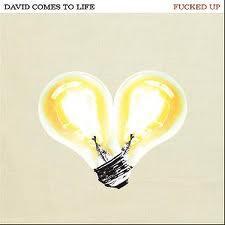
For a band named Fucked Up, they make music that is surprisingly catchy. Of course, as befits their name, they also have a pretty aggressive punk sound with lots of drums and loud guitars. But many of the guitar lines and choruses are surprisingly melodic. And then comes singer Pink Eyes. He screams in a gravelly, rough, cookie-monster type voice (although he is mixed lowish in the mix so he doesn’t often overpower the music). Despite the fact that most of the words are indecipherable, he also have a good sense of melody.
So how does a band that plays distorted hardcore punk with a barely comprehensible singer decide to make a 78 minute concept album? Beats me. But guitarist 10,000 Marbles has written a pretty solid collection of songs. Of course, it also beats me exactly what the concept is. According to allmusic the plot is: In the fictional town of Byrdesdale Spa UK, David has a humdrum life working at a light bulb factory, and finds an escape by falling in love with a communist rebel rouser, only to find out later that she has died in a terrorist bombing and that he has a lot of emotional turmoil to face.
I’ve listened to the disc a dozen or so times and never got that plot. I even followed along with the lyric sheet and never got that plot. Part of the reason may be that Pink Eyes sings all of the parts in the same way, so it’s really hard to notice that there are different characters (like Veronica) in the story. While it is fascinating to hear a really catchy choruses sung by someone who is kind of scary, it doesn’t do a lot for the story. The other odd thing is when Mustard Gas provides female backing vocals–they are sweet and pretty–a drastic counterpoint to the noise that Pink Eyes makes. But she only comes in on a few songs. I wish she did more.
There are some really great songs on this disc. Song two, “Queen of Hearts” has some incredibly catchy sections. And the “dying on the inside” harmony in “The Other Shoe” compliments the grizzly “It can’t be comfortable when you know the whole thing is about to fall” very nicely. The b vox are also great in “Turn the Season.” I find myself singing the “Hello my name is David, your name is Veronica. Let’s be together. Let’s fall in love” section over and over. It’s surprisingly sweet when sung by such a voice.
Since this is a concept album (or rock opera I suppose), there’s things like the nearly two-minute instrumental intro to “Remember My Name” which doesn’t fit with the rest of the song but is really catchy. There’s also a kind of introductory “theme” that crops up in the album. Fucked Up confound you at ever turn with beautiful melodies that morph into noisy punk.
By the middle of the disc (where I gather David is a low point), there’s some really loud heavy songs. Amid the pummeling noise, there’s some nice acoustic guitar in “A Slanted Tone” and some very cool rumbling drums and bass that propel “Serve Me Right.” These songs help to break up the flow nicely. “Life in Paper” which is near the half way point opens with the same staccato notes as the disc itself, and it proves to be a very catchy song in which David asks “Who can I trust?”
The second half of the disc continues with the more catchy style with “Ship of Fools.” But as the story nears the end, it starts to feel very samey. There’s a few breaks, but it’s a hard row to hoe. There is redemption in the end, but you still feel exhausted. Perhaps 78 minutes of Fucked Up is too much. For some listeners even 5 minutes will be too much. Despite the accolades (and they received a lot), you won’t be hearing this one the radio (and not because the DJs couldn’t say their name).
And yet amid all of the noise, there are some really shiny gems. They have even released four music videos for the album! The first one, “Queen of Hearts” is especially cool as the video is set in a classroom and the kids sing all the parts (after a nearly two-minute spoken intro of the song. I admit to not having any idea what’s actually happening in the video, but it’s still cool.
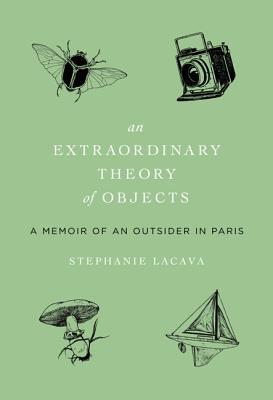
[READ: January 26, 2013] An Extraordinary Theory of Objects
This is a strange little book. It was another one that I saw while waiting online at the library. I was attracted to the cover (I know, don’t judge… but honestly, you can tell a little bit about a book by the way it is marketed. And this was marketed at me.) It’s a small book with a stark cover and interesting drawings on it. And then there’s the unusual title.
The book was only 180 pages (plus notes and a bibliography) and it was chock full of pictures. I mean, this thing can be polished off in an afternoon.
And here’s what it’s about. Well, let me modify that. Here’s what’s in the book. Stephanie is a young girl when her family moves to France (for her father’s work). She has always felt like an outsider and now feels even more so in France. She is introverted and spends a lot of her time in books. Then she moves back to America and reflects on her childhood.
Yeah, that’s about it. For here’s the thing, Lacava isn’t famous and she hasn’t done anything that you might have heard of. She’s just a person who went to France as a kid. The introduction kind of gives you some reason as to why you should read the book. Lacava was a sad and miserable child and she took refuge in objects–not as a collector so much as an admirer. On her windowsill she has collected various geegaws that she treasured (and which she brought from America in her carry on, they were so precious). And she has this interesting relationship with objects. Although, as with many things in the book, that relationship is not really delved into very much. (more…)
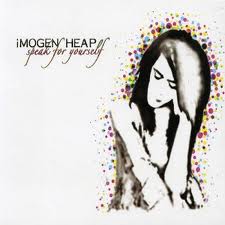
SOUNDTRACK: iMOGEN HEAP-Speak for Yourself (2005).
I really liked Heap’s first album i Megaphone, but I didn’t really think to much about her after that. Sometime last year I heard a track she was in with Frou Frou, which I liked. So I thought I’d get this album which was highly regarded.
The problem with it is that I have listened to it a bunch of times, often several times in a row and it really just never sticks with me. I keep relistening to see if it ever does but it’s just a kind of nebulous dancey pop. Heap has an interesting voice–she can hit major highs, but she can also do a raspy voice that is unusual and intriguing. But I suppose the problem is that there’s so much going on that she is effectively lost in the sound.
The standout track is “Hide and Seek” but that’s because her voice is manipulated by a vocoder, making her sound like a machine. It’s a very cool effect, especially when she hits a very high note, but it can’t really be a good sign that the most memorable track on the album is the one where you sound like a machine.
This is not to say that the album is bad–there are a number of interesting moments on it, unfortunately there aren’t a lot of great songs. When I was looking this disc up to see other comments about it, I see that it was very highly regarded in the dance genre. And maybe given those parameters I should revise somewhat as well. As dance music this is more interesting than your average four on the floor stuff. I can see how it led to the duet of Frou Frou. And yet, compared to i Megaphone, I fear that it’s a lot less exciting.
[READ: January 12, 2013] The Dangerous Animals Club
I don’t often read autobiographies or memoirs. I really never even look for them. But I was waiting online at the library and this book jumped out at me. I don’t really know why. The title is kind of interesting and catchy. And the author’s named seemed, if not familiar, then at least compelling in a very-long-and-Polish-or-Russian way. So I started flipping through it. And it sounded interesting.
But who the hell is Stephen Tobolowsky? Well, if you have seen just about any movie or TV show, you have seen him. He has been in a ton of things. He was in GroundhogDay, he was in Heroes, he is in Glee, he was in The Mindy Project briefly. Community? yup. The New Adventures of Old Christine? you bet. Deadwood for a lot of the show. That 70’s Show for one episode. He was in the unaired pilot of Buffy the Vampire Slayer. He was even in a 1976 movie called Keep My Grave Open!
SOUNDTRACK: TOM WAITS & KEITH RICHARDS-“Shenandoah” (2013).
This tune comes from the album Son Of Rogues Gallery. The album is, of all things, a sequel to the album Rogues Gallery. The full title is Son Of Rogues Gallery: Pirate Ballads, Sea Songs & Chanteys. The first album was a kind of novelty–I can’t even say novelty hit as I don;t know if it was. But it must have had some success because here’s a second one (and there’s no Pirates of the Caribbean movie to tie it to).
The album has 36 songs (!) by a delightful collection of artists, including: Shane MacGowan, Nick Cave, Macy Gray, Broken Social Scene, Richard Thompson, Michael Gira and Mary Margaret O’Hara (among many others). I enjoyed the first one, but I think the line up on this one is even better.
“Shenandoah” is not a song that I particulalry like. Because it is traditional, I have a few people doing versions of it, but I don’t gravitate twoards it–it’s a little slow and meandering (like the river I guess) for me. And this version is not much different. What it does have going for it is Waits’ crazed warbling along with even crazier backing viclas from Keith Richards (there;s no guitar on the track).
[READ: January 7, 2012] Every Love Story is a Ghost Story
I had mixed feelings about reading this biography. I’m a huge fan of David Foster Wallace, but I often find it simply disappointing to read about people you like. And yet, DFW was such an interesting mind, that it seemed worthwhile to find out more about him. Plus, I’ve read everything by the guy, and a lot of things about him…realistically it’s not like I wasn’t going to read this. I think I was afraid of being seriously bummed out. So Sarah got me this for Christmas and I really really enjoyed reading it.
Now I didn’t know a ton about DFW going into this book–I knew basics and I had read a ton of interviews, but he never talked a lot about himself, it was predominantly about his work. So if I say that Max is correct and did his research, I say it from the point of someone full of ignorance and because it seems comprehensive. I’m not claiming that he was right just that he was convincing. And Max is very convincing. And he really did his research.
It’s also convenient that DFW wrote a lot of letters–Max has a ton of letters to quote from. And DFW wrote to all kinds of people–friends, fellow authors girlfriends, colleagues…. Aside from old friends, his two main correspondents were Don DeLillo, whom he thought of as a kind of mentor, and Jonathan Franzen, whom he considered one of his best friends and rivals. I guess we can also be thankful that these recipients held on to the letters. (more…)
 SOUNDTRACK: THE STATLER BROTHERS-“Flowers on the Wall” (1965).
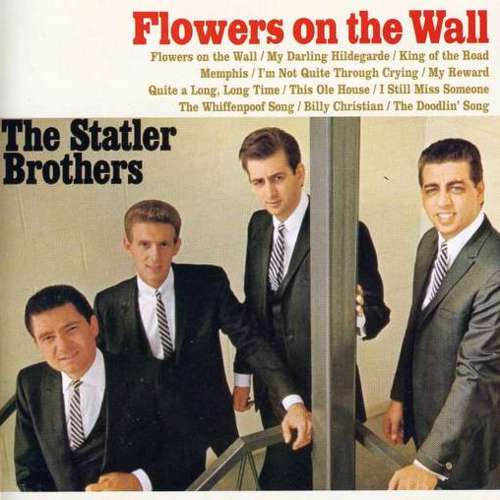 Vonnegut mentions this Statler Brothers song in Palm Sunday as well. I know this from Pulp Fiction–a song that I found very amusing and never would have guessed was a classic country song. Country music was very different in 1965 than it is now. I don’t even know if there was a folk or bluegrass category back then, and this song, with its banjo and bouncey acoustic guitar is a great example of the kind of country music I like. And those harmonies!