Feeds:
Posts
Comments

Archive for the ‘Environmentalism’ Category

SOUNDTRACK: PRIMUS Green Naugahyde (2011).

Primus is back with their first full length album since 1999.

As  they have done before, this album opens with a brief instrumental “Prelude to a Crawl” which sort of sets the tone for “Hennepin Crawler.”  As soon as “Hennepin” opens you know that this is classic Primus–bass loaded and crazy rhythms.  But it’s also apparent that Les is bringing some of the weird effects he’s been playing with in his various other bands to Primus–the bass is wonderfully distorted with crazy effects.  I love that he’s also playing harmonics on the bass.  It’s really hard to tell what is the guitar and what is the bass on this song.

The only problem I have with this song, and a few others, is that Les is singing in a low(er) register.  And since the bass is so prominent, it makes it really hard to hear the vocals.  Either that or they are mixed especially low.  Primus lyrics are usually just as weird as the music, and it’s always fun to hear what’s on Les’ mind.  So it’s a shame that they are buried.  It also means that the music has to stand on its own.  It often does this, but they do put extra effort into instrumental sections, so a section that feels like an instrumental because  the lyrics are so quiet means it’s not quite as interesting as it could be,

Having said that, there’s some great musical ideas here.  I love the riff of “Last Salmon Man” (again, the lyrics are hard to decipher) and the way it changes from verse to bridge.  Although at 6 minutes it’s a bit too long.  “Eternal Consumption Engine” is a great title.  It’s the first song where Les’ old vocals come back, and it’s nice to hear him.  Although I admit the “everything’s made in China” refrain does go on a bit long.

“Tragedy’s A’ Comin'” is classic Primus, a funky rubber bass line, and group vocals (although again, that bass lead vocal is hard to hear).  I think what I really like about it is the openness of the music–so that you can really hear the fun things that original drummer Jay Lane  is doing.  (I was bummed that Herb wasn’t here, but Lane is really great).

“Eyes of the Squirrel” is probably my least favorite song which is a real shame because the opening bass riffs are INSANELY wonderful!  I don’t know how anyone can play that fast.  I really like the way the song opens.  But it just seems to drag.  “Jilly’s on Smack” is one of those weird Primus songs that worms its way into you–the song is mostly quiet little noises and whispered vocals.  But there’s a cool instrumental break (and on this song, too, the drums sound great).

It’s the second half of the album that totally kicks ass.  “Lee Van Cleef” is a great stomper about missing Lee.  “Moron TV” is infectiously catchy (especially the dang a dang a dang a dang dang part) and the lyrics are wonderful.  The spoken word/jam section is also really fun.

“Hoinfodaman” is awesome and listening to Les pitch for fake products is hilarious.  It also features what may be a first for Primus: guitars in the lead melody line.  I especially love the crazy (and I think rather funny) guitar line that works as the bridge.

“Extinction Burst” ends the album on a major high note.  The harmonics from the bass jump into the really heavy main riff.  And Ler’s bizarrely fiddly guitar section is great–easily comparable to any of Les’ fiddly nonsense.  I don’t know how these guys make their instruments sound like this.  And the drums are a great complement once again.  The truly amazing part comes at the end.  The outro of the song is very Rush-like, except that Ler’s guitar chords go high when you expect low, which is awesome, and his solo is insane–all the while Les is being Les.

The disc ends with the 58 second reprise called “Salmon Men” which reintroduces the fishy theme.

It’s great to have Primus back.  It’s also great to hear them exploring different styles like funk! (within their own weird style).  Even the songs I don’t like that much are still enjoyable.  This makes for one of Primus’ best releases overall.

[READ: March 21, 2012] “The Life of a Zombie,” “The Forest,” “Snoopy,” “Life with Billy Joel”

I haven’t read Crosbie before, so I don’t know if she typically writes these really short (yup, I’m going to say it) flash fictions.  I’ve mentioned many times that I sort of love and hate flash fiction.  It seems like as the genre develops it revels even more in what is not stated.  Sometimes this works really well, and other times it just seems to ask too much of the reader–especially if you don’t have time to get invested in a character.

“The Life of a Zombie” is strangely titled because it’s actually about the life of a woman dating a zombie.  The story (half a page in total) goes into Lynn’s previous bad dates as well as the men she met through a dating service (including a criminal and a man on hid death bed).  The zombie has more life than either of them.  She just has to keep him from eating her brains, but otherwise they have a nice time and have just moved in together.

It’s hard to critique a story because it doesn’t do what you want it to, but I will anyway.  I had hoped this story would have been more deadpan–not so much that should couldn’t get anyone else but how it really is to be in love with a zombie.  It could have been funny through playing it straight.  And, yes, longer would have been better here as it was it kind of felt like a one note joke. (more…)

Read Full Post »

SOUNDTRACK: LES MOMIES DE PALERME-Brûlez de Coeur [CST070] (2011).

This is the second disc from Constellation’s MUSIQUE FRAGILE 01.  Les Momies de Palerme, comprised of Marie Davidson and Xarah Dion, create ethereal music that would not be out of place on NPR’s Echoes (wonder if John Diliberto knows about the album).

There is a female vocalist who has qualities of Cocteau Twins’ Elizabeth Fraser (big surprise there) as well as early Lush.  But while the music is often swirling and intriguing, it is also sometimes odd.  There are moments in “Solis” which remind me of Pink Floyd’s “Several Species of Small Furry Animals Gathered Together in a Cave and Grooving with a Pict.” (That’s the second time I’ve mentioned this song in just over a month).

“Incarnation” has a vaguely middle eastern feel and works more in a Dead Can Dance kind of vein and “Le Cerf Invisible” has some really cool sound effects that spring up throughout the song.

The title track has a spoken word section that reminds me of the spoken word part in Sinéad O’Connor’s “Never Get Old” from The Lion and the Cobra (probably because it’s spoken by a woman and is in a foreign language, although on Sinéad’s album it’s Gaelic (spoken by Enya(!) and on this one it’s French).  I rather like it.

Most of the songs are longer than five-minutes, but there are two short ones: “Médée” is just under three and “Outre-Temps” is just under two, but they retain the same style of music, although “Médée” introduces acoustic guitars.

“Je T’aime” ends the disc with a bit more acoustic instrumentation.  The album kind of becomes more grounded as it goes along.  But it’s always ethereal.  It’s a neat experience.

Their website has a great front page, too.

[READ: January 23, 2012] Five Dials Number 22

Most Five Dials issues are chockablock with different ideas: contemporary issues, flashbacks to the past, fiction, poetry, ethics, music.  A wonderful melding of interesting ideas.  But Number 22 is entirely different.  Simon Prosser and Tracy Chevalier co-edited this issue and as they say in the editor’s note, they asked a group of contributors “to write grown-up fables about nineteen trees native to the UK.”

This issue is also promoting trees by highlighting the work at http://www.woodlandtrust.org.uk, an organization with three aims:

1 Work with others to plant more native trees…

2 Protect native woods, trees and their wildlife for the future…

3 Inspire everyone to enjoy and value woods and trees…

Simple but noble goals.  You can even buy a copy of this book in print from them at their store.

Even though I love nature and like being in the woods, I don’t know a lot about different kinds of trees.  I’m always stumped when it comes to tree identification.  So this issue was kind of enlightening for me.  Each fable has a picture of a leaf (presumably from that tree) which were painted by Leanne Shapton.  The fables also create backstory for what tree-lovers know about their favorite trees, and so this was also helpful just to learn what people know about trees.

But at the same time, it makes me uniquely unequipped to really talk about these fables.  So I’m just going to list the authors and their trees and say a word or two about their style. (more…)

Read Full Post »

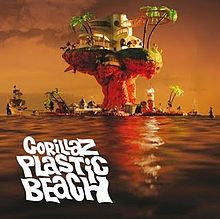
SOUNDTRACK: GORILLAZ-Plastic Beach (2010).

I have been a huge supporter of Gorillaz since the drew their way onto the music scene all those years ago.  It’s true that part of my love for the band was the art of Jamie Hewlitt, who I assume doesn’t really have any input anymore.  I also love Del the Funky Homosapien (who is also missing).  But I’m almost slavishly devoted to Damon Albarn, so I was pretty psyched when I heard they had a new album coming out and that it was getting rave reviews.

I was severely disappointed when I heard the record. 

“Welcome to the World of the Plastic Beach” features Snoop Dog who is phoning it in from a vacationland far far away.  He was more exciting on his cameo for The Lonely Island.  Even musically, it’s not very interesting.  “White Flag” is more promising, with the cool flute and string intro, but the rap by Bashy (which I wanted to like because of his accent) is just bland.  And Gorillaz must agree as the rap is less than a third of the song. 

“Stylo” has a cool bass line but the track overall is surprisingly discoey.  The Mos Def bit is interesting but I guess I’m not a fan of Bobby Womack, as I don’t care for his part of the song at all.  “Sweepstakes” has some interesting parts but the intermittent yelling of “Sweepstakes” kind of ruins it for me.  “Plastic Beach” features Mick Jones and Paul Simonon but you’d never know it.  And I actually don’t enjoy the manipulated voice much here, it sounds uncomfortably like early 80s technology.  “Cloud of Unknowing” is barely there at all (sorry Bobby Womack, I’m, not convinced)

It’s probably unsurprising that my favorite song with guests is “Superfast Jellyfish.”  I love De La Soul (although their “dopey” sounding rap is a bit much).  But I like that they play up the cartoon feel of the song (and the band).  I also didn’t even realize that the main singer was Gruff Rhys until a few listens in.  And since I love him, it all plays out nicely.  I also like “Glitter Freeze” because fun with keyboards can be interesting. I didn’t realize it was Mark E. Smith until recently.  I’m not really sure if that makes any difference since he just says a few words, but things are always more interesting when he’s around.  Of course, this song could have been 2 minutes instead of 4.  “Some Kind of Nature” features Lou Reed.  Reed has been hit or miss lately and this is more miss than hit.  “Empire Ants” features Little Dragon (unknown to me).  It is very slow to get to the interesting part, but when it does, the song is pretty cool.  The other song with Little Dragon, “To Binge” is wonderful.  It reminds me of a track from A Clockwork Orange and it also features some great lyrics. 

The few songs that I like on the album are ones that are credited to just Gorillaz.  “Rhinestone Eyes” is a bit lazy for my tastes, although the second part of the song really showcases the first decent melody on the disc, and the introduction of Damon’s voice is like a salve.  “On Melancholy Hill” has the best wispy keyboard intro this side of early 80s Madonna–a wonderful counterpoint to the title and lyrics.  “Broken” is actually a little too mellow for me, but again, the melody is a nice one.  “Pirate Jet” is a simple, dopey song that ends the album in a kind of limbo state.

I’m confused by all the rave reviews, especially the one that says the album is chock full of singles.  I mean, “Dare” now that’s a single.  I guess I just miss Del (and Russel) way too much.  And frankly, even the artwork is pretty lame on this one.

[READ: January 10, 2012] “Center of the Universe”

Simon Rich never fails to make me laugh. Sometimes his ideas are completely original.  Other times he takes a fairly common observation and runs with it into a land of lunacy.  And sometime he takes an idea that seems like it’s been done before but he puts a fun twist on it and makes it entirely his own.  Such is the case with this.

The very simple premise is that while God is busy creating the earth, his girlfriend is not only complaining that he never spends time with her, but she also feels slighted that he doesn’t seem to care how hard her job is.

A wonderful part of this scenario is that God has not yet finished making the earth–He’s only on the sixth day–but His girlfriend, Kate, is hanging out in Chelsea reading a magazine impatiently waiting for Him to show up.  (more…)

Read Full Post »

SOUNDTRACK: ULVER-Bergtatt (1994).

Ulver has some music in the soundtrack to Until the Light Takes Us and my friend Lar pointed me to a location where you could download a bunch of their music (this was before Spotify of course). 

So I grabbed a few of their albums expecting to hear some brutal death metal.  And I kind of did, but I also heard classical guitar, flute solos and chanting.   So this album’s full title is Bergtatt – Et eeventyr i 5 capitler (“Taken into the Mountain – An Adventure in 5 Chapters”) and it comes in at a whopping 35 minutes–not bad for an epic.

The opening track (“I Troldskog faren vild” (“Lost in the Forest of Trolls”)) is fascinating–a kind of chanting vocals over a quietly-mixed-in-the-background black metal.  The music is so quiet (and yet clearly black metal) that it almost comes across as ambient noise, especially over the multilayered chanting (I have no idea what language they are singing in).  It ends with a pretty acoustic guitar passage that segues into a very traditional sounding heavy metal section–with a catchy solo that takes us to the end.

“Soelen gaaer bag Aase need” (“The Sun Sets Behind Hills”) opens with, of course, a flute solo.  It’s a minute long and quite melancholy before blasting into the fastest of heavy black metal complete with growling vocals and nonstop pummeling.  But after a minute of that it’s back to the layered chanting like in the first song.  The song ends with a conflation of the two–the chanting metal with the growling black metal underneath.  It’s quite a sound.

Track three “Graablick blev hun vaer” (“Graablick Watches Her Closely”)opens with a lengthy acoustic guitar intro–not complicated, but quite pretty and unlike the poor recording quality of the metal, it seems to be recorded with high quality equipment.  After about 45 seconds that gives way to more black metal.  In a strange twist, the black metal section just fades out, replaced by more acoustic guitar and what seems like the end of the song.  But instead, there is a strange quiet section–not music, but sounds–like someone walking around in the cold forest with crunchy noises and little else.  For almost two minutes.  Until the black metal comes back with a vengeance.

Slow guitar with slow chanting opens track 4 “Een Stemme locker” (“A Voice Beckons”) (the shortest at only 4 minutes).  And the amazing thing is that it doesn’t change into something else.  It is a nice folk song.

The final song “Bergtatt – Ind i Fjeldkamrene” (“Bergtatt – Into the Mountain Chambers”) has a blistering opening followed by some of the most intricate acoustic guitars on the record.  It morphs into a very urgent-sounding black metal section which lasts about 5 minutes.   But just to keep us on our toes, the song (and the disc) end with more classic acoustic guitar.

There is a story here (allmusic says it is a Norse legend about maidens being abducted by denizens of the underworld) and that might help explain the music madness.  But as a musical composition it works quite well.  The chanting over the black metal is really effective and the acoustic instruments bring a nice sonic change from the pounding metal. 

This is not for everyone obviously, but the diversity makes this an interesting introduction into the black metal scene.  Baby steps. 

[READ: November 4, 2011] “Apocalypse”

This is the final non-fiction essay of Junot Díaz that I could find online.  The other one comes from GQ and is called “Summer Love”, but there’s no access to it online. 

In this essay, Díaz looks at the impact of the earthquake that devastated Haiti now that it has been over a year.  Díaz was born in the Dominican Republic which has a long and very brutal history with the people of Haiti–they share a land mass after all.  But rather than looking only at Haiti and how it was devastated, Díaz takes this as an opportunity to see what the earthquake reveals about our country and the state of the world.

The essay is broken down into eight parts.  The first revisits what happened.  The second discusses the meanings of apocalypse, which sets up the “theme” of this essay.  The First: the actual end of the world (which for the thousands of people who died, the earthquake was); Second: the catastrophes that resemble the end of the world (given the destruction of Haiti and the devastation that still lingers, this is certainly applicable); Third: a disruptive event that provokes revelation.

Díaz is going to explore this third option to see what this earthquake reveals. 

What Díaz uncovers is that the earthquake was not so much a natural disaster as a social disaster–a disaster of our creating.  The tsunami that hit Asia in 2004 was a social disaster because the coral reefs that might have protected the coasts were decimated to encourage shipping.  Hurricane Katrina was also a social disaster–years of neglect, the Bush administration’s selling of the wetlands to developers and the decimation of the New Orleans Corp of Engineers budget by 80 percent all contributed to a situation where Katrina could be so devastating.

Then he talks looks at the history of Haiti.  I had known some of this story, but not as much as he provides here–the constant abuse of the citizens, the constant abuse of their finances (both from simple theft and from French and American planning that changed their economy).  There’s also the story of “Papa Doc” Duvalier.  Basically Haiti was a disaster waiting to happen. 

Díaz goes into great detail about the global economy and how it impacted the poor in Haiti and he shows that it doesn’t take a lot of extrapolation to see it reflected in the rest of the world as well.  With the constant rise in standards for the wealthy and the constant abuse that the poor take, it’s not hard to see that Haiti could easily happen here.  If not in our lifetime, then certainly in our childrens’.

But Díaz has hope.  (more…)

Read Full Post »

SOUNDTRACK: MC PAUL BARMAN-It’s Very Stimulating (EP) (2001).

So is this guy a joke? Well, he’s very funny.  Very funny, in fact.  But to my ear, not in a novelty sort of way.  He’s got the kind of rhymes that make you laugh but still work upon multiple hearings.  And, yes, Paul Barman is a squeaky, Jewish boy from Ridgewood, New Jersey (again!) and he really can’t rap on the beat and he really doesn’t have much in the way of rhythm, but got awesome skills in the lyrics department and he has production from Prince Paul (that’s the kind of credentials that anyone would like).

The theme of this EP is Paul’s utter failure to get with women (even in his fantasies).  He’s crass and vulgar and yet he’s also quite smart and rather witty (“I think about all the pube I got while reading the Rubaiyat“) .  The music is more or less inconsequential.  As Prince Paul noted, the craziness comes from the lyrics, so you don’t want to overkill the song.  But there’s some great samples and some solid beat work as well.  Nevertheless, we’re here for the words.  So, sample a few of these rhymes:

“The Joy of Your World”

It was time to copulate but we didn’t want to populate
So my bold groin reached for my gold coin proooophylactic
I unwrapped it, you can’t know how I felt
It wasn’t a gold coin condom, it was chocolate Chanukah gelt
The white part crumbled on her tummy and the rest began to melt
Foiled again…..

“School Anthem” or “Senioritis” (this song was renamed for the reissue of the disc it seems)

Homework is tell major lies or plagiarise encyclopedias, so boring
Fresh-faced teachers want to tickle ’em
but a test-based curriculum excludes exploring

I’ll let a mystery gas out of my blistery ass
Just to disrupt the misery of history class

“Salvation Barmy”

She said, “Go get a haircut”
So I showed her my bare butt
Pulled down my Carhartts put my moon in her star-charts

“I’m Frickin’ Awesome” ( I love this especially for the Lila Acheson bit)

It’s nice to be hypnotized by a man you don’t despise yet
He had a type of flow and I can’t quite label it
All I know it made me want to take off my cableknit
Sweater, Oh he better be hetero
I hope they don’t catch us in the Lila Acheson
Wallace Wing when Paulus brings the mattress in–rudely
He backlashed my booty
like I was Susan Faludi over the Grace Rainey Rogers Room rostrum

“MTV Get Off The Air, Pt 2”  (the first two lines are fantastic, but the whole thing is genius).

Smirkin’ jocks with hackysacks
in Birkenstocks and khaki slacks
I’m the hypest lyricist
while they’re like, “What type of beer is this?”

Just wait until the full length for the utter genius that is “Cock Mobster” (how can be s o smart and so stupid at the same time?)

[READ: October 10, 2011] E Pluribus Venom

Like most people, I learned the name Shepard Fairey because of his iconic prints for Barack Obama.   In addition to supporting Obama, I really liked the design of the prints–simple, bold, an easy iconic style (which has since been lifted, morphed and used everywhere).  I know that many of Fairey’s prints actually come from other people’s original photos.  He has a print of Muhammed Ali in this book, and he clearly didn’t take the original photo (I don’t know where it came from).  But since all art is theft, I’m okay with Fairey taking someone else’s work and making something new from it.  I’ve always felt that attribution should be enough if you modify the original enough to call it different (which I feel this print does).  [The fact that he didn’t acknowledge the source does bug me, of course].  But that’s neither here nor there because this book predates all of that.

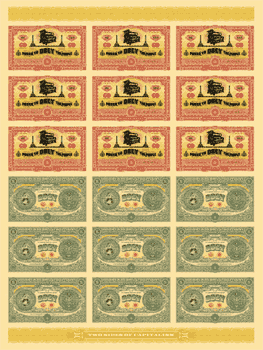
This book documents events that occurred in 2007.  The E Pluribus Venom show was based largely around two images that Fairey designed to reflect the two sides of capitalism.  The image to the right really doesn’t do any justice to the work itself, but you can kind of see that he created two-sided faux dollar bills.  The front showed all the good things that capitalism can do.  The back showed all of the evils that capitalism causes.  The images resemble dollars, but the text is straightforward in its message.  As with a lot of what Fairey does, it’s blunt and obvious but pretty cool.

As far as I’m concerned, though, this is the least interesting image in the book.  Although I love that they made dollar bill sized prints of these faux dollars and left them scattered around in cities to promote the show.  They way they were folded made them look at a glance like actual currency.  Very cool. (more…)

Read Full Post »

SOUNDTRACK: JONATHAN FRANZEN-Commencement Speech (audio) (2011).

You can hear the entire speech from the Kenyon College site.

[READ: May 28, 2011] Commencement Speech

On May 21, Jonathan Franzen gave a commencement speech to the students of Kenyon College.  When I think about my commencement speech (from Judy Woodruff of CNN), all I can remember is that I had never heard of her (and when I typed her name just now I got it almost entirely incorrect–the only thing right was the “wood” part).  I don’t recall a single thing that she said.  [It’s also fascinating that I can’t find any record of this speech anywhere online–what a different world it was twenty years ago].  I rather expect that most people feel this way about commencement speakers.  I have to wonder, if Jonathan Franzen had spoken at my college, would I have cared?  Is there even a chance that I would have read any of his novels (had they been published of course) when I was in college?  Would I be treating this any differently than my whatever speech in 1991?

But I like Jonathan Franzen and I wanted to read what he had to say. 

His speech is about love.  Love is kind of an odd topic for a commencement speech, isn’t it?   I mean, aren’t they supposed to talk about the Future and Jobs or something?  Or maybe even sunscreen?  But really, what is more useful for a 21-year-old to think about than Love.  Franzen hits the nail right on the head about Love, how it is a dangerous, risky proposition to put yourself out there, to take off your veneer and reveal all of your flaws–and hope someone will love you.  Not new or novel, but still true.

The way that Franzen gets into this subject is through technology.  It seems weird and artificial at first, but it’s a wonderful way to get into a young audience’s state of mind.  They were probably all looking at their iPhones while he was extolling the virtues of his new Blackberry (the old person’s phone, right?).  And when he segues into Facebook (who even knows if he has an account–but he seems to be well-versed with it, so maybe he does) you can imagine students raising their head in familiarity (maybe even updating their status) and wondering (as he puts it) if this 51-year-old guy is going to dis Facebook. (more…)

Read Full Post »

SOUNDTRACK: RA RA RIOT-Live at the Black Cat, Washington DC,  October 12, 2008 (2008).

I really like Ra Ra Riot’s album The Rhumb Line, and this concert is basically a showcase for that album.  There’ s an interview at the end of the show (all downloadable from NPR), in which the  band says that critics raved about their live show as much as their album.

I don’t really hear that the show is more energetic than the album (maybe visually they are wild), but it did sound fantastic.  It’s amazing to hear a rock band that is dominated by strings–the cello and violin are often louder than the guitar (but not in a competing/drown you out kind of way,  more of a strings do the melodies and the guitar adds bulk to the sound).

I always enjoy hearing a band that is grateful to their audience for showing up (this is most evident in young bands, who seem so much more genuine about their love of the audience) and Ra Ra Riot are certainly that .  They seem genuinely surprised at the turn out, and they play a great set accordingly.

There are two songs that aren’t on the album here “A Manner to Act” and the encore “Everest.”  They both feel like they came off the album, which bodes well for their second album, Orchard, which just came out in May.  Ra Ra Riot also do a great cover of the obscure Kate Bush song “Suspended in Gaffa.”  At the end of the show they tack on a cover of “Hounds of Love.”  Lead singer Wesley Miles has a wonderfully strong voice and he can reach some pretty high notes–not soprano or anything like that, just strong enough to be able to pull off a Kate Bush cover.

This is a great show.  And when you read about the tragedy they suffered just as they were starting to take off, their obsession with death may not be so surprising.  I’m looking forward to Orchard.

[READ: 1995 and August 18, 2011] Microserfs

After reading Life After God and thinking about Microserfs, I looked up Coupland’s bibliography and saw that indeed Microserfs came next.  And I was really excited to read it.  I have recently watched the JPod TV show and I knew that JPod was a kind of follow-up to Microserfs, so I wanted to see how much of it rang true.  And I’ve got to say that I really rather enjoyed this book.

While I was reading this, I started taking notes about what was happening in the book.  Not the plot, which is fairly straightforward, but about the zeitgeisty elements in the book.  And, since I’m a big fan of David Foster Wallace, I was also noting how many zeitgeisty things this book had in common with Infinite Jest.  I’m thinking of tying it all together in a separate post, maybe next week.  But I’ll mention a few things here.

My son also loved the cover of this book because it has a Lego dude on it and he has been really getting into Lego lately.

So Microserfs is the story of a bunch of underpaid, overworked coders who work for Microsoft.  The book is written as the journal of Daniel Underwood (Coupland still hadn’t really branched out of the first person narrative style, but the journal does allow for some interesting insights).  The story begins in Fall 1993.  I felt compelled to look up some ancient history to see what was happening in the computer world circa 1993 just for context.  In 1991, Apple released System 7.   In 1993, Windows introduced Windows NT, Intel released the first Pentium chip, Myst was released and Wired magazine launched.  In 1994, Al Gore coined the term Information Superhighway.  Yahoo is created.  The Netscape browser is introduced.  So we’re still in computer infancy here.  It’s pretty far-seeing of DC to write about this.

Daniel works at Microsoft with several friends.  Daniel is a bug tester, Michael (who has an office, not a cube) is a coder, Todd (a bodybuilder) is a bug tester.  There’s also Susan (smart and independent), Abe (secret millionaire) and Bug Barbecue (an old man–he’s like 35).  The five of them live in a house on “campus.”  There’s also Karla (a type A bossyboots who doesn’t like seeing time wasted) who works with them but lives up the street.

As the story opens, Michael has just received a flame email from Bill Gates himself and has locked himself in his office.  This leads to a very funny scene and ongoing joke in which the office mates feed slide two-dimensional food under his door and he vows to eat only things that are flat. (more…)

Read Full Post »

SOUNDTRACK: RUSH-“Garden Road” (1974).

So the bootleg that I mentioned yesterday was in fact incomplete.  On the Up the Downstair site, the track list includes “What You’re Doing” and “Garden Road.”  When I wrote to the cool host of Up the Downstair, he said that these two songs were available on You Tube and that he’d try to find them and add them to the site.

So in the meantime, I got to listen to the song on YouTube.  This is a song that the band wrote but which they never recorded (same is true for “Fancy Dancer”).  I have to imagine that they wrote these songs for their second album (along with “In the End” which they kept) around the time that Neil Peart joined the band.  Once they realized that Neil could write better lyrics, they scrapped these two heavy rockers.  Both songs have great riffs, even if lyrically they’re pretty poor.

The song rocks pretty well, although the solo seems to have been put to better use in “Working Man.”  I enjoy how the song breaks for the shouts of the Garden Road chorus (kind of like “Bad Boy”–perhaps it was a “thing” for them).  I rather like this song, and I think I like it better than a couple of the songs on Rush.

Check it out.

Maybe it’s time to release these old chestnuts for the fans?

[READ: August 10, 2011] Life After God

After the success of Shampoo Planet, Douglas Coupland wrote several short books (which were really short stories).  They were compiled in Life After God.  To me this book also stands out as another odd one from DC, because it is very tiny.  Not in length, but in height.  It’s a small book, about the size of a mass market paperback.  But it makes sense that it was made this short because it is written with lots of short paragraphs that lead to page breaks (kind of like Vonnegut).

For instance, the first story contains at most two paragraphs per “chapter” about–16 lines of text and then a page break.  At the top of each page is a drawing from DC himself which illustrates to a small degree the information on the page.  It leads to incredibly fast reading and even though the book is 360 pages, you can polish it off pretty quickly.

But what’s it about?  Well, mostly the stories seem autobiographical (even though they are classified as fiction.  And actually, I don’t know anything about DC’s personal life so I don’t know if they are based on anything real, although I do know he doesn’t have any kids, so those can’t be true at any rate).  There are eight stories.  They are all told from the first person and are more or less directed at “you.”  They all seem to deal with existential crises of some sort.  They are honest and emotional.  To my ear, sometimes they seem a little forced, maybe it’s contextual, but it’s hard to write this kind of massively introspective piece and have it sound “real.”  (But maybe I’m not very introspective about things like this myself). (more…)

Read Full Post »

SOUNDTRACKMETRIC-Fantasies (2009).

I was hooked by the song “Gold Guns Girls.”  I liked it so much, I bought the disc, and I was absolutely not disappointed.  This disc reminds me of all of the best things about late 90s alt rock (one of my favorite musical periods).  There are echoes of later period Lush, or of Garbage or some other slickly produced commercial alt-rock.

I’m led to understand that this disc would merit cries of sell-out from older fans (their earlier stuff it a bit rougher, I gather), and yes, this is a pretty commercial release, but I don’t mind.  The songs are all top-notch: great songwriting, catchy choruses, wonderful production.  And there’s something slightly uncommercial about the lyrics which I think is what keeps this album from being too slick for its own good.

I have listened to this disc dozens of times at this point and I never get tired of it.  And, there’s no reason why I shouldn’t go back and get some of their earlier releases too.

[READ: May 15, 2011] Fraud

I’ve seen Rakoff on the Daily Show, and his name has been cropping up in various places lately.  So I decided to read his actual published work to see what he was all about.

Fraud is his first book.  It is mostly funny, although it also dwells on serious matters by the end of the book.  In many ways Rakoff is like a slightly wilder, slightly edgier version of David Sedaris (the two have a long history of friendship and working together, so this may not be totally surprising).

I’m not going to compare him to Sedaris in any meaningful way, just to say that there are similarities of temperament and style; I don’t think either one of them is hilarious, but that I enjoy both of them and often laugh pretty hard at their material.

I’m also not going to review each essay in this book.  It seems to be constructed in a vague sort of narrative arc.  Well, actually, the second half of the book has the narrative arc (I suspect that the essays that were published previously were modified slightly and that the new essays allude to some of the incidents mentioned there.

The first few essays of the book are the funnier ones (insert joke about Woody Allen’s early funny movies here), and they stick more to the idea of Rakoff as a “Fraud.”  In them, Rakoff, a Canadian ex-pat (he’s from Toronto), somewhat neurotic, gay, New York Jew goes to different locations where he is an atypical person and then reports on them. (more…)

Read Full Post »

SOUNDTRACK: WEAKERTHANS-World Cafe Live, December 5, 2007 (2007).

I really like the Weakerthans, and they are surprisingly unknown here in the States.  I say surprisingly because they write exceptionally catchy (almost absurdly poppy) songs which would fit on many radio stations’ playlists.  But what sets them apart is John K. Samson’s lyrics which are clever and interesting and about people and loss (maybe that’s why they never made it down here).

This World Cafe set came about shortly after the release of their last studio album, Reunion Tour.  David Dye asks some great questions (I’ve never really seen/heard any interviews with them, so it’s all new to me) and the band plays three songs from the album.

We learn that Reunion Tour was initially inspired by Edward Hopper paintings (and the whole album was going to be devoted to Hopper until Samson grew sensible again).  We also learn the official pronunciation of the recurring cat on the Weakerthans albums is Virtute (Vir-too-tay) which comes from the city of Winnipeg’s crest.

They play “Night Windows,” “Civil Twilight” (and talk about the video, which I watched and it’s very cool), and “Virtute the Cat Explains Her Departure.”  The interesting things about the Weakerthans is that they don’t sound all that different live than on record.  So, these songs aren’t terribly revelatory.  There are some effects that are changed, and the tempos feel slightly different as well.  But nevertheless, the songs sound great.  The only problem is that the set seems mixed rather loudly, so there’s distortion (unintended, I assume) on some of the tracks.

Nevertheless, this is a great introduction to a relatively unknown band.

[READ: April 19, 2011] Five Dials Number 2

After just one issue, Five Dials has already lied to us.  In Number One, they said that all of the artwork would be black and white, but here is Number 2, and we have a host of beautiful color pictures (perhaps they only meant that Number 1 would be in black and white).   Of course, I’m only teasing them because the color pictures are really nice, and they really bring a new aspect to the magazine.

Number Two is a bit larger than Number 1 (twenty pages).  This issue has a vague sort of theme as well (it’s unclear if the issues will be thematic in the future), but this one has a general theme of adventure/nature/environmentalism. (more…)

Read Full Post »

« Newer Posts - Older Posts »