Feeds:
Posts
Comments

Archive for the ‘Drugs’ Category

SOUNDTRACK: THE SWELL SEASON-Strict Joy (2009).
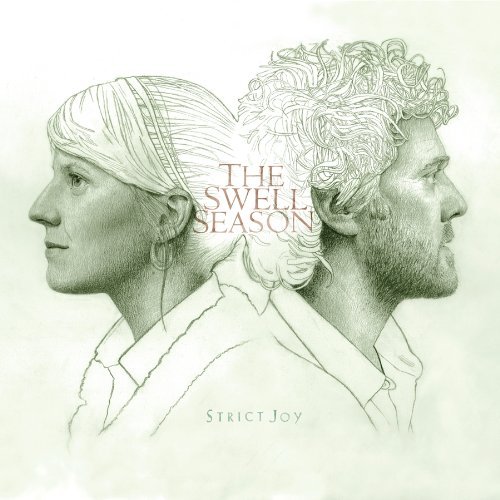
I bought this disc for Sarah after it came out.  I didn’t think that I would enjoy it that much because while I loved the movie Once, I wasn’t sure if I needed more from Glen and Marketa.  But then I found a whole slew of free concerts from NPR and I became hooked on the band.

The disc opens with “Low Rising” (what I think of as the “Van Morrison” song).  It gets better with each listen.  It’s a slow ballad which is followed by “Feeling the Pull,” a more up-tempo song that really highlights Marketa’s beautiful harmonies.  “In These Arms” is a gorgeous song.  The verses are downbeat and somber “if you stay…with that asshole…it will only lead to harm” but again the harmonies are gorgeous.  “The Rain” is a more rocking tune (within reason, of course).  It has an interesting middle section that quiets down, but it’s a solid folk rocking song.

“Fantasy Man” is Marketa’s first lead vocal song on the disc.  I like her voice but sometimes I find her lead songs to be a bit too wispy, too quiet.  I like this song, but it feels long (and at 5 minutes, it is).  “Paper Cup” is one of Glen’s quiet ballads.  It’s a pretty song.  “High Horses” is one that I didn’t know from the live sets, I guess it’s not too popular with the band, but I think it’s strong.  It runs a little long but that’s because it has a cool middle section that keeps building and building with more instruments and voices.  “The Verb” is another song that I didn’t know.  It has a cool intensity to it and while it doesn’t stand out as a hit, it’s certainly an enjoyable song.

“I Have Loved You Wrong” is another pretty Marketa song, but again it’s very slow and very long.  I don’t think I could buy her solo album because although her voice is lovely and her melodies are nice, they’re just so ephemeral I can’t really get into them.  “Love That Conquers” is an interesting song.  It sounds nothing like The Swell Season (must be the banjo).  It’s a nice addition to the album and should maybe have been placed a little earlier to break up the sound style a bit more.  “Back Broke” ends the disc very strongly.  Although I think the song works better live (with audience participation), the melody and tone of the song are somberly beautiful.

There are moments of this disc when it turns out to be what I feared the whole disc would be–bland folkiness. But overall this is an enjoyable album for a rainy day.  And Hansard really has an amazing voice.  However, I really like them better live.

[READ: December 26, 2011] Third Reich

I was pretty excited when I heard about this book, although I must admit I was a little concerned by the title.  Bolaño has a kind of weird Nazi fascination.  There is Nazi Literature in America and then a whole section of 2666 is given over to Nazi Germany.  He doesn’t like Nazis or anything but he writes about them a lot and it can be a little exhausting.  So it was with some relief that I learned that Third Reich is the name of a game that the main character plays.  It is a kind of historical reimagining kind of game (I guess like Risk but more specific and with more at stake).  It is set during the time of the Third Reich and the players represent various countries (or perhaps even powers).

I am giving up on explaining the game from here on because a) there’s a lot about the game in the book and b) I’m not sure if it wasn’t explained very thoroughly or if I just missed out on exactly what was happening.  During the book he talks about Hexes 65 through 68 and so on.  So I assume the map of the world is a hex grid.  But he never gives any context (or even a picture!–and this makes sense as it’s written as the diary of a well-regarded player who is not trying to teach us the game).  So while I understand the general tenets and play of the game (there’s a die (or dice) and tokens that reside on the board), the specifics are completely nebulous.  But that’s okay.  Because the game specifics don’t impact the book, but the game overall is at the heart of the book.  I think it’s neat that Bolaño invented a game (and several others games are named, but no details are given).  He is clearly very gifted at inventing people, games, things.

But as I said, the game is only a part of the book and in fact, the game details don’t enter into the book until about half way through. (more…)

Read Full Post »

SOUNDTRACK: LONDON PHILHARMONIC ORCHESTRA-Angry Birds Theme (2011).

My son, Clark, loves Angry Birds.  I’ve played it a few times and found it enjoyable, but he is obsessed.  He is absolutely the target market for this song.  And who knows maybe it will get him to like classical music.

I wasn’t sure if I’d recognize the tune, but it is already ingrained in my head.

This version is wonderful.  It sounds like it might be from a Tim Burton movie. 

The full CD is a collection of video game themes.  We don’t have a console, so I don’t know any of the other songs on the disc. But I do rather like this one.  I can’t wait to see his face when he hears it.

Check it out on NPR!

[READ: December 15, 2011] “What We Talk About When We Talk About Anne Frank”

This story went from being a (rather) funny piece about Hasidic Jews to being a (rather) emotional story about marriage, religion and self-preservation.

As the story opens, Mark and Lauren are visiting the narrator and Deb.  Deb and Lauren grew up together.  But after school Lauren met Mark and they moved to Israel where they became Hasidic (and took the new names Shoshana and Yerucham).  As the story opens, the narrator (a non-observant Jew) is trying to hold his tongue while these religious folks are well, kind of judging  them.  It’s wonderfully summed up by this comment:

“Jewish to you?” I say.  “The hat, the beard, the blocky shoes.  A lot of pressures, I’d venture, to look jewish to you.  Like, say, maybe Ozzy Osbourne or the guys from Kiss, like them telling Paul Simon, ‘You do not look like a musician to me.'”  [Is there a joke in there since the guys from Kiss are indeed Jewish, or no?]

The narrator and Deb has a son, Trevor, who is sixteen.  The scene where he comes into the room to discover the Hasidic couple is hilariously subtle (very well written).  Then we learn that Shoshana and Yerucham (which Deb calls them) have ten children–all girls.  Yikes.  But the narrator continues to refer to them (at least in his story) as Mark and Lauren.  And the more questions he asks the more we find out that although they keep Holy the traditions, they are a bit lax about some of the rules (maybe?)  I actually don’t know the rules so I don’t know if what they’re doing is “wrong” or not.  And, amusingly there’s a bit in the story in which Yerucham complains about non-Jews giving them shit for what they do–“Can you eat in there?” kind of questions.

So, when the narrator asks if they can drink, Yerucham says he can make the whiskey kosher.  And that starts them on their way. (more…)

Read Full Post »

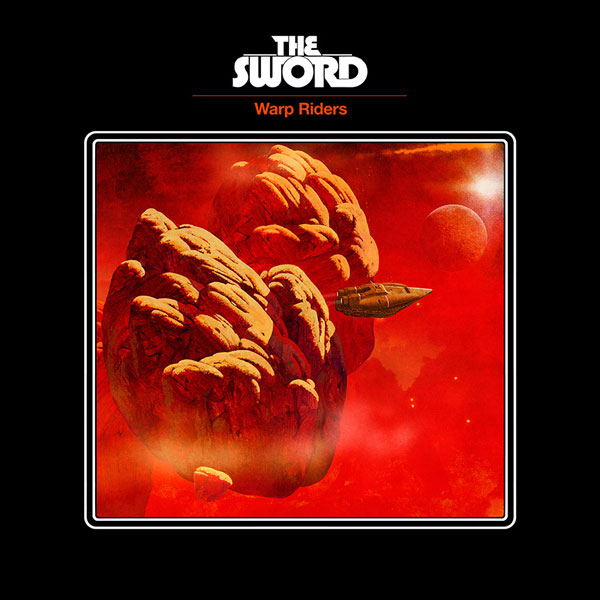
SOUNDTRACK: THE SWORD-Warp Riders (2010).

I have heard some great things about this disc from The Sword–that it was old school metal who usually sang about swords (duh) and sorcery but were warping into the future on this disc.  I put the disc on and was blown away by the opening track, the instrumental “Acheron/Unearthing The Orb.”  It sounds very 80s metal: heavy guitars, and great riffs coupled with tremendous solos.  The second song opens just as strong but then something weird happened.  I hated the lead singer’s voice (my discussion of their previous disc came to the same conclusion).  It doesn’t do ANYTHING that 80s metal should do–it’s neither growling nor yelly nor operatic.  In fact, once the vocals kick in, the song takes on a distinctly non-metal feel.  More specifically, it feels like heavy classic rock from the 70s.  The guitars are still heavy as anything, but the melody and vocals change things.

I really didn’t like the album all of a sudden, until I listened a few times and accepted that this blend actually worked.  Once I acknowledged that it wasn’t what I thought it would be, I wasn’t disappointed by it anymore, and I was able to really enjoy it.  “Tres Brujas” has a simply wonderful sing along chorus that I can’t get out of my head.  And it continues in this vein–heavy riffs (the guitars on “The Chromancer 1: Hubris” and “The Chromancer II: Nemesis” (love the names!) are really heavy) and surprisingly catchy choruses. 

The biggest surprise comes with the song “Night City” which sounds like, well, like Thin Lizzy.  The macho riffs, the swagger, the lyrics, it’s all Lynott.  And once I realized that, I really understood what The Sword was all about, and the disc has been in heavy rotation ever since.  I don’t mean to say that I had to analyze the disc to “get” it, but once it all clicked, it clicked really well.

[READ: December 13, 2011] “The Pharmacist from Jena”

This is my first story from Michael Dahlie and I have to say that I was hooked from the start. 

The story is set in 1912, when the narrator was sent from his home in Stockholm to Winslow, Indiana.  He was sent to work with his uncle as a pharmacist’s assistant. 

It’s in the second paragraph, after the exposition, that things take off: “My uncle was a passionate lover of cocaine and had situated himself in such a way that he supplied nearly all the nearby interested parties.”  He was also renowned as a great “voluptuary and eroticist.”

There is a real plot, which gets established late in the story, but in the beginning, the story is all about the narrator’s adjustment to this life.  How his aunt seemed to believe he was a girl and decorated the room accordingly.  How his uncle had a fight with a bear (long story) in that very girl-themed room (long story) and how the room was soon, no longer girl-themed.

One thing I really liked about the story was the narration.  Like: “At the time I was living in Winslow, it was fashionable for wives of wealthy men to suffer from mental disorders.”

His uncle experimented with shock therapy, but he mostly used it for erotic experimentation.  The end of the shock experiments occurred when a local husband found out what the good doctor was doing (from the burns that his wife received at the doctors hands).  (more…)

Read Full Post »

SOUNDTRACK: PUBLIC ENEMY-Fear of a Black Planet (1990).

NPR recently broadcast a PE show from the All Tomorrow’s Parties Festival.  I didn’t know that PE was still touring, so that was a surprise to me.  The show was largely a celebration of Fear of a Black Planet, which meant that I had to go back and listen to the original.

Man, is this a solid album.  The lyrics pack a punch even twenty years later and what is perhaps more amazing is that the sound collages that Terminator X created, which were something of an oppressive sonic assault are now fairly mainstream-sounding (forward thinking or what?).

What I like about this (and most PE) albums, is that  they have little skits between songs, but unlike most rap skits they’re not one-not jokes that you listen to once and then skip every future time.  A wonderful skit (for lack of a better word) is “Incident at 66.6 FM” in which we hear an amazing amount of racist epithets thrown at PE apparently on the radio.  Or the rather disturbing “Meet the G That Killed Me.”  “Anti-Nigger Machine” is a great collage of samples like “Think” and James Brown and a dozen more songs.

“Can’t Do Nuttin for Ya, Man!” is a (sort of) comic song from Flav that is catchy as anything. While “Reggie Jax” is a confusingly titled song that has nothing to do with baseball, but everything to do with funk.

Of course, this disc has some of PE’s best songs as well.  From the awesome “911 is a Joke” to one of the best rap songs ever, “Welcome to the Terrordome” (my favorite story of this song is when I was wearing a  Welcome to the Terrordome shirt and my philosophy professor asked me quite pointedly, “What in the hell is a terrordome.”  That was a fun conversation).  “Terrordome” is still amazing–powerful, musically intense and for all of its lyrical acuity, it still has funny moments….boing.

And of course, “Burn Hollywood Burn” is an amazing critique of the movie industry (and it’s catchy too).  I got Black Caesar back at the crib, right Lar?

I’ve always been a little confused by “Pollywannacracker.”  Not lyrically, but vocally, as Chuck’s (is it really Chuck?) voice is treated in a surprisingly tinny way.  I liked the song more on this listen than any other, I guess in the past it just kind of snuck by me.

The album is a little front loaded with greatness.   “Power to the People” is another powerful song, but it’s not quite as memorable as the other tracks.  “Fear of a Black Planet” has some really cool sounds on it (where did they get that “black man, black woman, black baby” sample?).   “Revolutionary Generation” is a great track in which Chuck and Flav stand up for black women: “R-E-S-P-E-C-T, my sister’s not my enemy.”  Not your average rap subject.

And the last couple of proper songs, “B Side Wins Again” and “War at 33 1/3” are fast paced and furious, but they don’t really have much in the way of a hook.  Nevertheless, lyrically they are really great, and I love to hear Chuck D flow that quickly.

The biggest surprise for me is the censored version of “Fight the Power” (the song that got me into PE in the first place, thanks Spike).  It’s really surprising to me that PE allowed their music to be bleeped–unless it was just for a deliberate radio play (which I can accept).  Although they also list a title as “Leave This Off You Fu*Kin Charts” (did I buy a Columbia House version or something?)

This is an amazing album, one that still sounds fresh and sadly, is still relevant.

[READ: October 15, 2011] Between Parentheses

I never expected to get so addicted to Roberto Bolaño.  And despite his death, there is no shortage of works coming out in English (that is one of the advantages to reading a translated author–even death doesn’t cease the available materials).  Indeed, this year alone, New Directions is publishing Between Parentheses, and Tres and FSG is publishing The Third Reich (a collection of non fiction, a collection of poetry and a novel respectively).

When I really get into an author, I fall for his or her works, not necessarily him or her as a person (heck, some author are downright jerks).  But there are some authors that I want to know about, personally.  Bolaño is a pretty polarizing figure–he seems obnoxious, his works don’t shy away from very specific opinions, and sometimes it’s unclear what kind of views Bolaño himself has in his works (or if he’s even telling the truth about his so-called truths).  One thing in particular is the constant use of the word “faggot.”  It is used often in 2666 (and I know that is a translator’s choice, but still) and used derogatorily.  Now, clearly the context is everything for something like that.  But it seems to speak badly of Bolaño.  And yet, when reading these essays he is not homophobic in the least.  He is obviously well aware of institutionalized homophobia in Latin America, and he is obviously not supportive of it.

But that’s just one interesting thing about this book.  So let me back up. (more…)

Read Full Post »

SOUNDTRACK: KISS-Rock and Roll Over (1976).

After Alive!, Kiss released what I think of as the cartoon albums.  These next three discs all had cartoon covers, which also coincides with their huge ascent into fame.  I tend to think of Destroyer and Love Gun more than this one (maybe full-bodied pictures are more memorable than just their faces), even though this one has a huge share of important Kiss songs like “I Want You” (which has an amazingly long version on Alive II). 

I never really liked “Take Me,” there’s something about the chanting backing vocals that irks me (although “Put your hand in my pocket, grab onto my rocket” is one of my favorite Kiss couplets).  But “Calling Dr. Love” is a wonderful twisted song (the falsetto backing vocals are so doo wop, it’s funny to contemplate the band’s musical direction at this point).  I loved this song so much it even features in one of my first short stories

As an eight year old, I could never figure out what Gene would be doing in the “Ladies Room”–since he was a boy and all.  Naiveté is a wonderful thing to have as a young person listening to Kiss–I had no idea what was going on in most of the songs–I wonder if my parents bothered to listen to the lyrics at all.

I also never really liked “Baby Driver” all that much–I don’t know if it’s Peter’s voice, or that I can’t figure out what the hell this song is about but it’s still just okay to me–although I like the guitars at the end.   I love the solo in “Love ‘Em Leave ‘Em”–although the sentiment is not the best.  Of course, the sentiment in “Mr. Speed” cracks me up: “I’m so fast, that’s why the ladies call me Mr. Speed.”  Did that mean something different in 1976?

“See You in Your Dreams” was covered by Gene on his solo album, and I think I like that version better (it’s more theatrical).  Although this one has very interesting use of Beatlesesque harmonies.  “Hard Luck Woman” is wonderful song, and I do like Peter’s voice here, yes.  But who the hell is Rhett?  “Making Love” ends the disc.  I like the break in the middle and the awesome guitar solo.  Also, Paul’s vocals have some cool effects on them. 

This is a fun album.  Even the songs I don’t love are still songs that I like quite a bit.  It’s a nice contrast from the bombast of Destroyer.  The amazing thing is that both this album and Destroyer are barely over 30 minutes long.  Were they making albums so frequently that they didn’t have any more songs, or were they just following the Beatles model: make an album every 7 months to stay in the public’s eye?

[READ: October 2, 2011] Dogwalker

I can’t believe how quickly I read this book.  I wasn’t even planning on reading the whole thing just yet, but I started the first story and it was so quick to read and so enjoyable that I couldn’t stop.  I finished the whole book in a couple of hours (it helps that a number of stories are barely 4 pages and that it’s barely 150 pages).  The title of the book is something of a mystery as there are a lot of dogs in the stories, but walking is about the furthest thing from what happens to them.  I was also somewhat surprised to see how many of these pieces I had already read (Bradford was in five of the first six McSweeney’s issues). 

This collection is certainly not for everyone.  In fact when I recounted the story “Dogs,” Sarah was disgusted and said she would never read the story.  Bradford definitely pushes some boundaries, but they’re mostly in an attempt to find humor, so I think that’s cool. Sarah even admitted that the end of “Dogs” sounded funny (although she was still disgusted).  The two things I found odd about the stories were that two of them featured a three-legged dog, which seems a little lazy to me–although I don’t know what the dog might signify.  And two of them featured someone or something singing unexpectedly and the narrator getting a tape recorder to surreptitiously save this special recording.  Again, it’s a really unusual thing to happen at all, but to have that happen in two stories?

Aside from those little complaints, the stories were fun, funny and certainly weird. (more…)

Read Full Post »

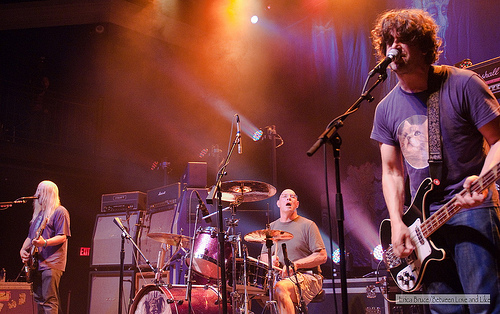
SOUNDTRACK: DINOSAUR JR.-Live at the 9:30 Club, Washington D.C. October 8, 2009 (2009).

This was one of the first shows I downloaded from NPR.  I’ve been a fan of Dinosaur Jr. since my friend Al turned me on to Green Mind back in college.

This is an amazing show created by the original Dino Jr. members.  This tour is in support of their second album since reuniting, Farm. This set-list is an outstanding mix of old songs, new songs, Barlow-sung songs and even some songs from when Barlow and Murph weren’t in the band.  (Green Mind is still my favorite album by them).

When the band reunited there was much joy, and I’ve said in reviews of the newer albums, I’m not entirely sure why.  I mean, Dino Jr has always been about Mascis, and it’s not like Barlow is such an unusual bassist (although Murph’s drumming is always solid).  I’ve nothing against Barlow (I love Sebadoh and Folk Implosion) or Murph, it just seems odd to get excited about having them back in the band aside from nostalgic reasons.

Having said that, the band sounds amazing (and yes, Barlow does get to sing on “Imagination Blind”).  What never really came across to me until hearing all of these great songs live was that Mascis has always been a great pop song writer.  These songs are catchy as hell. But Mascis buries them under loud squalling guitars and a voice that is almost whiny, almost off-key, a total slacker voice.  (But you’ll notice it is never actually off-key.  He must work very hard at that.)

By the nd of the show Mascis chastises the audience for not moving (we obviously can’t see what they’re doing), saying he forgets that people don’t move in Washington, D.C.  But during the encore break, NPR host, Bob Boilen, points out that Mascis himself doesn’t move either–he just stands in front of that wall of Marshall stacks (Boilen wonders how he can hear anything anymore).  And looking at the pictures it’s comical the way he looks, surrounded by amps.  The picture above doesn’t fully do it justice, but check out the extra photos at the NPR page.  And while you’re there, listen to this show. It is amazing.  For a total slacker, Mascis can rock a guitar solo like nobody’s business.

[READ: July 20, 2011] The Best American Non Required Reading

I’d been meaning to read this series for years (yup, Eggers fan), But I have a hard time starting “collections” because I feel like I’d rather be reading a novel.  Nevertheless, I have most of these Nonrequired books, so it seemed like I should dive into one and see what it was like (I don’t think the year really matters all that much–some of the articles are topical but most are not exactly).  Then Sarah said this would be a great book to read on vacation because it’s all short essays, and she was right.  It was perfect for late nights when I wanted something to read but didn’t feel like getting involved in the novel I was reading.

DAVE EGGERS-Introduction
Eggers’ introduction is actually a partial short story about kids who go swimming in pools around town. It reminded me of the opening of Life After God by Douglas Coupland, but of course, lots of kids did that so I’m not saying it was “lifted” from DC.  The story “ends” (it doesn’t really end so much as stop) with an interesting scene between two unlikely kids who get caught.

After this story Eggers includes these three notes about the collection: It’s not scientific, It’s alphabetical, and We had a lot of help with this.  Of the three, it’s the middle one that’s most useful because Eggers says that you shouldn’t necessarily read them in order just because they are printed this way: “In the first half of this collection, you get a good deal of hard journalism, primarily about war and refugees, from Afghanistan to the Sudan, followed immediately by a number of less serious pieces, about malls and Marilyn Manson.  We didn’t group anything by theme , and won’t be offended if you skip around.”  This was good to know (not that we needed the permission of course), but yes, the beginning of the book is pretty heavy. (more…)

Read Full Post »

SOUNDTRACK: THE SWELL SEASON-Tiny Desk Concert #24 (August 10, 2009).

I was going through the NPR recordings that I’ve downloaded and discovered that I had four from The Swell Season.  This Tiny Desk concert is the shortest of the four recordings (although it’s one of the longest Tint Desk concerts–most are about 10-15 minutes, this one is over 33 and has an encore!).  Glen Hansard is charismatic and funny as he says he feels foolish playing just a few songs and would they mind if he played one or two more.

I usually prefer the louder Swell Season songs, but the quieter songs work well in this situation (especially when the NPR staff helps out with backing vocals).  He plays the same songs that you’ll hear a lot on these NPR recordings (“In These Arms,” “Low Rising,” ‘Feeling the Pull” and the highlight of the show: “When Your Mind’s Made Up.”

I’ve liked this song from the first time I heard it in Once.  Every live version I’ve heard is great.  And this one is no exception.  He brings so much emotion to the end of this song as it gets louder and louder and his voice (man he can hold a note) gets louder and more strained.  It’s truly a great musical moment.

And, of course, Markéta Irglová is there as well.  She only sings one song, but her gorgeous harmonies are all over the session (no piano, though).

This is the most subdued of the four concerts, but it’s a good one.  (The NPR halls must have been ringing with his voice during this one!)

[READ: August 21, 2011] JPod

JPod holds a special distinction on this blog.  It is the first book that I have read twice during my time of writing this blog.  It’s also the only book that now follows this pattern:  I read the book, I watched the TV show based on the book, I reread the book.  So now I have the actors from the show in my head as I re-read what happened to them (hi Alan Thicke!).

I’ve been on this Coupland kick (which will now come to a halt for a bit, but will pick up again in the not too distant future) and since I just read Microserfs, I wanted to read this book right on its heels as it is seen as kind of a sequel (but not really at all) possibly because it, like Microserfs has Lego people on the cover.

So let’s get things out of the way first.  This book is not related to Microserfs in any way (except that there’s a (different) character named Ethan, it’s set in a techie world of computer programmers and there are huge swaths of pages that are, if not wasted, then certainly not very practical in terms of reading–more on that).  But there are no overlapping characters, it’s not set in the same country and there’s lots more violence.

The book starts off with a series of pages that tell you the book is not going to be terribly conventional. There’s a series of super large-font words (like in Microserfs) of random ideas.  They’re followed by a break-free four-page rant (in a  different font from the rest of the book) about modern life and technology.  It’s hard to read, but it really conveys a sense of the world we’re entering.

When the book proper starts, Douglas Coupland is mentioned in the first few pages (in a very disparaging way).

“Oh God. I feel like a refugee from a Douglas Coupland novel.”
That asshole?”
“Who does he think he is?”

Then the story kicks into gear. (more…)

Read Full Post »

SOUNDTRACK: RUSH-“Garden Road” (1974).

So the bootleg that I mentioned yesterday was in fact incomplete.  On the Up the Downstair site, the track list includes “What You’re Doing” and “Garden Road.”  When I wrote to the cool host of Up the Downstair, he said that these two songs were available on You Tube and that he’d try to find them and add them to the site.

So in the meantime, I got to listen to the song on YouTube.  This is a song that the band wrote but which they never recorded (same is true for “Fancy Dancer”).  I have to imagine that they wrote these songs for their second album (along with “In the End” which they kept) around the time that Neil Peart joined the band.  Once they realized that Neil could write better lyrics, they scrapped these two heavy rockers.  Both songs have great riffs, even if lyrically they’re pretty poor.

The song rocks pretty well, although the solo seems to have been put to better use in “Working Man.”  I enjoy how the song breaks for the shouts of the Garden Road chorus (kind of like “Bad Boy”–perhaps it was a “thing” for them).  I rather like this song, and I think I like it better than a couple of the songs on Rush.

Check it out.

Maybe it’s time to release these old chestnuts for the fans?

[READ: August 10, 2011] Life After God

After the success of Shampoo Planet, Douglas Coupland wrote several short books (which were really short stories).  They were compiled in Life After God.  To me this book also stands out as another odd one from DC, because it is very tiny.  Not in length, but in height.  It’s a small book, about the size of a mass market paperback.  But it makes sense that it was made this short because it is written with lots of short paragraphs that lead to page breaks (kind of like Vonnegut).

For instance, the first story contains at most two paragraphs per “chapter” about–16 lines of text and then a page break.  At the top of each page is a drawing from DC himself which illustrates to a small degree the information on the page.  It leads to incredibly fast reading and even though the book is 360 pages, you can polish it off pretty quickly.

But what’s it about?  Well, mostly the stories seem autobiographical (even though they are classified as fiction.  And actually, I don’t know anything about DC’s personal life so I don’t know if they are based on anything real, although I do know he doesn’t have any kids, so those can’t be true at any rate).  There are eight stories.  They are all told from the first person and are more or less directed at “you.”  They all seem to deal with existential crises of some sort.  They are honest and emotional.  To my ear, sometimes they seem a little forced, maybe it’s contextual, but it’s hard to write this kind of massively introspective piece and have it sound “real.”  (But maybe I’m not very introspective about things like this myself). (more…)

Read Full Post »

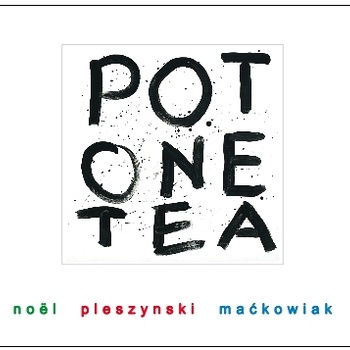
SOUNDTRACKNOËL, PLESZYŃSKI, MAĆKOWIAK-“Salty Air” (2011).

While looking for videos of Basia Bulat, I stumbled upon a Polish music site.  The site featured a review of this album and a free stream of this song.

The album is a collaboration of artists Ann Noël, Grzegorza Pleszyńskiego and Artura Maćkowiaka (Ann Noël, Grzegorz Pleszynski and Artur Maćkowiak).  Their website explains the collaboration (in translated English obviously):

It is for the first time that Fluxus artist Ann Noël and a visual artist Grzegorz Pleszynski engage in a music venture. For Maćkowiak, a musician from Potty Umbrella and Something Like Elvis, this project has become an unprecedented way to go beyond rock band routines known for years.

Potty Umbrella?  Love it.

Anyhow, this is experimental improv music of the most fascinating kind. Especially since, “Ann and Grzegorz have never played music or any instrument.”  The site allows you to listen to all of the tracks.  “In Emmet’s Bag” is a spoken word piece in the spirit of Laurie Anderson (the spoken part is in English).  And “Hey Man!” is a pretty conventional guitar with spoken word piece.

But it’s this track, “Salty Air” that I keep coming back to.  It opens with some guitar waves. Then a simple repeated riff entrs the mix.  And after a minute or so, distorted, echoed vocals speak underneath the music.  I think it’s in English but that’s irrelevant because the repeating and echoing makes it almost incomprehensible.

It doesn’t evoke a mood so much as a kind of helplessness.  But it’s a beautiful helplessness.  Especially when the second voice comes in, sounding almost inhuman as it moans over the top of everything else.  It’s quite a track.

 You can hear this song (and others, and download the CD for $.50) at their site.

[READ: July 10, 2011] “The Swan”

“The Swan” was a wonderfully dark and confusing story.  I loved everything about it.  It opens with the very simple scene of David coming home from work and knowing something was wrong.  His wife Suzie is acting very strange, and where the hell is the car?  Suzie tells him that she was hit by a car and that her car was totalled.  Why didn’t she call him at work?  She didn’t think it was that big of a deal.

He doesn’t know what to think so he turns his anger towards his seventeen year old son (from his first marriage).  Jamie is upstairs in his room, smoking pot and more or less ignoring everything around him (a trait he has perfected).  When David finally breaks through to Jamie, he learns the truth–Suzie was hit by a swan.

The story unfolds a little more: Suzie imagined that the swan was David’s first wife, coming to give her a message.  David is more freaked out by this than Suzie seems to be.  He can’t understand why suddenly all these years later, she is so upset about his first wife (who died, before David met Suzie, by the way).  Suzie wants to know why David never talked about her (she didn’t want to know back then).  And then finally she winds up spending most of her time with a sketchy woman across town. (more…)

Read Full Post »

SOUNDTRACKTINDERSTICKS-Claire Denis Film Scores 1996-2009: White Material [CST077] (2009).

White Material is the most recent soundtrack that the Tindersticks created for Claire Denis.  It was recorded between their “reunion” album The Hungry Saw and their latest album Falling Down a Mountain.

This is a very moody soundtrack.  The guitars set a brisk but desperate-sounding pace.  There are feedback squalls that echo for even more tension.  The feedback could be any number of things as well: squeaky machines, industrial noise, or simply disconcerting sounds.

There is a repeated motif throughout the score that morphs and blends with the tone.  The overall feel of the soundtrack is unified but it never sounds like you’re listening to the same few notes repeated (which is actually what it is, the songs use a very limited palette).

For such a limited palette of music, they really manage to give a diverse picture of the movie.  The way “Andre’s Death” builds, using those same few notes and feedback is truly amazing.  The tension that has been building throughout the score really comes to a head in those 2 minutes.  Contrarily, the flute that plays over those same notes in “Children’s Theme 2” is a haunting exploration of the theme.

This soundtrack isn’t as industrial/weird as L’intrus, but it is probably more intense and spooky.  It’s amazing how evocative these guys are.

[READ: June 22, 2011] Merit Badges

Sarah brought this book home, but she didn’t read it.  It sounded pretty good (I mean it won the 2009 AWP Award for the Novel), so I decided to give it a go.

The book seemed strange to me in the way it was set up: it seemed to have a very specific structure but it didn’t always follow it exactly. So, there are four main protagonists who write chapters of the book.  But they don’t each get a turn, in fact one, Barbara doesn’t really have much to say until much later when her story becomes very compelling.  It also advanced over the years with no real explanation of pacing or even of when a new narrator has jumped ahead several years.

I assumed this was going to be a story of four people looking back on their high school years.  But indeed, it’s about four people looking back on their whole lives, as they grow together, drift apart, come back into each others lives and then disappear again.  In that way, it was also a bit hard to get my bearings.  It was also hard for me to keep all of the characters straight.  Because even though there are four narrators there are many many more kids introduced in the beginning of the story.

Each chapter opens by stating who the narrator is.  The first few narrators are Chimes Sanborn (Prologue), Quint (Woodwork), Slow Slocum (Cooking), Chimes (Drafting), Barb Carimona (Music), Quint (Mammals), Quint (Crime Prevention) etc.  So it’s not consistent.

But also, as you can see, all of the chapter titles are named after Merit badges (which I liked quite a bit).  The subtitle describes what you have to do to achieve the badge (and the chapter does indeed kind of work within that stricture).

So far so good, but we’re also introduced to ancillary characters who appear quite often: Dickie Burpee, Pooch Labrador, Smash Sarnia, and a psychopath named Tulep.  With all of the nicknames and rotating narrators, I admit to losing track of who was who, which I fear lessened the impact of some of the events.

Of course, that’s all structural.  And while I felt like I probably missed out on moments of impact, the overall storyline was not hard to follow.  And, indeed, complaints aside, the story was pretty intriguing.  It is set in the (fictional) small suburb of Minnisapa, Minnesota.  It feels very true to me (having lived in a small town, myself) as do the choices (bad and good) that the kids make. (more…)

Read Full Post »

« Newer Posts - Older Posts »