Feeds:
Posts
Comments

Archive for the ‘Drugs’ Category

922SOUNDTRACK: PRIMUS-Tales from the Punchbowl (1995).

punchbowlTales from the Punchbowl is the final album to feature Tim Alexander on drums (until he came back a decade or so later).  It was never a favorite although it has some really good songs on it.  I feel like their songs were getting a bit too long and kind of dull at this point–all of the songs weren’t fun.

“Professor Nuttbutter’s House of Treats” the opening song, is over 7 minutes long.  It starts off with cheering and what I think of as circus music.  Then the bass comes rumbling in.  After about a minute the proper bass riff begins and the heavy heavy guitar crunching follows.  It’s a surprisingly heavy opening song.  By around 3 minutes, Ler plays a crazy solo and then the song slows down into a jam band sounding song–a bass solo and a normal guitar solo. Around 5 minutes the song turns into something else–a fast bass line with Ler’s repeated solo and Les (I guess) talking over something although it’s kind of inaudible.  It’s a weird way to start the album.  “Mrs Blaileen” is a quietly sung song with a groovy bass and drums.

The two biggest hits on the album were “Wynona’s Big Brown beaver” and “Southbound Pachyderm,.”  I forgot just what a great song “Wynona” is. Anytime Primus does a fun bouncy song you know it’s going to be good.  And between the bass and the guitar this song is just instantly catchy (but because MTV thought it was vulgar they only played it after midnight, so it never became quite the hit it could have).  “Southbound” is a slower song with a smooth bass punctuated by a dissonant riff that is strangely compelling.  At 6 minutes it an unexpected hit, but Primus has been doing the unexpected for ages now.

“Space Farm” is a 2 minute piece of weirdness with a South Park type bass riff and the sounds of, yes, farm animals in space.  I find that I can’t get into “Year of the Parrot” that much.  Not sure why.  I think I don’t like the songs that feature Les’s slow vocals and rhythms, I like the faster more upbeat tracks.  “Hellbound 17 1/2” is called a “theme” and it could feel like a theme song, although the South Park theme is better.

I don’t mention Tim’s drums enough in these songs, but they are great starting point to “Glass Sandwich” which follows up the opening cool drum sequence with a bowed bass.  It’s a little slow as well.  But a song like “Del Davis Tree Farm” brings the excitement back with the weird and unexpectedly poppy chorus.  The next song is “De Anza Jig.”  I love Primus’ goofy song like this one, big wet bass and Ler’s banjo tells a funny story in Les’s cartoon voice.  “On the Tweek Again” is a dark song with a big bass sound and Ler’s effects filled guitars.  The disc ends with “Over the Electric Grapevine” is a great 6 minute song (sometimes when they are long they are really good).  It opens with Les’ bass sounding middle eastern again. The solo in the middle is full of interesting noises (I’m not sure who is making what sound).

There are some great songs on this disc, but I find I don’t listen to it all the way through like I do with their earlier discs.

[READ: January 7, 2015] “Jack, July”

I have enjoyed most of the stories that I’ve read in my recent run through of New Yorker stories.  But I really did not like this one.  I’d say the first reason is because Jack is a meth head and I could not get sympathy for him, especially with the chaotic way the story opened.

I will say that there were a lot of funny moments, in which Jack, while coming down from the meth seems genuinely confused by what’s going on around him.  The crazy mistakes he makes are quite amusing, but considering the whole first part of the story was just Jack trying to get to a house presumably to score more meth was very disappointing.

So Jack walks through the baking Arizona sun.  First he arrives at his “girlfriend” Rhonda’s house.  She tells him he can’t be there [“Jack, who was clearly there, only smiled”].  He walks on to his mother’s house.  But there’ a woman living there (whom he calls Yoga Tights because that is what she is wearing).  She immediately gives him a hard time and calls the cops on him (could be because he climbed in through her window and his pants got caught and were pulled off as he climbed through).  So he runs off with some supplies from her house (“she liked all stores that ended with Mart”). (more…)

Read Full Post »

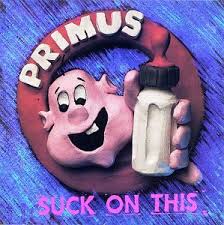
primus bookSOUNDTRACK: PRIMUS-Suck on This (1990).

primus suckThis was the disc that introduced me to Primus–it was on a beach vacation with my friends Al, Joe and Rad.  Al made this the soundtrack of the drive and, man, it was weird and crazy and super cool and by the end of that trip I was hooked.

Actually I was immediately hooked when the band opened this live disc with a rough version of Rush’s “YYZ” which then launched into “John the Fisherman.”  What do you make of this band and this weird song?  Stomping bass which is doing all of the lead stuff, with guitars that are just noises and craziness but which really work with what the bass is doing (once you listen a few times, anyway).  The drums are mammoth and very prog rock.  And then there’s Les’ voice–cartoony and unconventional–sometimes deep, sometime really silly, sounds that work perfectly with the storytelling lyrics.

The quality of this recording is pretty poor, although I find that it sounds a bit better on smaller, less “good” stereos, where Ler’s guitars don’t get lost so much in the bass.  Most of these songs have been re-recorded for later albums, so perhaps the newer versions sound cleaner to me.  [Groundhog’s Day, Frizzle Fry, John the Fisherman, Pudding Time and Harold of the Rocks on Frizzle Fry and Tommy the Cat on Sailing the Seas of Cheese].

The best songs on this disc have really catchy parts: “John the Fisherman” (most of it) or the insane fast bass and wild soloing section of “Groundhog’s Day.”  Sometimes it’s just when the noise stops and Les gets a line, like “It’s Just a Matter of Opinion” (in “The Heckler”).  Although the noise there is really catchy too–listen to what Ler is playing during the funky bass section–it’s wild and amazing.

Of course “Tommy the Cat” is a major standout from all three guys.

The only song that doesn’t really work for me is “Pressman” which seems a bit too long without a lot of resolution (although the end is pretty cool).  I often get “Jellikit” (the other song that didn’t make it to a studio album) in my head, whenever I think, Did you like it?  There’s even a drum solo from Herb the Ginseng Drummer in that song

What’s fun is that the audience is totally into it and they know most of the songs–anticipating lyrics and even singing along.  And this is where “We’re Primus and we suck.” comes from.  It was a shocking debut when it came out, and it’s still pretty unusual, although not as unusual as some of their later songs would be.

[READ: January 3, 2015] Primus

As I said above, I’ve been a fan of Primus since near the beginning of their existence.  And yet, for all of my enjoyment of them, I didn’t really know all that much about their origins.  I didn’t know that the original line up was Todd Huth and Jay Lane (guitars and drums), and that the three of them wrote the songs that appear on Suck on This and much of Frizzle Fry.  Ler had to learn these unusual parts (Ler took lessons with Joe Satriani and is much more accomplished than his lack of flashiness indicates) and did so wonderfully. I also didn’t know that Les and Kirk Hammet were in the same class in high school (and that he’s the reason Les picked up a bass in the first place, even though they never formally played together).

The book is constructed as a series of quotes from a vast assortment of people.  The “cast” is two pages long and includes current and former members of the band and management as well as fans like Trey Anastasio, Matthew Bellamy (from Muse), Geddy Lee, Chuck D, Eugene Hutz, Tom Morello, Buzz Osborne, Matt Stone, Mike Watt, Hank Williams III, guys from 24-7 Spyz, Fishbone, Limbomaniacs and even Linda Perry (!).

It opens with Les talking about his high school years.  And what’s amazing is how many people who were involved in Primus are friends from when he was a kid.  If they didn’t play together, they were involved with art or management or something.  We also get the origin story of Bob Cock, which answers many questions.

Les had formed Primate (legal dispute with the band The Primates made them become Primus) with Todd and Jay.  They toured a lot and were gaining a following, but Les was always looking for something more.  He even auditioned for Metallica after Cliff Burton died (Kirk thought it sounded great but I guess James didn’t). (more…)

Read Full Post »

freedomSOUNDTRACK: CRASH TEST DUMMIES-Jingle all the way… (2002).

ctdEven though the Crash Test Dummies are often seen as a joke band or a one hit wonder (which I guess they are), I’ve liked them for a while (their earlier stuff a lot more than their later stuff, admittedly).  But it seemed like they’d have a fun take on Christmas music.

And it starts out in a comical sort of way with Brad Robert’s deeper-than-ever voice reciting about his life in Los Angeles, where it is warm and sunny at Christmas time.  I like that he rhymes 24th with up north.  The spoken section is quite loud in the mix (it sounds like he is right in your ear).  Unfortunately, that is the case when he starts singing too–he is uncomfortably loud in the mix and it sounds like he is holding back because of it–he doesn’t sound great and his voice sounds more comical than interesting.  Which is a shame because the music (with cheesey keyboards) is great.

Roberts sings lead on about half of the songs.  Ellen Reid sings lead on the other half except for a couple where they split lead duties.

The rest of Robert’s songs include: “Jingle Bells” (which is certainly comical–it sounds like a chain gang song with the “Hey!s” sounding almost like a prison chant).  It’s weird and cool though (even if his voice is once again too loud in the mix).  “God Rest Ye Merry Gentlemen” has his voice mixed much better–he seems to be really singing.  And this version–a loungey/jazzy rendition is much great fun.  “God King Wenceslas” sounds proper (with Reid’s close backing vocals).  It has a pretty penny whistle keeping the song going.

Ellen Reid has a great voice and I love hearing her sing.  But in the first two songs she sings lead on in this disc she sounds like she is singing too slowly.  “O Little Town of Bethlehem” especially sounds like the music is going to pass her up at any minute.  I also don’t like the country vibe of the song.  “In the Bleak Midwinter” is also (intentionally) slow, which I don’t like.  Perhaps I just don’t like this song (although I do think the melody is lovely).  “The Little Drummer Boy” is beautiful and Robert’s bass backing vocals are perfect.  “Silent Night” is done in a countryish style, but I like this version.  Although normally this song can make me cry, this version absolutely does not–too honky tonkish.

The final song, “The Huron Carol” is quite formal and proper–just Reid and a piano opening the song.  It sounds very holy, very pretty.  When Robert’s bass backing vocals come in, it adds more depth to the song.  And it’s a lovely way to end.

[READ: October 30, 2014] Freedom

I read this a couple months ago and then got so caught up in reading other things that I never got around to posting about it.  And that’s a bummer because I really liked the book a lot and I fear that I won’t remember everything I wanted to say about it.

I had read a couple of excerpts from the book in the New Yorker (quite some time ago).  They were helpful in grounding the story for me, but they didn’t prepare me for the breadth of the story.  It follows one family, the Berglunds, through several decades, focusing on each of them in great detail as they navigate through the Reagan, Bush, Clinton, Bush and a smidge of the Obama years.

The Berglunds are a liberal family.  They were among the first white families to move onto their urban street in St. Paul, Minnesota (after white flight to the burbs).  Patty is a charming (some say smug) homemaker and Walter is a lawyer (public defendant, naturally).  They have two kids, Jessica and Joey.  Patty dotes on Joey to an embarrassing degree (Joey is embarrassed by it, Jessica is infuriated by it and even Patty is kind of embarrassed when she really thinks about it).  At the same time she is rather neglectful of Jessica.  Naturally, Jessica becomes quite the success (loves reading, committed to the environment), while Joey rebels and finds all kinds of ways to disappoint them and make money.  (This isn’t a bad thing, but the family has plenty of money and Joey doesn’t need to (especially not the way he goes about it).  Not to mention Walter and Patty are not into the money for money’s sake thing.

The book opens that there was some “news” about Walter. He and Patty had moved to Washington DC two years earlier.  He clearly did something bad (we won’t find out until much later).  But that serves as an introduction to the Berglunds.  And then we go back to see them, years earlier, settling into St Paul. (more…)

Read Full Post »

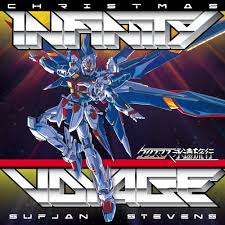
superSOUNDTRACK: SUFJAN STEVENS Christmas Infinity Voyage: Songs for Christmas Vol. 8 (2008).

sufjan 8Back in 2008, a Vol. VIII of Sufjan’s Christmas recordings was leaked on the internet.  It was called Astral Inter Planet Space Captain Christmas Infinity Voyage-Songs for Christmas Vol. VIII and I talked about it here.  When his official release came out volume 8 was similar yet different from the leaked one.  The song tracks were almost identical, but the versions (and lengths) were rather different.

The leaked version of the disc has this track listing:

Angels We Have Heard on High  5:00
Do You See What I See  4:59
It Came Upon a Midnight Clear   :48
Christmas in the Room  4:50
Good King Wenceslas  2:15
Joy to the World  7:49
The Child With the Star on His Head 13:15

And the official version has this track listing

  Angels We Have Heard on High  4:04
Do You Hear What I Hear  9:14
Christmas in the Room  4:32
It Came Upon a Midnight Clear    :48
Good King Wenceslas  4:18
Alphabet St.  1:36
Particle Physics 1:04
Joy to the World  5:25
The Child With the Star on His Head 15:13

So what’s the difference


“Angels We Have Heard On High”—The leaked version has a lengthy warbling keyboard introduction and is the real song.  The official version is an original song based on the hymn.  I like the way the opening melody changes expected direction in mid line.  I also enjoyed the “oh ho ho hos.”  This is pretty much the only traditional sounding song on the disc because the rest get pretty unusual electronic treatments

“Do You Hear What I Hear”  The leaked version (with a different title) was autotuned and slow (and only 4 minutes).  The official version is also autotuned, and is filled with electronic percussion. It quickly goes weird and crazy, but I like it.  It’s 9 minutes long and the last five minutes are a crazy freakout of autotuned nonsense.

“Christmas in the Room” is a song about being alone with someone you love for Christmas—pros and cons (although there seems like a lot sadness in the song). The autoharp is pretty though. [The leaked version is a bit louder with electronic music rather than autoharp].

“It Came Upon a Midnight Clear” in both version this is a short (less than a minute) electronic version of the traditional song.

“Good King Wenceslas” is also crazy and electronic with lots of strange inserted sounds and lines from other songs.  [The leaked version is only 2 minutes and while still electronic is far less crazy].

“Alphabet St” continues some of the nonsense in Wenceslas—lyrics about being sexy. “Particle Physics” is also 1 minute long of space sounds that merge into

“Joy to the World” is also slightly off-sounding (with lots of different instruments). It starts kind of pretty but goes really wild with the electronics and the autotune and by the end it’s just crazy electronic freakout.

“The Child With the Star on His Head” opens the official version with someone saying “desperately seeking Santa take 3.”  Despite it being super long (in both version) the song itself is really quite pretty.  It’s very Sufjan with great falsetto and an unexpected melody.  The two versions are similar in construct but after the opening few minutes they diverge pretty radically.  At around 5 minutes an electronic sounding, totally fuzzed guitar solo begins and it adds a very strange element to it—a kind of psychedelic outer space sound, which doesn’t quite fit the mood. [Interestingly, in the leaked version, the solo is pretty much the same notes, but it is far less spacey and effects filled.  It has more of a classic rock guitar solo (kind of David Gilmour-ish]. The solo lasts longer in the new version too.   That pretty much accounts for the two minute discrepancy.  The rest of the song plays out mostly the same, although again, the leaked version is kind of pretty and sweet (with la las and a horn solo) while the official release is all electronic and gets crazy here and there.  The end of the song is a denouement–horn based in the leaked and all electronic in the official.

I’m not really sure which release I prefer, because the electronic stuff is really kind of wild and fun (although not very Christmassey).  But the leaked version is really quite nice.

[READ: December 11, 2014] Superfuckers

I know Kochalka mostly from his children’s books, which are weird and warped and really really funny.  Most of them seem to star his son’s head imposed on his weird cartoon style (so funny).

So imagine my surprise to discover a book of his called Superfuckers.

Superfuckers is a “collection” of “issues” of the “series” Superfuckers.

It opens with issue #271 (from 2005).  And within five or six panels, we get every single curse word you can imagine from our “superheroes.”  Indeed, they really don’t “do” anything.  They just sit around and yell at each other (calling everyone gay or slut or some such), get high (on a staggeringly odd number of things) and plot to take over the gang. (more…)

Read Full Post »

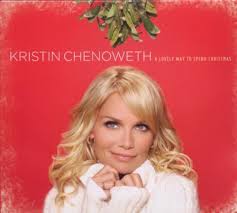
aamaSOUNDTRACK: KRISTIN CHENOWETH-A Lovely Way to Spend Christmas (2008).

chenoLast year I thought about doing a Christmas CD every day in December as my soundtrack.  But I forgot until a week or so in.  But this year I remembered.  Yuletide joy!

Since Sarah and I have a lot of Christmas CDs from over the years, I decided to just pick some at random this year.  And we start with this one which I got for Sarah I thought last year, but if it’s from 2008, perhaps I got it earlier?

I knew Chenoweth from her great role on Pushing Daisies.   I didn’t know she was a singer then.  She has since done some amazing runs in various roles and her voice is great.  This disc features a mix of traditional songs, a few more religious songs and a number of unexpected “mashups.”  It works pretty well, although it tends to cross the line into cheese a bit too much for me.

“I’ll Be Home for Christmas” has her in great voice.  Although I hate the cheesey sax solo.
“Christmas Island” is a new favorite song for me.  Her version is fun (although the original Hawaiian version is much more fun).
“The Christmas Waltz” is a song I don’t know.  It is probably best song on the disc.
“Do You See What I See” also suits her voice very well.  It’s the first song to mash in another song (“Angels We Have Heard on High“) which is quite pretty
“Sleigh Ride/Marshmallow World” I like her part, I’m not sure about the blend.  I don’t know who John Pizzarelli is, but he sings it too clean.  The original of “Marshmallow World” is sung in an almost drunken fashion which makes the weird lyrics better.   Nevertheless, the two of them have a good vocal chemistry.  And there’s some goofy fun at the end.
“Sing” (you know, sing, sing a song).  It’s a really weird inclusion here.  But she sounds great.
“Silver Bells” also sounds great.
“Come On Ring Those Bells” is another song I don’t know.  This version is way too pop country for my liking.
“What Child is This” is also perfect for her voice.
“Home on Christmas Day” is another song I don’t know (who knew there were so many unfamiliar Christmas songs?), and it works well “Born on Christmas Day” is a rather dull more religious song, which seems somehow out of place.
“Sleep Well Little Children/What a Wonderful World” is another mash up. It works pretty well and I kind of get why she chose it to end the album, but it’s another weird non-Christmas related song.

So overall this is a decent Christmas album. There’s some lovely traditional songs, some odd choices, and a few clunkers.  But her voice is really fantastic throughout.

[READ: November 29, 2014] Aama

I’m surprised and delighted with how many unusual, translated graphic novels are being published in the States these days.  There’s always something about the art that screams “not American.”  So when I get books like this (especially if the author’s last name is Peeters), I immediately look for the translator to confirm my suspicions.  This book was translated by Edward Gauvin.

While translated childrens book often seem slightly weird to my family (fun, but always slightly askew), the graphic novels don’t usually seem as weird to me.  (Maybe the childrens authors just expect more existential thought from their kids).

Having said all of that, I found that I really couldn’t get into this story.  There were some great elements to it, in both storytelling and character creation, but, and maybe more will be explained in future books, but the main plot was a little too vague to me.

But I loved the way it was constructed.  We open on a man face down.  As he comes to, he realizes that he has no idea who he is.  While he tries to get himself together, a weird looking ape comes up and calls him Verloc.  The ape has no hair on his legs (so they look human).  The ape is named Churchill and he is a custom built robot.  As Verloc tries to come to grips with what’s happening, Churchill gives him his “memoirs” to read.  The book is “real paper” which Verloc appreciates.  And they started just a week ago.

Pretty cool opening. (more…)

Read Full Post »

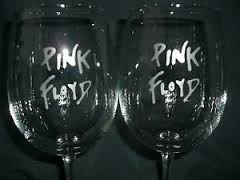
greatestSOUNDTRACK: PINK FLOYD-“The Hard Way” and “Wine Glasses” (1974).

glassThis book informed me about these two unreleased Pink Floyd songs (there’s a Wikipedia site that lists some fifty more !).  While the were unreleased in 1974 (from the abandoned Household Objects album), they were eventually released in 2011 on expanded versions of albums.

“The Hard Way” features some “percussion” that sounds like someone taking steps.  There’s a bass riff which I gather is from rubber bands (but very well tuned).  There’s clocks ticking and chiming and tape being unspooled.  It’s a neat idea and while it is absurd to think you could make a whole album with this kind of stuff (in 1974), it’s a surprisingly good sounding track.

“Wine Glasses” was apparently made with wine glasses.  It is all of 2 minutes long.  It was designed to be a full song but was eventually used in the introduction to “Shine on You Crazy Diamond.”  I never really considered that there were wine glasses making the sounds (and clearly there are synths added on top), but yeah, so that ‘s kinda neat.

[READ: November 25, 2014] The Greatest Albums You’ll Never Hear

I found this book at work and knew I had to read it.  I was actually surprised at how long it took me to read (there’s a lot of entries).

The title and subtitle pretty much say everything you need to know about this book (and if you need to read it or not).  This book collects a series of writers who give a brief history of some of the more famous (and some not so famous) albums that were never released.  It explains (as best they can) why the albums weren’t released and even gives a percentage chance of likelihood of the album ever seeing the light of day (interestingly, most seem to be a 3/10–they may have been able to use a 5 point scale).

I knew some of the records they talked about (The Beach Boys’ Smile, Neil Young’s Chrome Dreams), but was ignorant of quite a lot of them. And while big fans of the artists may know all of the details about their favorite lost album already (these are sketches, not exhaustive research), there will certainly be some new information.  For instance, I’m a huge Pink Floyd fan but had no idea about the two shelved works mentioned here.

I liked the way the book was done chronologically and grouped by decade.  It was also interesting to see how the “reasons” for the non-release morphed over the decades from “the record label didn’t like it” to “it was leaked online.”

The one major gripe I have with the book is that it is chock full of “imagined” album covers.  This in itself is okay, but it is not made explicitly clear that they are all imagined (credits are given at the bottom of each image, but it took me a few entries to realize these were just people’s ideas of what the covers could look like).  And most of them are gawdawful.  Just really lame and dull (as if they had 20 minutes to come up with an idea).  They mar an otherwise cool collection,especially since some of the unreleased records actually do have proposed covers (even if they were never released).  I see that there is in fact a paragraph about the covers in the front pages of the book, but it is almost hidden away.

In addition to the albums I’ve listed below, I learned some fascinating things.  That Bruce Springsteen has hundreds of songs that he wrote but never released for various reasons.  That Pink Floyd did try to make an album out of household objects (with no instruments).  That the Sex Pistols’ Never Mind the Bollocks was almost simultaneously released illicitly as Spunk.  And that Danger Mouse’s The Grey Album was recently remastered.

The end of the book includes two small sections: other favorites that were never released.  Not sure why they earned only a small column instead of a full entry, but that’s okay.  The second was albums that we eventually did see, like My Bloody Valentine’s MBV and Guns N’ Roses’ Chinese Democracy.

So if you ever wondered what happened to that long lost album, this may be the book for you.

A sampling of the unreleased records include:

  • The Beach Boys-Smile
  • Buffalo Springfield-Stampede
  • The Kinks-Four Respected Gentlemen
  • The Beatles-Get Back
  • Jeff Beck-The Motown Album
  • Jimi Hendrix-Black Gold
  • The Who-Lifehouse
  • Wicked Lester
  • Rolling Stones-American Tour ’72
  • CSN&Y-Human Highway
  • Pink Floyd-Household Objects (1974), Spare Brick 1982
  • Dusty Springfield-Longing
  • David Bowie-The Gouster (1975), Toy (2001)
  • Sex Pistols-Spunk
  • Neil Young -Homegrown (1975), Chrome Dreams (1976)
  • Frank Zappa-Läther
  • Beastie Boys-Country Mike’s Greatest Hits
  • Weezer-Songs from the Black Hole
  • Jeff Buckley-My Sweeetheart the Drunk
  • Van Halen-IV
  • Foo Fighters-The Million Dollar Demos
  • Green Day-Cigarettes and Valentines (the author doesn’t believe it was actually stolen)
  • Tapeworm (Trent Reznor and Maynard James Keenan among others)
  • Deftones-Eros
  • U2-Songs of Ascent
  • Beck-The Song Reader


Read Full Post »

how you dieSOUNDTRACK: DIARRHEA PLANET-“Lite Dream” Live on KEXP (2014).

dpHow to pass up a band with a name like this?  Well, it’s pretty easy, actually.  Who would even want to say their name?

The name conjures images, no, let’s not go there.  The name conjures music that is just abrasive and rude–ten second punks songs.  But in reality, their music is pretty traditional old school heavy metal.  They have 4 lead guitarists after all! (There’s 6 guys in the band altogether, surprisingly, there’s no women).   One of the lead guitarists even plays with his teeth (for a few seconds).

This song is about heavy metal, although I’m not sure what about it.  There’s some big riffs, solos galore.  There’s even a classic 80s style dual lead guitar solo.  There’s big loud drums.  There’s feedback.  It’s everything you think of as heavy metal, with a seeming wink and nod thrown in.

This is basically a goofy feel good band, playing fast heavy metal.  Shame about the band name, though, really.

Watch it all here.

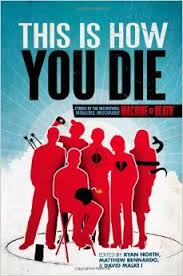
[READ: spring and summer 2014] This is How You Die

It is quite disconcerting to open a Christmas present from your wife and have the first thing you see be the words “This is How You Die.”  To then look at her confusedly and try to interpret the look of excited delight on her face as she wonders why you’re not excited.  Then she explains that it is a sequel to the interesting collection Machine of Death that you both had read several years ago (but which I evidently never posted about).  Sighs of relief and then Christmas can proceed with more merriment.

So over the course of the new year I read these stories and I enjoyed most of them quite a lot.

The premise of the book is that there is a Machine of Death.  This machine states how you will die, but it does not give you a time, place or real definition of what it means by hope you will die.  Statements seem obvious but may in fact be different in some twisted way.  As it says on the back of the book, OLD AGE could mean either dying of natural causes or being shot by an elderly bedridden man in a botched home invasion.  The book revels in the irony that you can know how it’s going to happen , but you’ll still be surprised when it does.

The way the machine works is that you insert your finger, it takes a blood sample and gives you a card with the way you die printed on it.  No matter how many times you do it you will get the same result.  These are the guidelines, and each author made a story with just that set up.

Pretty cool right?  The first collection was really great.  And so is this collection, done by writers and cartoonists that I had never heard of before.  There are 34 stories and 12 comic strips (it’s a hefty collection).  Because each story is basically about how a person dies, I had to think about how best to review the book–without giving away any twists.  So I think the title and a very brief plot will have to suffice.

There’s even a funny promo video for the book (at the end of the post). (more…)

Read Full Post »

tpk3SOUNDTRACK: OBETROL-“The Sound Machine” and “Chopped an Dropped”(2011).

obetrrolObetrol is a band that I can find out very little about. They seem to have 5 songs out and each one is quite different. My favorite is “The Sound Machine” which has a lush sound with twinkly guitars and a wispy female vocalist singing over the top of it.  It has a very trippy slow motion quality to it.  The singer sings a bit like a delicate Kim Gordon (in that shes not always exactly on key).

It’s hard to get more out of this song since it’s only 2:25, but I think it would make a cool intro to any record.

“Chopped and Dropped” on the other hand opens with buzzy guitars (and a “Kick Out the Jams” sample).  The vocals are sung (screamed) by a man. It is a fast-moving tinny punk song with trippy female echoed vocals in the background.

Hard to pin them down, but you can check them out here.

[READ: July 28, 2014] Pale Summer Week 3 (§22)

This week’s read is only one section because it is almost 100 pages of one person’s testimony.  Presumably, this is also part of the testimony on videotape which was broken down into smaller sections.  But there is no “context” for this section;  no ID number.  Although it does address very similar issues and questions.  I was on the fence about how much to include here.  So much of it is “irrelevant,” that I hate to get bogged down in details.  So I think it will be a basic outline of ideas until the more “important” pieces of information surface.

§22

For the most part, this is all inside one man’s head as he talks about his life in college, after college, and into the Service.  In terms of advancing the “plot,” there’s not much (until the end).  Mostly this is simply a wonderful character study, full of neuroses and problems that many people face at some point (to one degree or another).  We don’t know who this author is (very minor spoiler: we will learn who it is in §24 [highlight to read]).

The interviewee states that “A good bit of it I don’t remember… from what I understand, I’m supposed to explain how I arrived at this career.”

Initially he was something of a nihilist, whose response to everything was “whatever.”  A common name for this kind of nihilist at the time was wastoid.  He drifted in and out of several colleges over the years, taking abstract psychology classes.  He says that his drifting was typical of family dramas in the 1970s–son is feckless, mother sticks up for son, father squeezes sons shoes, etc. They lived in Chicago, his father was a cost systems supervisor for the City of Chicago. (more…)

Read Full Post »

over easySOUNDTRACK: ANDREW HEWITT-“A Boy Held Up with String” (2014).
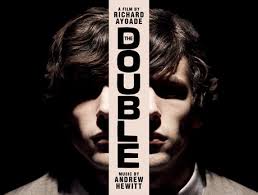
Yhewittesterday I mentioned the soundtrack to The Double.  The score was composed by Andrew Hewitt, and this is one of the more popular pieces from the film.

It opens with some fast violin runs that seems to be racing each other, until about twenty seconds in the piano takes over the runs, but with a high note that keeps the pieces grounded (in the air somewhat).

The end of the song is primarily the piano with violin swirling around on top of the melody.

It actually feels like an introduction to something epic, but as with most scores, 75 seconds is all you’re going to get out of this cool, dramatic piece.

You can hear it here.

[READ: June 5, 2014] Over Easy

I saw this book at work and more or less ignored it.  Then a few days later I saw a review of it in somewhere and decided to read it.

This is a graphic novel about a young artist making ends meet at a diner in Oakland, California in the 1970s.  The back of the book says this is a fictionalized memoir (which I hate because, well, let’s just call it fiction, huh?).

Margaret is an art student.  As the story opens, she is in a diner, the only one there, when a guy named Lazlo starts talking to her. He is funny, cleverly dressed and probably high.  (He claims his full name is Lazlo Meringue).  Margaret is broke and knows that most waitresses hate poor students, but Lazlo is willing to take one of her drawings in exchange a meal.  And a friendship is born.

A flashback shows us that Margaret grew up in San Diego.  When she graduated high school, she didn’t want to do anything, but was forced to go to college–so she chose Art school at San Diego State.  Then she moved to Oakland, and got mired in the art scene.  In which punks were starting to push out the hippies.  And the center of it all was the Imperial Cafe (the diner in the first scene).

She says that you can discern the various culture who came into the cafe by the drugs they took: Professional crowd (cocaine); punks (speed); hippies (pot).  And since she could no longer afford school, she felt that she could do worse than working at the Imperial.  Lazlo says she has to tell him a joke or a dream and if he likes it, she’s hired.  Her joke is quite vulgar and she is welcomed as Madge.  Her first job is washing dishes and scrubbing out all the shit.  It is backbreaking and strangely satisfying. (more…)

Read Full Post »

flies2SOUNDTRACK: CIAN NUGENT-Tiny Desk Concert #353 (May 3, 2014).

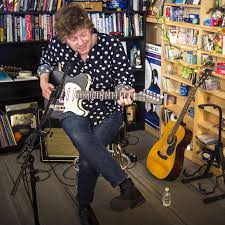
cianCian Nugent is from Dublin.  In this Tiny Desk Concert, he plays two guitars, including a crappy no name electric guitar with a great raw sound.  For the first song, he plays a pretty acoustic guitar instrumental called “Grass Above My Head.”   It has a slow melody that turns into a ragtime jaunt over the course of 6 and half minutes.

The next two songs are on that electric guitar and are both rather different (he says the songs comes from “incoherent range of the mess that is my musical career”).  Before playing “Hire Purchase” he tells a very funny story about getting a pencil from a garage (and that he uses it to keep his string from detuning–does that work?).  This is an electric guitar instrumental, bluesy and mellow with some great riffs.

The final song, “Nightlife” has words.  It’s a simple blues song. Nugent has a nice delicate voice.  I’m not a big fan of bluesy songs, but he does a great job with this and the other two styles.

He also wrote a song called “My War Blues” which is variations on a Black Flag song (I don’t recognize the original in his version, myself).  But you can hear that here.

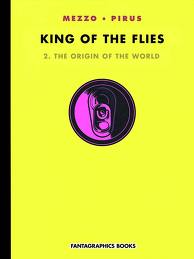
[READ: June 4, 2014] King of the Flies 2. The Origin of the World

This book picks up right where Book 1 left off.  This edition was also translated only by Helge Dascher although it says she had help from Dag Dascher and Kim Thomspon (I didn’t notice any change in quality).

As this book starts, Eric’s mother is making serious advances with Francis–the man whom she just met but who she is already calling her fiance.  Eric fantasizes about killing him (his dream sequence mother says this is the 13th time he has killed Francis).  Marie and Eric are still together and, through a strange series of events, Ringo is asking Eric to hold on to a cool looking elephant bowling bag.

By the end of this first story, Eric has saved Becker from drowning.  And yet neither Becker nor Karine bothers to thank him.  Indeed, Karine seems even more angry at him.  But this blow off makes Eric want Karine even more.

In a later story we finally meet Karine’s family who are just as freaked out about her “dating” this old guy.  And, by the end of the story Becker has a heart attack and dies.  When she returns home after the funeral she sees Eric and she confides in him that she is pregnant.

The newest development in the book comes in the next story in which we learn that Damien is a ghost and that he visits everyone that he knew.  Some people who are receptive to seeing him can actually talk with him.  He’s obviously pissed about Eric and Sal, but he has come to terms with a lot of things.  He even forgives the man who killed him (by accident).  He also winds up meeting ghost Becker at some point. (more…)

Read Full Post »

« Newer Posts - Older Posts »