Feeds:
Posts
Comments

Archive for the ‘Drinking’ Category

SOUNDTRACK: SONIC YOUTH on World Cafe, August 21, 2006 (2006).

Travelling back even further on the NPR timeline, Sonic Youth appeared on World Cafe in 2006 to promote Rather Ripped.

This is a brief session (only three songs) but as with the interview with Thurston Moore, David Dye does another great interviewing the band here.  Although it must be said that saying the band is once again a four piece (when clearly there are five people in the picture and in the studio and when he later says two guitars, two basses and drums–which I also think is incorrect, as I’m pretty sure Kim switched to guitars at this point, although I don’t know if she did during this set) is not a great way to start the interview.

Facts aside, the interview is informative and interesting and provides a glimpse into the band’s psyche all these years into their career.

The set is also good (although Thurston’s voice sounds a little off on the opener “Incinerate”).  The surprising thing about the set is that even with the five of them, the feeling is one of restraint. True, the songs on Rather Ripped are not as noisy as previous records, but this feels like they are trying not to wake anybody up the NPR folks.  It’s a weird feeling for a Sonic Youth set, but the plus side to it is that you can really hear everything clearly.

The other two songs are sung by Kim: “Jams Run Free” and “What a Waste” (why do they never promote any of Lee’s songs??).  And there’s the very amusing comment that the first time they played “What a Waste” Thurston and Kim’s daughter said it sounded like the theme from Friends.  Ha!

[READ: April 15, 2011] The Best American Comics 2006

I just recently learned about this series from The Best American line of books.  I had known about the Best American Short Stories and Essays and even Non-Required Reading (which I have not yet read).  But once I found out about the best comics, I knew I had to check it out.

The first issue came out in 2006.  The series editor is Anne Elizabeth Moore and the Guest Editor for this volume was Harvey Pekar.  Each of them has an introductory essay in the book.  To me the amazing thing about Pekar”s essay is how aggressively defensive he sounds (a sort of, “you may not like this one, but try this one” attitude) about these comics and comics in general.  I don’t know much about Pekar’s work.  I know he’s a kind of underground icon, but I seem to have missed him.  My impression of him is that this sort of antagonistic/defensive attitude seems to go along quite well with his comics, so I guess that makes sense, but I didn’t find it very welcoming.

But that’s okay, because I really enjoyed the comics.  And quite a few were by artists that I had never read before, which is even better! (more…)

Read Full Post »

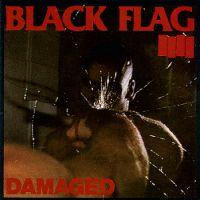
SOUNDTRACK: BLACK FLAG-Damaged (1981).

I’ve liked Black Flag since I bought Loose Nut on vinyl way back when (1985, the year punk broke for me).  And those four bars were iconic to me even before I had heard a note (although I just learned they are supposed to represent a flag waving).

And this is where their legend really took off.  So a few things I never knew about this album until I looked them up recently.  1) That’s Rollins on the cover punching the mirror.  2) He didn’t really punch the mirror (it was smashed prior and the blood is fake).  3) I knew that Black Flag existed for a while before Rollins’ arrival and that they’d had a series of singers before him.  But I didn’t realize what a their first EP (Nervous Breakdown–Keith Morris on vocals) came out in 1978, their second EP (Jealous Again–Ron Reyes on vocals–credited as Chavo Pederast (he left the band in the middle of a live show, so they changed his name to that rather offensive one)) came out in 1980.  Their third EP (Six Pack –Dez Cadena on vocals) came out in 1981.  Rollins joined a few months after that and Damaged–their first full length–came out in December 1981.

“Rise Above” is a wonderfully angry song.  The gang vocals of pure empowerment work so well with the chords.  It’s still effective thirty years later.  “Spray Paint” goes in the other direction: rather than an uplifting, catchy chorus, it’s a deliberately angular chorus that’s hard to sing along to (even for Rollins).

“Six Pack” represents the more “popular” side of the band.  And it is a wonderfully funny single.  I just can’t decide if it’s serious or ironic (see also “TV Party”).  These two dopey songs are great to sing along to and are simply awesome.  (Fridays!)

The rest of the album turns away from the lighthearted tracks.  “What I See” is a really dark moment on this album.  And the negativity is unusual especially given Rollins’ later penchant for lyrics about fighting back.  True, Rollins didn’t write these lyrics.

“Thirsty and Miserable” is a blast of noise with some of Ginn’s first real guitar solos (which Guitar World says is as one of the worst guitar solos in history…and I say really? that’s the solo they pick?  Ginn has done some pretty outlandishly bad solos over the years…of course the whole list is questionable at best).  “Police Story” is a simple but effective description of the punks vs cops scene at the time.

“Gimme Gimme Gimme” seems childish, but that’s clearly the point.  “Depression” is a super fast track.  (Trouser Press considered Black Flag America’s first hardcore band).  “Room 13” is an odd musical track, with pretty much no bass.  It’s just some roaring guitars and drums and Rollins’s screams.  This track stands out because Chuck Dukowski’s bass propels most of the songs here.

“No More” sounds “typically” hardcore: very fast with the chanted chorus of “No More No More No More No More.”  “Padded Cell” is also fast (and is pretty hard to understand) except for the “Manic” chant, but the following track “Life of Pain” features what would become a signature Greg Ginn sound…angular guitars playing a riff that seems slightly off somehow.  Compelling in a way that’s hard to explain.

It’s funny that a band that plays as fast as they did also released some pretty long songs. “Damaged II” is almost 3 and a half minutes long.  It has several different parts (and a pretty catchy chorus).  And the final song “Damaged I” is a kind of crazed rant from Rollins;  It’s one of his scariest vocal performances; he sounds really deranged.  Especially when it sounds like he just cant think of anything else to say so he just screams maniacally.  But his vocals are mixed behind the music as if he’s trying really hard to get heard.  There’s very little else on record like it.

It’s a wonderful end to an intense disc, and the beginning of a brief but powerful career.

[READ: March 25, 2011] The Life of Polycrates

I’ve been reading Connell for a few years now.  In fact, the first time I posted about his work came with a blistering dismissal of his story “The Life of Captain Gareth Caernarvon” in McSweeney’s 19.  That story is included here, and upon rereading it, I learned two things:

  • One: context is everything.
  • Two: I was totally and completely wrong in that original review, and I take it back.

But before I explain further, some background about this book.  This is a collection of eleven stories, eight of which have appeared elsewhere.  Unfortunately there’s no dates of publication included so I don’t know how old any of these stories are.

The other thing I’m fascinated about is Connell himself.  I’m not the kind of reader who wants to know a ton of details about the author, but I like a little bit of bio (or a photo) when I read someone.  The only bio that is consistently presented about Connell is that he was born in Santa Fe, New Mexico.  I’m fascinated by this because so many of his stories are set in Europe.  So I have concocted a master biography about Connell’s life and how he has lived and toured extensively in Europe, studied theology (and found it wanting) and investigated all of the world’s darker corners.

It’s this latter aspect that really altered my perception of Connell’s writing.  I’ve liked the last few things that he’s written, but I fear that I was not looking at him through the proper lens.  And this relates back to bullet point one above.

Connell writes in a world not unlike H.P. Lovecraft–a world that is unconventional, dark and more than a little twisted.  And yet, unlike Lovecraft, there is very little of the fantastical in his stories.  Rather, his characters reside in our own world (with a little chymical help from time to time), but they are all real.  They’re just not characters most of us choose to associate with.  So, reading that first story in McSweeney’s, where it was so different from all those others, I found it really distasteful.  In retrospect, I’m not going to say that it is meant to be distasteful, although some of his stories are, but it was certainly not a pleasant story by any means.

The other fascinating thing to note about this book is that all of the stories are written in short, Roman Numeraled segments.  So the title story has 35 segments.  But even some of the shorter ones has twelve or thirteen segments (sometimes a segment is just a few lines long).    I actually enjoy this style (especially when the segments introduce something totally new into the story–which many of these do). (more…)

Read Full Post »

SOUNDTRACK: MOGWAI-Kicking a Dead Pig + Mogwai Fear Satan Remixes (1998).

This release came out soon after Young Team, when it seemed like Mogwai was just flooding the market.  It’s a remix album of a number of tracks from Young Team. And, when it was re-released it contained several mixes of the track “Fear Satan” as a bonus disc.

In general, I’m not a fan of remixes.  There, I’ve said it. Back in the flush 90s, when I used to buy a lot of import singles, I enjoyed the B-sides, but was always disappointed when there was a remix rack.  Some are fine.  Indeed, some are pretty good.  But for the most part you get a very long song that is mostly drum machine and sounds and noises.  And I know that they are designed for dancing, but I’m not a dancer, so despite how much techno I own, I’m very rarely thrilled to ge a remix.

Which is  as good a way as any to say that this is a pretty inessential disc, even for Mogwai fans. Even though Mogwai themselves throw a couple of remixes on there.  And for the most part, what we get are washes of sound.  Since Mogwai don’t really do lyrics, it’s not always very obvious what song the remixers are remixing.

  • Hood: “Like Herod” has some interesting staccato, which Mogawi typically doesn’t have.
  • Max Tundra: “Helicon 2” is primarily ride cymbal although a guitar motif does come in (with some pretty harmonics) eventually.
  • Klute: “Summer” (Weird Winter Remix). There’s nothing distinctive about this.
  • Arab Strap: “Gwai on 45.”  I actually expected a lot from this mix because Arab Strap are a weirdly wonderful band and the guys have worked with Mogwai.  But then, they’re not an exciting band–they’re very good, just understated.  And as a result, this remix is okay but nothing too exciting.
  • Third Eye Foundation: “A Cheery Wave from Stranded Youngsters” (Tet Offensive Remix) is also okay.
  • Alec Empire: “Like Herod” (Face the Future Remix).  Alec Empire usually turns all of his remixes into super fast like 500 bpm noise explosions (just like Atari Teenage Riot). He doesn’t do that here, and the song just kind of melds in with the rest.
  • DJ Q: “R U Still In 2 It” has a vocal, but it is mostly one word repeated over and over.
  • Kid Loco: “Tracy.”  I liked this track more than many others.
  • Mogwai: “Fear Satan.”  It’s weird to me that you would remix one of your own songs, although I guess it’s fun.  I still like the original better.  And I’m fairly certain this one is different from the one on the next disc.

The four “Fear Satan” remixes are by:

  • Mogwai: delicate, the washes of sound are quiet and warm, and it really features the flute quite a lot. Although by the end, the feedback does come in.
  • μ-Ziq: remix is much more staccato. The washes have been removed.  There’s very little connection to the original.
  • Surgeon: remix begins electronically and builds as a slow wave.  It’s pretty much one note getting louder and louder until about a minute left when it changes tone.  It’s hard to imagine even calling this a remix.
  • My Bloody Valentine: at 16 minutes,  the MBV remix stands out for length. After about five minutes of interesting feedback squalls it shifts to a high-pitched noise, almost like a drill. After a few minutes of this it shifts into a very pretty electronic song.  By the end it’s a pounding heavy drum fill rocker.  Any resemblance to “Fear Satan” seems purely coincidental, but it’s a wild ride.

[READ: March 11, 2011] The Revolution Will Be Accessorized

I only heard about this anthology when I read the Sam Lipsyte piece from it.  I didn’t really like his piece, but the rest of the anthology sounded intriguing.  It was put out by BlackBook magazine, which I have a sort of vague awareness of, but couldn’t really say anything about (it’s some kind of counter-cultural fashion magazine or something).  But it seems like the counter-cultural aspect really lends sway here.

This anthology is a collection of short stories, essays and interviews.  There’s also an introduction by Jay McInerney

JAY McINERNEY-Introduction
He talks about BlackBook and the essays contained here. (more…)

Read Full Post »

SOUNDTRACK: MAYYORS: 3 EPs (online only) (2008-2009).

I learned about Mayyors from the NPR’s Best Metal and Outer Sounds releases of 2009 on All Songs Considered.  I enjoyed Viking’s picks for 2010 quite a bit so I thought I’d investigate his previous years’ selections.  I’d never heard of Mayyors before, but he makes the band sound so intriguing (and dirty).

The write up is so wonderfully enigmatic that I had to find the tracks online.  I mean, how can you pass up this:

This is a plea to Mayyors: If you’re going to release one of the ugliest pieces of noise rock this side of The Jesus Lizard, please start issuing your music in editions bigger than David Yow’s beer gut. After a couple of ripped 7″ singles made the rounds on blogs last year, those seeking the puss-popping skronk of Mayyors scavenged message boards and listservs to get their hands on the next limited affair. (After all, these Sacramento-based dudes don’t have a Web site or any known email addresses. Punk rock, I guess.) The Deads 12″ EP significantly dirties the rock gene pool with nauseating feedback and power chords dumber than the actual mud driven over the orange covers. Once again, Google is your friend.

That link to Google is the only way I was able to find these songs.

So Mayyors have released three EPs since 2008.  Each had a pressing of about ten copies, apparently.  You really can’t find any information about them online.  I don’t even understand how the band plays shows since their total recorded output is about 2o minutes long.  But I was able to get all 9 songs.

Having said all, that I don’t always like the music.  It hurts your head. The general sound is really downtuned sludge rock.  It’s not squealy feedbacky noise, it’s just distorted guitars played very loud and fast with vocals that are pretty incomprehensible (with lots of echo!). I have no idea what he’s singing about.  I’m sure it’s not very nice.  But I feel like their music would be even more subversive if they sang about love and kindness (or like the cover of Megan’s LOLZ: unicorns and rainbows).

The first EP: Marines Dot Com has two tracks “Metro” (3:08) and “Fatigure” (3:35).  “Metro” reminds me a lot of early Butthole Surfers.  “Fatigure” has a discernible riff (which is of course very downtuned.  It’s entirely possible they have only a guitar and a bass.  About half way through, the song changes into a noise-fest.  Of course, nearly 4 minutes of noise is pretty tough to handle.  Especially since the noise is sludgy and loud loud loud.

The middle EP, Megan’s LOLZ, is my favorite.  Three songs: “Intro” (0:59), “Airplanes” (3:23), “White Jeep” (2:18).  The noise and sludge is still there, but you can actually hear nascent riffs under all the noise. It also seems a little crisper (or something), which makes the tracks stand out a little more.

“Intro” actually plays around with different kinds of noise, suggesting they’re in for something new on this EP (of course, it’s still buried under noise and sludge).  “Airplanes” has another discernible riff, although it does sound like it’s recorded in an airplane hangar.  “White Jeep” has a similar (if not the same) riff, but it plays a bit more with feedback and genuinely piecing noises.  (There’s even a  kind of guitar solo).

The latest EP, the one that Viking likes, is called Deads.  It has four songs: “The Crawl” (1:41), “Ghost Punch” (1:41) “Clicks (2:42) and “Deads” (2:53).  And as he describes above, the cover does appear to have been driven over by a muddy truck.

This album is a bit more “polished” (how dare anyone use that word).  In fact the sludge doesn’t really get put onto “The Crawl” until about 50 seconds in.  Don’t get me wrong, it’s still a sludgy mess, but you can sort of tell what instruments there are and that there’s a guy singing.   “Ghost Punch” sounds a bit more death metal-like than their other songs, although it’s so tinny, it sort of transcends the genre somewhat.  “Clicks” seems to be the song of choice for examples of what Mayyors can do.  It’s got intense delay, squealing noises and a vocal melody! (Do I hear screams of sellout?).  Hear it and “The Crawl” here.  “Deads” actually has staccato notes in the opening, but it’s all sludge from there.

And then there’s silence.  Blissful silence.  Mayyors: Not for the sensitive.

[READ: March 5, 2011] “The Other Place”

Mary Gaitskill is generally acknowledged as a master short story writer.  I haven’t read all that much by her.

I’m not sure if her stories are all as dark as this one, but man this is quite dark, indeed.  It’s about a man and his son.  Well, actually it begins with the son.  He is into guns. Like really into guns. He draws them, he makes stories about them, he plays guns outside even if they don’t have guns.  He also loves violence on TV, especially if it’s funny.  The boy is thirteen.

When I read the story, I initially thought that the father was upset or worried about this gun fascination, because he opens the story with “How did this happen?”  But he seems to know how this happened: “The way everything does, of course.  One thing follows another, naturally.”

And so, with the wrong impression, I couldn’t quite understand why the father was so surprised by the son’s behavior because as the father relates his own past, it’s pretty full of violence itself.  Indeed, as it progresses, it seems like the son inherited all of his father’s traits. (more…)

Read Full Post »

SOUNDTRACK:  THE TRAGICALLY HIP-In Violet Light (2002).

Back in 2000 or so, I was a little down on The Hip’s releases.  I may have even decided to give them a break for a while. But then I heard bits of In Violet Light and I felt that they were back to their strengths: anthemic rock with interesting hooks.  And the disc scales back the total time to about 45 minutes, so there’s less bloat.

“‘Use It Up'” is a pretty standard fast rocker but there’s nice subtle sounds in the bridge that make it a bit more.  But their two best songs in years come on this disc:  “The Darkest One” and “It’s a Good Life if You Don’t Weaken.” “Darkest” brings back that smooth low end that gets you moving and Downie’s voice just soars above the music.  And “Good Life” is a great slow builder, the kind they haven’t really done in a few albums.  Again, the bridge is great.

It’s followed by “Silver Jet” which features some of the most unusual sounds that Hip guitarist have made.  Squealing feedback sounds, which build to a great chorus.  “Throwing Off Glass” is one of their infectious ballads.

There’s a couple of okay songs towards the end, but the album comes back to life with “Beautiful Thing” a catchy, building rocker and “Dire Wolf” a great ballad in which Downie’s voice and lyrics (along with some interesting country tinged guitar) make this a great track.  And the album closer “Dark Canuck” is a slow builder.  It starts off somewhat plainly, but it keeps ratching itself up over 6 minutes to end the disc on a high note.

The Hip are definitely moving into a more mature period at this point, but they’re still writing interesting songs that are full of intensity.

[READ: February 15, 2011] “Wireless”

This story has a few components that tie together very nicely.  The major component is alcohol, for this is a story about an alcoholic.  And what I liked about the construct of the story is that it seems to take a while to gain focus, like the alcoholic herself.

It opens with observations about people who collect or obsess over something (her friend has a Glenn Gould obsession –glennerd she calls herself).  The story then tries to get us to meet the antagonist of the story, but, the story plays coy, making a joke out of how the two meet.  Finally, Joan and Ned meet in a bar in Toronto.  She’s from Vancouver, he’s from Newfoundland.

She is charmed by his east coast/Irish/Newfie ways and even though he hates to be seen as charming he assumes that this is a pick up so he lets it pass. Ned is in a trad band which plays lots of vulgar trad songs (sounds like a lot of fun,actually).  They have many drinks together.  He figures the night’s going well for him until we learn that Joan doesn’t like burly, hairy men, which Ned is.  She doesn’t invite him back to her room, but he invites her to visit him in Newfoundland any time.

She can’t get him out of her head, so she plans an excursion to Newfoundland, under the guise of writing a piece about the east coast for her magazine.  She argues that since that movie was filmed there and its very touristy now, it will be of interest to their readers.  (I don’t know what that movie might be).

Ned is excited to see her and they quickly get to drinking.  Ned’s Newfie hospitality makes him insist that she stay at his place that night, but frankly, her hotel is ever so much nicer than his house.  Rather, after much internal debate, she invites him to stay in the hotel room.

The next day they do some sight-seeing together–the go for a hike to the icebergs.  Ned is not as interested in the outdoors as Jane is, and Jane starts talking about how they (alcoholics) need to stick together and take care of each other (Ned is on his fifth cigarette by now).  Ned is put off by this, and their relationship gets strained very quickly.

But Ned is not willing to let her go and he makes some promises to her which she is not sure how to read.

It’s a dark story, that’s for sure.  I liked it, especially the way it came alive just before the end, but I had some complaints.  There was too much in the way of grand proclamations about “alcoholics.”  I got as annoyed by it as Ned.  But the really complaint is that, by the end, Jane is clearly the only person who doesn’t see what Ned is doing (readers figured it out a page earlier than she did), and it makes the ending all the more disappointing because although there is resolution, it’s rather unsatisfying.

But I did enjoy the story, and the ending threw in some wonderful surprises.  It just felt like the actual end missed a great opportunity to blow us away.

Read Full Post »

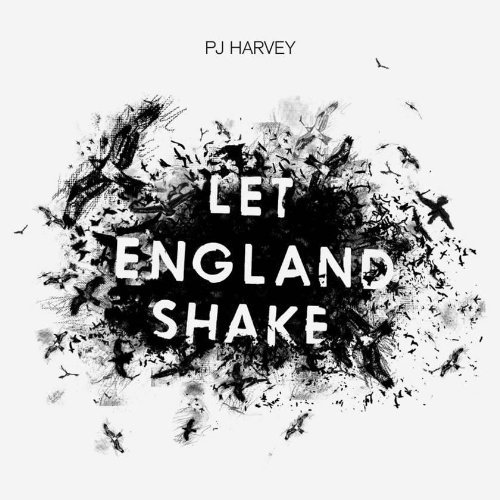
SOUNDTRACK: PJ HARVEY-Let England Shake (2011).
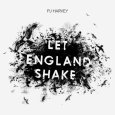
I’ve listened to this disc several times online; I have no details about the recording.  There’s samples, but I don’t know what they are and I can’t really tell what all the lyrics are (it’s obvious she’s pretty angry, but the details are lost to me).

The first question for me on hearing this disc is what happened to PJ Harvey’s voice?  It comes as such a shock when you compare it to Dry.  But once I accepted that this is not the PJ Harvey of Rid of Me, I listened to it as a new artist and I really like it.  But it’s a weird record to be sure.

The title track is played on an autoharp (!).  In fact the autoharp is a dominant instrument here.  It’s got a cool melody and, once you accept that she sounds like the singer from Rasputina, you can really appreciate what’s going on.

The second track, “The Last Living Rose,” returns somewhat to the PJ of old (the opening “God damn” sounds like she’s about to bust out some good-ol’ invective).  And there are guitars, but the music is upbeat (as are the vocal melodies) and there’s even a horn!  “The Glorious Land” has samples from the cavalry (I can see the horses riding across the plains) and a cool, slinky guitar (or is that the autoharp?).  There’s male vocals in the middle of the song, and it makes for disconcerting harmonizing (especially when PJ,’s voice ratchets up the weirdness and sounds more like Kate Bush).  But musically this song is great, it’s got a wonderful 80’s alt-rock feel.

“The Words That Maketh Murder” also has horns and some interesting male vocals chanting the lyrics.  This has one of the least subtle lyrics I’ve heard in a long time, although the re-imagining of the “Summertime Blues” refrain is pretty genius.

“All and Everyone” opens with more autoharp, and I think I’m realizing that the autoharp is what I think of as the interesting guitar sound (this song opens like a Smiths’ ballad.)  There’s more horns on this track which adds a weird dimension of sadness to it.  “On Battleship Hill” is a fast but delicate track in which PJ pulls out an astonishing falsetto–completely unexpected.  After the first verses, the rest of the song has, again, a kind of slinky 60s vibe.  “England” brings out the Kate Bush voice in PJ again.  This is a very delicate song, the music is mixed so low in the background that it feels like acapella–I guess Harvey has grown much more confident in her voiuce.  The music builds and builds though and there’s an unexpected middle eastern sounding vocal in the background.

“In the Dark Places” brings out Harvey’s guitar (in this case the Harvey is Mick Harvey, I believe) and her lower register vocals. While “Bitter Branches” is probably the loudest song on the disc, with a bunch of screamed vocals.  It’s rather startling considering the rest of the disc, but it’s nice to know just how much fire PJ still has.

“Hanging in the Wire” is another delicate song, with quiet pianos and Harvey’s sedate voice.  “Written on the Forehead” returns to that middle eastern vibe (“people throwing dinars at the belly dancers”) and that Kate Bush vocal–the backing vocals remind me of Peter Gabriel.  The album ends with “The Colour of the Earth.”  It’s the most disconcerting song of the bunch becuase it opens with a male singer (John Parrish?) singing what sounds like an old trad song (the melody is very traditional).  Then PJ joins in and makes the song her own.

It’s obvious that the lyrics are the main aspect of this disc, and I know that I’m missing something by not having them. I’m also missing a lot by not knowing all that much about England’s history.  It sounds like she has a lot of gripes with Eng-a-lund, and I’m curious to know what she’s on about.  But more than that, I’m totally hooked by the music.  It’s a great reinvention of a great artist.

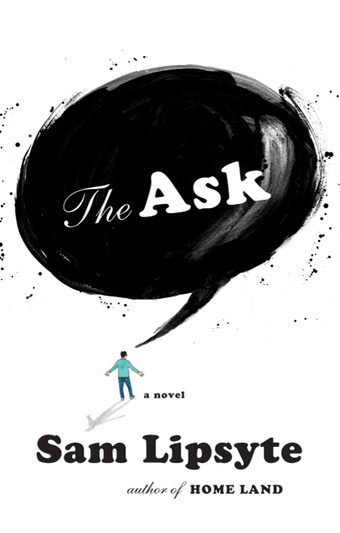
[READ: February 9, 2011] The Ask

I was planning to read nothing except books from the pile by my bed for the foreseeable future.  And then, as if calling to me, I saw this book, which I was planning to read eventually, on a display right in front of me called Booklist Editor’s Choice (a new display for our library).  I stared at it for three hours and just had to check it out.

And I’m glad I did.  For the most part I really enjoyed this book, it was quite funny and the main character, kind of a schlub, was completely relatable.  I say for the most part because I felt like it dragged a bit about 2/3 of the way through (more on that later).  But its possible that it dragged because the first half of the book was just fantastic–fast paced and clever with lots of wonderfully funny lines (more on that later too).  And a setting that I found very entertaining.

The story is about Milo Burke. He is married to Maura and they have a going-on-four-year-old boy Bernie who is nothing if not precocious.  The titular ask concerns Bernie’s job.  He works for a small arts college in New York (which he called Mediocre University).  His job is to basically ask (hence the title) rich people for money for the college. We see him in his office as the book opens and we meet the rest of the staff: the surprisingly unslacker slacker Hubert (with whom Milo shares space and ribald jokes…this section is the funniest; many paragraphs end with sentences that hilariously undermine what he just described.

We often called it, with what we considered a certain amount of panache, the Mediocre University at NewYork City.  By we, I mean Horace and I.  By often, I mean once (4).

His supervisor is Vargina.  (This name, which is obviously over the top and childish and which I absolutely laughed at and then felt was maybe too easy of a laugh, has a great origin story and is really never not funny no matter how often you see it).  Milo has obscene fantasies about Vargina, but he is a (somewhat) happily married man and would not cheat on his wife.

He’s not very good at his job, but the other askers do alright so his job is safe.  Until, that is, he insults the daughter of one of the university’s biggest donors and he is summarily let go, without severance.  And then we get to see a lot about his home life. (more…)

Read Full Post »
SOUNDTRACK: PJ HARVEY-“Let England Shake” [Live on the Andrew Marr Show] (2011).

PJ Harvey has a new album out.  I’ve listened to it free on NPR, and in the introduction, they mention this live version on the Andrew Carr show.  Harvey (solo) plays an autoharp, and the melody is provided by a sample of the original version of “Istanbul (Not Constantinople)”  (done by The Four Lads).

The album version doesn’t use the sample, although the melody is the same.

I loved PJ Harvey back on her first few albums, but I didn’t even get White Chalk.  Harvey has undergone a bizarre transmogrification, where not only is she no longer a rocking guitar woman, her voice has lost its growling edge and his been replaced by an amazing falsetto.

This version also differs from the official release in that this one is shorter (probably time constraints on the show) and has fewer verses.  It also has Harvey singing the “Istanbul” chorus which isn’t on the disc.  So, this is a unique interpretation of the song, one that likely won’t be available anywhere else.

I wasn’t expecting to like this as much as I did.  It’s not the PJ I know, but this new PJ is certainly interesting.

[READ: January 31, 2010] Lemon

Krauser hand-scribbled the covers of all 10,000 extant copies of this book.  So if nothing else, the covers are all unique!  (Click here for a larger scan).

This is one of the first half-dozen or so books that McSweeney’s published and to me it speaks volumes about the kind of absurdist books that they initially released.  Those early titles were weird and possibly ironic and maybe post modern and were kind of interesting but not necessarily enjoyable.  Thankfully, they have since published very very readable books, but everyone has growing pains, right?

That sounds like I didn’t like this book, which is not exactly true.  I was bemused by it, but mostly I kept thinking I can’t believe that this guy did this much research about lemons, he was practically as obsessed about lemons as his main character.  For indeed, that is what this book is about: a man’s obsession with lemons.  Or, specifically, one lemon. (more…)

Read Full Post »

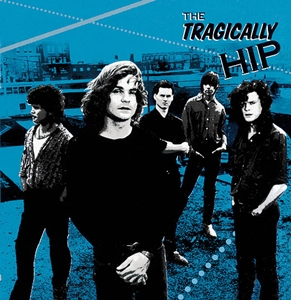
SOUNDTRACK: THE TRAGICALLY HIP-The Tragically Hip (1987).

It’s not really fair to review a successful, long-lived band’s first album over 30 years after the fact.  I mean, Rush’s first album doesn’t show any of the prog tendencies they’d be known for (not to mention a different  drummer/lyricist).  In fact, virtually no bands come out fully formed, which is good for all fans.

Having said that, from this album, you’d have very little indication that the Hip would become as dynamic as they eventually did.

This is a 7 song EP full of rocking tracks with overlays of acoustic guitars.  Unlike later discs, there’s only a minor indication that they’re from Canada (“Last American Exit”) or overly literate.  Mostly they seem like a rocking bar band.  The songs are good, somewhat generic, but solid.  In fact, “Small Town Bringdown” is still played in concert from time to time.

The biggest surprise is Gord Downie’s voice.  By now his voice is pretty distinctive, but on this first disc it seems like he’s still trying to figure out what he’s doing.  On “Killing Time” he’s unrecognizable from the frontman of today.  He seems to be working in a much gruffer range than he would later use.  Lyrically, the songs are also tougher than they would eventually become.

The most memorable song is probably the most embarrassing: “I’m a Werewolf, Baby” is as silly as it sounds, but the riff is really great and it has staying power.  Shame about the lyrics.  This disc is probably not worth getting since “Small Town” is available on their Greatest Hits.  Although if you really want to hear “Werewolf” it’s only available here.

[READ: January 26, 2011] “Live Large”

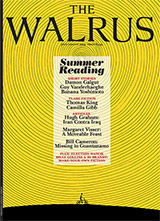
Just as I settle into the idea of reading 25 back issues of The Walrus for all of the fiction contained therein, I get to this 2004 Summer Reading Issue which features seven stories!  Three of them are short stories and the other four are flash fiction.

This first story was my favorite of the bunch.  It is a fairly simple story about a down-and-out man who longs for one day of joy.  Billy Constable has slowly seen his money evaporate.  He has had to sell off a lot of his luxuries, including the membership  to the Fairview Golf Club.  He has also had a recent medical scare (a minor heart attack) which has made him go straight and clean: no booze or smokes.

Except that things have gotten really bad lately, and who can resist the slide back into temptation.  When he gets a call to play a round of golf, from the very man he sold his golf membership to, he is about to tell him where to go, until he realizes that the man is calling him because he genuinely wants him to play in their foursome.  He decides why the hell not. (more…)

Read Full Post »

SOUNDTRACK: WEEPING TILE-eePee (1995).

Canadian singer Sarah Harmer was originally in the band Weeping Tile.  As far as I knew, they had only released this cleverly titled EP.  Further research at Sarah’s site proves this to be incorrect.  They released two albums and this EP, all of which are available at her site (and elsewhere).  There’s also mention of something called Secret Sessions although there is no evidence of its physical existence on the net.

So this EP is 7 tracks and features two songs that were recorded later on Sarah’s solo discs.

The opener, “Anyone” opens with a nice R.E.M. type guitar sound, but jumps into an uptempo alt rocker.  It’s a very satisfying opening and seems like it should have been a hit.  Interestingly, the next song, “Basement Apt” was a hit…six years later on Sarah’s solo disc.  This version is rawer and feels slower even though it is the same overall length.  The big difference is that Sarah’s solo version has a louder and faster drum track that really makes the song fly.  This version feels more aching though.

“Dogs and Thunder” introduces a more country sound (folk guitar and strings) that Harmer would experiment with off and on for years.    It’s followed by a great cover of Neil Young’s “Don’t Let It Bring You Down.”

Another highlight is “Westray” a very stark almost a capella track which highlights Sarah’s raw voice.  It’s very affecting.  And the disc concludes with “King Lion,” a great song that is back to guitar basics.  The chorus is wonderfully catchy.

This is a great EP from a short-lived Canadian band.  Sarah Harmer has always had great songwriting chops and it’s fun to hear her in her more youthful rock version here.

[READ: January 11, 2011] “Hard Currency”

This is one of the longest stories in The Walrus that I can remember.  It’s set in Russia and concerns Alexei, a Russian writer who now lives in America.  He has had great success internationally (and won a Pulitzer) for his novels, all of which were set in Russia.

And yet, for all of his connections to his motherland, he doesn’t really like Russia very much.  He has been back there several times but he is never treated with respect. In fact, he is never even treated as a Russian–despite his birth, people look at him and know that he’s not a Russian anymore.

The plot of the story is about prostitutes.  [I am pretty surprised at the proliferation of prostitutes in stories…do authors frequent prostitutes more than other people?].  When the story opens, we learn that Alexei’s very first sexual experience was with a prostitute.  And now, twenty-eight years later, after much success and a failed marriage, he has returned to Russia and has called upon another prostitute. (more…)

Read Full Post »

SOUNDTRACK: Ô PAON-“Courses” (2010).

This album, Sainte Patronne De Rien Pantoutemade ranked #7 on Viking’s Top Ten list and it is very different from the other albums on the list.

This is a simple song with a gentle guitar motif repeated over and over.  There also appears to be some looped vocals.  The singer, Geneviéve Castrée, sings in Quebecois-French and is assisted by Godspeed You Black Emperor mainstay Thierry Amar.

As with many of the songs on this list, the song builds and builds as it repeats itself.  But unlike the other songs, this one never grows menacing or dark.  Rather, it builds, layer upon layer of instrument or voice until the song (whatever it’s about) reaches its climax.

Viking says that there are English liner notes on the disc, but you ‘ll have to buy the disc to get them.  I liked this track more with each listen, and would like to hear more from her.

[READ: January 4, 2011] “Costello”

This is a story of perseverance.  Costello is a middle-aged man with two kids.  When the story opens, we see him floating on a raft in his pool. The pool is overgrown with grossness and, down in the filter, there is a dead lizard.  But Costello seems, if not exactly content, then at least not unhappy.  He has everything he needs nearby: a newspaper, a Zippo and smokes.

Costello is a plumbing salesman, and he has been nominated as salesman of the year (you can read about it in Pipeline!).  It’s pretty much the only exciting news he’s received recently, especially since his beloved Dodgers are middling at best.  Although even he likes being able to watch the Disney fireworks from his roof.

Costello seems like a decent guy.  He also seems liked by others: his coworkers like him, his neighbor likes him (although Costello hasn’t accepted a dinner invitation from him in almost a year).  Through the course of the story we wonder why his wife isn’t there with him.  The answer to this is revealed slowly throughout the story. (more…)

Read Full Post »

« Newer Posts - Older Posts »