Feeds:
Posts
Comments

Archive for the ‘Drinking’ Category

SOUNDTRACK: METRIC-Live It Out (2005).
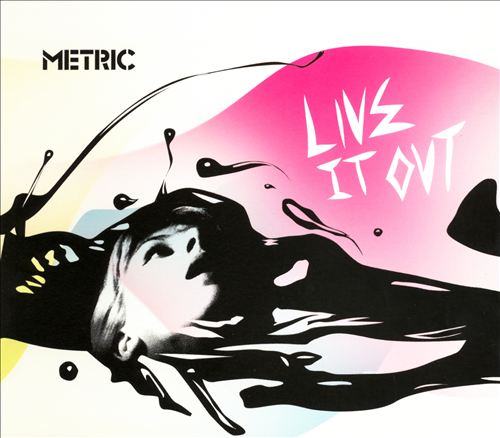
I enjoyed Metric’s Fantasies album so much that I bought their previous album (an album that I had written down as worth checking out about 5 years ago).  At first I was a little disappointed–the album doesn’t have the glow (or perhaps sheen or polish) of Fantasies.  Normally I prefer raw to polished, but it’s surprising to go the other way sometimes.  And after a couple more listens I really started to appreciate this album’s rawness.

The guitars are loud and pushy.  There are keyboards that dominate some songs, but they never make the songs poppy.  And Emily Haines’ voice sounds great.  The opener “Empty” has a lot of quiet sections, but the guitars really just burst forth.  It’s 6 minutes long but that’s mostly through a long intro and outro.  The rest of the songs stick firmly in the 3-4 minute range.  “Glass Ceiling” has a cool stuttering riff and a kind of awkward bridge–these first two songs kind of resist admittance (the piano/guitar solo is certainly a weird combination–which I like now of course).  “Handshakes” shows their more commercial side–a slick kind of guitar riff with Haines’ more aggressive vocals.  True the siren sound may turn off some, but it’s certainly a signature.  “Too Little Too Late” is a slow sultry number, but even more sultry is the sleazy-feeling (no doubt because of the keyboards) “Poster of a Girl.”  In addition to a cool spoken word section in French (the whole song is bilingual), we get the English lines “Coming in your pants/For the off chance/With a…poster of a girl.”

“Monster Hospital” is a fun punk blast that is still a live favorite for the band.  “Patriarch on a Vespa” has another rough riff with some cool bass.  It also features some disconcerting singing (ahahs that sound more than a little spooky).  “The Police and the Private” is one of the cool songs with easily singable but easily confusable lyrics.  While “Ending Start” has some great guitar riffs near the end.   “Live It Out” ends the disc with a staccato punk number.  It’s a perfect summation of Metric before they got more commercial.  And it’s a great addition for fans of the band.

[READ: July 8, 2012] The Big Meal

This play came as a supplement with Lucky Peach issue #4.

I have often maintained that it is much better to see a play than to read one.  Not a daring opinion, by any stretch. I have taken that to something of an extreme however, which means that I pretty much never read plays.  This has severely limited by Shakespeare intact, naturally.  It also means that a lot of great works are lost to me.

I’m using that information by way of introduction, not because I think this play compares to Shakespeare, but because this is one of a few plays that I have read recently that I’ve really enjoyed.  So I’m retracting some of my earlier thoughts about reading plays.  True, some plays with multiple characters can be confusing to keep straight (since defining characteristics are not given).  But in shorter plays or plays with not too many characters, it’s not so hard to read them.  And in fact, it can be a quick and enjoyable read.

Although this play complicates things immensely because of its (very cool) setup.  The setup is described in the introduction to the play: “The actors play multiple generations of one family…as they glide through time.  As the characters age, their “essences” pass from younger to older actors.”  So, the story takes places over a few generations of time.  There are eight actors.  Each actor plays multiple roles.  These roles correspond to the characters at certain ages.  So, for example, the youngest actor plays Character A as a child; the adolescent actor plays Character A as an older child; the middle-aged actor plays Character A as a middle-aged person, etc.   So that’s a little confusing (although I’ll bet it makes sense seeing it live).  What I like though is that this “gimmick” is not so much a gimmick at all, but a real indication of how we turn into our parents and an indication of how quickly time passes in this play. (more…)


Read Full Post »

SOUNDTRACK: THOU-“Something in the Way” (2011).

Sometimes you hear a  cover version and you really don’t know what to think.  Maybe you hate it from the very beginning.  And then maybe it does something and you kind of hate it a little more.  And then suddenly it turns the corner and who knows what they’re doing.

This song opens almost ponderously slowly.  I guess it’s not that much different from the original , but it feels so really slow.  And then, when they get to the “something in the way” part, the band kicks in with really heavy squalling feedback and cookie monster vocals shouting “Something in the Way.”  And I kind of didn’t like anything.  But then came the surprise.  the “oooh” part was sung very straight and melodically.  The song reverts back to the original slow vocals section and you realize that the singer sounds an awful lot like Cobain himself. And the second time when the chorus comes in, you expect it and while you may not like the cookie monster vocals, the juxtaposition to the sweet “oohs” is strangely cathartic.

Not for everyone by a long shot, but very interesting nonetheless, especially the way the feedback squalls and wheedles.

Thou has done a number of Nirvana covers evidently.  There’s a cover of “Anuerysm” in this live show (in which they acknowledge that the fans aren’t there to see them).  The music is spot on, but man, those vocals are hard to handle.

[READ: June 29, 2012] “The Golden Vanity”

As yesterday’s story was about “the husband,” today’s story is about “the author” (have short story writers run out of names?).  The author has just written a very successful book in which the main character tries very hard not to be nervous in social situations.  The author himself gets nervous in social situations.  When people know he wrote the book they scrutinize him to see if he gets awkward in social situations…which makes him more awkward…etc.  It’s a pretty funny concept.

The opening section has the author meeting the librarian.  He’s put in an awkward situation because his hands are full when she waves.  So he gets emabrassed and scowls.  Then he thinks she assumes he is scowling at her.  He gets through the encounter with advice from his shrink.

The next scene jumps quickly (I wonder what happened to the librarian) to his medical condition.  The author has to have his wisdome teeth out.  He spends a lot of the story wondering is he should have a local or a twilight anesthetic (which costs $3,000 more and calls for an I.V.). He wonders aloud a lot to his friend Liza, who tolerates his neuroses and enjoys talking about them, even though she says things like “We’re not talking about this again.”

The evening before the surgery (he of course chose the I.V.) he went on a date.  Well, not really a date (he liked to say that), but friends going out together with a single woman there to meet him.  Naturally this made him nervous too.  But he and Hannah hit it off (lots of drinks helped).

There’s a whole section devoted to waiting room art which I appreciated quite a bit.  Who decies what to buy?  It’s not like the doctors would come out and look on it and admire it, right?  This sort of melds with a discussion about the preserved letters of famous writers.  Do libraries buy emails?  Do they buy the letters of young writers as a security upon further greateness?  These ideas are pretty theoretical yet the way it is written keeps it inetersting. (more…)

Read Full Post »

SOUNDTRACK: EAST OF THE WALL-“False Build” (2011).

Viking picked this song back in September of 2011 as his song of the week (or however often he posted then).  I’d never heard of East of the Wall, despite their New Jersey pedigree.  (I know I don’t know every band from New jersey, but usually by the time a band has three records out I’ve at least heard of them).

This song is just over five minutes long and the vocals don’t come in until about three an a half minutes.  By the time the vocals come in, we’ve had three or four different stylistic changes.  And, by  the time the vocals have been with us for a minute it’s possible that there are four vocalists in the band.

It opens with some clean guitars playing an open (but slightly off) chord progression.  Over that comes a slightly distorted guitar and a bass playing mostly the same notes but just enough to be notably different.  Then add some drums so the song is builds very nicely.  The solo gets more and more complicated and when the drums rumble in for a climactic progression…the songs shifts into a kind of loud heavy rock/almost funk.  A new more angular solo plays over the funk riffs and it all works wonderfully.  Then the song becomes a rapid fire snare drum metal song and that’s where the vocals kick in.  I assume this is all one vocalist but who knows.  For the sake of argument I’ll pretend they are all different.

The first vocalist is a screamer–hard to understand but fitting in perfectly with the now heavy riffs.  He doesn’t say much before the second vocalist comes in.  This section of the music is mellow and kind of prog rocky and the vocalist fist perfectly–actually crooning along with the melody.  Until vocalist three comes in with a kind of cookie monster vocal which is interspersed with a different cookie monster vocalist.  By the quarter to 5 moment the first vocalist comes back, and there’s more screaming until the song ends.  It’s chaotic and cool and keeps you on the edge of your seat.  I wonder what they’re singing about.

Wow.  If I’m this exhausted writing about it, imagine how they must feel playing it.  I’m going to have to check out more from them.

[READ: June 28, 2012] “Another Life”

This story is disconcerting in that the first paragraph is a page and a half long.  And it works very well stylistically.  The whole first paragraph concerns a man (the husband) as he returns from a party for father-in-law.  He’d rather not have gone to at all, but since he is also sick and on medication, he takes the opportunity to leave early.  He arrives back at the hotel and sits down to read Rousseau’s Discourse on the Origin of Inequality.  (Holy crap!).  He can’t focus on the book so he decides to go down to the hotel bar (with the book) just to mix things up.

There are a few people in the room, but he sits alone at the bar.  The bartender (whose name is later revealed to be April P) is very nice and chats as she serves him.  She sees his book and asks what he’s reading.  He’s a bit embarrassed, because she’s never heard of Rousseau.  But she says that she reads everything and her favorite is Emily Dickinson.  He is thrown by her choice of authors and by the fact that he can’t think of anything clever to say about Dickinson.  He fumbles a bit.  She remains nice but is clearly unimpressed. (more…)

Read Full Post »

SOUNDTRACK: THE GREAT GAMBLE-Book One (2012).

My friend Matt has worked at a school in Pennsylvania for years. He wrote to tell me that a few kids who graduated from his school had formed a band and have released a CD.  It’s streaming (and downloadable) on bandcamp at their site.

I have lots of friends in bands, and I’ve listened to lots of demos, so I wasn’t expecting very much.  But the first thing I noticed when I listened was how good this sounds–professional and, yes, like a “real” album.  This isn’t just a bunch of guys jamming in their garage.  What makes this even more striking is that the music is heavy progressive metal–not something you just whip out in a quick take.  This is complicated, interesting music.  I’m hearing a kind of Dream Theater meets King’s X vibe going on.  And man, it’s really good.

This is multi-step heavy rock (complete with a synth player/violinist!). The only song that is less than 9 minutes is the 90 second introduction called “The Marketplace.”  Otherwise, we’ve got three songs over ten minutes and one over 16!  Who even knew young bands did stuff like this anymore?

Al Joseph plays lead guitar and sings lead vocals.  His guitar speed is very impressive and his vocals sound not unlike Dug Pinnick from King’s X (noticeable on the opening track, especially) .  Matt Weaver plays violin and keyboards.  The keyboards offer more than just a fuller sound.  On “Release the Kraken” they provide some cool sci-fi sound effects.  At about five minutes in, “Release the Kraken” slows down to a quiet middle section that really showcases Steve Michael’s drums.  And then comes the blistering guitar solo.  It’s followed quickly but a slight diversion and then a wholly different style of solo.  It’s really something.

If “Release the Kraken” wasn’t a good enough prog rock title, how bout “Legends of the Symmetria.”  This one has a very Dream Theater feel for the opening.  But the vocals sound very different–dual vocals with great low harmony.  There’s a cool pre-chorus (I guess) at about 3 minutes.  This song is definitely a heavy one.  At about 4 minutes, the song slows down into a pretty classical guitar section,where Chris Joseph on plays bass gets to show off a bit (although he seems to be the most understated of the 4 players).  There’s some great drumming at the end of the song, too.

“The Ghost of Three Reflections” is a slow builder of a song.  There’s some quiet parts (with beautiful harmonies) and a guitar solo that sounds clear and perfect (I’m hyping the production so much because it sounds so good).  The guitar solo section in this one strikes me as something that might suit two guitarists better–maybe two more different styles of soloing, but he pulls it off well, especially when by the end, he has shifted to a very different style, and the music changes along with it).  I love the bass section at the 8 minute mark, which reminds me of something Rush might have done back in the mid 70s.  The song kind of merges into “Breach At Fort Mycenae” which opens with the same kind of staggered sound as the end of the previous song.  The violin gets an airing in the middle of this song and it’s a cool treat.  I could definitely use more violin in these songs, although maybe little bits are a treat.  There’s a few times when I don’t like the production choices–maybe there needs to be a bit more music behind some of these solos so it doesn’t just sound like two players soloing against each other.

The disc ends with the big one, the sixteen minute, “The Sleepwalker Pt. 1 – Tears of Dagon” [I love that it’s a Part One and it’s 16 minutes long].  When the vocals kick in at about 3 minutes, the harmonies are gorgeous.  I love the bass guitar break at 5 minutes.  Although there’s something about the keyboard sound that I don’t like–maybe they’re not big enough?  But I love the crazy guitar solo at the 9 minute mark of this track (I’m a sucker for dissonant scales).

This is an amazing debut CD and I hope these guys go far (they’re going from Scranton to Boston for school, but I hope they can go further than that).  They are tight as a drum, stopping and starting perfectly, keeping all of the rhythms and time changes perfectly.  They really have done their prog rock homework.  The only gripe is as I’ve said, some sections don’t feel “big” enough.  If you’re going to write a 16 minute song, you don’t want sections that sound small–you want your backing guitars or bass guitars to be a little louder so it sounds like the song is still going.  But other than that, there’s not much room for improvement.

I downloaded their CD, (and yes, I paid for it…that will help with college, eh?).  But my real complaint is that on the computer, the album cover is awesome–if you look at it from an angle, there’s a whole scene behind the large logo (try it, it works here too).  But when you print it out, you lose all of that.  The images are there, but the effect is gone.  This is a band that calls out for full color packaging and maybe even a gatefold sleeve!  (The bottom of the cover says Ο υπνoβάτης which means The Sleepwalker).

Good jobs guys!  You’ve done NEPA proud!

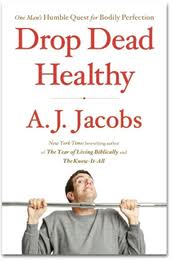
[READ: May 15, 2012] Drop Dead Healthy

Sarah got me this latest A.J. Jacobs book for my birthday.  At first I didn’t think I wanted to read it because I feared what a book all about being in good shape would be—nagging, obnoxious, making me feel bad about my vices. But I should have leaned from all of my A.J. Jacobs experience that he is completely NOT about that.

Jacobs occasionally enters into preposterous forays of Self-Improvement.  In the first book of his I read, The  Guinea Pig Diaries, he tried various weird experiments to see what it was like to be a woman, radically honest, a unitasker, etc.  His other books have been about self-improvement.  He read the encyclopedia from A-Z, he did a year trying to live like out of the bible (I will get to these eventually).  In this book, he is on a quest to be the healthiest person in the world.

It’s an impossible task.  And, frankly, a foolish one.  But he decides he will take two years and focus on individual parts of his body one month at a time.  I’m going say right up front I feared that this book would make me feel bad about all the things I don’t do for myself.   But well, a) Jacobs is a funny writer, so at least you’re laughing.  b) Jacobs is either in bad shape or plays up his badshapedness so that the average person doesn’t feel too bad off.  c) He is so over the top in his quest that no one would ever think about doing all of the things, but we can take what he learned and apply little bits to ourselves.  What is nice is that he tries to get two if not balanced opinions then perhaps fringe opinions to balance out–trying one extreme then another to see which work.

He Breaks His Categories Down thusly: stomach (eating right, the perfect food), the heart, the ears (the quest for quiet), the butt (avoiding sitting too much), the immune system (germs), genitals, nervous system, lower intestine (better bowels), adrenal gland (lowering stress), brain, endocrine system (removing toxins), teeth, feet, lungs, skin, inside of the eyelid (sleep), bladder, gonads, nose, hands, back, eyes, and skull.  Each category is designed to be a month-long workout of that organ/item–some things he keeps doing after the month is over making his workout regime something like 5 hours a day.  And at the beginning of each month he lists the stats for what he accomplished.

I’m not going to talk about all of his body parts, but I will mention a few that i enjoyed the most. (more…)

Read Full Post »

SOUNDTRACK: HELLBENDER-Con Limón (1997).

Con Limón was Hellbender’s final CD.  It shows a lot more depth and variation than one would have expected from the debut.  “Fake I.D.” opens really really quietly for two verses so that you have to turn it up loud.  And then the song kicks in and explodes your speakers.  There are more such dynamics on this song, including the verse ending on a high guitar note and pause that adds a bit of quiet punch to the otherwise fast song.  “You Gutted Me with a Switchblade Shaped Like a Telephone” opens with some quietly spoken words (which I have not as yet been able to understand), but the verses and chorus have quite an emo feel.   “Long Distance Phone Bill Runner” has a catchy chugging riff with some screamy vocals.  “Untrusted You” introduces acoustic guitar (and a cool off-key note).  The vocals sound like Bob Mould.  Indeed the whole thing has a kind of Hüsker Dü feel to it.  “I-95 is Tattooed on My Brain” also opens slowly, with dark, quiet lyrics and a cool riff once the guitar kicks in.  The guys clearly have a way with song titles.

“Song About Some Girls” is perhaps one of the cheesiest songs I’ve heard in a long time (although as one reviewer points out, it does anticipate radio friendly emo by about a decade).  Coming from Hellbender it is super-cheese.  I’m surprised they allowed it to be released (and I’m surprised it wasn’t a huge hit).  Check out the lyrics (and this coming from a band with two lyricists who are currently published authors): “This is a song that I wrote about some girls/That I met at the beach back when I had the Jeep.”  Really.  And the chorus is a series of staggered “Right” “Right” “Right” “Right.”  It is so insanely catchy–I hate myself for liking it so much.  (The lyrics to their other songs are much better).

“Graveyarded” returns to the more angry type of song, dark with interesting riffs.  It’s a fitting ending to the last release by this under appreciated (they don’t even have an entry in allmusic?) band.  Oh wait, there’s a bonus song on the disc.  After a few seconds of silence, there’s a strange bass-heavy riff (and kind of dancey drums).  The lyrics are all spoken (I won’t say rapped).  It sounds nothing like them, but I’ll bet they had fun making it.

[READ: May 21, 2012] “Fun Won”

Sometimes a title confounds you until you see it in the context of the story.  I couldn’t even figure out how to say the title (which isn’t hard, but looks so peculiar) until I read it from one of the characters.  I also had no way of anticipating what this story might be about.

Imagine my surprise that it was about the 90s, and about a woman who worked for Conde Nast, when money and drugs were plentiful and the fun never stopped.

It’s funny how context is everything.  If I had read this story in the 90s, I would have hated everyone in it for their glamorous life, their quarter pound of weed, their expense accounted fancy dinner and even the fact that they work for a fashion magazine (Gaultier and Naomi Campbell are name-checked).  And yet now that the bubble has burst and the fun has stopped and I never got to be a part of it (not that I would have…but still), I read this story almost wistfully.

This story is set up in a tricky way.   Meaning that it starts out by talking about marriage but then shifts gears.  The marriage discussion is all about how her friends married such squares in the 90s (while now women marry interesting men who have job but are defined by their hobbies).  And it is a nostalgia piece for the 90s (“when you could still dream of being a writer, when writing for magazines and then writing books and all of that added up to a good life.”) [Sigh].

For background we learn that the narrator, her brother and their father were big dopers (their mother abstained–from the dope and the family).  Her brother Ed is visiting from California with a quarter pound of awesome pop (this was before everyone had access to awesome pot).  The bulk of the story concerns this visit.  Ed and the narrator get high, then they share the pot with Marni (who is famous, although whose actual title is unstated–she’s the one who calls Gaultier).  They end up all going for dinner at a fancy restaurant (with shaved truffles).

They also meet the narrator’s boyfriend who is a real estate mogul–he sells building for tons of money (and yes, is likely the reason the bubble burst).  And then they go to a record studio to hear a famous singer make her album and watch it get mixed. (more…)

Read Full Post »

SOUNDTRACK: RUSH on Archer (2011-2012).

Not really a soundtrack, but I wanted to mention some of the Rush references in Archer.

I was really hoping to use the Rush in Cleveland DVD as my Soundtrack, but I haven’t finished it yet.  And yes, I am padding this out a bit so that the pictures fit nicely.

Cobra Cobra Cobra (that’s a joke to the book below).

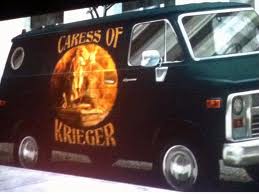
The Archer guys like Rush and they put nods to Rush in occasional episodes–usually through mad-scientist (I want to call him The Professor), Krieger.  Here’s three of Krieger’s vans.

I love the detail that went into “Vanispheres.”  Since Krieger always wears a lab coat, it’s a wonderful detail to have him wearing it as the nude man.  And, of course to have him as both the nude man and the clothed man is perfect.

Since it’s my favorite obscure Rush album, the Caress of Krieger van just cracks me up the most.

And just to add to the fun here’s a video of Krieger’s Neil Peart-like drum set

It’s pronounced “Why Why Zed.”

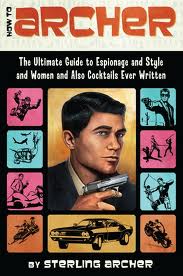
[READ:May 9, 2012] How to Archer

Although the Archie Meets Kiss comic proved to not be the joy I’d hoped, How to Archer easily made up for it.  I love Archer, it is one of my top ten shows ever, I think.  And this book is basically a print version of the show.

It’s designed as a how-to manual written by Sterling Archer himself.  He gives you tips on how to become the world’s best secret agent.  He teaches you how to dress (the details about buying shoes are amazing), how to drink (he provides cocktail recipes and his own opinion of subpar drinks), how to eat (a recipe for Eggs Woodhouse that sounds divine) and even a secret to gambling!

The fact that Archer is an abrasive, cocky, sexist, racist dick only makes the book that much funnier.

If you haven’t seen Archer (on FX), it’s a cartoon about a spy.  His mother, Malory, owns the spy agency and they have a very contentious relationship.  (The fact that his full name is Sterling Malory Archer should be just one clue to that).  Malory gets the introduction to the book, which is pretty darn funny as well. (more…)

Read Full Post »

SOUNDTRACK: PINK FLOYD-the final cut: a requiem for the post war dream (1983).

My college experience seems very unlike many people’s (especially the stories I hear from you young kids today).  And I’m just talking musically.  I went to college in the late 80 and early 90s.  And my freshman year, the most popular albums on campus  were Steve Miller’s Greatest Hits, Squeeze’s 45s and Under and Pink Floyd’s The Wall.  My friend John also loved this album.  And I think we listened to it hundreds of times, blasting out of dorm room windows.

It’s kind of strange that college freshmen would embrace an album about (more or less) Roger Waters’ father dying in WWII, especially since none of our fathers had died at all, much less in WWII.  But angst finds its home I suppose.

This album is not a sequel to The Wall, but it has echoes (see what I did there) from that album.  There were touches of WWII in The Wall.  And sonically a lot of this album sounds similar.  The big difference is that Roger Waters wrote pretty much the whole thing, long time keyboardist Richard Wright left the band and David Gilmour, sings on only one song.  So, it’s practically a solo project (and it fees a lot like Waters’ solo album The Pros and Cons of Hitch Hiking).

This album seems to have alienated fans of Floyd. But I happen to like it quite a lot.  And, I it a lot while reading Gravity’s Rainbow.

“The Post War Dream” opens with military sounding horns and funereal organs, as befits an album about the war.  It also has an intriguing assortment of sound effects (I wonder where he gets most of this stuff).  It sounds very Pink Floyd–Roger Waters’ voice is pretty unmistakable).  But “Your Possible Pasts” sounds even more Pink Floyd.  Evidently this album has a number of songs that were cast offs from The Wall.  If that’s true, this is probably one of them, as it sounds like it could easily fit on that album–especially when the keyboards kick in during the second chorus (even if Richard Wright wasn’t on the album).  And the guitar solo is so David Gilmour–that’s what you call a signature sound.

“One of the Few” has something I love from Floyd–whispered vocals (“teach”) and creepy laughing; it works as a nice transition to the louder “The Hero’s Return.”  This track is very complex–all kinds of tonal shifts, echoed vocals and bitter lyrics.  It explodes into “The Gunner’s Dream,” a gentle piano ballad about a soldier being shot down.   It’s a surprisingly tender song (although not really given the topic of the album) and lyrically it is really impressive.  I don’t really care for the saxophone solo–it’s not my thing, but I think it actually works well for the song.  And, again the end sounds like it came from The Wall (Waters is amazing at angsty screams).

“Paranoid Eyes” is a delicate song that works, for me, as lead in to the wonderful “Get Your Filthy Hands Off My Desert” a short, string-filled somewhat goofy song that is very bitter under its seeming jocularity.  It’s followed by “The Fletcher Memorial Home,” a really dark track about old age with a lot of current political commentary thrown in (although the “group of anonymous Latin American meat-packing glitterati” always confused (and amused) me.  So even though it is “about” WWII, there’s plenty of anger at current political climate, right Maggie?.  Boom boom, bang bang, lie down, you’re dead–take it away David…

“Southampton Dock” is another gentle song, more of a story with musical accompaniment.  It segues into “The Final Cut” a fitting piano end to a sad album about death and loss, that also happens to reprise song elements from The Wall.

But that’s actually not the last song.  We get the incongruous “Not Now John.”  It really doesn’t fit with the album at all (I happen to love it, even if it doesn’t).  It’s way over the top, including the how-in-the-hell-did-they-think-this-would-be-a-single? opening lyrics: “fuck all that we gotta get on with this. (fuck all that).”  And yet, single it was, reaching #7 in the US.  Man it rocks.  Oi, where’s the fucking bar, John?

The album ends properly with “two suns in the sunset” a mostly acoustic track that returns the mood to more sombre feelings (except for the rocking section where you drive into an oncoming truck).  Never has futility felt so upbeat.  For an album as personal as this is, it really draws the listener in.  Of course, if you don’t want to be drawn in, it’s easy to resist, as many have.

The reissue (which I don’t have), includes the cool song from The Wall movie, “When the Tigers Broke Free.”  Which I imagine would work quite well contextually.

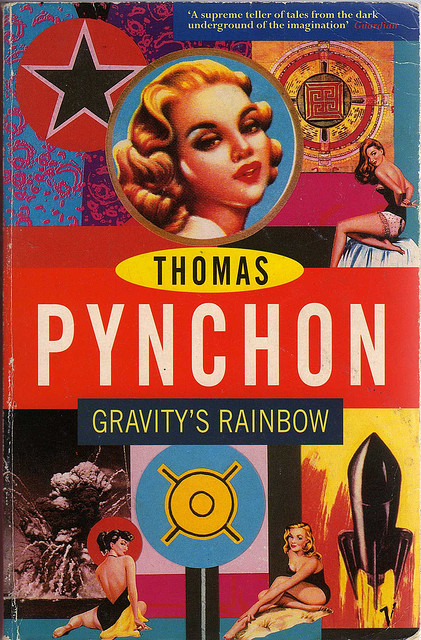
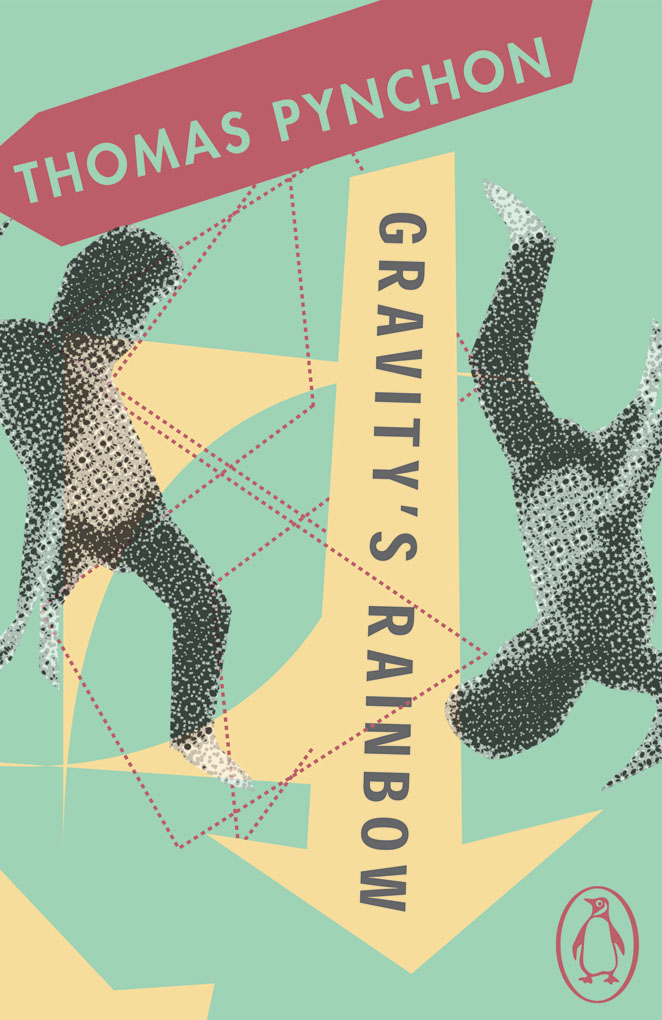
[READ: Week of April 30] Gravity’s Rainbow 4.7-end

And the book ends with a bang and a lot of leftover questions.  My first reaction is that I can’t get over Pynchon spent so much time in the last 60 pages talking about things that had nothing to do with the “plot” per se.  I never really felt like the story was all that hard to follow until the end, when Pynchon let loose the dogs of war on his writing.  There are several pages of stream of consciousness reverie where I was completely at a loss.  Of course, this has been true for much of the book–Pynchon would talk about something and then cycle back into it, filling in the gaps that he left open.  The whole book seemed to have this kind of coiled effect (perhaps a slinky). He would set up a scene as if you had been there all along.  And while you were puzzling over just who the hell he was talking about, he would flashback to whatever you needed to fill in the missing pieces.  And he is still doing that as the story comes to a close.

And although it starts out with a familiar figure, he quickly takes something and has a massive hallucination.  Is this even true? (more…)

Read Full Post »

SOUNDTRACK: DEATH CAB FOR CUTIE-“Kicked In” from Score! 20 Years of Merge Records: The Covers (2009).

Death Cab for Cutie are immediately recognizable here.  And they take this Superchunk song and make it sound like a Death Cab for Cutie song.

This cover is the rare cover in which the band takes a song and makes it clearly their own, and yet they don’t alter it all that much from the original.  The Superchunk version is slow (for Superchunk), with buzzing, distorted guitars and Mac’s vocals riding over the top.  The DCFC version features Ben Gibbard’s voice riding over the top as well.  But DCFC make the song a bit cleaner.  Rather than distorted guitars, we get chiming guitars and simple notes.  Instead of being a kind of grungy anthem, it feels somewhat uplifting.  And in true DCFC style, the uplifting sounding song really disguises something darker.

Even though the DCFC version feels slower, it’s not any longer than the original, and I think the pacing is pretty much the same.  It’s a neat trick.  I like both versions equally.

[READ: May, 2, 2012] “Men Against Violence”

This story came in third place in the Narrative Magazine Fall 2011 short story content.  It had a very different feel from second place winner.  It is set in college.  It feels contemporary and it reads young.  This, of course, means that I liked the style immediately.  I admit I was a little confused by the opening—I felt the exposition was  little convoluted and relationships were not established effectively.  But once it got moving, the story was really engrossing.

This is a reasonably simple story.  Kyle has a Hennessey scholarship—he received hundreds of thousands of dollars over his four years of college.  As the story opens he is attending the dinner which announces the newest scholarship grant, and introduces Kyle to the latest scholarship winner, whose name is (in all lower case letters) madison pepper.

The guest speaker at the banquet is Brooke Hennessey.  She is the granddaughter of Dorothy Hennessey and is currently is Kyle’s class at the college.  She speaks eloquently about her family’s donation (of the Hennessey Art Museum).   What she doesn’t say is that she ran away at 15, spent two years living in a car in Portland and that she accepts no money from her family (and has a mountain of debt).  She also doesn’t say that she is currently dating Kyle.

Kyle has problems of his own.  He recently got into a fight with a Trevor, a fairly important person on campus and he is now on a kind of probation—if he fights again, he loses the scholarship and has to back all the money.  This is why he joined Men Against Violence.  There’s a funny (but not really) insight into the existence of MAV on the campus, which leads to many unanswered questions about gender relations.  And the subject of gender relations is all over this story.  That delicate subject is handled very well. (more…)

Read Full Post »

SOUNDTRACK: PHOEBUS CARTEL-“Difficult,” “Asylum Energy,” “November”

If I had any idea how many bands were named after things in Gravity’s Rainbow, or were perhaps tangentially related to it, like this one, I would have never bothered mentioning bands that I actually know.

Phoebus Cartel is a heavy metal band based out of Denmark.  And…  well, that’s really all I know about them.  I found this image for them online which linked me to their site on bandbase (if you must, you can also get it in English–although there’s no extra information).

There are three songs here on the site.  They are all sung in English and all have heavy guitars.  The band is clearly heavy metal inspired, but they also classify themselves as “alternativ.”

“difficult” has elements of Marilyn Manson in the singing (and even the melody). It’s a very catchy interesting song and very heavy.  “asylum enemy” has some great heavy chugging guitars. I like the part in the middle where we just get two heavy notes and a pause.  It reminded me a lot of Tool.  “November” has the most normal sounding singing in the bunch–it’s also the least metal sounding–more like heavy alt rock.  Although the break in the middle with slow guitars is nicely atmospheric.

I really enjoyed all three songs.  I’d like to learn more about these guys but I literally can find nothing else about them anywhere.

[READ: Week of April 23] Gravity’s Rainbow 4.1-4.6

Section 4, the final section is here at last.  We are out of The Zone and into The Counterforce.  The epigram here is by Richard M. Nixon.  Hilariously it is simply, “What?”  Unfortunately, I found it to be way too apt for my own feelings while reading this pretty confusing section.  While some sections advanced the “plot,” there were a ton of new characters added and, even more confusingly, a bunch of scenes that were either hallucinations or fantasies  or both.  And none of these do much for you sense of what the hell is going on. (more…)

Read Full Post »

SOUNDTRACK: MERCURY REV-Deserter’s Songs (1998).

Mercury Rev has changed a lot as a band over the years.  They began as a noisy punk outfit who was getting kicked off of airplanes, and by this album (seven years after their debut), they’ve turned into a kind of sweet orchestral pop band (a transformation not unlike The Flaming Lips).  I got into them with their album before this See You on the Other Side with the seriously rocking song “Young Man’s Stride.”  This album came as something of a shock, it is often so delicate.

I used to really love this album a lot and then one day I thought that it was a little irritating sounding, and that has stuck with me ever since.  The irritation comes from a combination of the really high-pitched vocals and the musical saw that seems to accompany most songs.  However, I hadn’t listened to it in quite some time and hearing it now, I found it enjoyable once again.

It opens with “Holes” a five-minute song that layers many different instruments (musical saw, of course, and horns) over Jonathan Donohue’s timid and wavery voice and gentle keyboard washes.   “Tonite It Shows” continues in the pretty vein–a beautiful song that name checks Cole Porter.  “Endlessly” features more unearthly soprano singing (there’s a lot of high-pitched music on this disc).  It has a lovely melody and references “Silent Night” on the flute.

The first highlight has to be “Opus 40” which tempers all of the potential irritants but maximizes the beauty and wondrous songwriting.  It soars to the heavens but stays grounded with a cool retro organ solo.  The other major highlight is “Goddess on a Hiway.”  “Hiway” is even better than opus 40 at blending the wonderful elements of this album.

“Hudson Line” is an anomaly on the disc–raw saxophone solo and low vocals change the pace of the album quite a bit.  “The Funny Bird” actually sounds like a Flaming Lips song circa 2008.  The Flaming Lips comparisons aren’t all that surprising since Donahue played with the Lips back in the early 90s.  And “Delta Sun Bottleneck Stomp” is a pretty raucous song (“stomp” is correct).  It has a traditional feel and ends the disc on an upbeat note.

So, yes, although some of the effects on the disc veer into annoying, it’s still a great disc overall.

[READ: Week of April 16] Gravity’s Rainbow 3.25-3.32

We have finally exited The Zone this week.  The lengthy Section 3 has come to a close with an unceremonious send off to Slothrop, who I assume we’ll see in Section 4, with the reintroduction of old characters and with a chance meeting that made me go wow!

I’m really amazed at the interconnectedness of the book.  While I didn’t think that things would be unrelated, the number of unexpected connections is really tremendous.  And while I missed many of the other characters, seeing the occasional one pop up is pretty exciting.

I’m happy to leave the Zone, not because I didn’t like it (although I admit I Slothrop’s slog from one place to another was getting a little tiring), but because I really want to see how he wraps all this stuff up.  Connections are popping up everywhere, and I feel like he’s doing a whole lot more than I initially thought. (more…)

Read Full Post »

« Newer Posts - Older Posts »