Feeds:
Posts
Comments

Archive for the ‘Drinking’ Category

heynosSOUNDTRACK: JULIE DOIRON-Tiny Desk Concert #20 (July 6, 2009).

julieI don’t know Julie Doiron exactly–her name sounds familiar, and I know the band Eric’s Trip (she was the bassist), but I don’t really recognize her.

Nevertheless, I really enjoyed her Tiny Desk Concert.  Unlike most of the musicians, she busts out an electric guitar, and although it’s quiet, there’s some good buzzy distortion on it, especially in the first song “Heavy Snow.”  And it sounds good with her voice, which is powerful, even if she does seem nervous.

On “Ce Charmant Coeur” she sings in French and then messes up when she admits she’s thinking of other things and is distracted by the intimacy of the setting.  Bob and company calm her by saying that she is sweating less than Tom Jones did (and there’s very funny joke about her breasts popping out (they don’t)).

She plays “Tailor.” It seems like she tried earlier and stopped half way through and is now trying again (the Concert itself starts midway through, so I assume that’s what was cut off).  It’s a pretty, mellow song (very different sounding from “Heavy Snow”).

For the last song she plays “Consolation Prize” which she says is unlike any she’d written before.  There’s a chaotic section in the middle which they agree we can just imagine because shes not going to play it in this setting.  The blurb with the show says that she normally rocks out pretty hard–something that I’d like to see.

In looking up Doiron’s past she was on Kill Rock Stars and Sub Pop, so I must have seen her name a lot back in the day.  I now see she has recorded with all kinds of bands that I like, and I’m curious to hear her more rocking edge (especially since she is so polite and sweet and nervous here).

Check it out here.

[READ: January 11, 2014] Hey Nostradamus!

After finishing the exciting All Families are Psychotic I moved on to his novel with my least favorite title and with a horrendous cover.  You’d think that I would remember these books but I had no memory of this one either, and I’m fairly certain I read it within the last ten years.

Coupland must have been in a very dark place with this book as well.

There are four sections, each from a different person’s point of view.  This technique of having a person tell his or her story is something Coupland does very well in all of his works–he loves to tell stories about telling stories.

But the darkness about the book is that it is set in a school just as three student gunman come in and shoot up the cafeteria, killing dozens of students, including the first narrator, Cheryl.  This was written with the Columbine shootings in mind, although it has nothing specifically to do with Columbine.

In Part 1, Cheryl has already been killed as she is relating this story to us.  She tells us about herself and her decision to join Youth Alive! a religious group in school.  She and her friends in the group are very moral and are quite clique-y (and they are not widely liked).

The latest thing in Cheryl’s life which has her preoccupied and which has her Youth Alive! group very upset is that she has been spending a lot of unchaperoned time with Jason.  Everyone knew they were dating, but it seems to have gone further now.  And Cheryl explains to us (but not them) that she and Jason have started having sex.  But not until after they rushed off to Vegas and were quickie-married (which no one knows, not even their parents). (more…)


Read Full Post »

CV1_TNY_09_30_13Blitt.inddSOUNDTRACK:WOVEN HAND-Tiny Desk Concert #11 (January 9, 2009).

wovenWoven Hand is yet another band that I hadn’t heard of until this Tiny Desk concert (and I thought I knew a lot of bands).  They are a band, but for this Tiny Desk Concert David Eugene Edwards plays solo.  He has a cool baritone voice that has a nice ponderous quality.  This suits his chosen instrument–a mandolin-banjo hybrid made in 1887 by the Pullman Train Company (!)–perfectly.  Turns out that Edwards was the voice behind 16 Horsepower, so that explains some of the sound he’s going for.

The opener “Whistling Girl” and the closer “Kingdom of Ice” (which is practically a mini-epic) are beautiful slices of Americana made slightly more esoteric by the instrumentation and his voice.  I like them a lot.  The middle song he plays is a Bob Dylan song “As I Went Out One Morning.”  I know that I’m not a big Dylan fan, but I just can’t get over how many songs he has written that people cover.  I’d never heard this one, which with this instrumentation takes on a kind of fairy tale quality (which I assume the original doesn’t).

This makes me want to bust out my 16 Horsepower CD and to check out more from Woven Hand.  I enjoyed his solo performance so much I can’t imagine what a full band version would sound like.

[READ: January 7, 2014] “The Breeze”

I have really enjoyed Joshua Ferris’ work, so I was excited to read this.  But I was ultimately disappointed by this story.

The construction is interesting, so of.  It looks at multiple possible outcomes of a situation.  But I felt like even that was done a little too vaguely to be really effective.

It also features one of my most hated scenarios in real life and one which I guess I have no patience for in fiction.  It concerns a person who is bored, existentially bored.  So when she wants to do something, she proceeds to ask her partner what he wants to do.  Thus, Sarah asks her husband to come home from work early.  She is sitting on the balcony of their apartment enjoying a perfect spring breeze.  When he gets home, she is excited to have a wonderful excursion with him.  So she asks him “What do you want to do?”  And naturally he hasn’t thought of this at all, so he has no opinion.  But this makes her mad.  She asks if he doesn’t want to do anything.  He says he does. And then she asks him what.  I don’t know if this is a gender-specific scenario, but I have been in it many times in many different relationships and I know my parents went through it as well—my mother always complained about my father’s lack of wanting to do things and he would always say all she had to do was say what she wanted to do and he would do it.  So, I guess Ferris has tapped into something, but I hated reading about it. (more…)

Read Full Post »

holoSOUNDTRACK: SIGUR RÓS-() (2003).
rosAfter a staggeringly successful tour, Sigur Rós took some time off. They returned about four years after their successful album with ().  I like to think they were trying to make it easier for English speakers to not have to pronounce their Icelandic words, but perhaps they were just being more difficult.  For they have made an album title that is hard to search for and hard to say.  To make it worse, there are no song titles on the record either.  (Although the band did have I guess unofficial titles for them):

  • 1.”-” (“Vaka”) 6:38
  • 2.”-” (“Fyrsta”) 7:33
  • 3.”-” (“Samskeyti”) 6:33
  • 4.”-” (“Njósnavélin”) 6:57
  • 5. “-” (“Álafoss”) 9:57
  • 6. “-” (“E-Bow”) 8:48
  • 7. “-” (“Dauðalagið”) 12:52
  • 8. “-” (“Popplagið”) 11:43

While looking for these song tracks, I learned that a lot of people think this album is mopey and depressing.  And I couldn’t disagree more.  I find the songs to be wonderful builders of drama.  Track 1 opens with lovely piano and vocals.  It’s a pretty melody that is punctuated with odd, squeaky voices.   Track 2 is slower, with a nice guitar melody instead of pianos. Track 3 opens with organs and more lovely pianos.  The pianos are slow which I usually don’t like, but there’s something about the simplicity and solitariness of their pianos that I find really captivating.  I love that it is repetitive and building, edging towards a dramatic conclusion.  Track 4 has low drumming that propels the echoing song.

Each of these 4 songs is around 7 minutes long.  And while they are not vastly different from Ágætis byrjun, they show the band experimenting within the form.  Also, Ágætis byrjun contained several different styles mixed between their epics, whereas this album is all epic.

After the 4th song there is 30 seconds of silence.  Which signifies something of a change for the second half of the album.

Track 5 is the slowest, saddest music on the album.  But it builds slowly, growing out of that sadness with a cathartic explosion at the end.  Track 6 opens with very loud drums (the percussion is spectacular on this album) and drones.  It builds and builds with more catharsis at the end.  Track 7 is the 12 minute epic that opens with organs and washes of guitars.  The opening is slow but you get the sense that it is building towards something–there is tension in the music, especially when it shifts to a minor key around 3:30.  It takes over 4 minutes to get to the chorus.  And then the song repeats and builds again.  The end is an unholy racket until Jonsi is left singing by himself.  It’s incredibly satisfying.  The final track is 11 minutes long and opens with an upbeat guitar sound.  It’s a good song and then the drums kick in around 6:20 and the song gets even better.

So yes, this is a long album full of long songs.  And none of it is in English.  Not exactly a pop seller, and yet there is something magical about the music on it.

[READ: October 10, 2013] A Hologram for the King

I had been putting off reading this book because I didn’t really like or get the title.  Sarah laughed at me when I said this, because the title is very explicit, but I honestly didn’t know what it was supposed to mean.  My mind reeled with the metaphorical possibilities.  So imagine my surprise when the title is indeed very literal.

The book is about a man named Alan Clay who is an IT sales person.  He will be doing a presentation–which will include an interactive hologram–to Saudi Arabia’s King Abdullah.  So, a hologram for the king.  Simple.

And indeed, the story is quite simple.  I had read an excerpt from it in McSweeney’s 38 and enjoyed it quite a bit–not realizing that it was from this book, of course.  The excerpt has been changed since then but most of the elements have been incorporated.  About the excerpt I said:

a man named Alan is on a flight to Saudi Arabia for business.  We learn through the course of the chapter that he has very little money left, that he is divorced and that his daughter is now fighting with her mother (his ex-wife).  He composes letters in his head to her trying to figure out the best way to placate the scenario.  But he also knows how important this deal is, both for him and for his daughter who needs money for school.  So he tries to put everything out of his mind so he can sleep.  There’s a lot of wonderful details in this chapter.

None of those details have changed, except we don’t really see as much of the flight.

Alan has landed in Saudi Arabia after not sleeping for 60 hours.  He misses the shuttle bust to KAEC (pronounce cake) the King Abdullah Economic Center.  So he calls for a taxi.  Instead, he gets a young man name Yousef who drives him the 60 or so miles to KAEC.  Along the way, Alan and Yousef talk a lot and they hit it off. Yousef has been to America (he studied for a year there) so he understands Americans.  He also has no hope for the future of the KAEC.  Alan likes Yousef and is dismayed by his attitude about KAEC, but finds him to be enjoyable company (Yousef enjoys jokes and, as a salesman, Alan is full of them). (more…)

Read Full Post »

[LISTENED TO: November 19, 2013] “Reunions” podcast

podcastIn the very first New Yorker fiction podcast, Richard Ford reads a story by John Cheever from 1962.  This is an especially apt pairing because Ford explains that when he does author appearances, he often reads Cheever’s story “Reunion” before reading his own story “Reunion.”  The reason, he explains, is that the Cheever story inspired his own.  [I haven’t read the Ford story although it too appears in the New Yorker, but from the way he describes it, it doesn’t sound like it’s all that similar, just “inspired” by the Cheever piece].

I don’t know a lot of Cheever (which Ford says is a common and sad problem for American readers), but I have always loved his story “The Swimmer,” which I think is fantastic.

“Reunion” (the Cheever story) is very simple and yet it speaks a lot about family. (Both Ford and the New Yorker host talk about how remarkably short (about 1,000 words) and yet how powerfully concise it is.)  In the story, a young man has time to kill between trains in Gran Central Station.  He is en route from school and had about 90 minutes before his next train arrives. So he contacts his father to see about having lunch.  He hasn’t seen his father in about three years and he thinks this will be nice. (more…)

Read Full Post »

[ATTENDED: November 14, 2013] Much Ado About Nothing

much adoDespite all of my reading, I am fairly ignorant of Shakespeare. I’ve read or seen most of the big ones, but I don’t know a lot of his works first hand.  As a young reader I realized that reading Shakespeare was hard—as, really, any play with dozens of characters tends to be.  It’s not easy to keep character straight when there are no descriptors about them.  So I more or less gave up on reading Shakespeare and decided I would watch him when I could.

When the Princeton University theater offered us tickets to see Much Ado About Nothing, it seemed a great opportunity to brush up.

This was a student production, and I have to complement all of the students on their wonderful performances.  They never broke characters, and their Shakespearean dialogue was flawless (as far as I know).  What I found interesting was that it took about fifteen minutes before I was absorbed in the dialogue and understood, well, about 45% of it.  Well, maybe 60%.  They did speak a little fast sometimes.

What was incredibly helpful about the dialogue was…the actors.  Duh.  But really, the language comes to life when you see people actually performing the lines (making Shakespeare’s bawdy jokes that much more bawdy).  And while some of the performances seemed almost over the top, I have little doubt that that is how it was performed back in the day—why would they go for subtle when there’s jokes about sex? (more…)

Read Full Post »

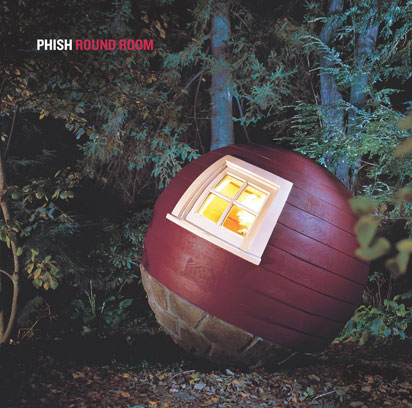
wallsSOUNDTRACK: PHISH-Round Room (2002).

round After Farmhouse, Phish went on a hiatus.  No one knew it would be quite so brief, but there was really a feeling that they were done.

And then they quietly released Round Room in 2002.  And it bursts forth with an 11 minute song.

“Pebbles and Marbles” has an interesting riff—complex and pretty.  And when I listened to it again recently I didn’t really quite recognize it.  But that’s because it’s nearly 12 minutes long and the really catchy part comes later in the song.  At around 5 minutes, the catchy chorus of “pebbles and marbles and things on my mind” announces itself.  And it is a good one.

“Anything but Me” is a pretty, mature song that is slow and piano heavy.  “Round Room” is a boppy little ditty (clearly a song written by Mike).  It is sweet and a little weird.  “Mexican Cousin” sounds a lot like a cover (maybe an old song by The Band) except for the solo which is very Trey.  It’s a funny, silly ode to Tequila.  “Friday” is a slow six minute song with two sections.  The verses are spaced out a bit, delicate riffs that are mostly piano once again.  The middle section is sung by Mike (which makes it more mellow somehow).

“Seven Below” is an 8 minute song.  It has another great riff (and the intro music is cool and bouncey).  When the vocals come in, it’s got gentle harmonies as they croon the sweet song).  Most of the 8 minutes are taking up with a guitar solo.  “Mock Song” is another of Mike’s songs.  This one seems to be a random selection of items sung to a nice melody.  Then when the chorus comes it’s quite nice, how this is a “just a mock song.”  The first verse is sung by Mike, then Trey does a kind of fugue vocal with different words in verse two.

“46 Days” opens with funky cowbells and turns into what seems like a classic rocking folk song—few words but a great classic rock melody (complete with 70s era keyboards).  “All of These Dreams” is a mellow piano piece, another mature song.  “Walls of the Cave” has an interesting piano melody that opens the song. The song is nearly ten minutes long and the middle part has a nice flowing feel to it.  There’s also a few sections that are separated be drum breaks—something that doesn’t often happen in Phish songs.  When the third part opens (to almost exclusively percussion, their vocals all work in a very nice harmony.  It’s a long song but with so many parts it always stays interesting.  “Thunderhead” is another piano-based song with some guitar riffs thrown on top. But it is largely a slow, mellow piece.

“Waves” is an 11 minute song with long instrumental passages.  It also begins with a kind of Santana feel to it, but it is a largely meandering song, with a simple melody that they stretch out for much of the song.  So this album proves to be an interesting mix of long jams and mellow ballady type songs.  It seems like Phish had a big mix of things to let loose.

[READ: November 1, 2013] If Walls Could Talk

This book reminds me of the work of Mary Roach—exploring a topic in great detail and including lots of amusing insights.  The two big differences here are that Worsley is British and that she goes back very far in British history to give us this fascinating information about the development of certain rooms of the house.

Worsley begins with the bedroom.  She looks at the furniture—the history of the bed from lumps with straw to fantastically ornate full poster beds that were made for kings who might never actually use them.

Then she moves on to more personal matters—sex (including deviant sex and venereal disease); breast feeding (for centuries mothers felt they were not equipped to take care of and nurse their own children, hence wet-nurses) and knickers (royalty had an entourage designed specifically to assist with underthings).  Indeed, privacy was an unknown thing in olden times.  Even royalty was expected to receive people in all of the rooms in the house.  Initially the bed chamber was for their most intimate friends, not just for sleeping.

The section on old medicine was also fascinating, they believed that it was vaporous miasma that did you more harm than say, excrement-filled water.

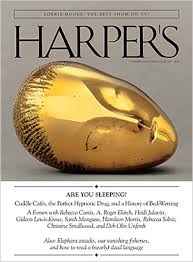
The section on Sleep discusses what was also in a recent article by Gideon Lewis-Kraus—that there were two sleep times at night.  With no electricity there was no artificial light to keep people up late so they would go to sleep early, wake up in the middle of the night (the best time for conception of children) and then sleep again. (more…)

Read Full Post »

sep2000SOUNDTRACK: PHISH-Rift (1993).

riftRift has a kind of story to it (albeit it’s not a real concept album) and you can tell by the full cover (see the bottom) that the story is complex–thank you gatefold sleeves).  The album starts with “Rift” a fast guitar spiral that opens with a harmony vocals on the opening lyric and then a call and response between I believe, Page and Trey as they each take a line of the verse—it’s a cool and surprising opening.

“Fast Enough for You” is a slow country-tinged song (with slide guitar).  This is the first song of their early records that I really don’t know that well.  So it must not get played very much.  It’s a pretty song.  “Lengthwise” is a cute little a capella song (with snoring and clock ticking) which I think about whenever I am alone in a bed: “When you’re there I sleep lengthwise and when you’re gone I sleep diagonal in my bed.”

“Maze” is one of my favorite Phish songs and it sounds great here.  I love the bomp bomp at the end of the verses and the fugue vocals at the end of the song.  This version is fantastic.  “Sparkle” also features fugue and barbershop type vocals (with Mike’s deep voice added in) in a funny silly roping song.  It’s another highlight.  “Horn” has a great opening guitar line (that reminds me of Pearl Jam for some reason).  I’ve always enjoyed this one.  It sounds great here (because you can actually hear what the harmony voices are saying (something you usually can’t in the live setting).  “The Wedge” is a mid tempo song that sounds different from their live versions.

“My Friend My Friend” is a pretty dark song (“My friend, my friend he;s got a knife”) but the opening is a beautiful instrumental with lovely guitar sequences until at 2:30 when the piano takes over and the song becomes slightly menacing.  “Weigh” is a weird song that I rather like.  It’s very piano heavy and very boppy despite the crazy lyrics:  “I’d like to cut your head off to weight it, whaddya say?  5 pounds, 6 pounds, 7 pounds.”  “All Things Reconsidered” a nice NPR joke.  This is a 2 and a half minute instrumental of guitar and keyboards that sort of plays with the NPR “All Things Considered” music.

“Mound” starts with some wonderful out of time signature riffing—4/4 drums and bass and then super fast guitars that don’t quite match until the drums and bass then catch up.  It’s hard to believe that that unusual opening leads to the big catchy bouncy chorus: “And it’s time, time, time for the last rewind.”  “It’s Ice” is a little slower here than live but I kind of like it in this slightly slower version (you can really hear the riffs).  This is another song with fugue-like vocals (they do all of their vocal tricks very well).  “The Horse’ begins as a beautiful Spanish style guitar piece and morphs into a simple acoustic song (it’s al of 90 seconds) which bleeds into “Silent in the Morning,” another highlight from their live shows and a standout here.

Rift might just be my favorite Phish album.

[READ: October 23, 2013] “Escanaba’s Magic Hour”

Once I found out that Tom Bissell had written a number of articles in Harper’s I decided to read them all, especially since some of them already appeared in his book Magic Hours.  This was his first piece for Harper’s and it is the one I remembered most from the book.  So I enjoyed reading it again.

I’m also glad I read the Harper’s version because although I don’t think it varies from the book version at all (and I’m not willing to check), it had pictures from the movie and from Escanaba, which brought a bit more reality to the article.

So, what’s this about a movie?

Well, this article is about Jeff Daniels making a movie in Escanaba, Michigan called Escanaba in da Moonlight (which I haven’t seen, but as I said after reading this the first time, I now feel invested enough in it to want to watch it–reviews are mixed).  And it sounds kind of interesting.  I also really enjoyed the comment that Daniels’ appeal “has something to do with the fact that many men, if asked to cast their lives without undue conceit, might settle on Jeff Daniels to play themselves.” (more…)

Read Full Post »

dec2004SOUNDTRACK: AWAY-Cities (2013).

awayAway is Michel Langevin, the drummer for metal band Voivod.  But on his first solo album he eschews all conventional music.  Rather, he has created an exercise in found sound and released it on the small label Utech Records.

The album is described as

Strong field recordings capture more than just the sound of an area, they capture a mood and spirit of the place and people. On Cities, local color and nature recordings clash with riots and discord, capturing the full human experience across the world. Literal and metaphorical “found music” appears: the booming stereo of a passing car or distant church bells, as does the rhythmic engine hum of a bus or the chirping of birds. This tour is a fast paced one, rapidly weaving through the geographic locations building a diverse, yet consistently engaging experience. The audio journey captured here perfectly reinforces the fact that, regardless of one’s location, the presence of music is never far, nor should it be.

What we get is a collection that sounds like a tour through the streets of the respective cities (nothing more specific than Europe is given, sadly).  We hear street noise and buskers playing (interestingly just about every type of music I have heard in Boston subways as well).

I only wish more information was given about just what Away was up to.  Where he was and, more importantly, how he recorded these sounds. The recording quality is amazing—the panpipes and harmonicas sound crisp and clean with no other ambient noise.  Did he ask the performers if he could record?  How did he get them so pristine especially since I assume they are in the streets?  And for the Europe ones, was there any given order to the way they were edited?  Is it the progression of their Voivod tour, or is it just random?  The mixing and sequencing is quite good, especially in the shorter pieces which really take you on a journey.  Not knowing what’s happening is maddening and part of the fun as you try to picture (especially if you use headphones) exactly what you are hearing.

“Montreal 2010” opens with the sound of travel until we zoom in on panpipes (for a few seconds).  This switches to a lurching shanty (sung, I suspect in French—it’s a little hard to hear).  Then from the shadows comes the sound of someone playing Leonard Cohen’s “Hallelujah” on the harmonica.

“Europe 2012” opens with someone playing what I suspect is a hammered dulcimer (exactly the kind of thing that buskers play in subway stations), it shifts to a jazz trio (sax, bass, drums) wailing away with traffic noises in the background.  After some busses and an accordion solo, there are delicate chimes.  Finally a bagpipe melody leads us away from the delicate chimes until we hear announcements in what sound like Russian and then French.  The track ends with fans chanting “Voivod Voivod.”

Montreal 2012 returns Away to near his home city.  This time the scene is much nosier—it could be joyous, it could be angry—there are whistles and horns, and by the end it seems like a joyous parade.  The noise diminishes as an operatic voice pierces through briefly until the drums return.  More street noises, including police sirens, French chanting and a train passing by as we return to yet more street drumming.  If this track had more context for the title it would probably be more enjoyable. And yet as the parade (for surely that is what it is ) marches past you feel like you’re there.

“Mexico City 2012” opens with a truck honking and street noise until we hear what sounds like an indigenous band playing, then some more flute music and church bells pealing. Then there are announcements in Spanish (by both a man and woman presumably in the church) and church organ music.  Pan pipes and drums bring us back into the street and what sounds like a market scene which ends with some Mexican music playing.

“Europe 2011” opens with some beautiful guitar or perhaps an Indian stringed instrument playing and some traditional Indian singing.  There’s some more music playing and cheering and then some peace as birds take us out of this short track.

“Montreal 2011” opens with banjo music (!).  And then the more typically French sounding violin moves us along.  More pan pipes and traffic noise progress us through the city.  Then two very different examples of accordion music meld until the noise of the train wipes them out.   The track fades out with a band playing a  jaunty accordion inspired track.

“Chicago 2012” ends the disc with a symphony orchestra tuning up (I presume) for a few minutes.  It’s a shocking cacophony.  Until someone shushes the noises and the birds return, playing us out of this aural tour.

You can stream, download or buy the CD  here.  Buying the CD gets you some of Away’s cool art (although I wish there was more).

[READ: October 8, 2013] “War Wounds”

Since I’ve been enjoying Tom Bissell’s book reviews, I thought I’d see what else he had written in Harper’s.  He seems to have a storied career with the magazine as a traveling journalist.  And this article dates back to 2004.

It is a personal article about himself and his father.  What I found fascinating about this is that his father was a Vietnam veteran, and I don’t know too much in the way of writing that concerns being the child of a Vietnam veteran.  There are a lot of books and films about the Vietnam experience for the soldiers, but not so much about the families that they returned to (as far as I know).  So it was interesting to read Bissell’s account of growing up with his father–who was a hard man and who wasn’t afraid to fight with his children (especially when drunk).

The man that Tom grew up with had a temper and didn’t much approve of Tom’s chosen profession.  But unlike many people of his generation, Tom didn’t feel that he had a particularly estranged relationship with his father.  What on earth possessed him to invite his father on a trip to Vietnam–to visit the sites where he lost friends and was himself wounded, is the stuff of journalism. (more…)

Read Full Post »

Two-Pints-Doyle-Roddy-9780224097819 SOUNDTRACK: BONNIE “PRINCE” BILLY-LIve on Mountain Stage (April 11, 2013).

bpbI saw Bonnie “Prince” Billy several years ago when he opened for Godspeed You Back Emperor.  His set was really good.  And yet I have never bought any of his music (his back catalog is just too intimidating to want to jump into).  But i still enjoy his music, and this Mountain Stage appearance shows off his songs and his between set humor.

He plays four songs here: “Oh How I Enjoy The Light,” “We Love Our Hole,” “Screaming Issue” and “You Remind Me Of Something (The Glory Goes).”

“We Love Our Hole” is from an Australian movie about surfing (and features some great baking vocals from Emmett Kelly and especially Cheyenne Marie Mize.  And “Screaming Issue” is a Loudon Wainwright song (it seems funny to me that he has so many songs but he chose to do a cover) and he does a great job of it.  “You Remind Me of Something” may be my favorite song of the set.

One of these days I’ll have to dive into his recorded work.  But, oh where to start?

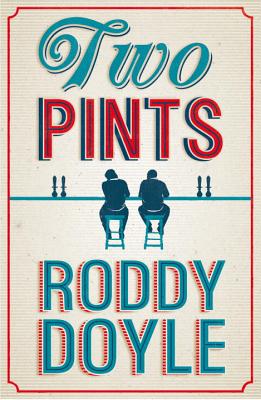
[READ: September 19, 2013] Two Pints

Two Pints is a delightful, short book that shows just how funny Roddy Doyle is.  I’m not sure how easy it is to find in the States, but if you’re a fan of Doyle’s humor, this is worth tracking down.

It is a series of conversations between two mates at the pub.  Each entry is dated starting with 24-5-11 (May 24, 2011 for us Americans) and ending 4-9-12 (September 9, 2012).  At first I thought that they were regular meetings, but they aren’t.  Some come weekly some more frequently.  But in each visit, the two men meet at their local with a pint to discuss the events of the day (often quite reluctantly).

Of course they also talk about their wives and kids and grand kids (the one crazy piece of nonsense is that one man (neither are named) keeps talking about buying wild animals for his kids (polar bears, hyenas and the lot).  It’s so strangely far-fetched for something that is otherwise down to earth, that I’m just not sure if Doyle was making a point or just being goofy.

But otherwise, one man begins talking and the other joins in.

They talk about Gaddafi (one of them thinks he’s the guy at the chipper, the other one is sure he’s spotted him working at the airport—the perfect hiding place).  They talk a lot about the Queen (it’s okay to hate the Brits again, phew) and The Pope (the mean German pope, not the nice new pope).  They talk about politics and voting.  They even talk about Anthony Weiner. (more…)

Read Full Post »

aug2013SOUNDTRACK: DAVID LYNCH-“Crazy Clown Time” (2012).

lynchIt’s hard for me to divorce this song from the video, because the video is so…David Lynch.  Even though it pictures the lyrics literally, there’s so many weird little Lynchisms that it’s an art unto itself.  Imagine David Lynch directing a rocking music video, but of a song he wrote.  Wow.  But I’m not going to talk about the video.

Musically, his song is a fairly simple construction–it’s primarily drums with some echoing guitars (with no real melody) and other crazy noises.  Over the rhythmic cacophony, we get David Lynch’s bizarre falsetto/spoken words.  Lyrically the song seems to be describing a party that gets pretty out of hand (and the video certainly shows that).

Lyrics include: Paulie he had a red shirt; Suzy, she ripped her shirt off completely; Petey set his hair on fire. And then the chorus: It was crazy clown time.  It was real fun.

Lynch’s voice sounds like an excited child (or demonic clown) as he talks about certain details of this party.  This is definitely a song that people will ask you “what are you listening to?”  There’s very few who will want to listen to this, although I’ve found that after three listens, it makes a kind of twisted sense.

If you dare, watch the NSFW video

[READ: September 10, 2013] Animal Instincts

I very rarely talk about reviews of TV shows–that’s a slipper slope if ever there was.  But I like Lorrie Moore and I like Jane Campion and I hadn’t heard about Campion’s show called Top of the Lake  Moore suggests is the best show on TV.  It aired on the Sundance Channel but was originally a BBC production.  Like Campions’ other works, it is set in New Zealand and the location and cinematography are part Deliverance, Road Warrior, Winter’s Bone and Hobbit.

The show sound very dark, but as soon as Moore started describing it I couldn’t help but think of Twin Peaks.  And indeed, there is a David Lynch nod within the show (girls say they are reading Blue Velvet for their book club). (more…)

Read Full Post »

« Newer Posts - Older Posts »