Feeds:
Posts
Comments

Archive for the ‘Beer’ Category

vanSOUNDTRACK: FRANK TURNER-Tiny Desk Concert #287 (July 13, 2013).

turnertinydeskNPR introduced me to Frank Turner and I’m pretty delighted that they did.  I really enjoyed his set at the Newport Folk Festival.  And here’s another live recording (a Tiny Desk Concert).

In this brief set, Frank and mandolin player Matt Nasir (he’s only been playing it for 6 months) blast through 3 of his rockingest folk songs.  “Recovery,” “The Way I Tend to Be,” (with a very funny lead story) and a rousing mandolin solo-filled and a (reluctant) NPR audience singalong. of the great “Photosynthesis.”  I imagine it was quite loud in their offices that day.

Turner is fantastic live—he’s personable and funny and even more so in this intimate setting.  It’s a wonderful set.

Check it out.

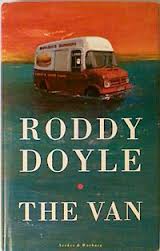
[READ: August 23, 2013] The Van

This is the final book in the “Barrytown Trilogy” (except for the new one coming out next year).  Whereas The Snapper was tied to The Commitments by virtue of it being the same family, The Van is tied to The Snapper because it follows the same guy—Jimmy Rabbitte Sr.

It’s 1990 (a few years after The Snapper because the baby from that book is now talking and mobile) and like many older people in Ireland, Jimmy Sr. has been laid off.  The first third of the book looks at life on the dole in Ireland—skimpy Christmas presents and getting handouts from your son.  And yet there’s always money for a pint or two—so Jimmy still gets to hang out with his mates at the pub a few nights a week.  He also goes out with the baby from time to time and occupies himself in various ways (pitch n putt).  There’s a lot of humor and silliness in this section–especially within the family when the twin girls start getting older and even cheekier.  And the focal point is the World Cup—because Ireland is actually going to be in it this year—Italia ’90!

And the Jimmy’s mate Bimbo gets laid off.  And that’s where the titular van comes in (over 100 pages into the story).  Bimbo is crushed to be laid off, but Jimmy is a little pleased.  He’s not happy that Bimbo is laid off, but he is happy that he has someone to waste the day with.  They go golfing together (and win a prize or two) and they do their best trying to stay happy.  But they’ve noticed that the fish and chips van that used to be parked outside of the bar is no longer there.  It’s a sad state of affairs when you’re drunk and hungry at midnight and can’t get a fish n chips.

And that’s when their friend Bertie (who can get anything for anyone) comes through on Bimbo’s half serious question–could Bertie get him a chipper van?  Bertie finds one—an unholy filthy mess of a thing with no engine.  And Bimbo uses his redundancy money, £800, to buy the mess.  Jimmy is appalled until Bimbo starts talking about the two of them being partners—working together to makes some money and sell chips to their drunken mates and—even better—to the punters who are enjoying the World Cup!  And suddenly it seems like a real idea. (more…)

Read Full Post »

Harpersmaerch13

SOUNDTRACK: DEFTONES-“My Own Summer (Shove It)” single CD 1 (1998).

shoveitThis is a four track single (it’s out of chronological sequence, but it does follow the B-Sides release, so lighten up!).

Obviously, “My Own Summer” is awesome.

The other three tracks are live from Amsterdam.  The sound quality is not as great as I would like–Chino’s voice is mixed strangely and he seems to be “above” the music–almost like he is rapping to prerecorded music. It’s especially notable on “Lotion” which I don’t especially like here–it doesn’t really sound like the song so much as a guy talking over background.  It’s better on “Fireal-Swords,” but what’s most notable about the song is that in the middle of it, while the band are still playing, he talks to the crowd and asks them to be a little gentle to some guys (I can’t imagine the context) at least for the rest of this song, okay?

In the final song, “Bored” the band sounds great–and Chino’s vocals distortions are incredible (and incredible in how consistent they are–does he have pedals or something).  But in this case, in the middle of a verse, the band completely stops when Chino sees a kid on the ground.  He asks if the guy’s okay and you can hear the relief in his voice when you find out he’s just looking for his shoe.  So they bring the kid on stage and tease him a bit and then let him stage dive off as they pick up at the next chorus–from zero to ten –like nothing happened.  Cool.

It was very impressive to hear genuine concern from such a loud and screamy band.

[READ: March 5, 2013] “Deeper Winter”

This is a story about an illegal immigrant.  And what’s interesting about it is that there’s no “message” one way or the other about illegal immigrants.  Eduardo is just a guy looking for a job and a place to stay.

The story opens with Eduardo and his Uncle Luis at a Dodgers game.  Luis is telling him that he has to move out because he and his lady want to get married and have the place to themselves.  Eduardo understands, he knew the place was only temporary for him.  Luis feels bad, but he has already gotten in touch with a friend in Idaho who can get him a job and give him a place to stay.  He also gives Eduardo a down parka and a bus ticket.

Eduardo sets out on a quiet Sunday morning bus.  They stop briefly in Las Vegas and then they’re off to the north.  When the bus arrives, Miguel is there to pick him up.  Miguel’s mother is very excited to see Eduardo (Eduardo of the Angels she calls him).  She reveals that she and Luis were an item a long time ago and she thinks of Eduardo as family.  They give him his own room and tell him that he’ll be working with Miguel on a construction site–working for Johnny Danilo.

Eduardo is a quick study and learns the fine art of roofing so that when the job is finished (it’s a big job and takes awhile), Danilo lets him put on the finishing caps–something of a rite of passage.  There’s plenty of work upcoming, so Danilo invites Miguel and Eduardo to keep working for him.  Eduardo becomes friendly with Danilo and his son Leo.  Eduardo even shows Leo how to pitch like Fernando Valenzuela.  But one day when Eduardo returns home, Miguel and his mom have taken off–they left Eduardo’s things but cleared out everything else.  Eduardo has no one to turn to except Danilo. (more…)

Read Full Post »

snuffSOUNDTRACK: SINÉAD O’CONNOR-How About I Be Me (and you be you)? (2012) .

sineadI was a huge fan of Sinéad’s first album.  And I liked her second one too (the one that made her a star).  I even followed her through a few of her later albums (while she was getting a bit more publicly odd).  But then it just got to be too much work (she released a bunch of albums which I couldn’t keep up with).

But this album promised to be a nice return to form.   And so it is–her voice sounds great and there’s many of the elements of good ol’ Sinéad here–the jangly guitars, great backing vocals and awesome mixture of gentleness and rage that really marks Sinéad’s best work.

“4th and Vine” is a boppy reggaeish song about love and marriage.  It’s nice to hear that kind of cheer from Sinéad (even if it didn’t all work out).  It’s followed by “Reason with Me” a sympathetic song from the POV of a junkie who plans to call that number one of these days.  “Old Lady” is a simply beautiful song–in which you can really hear how well Sinéad’s voice has stood up through all the troubles she’s been through.  But more than that, when the guitars kick in, you can hear that she still has the chops to write a great song.

“Take Off Your Shoes” is one of those great Sinead songs that gives you chills.  I’m not sure what she’s on about with the blood of Jesus and all, but when the song kicks in and “you’re running out of battery” wow, what a great song.  “Back Where You Belong” is one of Sinéad’s more delicate songs–a plea for peace from men on behalf of boys–the chorus is soaring and gorgeous.

“The Wolf is Getting Married” is being released as a second single this month (good for an album to have that long of a shelf life).  It starts a little slow but once the verse really starts it’s pure Sinéad–that guitar backing is just like Sinéad’s earlier hits).  And the lyrics, which are simple enough, are fun to sing with.  “Queen of Denmark” is a stunning, vulgar track that is really amazing.  It’s great to hear her when she is passionate and angry and indeed here she is–soaring voice and loud guitars and all.

“Very Far from Home” and “I Had a Baby” are sweet songs, they are enjoyable, but feel like decent end-of-disc songs, especially after the power of “Denmark.”  The final track, “V.I.P.”  ends the disc quietly, with a gently sung, almost a capella track about the true nature of very important people.  The song  ends with a whispered prayer and a chuckle.    It’s a really solid album and I’ve enjoyed listening to it many times (but I really don’t like the cover).

Perhaps, as my friend Louise has been telling me all along, I should check out those discs that I missed.

[READ: February 1, 2013] Snuff

I can’t believe I have two books in a row that deal so largely with poo!

Terry Pratchett is back with Snuff (actually, he has a book of short stories and a new novel named Dodger since Snuff came out).  Sarah gave me this for Christmas two years ago and I have just gotten around to reading it.  Which is a surprise as I love Pratchett and have read all of his books (for the most part).

This book seemed a little big.  It is 400 pages, as long as Unseen Academicals, and I was a little daunted by it.  But as soon as I read the first few pages (again, no chapters here, just section breaks), I was back in the world of Commander Vimes (or arch Duke or something) and back in Discworld.

Commadner Vimes is a wonderful character–a policeman who is street smart and very wise, even if he’s not proper smart.  He’s an excellent everyman character and the kind of person you wish was running things in your town.  Or someone else’s town.  For Vimes is off on vacation to the Shire, the childhood home of his wife Lady Sybil.  And Vimes is out of his element (which is always funny).  And he also senses that something is amiss here in the idyllic countryside.  So, despite Sybil’s gentle warnings to be on vacation and come in and be social, Vimes is on the case.

The case, as it were, is about goblins.  Goblins are a new race in Discworld.  Everyone always treated goblins like vermin–they smell bad, they steal chickens, they live underground  they are worthless.  And the goblins seem to agree (well, that’s what generations of maltreatment will do to your self-respect).  But Vimes gets mixed up in a murder–and when a goblin pleads for mercy but is killed anyway, that is murder vermin or not.  And when Vimes discovers that goblins can talk, emote and, indeed, play the harp–well that makes them a little less verminous, no?

Wait, what’s this got to do with poo?  Well, Miss Felicity Beedle, Discworld’s premier children’s author, has written a book called The World of Poo (which is actually for sale on its own too, ha) which Young Sam Vimes loves.  It is his favorite book after Beedle’s earlier book Wee.  And so Young Sam is off collecting samples of poo to dissect, and the Shire is a great place for it.  Well, when Vimes meets Beedle, he learns that in addition to being a children’s book author, Beedle has been teaching goblins how to be more…well, not human exactly, but more approachable to humans so that they may be recognized as valuable creatures. (more…)

Read Full Post »

CV1_TNY_12_03_12Thiebaud.inddSOUNDTRACKDEERHOOF-Live on KEXP, February 1, 2007 (2007).

deer2Deerhoof is noisy and chaotic, indeed much more noisy and chaotic here than on their 2008 set.  The introduction has the band posing a very funny question in which they asks the DJ about how the show will be streaming in various formats.  He imagines easy listening–a good joke for this uneasy listening band.

There are five songs in this set, although “The Eyebright Bugler,” “+81” and “Wrong Time Capsule” are played as a medley.  This is an interesting set because they play songs from various albums, not just their newest release.  The set opens with “Milkman” (from Milkman) with a quick jump to “Twin Killers” (From The Runners Four).  Then there’s an interview which is, as always, very funny, they’re a very enjoyable band.    It also reveals that a middle school has taken Milkman (I assume the whole album) and made a ballet out of it.

“Eyebright Bugler” (from Reveille) merges easily in “+81” (from Friend Opportunity).  “+81” is one of the most catchy oddball songs I know–a simple riff that seems to project excitement and yet not a full rocking sound.   The DJ even says that people have called up and asked not to play that song because it is such an earworm they can’t get it out of their head (the band takes this as a compliment .  Finally “Wrong Time Capsule” also comes from The Runners Four.    It merges all of the sounds-noisy guitars , conventional bass and the always enchanting vocals.

 Check out the strangeness here

[READ: December 6, 2012] “Manhattan”

The final “Gut Course” in this issue isn’t about food at all but about a drink.

Chang-Rae Lee remembers the summer when he lived with his girlfriend Nina in her parents Fifth Avenue apartment.  He lived in a maid’s quarters while Nina and her friend Carol shared Nina’s room.

This was just before his senior year of college, when the opportunity of living with your girlfriend must have been mindblowing.  But what he remembers most is her father’s request for a nightly Manhattan.

He explains that his family (indeed I have to assume most families in 1986) did not have a cocktail hour.  Chang says that his own father had an occasional Genesee Cream Ale, and hardly finished it.  But Nina’s father (who was a New York sophisticate) taught him how to prepare the perfect Manhattan. (more…)

Read Full Post »

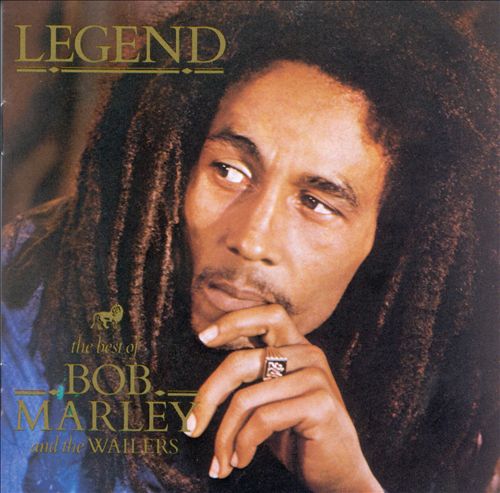
SOUNDTRACK: BOB MARLEY AND THE WAILERS-Legend (1984).

I’m white, so that means I own a copy of this CD (according to the book below).  And I do, because it’s mandatory in college that you play “Jammin'” at every party.

Now, I like ska (yup, still).  I know that ska came from reggae, but to me reggae is just boring ska.  I couldn’t agree more with Barney on How I Met Your Mother:

Ted: Oh, get this, she plays bass in a reggae band. They’re having a show this Friday. How cool is that?

Barney: Oh, does she know that one song? Mm-hm chaka, mm-hm chaka. What’s that song called? Oh, right, it’s called every reggae song.

Although in fairness, listening to this again, it is a rather nice album (I guess I know every song).  I have a personal aversion to some of the really overplayed songs, like “One Love” (because if you go to any Caribbean location they all act like it’s the official slogan of hot weather.  We even have a Christmas ornament from St. John that says “One Love”  WTF?  And I don’t think anyone needs a 7 minute version of “No Woman No Cry.”

But some of the lesser played its (“Could You Be Loved” and just about anything with The Wailers backing him are pretty great).  Although I’ve got to admit I can’t take more than a few songs.  I had to skip through some of the last songs (thank goodness I don’t have the 2 disc version).

[READ: July 26, 2012] Whiter Shades of Pale

Christian Lander created the blog Stuff White People Like.  It was very funny (it hasn’t been updated since Feb 2011, so let’s assume it has run its course).

Lander had released a first book of SWPL back in 2008.  I didn’t read it (blog to book deals were overwhelming in 2008), but I had seen enough of the site to assume it was funny.  One of the funnier jokes when the blog first came out was wondering if the creator was white or not.  (Well, the author photo gives that away, but I won’t).

We grabbed this book at a Borders going out of business sale (sorry Borders, you are missed).  This book continues where the first book left off (I gather).  I don’t know if every entry from the blog made it into the book (the thanks at the end of the book lead me to think not), but I have to assume most of them made it (and maybe there is new stuff in the book too?) (more…)

Read Full Post »

SOUNDTRACK: TAME IMPALA-Innerspeaker (2010).

Tame Impala are from Australia, and their sound is majorly retro.  They remind me a lot of Dungen, including the fact that I would have guessed (from the way the words are sung) that English wasn’t their native language (which makes this already trippy album feel even more trippy).

Fuzzy guitars over a cool bassline introduce this album.  “It is Not meant to Be” is something of  statement about the sound of this album.  And when the vocals come in (fuzzier still), it’s retro all the way.  “Desire Be, Desire Go” continues the fuzzy guitar with a slightly faster pace.  The chorus comes in a little cleaner which is nice as it breaks up the fuzz somewhat (but only somewhat).  “Lucidity” ups the noise and pace with a great catchy riff and a strong chorus.  I think of this as the “hit” based solely on the fact that I heard it first, but when they played KEXP in studio sometime after the release of the album, they didn’t play this song .

They did play “Why Won’t You Make Up Your Mind” which is probably the real single–the cool reverbed riff and the soaring guitars sound great.  “Solitude is Bliss” has become my favorite song on the album lately.  The vocals remind me of early songs by The Who (maybe from Sell Out), but again, the music is all reverbed and hippie sounding, it’s a nice pairing and the chorus is once again, really catchy.  “Jeremy’s Storm” opens with a cool riff. It turns into a wild jam instrumental.  “The Bold Arrow of Time” sounds like a song from the 70s.  The guitar sound as it opens could come from Jesus Christ Superstar and when the riff finally kicks in, it could be a Cream song.  And yet the vocals (always soaring) don’t sound like anything from that time).

I love any song with a good bassline (especially one that’s not just repeating the guitar riff)–so I love the cool bassline that runs through “Runway, Houses, City, Clouds”–high and kind of obtrusive.  A perfect way to keep pace.  And when the bass gets a little “solo” at the end, it’ s a nice payoff.  The final song is “I Don’t Really Mind.”  It’s the most conventional and not dreamy sounding album on the album.  There’s even a break from the wall of guitar where we get just some drum beats–it’s very p0ppy.  It’s a good ending, upbeat and catchy and makes you want to start the whole shebang over again.

The album is a little long-feeling overall (it’s about 55 minutes), and some of it can be a little samey, but there’s enough diversity and great songwriting to make this album really enjoyable.

[READ: July 2012] At Home on the Range

Another frickin cookbook?  For a guy who doesn’t do cookbooks, there’s certainly a lot of cooking-based items on this blog.  Blame McSweeney’s who put out this book, too.

As everyone knows Elizabeth Gilbert wrote Eat, Pray, Love.  I’ve never read it (although I have read some of her earlier books (Pilgrims and Stern Men) which I liked quite a bit–I was into her before she was cool, man).  But this book is actually a cookbook that her great-grandmother wrote and had published in 1947.  Gilbert’s contribution is slim, but engaging.  She gives a lengthy biography of her Gima.  She was born rich (Main Line Philadelphia rich) and loved to travel.  Gilbert says that you can sum up Gima with a Jazz Age sensibility and one word: Enjoy!  By the time she was married (to an “impossible” man) much of their money was gone–indeed, she slipped out of a few foreclosed homes as the sheriff was coming for them.

Gilbert also points out how far ahead of her time Gima was.  The 1940s saw food moving towards prepackaging and processing.  So this cookbook came out right around frozen dinners to try to re-introduce women to the kitchen (although not in a retrograde way) and to be proud of what you can accomplish there.  But more than just a cookbook, Gima tried to introduce Americans to Brains with Black Butter, Eels, Tripe and Calves’ Head Cheese.  She was also unafraid to try things in different neighborhoods (the story of how she first encountered pizza is wonderful).  Gilbert wonders what might have become of her in a different time place or circumstances and it’s true for she was really a remarkable woman.

And the remarkable nature of this cookbook is not the recipes (which are remarkable and I would like to try some of the simpler ones), but the prosaic nature of the book.  Gima is telling a story with each recipe.  Indeed, the recipes aren’t even given in standard annotated form: they are written in the prose.   Gilbert’s other contribution is to take ten of their family’s favorite recipes from the book and write them out in conventional cooking style for ease of cooking.  I enjoyed this book a lot–Gima is a fascinating woman with a delightful taste for life.  The question is what to try first? (more…)

Read Full Post »

SOUNDTRACK: THE GREAT GAMBLE-Book One (2012).

My friend Matt has worked at a school in Pennsylvania for years. He wrote to tell me that a few kids who graduated from his school had formed a band and have released a CD.  It’s streaming (and downloadable) on bandcamp at their site.

I have lots of friends in bands, and I’ve listened to lots of demos, so I wasn’t expecting very much.  But the first thing I noticed when I listened was how good this sounds–professional and, yes, like a “real” album.  This isn’t just a bunch of guys jamming in their garage.  What makes this even more striking is that the music is heavy progressive metal–not something you just whip out in a quick take.  This is complicated, interesting music.  I’m hearing a kind of Dream Theater meets King’s X vibe going on.  And man, it’s really good.

This is multi-step heavy rock (complete with a synth player/violinist!). The only song that is less than 9 minutes is the 90 second introduction called “The Marketplace.”  Otherwise, we’ve got three songs over ten minutes and one over 16!  Who even knew young bands did stuff like this anymore?

Al Joseph plays lead guitar and sings lead vocals.  His guitar speed is very impressive and his vocals sound not unlike Dug Pinnick from King’s X (noticeable on the opening track, especially) .  Matt Weaver plays violin and keyboards.  The keyboards offer more than just a fuller sound.  On “Release the Kraken” they provide some cool sci-fi sound effects.  At about five minutes in, “Release the Kraken” slows down to a quiet middle section that really showcases Steve Michael’s drums.  And then comes the blistering guitar solo.  It’s followed quickly but a slight diversion and then a wholly different style of solo.  It’s really something.

If “Release the Kraken” wasn’t a good enough prog rock title, how bout “Legends of the Symmetria.”  This one has a very Dream Theater feel for the opening.  But the vocals sound very different–dual vocals with great low harmony.  There’s a cool pre-chorus (I guess) at about 3 minutes.  This song is definitely a heavy one.  At about 4 minutes, the song slows down into a pretty classical guitar section,where Chris Joseph on plays bass gets to show off a bit (although he seems to be the most understated of the 4 players).  There’s some great drumming at the end of the song, too.

“The Ghost of Three Reflections” is a slow builder of a song.  There’s some quiet parts (with beautiful harmonies) and a guitar solo that sounds clear and perfect (I’m hyping the production so much because it sounds so good).  The guitar solo section in this one strikes me as something that might suit two guitarists better–maybe two more different styles of soloing, but he pulls it off well, especially when by the end, he has shifted to a very different style, and the music changes along with it).  I love the bass section at the 8 minute mark, which reminds me of something Rush might have done back in the mid 70s.  The song kind of merges into “Breach At Fort Mycenae” which opens with the same kind of staggered sound as the end of the previous song.  The violin gets an airing in the middle of this song and it’s a cool treat.  I could definitely use more violin in these songs, although maybe little bits are a treat.  There’s a few times when I don’t like the production choices–maybe there needs to be a bit more music behind some of these solos so it doesn’t just sound like two players soloing against each other.

The disc ends with the big one, the sixteen minute, “The Sleepwalker Pt. 1 – Tears of Dagon” [I love that it’s a Part One and it’s 16 minutes long].  When the vocals kick in at about 3 minutes, the harmonies are gorgeous.  I love the bass guitar break at 5 minutes.  Although there’s something about the keyboard sound that I don’t like–maybe they’re not big enough?  But I love the crazy guitar solo at the 9 minute mark of this track (I’m a sucker for dissonant scales).

This is an amazing debut CD and I hope these guys go far (they’re going from Scranton to Boston for school, but I hope they can go further than that).  They are tight as a drum, stopping and starting perfectly, keeping all of the rhythms and time changes perfectly.  They really have done their prog rock homework.  The only gripe is as I’ve said, some sections don’t feel “big” enough.  If you’re going to write a 16 minute song, you don’t want sections that sound small–you want your backing guitars or bass guitars to be a little louder so it sounds like the song is still going.  But other than that, there’s not much room for improvement.

I downloaded their CD, (and yes, I paid for it…that will help with college, eh?).  But my real complaint is that on the computer, the album cover is awesome–if you look at it from an angle, there’s a whole scene behind the large logo (try it, it works here too).  But when you print it out, you lose all of that.  The images are there, but the effect is gone.  This is a band that calls out for full color packaging and maybe even a gatefold sleeve!  (The bottom of the cover says Ο υπνoβάτης which means The Sleepwalker).

Good jobs guys!  You’ve done NEPA proud!

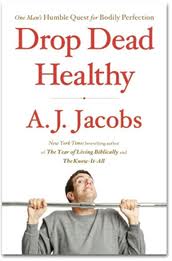
[READ: May 15, 2012] Drop Dead Healthy

Sarah got me this latest A.J. Jacobs book for my birthday.  At first I didn’t think I wanted to read it because I feared what a book all about being in good shape would be—nagging, obnoxious, making me feel bad about my vices. But I should have leaned from all of my A.J. Jacobs experience that he is completely NOT about that.

Jacobs occasionally enters into preposterous forays of Self-Improvement.  In the first book of his I read, The  Guinea Pig Diaries, he tried various weird experiments to see what it was like to be a woman, radically honest, a unitasker, etc.  His other books have been about self-improvement.  He read the encyclopedia from A-Z, he did a year trying to live like out of the bible (I will get to these eventually).  In this book, he is on a quest to be the healthiest person in the world.

It’s an impossible task.  And, frankly, a foolish one.  But he decides he will take two years and focus on individual parts of his body one month at a time.  I’m going say right up front I feared that this book would make me feel bad about all the things I don’t do for myself.   But well, a) Jacobs is a funny writer, so at least you’re laughing.  b) Jacobs is either in bad shape or plays up his badshapedness so that the average person doesn’t feel too bad off.  c) He is so over the top in his quest that no one would ever think about doing all of the things, but we can take what he learned and apply little bits to ourselves.  What is nice is that he tries to get two if not balanced opinions then perhaps fringe opinions to balance out–trying one extreme then another to see which work.

He Breaks His Categories Down thusly: stomach (eating right, the perfect food), the heart, the ears (the quest for quiet), the butt (avoiding sitting too much), the immune system (germs), genitals, nervous system, lower intestine (better bowels), adrenal gland (lowering stress), brain, endocrine system (removing toxins), teeth, feet, lungs, skin, inside of the eyelid (sleep), bladder, gonads, nose, hands, back, eyes, and skull.  Each category is designed to be a month-long workout of that organ/item–some things he keeps doing after the month is over making his workout regime something like 5 hours a day.  And at the beginning of each month he lists the stats for what he accomplished.

I’m not going to talk about all of his body parts, but I will mention a few that i enjoyed the most. (more…)

Read Full Post »
SOUNDTRACK: AUSTIN CITY LIMITS FESTIVAL 2010 (on Palladia TV 2011).

Recently Palladia broadcast some highlights from the Austin City Limits Festival in 2010.  The bands they showed were Phish, The Flaming Lips, Vampire Weekend, Muse, LCD Soundsystem, Sonic Youth, Spoon and Slightly Stoopid.

There were so many good bands at this festival (why is Richard Thompson in such small print?) that I won’t really complain about the inclusion of Slightly Stoopid and LCD Soundsystem on this best of (but they could have included Band of Horses, Yeasayer, Broken Bells, Gogol Bordello (the list goes on!).  (I’d never heard of Slightly Stoopid and although I like LCD Soundsystem, live they were less than stellar).  Although I am glad they didn’t include the Eagles, thank you very much.

I’m trying to get actual set lists of these airings (they mentioned the song titles during the show but I didn’t write them down).

This was a 2-hour broadcast and it was really good.  If they re-air the episode, it’s worth watching.  The quality of the broadcast is excellent (even if the HD format does take up way too much space on a TiVo).

[READ: November 6, 2011] “Beer Cans: A Guide for the Archaeologist”

A while back I read a few old articles that I got from JSTOR, the online archiving resource.  This month, I received some links to three new old articles that are available on JSTOR.  So, since it’s the holiday weekend, I thought it would be fun to mention them now.

And to start of the holidays, I present you with this–a loving history of the beer can (for archaeologists).

This is a fairly fascinating look at the development of the beer can from 1935 to the present.  The selling point of the article is that archeologists could use beer cans to date the timeframe of an excavation.  I agree with this; however, since they only date back to 1935, I’m not entirely convinced of its long-term usefulness.

The problem with the article is that page two shows a chronological timeline.  This in itself is not a problem (although it is odd that it goes from present to 1935 instead of chronologically forward); the problem is that the article itself more or less sates exactly the same thing as the timeline.  For although this article is 20 pages long, there are tons of photos and very little in the way of text beyond what was in that (very thorough) time line.

Nevertheless, you can see the morphing of beer cans from ones that you had to pop open with a can opener to ones that finally had self opening cans.  See the switch from tin to aluminum, and even learn why the tops of cans are a little narrower than the sides (called a neck-in chime, it evidently saves a lot of money). (more…)

Read Full Post »

« Newer Posts