Feeds:
Posts
Comments

Archive for the ‘Demons’ Category

SOUNDTRACK: New Moon Original Motion Picture Soundtrack (2010).

Back in the 90s, it seemed like every week there was a new soundtrack featuring an unreleased song from some great alt rock band.  This meant huge sales for soundtracks, even if for the most part they weren’t solid start to finish.  In fact, mostly you got three great new songs, three pieces of rubbish, one great song by a band you’d never heard before and two or three okay tracks.

The inclusion of a new Death Cab for Cutie song was the big news about this soundtrack.  And overall, the reviews were positive.  And I’m pleased to say there aren’t really any horrible songs here.  (I have no idea how the soundtrack fits in with the movie as I haven’t seen it and probably never will).

But as with that old soundtrack formula: we get a few good songs by reasonably well-known bands: Death Cab for Cutie, Thom Yorke, Bon Iver & St, Vincent, Muse, Grizzly Bear.  And then there’s a whole bunch of good rock songs.  The disc plays as something of a sampler of downcast, mellow alt rock. In fact, the back half of the disc sounds like a pretty decent alt rock radio station from the last decade or so.

Some of the tracks even sound like 90s alt tracks (Hurricane Bells, that song is 16 years old right?  And Sea Wolf, you’re channeling Peter Murphy, I know.)  The final two tracks are okay.  The Editors is kind of a Nick Cave via Joy Division sorta spoken word ballad.  And I admit I’m a little disappointed in the Lykke Li track–they got hyped beyond their ability.  The final track is a piano score, which is fine.

The biggest surprise to me is how much that Death Cab for Cutie songs sounds like a Rush song.  I’ve never considered that the bands sound anything alike before, and yet from the moment the song opens, that could be Geddy Lee singing, and that whole guitar structure is very Rush-like.  Maybe they should do a cover of it.

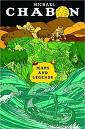
[READ: April 20, 2010] Maps and Legends

This is a collection of 17 non-fiction pieces by Michael Chabon.  The pieces cover everything from book reviews, essays about reading and writing, comic book and comic book artists and golems.

The opening essay is about the modern short story and it sets the tone for the entire book.  Interestingly, this essay talks about the state of entertainment and how “Entertainment has a bad name.  Serious people learn to mistrust and revile it.  The word wears spandex, pasties, a leisure suit studded with blinking lights. (13).  This very topic is at the heart of the David Lipsky/David Foster Wallace book (and in fact Chabon is mentioned in that book as well.)  Ah, serendipity. (more…)

Read Full Post »

SOUNDTRACK: ALANIS MORISETTE-Jagged Little Pill (1995).

In this book, DFW considers himself to be absolutely useless when it comes to music.  He doesn’t know anything at all.  He says he listens to Bloomington country radio stations until he can’t take it anymore and then he switches over to the alt rock station.  He’d never even heard of Nirvana until after Cobain’s suicide.

And so, the soundtrack for the book is R.E.M., Bush (two songs) and Alanis.  In fact, there’s a surprisingly long section devoted to Alanis in the book, including DFW’s admittance that he would love to have a date with her for tea.  He admits that she is pretty much manufactured angst and yet there’s something about her that he finds irresistible.

At this stage (2010), the whole Alanis thing seems almost adorable in it’s “controversy” or “hype” or whatever.  It’s still hard for me to be objective about the quality of Jagged Little Pill (I mean, Flea plays bass on it so it must be good, right?).  I really enjoyed it at the time, perhaps because of its rawness or its honesty (which was pretty novel at the time, especially from a woman), all packed in a clean production of course.  There’s also something weirdly appealing to me about her (really not very good) voice.  She seems just off enough for all of this to be really sincere.

And of course, the nastiness of “You Oughta Know” was pretty astonishing for pop radio at the time.  True, there’s songs on here that make me cringe now (there’s a lot about her that makes me cringe) and yet there’s still some really enjoyable stuff here.  Even the perennially mocked “Ironic” for all of its flaws has a stellar chorus.

Now that the “women in rock” phase of alternative music has passed, there’s very little music like this being made anymore.  So it’s kind of fun to reminisce about this stage of my musical life, warts and all.

Oh, and by the way, I also grew up watching Alanis on “You Can’t Do That on Television,” so it was pretty exciting to see a child star that I knew make it big.

I never liked Bush though.

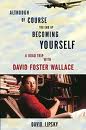
[READ:April 21, 2010] Although of Course You End Up Becoming Yourself

As I mentioned, I was super excited to get this book and I treated it like the artifact it is: trying to read it in one sitting (impossible) or at least in as compressed a time as possible to preserve the stream of consciousness attitude of the book.

For, as the subtitle doesn’t quite state, this is five-day conversation between David Lipsky and David Foster Wallace.  The tape recorder was running for most of these five days and what we get is a literal transcript of the conversation (with much of Lipsky’s parts excised).  It is an all-access pass to the mind of the man who wrote Infinite Jest as the hype of the book was really taking off and as his brief promotional tour for the book was winding down.

Lipsky was (is) a reporter for Rolling Stone. DFW’s Infinite Jest was the huge media hit (#15 on the bestseller list) and the hype was outrageous.  DFW had begun a (sold out) reading tour which actually began the day before the book came out, so he rightfully notes that no one could have actually read the book by then, they were just there because of the hype.  And Lipsky himself is part of this hype.

Lipsky was sent to do a profile of the wunderkind, literature’s next great hope (RS hadn’t (hasn’t?) covered a young author like this in a decade at least).  The idea was that Lipsky would tag along with DFW, go to the last readings on the tour, an NPR interview, and spend most of their time together: planes, rental cars, hotel rooms, etc generally just hanging out with tape recorder running. (more…)

Read Full Post »

SOUNDTRACK: THE DEAD MILKMEN-Metaphysical Graffiti (1990).

You know that it would be untrue, you know that I would be a liar if I were to say to you I didn’t set your house on fire.

You don’t have to be a philosopher to appreciate the joke of this album title (actually that may hurt the joke a little). But the “runes” that accompany the disc are quite amusing.

I haven’t listened to this disc in ages, and it turns out that I remembered about half of these songs really well.  And that’s because half of the songs are really good.  And the other half are, well, okay.

It opens with a children’s chorus which morphs into one of their heaviest rocking (although fairly uninspired) songs, “Beige Sunshine.”  The disc comes into focus with track two: “Do the Brown Nose” a funny song that outlines exactly how to do the titular dance (although at nearly 5 minutes, it’s a bit long).

The single (!) “Methodist Coloring Book”: features Joe Jack Talcum singing (clearly his success with “Punk Rock Girl” had an impact on that decision).  But on this track, he sings with a dark and distorted voice (which pales to Rodney’s dark voice) and is less interesting than his whiny normal singing voice. It’s a good song (and amusing) although as a single it’s less than successful.

I’ve always enjoyed the premise of “I Tripped Over the Ottoman” although I’m not sure it’s a very good song.  While “If You Love Somebody Set them on Fire” is funny and catchy (and astonishingly irritating with the screechier higher register notes in the chorus).

“In Praise of Sha Na Na” makes the valid point that they played at Woodstock and aren’t dead.

Joe Jack’s other songs are the very slow ballad “Dollar Signs in Her Eyes” and the rollicking (and more distorted singing) of “I Hate You, I Love You.”  But the ending tracks “Now Everybody’s Me” and “Little Man in My Head” (which is musically quite a good reggae track) just don’t have a lot of oomph.

However, the final track, “Anderson Walkmen, Buttholes and Howl!” (which parodies a short-lived but much talked about prog rock band) is delightfully twisted.

The problem with the disc overall is the four or five “improv pieces”  They all feature the same bassline, and by the end of the disc you start to cringe when you hear it (especially since the last one is 6 minutes long).  Each one is a mildly funny rant (along the lines of “Stuart” from Beelzebubba, but less focused and less interesting).  Some of them are certainly funny (Earl’s maggots and the “chills me to this day” refrain is pretty good), but they feel like comedy skits that you only want to hear once.

Erlenmeyer Flask!

[READ: April 3, 2010] By Night in Chile

In continuing with my Bolaño obsession, I moved onto yet another of his short books (144 pages).  Interestingly, By Night in Chile is written in a complete different style than the other two titles I’ve recently read (Bolaño is nothing if not diverse).

This is a stream of consciousness reminiscence told by Father Sebastián Urrutia Lacroix.  The entire book is one paragraph (actually that’s not true, the final line of the book is its own paragraph).

As the book opens, Father Urrutia is dying.  But worse than that, he has been disparaged by a wizened youth.  And his entire memory/rant is a response to the accusations of this (unseen by us) wizened youth.

And Father Urrutia uses this opportunity to describe the highlights of his life.  When he was very young he decided to join the priesthood against his family’s objections. There’s a running joke about people calling him “father,” I especially enjoyed the scene where his mother calls him father. (more…)

Read Full Post »

SOUNDTRACK: VIC CHESNUTT-At the Cut [CST060] (2009).

Vic Chesnutt died in December.  I have limited exposure to him, although I really enjoyed his previous Constellation release North Star Deserter.

This release (his second to last) shows him playing with much the same line up as North Star.  And it is just as harrowing and passionate as the other.

It opens with the fantastic “Coward” in which, stating how courageous it can be to be a coward her proudly sings “I am a Coward!”.  This track is one of the rocking ones on the disc, which is split pretty evenly between cacophonous rockers and slow moody acoustic pieces.  Another great rocker is “Chinaberry Tree.”  The lyrics are simple and the chorus is just the words Chinaberry Tree, but it is fantastic.

My preferences run to faster music, so I enjoy his noisier tracks to the simpler, acoustic ones.  And yet, lyrically, his songs are so moving that I easily get sucked into the narratives.  The most notable song on the disc is “Flirted with You All My Life” which is about death, specifically about his past suicide attempts.  It’s really moving.  And even the seemingly simple “Granny” is a well-written mood piece.

Chesnutt had all kind of physical problems (when he was 18 he was in a car accident and had been mostly paralyzed) and he had been in pain most of life.  It’s a shame he felt compelled to end his life, but we still have his music to enjoy.

[READ: March 27, 2010] Fever Chart

About half way through this first-person book, the narrator has a mental breakdown and tries to bite his hand off.  That should tell you right off the bat whether or not you want to read the book.  (Add to that that the narrator also has terrible bowel problems).

I had received an excerpt from McSweeney’s over the summer, and of all three books in the sampler, I enjoyed this one the most.  Little did I know how utterly surreal the story would get once that excerpt was over!

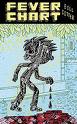
The cover of the book shows a man walking down the street with blood dripping from his hand.  This seemed like an odd choice to me.  However, for the bulk for the story, the narrator seems to be walking down streets with blood dripping from his hand (the one he eventually tries to bite off) so it perfectly encapsulates the tone of the book.

The story opens in the middle of a series of events from the narrator’s past (the first few sections are written in a wonderfully disjointed way that keeps the reader off balance).  Jerome Coe is currently living in an Apartment in Boston.  It has no heat.  His toilet is frozen solid and he is sleeping between his mattress and box spring to keep warm.  After ages of complaints to his landlord, one day the heat kicks on.  Full blast.  And Jerome cannot turn it off.  Soon, wallpaper is peeling of the walls and steam is flowing from his windows.  He is naked in his apartment and is preparing to run outside into the freezing weather just to escape the heat.

While he is standing outside, half-naked, a car pulls up and the driver, a woman named Tommy, asks him to jump in. (more…)

Read Full Post »

SOUNDTRACK: ANTHRAX-The Greater of Two Evils (2004).

I loved Anthrax when they first burst onto the metal scene back in 1983.  They were fast and heavy and totally great.  As they matured, they got delightfully silly, releasing a couple of novelty hits (with Public Enemy!) and really showing off their juvenile side.  (Big baggy shorts and crazy haircuts).  Then some time around 1993 I stopped listening.

Whether it was because my metal cred was running out or whether I just didn’t like what they were doing, I’d given up on the mosh kings.  Around that time, they switched singers from Joey Belladonna to Jon Bush and the difference is striking.  Belladonna had a strong, high pitched, soaring voice that rose above the trash.  While Bush has a deeper, tougher voice, and he sort of forces his way on top of the beat.

I haven’t given the Bush-era Anthrax much time, but I recently learned that they (like Kiss) re-recorded songs from their first few discs with Bush now on vocals.  Okay, so unlike the Kiss version, these songs sound totally new.  A new singer brings a totally new sonic dimension to the disc. But they have also re-recorded the music, which in most cases sounds better: recorded on better equipment, less sludgy.  But it also sounds different: different drumbeats or (as is often the case, furious double bass drumming), and the solos mixed into separate speakers and all kinds of other studio tricks.

And yet overall, I’m not that excited by the set.  I just don’t like Bush over Belladonna for these songs.  Bush’s voice is tough.  And their new songs are almost brutally heavy.  Some of these older tracks work with Bush’s voice.  However, there are a few which relied more on soaring sounds (like “Indians”) or demanded a little more subtlety (like the outstanding “N.F.L” which Bush sounds a little hamstrung by.

Anthrax is definitely a different band, but they still play loud and furious.

[READ: March 26, 2010] Heck

I found this book because someone put it in the wrong place in the library. I was looking for Easy Reader for my son, and someone had put this book at the front of that section.  I went to move it, but it looked interesting enough that I decided to read it.  Serendipity!

The premise of the book is that Heck is where you go when you die if you’re under 18.  They’re not quite sure where you’re going to wind up, so you have to go through Heck, which is basically school, until they can sort out which layer of Hell you’re going to wind up in.  Needless to say Heck is full of bad kids (and bad demons).

Our two bad kids are Milton and Marlo Fauster.  Marlo is a troublemaker from way back.  She is a petty thief and is always up to no good.  Milton is a good kid.  He never did anything bad in his life, and he always gets abuse from Marlo.  As the book opens, Milton and Marlo are sprinting down the corridor of a mall where Marlo has just stolen something. She is planning on wreaking havoc with Grizzly Mall’s centerpiece: The State’s Second-Largest Bear-Themed Marshmallow Statue (that cracked me up).

The kids run to the center of the mall where they are cornered by security.  Marlo is trying to think of an escape plan when Milton notices his classmate Damian.  Damian torments Milton every chance he can get.  And now, he is standing at the top of the marshmallow bear with matches.  Milton also notices a fuse sticking out of the bear.

One explosion later, the kids find themselves no longer attached to their bodies, as they are rapidly sliding down to Heck.  Marlo deserves to be there, she’s a bad egg.  But what about Milton?  It turns out that Marlo had slipped an item into Milton’s backpack, and therefore he technically stole something as well.  A technicality but true nonetheless.

The rest of the book shows the kids in their gender segregated classes.  The boys learn physical education from Blackbeard the pirate and ethics from Richard Nixon (the Nixon bits were hilarious, and yet I can’t imagine many kids getting the jokes).  The girls, meanwhile, learn home ec from Lizzy Borden (do kids know who that is) and singing from an angel who is on a teacher exchange program. (more…)

Read Full Post »

SOUNDTRACK: MONSTER MAGNET-God Says No (2001).

It’s not often I have a disc with the same name as a book.  But lo, here they are.  I’ve no idea if the album inspired Hannaham at all (or if he even knows of it) although the title track song does rather work well with the book, with lines like:

You won’t get caught if you don’t get queer/And you’ll be ready for a new frontier  You try and live And God says no.

I had loved Monster Magnet’s Powertrip quite a lot.  So, I was more than willing to get this follow up.  I’m a little disappointed in the disc overall, but I’m not entirely sure why.  It’s not quite a sharp as Powertrip, but it’s also not quite a trippy as their earlier stoner rock releases.

Having said that, there’s some great tracks here.  It opens very prominently with “Melt” and the phenomenal heavy rocker “Heads Explode” which features delightfully obscure lyrics like “I am a pillar of salt.  You’ll never be worse than me.”  And then comes, “Medicine 2001” another fast, chunky rocker.

There’s also some other way-out (for Monster Magnet) tracks, like the bluesy slide guitar sleaze of “Gravity Well.”

I think it’s the tracks at the end that kind of drag the disc a little bit “Queen of You” is an interesting slow track, but at nearly 7 minutes and coupled with the 7 minute “Cry,” it’s a bit too much all at once.  The final track, “Take It” is a weird, weird (for Monster Magnet) keyboard and drum machine track. It’s very mellow (and sounds like early Depeche Mode), and works as a weird experiment.  The actual final track is a bonus track, “Silver Future” which rocks once again.

I’m pleased that Monster Magnet experiments so much, but it feels like a full disc of MM songs with an extra EP of experiments tacked on.  I’m not sure what they could have done differently, but for some reason the disc falls a little short.

[READ: March 18, 2010] God Says No

This is a very simple tale of an overweight black man struggling with life in the 1990s.  The twist on the story is that he is not struggling because of his race or his size.  He is struggling because he is a good Christian man who is, without question, homosexual.

The book is written in first person and as such it reads like a memoir (although the main character has a different name than the author).  You can’t help but wonder how much of this book is true (although really it doesn’t make any difference), especially when one of  the characters dies.  It feels like tribute to an actual person.

The book opens with Gary Gray living in a dorm at a Christian college.  He is completely obsessed with his roommate, a hunky white guy who walks around in his boxers.  The roommate is clearly not interested in him, in fact he goes so far as to say he is repulsed by Gary (for being fat and black, in addition to anything else he may find flaw with). (more…)

Read Full Post »

[WATCHED: March 17, 2010] Brief Interviews with Hideous Men

This film is based on the short story collection Brief Interviews with Hideous Men by David Foster Wallace.  The book is a collection of short stories.   The majority of the stories are indeed, brief interviews (although some are unrelated). And the film is an adaptation of these interviews.  It did pretty poorly at the box office and has met with largely negative reviews.  And I think for the most part that’s understandable.  If ever a film was made for a select audience, it was this.  And it’s very easy to see why a vast number of people either didn’t like it, or didn’t get what he was trying to do.

The interviews in the book are designed so that you only hear the responses of the “subject.”  You never hear the initial o follow-up questions, and you don’t learn anything about the questioner.  In an NPR interview, John Krasinski reveals that DFW told him that he felt that the stories were a “failed experiment.”  He wanted to create a character without actually writing anything about her specifically.  He wanted the reader to insinuate who the interviewer was based upon the answers and reactions of the subjects.  He felt that he was not successful in doing so.

When Krasinski read (and re-read) the stories, he pictured who the interviewer was.  And so in his script, he created an interviewer (because a movie without the interviewer would have done even worse at the box office!).  His interviewer is a young woman who is working on a post-doctorate in feminist studies.   When Krasinski told DFW this, DFW told him that that is exactly who he had in mind.  This great interview reveals how excited Krasinski was at getting DFW’s blessing. (more…)

Read Full Post »

SOUNDTRACK: BLUE ÖYSTER CULT-compilations and live releases (1978-2010).

For a band that had basically two hits (“Don’t Fear the Reaper” and “Burnin’ for You”) and maybe a half a dozen other songs that people might have heard of, BOC has an astonishing number of “greatest hits” collections.

Starting in 1987 we got Career of Evil: The Metal Years (1987), Don’t Fear the Reaper (1989), On Flame with Rock n’ Roll (1990), Cult Classic (which is actually the band re-recording their old tracks (!)) (1994), and the two cd collection Workshop of the Telescopes (1995).  There’s even Singles Collection, (2005) which is a collection of their European singles & Bsides.

This doesn’t include any of the “budget price” collections: E.T.I. Revisited, Tattoo Vampire, Super Hits, Then and Now, The Essential, Are You Ready To Rock?, Shooting Shark, Best of, and the 2010 release: Playlist: The Very Best of).

The lesson is that you evidently won’t lose money making a BOC collection.

I don’t know that any of these collections are any better than the others.

The 2 CD one is for completists, but for the most part you’re going to get the same basic tracks on all of them.

And, although none of them have “Monsters” for the average person looking for some BOC, any disc is a good one.

Regardless of the number of hits they had, BOC was tremendous live.  And, as a result, there have also been a ton of live records released.  Initially the band (like Rush) released a live album after every three studio albums. On Your Feet or On Your Knees (1975) Some Enchanted Evening (1978) and Extraterrestrial Live (1982) were the “real releases.”

Then, in 1994 we got Live 1976 as both CD and DVD (which spares us nothing, including Eric Bloom’s lengthy harangue about the unfairness of…the speed limit).  It’s the most raw and unpolished on live sets.  2002 saw the release of A Long Day’s Night, a recording of a 2002 concert (also on DVD) which had Eric Bloom, Buck Dharma an Allan Lanier reunited.

They also have a number of might-be real live releases (fans debate the legitimacy of many of these).  Picking a concert disc is tough if only because it depends on the era you like.  ETLive is regarded as the best “real” live disc, although the reissued double disc set of Some Enchanted Evening is hard to pass up.  Likewise, the 2002 recording is a good overview of their career, and includes some of their more recent work.

If you consider live albums best of’s (which many people do) I think it’s far to say that BOC has more best of’s than original discs.  Fascinating.  Many BOC fans believe that if they buy all the best of discs, it will convince Columbia to finally reissue the rest of the original discs (and there are a number of worthy contenders!) in deluxe packages.  I don’t know if it will work, but I applaud the effort.

[READ: October 2009-February 2010] State By State

This is a big book. And, since it’s a collection essays, it’s not really the kind of big book that you read straight through.  It’s a perfect dip in book.  And that’s why it took me so long to get through.

I would love to spend a huge amount of time devoting a post to each essay in the book.  But, well, there’s 51 (including D.C.) and quite a few of them I read so long ago I couldn’t say anything meaningful about.  But I will summarize or at least give a sentence about each essay, because they’re all so different.

I’ll also say that I read the Introduction and Preface last (which may have been a mistake, but whatever).  The Preface reveals that what I took to be a flaw in the book was actually intentional.  But let me back up and set up the book better.

The catalyst for the book is the WPA American Guide Series and sort of Steinbeck’s Travels with Charley.  The WPA Guides were written in the 1930s as part of the Works Progress Administration.  48 guide books were written, one for each state.  Some famous writers wrote the books, but they were ultimately edited (and many say watered down) by a committee.  I haven’t read any of them, but am quite interested in them (and am looking to get the New Jersey one).  Each guide was multiple hundreds of pages (the New Jersey one is over 800).

State By State is written in the spirit of that series, except the whole book is 500 pages (which is about 10 pages per state, give or take).  And, once again, famous writers were asked to contribute (no committee edited this book, though).  I’ve included the entire list of authors at the end of the post, for quick access.

So I started the book with New Jersey, of course.  I didn’t realize who Anthony Bourdain was until I looked him up in the contributor’s list (I’m sure he is thrilled to hear that).  And his contribution was simultaneously exciting and disappointing,.  Exciting because he and I had quite similar upbringings: he grew up in North Jersey (although in the wealitheir county next to mine) and had similar (although, again, more wealthy) experiences. The disappointing thing for me was that Bourdain fled the state  for New York City (and, as I now know, untold wealth and fame (except by me))  I felt that his fleeing the state, while something many people aspire to, is not really representative of the residents of the state as a whole.

And that dissatisfaction is what I thought of as the flaw of the book (until I read the Preface).  In the Preface, Matt Weiland explains that they asked all different authors to write about states.  They asked some natives, they asked some moved-ins, they asked some temporary residents and they asked a couple of people to go to a state for the first time.  In reality, this decision makes for a very diverse and highly entertaining reading.  In my idealized world, I feel like it’s disingenuous to have people who just stop in to give their impression of an area.  But hey, that’s not the kind of book they wanted to compile, and I did enjoy what they gave us, so idealism be damned.

For most of the book, whenever I read an essay by someone who wasn’t a native or a resident of a state, I assumed that there weren’t any famous writers from that state.  I’ve no idea if that played into anything or not.  From what I gather, they had a list of authors, and a list of states (I was delighted to read that three people wanted to write about New Jersey-if the other two writers ever decided to put 1,000 words  to paper, I’d love to read them (hey editors, how about State by State Bonus Features online, including any extra essays that people may have wanted to write).

From New Jersey, I proceeded alphabetically.  And, I have to say that I’m a little glad I did.  I say this because the first few states in the book come across as rather negative and kind of unpleasant.  Alabama (written by George Packer) comes across as downtrodden, like a place you’d really have to love to live there.  Even Alaska, which ended up being a very cool story, felt like a veil of oppression resided over the state (or at  least the part of the state that Paul Greenberg wrote bout.)  But what I liked about this essay and the book in general was that the authors often focused on unexpected or little known aspects of each state.  So the Alaska essay focused on Native fisherman and the salmon industry.  Obviously it doesn’t do justice to the rest of that enormous state,  but that’s not what the book is about.

The book is meant to be a personal account of the author’s experiences in the state. (more…)

Read Full Post »
SOUNDTRACK: BLUE ÖYSTER CULT-Fire of Unknown Origin (1981).

This was the first BOC album that I bought.  The video for “Burnin’ for You” was all over MTV (although I don’t remember it at all, now).  And I was an instant convert to BOC.  I listened to this disc constantly.

It took going to college and meeting my roommate before I got any other BOC discs (he was a diehard fan).  And while I like most of their releases, this one still ranks as number one for me.  BOC had been getting poppier and lighter over the years, there’s no question.  But this album perfected this mix, making for a supremely catchy recording that still exhibited all of their metal trademarks: wild guitar solos, bizarro futuristic lyrics (although there’s no weirdo titles on this one) and heavy heavy chords.

The opener, “Fire of Unknown Origin” is a wonderful rocking song.  It sets the tone for the disc: keyboards, yes, but of the atmospheric/spooky variety, not the poppy/hit single variety.  “Burnin’ for You” seems like an obvious single, and so it was. It also screams early 80s to me, which I guess isn’t necessarily a bad thing.

But the album’s wonderful weirdness kicks in with “Veteran of the psychic Wars” written by Michael Moorcock. It was featured in the movie Heavy Metal, and is weird and creepy, propelled by thunderous drums and a great guitar riff: a sci-fi masterpiece.  “Sole Survivor” is in the same vein, Eric Blooms ragged voice and the awesome bass line really sell the song.

The middle track is “Heavy Metal (Black and Silver)”  It is heavy heavy heavy and it rocks like all get out with a screaming feedback solo.  It’s an awesome song that seems more than a little out of place on this rather light sounding disc (although even on their later discs, they have included an occasional heavy track).

“Vengeance (The Pact)” is a keyboard-fueled track.  But the greatness is that it’s Lanier’s spooky keyboards.  It also features an awesome middle section with heavy heavy guitars and dark lyrics.  “After Dark” is another wonderfully creepy keyboard song.  The underlying riff is sinister and cool, and the lyrics (and harmonies) meld the “band vocals” on some of their more “hit single” songs, with the oddness that keeps BOC interesting.

But by far the creepiest, most sinister and flat out weird song is “Joan Crawford.”  When I first heard this song back in 1982, I had no idea who Joan Crawford was.  Finding out later that she was a real person has messed with my head for my entire life.  I have never seen a film with her in it and am just convinced that she’s a scary, scary woman (the whispered “Christina…mother’s home” really did me in).  Interestingly, I don’t find the song spooky (although I do get chills if I’m paying attention), but I still find her spooky.  It opens with a pseudo-classical piano riff and then bursts out with menacing metal chords.  The chorus “Joan Crawford has risen from the grave!” complete with squeaky violins proceeds until and the break with sound effects that imply Crawford’s life, I assume: car crashes, race tracks, telephones, babies crying and the whispered “No.”   And it’s all catchy as hell.

“Don’t Turn You Back” ends the disc as something of a mellowing out after Joan Crawford.  It features a great solo and rather soothing choruses (despite the warning that you shouldn’t turn your back).  And it features the ever confusing line: “You use that special option in your car”  (what could that BE?).

Why on earth hasn’t this disc gotten a deluxe reissue from Columbia>?

[READ: March 3, 2010] Abraham Lincoln: Vampire Hunter

I received this book as a prepub Advanced Readers Copy and hoped to have it finished before the book actually came out, but I was shy of it by a couple of days (rats).

So Grahame-Smith wrote Pride and Prejudice and Zombies.  His was pretty much the first in what has become an ever increasing series of literary mash-ups: using “classic” texts as a basis and inserting a seemingly random (usually horror) element.  The genre is already close to jumping the shark, although realistically, you never know when a combination is going to work wonders.

I wasn’t really that interested in the follow up to P&P&Z: Sense & Sensibility & Sea Monsters.  When I first heard of it I was intrigued, but watching the promotional video for the book actually turned me off of it.  I’m intrigued that a new title: Pride and Prejudice and Zombies: Dawn of the Dreadfuls is written by a different author, but I have to assume that it will be all original as there’s no prequel to P&P itself.  And I have to admit I like the title of the upcoming Jane Slayre (for Jane Eyre).

But the things about P&P&Z were that it kept the original text (mostly) intact, and there were a number of things in the original that actually led to inserting zombies into the text.

Plus, Grahame-Smith matched the tone of the original perfectly.  The forthcoming mashups will have a lot to prove but I think some cream will definitely rise to the top.

So, Grahame-Smith’s new book Abraham Lincoln: Vampire Hunter is sort of a mashup.  Unlike P&P&Z, there is no source text to blend.  Rather, Seth Grahame-Smith, who is a character in the introduction of the book is given the “secret” diary of Abraham Lincoln, under provision that he write up the real story of our 16th president.  The secret diary reveals not only that our country was plagued by vampires but that Lincoln himself was personally impacted by them. (more…)

Read Full Post »

SOUNDTRACK: BLUE ÖYSTER CULT-Secret Treaties (1974).

With Secret Treaties, BOC moved into the stratosphere.  The first three tracks are outstanding. “Career of Evil,” again cowritten by Patti Smith, sets the tone: heavier, louder, more guitars and yet, no less of Allen Lanier’s piano.  “Dominance and Submission” is an absolutely classic heavy metal song (and live, it gets absurdly long).

“ME 262” is another of their heavy boogie songs (complete with “dit dit dit’s” in backing vocals (and the sound of bombs dropping!).  While “Cagey Cretins” features more ooh’s and backing vocals, which belie the sinister guitar riff.

They still haven’t lost their bizarro-ness with the delightfully titled, “Harvester of Eyes.”  But the highlight has got to be “Astronomy” a song so nice they recorded it twice (again in 1988 reworked for the album Imaginos).  It’s long, it tells a story, it has multiple parts, and it’s simply fantastic.

The disc  is totally worth investigating if you like psychedelic heavy metal.

[READ: February 22, 2010] North World: Other Sagas

I’ve enjoyed the North World series since the beginning.  This third volume is a short story collection about characters other than the major dude from the series.  And I have to say it’s engaging, funny and wholly enjoyable. I think it’s the most fun book of the three.

This is not to dismiss the main story line of the series at all.  However, now that the story of Conrad has more or less run its course, it would be kind of sad to keep bringing him back out of retirement (he should save that for like the 12th book or something).  So, this collection fleshes out North World, the city, by  showing other magical characters and the mini adventures they go on.

In case you’re unfamiliar with the premise, North World is a town that’s set in the 21st century. However, in addition to regular folks, it is populated by wizards, warriors, spell casters and sword wielders.  There’s also giant marauding animals (which gives the warriors something to fight).  So you have scenes like a cyclops giving away free kittens at the side of the road.  Or a viking raid in a pizza store.  There’s plenty of combat, plenty of action and plenty of humor.

(more…)

Read Full Post »

« Newer Posts - Older Posts »