Feeds:
Posts
Comments

Archive for the ‘Decadence’ Category

resetSOUNDTRACK: RUSH “Garden Road” and “Fancy Dancer” (from Fifth Order of the Angels) (1974).
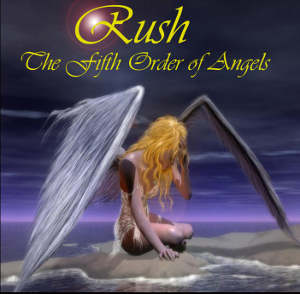
I mentioned this bootleg a few years ago, but it has recently been updated to include the missing songs.  (Huzzah!).

So this set from 1974 is pretty great–rocking, noisy, screaming solos–a very heavy show (and the crowd is quite appreciative).

These two songs never made it on any Rush albums.  They were written before Neil joined the band and, when asked, he said they never made it on an album because they were written before he joined the band (bitchy!).  But evidently the songs were quite popular when they toured.

“Fancy Dancer” opens with a staccato riff and lyrics about a woman who leaves him.  The second verse allows Alex to noodle while Geddy is singing (which is why I never really notice the lyrics).  The chorus has some big chords and reminds me in some ways of “Making Memories.”  But mostly this seems like a chance for Alex to solo and solo and solo (and for Neil to play…only a bass drum!  (for a few measures)).  The song is 3:43 and the solo is over a minute and a half.  Although the end has some cool fast short chords that the band would use very effectively on 2112.

“Garden Road” has a faster riff (very bluesy), which is interspersed with some chugga chugga guitars during the vocals.  The chorus is completely unintelligible to me.  “This Garden Road is Whoa!.”

A few other things about this bootleg which I neglected to mention.  The solo in Working Man incorporates some sections of what would become “By-Tor and the Snow Dog.”  And it’s really funny hearing Geddy say, “We’d like to do something from our album.”  It’s pretty amazing how far the band progressed from these rocking beginnings.

Download the whole thing here.

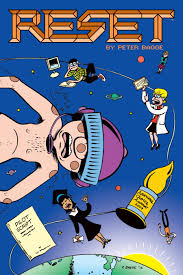
[READ: July 5, 2013] Reset

I recognized Bagge’s name, although I haven’t read his previous books.  I’m sure I’ve seen his work anthologized as his style is very familiar.  His drawings are dark (some might say ugly) and his characters always seem a little pained.

So it’s unsurprising that this book’s protagonist is Guy Krause, a former actor.  (His famous line is hilarious and I love that it is revealed very late in the story and then as a running joke).  He has recently come close to hitting bottom–his upcoming shows have been cancelled and his last resort is a reality show.  And when we first meet him, he is in a drunk driving class.

And that’s where Angela Minor comes in.  She offers Guy a chance to relive his life.  He’s obviously skeptical until she explains that it is a virtual experience.  They hook him up to a machine and he gets to try to change the virtual past.  This is all an experiment in seeing how people react to being able to change things that they fixate on.  It turns out the scientists have all kinds of information on him (because he is a celebrity) so it’s not a coincidence that they found him.

Guy balks.  Until she tells him how much they’ll pay him to do it.  Then he’s in. (more…)

Read Full Post »

[LISTENED TO: June 7, 2013] Hard Magichardmagic

My sister-in-law Karen raved about this book and then gave it to me for Christmas.  And holy cow.  I.  LOVED.  IT.

And before I even get into the story I have to say that a major reason why I loved it is because of the reader–Bronson Pinchot.  Yes, Balki from Perfect Strangers.  Yes, that goofy “foreigner” from the show has an utterly mesmerizing speaking voice.  It is amazingly deep–when he first started speaking the menacing drawl of Jake Sullivan, I was blown away.  And then he pulled out a couple dozen more characters, women and men–German, Japanese, Okies, military men, New Yorkers.  He brought this story to absolutely real life.

I have made a point of looking for anything else that he reads (although I see that he mostly reads books about war (which is not my thing))–but I see a Flannery O’Connor in there and–YES–he reads book two of the Grimnoir series (called Spellbound) and it’s already out!

Okay enough about Pinchot.  No, not enough.  He was stellar!

Okay, now enough.  What’s the story about?  Well, the best thing is that the story itself is also amazing.  It is set in the 1930s, in an alternate reality Untied States.  And in this reality, random people have been gifted with magic.  And there’s all kinds of magic–fades (people who can walk through walls); torches (people who can make and stop fires), mouths (people who can put thoughts in your head); brutes (people who are crazy strong and who can actually bend gravity to their will) and movers (people who can jump from place to place).  There’s also healers and cursers and cogs–really smart people–and other with more mysterious powers.

Each chapter opens with a quote from a real (in our world) person talking about how the magic or the people with magic–the Actives–impacted society.  So Einstein was a cog, and military leaders used brutes to fight in wars, etc. (more…)

Read Full Post »

mirkaSOUNDTRACK: MATISYAHU-“Chop ‘Em Down” (2004).

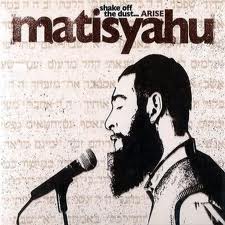
matisyaMatisyahu was something of a novelty when he appeared in 2004–a Hasid who performed dancehall reggae.  And yes, it does look very strange.  But he is quite adept at the style.  And lyrically it works really well.  Reggae is (often) a very spiritual music so Matisyahu’s own spiritualism works with the beats he lays down.  Instead of Jah, we hear about Egypt and Pharaoahs.  And the “scatting” that he does is like the scatting found in more typical reggae but it has a more Middle Eastern feel.  It’s a neat concept and well executed.

This is not a style of music that I like a lot (one song is usually enough for me), but I really like the sound he has conjured.  It’s clear that he transcends the novelty and is a genuine fan of the music.  It’s an interesting way to expand people’s horizons (on both sides).

Interestingly, in 2011, Matisyahu shaved off his beard and dropped his Orthodoxy.  He is still spiritual, but without the trappings of his faith.  Fascinating.  Here’s a before and after photo.

matismatisy

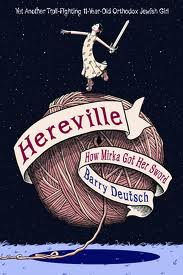
[READ: January 18, 2012] Hereville: How Mirka Got Her Sword

I enjoyed the second book in this series quite a lot.  So I found the first one to read too.  Who can pass up a book subtitled: Yet another troll-fighting 11 year-old Orthodox Jewish girl.  I had said that you didn’t need the first one to enjoy the second one.  And that’s true, although I now know that the first one would have laid down a foundation for me to enjoy the second one even more.

What is neat about this story is that there isn’t a lot of exposition up front.  We learn that Mirka is an 11-year-old Orthodox Jew living with her family (which contains many siblings).  She is a little wild and not interested in being “good.”  She’s not bad at all, just spirited–she really wants to fight a dragon.  It’s not until later in the story that we learn that she has a stepmother (unless that is obvious to Orthodox readers from the way Mirka addresses her) and that there may actually be dragons in this world.

The book presents Orthodox life and its day to day realities.  It doesn’t explain or justify the details, it just shows them (with occasional translations of Yiddish terms).  Although it must be admitted that Hereville, where the family lives, is a bit unlike other communities.  Everyone who lives there is Orthodox and non-Orthodox reading materials are not permitted.  And indeed, when a pig shows up, the children don’t know what it is. (more…)

Read Full Post »

dtmaxSOUNDTRACK: TOM WAITS & KEITH RICHARDS-“Shenandoah” (2013).

roguesgallery-f8be47f3887d51de57ea842a129f0a722e53ef74-s1This tune comes from the album Son Of Rogues Gallery.  The album is, of all things, a sequel to the album Rogues Gallery.  The full title is Son Of Rogues Gallery: Pirate Ballads, Sea Songs & Chanteys.  The first album was a kind of novelty–I can’t even say novelty hit as I don;t know if it was.  But it must have had some success because here’s a second one (and there’s no Pirates of the Caribbean movie to tie it to).

The album has 36 songs (!) by a delightful collection of artists, including: Shane MacGowan, Nick Cave, Macy Gray, Broken Social Scene, Richard Thompson, Michael Gira and Mary Margaret O’Hara (among many others).  I enjoyed the first one, but I think the line up on this one is even better.

“Shenandoah” is not a song that I particulalry like.  Because it is traditional, I have a few people doing versions of it, but I don’t gravitate twoards it–it’s a little slow and meandering (like the river I guess) for me. And this version is not much different.  What it does have going for it is Waits’ crazed warbling along with even crazier backing viclas from Keith Richards (there;s no guitar on the track).

[READ: January 7, 2012] Every Love Story is a Ghost Story

I had mixed feelings about reading this biography.  I’m a huge fan of David Foster Wallace, but I often find it simply disappointing to read about people you like.  And yet, DFW was such an interesting mind, that it seemed worthwhile to find out more about him. Plus, I’ve read everything by the guy, and a lot of things about him…realistically it’s not like I wasn’t going to read this.  I think I was afraid of being seriously bummed out.  So Sarah got me this for Christmas and I really really enjoyed reading it.

Now I didn’t know a ton about DFW going into this book–I knew basics and I had read a ton of interviews, but he never talked a lot about himself, it was predominantly about his work.  So if I say that Max is correct and did his research, I say it from the point of someone full of ignorance and because it seems comprehensive.  I’m not claiming that he was right just that he was convincing.  And Max is very convincing.  And he really did his research.

It’s also convenient that DFW wrote a lot of letters–Max has a ton of letters to quote from.  And DFW wrote to all kinds of people–friends, fellow authors  girlfriends, colleagues….  Aside from old friends, his two main correspondents were Don DeLillo, whom he thought of as a kind of mentor, and Jonathan Franzen, whom he considered one of his best friends and rivals.  I guess we can also be thankful that these recipients held on to the letters. (more…)

Read Full Post »

SOUNDTRACK: RA RA RIOT-“Is It Too Much” (2013).

raraI loved the first Ra Ra Riot album The Rhumb Line.  This song expands on some of the ideas from that album, but I fear that it goes in the one direction I would have preferred they not go.  The album had strings, nice harmonies and a great singer all melded into an interesting rock structure.

This song retains all of the elements that were interesting, but it removes it from the rock structure, making it  sound much more lightweight.  It’s pushing too far into easy-listening.  And do I hear autotune on the vocals?  The instrumental middle section is the most interesting part of the song.  But Ra Ra Riot seems to have removed the riot part of their sound.  If this is the direction of the album, I’m afraid I won’t be following.

[READ: January 8, 2013] “Consider the Writer”

I just finished the D.T. Max biography of David Foster Wallace.  I was curious what kind of reception it received.  And lo, here’s a review by Rivka Galchen (something I would have read anyhow since I enjoy her so much).

Galchen opens with two main points–the biography is gripping (and it is, I’ll be saying more about that tomorrow, too).  She writes: “In writing a chronologically narrated, thoroughly researched, objective-as-­imaginable biography, Max has created a page turner.”

The second idea is that you keep thinking “that you just don’t find Wallace all that nice”  (which I also thought).  But then she wonders if it is fair to be worried about that.  We should not judge others after all.  Especially since, as she points out, “We don’t always find ourselves asking whether a writer is nice. I’ve never heard anyone wonder this at length about, say, Haruki Murakami or Jennifer Egan.”  So why is that a concern about Wallace?  Because niceness is what Wallace wrote about, tried to encourage.  And perhaps “One understandably slips from reading something concerned with how to be a good person to expecting the writer to have been more naturally kind himself.”  But that is not necessarily the case–people strive for things that they cannot achieve.   I like her example “the co-founder of A.A., Bill W., is a guru of sobriety precisely because sobriety was so difficult for him.”   And her conclusion: “Wallace’s fiction is, in its attentiveness and labor and genuine love and play, very nice. But what is achieved on the page, if it is achieved, may not hold stable in real life.”

And Galchen talks a bit abut DFW himself (the book is a biography after all).  How he wore the bandana because he sweated so much–how self conscious he was about that and by extension nearly everything he did.  This mitigates his not-niceness somewhat.  It also ties in to his alcoholism  drug use and depression.  And his competitiveness, which is obvious in the biography.  She enjoys the pleasure of Wallace’s correspondences, “especially with his close friend and combatant Jonathan Franzen, but also with just about every white male writer he might ever have viewed as a rival or mentor. Aggressive self-abasement, grandstanding, veiled abuse, genuine thoughtfulness, thin-skinned pandering — it’s all there.”  I rather wished that the authors’ own reactions were included (of course it’s not biographies of them, and they are still alive), just to see if they sparred back with Wallace or if they were put off by yet indulgent of his needs. (more…)

Read Full Post »

2013SOUNDTRACK: ARCADE FIRE-The Suburbs (2010).

suburbsWhen The Suburbs came out, it was hailed as a masterpiece and also panned as a hack job (more the former than the latter).  It was impossible to listen to it without hearing raves and rants.  And then Arcade Fire became a kind of punchline or punching bag, the band people loved to hate (although not as much as Nickelback).  I didn’t write about this record then because I wanted to let the air clear.  And then I kind of forgot about it.  I pulled it out again recently and found that I really enjoyed it.  It’s a long album with a lot of different tempos.  It reminds me of the kind of albums I used to listen to as a kid, yes in the suburbs, in which I could absorb an entire hour in one sitting (preferably while driving).

It’s not as indie as their first album nor is it as dark as Neon Bible.  Indeed, with the instrumentation and easy melodies, the album is almost pop (or more like radio friendly AOR music from the 70s and 80s).  There’s orchestration (but Arcade Fire has always had orchestration, that’s why there are eight of them in the band).  There’s heavy piano (which is possibly the most notable difference on this album–the keys have gone acoustic, which definitely makes the album sound more 70s than 2000s.  And there’s big choruses.

“The Suburbs” starts the album, but it’s really hard to deny “Ready to Start”–a bouncy number with a very winning chorus (yes, nominated as song of the year, but deservedly so).  “Empty Room” opens with a violin section that I assume is sampled (its sounds very classical and more as a quote than an introduction to the pumping, rocking song that follows.

“Private Prison” has great backing vocals in the chorus–Wim Butler and Régine Chassagne play off each other so well.  “Suburban War” has a great guitar riff–melodic and pretty in its repetition.  “Wasted Hours” is one of the few folky songs I can think of Arcade Fire playing–but it’s a traditional kind of folk–with la la la las–with a twist.

There are two tracks with a Part I and a Part II.  In both cases the second part complements and surpasses the first part in terms of overall energy and catchiness. “Half Light II” is a beautiful soaring track and “Sprawl II” (the one with Régine singing lead), is one of the best tracks on the album (the way the “mountains beyond mountains” section soars is wonderful).  That honor of best tracks also goes to “We Used to Wait” with its simple piano and cool guitar riff at the end of the verses.

The album feels like a lot of music I grew up with–radio friendly hits that perhaps Butler listened to as a kid, and as he reflects back on them he updates and deconstructs them.  “Modern Man” and “Empty Room” feel this way.  “Month of May” sounds like “Beat on the Brat” while “Deep Blue” opens with a  vibe of “Happy Together” but moves beyond it to a massive (and massively good) chorus.

It’s safe to believe the hype–there’s nothing here that will blow your mind, but  taken together it is a very satisfying collection of songs.  I also just learned that there were 8 different covers created for the album (although they all look vaguely the same).  The one above is the version I happened to get.

[READ: January 4, 2013] “Knowledge”

I didn’t know anything about Gordon Lish when I read this story.  The name sounded vaguely familiar.  Then I looked him up.  Evidently Lish has been writing for a long time, although he hasn’t written much recently.  He is more known for his editing than his writing.

This story is a self-obsessing tale in which the words that the narrator is saying are more important than what the words mean.  So the beginning of the story has the narrator stumbling, repeating, reiterating and then alliterating (which he criticizes himself for doing) without really getting anywhere.  He frets that everyone is watching him–the neighbors, the doorman–and that his sneaky actions were seen by all, especially when the masking tape stuck to him.

Strangely, as the story reaches its midway point we see that the narrator is Gordon Lish himself and he asks rhetorically if the reason he has removed the flyer from the telephone pole (hence the masking tape) is because he himself had something to do with the message on the flyer itself. (more…)

Read Full Post »

herevilleSOUNDTRACKBRAVE COMBO/BOB DYLAN-“Must Be Santa” (1991).

bob dylanBrave Combo is a fun band that mixes more styles in one album than most bands do in their career.  While they primarily play polka, the also play everything from folk to rock to klezmer.  This song is an old song from Mitch Miller, but Brave Combo speed it up and spice it up with clarinets and fun instrumental frills.  It’s fast and furious.

And if that wasn’t strange enough, Bob Dylan covered the song–and clearly covered the Brave Combo version when he made his Christmas album in 2009.  Although Brave Combo didn’t write the song, Dylan’s cover is certainly in the polka style and he includes lyrics that Brave combo added:

Dasher, Dancer, Prancer, Vixen
Eisenhower, Kennedy, Johnson, Nixon
Dasher, Dancer, Prancer, Vixen
Carter, Reagan, Bush and Clinton.

Dylan singer faster than I’ve ever heard him.  It’s a hoot.  And the video is really funny too.

[READ: January 3, 2012] Hereville: How Mirka Met a Meteorite

I saw this book on the library shelf and the tagline (“Boldy Going Where No 11-Year-Old Orthodox Jewish Girl Has Gone Before”) made it sound like a lot of fun.  Upon reading it, I can see it’s not quite what thought it was.  It turned out to be much cooler.  This also proves to be the second book in this series, although you don’t need the first book to appreciate this one.

Mirka, an orthodox Jewish girl has been grounded (for fighting a troll with a sword.  Her stepmother, sick of her hanging around, offers to play Mirka in chess.  If Mirka wins, her punishment is over.  As with everything Mirka does, she is too brash, too hasty, which means that she will not win.  But her stepmother takes pity and allows her to go outside–if she stays out of trouble.  But because she is willful, Mirka runs right back to the troll.  The troll, angered at being defeated by such a stupid girl (his insults at her are great), creates a meteorite and sends it hurtling towards the town of Hereville.

Mirka consults with the witch who helped her defeat the troll in the first place and the witch changes the meteorite into a girl who is the exact copy of Mirka.  Although indeed, not an exact copy for Metty as she comes to be known is smarter, neater and better at basketball.  Mirka thinks it would be great to have this twin around to help with chores but Metty winds up eating all her food (they can’t both be in the same place at once) including the big feast at Shabbos and making her look bad.   (more…)

Read Full Post »

[WATCHED: Summer 2012] Great Expectations

300px-Great_expectations_titlecardSometime after I read Great Expectations, PBS aired this BBC production.  I don’t know if it’s a movie or a mini series and I don;t really care, so I’m calling it a movie.  So I thought I’ll just wait until after I watch the movie and then write my post about both.  And now here were are, several months later.  Sigh.

Anyhow, this movie version of the book was outstanding.  One of the main criticisms leveled at movie versions of books is that your own imagination makes things far “more” than any film could.  For instance  monsters in your head are far more scary than any special effects could make them.  But the opposite was true here.  I never would have guessed that the people in the book could be so horrible, that the squalor could be so extreme and that the atmosphere could be so stifling–I assume years of good breeding made me forget just how bad things used to be

Part of the fault also belongs to Dickens–he was writing for a contemporary audience–for people who didn’t need to be told, for instance, how old Pip was (they would just know) or how old he would need to be to receive his inheritance.  The story was serialized in a magazine, so it was very current.  And so those of us with a great remove from daily life in 1850 don’t always get the details we need.  This is not to say that Dickens himself was not a master writer or an evocative picture creator.  He often includes lots of details they are very helpful, but some things are left out.  So the movie filled in gaps and details that I didn’t know, and they brought the book to life in a way that reading it alone didn’t.  Again, no disrespect to the book–it’s the same way that seeing Shakespeare is better than reading him).   (more…)

Read Full Post »

11SOUNDTRACK: THE ANTLERS-Live at the Black Cat, Washington DC, May 11, 2009 (2009).

antlersI mentioned that I was uncertain about my appreciation of this band.  And I wondered how they would hold up to a longer show.  The answer is surprisingly well.  The sound quality of this set isn’t great–the levels seem way too loud (not sure if that’s the band or the recording) and I really can’t understand the words, but the music is very moody and evocative and I like it quite a lot.

This set comes from the album Hospice, which is a concept album about a person dying of bone cancer (with lyrics like “they told me that there was no saving you” and song titles like “Kettering”).  Earlier descriptions made me think the album was a major drag to listen to– I mean the subject alone is exhausting–but musically it’s a different story.  There’s lush strings and interesting guitars.  And, at least live, the band can make a holy racket.

I’m a little surprised by the number of keyboard errors in “Atrophy.”  I mean an occasional bum note is fine, but there’s a bunch in that track.  It’s very weird.  But that is made up for by the vocals which are angsty and impassioned, especially on the final song “Cold War.”  The NPR site has three tracks available for viewing and I must say that watching the band is more exciting than just listening to them.  But I have really gained an appreciation for The Antlers.

Check out the show here.

[READ: December 16, 2012] McSweeney’s #11

This crazy title for this Issue/Post comes because the cover and spine of the book are all text.  Indeed, the book is gorgeously bound in black leather(ish) with shiny gold print.  Each author gets a summary of his or her work and a note that he or she is free (see each story below).

I did not read Issue #10 yet because it came out as a thrilling paperback, and I’ve been putting it off for a reason even I can’t quite fathom.  I anticipate reading that one last.  Again, no idea why.  In some ways, Issue #11 picks up where Issue #9 left off.  There’s lots of text on the cover, there’s letters and everything else that makes it look like McSweeney’s.  But as I said this one seems more somehow.  It’s the hardcover.  And, it’s also the DVD that accompanies the book.  I have a hard time believing I’ve owned this book for almost ten years and never watched the DVD but I finally got around to it.  More on that soon.

This issue contains letters, fiction, non-fiction and a play that picks up from Issue #9 (more…)

Read Full Post »

SOUNDTRACK: JENS LEKMAN-Tiny Desk Concert #173 (November 7, 2011).

I have enjoyed Jens’ skewed take on pop folk for some time. He plays great folk music and there’s wonderful backing vocals by Addison Rogers.  What’s funny about this Tiny Desk concert is that he talks a lot about the song before singing it.  But he pretty much gives away everything in the song (especially if there is a punch line).  For the first song, “I Want A Pair Of Cowboy Boots,” the explanation is pretty good, he says that if you have the same dream for two years you may want a new one…with cowboy boots.  The song explains that the boots will help him walk back to the girl of his dreams.  Sweet.

What’s cool about the second song, “The End Of The World Is Bigger Than Love”  (in addition to the song) is that you can hear a car driving away before it starts, just showing how intimate the Tiny Desk shows are.

But it’s the final song in which Jens gives away so much about the origin of the story that the song itself is almost redundant (although it’s still great).  When you finally get to the punchline of “Waiting For Kirsten,” you’re charmed and smiling.  Jens explains that Kirsten Dunst once said that she likes his music.  So when she was filming with Lars von Trier in Scotland, he couldn’t help but stalk her day and night.

He’s a charming guy.  You can check it out here.

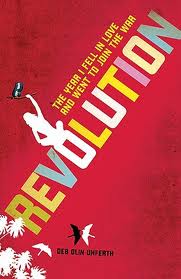
[READ: November 7, 2012] Revolution

Deb Olin Unferth has now published three books and I’ve read them all, even though I’m not a huge huge fan.  I enjoyed her novel Vacation, which was delightfully peculiar.  Her other book was a collection of flash fiction, a genre I’m really on the fence about, although Unferth’s is really quite good.

This book is a memoir.  And, as the subtitle indicates, it’s about the year that Unferth spent looking for a revolution in Central America.  The book proves to be about much more than Central America and revolutions–she talks about religion, family, morality, relationships, youth, idealism and reality.  Not bad for 200 pages.

It’s also about the man she fell in love with, George, who encouraged them to go to Central America and vive the revolution.  George is a Christian, Deb was an atheist Jew.  But she falls for him and his Christian ways and “converts” (much to the detriment of her younger sibling who had the family’s faux Jewishness now thrust upon her to avoid a similar thing happening.  (Poor Deb’s younger sister really is the victim in this saga).  George and Deb flee the comforts of home and all 80s capitalism and head to Central America.

As with Unferth’s short stories, these chapters are almost all very short.  And they often feel as unfinished as some of her flash fiction.  They are also mostly jumbled up in an utterly non-narrative way.  It’s entirely possible that you could shuffle some of these chapters and it wouldn’t matter at all (that’s not entirely true, as some do flow one in to the other, but many are jarringly out of sequence). (more…)

Read Full Post »

« Newer Posts - Older Posts »