Feeds:
Posts
Comments

Archive for the ‘Death’ Category

SOUNDTRACK: STEADY HOLIDAY-Tiny Desk (Home) Concert Meets SXSW: #187 (April 5, 2021).

Every year, NPR Music participates in the SXSW music festival, whether it’s curating a stage or simply attending hundreds of shows at the annual event in Austin, Texas. Last year, the festival was canceled due to the pandemic, but it returned this March as an online festival. We programmed a ‘stage’ of Tiny Desk (home) concerts and presented them on the final day of the festival. Now, we present to you Tiny Desk Meets SXSW: four videos filmed in various locations, all of them full of surprises.

Steady Holiday is the music of Dre Babinski. This video, filmed for our virtual SXSW showcase, finds her by the fireplace, a dog at her feet, an acoustic guitar in her arms. Steady Holiday is singing “Living Life,” a tune about a favorite topic of mine: the everyday, the mundane, and living in the moment. All the songs in this Tiny Desk (home) concert are from Steady Holiday’s 2021 album Take The Corners Gently, a top record of mine this year.

As “Living Life” opens, Dre Babinski sings the first verse solo, then you can hear other musicians join in and she reveals their secret location (with some very loud shutters).  Derek Howa plays a pretty solo on the keys and by the end of the song drummer Brijesh Pandya is “da da daing” along to really flesh out the song.

Surprise guests aren’t the only surprise.  After the first song, her printer (with googly eyes and an arm) prints out the next song on the setlist.

“Tangerine” is a bouncy song with some heavier ends and an interesting chord progression.  Howa’s keys sound almost like a toy piano (but louder) and add a chiming quality.  It’s wonderfully catchy.  I’m curious how much bigger the proper version of this song sounds. Howa adds some creepy spacey effects in the middle, so I imagine the recorded songs have more going on.

The printer spits out a piece of paper: Your band is overdressed.  Then she tells us why the guys are outside (it’s pretty funny).

Laughing while her dog grabs a chew toy, she performs the album’s opening track, “White Walls,” a song about self-reflection and how doing the same thing over and over (“painting white walls white”) won’t make life better.

This is a slow bouncy song with a really catchy chorus: “painting white walls white just to kill the time.”

Then she shutters out her band and

As her printer cues the last song, (oops, small spoiler), Steady Holiday takes us out on a lovely tune, Love Me When I Go To Sleep”:

It’s just Bea and her guitar as she delicately sings

“Fragile aren’t we, who would guess / Here today, tomorrow’s taking bets.” Her refrain amplifies that fragility with a reminder to appreciate the gift of life. “Love me when I go to sleep / Love me with no certainty / Love me when I go to sleep.”

Her voice is clear and lovely and the final song feels like a lullaby.

[READ: April 20, 2021] Joan & The Man

This book came in at work and something about it made me want to read it (the shortness helped).

So this is a self-published book (I think–it could use some editing) that we received as a gift (from the author?).  It is Rykaczewski’s fourth novel and it is a wonderfully weird mix of reality and nonsense.

Chapter One focuses on Joan as she tried on some clothes in a mall–she is buying bralettes–imposed propaganda to younger hip girls.  Then it pushes back as she and The Man head to their place–the World Revolt Art Gallery.  But more on that place after a brief excursion to the Riverbend Arts Market.

Joan & The Man are artists living in Florida.  She works in paint and he works in words.  They spend time at the RAM hoping to sell some works, but really it’s a sucker’s market.  They often head down with their dog Duke,  Duke is a nasty dog to everyone but The Man. Then there’s a weird moment where Duke winds up trading places with a movie star dog (to the terminal end of the movie star dog).  But losing Duke frees them. (more…)

Read Full Post »

SOUNDTRACK: YASSER TEJEDA & PALOTRÉ-Tiny Desk (Home) Concert Meets SXSW #188 (April 6, 2021).

Every year, NPR Music participates in the SXSW music festival, whether it’s curating a stage or simply attending hundreds of shows at the annual event in Austin, Texas. Last year, the festival was canceled due to the pandemic, but it returned this March as an online festival. We programmed a ‘stage’ of Tiny Desk (home) concerts and presented them on the final day of the festival. Now, we present to you Tiny Desk Meets SXSW: four videos filmed in various locations, all of them full of surprises.

Yasser Tejeda, a New York-based guitarist from the Dominican Republic, started his musical career on the Dominican cuatro (a folkloric guitar-like instrument) and has incorporated guitar stylings that have made him a “go-to guy” for Dominican artists looking for passionate elegance in their sound.

They play three songs in fifteen minutes.  And as with much music from this part of the world, the drums (Victor Otoniel Vargas) and percussion (Jonathan “Jblak” Troncoso) are unstoppable.

Yasser Tejeda and his band Palotré begin their set behind a home desk with “Amor Arrayano,” weaving a vaguely Caribbean feel with a killer R&B hook.

“Amor Arrayano” is a smooth love song gently echoing guitars and a smooth grooving bass.

After a brief introduction of his bandmates Tejeda launches into “La Culebra,” the track that caught my attention from their album Kijombo. Palotré is a powerful groove machine behind Tejeda’s virtuosic guitar playing and his playful dance moves.

“La Culebra” (The Snake) opens with percussive rattlesnake sounds from “Jblak.”   Kyle Miles plays a bouncy bass while Tejeda plays a cool virtuosic lead.  This (mostly) instrumental rocks on in various tempos for the duration of the song.

Tejeda has stated one of the goals of this project is to explore the crossroads between Afro-Dominican musical traditions with anything else that pops onto their radar. Their final song here,”Nuestras Raices,” [Our Roots] has become one of my favorites because I hear the essence of Africa mixed with jazz and maybe a hint of heavy metal, as Tejeda steps on his distortion pedal to kick the band into overdrive with guest tenor saxophonist Mario Castro in tow.

“Nuestras Raices,” opens with a ton of drums and Castro playing the intro melody on the sax.  The songs shifts gears to a quiet verse and then Tejeda stomps the distortion pedal for a brief foray into ripping guitar before pulling back for another quiet verse.  After some faster sections, the song slows down to a kind of moshing feel with all kinds of wild time changes, jazzy sax and heavy metal chords.

It’s pretty fantastic.

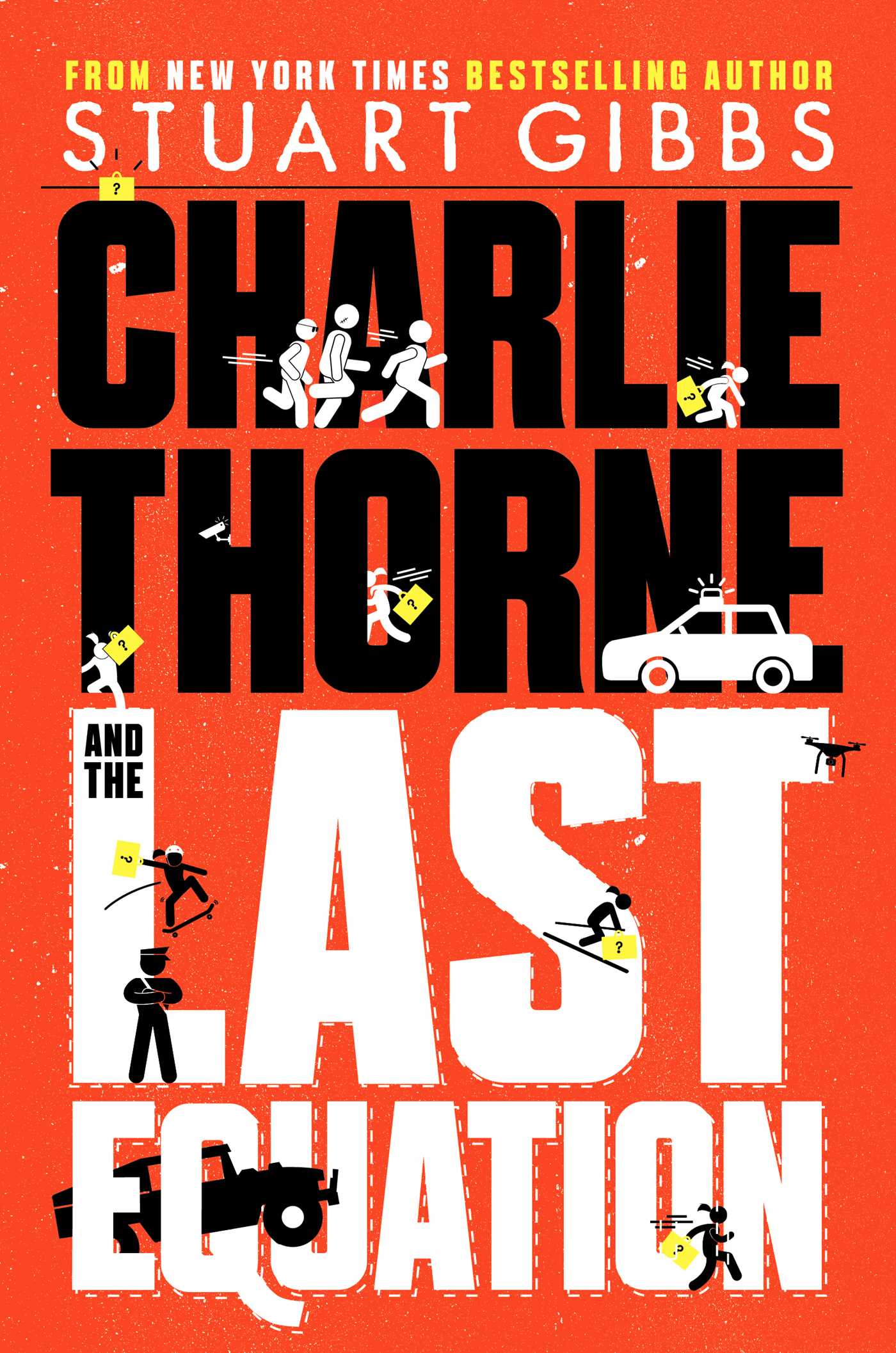
[READ: March 30, 2021] Charlie Thorne and the Lost Island

This is the first book in the Charlie Thorne series. I read the second one last month.  I don’t like to read things out of sequence, but it didn’t really impact this story all that much.  The only thing that I “knew” was that Charlie escaped at the end of the story.  But that’s pretty obvious since there was a second book.

This book was also good for some of the background information I was seeking.  Although, it turns out that Gibbs didn’t include a ton of background info on Charlie.  We learn just enough to understand how she is the way she is without getting bogged own in details.

The story starts with a Prologue set in Princeton, NJ in 1955.  It’s the evening of Einstein’s death and after being given some (unwanted) painkillers, he starts muttering something.  By the end of the night the secret service are all over his small house trying to uncover whatever it was he muttered (in German) about.

The book properly starts at CIA Headquarters as Dante Garcia is heading a team.  He is insisting that they call in the help of Charlie Thorne, a super-smart 12-year old girl with a potential criminal past.  His boss is skeptical but trusts Dante, so she agrees.  he also says he wants to work with Milana Moon, one of the best agents in the force.

Cut to a ski slope in Colorado where we are introduced to Charlie and her amazing mathematical mind.  She is able to picture the angles and speed she needs to conquer Deadman’s Drop.

The way she does it is pretty cool and it also sets up the first exciting chase.  She recognizes Dante and his partner as agents.  She doesn’t know why they are here but she knows she needs to evade them.  This leads to the first of many exciting chase scenes. (more…)

Read Full Post »

SOUNDTRACK: LIAM BAILEY-Tiny Desk (Home) Concert #184 (March 23, 2021).

I had heard of Liam bailey but I didn’t really know anything about him.  I’m fascinated by his voice because his British accent comes through as he sings (in the way that Billy Bragg’s accent is quite audible).

For this performance, Bailey teeters between belting and crooning, with emotions that ignite the screen from the top of “Fight” to the closing notes of “Paper Tiger.”

“Fight” is a short song that is primarily made of percussive chords and slaps on the guitar.  For most of the songs, he is playing the chords and you can hear them change but there’s no ringing notes, just muted chords.  Until the very last lines when the music resumes and he sings powerfully.

So it’s all about his voice.

Wiping the sweat from his brow between songs, he exclaims, “We don’t normally have these glaring lights in my living room.  This is my front room by the way welcome. We’re not doing no studio productions. We’re keeping it real. Keeping it raw.”

I don’t know what “Vixit” means.  He says he wrote this and the next song in upstate New York.  The music is a little darker. Trying to figure out he lyrics:

I still have my memories I still hear your song. They were always so vindictive, you always got me wrong. I cherish every day now I’m happy to be alone.  I get every thing I want and I still get stoned.  I’m out of love, I’m out of love never seemed to make sense.

If only I had realized the other side was fine.  If only I had realized.

“Paper Tiger” is another powerful song and once again, the guitar is the vehicle for his voice and lyrics.  Which is not to say the song isn’t good, just that the melody is not as important as the words.

Perched atop an amplifier in front the peeling walls of his living room, he presents three selections from his latest album, Ekundayo, accompanied by one acoustic guitar. Ekundayo, which means “sorrows become joy” in Yoruba, fittingly describes the Nottingham, England, native’s music industry journey thus far. After various projects and record deals, he found it impossible to operate under the confines of a major label. He finally found the liberation he yearned for on Leon Michels’s Big Crown Records, which released Ekundayo last November.

This set is not even ten minutes long, but it’s really solid.

[READ: April 12, 2021] Parable of the Talents [2033]

2033 is a brutal year for Acorn and Earthseed.  The end of the section was really hard to read.

As the year opens, our narrator, who we later learn is named Larkin Beryl Ife Olamina Bankole says that her mother should have left Acorn and gone to Halstead like Bankole asked.  It makes it seem as though perhaps Bankole went without her, but he did not.

“Larkin” is a derivative of Lauren and from the Greek Laurel ,  “Beryl” was his mother–emerald is type of beryl.  “Ife” is the Yoruba word for “Love”

Olamina dna Bankole had actually stayed in Halstead for a short time.  A family was moving from Halstead to Siberia (!) for a better life.  The election of Jarret was the last straw for them.  Bankole is amazed:

If [when I was a boy] anyone had said that Americans would be giving up thier homes and their citizenship and going to make new lives in Siberia, the rest of us would have looked around for a straightjacket for him (130).

Olamina and Bankole stayed in the family’s house while Bankole was trying to decide if he should move there.  Well, he knew he should, he was trying to convince his wife.  She doesn’t want to move but says it was a good trip for her.  Living in a modern house with plumbing.  Being so close to the Ocean.  She could see the appeal.

Bankole had told people that they were leaving.  Or, more specifically, Marc was telling people they were leaving and the faithful were understandably freaked out.  But she convinced them, and herself, that she wasn’t leaving.

When I started this year I was taking notes on things that interested me, but after having finished it and reading all the horrors, it seems bizarre to include little observations about things that made me smile.  But I get to throw this one in because I am a cataloger for a library.

Olimani and Channa have been sorting and cataloging books for their library and Olamina hated to be interrupted, but not too much: “Still, cataloging is tedious” (137).

The first bad news comes from Marc.  After he had been rescued by Olimani and taken in by  Acorn, he decided that he wanted to preach his own Christian beliefs to the people.  He was going to do it without asking his suiter, but Olamina found out and told him to preach at their next Gatehring.  She warned him that he would be questioned about what he said and he was cocksure enough to go on with it. (more…)

Read Full Post »

SOUNDTRACKSAMPA THE GREAT-Tiny Desk (Home) Concert #173 (February 23, 2021).

I thought that Sampa was actually Sammus, the indie rapper named after the character in Metroid.  So I was a little bummed to find out I had the wrong Sam… rapper.  But I quickly came over to Sampa’s style.

Sampa Tembo is better known as Sampa The Great, an understated title. In her Tiny Desk (home) concert, the poet, rapper and singer-songwriter delivers evidence that it’s more like Sampa the Greatest.  Initially raised in Botswana, Sampa moved to Australia as a young adult and established herself in Sydney’s hip-hop scene. There, she released two mixtapes, 2015’s The Great Mixtape and 2017’s award-winning Birds and the BEE9, all the while generating buzz. She had been based in Melbourne for the last four years, but the next chapter of her musical journey will find her at home in Zambia.

She plays four tracks and her live band is really solid.  She opens with “Rhymes To The East” which features a nice guitar riff by Samuel Masta.  I like the way the backing singers (l-r: Joy Tusankine Namwila, Mwanje Tembo, Tio Nason) sing the end of the rapped lines.

When Sampa really starts flowing her voice is great–a rough gravelly cadence with a Southern African/Australian accent.  It’s especially cool when she introduces the third verse with a snarl

Rhymes beast mother fucker
Tembo from the east put the beast in a trucker
Timbuktu, as I question all the loyalty
Build a big wall when you stole all of the royalties

The end of the song is really catchy, too.

The next three are from her 2019 album The Return.

“Mwana” opens with a drum solo Kasonde “Tek1” Sunkutu.  The song is mostly sung by the backing singers.  Then Sampa starts her flow.  Musically this song is much more spare with gentle keyboards Lazarus “Lalo” Zulu playing around the drums.

As she introduces the band, they jam, with some funky bass from Mapalo “Mapskeys” Mapalo which leads into an improv  that sounds like an island fun.

“Freedom” is up next.

Sampa Tembo is in Lusaka, Zambia, her landlocked African home country.  [She says] “Freedom is what we feel when we perform. And freedom is what the world is in need of right now. In this pandemic it feels like we all need a sense of freedom.”

“Freedom” features some terrific backing vocals. The end has a rocking jam as the singers all give up whooos and Masta plays a ripping solo.

When the camera is in full frame you can see that Sampa’s dress has a really long train which covers almost the entire floor (no wonder she sits through the whole set).

The set ends with “Final Form,” my favorite song of the set.  It’s got a big, heavy noisy riff with thumping bass and wailing guitars.  Her delivery is raw and raspy and really affecting.

The end is particularly cool as the band rocks out punctuating along and singing “Black power!” “Louder!” “Black power!”

Sampa is pretty great, indeed.

[READ: April 12, 2021] Parable of the Talents [2032]

Parable of the Sower ended on a vaguely optimistic note:  Lauren felt that they were ready to set up Acorn, the home of her Earthseed community.  Bankole thought there was no chance it would work.  But this is Lauren’s story, so we’ll assume that the story is tipped in her favor somewhat.

Plus, there’s a sequel, so things must work out reasonably well, right?

Well, surprise!

Parable of the Talents opens up with the news that Lauren is dead.

She is mostly called Olamina during this book because Bankole “doesn’t like my first name, so he ignores it.  That’s fair.  I didn’t like his first name either. It’s Taylor, by the way and I ignore it” (122).

This book is narrated by Olamina and Bankole’s child–unspecified gender and age in the Prologue, although by the end of this week’s reading we can assume the writer is their daughter [Bankole wants her named Beryl and Olamina wants her named almost anything that isn’t Beryl–“such an old fashioned name” (122).  The narrator later says something about high school, so it must be around 2050.

The child shares Olamina’s diary entries, but her basic attitude is that she hates her mother and thinks well of her father and wishes she knew him.

The book opens with this narrator saying “they’ll make a god of her” and the continues with something surprising about that

I think that would please her, if she could know about it.  In spite of all her protests and denials she’s always needed devoted, obedient follower–disciples–who would listen to her and believe everything she told them.  and she needed large events to manipulate.  All gods seem to need these things.  (7)

I never got the sense that Lauren wanted to be a god.  But maybe Olamina does.

She also tells us that Lauren’s middle name “Oya” is the name of a Nigerian Orisha–goddess f the Yoruba people (goddes of the wind, fire, and death, more bringers of great change (50).

Butler wrote this book five years after the Sower.  As I read Talent, I wondered what the intent of this story was. Had she planned all along to have a follower (child or otherwise) criticize Earthseed?  Had five years of thinking about Earthseed made her question the validity of Lauren’s ideas?  I don’t know anything about Butler, about whether she “agreed” with Lauren’s ideas or not.  I don’t have anything besides textual evidence to know how she felt about religion in general.  So was this book a commentary on her own ideas/ideals from five years earlier?  Or is this just interesting storytelling by having a new protagonist dispute the doctrine of the previous protagonist.  Especially if the bulk of this book is made up of Olamina’s diary entries (just like the first book was).

That’s right, even though the book is set after Olamina has died, the book so far is primarily her own diary entries from 2032, By the end of 2032, she is pregnant with, presumably, the person who is narrating this book and criticizing Olamina’s ideas. (more…)

Read Full Post »

SOUNDTRACK: RAE KHALIL-Tiny Desk (Home) Concert #171 (February 18, 2021).

Rae Khalil was a contestant on Netflix’s music competition show, Rhythm + Flow.  I distrust anyone who wins a music TV show, but I really liked Khalil’s music.

She is recording in Harun Coffee in the historic Leimert Park neighborhood of South Los Angeles.  Khalil’s set is a colorful explosion of talent, perfectly complimenting the funky patchwork and textures of her attire.

She calls her band The ill, and they are pretty great, in particular the fantastic bass work from both Dominick Cruz and special guest Kelsey Gonzalez of The Free Nationals (they switch mid set).

“Way Down” opens with retro keys from Elyzr and grooving bass (from Gonzalez) and a fiddly guitar solo from Takoda Barraza (on a nifty green Steinberger guitar).  Khalil has a great delivery throughout–quiet, understated and yet powerful too.  Drummer Nico Vasquez sets a killer rhythm throughout, too.

“Tiny Desk! Happy Black History Month!,” rapper, singer and songwriter Rae Khalil exclaims before gliding into “FATHER,” from her LP Fortheworld.

“FATHER” has a lengthy jazzy keyboard intro from Elyzr.  When Khalil sings, her delivery is understated on this one as well, although she occasionally lifts her voice into a kind of croon.  Dominick Cruz plays a jazzy guitar solo.

Sticking to the “inspiration” theme of our Black History Month celebration, she recites an excerpt from Langston Hughes’s “Let America Be America Again.” The 86-year-old words still read painfully relevant for many Black people in this country today.

Her reading of this poem is really good.  I wasn’t familiar with it and I can’t believe it is 86 years old.  I thought it was quite possible she had just written it, it felt so disturbingly contemporary.

The Torrance, California native’s musical theater background shines through here; she exudes an array of emotions in a span of minutes on tracks like “UP LATE” and “MARIA,” making it impossible to look away.

“UP LATE” has an outSTANDING bass line from Dominick Cruz.  Rae starts the song singing softly , but with speedy delivery.  Then she takes off!  Dramatically singing/rapping/laughing/pausing and then on a drop of a hat, “MARIA” shifts tones and she starts scatting along to the gentle jazzy music.

Vasquez get a few mini drum solos in the middle before the song takes off again and then ends with a jazzy bass solo from Cruz.  It’s fun watching her dance in he big bell bottoms.

This was a really great Tiny Desk and while it won’t get me to watch any reality music programs, I will acknowledge the success of this performer (although she didn’t even come in the top 8, so the heck with that).

[READ: March 30, 2021] Charlie Thorne and the Lost Island

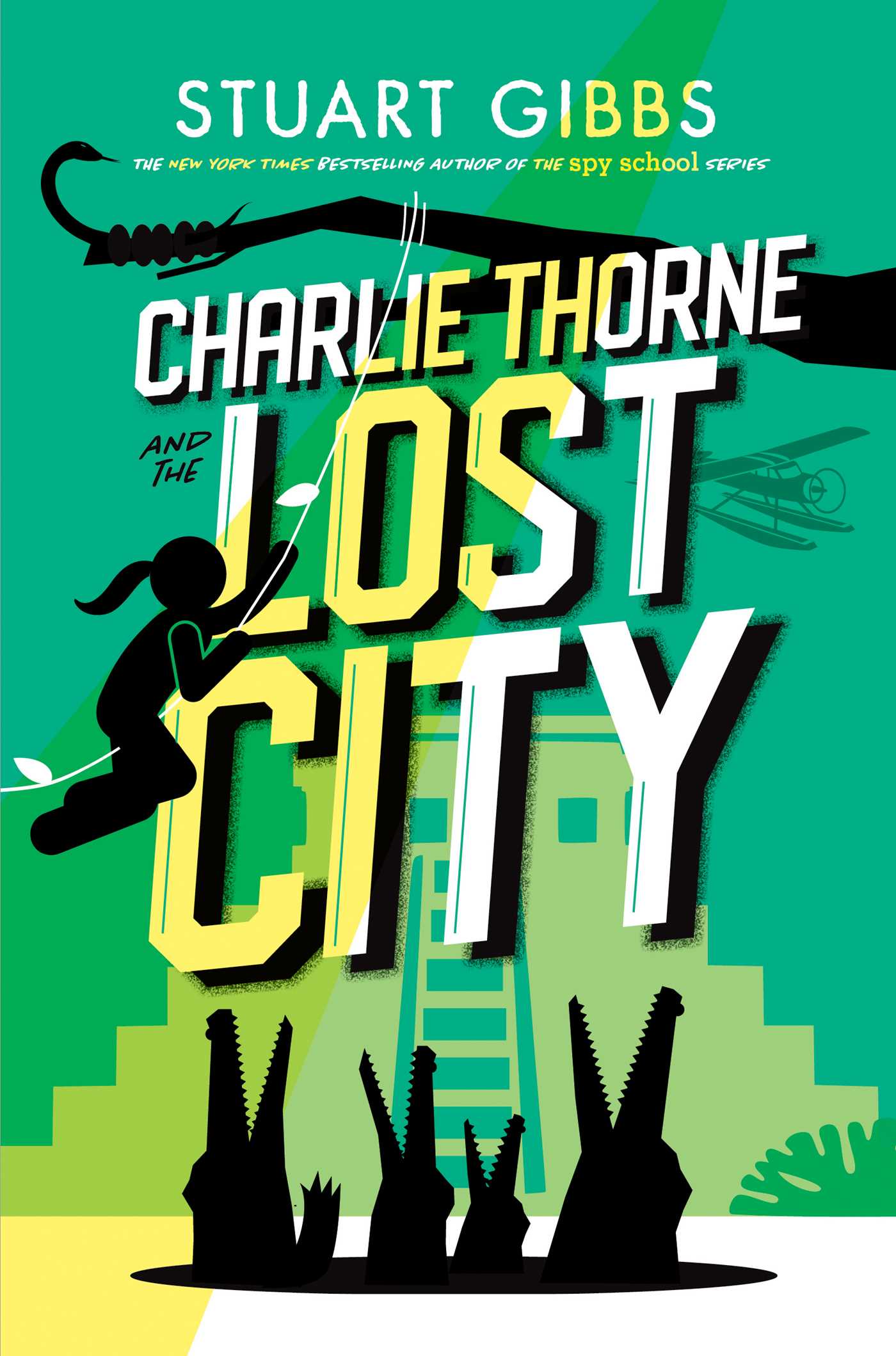
This is the second book in the Charlie Thorne series.  I had not read the first one but S. told me that I would love it and that the first book wasn’t necessary for the enjoyment of this book.  And that was absolutely true.  This story does follow that one, but it is wholly independent and anything that needs to be filled in from the previous adventure is dealt with pretty handily.

So who is Charlie Thorne?  She is a genius.  She is a fugitive.  She is not yet thirteen.

I have not read any Stuart Gibbs before (except for one short story), but I understand his Spy School is a great series.  I have to hand it to him right away for writing such a cool and compelling protagonist for this series.  And also for having a story with so much fascinating information included.

As the book opens, Charlie is surfing off a small island near the equator.  She chose this location because it is very remote.  She needs to be remote because of what happened in the previous book (she has a piece of information that everyone from the CIA to a dozen other international cartels would kill for).

She assumed she was safe, but knew she wouldn’t be for very long–nowhere was totally hidden.  But while she’s here, she’s going to learn to surf.

Gibbs using surfing to show off Charlie’s brain power.  She has never surfed before but because she is so smart–so good at using numbers to read nature–she never misses a wave and never wipes out.  The locals think she might be a demon.  I enjoyed the way he uses her skill at figuring out angles and pacing and such in several later scenarios. (more…)

Read Full Post »

SOUNDTRACKKeiyaA-Tiny Desk (Home) Concert #168 (February 11, 2021).

I had not heard of KeiyaA (and have no idea how to say her name), but i was quite stuck by this performance.

KeiyaA is a new performer, and her debut album

Forever, Ya Girl, appeared last year with kismet timing, unveiling her as a fully formed star. The 2020 release is a meditation on the thin line between solitude and loneliness, one that KeiyaA traces and teeters on while defining her Black womanhood.

The set opens with “Do Yourself a Favor.”  For this track KeiyaA sits behind the keyboard a while 13th Law plays a slow funky bass line plays accompanied by finger snaps and backing vocals from the amazingly named Nelson Bandela.

KeiyaA comes out front for the rest of the tracks.

Cornrows braided back with the precision of an architect. Stiletto nails commanding a sampling machine. Gold-glinted lids to match her light-up Beads Byaree earrings. With every move, KeiyaA shines so bright, it’s impossible to look away. And while your eyes are fixated on her person, the music KeiyaA conjures inside Brooklyn’s Electric Garden is what leaves you completely spellbound.

On “Hvnli,” Nelson Bandela plays keys behind a new slow funky bass line.  Keenyn Omari played guitar on the first song but he plays saxophone on this one.  It starts with soft bursts and then he really starts wailing.  With the sax and the syncopated drums from Buz “Hvnli” sounds like a spare jazz song.  She sings:

Gone for so long I prefer to spend time in my pain, hey / Gone for so long I can barely recall the last my phone rang,” she sings on “Hvnli.”

Her album

is a meditation on the thin line between solitude and loneliness, one that KeiyaA traces and teeters on while defining her Black womanhood. Whether it’s through jazzy woodwinds, heavy synths or prickly staccato, the singer-songwriter and multi-instrumentalist shares waves of anguish, depletion, love and elation in a swirling stream of consciousness.

She says that “Most of the work that has carried me has been the writing of Black women Jayne Cortez and Ntozake Shange [she holds up their books] who both speak unabashedly of the plight and joys and general experiences of the Black femme woman.  And those writings are paramount in my work.”

She opens “Finesse Without a Trace” with a wobbly sample and The 13th Law plays some bass chords and splashy drums.  The sample turns into some quotes while Omari plays some wild distorted flute.

The song ends with an improvised flute solo which KeiyaA accompanies with samples and some oohing.  The song slowly morphs into “Rectifiya” a funky piece with response vocals on the chorus.

She ends the whole set with the sampled quote from Nina Simone.

“Everybody is half-dead. Everybody avoids everybody. All over the place…in most situations, most of the time. I know I’m one of those everybodys. And to me it is terrible. And so all I’m trying to do, all the time, is just to open people up so they can feel themselves and let themselves be open to somebody else. That is all. That’s it.”

Apparently the album sounds very different than this Tiny Desk: (The “album version of these tracks boast much of KeiyaA’s own production, affirmations and layered vocals in chorus”).  Perhaps I’m better off just enjoying this and not looking further.

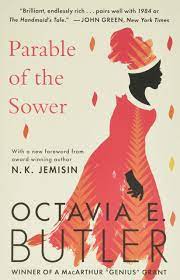
[READ: April 5, 2021] Parable of the Sower [end]

The end of the book provides something of a skeptical feeling of hope for our travelers.   I read in the Foreword that Earthseed was meant to be a trilogy; however, Butler only finished a sequel (and an unrelated novel) before she died.  The Foreword (by N.K. Jemisin also gives a spoiler to Parable of the Talents–uncool!  Even if the books are over twenty years old.

By the way, Jemisin sounds pretty interesting.  Anyone read her?

To me, it is astonishing how many big questions go unanswered in the book.

I had mentioned wondering about the Mars mission and there’s no mention of that again.  We never find out anything about any state east of Central California and we never find out What Happened.  Obviously that information is irrelevant for the characters–they just have to move on–but it’s frustrating not to have even a hint.  [I accept that it wasn’t relevant to Butler, but I’m still curious].  We never hear anything about the community that the corporation bought, either–although there is a kind of follow up with someone from a similar community telling about how badly it turned out for the people living there.

This section starts off with an earthquake.  Earthquakes are bad news in general but in this situation they are much worse because earthquakes tend to cause fires.  And we know who fires attract.  Zahra thinks that they might be able to scavenge for something they can use, but Lauren suspects, rightly, that it would be a dangerous thing to do–druggies and people more violent than they are would be there.  And this proves to be true.

In fact, it proves to be very smart to move on because they wind up putting some distance between themselves and the violent crowds that scavenged the burnt out houses. (more…)

Read Full Post »

SOUNDTRACK: MELANIE CHARLES-Tiny Desk (Home) Concert #165 (January 4, 2021).

I had never heard of Melanie Charles and boy was I in for a treat with this being my first exposure to her.

A Brooklynite proud of her rich Haitian heritage, Charles is conscious of the giant shoulders upon which she stands and takes steps to both honor and advance this music. Behind her, smiling pictures of her guardian angels, Mary Lou Williams and Billie Holiday, encourage Charles while she and her musicians blend the mystique of Haitian folk music with the sorrowful optimism of negro spirituals and the free space for elevation that jazz improvisation allows.

The video opens on a dark screen with samples being manipulated and twisted.  It’s amazing to have the camera fade from black into this really old-fashioned looking scene–upright bass, snare drum and a nearly sepia filter on the video.  And then there’s Melanie Charlie dressed in a beautiful but old-fashioned looking ensemble manipulating all of the sounds.

She is playing from the

Williamsburg Music Center, one of Brooklyn’s last surviving black-owned jazz venues… This performance was a full circle moment for Melanie Charles. The Williamsburg Music Center is owned by Gerry Eastman, a celebrated musician and composer who taught the jazz class Charles and her brother and saxophonist, Rogerst Charles, attended when they were in high school. According to Charles, Eastman “represents a special era of Brooklyn jazz musicians” and created a space that gave these artists a place to perform when all other doors were closed to them.

Then she starts singing French while Jonathan Michel plays a bass solo /melody.  This song is

“Damballa Wedo,” [in which] Charles channels her Haitian roots and delivers a modern twist of a traditional vodou song by Toto Bissainthe. She sings that when we seek transformation, we may become someone who those around us no longer recognize, but that the change is necessary and part of the ancestors’ divine plan. “C’est bon, c’est bon,” she sings.

Up next she offers a little Sun Ra vibration.  She plays a sample and dramatically shuts it off as it loops.  The starkness of the silence is very dramatic.   Then she starts singing

Charles’ arrangement of “Deep River” is inspired by her admiration for Sun Ra. The biography of the eccentric composer, arranger, musician, and early pioneer of Afrofuturism, Space Is The Place rests on a stand behind her. By really digging into his approach and arrangements and using his “spaceship setup as a performance guide,” she breathes new life into this spiritual, injecting it with a potency that is simultaneously somber and otherworldly.

While the sample continues the band picks things up.  The bass and sax play the main melody while Melanie plays some sharp and cool flute accents.

And what a voice!

Before the final song, she introduces the band:

Jonathan Michel: who looks like an upright bassist–he’s got that Ron Johnson turtleneck.  Shout out to Ron Johnson.  On drums, Diego Ramirez: coming in at the last minute and learning the songs over night.  On saxophone, Rogerst Charles, my blood brother, my heart.

The final song is “Dilemma.”

She finishes the set with “Dilemma,” a new song written to find the balance between self-care and showing up for those you love amid the cries for justice during the first summer of the pandemic. On our phone call, Charles explained that the song is an anthem that reminds us to not to “dim your light for anybody” and “remember how vibrant we are, despite what we as black people had to deal with in 2020.”

She plays keys and sings a soft song until the whole band joins in.  After a couple of minutes she she sings a high note and the sax plays the same note a wailing harmony of greatness.

With about two minutes left she starts singing the coda “we’ve been doing alright be we still shine bright.”  The band sings along and she interjects:

We’ve been doing alright
even though we didn’t get our stimulus.
But we still shine bright.

[READ: March 31, 2021] Only Righteous Fights

On December 31 of 2020 I donated some money to Elizabeth Warren (I’m not actually sure to what end it was used–presumably her Senatorial campaign?) to pre-order this collection of speeches (and get a laminated bookmark!).

There are few things more disappointing than reading amazing, inspiring and truly moving speeches by a person who lost a candidacy.

Kamala Harris and Elizabeth Warren were my number 1 and number 2 choices for President.  I didn’t have to worry too much about which one I would ultimately choose, I was just happy they both were so successful (until they weren’t).  Having Harris as V.P. is pretty awesome, and I will acknowledge that Biden (who was my last choice) has been doing a good job thus far (apparently having taken ideas from all the other candidates…which is rather a good idea).

But reading this book and seeing how genuine Warren was (or came across) and how much she cared (or appeared to) for the people she spoke to and about, it is crushing that her campaign didn’t last.

There are five speeches in the book as well as lots of photos.  There’s a few smaller sections as well, like photos from the Selfie Line, Letters to Elizabeth and Pinky Promises.

What’s impressive is how she manages to hit all of her main bullet points and yet how each speech is quite different. (more…)

Read Full Post »

SOUNDTRACK: GIVĒON–Tiny Desk (Home) Concert #166 (January 28, 2021).

GIVĒON is a pretty classic R&B crooner.  He seems pretty grateful to have gotten where he is.

“Just bear with me while I just enjoy this and soak in it,” GIVĒON admits with a laugh.

He plays three songs.

“The Beach” opens with gentle guitar chords from James Murray and a slow bass line from Ivan Chatman.  Then GIVĒON and RaVaughn Brown sing together.

After the song, he says he’s pretty excited to play in February.

“Any moment to do this would be special,” he says between songs, “but I think Black History Month … just celebrating Black culture for this month, I’m really excited to get to do this on this platform.”

He also notes that he is a Pisces.  “Pisces are emotional, maybe that’s why I make songs like this.”  “Like I Want You” opens with a simple drum intro from Andre Montgomery and a slow bass line.  Deondre Ellis plays a keyboard melody that matches the vocal melody at the beginning each line–it’s a nice touch.  Murray plays a pretty ripping guitar solo, too.

Before the final song, “Stuck on You,” he says, “I can’t wait to watch this with my mom and see what she thinks because she likes to nitpick sometimes.”  It’s a bit of a faster song and when there’s about a minute left, GIVĒON walks off to let the band jam out the set.  The mark of an old school singer already.

[READ: February 20, 2021] Goliath

The final book of this trilogy was as exciting as the rest of the series.

Everyone is back aboard the Leviathan and they are heading toward the Arctic.  They have an exciting and dangerous mission up ahead–they are going to lower Leviathan as low as she can go so that they can retrieve some cargo from the back of a polar bear beastie.

Deryn and Newkirk are on a small platform swinging madly through the air as they try to secure this very large parcel from the back of a moving bear.  It’s something that’s been done before, but never with something this large (usually just mail bags).  This is a massive time saver, but if they miss, it means a several hours before they can turn around an try again.

The package is a huge amount of supplies both for the Leviathan and for the special guest who they are going to meet in the Wilderness. Things don’t go as smoothly as promised because the package weighs more than was promised–the danger is pretty great and the scene is very exciting.

When they open up the packages in the ships hold, they discover that in addition to the various supplies there is a massive Clanker gadget that needs assembling.  It is good that Alek and his men are on board to help assemble the Clanker contraption.  He’s also happy to have gainful employ for a time–it’s the happiest he’s been in a while.

The device proves to be a portable metal detector–a powerful one designed to be used almost like a giant magnet. But there’s no explanation for why it’s here.

The ship continues on its mission further up towards Greenland.  Then the watchman sends a message: Trees All Down Ahead.  It doesn’t make sense until they see a clearing up ahead and indeed all of the trees are destroyed–knocked over as of by the world’s largest hurricane. Worse yet, there are gigantic bones littering the place–as if a whale beastie was eaten. (more…)

Read Full Post »

SOUNDTRACK: MESHELL NDEGEOCELLO–Tiny Desk (Home) Concert #167 (February 10, 2021).

I bought Meshell Ndegeocello’s Plantation Lullabies back in 1993 on the strength of “If That’s Your Boyfriend,” a funky track that is still pretty great.  I didn’t realize she had been steadily putting out music ever since.

This Tiny Desk (home) concert … includes songs from throughout her career framed by her thoughts on the importance and influence of James Baldwin: “He deserves flowers every day. Most of all because he was willing to discuss things that were painful, hard to look at, hard to see, hard to accept.”

Ndegeocello is a bad-ass bass player with a serious funk edge.  And yet in this Tiny Desk Concert, she strips almost all of that away.

The first song comes from Lullabies, but in this version of “Step Into the Projects” she strips away all the music and turns the song into a spoken word piece (although she does keep the rhythm of the original).

For the next three songs she is accompanied by her longtime guitarist Chris Bruce.

“Price of the Ticket,” is from Ndegeocello’s recent project, Chapter & Verse: The Gospel of James Baldwin, “a 21st century ritual toolkit for justice” inspired by Baldwin’s The Fire Next Time.  In the track, it’s just Bruce’s gentle guitar and Meshell’s quiet voice.

“Forget My Name” from Comet Come To Me (2014) is stripped down from its original reggae arrangement and lays bare the haunting imagery in the lyrics.

She plays some spare bass, but musically it’s all about Bruce–the cool low riff and the pretty high melody.

“Fool of Me,” from her acclaimed album Bitter (1999), ends the set with just vocals and guitar.

Like the other songs, it is spare and beautiful, allowing you to really hear the words.  I love Meshell’s funk, but this is a beautiful set.

[READ: March 29, 2021] Parable of the Sower [2026-2027 (chapter 19)]

I have not read Cormac McCarthy’s The Road, and I don’t intend to.  But I feel like this book acts as a precursor to that one.  And that is something I did not in any way expect.

2026 opens in June, almost seven months after the previous entry.  I’m curious about the distance between entries.  It’s possible that Lauren has dozens and dozens of pages that just said, “today sucked” and we don’t need to see that.  But I am curious about the time jumps.

Is it a way for Butler to move us ahead quickly so that something that needed to take a few years to happen is given the time to do so?  I’m thinking about Mars a bit.  In two years a lot can happen with the space program.  Of course, the President was supposed to cancel the program.  So who knows what’s going on there.  Aside from basic passage of time, did we need to wait six months to see what came next?  I’m not sure.

In June Keith is back–bigger and more confident.  He’s not yet 14, but he’s very successful, bringing home money and gifts (but none for his father).  He has ingratiated himself into a gang by being the only literate one in the group:

They’re all older than me, but not one of them can read or write anything.  They stole all this great stuff and they couldn’t even use it.  Before I got there they even broke some of it because they couldn’t read the instructions. (105)

Lauren and Keith have a heart-to-heart–really their first ever.  He learns a bit about her and while he gains a little more respect he also tells her that she’d never survive out there–she doesn’t know enough.  He also tells her about these new crazies called Paints who paint their skin green or blue or yellow and eat fire and kill rich people.

Keith comes back on her birthday and gives her a present.  A month later he is dead–killed in a horrific and gruesome way.  He was clearly tortured and left to be found.  His death was a message for someone–a rival gang, probably.

But they don’t call the police:

cops liked to solve cases by “discovering” evidence against whomever they decided must be guilty.  Best to give them nothing.  They never helped when people called for help.  They came later and more often than not, made a bad situation worse. (114)

In October, a new component to the story crops up.

Kagimoto, Stamm, Frampton and Company (KSF) has taken over a nearby town called Olivar.  It is small and well to do.  The citizens voted to let their town be taken over–privatized.  They intend to set up energy resources in the community–solar, wind, desalinization.  They mean to own great industries in an area that people have given up on.

Kagimoto, Stamm Frampton: Japanese, German, Canadian.  When I was young, people said it would come to this. Well why shouldn’t other countries buy what’s left of us if we put it up for sale. (121)

This is another aspect of the story that confuses me.  Is it basically that Los Angeles has exploded and the rest of the country is okay?  There’s talk about work up north, but why?  What happened to the country that they/we would let L.A. collapse but nothing else.  Or maybe it’s the entire South West?  Nobody knows anything about the East Coast, apparently.   I’m hoping that they will get explained a bit later on.

Olivar was accepting applications to live there.  They were looking for educated people.  And here we learn that both of Lauren’s parents have PhDs [a commentary on the invisibility of Black scholars?].  Her stepmother thinks it’s a great idea to go to Olivar.  They would be guaranteed safety and security.  But her father is against it, calling it “half antebellum revival and half science fiction” (122).

Anyone KSF hired would have a hard time living on the salary offered. In not very much time, I think the new hires would be in debt to the company.  That’s an old company-town trick–get people into debt, hang on to them and work them harder.  Debt slavery. That might work in Christopher Bonner’s America. Labor laws, state and federal are not what they once were. (121)

Come November, the Garfields have been accepted at Olivar.  The Garfieds include Joanne, Lauren’s one time best friend (who misplaced Lauren’s trust by tattling to her father).  Joanne has been serious with Harry Balter.  But Harry is staying in Rebledo.  Lauren suggests they get married and then Harry can move in with them, but she says that Harry wants to get married and travel north.  He thinks they way Lauren’s father does about Olivar.

But the Garfields are still going: “conservative and sensible and mature and wrong” (128).

In November, Lauren’s father did not come home one night.  They spend days looking for him with no luck.  The search parties uncover all kinds of remains, some of which they think might be her father’s but which turn out not to be.

The search also reveals an aspect of Lauren’s hyperempathy that we didn’t know–sound doesn’t trigger it (she hears a man screaming), only sight does.

Five days alter they have a Sunday survive that turns more or less into a memorial.  Lauren speaks at he service and proves to be powerful preacher.  She speaks of God but presumably she means her own god–the earthseed god.  By mid-December they have a formal funeral–they accept that he would have found his way home by now.

Later, when KSF came for the Garfields, it was in an armored truck

The two movers were a black and a white, and I could see that Cory considered that hopeful.  Maybe Olivar wouldn’t be the white enclave that Dad had expected. (139)

All along Lauren has been romantically involved with Curtis.  People anticipated that she would get married an have a baby with him–something she strongly resisted.  Indeed, her plan all along was to leave Rebledo without him.  But now with Lauren’s father gone (he was the reason she hadn’t left yet–she didn’t want to hurt him), Curtis suggests that they both go.  He’s upset that she wanted to go without him, but she explains that she didn’t want to force him to make that choice.

Two days later, someone burned down the Payne/Parrish house; while that was going on. they robbed three of the other houses including Lauren’s.

I’ve been frightened at the phrases that Butler says that prove eerily prophetic to the last few years:

People are setting fires because they’re frustrated, angry, hopeless. They have no power to improve their lives, but they have the power to make others even more miserable.  And the only way to prove to yourself that you have power is to use it.  (143)

Interestingly, the drug that gave Lauren her hyperempathy–Paracetco–was initially a legitimate drug intended to help victims of Alzheimer’s disease.  Pyro was an accident–a homebrew on the East coast it made it was away across the country.

People on the fire drug get off on watching things burn.  Blaze, fuego, flash, sunfire.  The most popular name is pyro short for pyromania [I’m fascinated that she needed to spell that out as I feel that in 2021 (and much earlier) it was a common abbreviation].

As the year ends, the families try to make due with what they have left.

Then we enter 2027.  Once again it’s six months into the year.  And this is when things change dramatically.   Thieves drove a truck through their wall and set everything on fire.  Nearly everyone in the community was killed.  [I did wonder if it was worthwhile learning anyone’s names, and it was two people I didn’t think twice about who survived].  The description is a violent orgy of death, rape, fire and who knows what else.  It is brutally described.  Lauren escaped.  She had the forethought to run back in and put on clothe and shoes and grab her bug out bag.  No one else in her family had done so. She saw them n bare feet and pajamas and then she didn’t see them any more.  She managed to get outside and to hide until the next day,

She crept back into her community and went to her house which was being looted and stripped. She knew where there were some hiding places and she managed to get clothes for her family as well as money that was hidden in the ground.  She grabbed a gun and got out, looking like all the other miserable looters.

Lauren was sure she was alone.  Then out of the rubble came Harry Balter and Zahra Moss–the youngest wife of Richard Moss the polygamist.  Zahra’s baby was killed (brutally) and an attacker was about to (or had begun to) rape her when Harry saved her (and got beaten for his help).  Neither one had planned for anything like this and they are pretty hopeless.  Lauren decides that three is safer than one and invites them to go North with her.

Zahra’s backstory is interesting.  Richard bought her from her mother who was a drug addict and a prostitute.  Zahra has lived on the streets and she knows what’s what.  She takes them to Hanning Joss, the biggest secure store complex.  I’m fascinated to learn that there are are still megastores and that they have security allowing people to shop safely there–commerce always wins.

Then they do what everybody else does–they head North.  Lauren has decided to pass as a man.  She’s tall and muscular and can do so, so she cuts her hair short.  They encounter much danger and violence but manage to get relatively far north.  Harry is a trusting guy, trying to avoid violence in any way possible.  But Lauren (and Zahra) knows the reality of the situation–kill or be killed; steal or be stolen from.  And with Lauren’s hyperempathy, she can’t afford to let people around her suffer.  She winds up cutting a man’s throat to stop the hurting that he (and she) are feeling.  Harry is appalled at her.  So she finally admits to her hyperempathy assuming they’ll abandon her.  But they do not–three is better than two.

Zahra and Harry become a couple and have unprotected sex (what harm could come from that?)

Then the trio meet another family who seems to be tagging along after them.  Everyone is out for themselves, but Lauren takes pity on this mixed race couple with a baby.  She helps them out at the second Hanning Joss and a few days later, when Lauren saves their baby from a feral dog, they agree that five (or six) is better than three and two (or three).

The new people are Travis Charles Douglas, Gloria Natividad Douglas and six month old Dominic. They are going to Seattle where Travis’ aunt lives.  Travis is quite taken aback when he learns that Lauren is a woman–especially since she saved them, but he’s going to have to get over it.

All of this time, Earthseed has been running around in Lauren’s head, but it hasn’t really shown up.

Then in chapter 18, Lauren starts talking to them about Earthseed.  Travis is a (surprisingly) intelligent man–he knows about entropy.

Travis’s mother was a live in cook for a rich man.  But before that she had written for newspapers and magazines.  She taught Travis to read. The man she worked for had a library and she would sneak out one book at a  time–he didn’t want Travis touching his stuff.

Of course. Slaves did that two hundred years ago.  They sneaked around and educated themselves as best they could sometimes suffering whipping, sale or mutilation for their efforts. (218)

Natividad was a maid and the rich man let them marry:  The son of the cook marrying one of the maids. That was like something out of another era too.

They discuss her poems–Earthseed.  Travis pushes back against her ideas, although never in an aggressive way.

She argues that here is no pore pervasive power than change.  Travis says that nobody is going to worship change.  Lauren says she hopes not

This excerpt from God is Change summarizes this discussion nicely:

“I was looking for God. I didn’t know whether there was a god to find, but I wanted to know. God would have to be a power that could not be defied by anyone or anything.”
“Change.”
“Change, yes.”
“But it’s not a god. It’s not a person or an intelligence or even a thing. It’s just … I don’t know. An idea.”
“It’s a truth. Change is ongoing. Everything changes in some way— size, position, composition, frequency, velocity, thinking, whatever. Every living thing, every bit of matter, all the energy in the universe changes in some way.”
“Sort of like saying God is the second law of thermodynamics?”
“That’s an aspect of God. There are all kinds of changes in the universe.”
“But why personify change by calling it God? Since change is just an idea, why not call it that? Just say change is important.”
“Because after a while, it won’t be important. People forget ideas. They’re more likely to remember God— especially when they’re scared or desperate.”
“Your stuff isn’t very comforting.”
“It is after a while. I’m still growing into it myself. God isn’t good or evil, doesn’t favor you or hate you, and yet God is better partnered than fought.”
“Your God doesn’t care about you at all.”
“All the more reason to care about myself and others. All the more reason to create Earthseed communities and shape God together. ‘God is Trickster, Teacher, Chaos, Clay.’ We decide which aspect we embrace— and how to deal with the others.”
“But nobody’s going to worship change.”
“I hope not.  Earthseed deals with ongoing reality, not with supernatural authority figures. Worship is no good without action. With action, it’s only useful if it steadies you, focuses your efforts, eases your mind.”
“Praying makes people feel better even when there’s no action they can take. I used to think that was all God was good for.”
“That isn’t what God is for, but there are times when that’s what prayer is for. And there are times when that’s what these verses are for. God is Change, and in the end, God prevails. But there’s hope in understanding the nature of God— not punishing or jealous, but infinitely malleable. There’s comfort in realizing that everyone and everything yields to God. There’s power in knowing that God can be focused, diverted, shaped by anyone at all. But there’s no power in having strength and brains, and yet waiting for God to fix things for you. Best to understand that and return the effort: Shape God.”

Lauren thinks he might join her movement.  Zahra is already on board.

She imagines finding and isolated place on the coast and making a deal with the owners–if there were more of them and they were better armed, they could provide security as well as education.

This fantasy, this plan gives the first sign of hope in this bleak world of Lauren’s.  It seems impossible.

Read Full Post »

SOUNDTRACK: MR. BUNGLE-The Raging Wrath of the Easter Bunny Demo (2020/1986).

In 1986, Mr. Bungle released a demo tape called The Raging Wrath of the Easter Bunny.

In 2020, after a reunion tour of sorts, the band rerecorded the album, with some slight personnel changes. Original singer Mike Patton was still there as was masterful guitarist Trey Spruance and bassist Trevor Dunn.  But they had two impressive guests stars (who also performed live with them), Scott Ian (from Anthrax) on rhythm guitar and Dave Lombardo, drummer extraordinaire.

And thus they re-recorded the initial demo.  Fans of Mr. Bungle’s later genre bending work would be a little disappointed because this was pretty much a heavy heavy metal record.  But it is Mr. Bungle so you know there’s gonna be some weird stuff too.

The only song they don’t play from the original is “Evil Satan” which is more or less a goof anyway.

“Grizzly Adams” opens the album with a very pretty guitar instrumental. Spruance really shines with this moody, weird piece.  But even when the full band joins in in the last 30 seconds, it doesn’t prepare you for the heaviness to come.

“Anarchy Up Your Anus” is old school metal–heavy guitars with an Anthrax/Slayer vibe.  There’s even a lengthy scream after the opening drum fills.  This song has an opening narration by Rhea Perlman.  Yes.  Rhea Perlman.  The narration comes from the Chilling, Thrilling Sounds Of The Haunted House Disney album (on the demo they just played the audio from the record).

“Raping Your Mind” is out of sequence from the demo (it was originally song 6).  It continues with the heavy Anthrax-like riffage and some serious drumming.  There’s a cool middle moment where there’s two guitar solos and just bass and drums in the back–there’s some seriously wicked guitar soloing going on.

“Hypocrites /Habla Español o Muere” was originally a longer song, but they decided to shorten it and add this humorous cover of the Stormtroopers of Death song.  The title is mentioned in the first few seconds, then after 30 seconds, the song jumps into a bit of “la Cucaracha” and then segues into “Speak Spanish or Die.”

“Bungle Grind” is really heavy with some classic mosh sections and faster riffage.

“Methematics” is a new song.  It’s a bit more standard heavy metal and not so much early thrash until the double bass drums kick.  There’s lots of parts including a classic punk style in the middle.  This is more akin to the later, adventurous Mr. Bungle, but at 8 minutes it is a little long.

“Eracist” is another new song.  This one is great.  Really catchy with some good old fashion metal riffs and chanted chorus.  There’s a seriously heavy middle section, too.

“Spreading the Thighs of Death” was the third song on the demo.  It’s some good fast thrash with wicked chord changes and massive double bass drum.  There’s some really wild guitar soloing too.

“Loss For Words” is a Corrosion of Conformity cover.  It’s a pretty serious cover version.  Patton’s vocal delivery is even a little different.

“Glutton for Punishment” is another new song that fits into the classic riff an thump thrash.  There’s a whispered vocal part where you can actually hear the words!  And a fascinatingly fiddly guitar solo that left me wondering how he did it.

“Sudden Death” ended the demo and ends this as well.  A heavy chugging riff and super fast thrashing–it’s impressive that they can keep it up for seven plus minutes.  I rather liked the “yes/no” chanting at the end.

This album isn’t for everyone (as most Mr. Bungle albums aren’t).  But it does show off some quality old school metal and some serious skill for a band covering themselves 30 years later.

[READ: March 24, 2021] Zed

I saw this book in Barnes & Noble and fell in love with the cover.  I made sure to look for it at the library and was pretty psyched when it came in.

And I was pleased as soon as I started reading.

Set in the not too distant future, one tech company, Beetle, dominates the world.  I thought that Beetle was pretty inspired name.  It could be Apple (who have a connection to The Beatles, with Apple Records) and it looks a lot like the word Google, although I suppose it is probably closest to being about Amazon–with their online assistant Athena.

Nearly every citizen (the book takes place in London, but Beetle is global) wears a BeetleBand which monitors everything you do–like a Fitbit or Apple Watch on steroids.

It tells you when you are stressed or when you should hydrate or that you shouldn’t have that donut.  Indeed, everything is now really “smart”: fridges, doors, cars.  Everything in your house is monitoring you. And everyone has a Veep, a personal assistant who does everything for you (except for physical things, since it has no body). You pay for all the best stuff in Beetle bucks–the cryptocurrency that replaced actual  money as the dominant currency.  If you didn’t convert your pounds, euros or dollars, when the rate was good, you’re just stuck.

When the book says everyone, it’s really mostly everyone. There are some people who can’t afford such extravagance.  People who don’t work for Beetle get paid in regular money which isn’t very useful.  There are also neo-Luddites who want nothing to do with Beetle.  But they are carefully monitored by Beetle.

Most people work and communicate in a virtual world with avatars that are some version of themselves.  And most importantly, every person has a Lifechain–the algorithm that determines the longevity and happiness you should experience.  This predictions are pretty much never wrong and everyone uses them to judge people–employers, police, etc. Everything you do, every decision you make changes our Lifehchain, which changes you likelihood of doing x y or zed. (more…)

Read Full Post »

« Newer Posts - Older Posts »