Feeds:
Posts
Comments

Archive for the ‘Death’ Category

SOUNDTRACK: RUSH-Permanent Waves (1979).

When my friend Doug and I were hanging out back in the 80s, we both were getting into Rush at the same time.  And because this album was in black and white this was the last Rush LP we bought.  Imagine our surprise when it turned out to contain “The Spirit of Radio” one of the best hard rock anthems ever.

The cover art also featured a newspaper that read Dewey Defeats Truman.  But the band got in trouble for it from the Chicago Tribune!  I’ve never actually seen an actual cover with that headline (or the proposed fix: Dewei Defeats Truman).  Huh, thanks internet, here’s a picture of it.

The disc  also contains some (more) of my favorite Rush tracks.  “Freewill,” a fantastic “smart” song features some insane guitar and bass work in the middle sections.  And side one ends with “Jacob’s Ladder,” a 7 minute mini epic with precious few words that really evokes the simple concept of the sun’s rays bursting through clouds.  It’s surprisingly moving.

Side two features two more short tracks: Entre Nous suffers from side two syndrome: it would have been a hit if it was on side one.  While “Different Strings” is probably the last mellow song the band would write until the acoustic tracks on Snakes and Arrows.

For me, the best song is “Natural Science.”  A three-part mini 9 minute mini epic that features very cool lyrics, acoustic and electric guitar, a mid-song (short) drum solo and an incredibly intense heavy metal section.  And I have been really really psyched that they play this live again.

This disc marks an interesting transition from the prog rock heyday to the poppier commercial side that would soon arrive.  It’s a great mix of truly classic classic rock, real virtuoso performances and a couple of nice pretentious epics.  You’ll but it for Spirit of Radio, but you’ll get hooked by Natural Science.  “A quantum leap forward, in time and space….”

[READ: Week of March 29, 2010]  2666 [pg 565-633]

Before I start with the final week of the Crimes, I wanted to acknowledge everyone else who has been doing a great job in the endurance-o-rama that is the winter/spring 2666 online readathon.  I have been terribly remiss in mentioning (and even reading) as many of these posts as I would have liked (oh where does the time go).  But there’s some folks who have been doing a great job bringing up issues and suffering through The Part About the Crimes with me.

Obviously our friends at Bolanobolano are hosting this event and keeping wonderful track of details that I’m too exhausted to do myself.

And of course, the cohosts in Crimes, Infinite Zombies, are keeping tabs on all manner of thoughtful aspects of this book.

Steve, who I often read on IZ, also posts at his own site: A Solipsist’s 2666.

The Daily Snowman has been offering interesting thoughts, as well as a Paragraph of the Week (often from 2666).

Naptime Writing always offers thoughtful comments as well as a quote of the week.

Bleakonomy offers brief summaries and ideas, as well as non-2666 related thoughtful ideas.

Alone with Each Other offers that rarest of birds: someone who really likes The Part About the Crimes.

I haven’t been reading these blogs as much as I would have liked (and maybe someday I’ll post a comment to one of them long after we’ve all finished reading), but what I’ve read, I’ve appreciated.  So thanks for keeping me company out here.

And on to the last (and best) section of the Part About the Crimes.

I don’t know if the slow plodding death after death was like climbing a hill, but these last 68 pages were like speeding downhill with the top down.  So much was packed into it.  I was totally rejuvenated, thrilled to meet new (!) characters and totally unsurprised when the Part ended and absolutely nothing was resolved. (more…)

Read Full Post »

Sarah and I watched a bit of the third or fourth episode of this show when it aired on CBC.  But jumping into the middle of this show is difficult.  The characters are established pretty quickly, their quirks are all explained in the first episode, and it’s a bit hard to care about them without knowing their whole story.

So, when the show released on DVD, I decided to give the whole series a shot. And it has now given me a new favorite actor of the month: Sherry Miller who plays Mrs Jarlewski is just fantastic.  She’s like an older,  subtler version of perennial  favorite Portia de Rossi.
The show also introduced a cast of relative unknowns (who have all gone on to do more since then), and gave a wonderfully twisted role to former Growing Pains dad Alan Thicke (he’s an alcoholic, a philanderer and a wannabe (but not very good) actor).  And in a (presumably) unintentional nod to Growing Pains, his wife’s name is Carol, too.   (more…)

Read Full Post »

SOUNDTRACK: Big 4 Thrash Tour (2010).

During my recent trip down metal memory lane, I learned that the Big 4 Thrash bands may be touring together.  The Big 4 would be: Metallica, Anthrax, Megadeth and Slayer.

When I was a young metal dude, these were definitely my big 4.  I own the first 5 or so albums by all of these bands.  Megadeth was the first to fall out of favor (around 1990), then Anthrax (around 1993), then Slayer (around 1994) (although they came back nicely in the last few years) and the Metallica (around 1997 although really they’ve drifted the furthest from the thrash world, and probably I should’ve stopped sooner).

I haven’t really listened to any of these guys’ newer releases (although I did get Slayer’s 2001 release, God Hates Us All–and I wanted to add this wonderful quote from Araya, who sings of ever so much death and destruction: “when you see someone and if you’re a human being you respect them and treat them as human beings”), so I can’t say that I’m the target audience for this tour.  However, I am delighted that these 4 bands, whose music I loved while growing up, are still together and still touring.

I wonder what the audience make up for this show is?  Is it old fogeys like me (who are still younger than the band members, at least) who would have wet themselves for this tour back in 1989, or is it a new generation of thrash kids who would mosh the crap out of me?

Either way, I won’t be going to this concert (in Poland or in Greece for that matter) but nor will I be going should it come to a theater near me.  But I’ll be delighted to hear how it goes.

[READ: March 29, 2010] “Bystanders”

I was prepared not to like this story (actually an excerpt from a novel).  It is set on a mountainside on the border of China and Tibet.  And it was about mountain climbing, a subject about which I care very little.  And as it started  feared it was going to be another story about battling with the elements on top of a mountain, blah blah.

But rather, the story went in a different direction entirely.  While the young protagonist is watching the sun set on the mountains she hears gun shots.  Ad i the distance, she sees a man fall.  The guides come over to offer her a hand but she refuses.  They force her down behind the rocks as they call for her father.  Then she flashes back to another time when her father selflessly came to someone’s rescue.

There were many cool ideas in this story.  I loved the idea that she was sitting in two countries at the same time.  I loved even more the later idea that the glacier has moved the border between the to countries and that soldiers had to remeasure and replace the flag.  But really, it was the final line, “that by making his care, his very life and limb, equally available to all, he deprived [his family] of an exclusivity they had a right to expect” that was incredibly moving.

I don’t know that I’ll track down the novel Every Lost Country, but I did enjoy this excerpt quite a lot.

Read Full Post »

SOUNDTRACK: ANTHRAX-The Greater of Two Evils (2004).

I loved Anthrax when they first burst onto the metal scene back in 1983.  They were fast and heavy and totally great.  As they matured, they got delightfully silly, releasing a couple of novelty hits (with Public Enemy!) and really showing off their juvenile side.  (Big baggy shorts and crazy haircuts).  Then some time around 1993 I stopped listening.

Whether it was because my metal cred was running out or whether I just didn’t like what they were doing, I’d given up on the mosh kings.  Around that time, they switched singers from Joey Belladonna to Jon Bush and the difference is striking.  Belladonna had a strong, high pitched, soaring voice that rose above the trash.  While Bush has a deeper, tougher voice, and he sort of forces his way on top of the beat.

I haven’t given the Bush-era Anthrax much time, but I recently learned that they (like Kiss) re-recorded songs from their first few discs with Bush now on vocals.  Okay, so unlike the Kiss version, these songs sound totally new.  A new singer brings a totally new sonic dimension to the disc. But they have also re-recorded the music, which in most cases sounds better: recorded on better equipment, less sludgy.  But it also sounds different: different drumbeats or (as is often the case, furious double bass drumming), and the solos mixed into separate speakers and all kinds of other studio tricks.

And yet overall, I’m not that excited by the set.  I just don’t like Bush over Belladonna for these songs.  Bush’s voice is tough.  And their new songs are almost brutally heavy.  Some of these older tracks work with Bush’s voice.  However, there are a few which relied more on soaring sounds (like “Indians”) or demanded a little more subtlety (like the outstanding “N.F.L” which Bush sounds a little hamstrung by.

Anthrax is definitely a different band, but they still play loud and furious.

[READ: March 26, 2010] Heck

I found this book because someone put it in the wrong place in the library. I was looking for Easy Reader for my son, and someone had put this book at the front of that section.  I went to move it, but it looked interesting enough that I decided to read it.  Serendipity!

The premise of the book is that Heck is where you go when you die if you’re under 18.  They’re not quite sure where you’re going to wind up, so you have to go through Heck, which is basically school, until they can sort out which layer of Hell you’re going to wind up in.  Needless to say Heck is full of bad kids (and bad demons).

Our two bad kids are Milton and Marlo Fauster.  Marlo is a troublemaker from way back.  She is a petty thief and is always up to no good.  Milton is a good kid.  He never did anything bad in his life, and he always gets abuse from Marlo.  As the book opens, Milton and Marlo are sprinting down the corridor of a mall where Marlo has just stolen something. She is planning on wreaking havoc with Grizzly Mall’s centerpiece: The State’s Second-Largest Bear-Themed Marshmallow Statue (that cracked me up).

The kids run to the center of the mall where they are cornered by security.  Marlo is trying to think of an escape plan when Milton notices his classmate Damian.  Damian torments Milton every chance he can get.  And now, he is standing at the top of the marshmallow bear with matches.  Milton also notices a fuse sticking out of the bear.

One explosion later, the kids find themselves no longer attached to their bodies, as they are rapidly sliding down to Heck.  Marlo deserves to be there, she’s a bad egg.  But what about Milton?  It turns out that Marlo had slipped an item into Milton’s backpack, and therefore he technically stole something as well.  A technicality but true nonetheless.

The rest of the book shows the kids in their gender segregated classes.  The boys learn physical education from Blackbeard the pirate and ethics from Richard Nixon (the Nixon bits were hilarious, and yet I can’t imagine many kids getting the jokes).  The girls, meanwhile, learn home ec from Lizzy Borden (do kids know who that is) and singing from an angel who is on a teacher exchange program. (more…)

Read Full Post »

SOUNDTRACK: KISS-KISSology: The Ultimate Kiss Collection, Vol. 2: 1978-1991 DVD (2007).

In addition to containing Kiss Meets the Phantom, this DVD contains concert footage, music videos and some interviews.  We see Peter Criss being interviewed on CNN (!) by a woman in a tank top (ah, the early days of 24 hour news) about leaving the band.   Of course, this doesn’t hold a candle to the actual music video for “Shandi” one of the cheesiest of cheesy Kiss videos.

This early 80s period is one of disco, operas and unmasking, and it is generally considered their low point.  I however, happen to enjoy this weird period.  While I acknowledge it’s not very “good,” I enjoy it much more than their mid-80s makeup-fee period.  (The often maligned The Elder has a weird kind of charm of the over-extended-effort).  So, I am of course sad that it is so under-represented here.  Although we do get a few clips from the long defunct show Fridays (I wish they would have shown more of the show itself, as it bought us Larry David and Michael Richards (and is mentioned in Black Flag’s “TV Party”, but that show seems to be locked away in a vault somewhere).

Disc 2 features an Australian tour during 1980, where the Aussies go crazy for them, and the band plays accordingly.  There’s also the final (or one of the final) shows they did with makeup.  And then the first show the did without makeup (1983).  And, naturally we see the highly undramatic “unmasking” on MTV, a hilarious attempt at TV news by the ever-flappable J.J. Johnson.

The concert in 1987, (The Crazy Nights Tour) is pretty bad.  This was a time when the band still played the early makeup songs, but they seemed to care so little about them, that it’s kind of embarrassing (Paul’s contempt for singing “Love Gun” in a way that even vaguely resembles the original is rather shocking).  Even Ace is phoning it in at best.  (Of course, Gene is a ham from the start so he’s always on).

After watching that last show I was not looking forward to the final Detroit show (The Hot in the Shade tour–a disc I liked more than most of the late 80s discs, even if the cover conceit of a sphinx with glasses is about as lame as you can get), but I was surprised at how great the band sounded.  They seem energized and like they were having a lot of fun.  Bruce Kulick definitely rocks hard (although I am a little disappointed that he felt compelled to change some of Ace’s signature guitar solos).  And it ends the disc on a very high note.

The collection ends with the death of drummer Eric Carr.  Which is certainly a downer, but seeing the shows that he played in are definitely a high point.  I’m fairly certain, however, that I can’t bring myself to watch Vol. 3 of this collection.

[READ: Week of March 22, 2010]  2666 [pg 513-564]

More deaths. I am starting to get worn down by all the murders (and I can see that I am. not. alone.) and by the cavalier attitude of the police (which is either a coping mechanism for them or just a case of simply not caring).  I am very much looking forward to Part 5!

However, there were some breakthroughs this week! One of the murderers was captured and found to be a member of Los Caciques [blackbird?] gang.  [UPDATE: 6/27/2012:  Thanks to Oscar in the comments for the update on what <<cacique>> means.]

Amidst the usual murders was a suicide.  Perla Beatriz Ochoterena, a teacher, wrote that should couldn’t take it anymore.  Juan de Dios Martínez talks to Elvira Campos about it, but they didn’t come to a valid explanation.  Was it because of the dying girls? Would that drive anyone to kill herself? (more…)

Read Full Post »

SOUNDTRACK: BLUE ÖYSTER CULT-Curse of the Hidden Mirror (2001).
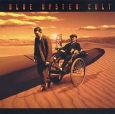
It’s something of a shame that BOC has fallen off the radar so much.  While never a big seller, they’ve been a surprisingly good singles band.  And on this disc, they have a couple of songs that could have been big hits if anybody still cared about them.
“Dance on Stilts” is their most interesting song in quite some time.  It’s catchy, it’ got a cool riff and it’s got a great keyboard sound that you could easily hear on rock radio.    “Here Comes That Feeling Again” could also have been a pretty huge hit, even now on a mellow rock station, it would work very well.  In fact, the whole disc plays wonderfully within the classic rock style.

Cyberpunk author John Shirley (who wrote a song called “Transmaniacon” based on a BOC song) wrote most of the lyrics for this disc.  And the band seems inspired by the subject material because throughout the disc, the riffs are solid and catchy and the songs are great.  “One Step Ahead of the Devil” has the great BOC keyboard sound that punctuates the chorus, while “I Just Want to Be Bad” is a silly song that surpasses it clichés with a  cool unexpected minor key riff.

Since the band has only released two albums since Imaginos, it’s faint praise to say that this is their best album in that time.  But this album is definitely one of their best released.  Whereas Heaven Forbid sounded like a standard collection of BOC songs, this one seems like a collection of superior tracks based on the classic BOC format.   BOC fans who were unsure if it was worth tracking down these latter day discs would do well with this one.  The final track, “Good to Feel Hungry” is pretty silly and is definietly something of a throwaway, but aside from that the whole disc is very solid.

[READ: March 20, 2010] “Just Before the Black”

This is the second story by Franco that I’ve read.  I’m torn about whether I think he ought to be a good writer or not.  I’ve enjoyed his acting, but when an actor switches to another medium, it’s always tough to know whether he’s serious.  Of course, Franco has gone to writing programs, and is in pursuit of his PhD, so I think his writing motives are pure.  It’s also interesting to wonder if there were any writers who inspired him to want to write.  In the two stories I’ve read, his style has been terse, and I’ve wondered if Hemingway was an inspiration.

This one started off short and brusque (typical of Esquire fiction), and I was afraid I wasn’t going to enjoy it.  But after a few paragraphs, the heart of the story came to light and I found it really fascinating; the story morphed from a tough guy story about two dudes hanging out in a car to an introspective story bout two dudes hanging out in a car. (more…)

Read Full Post »

SOUNDTRACK: BLUE ÖYSTER CULT-Heaven Forbid (1998).

After Imaginos, it seemed like Blue Öyster Cult was all wrapped up.  (Of course, they tour all the time, so I guess they’ll never officially go away).  So it was something of a surprise to hear that they had a new album out back in 1998.

The album cover is dreadful, but the music is actually pretty good.  It sounds like a good compendium of BOC styles, all updated with a late 90s sound.  You get heavy songs, light ballads, and even a cover of an old BOC hit.

The album opens with “See You in Black” a really heavy chuggy guitar sound, much heavier than anything BOC has done before.  (And lyrically, he wants to see her in black because that means her husband is dead).  And yet by the time of the fourth song, “X-Ray Eyes” we’re back in familiar keyboard-heavy poppy territory.

The second song, “Harvest Moon” is actually quite nice, and would likely have been a hit single a decade or so earlier.   By the time we get to “Damaged” we’re in the pretty traditional heavy boogie sound of their earlier discs.

“Cold Gray Light of Dawn” sounds like late period BOC.   And “Real World” offers one of the first tweaks of the BOC sound: acoustic guitars in a rocking song. The disc ends with a reprise of the earlier hit “In Thee.”  It’s live and sounds good in this all-acoustic guitar format (and since Allan Lanier plays on the disc, it’s okay that they re-recorded it).

There’s very little in the way of mind blowing songs here, but if you’re a fan of BOC, and you’re not sure what you’ll be getting with this disc, fear not.  Bloom’s heavy songs are typical of the heavy BOC sound and Buck Dharma has hit his stride with his poppy tracks ala “Burnin for You.”

[READ: March 21, 2010] “The Return”

I intend to read the other Bolaño books once I’m done with 2666, but the publishing world seems to be conspiring to make me read them all before that.  This story is another one from the forthcoming The Return, translated by Chris Andrews.

And whether it was the unusual subject matter or the translation itself, this is one of my favorite of his short stories so far.  The premise of this story is quite simple, and it is set up in the first paragraph.  The narrator has recently died, and he shares two pieces of news: there is life after death and Jean-Claude Villeneuve is a necrophiliac.

The story follows the narrator after his death (he died on the dance floor).  His spirit leaves his body (like that scene from Ghost) and floats around following the body as it goes through the process of post-death existence.  The narrator is funny, with snide comments about himself and the workmen who are caring for him (and how he can’t watch his own autopsy).  But it’s when his body is carted off the premises that things get really interesting. (more…)

Read Full Post »

SOUNDTRACK: BLUE ÖYSTER CULT-Imaginos (1988).

I think of this as the last BOC album (although they have released two since this one) because it was the last one that I was really aware of when it came out.  My roommate Glen was super excited about it and we listened to it all the time.  And even though I’ve said that Fire of Unknown Origin is my favorite BOC disc, I think this one may be better.

The story behind this disc is convoluted and strange.  It was apparently written by Albert Bouchard as a concept album that was designed to be 2 or 3 discs long.  He had started writing it as long ago as 1972.  Two tracks appeared in 1974 (“Astronomy” and “Subhuman” (which became “Blue Öyster Cult” on Imaginos).

Because record labels suck, the disc never got released as intended.  I’m not sure if it was ever even recorded in total.  When Imaginos was finally released in 1988, it no longer resembled the original and the liner notes are not exactly accurate about who plays what.

The concept behind the disc (and the original liner notes do explain the “concept”) is pretty confusing (for a summary, the Wikipedia entry is pretty helpful).

But if the released tracks are any indication, the whole package would have been amazing.  The songs retain the feel of the early 70s tracks, but they also feel updated to a more 80’s metal sound.  “I am the One You Warned Me Of” is a great rocking opener with wonderful use of keyboards.  What really sells the disc is the choral vocals, chanting/chorusing/adding incredible depth.  The “your master is a monster” part of “In the Presence of Another World” is fantastic.

But the centerpiece is undoubtedly, “The Siege and Investiture of Baron von Frankenstein’s Castle at Weisseria.”  The lyrics, the tension, the call and response are all fantastic.  It is one of the most unheralded hard rock songs ever.  And it deserves a wider audience.

We get a 14 year reprise of the classic “Astronomy,” this one is basically the same song but played differently, more epic.  I’m always torn as to which version I like better.  “Magna of Illusion” has a fun spoken part, “Grandaughter!”  and continues the excellence of side two.

“Blue Oyster Cult” the remake of “Subhuman,” keeps the strangeness of the song (“Ladies, Fish and Gentlemen”), but sounds quite a bit different.  It’s almost meandering on the original disc, a slow guitar solo and a Doors-sounding keyboard fill the track.  On the Imaginos version, it’s much heavier, and the keyboard is a staccato piano.  It’s also three minutes longer with the chanted “We understand. Blue Oyster Cult.”  It’s almost unrecognizable, and yet those lyrics are unmistakable.  The title track ends the disc with a catchy and cool riff and chorus.

There’s also a whole bunch of guests listed in the notes, including Robby Krieger, Also Nova (!) and Joe Satriani.

Imaginos was reissued recently but I’m not sure if it’s worth getting as it has no bonus anything on it (except corrected liner notes).  The original recording sounds pretty poor (at least compared to other contemporary discs) but I’m holding off for the proper reissue (will we ever see the whole project?) that this disc deserves.

[READ: Week of March 15, 2010]  2666 [pg 466-513]

This week’s reading is the shortest amount for the entire book.  It offers some new ideas and lots more deaths.

As the reading opens, Epifanio is continuing his investigation into the murder of Estrella Ruiz Sandoval.  He tracks down two of her friends, both named Rosa (although neither is a Rosa that we have met before).  After hanging around with Rosa for some time (and even going to her house) he learns that Estrella had been frequenting a computer shop owned by a blond blond man.  Lately, he had grown angry with her.

The Santa Teresa police decide that there is one man behind the grisly unsolved murders (they focus specifically on the three women who have been brutalized in the same manner (don’t make me write it). And they discuss whether or not he is a serial killer.  One argues that the serial killer is responsible just for the three recent deaths (that the others were done by someone else, but because they didn’t match the pattern, it can’t be the same guy).  Another proposal is that the same man is responsible for all of the killings.  But now, he is upping his gruesomeness because he feels cocky. (more…)

Read Full Post »

SOUNDTRACK: BLUE ÖYSTER CULT-compilations and live releases (1978-2010).

For a band that had basically two hits (“Don’t Fear the Reaper” and “Burnin’ for You”) and maybe a half a dozen other songs that people might have heard of, BOC has an astonishing number of “greatest hits” collections.

Starting in 1987 we got Career of Evil: The Metal Years (1987), Don’t Fear the Reaper (1989), On Flame with Rock n’ Roll (1990), Cult Classic (which is actually the band re-recording their old tracks (!)) (1994), and the two cd collection Workshop of the Telescopes (1995).  There’s even Singles Collection, (2005) which is a collection of their European singles & Bsides.

This doesn’t include any of the “budget price” collections: E.T.I. Revisited, Tattoo Vampire, Super Hits, Then and Now, The Essential, Are You Ready To Rock?, Shooting Shark, Best of, and the 2010 release: Playlist: The Very Best of).

The lesson is that you evidently won’t lose money making a BOC collection.

I don’t know that any of these collections are any better than the others.

The 2 CD one is for completists, but for the most part you’re going to get the same basic tracks on all of them.

And, although none of them have “Monsters” for the average person looking for some BOC, any disc is a good one.

Regardless of the number of hits they had, BOC was tremendous live.  And, as a result, there have also been a ton of live records released.  Initially the band (like Rush) released a live album after every three studio albums. On Your Feet or On Your Knees (1975) Some Enchanted Evening (1978) and Extraterrestrial Live (1982) were the “real releases.”

Then, in 1994 we got Live 1976 as both CD and DVD (which spares us nothing, including Eric Bloom’s lengthy harangue about the unfairness of…the speed limit).  It’s the most raw and unpolished on live sets.  2002 saw the release of A Long Day’s Night, a recording of a 2002 concert (also on DVD) which had Eric Bloom, Buck Dharma an Allan Lanier reunited.

They also have a number of might-be real live releases (fans debate the legitimacy of many of these).  Picking a concert disc is tough if only because it depends on the era you like.  ETLive is regarded as the best “real” live disc, although the reissued double disc set of Some Enchanted Evening is hard to pass up.  Likewise, the 2002 recording is a good overview of their career, and includes some of their more recent work.

If you consider live albums best of’s (which many people do) I think it’s far to say that BOC has more best of’s than original discs.  Fascinating.  Many BOC fans believe that if they buy all the best of discs, it will convince Columbia to finally reissue the rest of the original discs (and there are a number of worthy contenders!) in deluxe packages.  I don’t know if it will work, but I applaud the effort.

[READ: October 2009-February 2010] State By State

This is a big book. And, since it’s a collection essays, it’s not really the kind of big book that you read straight through.  It’s a perfect dip in book.  And that’s why it took me so long to get through.

I would love to spend a huge amount of time devoting a post to each essay in the book.  But, well, there’s 51 (including D.C.) and quite a few of them I read so long ago I couldn’t say anything meaningful about.  But I will summarize or at least give a sentence about each essay, because they’re all so different.

I’ll also say that I read the Introduction and Preface last (which may have been a mistake, but whatever).  The Preface reveals that what I took to be a flaw in the book was actually intentional.  But let me back up and set up the book better.

The catalyst for the book is the WPA American Guide Series and sort of Steinbeck’s Travels with Charley.  The WPA Guides were written in the 1930s as part of the Works Progress Administration.  48 guide books were written, one for each state.  Some famous writers wrote the books, but they were ultimately edited (and many say watered down) by a committee.  I haven’t read any of them, but am quite interested in them (and am looking to get the New Jersey one).  Each guide was multiple hundreds of pages (the New Jersey one is over 800).

State By State is written in the spirit of that series, except the whole book is 500 pages (which is about 10 pages per state, give or take).  And, once again, famous writers were asked to contribute (no committee edited this book, though).  I’ve included the entire list of authors at the end of the post, for quick access.

So I started the book with New Jersey, of course.  I didn’t realize who Anthony Bourdain was until I looked him up in the contributor’s list (I’m sure he is thrilled to hear that).  And his contribution was simultaneously exciting and disappointing,.  Exciting because he and I had quite similar upbringings: he grew up in North Jersey (although in the wealitheir county next to mine) and had similar (although, again, more wealthy) experiences. The disappointing thing for me was that Bourdain fled the state  for New York City (and, as I now know, untold wealth and fame (except by me))  I felt that his fleeing the state, while something many people aspire to, is not really representative of the residents of the state as a whole.

And that dissatisfaction is what I thought of as the flaw of the book (until I read the Preface).  In the Preface, Matt Weiland explains that they asked all different authors to write about states.  They asked some natives, they asked some moved-ins, they asked some temporary residents and they asked a couple of people to go to a state for the first time.  In reality, this decision makes for a very diverse and highly entertaining reading.  In my idealized world, I feel like it’s disingenuous to have people who just stop in to give their impression of an area.  But hey, that’s not the kind of book they wanted to compile, and I did enjoy what they gave us, so idealism be damned.

For most of the book, whenever I read an essay by someone who wasn’t a native or a resident of a state, I assumed that there weren’t any famous writers from that state.  I’ve no idea if that played into anything or not.  From what I gather, they had a list of authors, and a list of states (I was delighted to read that three people wanted to write about New Jersey-if the other two writers ever decided to put 1,000 words  to paper, I’d love to read them (hey editors, how about State by State Bonus Features online, including any extra essays that people may have wanted to write).

From New Jersey, I proceeded alphabetically.  And, I have to say that I’m a little glad I did.  I say this because the first few states in the book come across as rather negative and kind of unpleasant.  Alabama (written by George Packer) comes across as downtrodden, like a place you’d really have to love to live there.  Even Alaska, which ended up being a very cool story, felt like a veil of oppression resided over the state (or at  least the part of the state that Paul Greenberg wrote bout.)  But what I liked about this essay and the book in general was that the authors often focused on unexpected or little known aspects of each state.  So the Alaska essay focused on Native fisherman and the salmon industry.  Obviously it doesn’t do justice to the rest of that enormous state,  but that’s not what the book is about.

The book is meant to be a personal account of the author’s experiences in the state. (more…)

Read Full Post »

SOUNDTRACK: TORI AMOS-“Juarez” (from To Venus and Back) (1999).

This song was the first that I had heard of what was happening in Juarez, Mexico.  In AP Magazine (Oct 99) Tori Amos said:

“I read an article about several hundred women in Juarez, Mexico, who had been taken out to the desert and brutally raped and murdered. When they didn’t come home, their brothers would go and look for them, and many times they’d find nothing. Sometimes they’d find a hair barrette or a sock or something they knew was their sister’s. The authorities haven’t really done anything about it…they get into this serial-killer theory. I mean, how much serial can one man indulge in? So as the song started to develop, I really began taking the voice of the desert, singing in that perspective.”

The song is very abstract, with references to Juarez, but overall the meaning is oblique (in typical Tori Amos fashion).  Sonically it is claustrophobic and creepy, and the repeated line “No angel came” adds to the intensity of it.  It has never been a favorite song, although I think as a commentary on the situation it is delightfully eerie.  It doesn’t really add anything to 2666, but at least it provided me with some context.

[READ: Week of March 8, 2010] 2666 [pg 404-465]

Week 6 picks up much where Week 7 left off.  There are a lot more deaths (Nicole at bolanobolano has the dubious honor of tallying them)in this reading.  And you’ll have to look at bolnobolano for the details, as I’m not up to keeping the records straight.

Juan de Dios Martínez is ordered to stop working on The Pentitent, so that his officers can be freed up for other duties.

And the first dead woman of this section is an American, Lucy Anne Sander.  She and a friend came down from Huntsville, Arizona.  While her friend, Erica, was parking the car, Lucy got out to walk in the wet grass.  She was not seen again for three days when her body turned up, raped and murdered.  This was the first instance in the book where someone aggressively looks for a missing woman.  Erica befriends a local nurse (and they from an intense bond in the short time they know each other) and has an Arizona sheriff come down to investigate on her behalf. (more…)

Read Full Post »

« Newer Posts - Older Posts »