Feeds:
Posts
Comments

Archive for the ‘Culture Shock’ Category

SOUNDTRACK: BELLE & SEBASTIAN-“Write About Love” (2010).

This single was released on the bands website on September 7th.  The first 20,000 visitors were able to get a free download.  By the time I’d heard about it (3PM) it was long gone.  But the streaming version is still there.

This song continues in that “groovy” vibe that they’ve been indulging in with the last few listens.  It’s far afield from their earlier, more mellow/acoustic sound, and it features some loud organ and solid guitar lines.  Although I really like the early B&S, I’m also quite fond of this later, louder material, and I think it makes for a well-rounded band.

The song is a duet with Carey Mulligan (who I don’t know, but she was in An Education which I haven’t seen).  B&S have always found great melodies for their songs, and this one is no exception. Even with this more rocking sound, they still haven’t lost their sense of songcraft.

I can’t seem to embed the song, so here’s a link: http://www.belleandsebastian.com/newsstory.php?id=515.

[READ: September 7, 2010] Pinky & Stinky

This is the third book that Sarah received for her birthday.  I’m not sure why I put off looking at it until now, but it was worth the wait.

This is a fanciful graphic novel about two pigs who are sent into space.  I’ve always thought that Kochalka’s drawings were simple/sloppy.  But this book shows them to be not at all sloppy, and perhaps deceptively simple.  Because even though the main characters are cute pigs with very few lines, and (once they get to the moon) the moon men are basically hands, the drawings are consistent and are all quite good (hands are definitely not easy to draw).

But on to the plot…. (more…)

Read Full Post »

SOUNDTRACK: A HOUSE-Live in Concert (1998).

This is a strange live collection of songs.  The first half are “band” efforts.  And they are pretty good, although the backing vocals on some of the later songs seem a bit much.

The second half of the disc, however, is an acoustic set.  I initially thought it was just Dave Couse, but there are clearly two guitars.  This more intimate set is cool because it shows that their songs are solid even without the effects and silliness some of the originals had. I especially liked “Blind Faith” because he sort of teases the audience into singing with him.

This disc is certainly not essential A House listening (In fact, I can find virtually no record of its existence on line–Wikipedia and Zop list it but there’s precious little information about it).  Hey, maybe it’s a collector’s item (that I bought used for $2 used).  But since there’s no other live recordings of A House that I’m aware of, this will have to do.

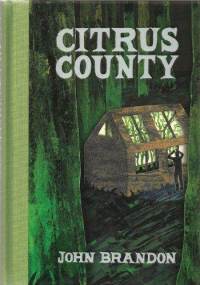
[READ: June 26, 2010] Citrus County

I read this book several months ago, but with all of the big summer projects, I didn’t have a chance to say anything about it.

Citrus County is a dark book.  Make no mistake.  It is set in a world of adolescents, high school and crime.  And even within those dark boundaries, this book is quite dark.  And yet it is also kind of funny.

The story is also something of an indictment of Citrus County, Florida, a county I didn’t know existed, although sure why wouldn’t it.  When Shelby Register moves there, she thinks that she’ll be in Disneyland, or at least by the beach, but what she finds herself in is a kind of backwater swampland.  Just what ever teenaged girl wants. (more…)

Read Full Post »

SOUNDTRACK: DAVE BIDINI-The Upstairs, Sydney Nova Scotia July 26 2007 (2007).

Dave Bidini recorded three shows in 2007 in eastern Canada which are all available on the Rheostatics Live website.  They were acoustic shows and featured a reading from his then new book called Around the World in 57½ Gigs.

On this particular venue, he gives two readings (and the readings are very good.  His writing has grown even more engaging since this first book).

The songs he plays are a couple from the Rheostatics: “My First Rock Show” which sounds good in this format.  “Me and Stupid” which is almost made for this format and “Horses.”  Now “Horses” is a wild and raucous song, typically full of Martin Tielli’s amazing guitar pyrotechnics.  The acoustic version is much more mellow, but no less affecting.

He’s got a number of what I assume are new songs (I haven’t heard any BidiniBand songs yet, so I don’t know from whence they come).  “Song Ain’t Good” is a kind of jokey song about how the song itself isn’t any good.  Lyrically, the song grows on you as it progresses.   “The List” is indeed a list of people and things that are killing us now: Tim Hortons, Chad Kroeger, Stephen Harper etc.  It’s a protest song and is kind of catchy.

“The Land is Wild” is a more interesting song, musically.  Lyrically it’s about Bryan Fogarty, a dead hockey player.  And the final track is “The Ballad of Zeke Roberts” the story of a Liberian singer.

The other shows feature essentially the same songs (one of them includes “Fat” instead of “Horses”).

The difference with these new songs as opposed to the Rheos songs is that these are more pointedly about something.  They are quite message driven.  And one needs to care about the message I suppose.  Bidini does not have a great voice. Or, more to the point, he has a limited voice that works great for certain things, but it’s not always at its strongest in this acoustic setting.  Nevertheless, he has great rapport with the audience, and is a very charming performer.

I’m rather interested in hearing what the BidiniBand have to offer.  There’s an interesting interview with the Bidini here.

[READ: September 1, 2010] On a Cold Road

So Dave Bidini was in the Rheostatics.  This book is a chronicle of their tour as the opening act for The Tragically Hip on their tour across Canada.

The book offers lots of insights into the ins and outs of touring–the frustration, the loneliness, the elation, the confusion, the shattering disappointments, everything.  As a fan of the Rheos and the Hip, I found this to be a really interesting chronicle of a cross-country tour.

And what I found interesting about the book itself is that the main guys aren’t a small band struggling, nor are they a headlining megaband.  They’re a reasonably small band but they are successful, and are certainly well looked after on this  tour.  So it gives the feeling of being the underdog without actually working too much about pathos.

The Rheos are simultaneously jealous of the Hip, but also very grateful to them.   It makes for an interesting read. (more…)

Read Full Post »

SOUNDTRACKDEAD KENNEDYS-Fresh Fruit for Rotting Vegetables (1980).

Punks often marry politics to their music.  And none moreso than the Dead Kennedys.  I found out about them around the Frankenchrist album, but it’s this one that introduced Jello Biafra to the world.

What I loved about the Dead Kennedys is that they set out to offend everyone–unless you actually listened to their lyrics. The first track, “Kill the Poor” seems like it a horrifying encouragement to do just that, but if you read the lyrics: “Efficiency and progress is ours once more/Now that we have the Neutron bomb/It’s nice and quick and clean and gets things done/Away with excess enemy/But no less value to property/No sense in war but perfect sense at home.”   As was recently commented, Dick Cheney may have seen the sarcasm there.

“Let’s Lynch the Landlord” is a song that Sophia and Yarostan could get behind: “I tell them ‘turn on the water’/I tell ’em ‘turn on the heat’/Tells me ‘All you ever do is complain’/Then they search the place when I’m not here.”

The biggest track of the disc was “Holiday in Cambodia,” a song so catchy that Dockers actually asked to use it in a commercial (!).  Cause nothing sells jeans like: “Play ethnicky jazz/To parade your snazz/On your five grand stereo/Braggin’ that you know/How the niggers feel cold/And the slums got so much soul.”

The thing that I especially liked about the DKs was that although they played hardcore (some brutally fast and crazily short songs), they didn’t limit themselevs to just that.  They had actual guitar riffs, they tinkered with styles and genres (surf and rockabilly among others), and they even slowed things down from time to time (all the better to hear the lyrics).

Even if the band disintegrated into lawsuits, it’s fair to say that they inspired plenty of kids to take an interest in what was going on around them.

Pol Pot.

[READ: Week of June 25, 2010] Letters of Insurgents [Yarostan’s Fifth Letter]

Because Sophia’s letter is very long, this week it’s only Yarostan’s letter for Insurgent Summer.  It opens with Yara annoyed about the tone of Sophia’s letters and her surprise that Yarostan is so quick to want to open the latest one.   But indeed, Yarostan feels compelled to apologize for “the way I treated your earlier letters.  I did treat you as an outsider, as a person with whom I couldn’t communicate about my present situation.  I was wrong” (283).  [It’s very nice of him to admit that he was wrong].  But that doesn’t mean that he is going to lighten up in his discussions with Sophia: “it seems to me that …critical appreciation is not an expression of hostility but is at the very basis of communication and friendship” (285).  Mirna also chimes in (with rather high praise):

Sophia is a born troublemaker, just like Jan and Yara.  She shares Jan’s recklessness as well as his courage.  I’m glad for her sake that she was taken away from here even if her emigration caused her some pain.  There’s no room here for people like that.  If she’d stayed she would have disappeared years ago in a prison or concentration camp (283). (more…)

Read Full Post »

SOUNDTRACK: QUICKSILVER MESSENGER SERVICE-Quicksilver Messenger Service (1968).

For me, QMS have always been mythical–like a unicorn or a gryphon–I had no real proof that they existed, but I have seen glimpses.  I think that this record, along with Steely Dan’s Aja and all of the records of Lee “Scratch” Perry were on every first page of every Columbia House ad and catalog ever.  And yet, I had never heard them or known anyone who listened to them.

Well, thank you vacation house iPod!  The first QMS album was here and I got to listen to it!  All these years I assumed that QMS, with that weird name were some kind of southern rock band like Molly Hatchet or Badfinger.  Boy was I wrong!  They are steeped in the psychedelic sounds of the late 60s (their lead singer even wrote the sixties’ anthem “Get Together”–although he never recorded it).  Much of the story about the band seems to involve the main guy’s drug bust which kept him, well, out of the band.

But anyway, the music sounds not like Jefferson Airplane, and other psychedelic bands of the era.  But I think mostly it’s the recording style more than the music (lots of echo and reverb and very tinny guitars) that keeps that sound together.  It’s a sound that I like in small doses (and in big hits) but one which I don’t enjoy a lot of–it seems like if I’ve heard it on classic rock radio, then I like it, otherwise, not so much.

The disc has a couple of long instrumental sections which are interesting.  The 12 minute “The Fool”, in particular is home to lots of exploration.  But it feels like they didn’t go far enough since none of the songs are fully instrumental.

Nevertheless, it’s nice to finally know what the band sounds like; maybe it would have been a penny well spent.

[READ: July 3, 2010] “What You Do Out Here, When You’re Alone”

This story begins in medias res.  We know that something has happened, that Max calls it the Accident and that his wife doesn’t.  Max’s wife Lilli was disliked by his brothers (they’d even had an intervention, trying to convince him to dump her), but Max was always defending her, so that was no big deal.  She always acted like she didn’t care what anyone thought of her.  Until they moved to the Oaks, when she became Martha Stewart in an attempt to fit in with everyone else.  Max didn’t try to fit in.

But that has nothing to do with the accident.  Rather, the accident concerns their son, Harley.  He did not adjust to the Oaks well at all, and he goes off and gets into trouble and has, well, an accident.  Lilli blames Max, and Max has been stuck in inertia for three weeks since it happened.

The story starts out confusing but intriguing.  The confusion was deliberate, I believe; the reader knows very little of what is going on with this accident, even when all the details are revealed.  And yet it’s the glimpses of the hidden information that keep you riveted.  Especially as more details, more horrible details, come to light. (more…)

Read Full Post »

SOUNDTRACK: BILLY BRAGG-Talking to the Taxman About Poetry (1986).

I’ve liked Billy for ages now.  I’ve seen him live a few times, and I’ve always loved that his accent is so prominent when he sings.  Over the years he has become somewhat less overtly political, but he is still a man of issues and causes.

This is Billy Bragg’s second full length.  He was still primarily a man with a voice and a guitar at this stage.  His melodies are strong, and since there’s no other instrumentation, all that’s left to talk about is the lyrics.

“Greetings to the New Brunette” is an adorable love song, followed closely by the anti-marriage “The Marriage”: “If I share my bed with you Must I also share my life Love is just a moment of giving And marriage is when we admit our parents were right.” (which doesn’t quite jibe with Sophia, but it’s close.

But really what you come to Billy Bragg for is the politics.  LIke in “Ideology”:  The voices of the people Are falling on deaf ears Our politicians all become careerists They must declare their interests  But not their company cars  Is there more to a seat in parliament  Then sitting on your arse.”

He also covers a public domain song which I wondered how well it would fit here.  “There is Power in a Union” seems like it’s saying the right thing, but some of the characters here would disagree about the end: There is power in a factory, power in the land Power in the hands of a worker But it all amounts to nothing if together we don’t stand There is power in a Union.”

This album also features the great track, “Help Save the Youth of America.”

Over the years Billy would expand his sound (he even worked with Wilco on two discs), but he always sings for the people.

[READ: Week of July 2, 2010] Letters of Insurgents [Fourth Letters]

As I’ve been going along in the story, I began to wonder if the two letter writers were going to be rehashing the same arguments in each letter.  I had confidence in Perlman that the story would be interesting (it sure had been so far), but I couldn’t imagine how he would keep it original, especially since Yarostan was in jail for so long–he has no information except secondhand.

This week’s reading gave two examples of how he’d do it:  Jasna comes to visit Yarostan and she updates everyone about what had happened to all of their fellow workers, and Sophia reveals a horrible situation in which she hits rock bottom–a real physical bottom, not a philosophical one. (more…)

Read Full Post »

SOUNDTRACK: FUGAZI-13 Songs (1990).

I was so blown away by that first Fugazi disc that I immediately ran out and got this collection of their first two EPs.

The strange thing to me is that even though I enjoy the disc, nothing on it really stands out as all that memorable.  I feel like Repeater was such a strong release that these earlier tracks pale somewhat.

I’ve listened to this disc a number of times over the last few days and nothing really stands up and grabs me like Repeater still does.

I wound up buying two more Fugazi discs after this, but I’m pretty sure the reason I stopped buying their music was from this same feeling: the songs were all good, rocking, indie music, but there was nothing terribly memorable about them.

[READ: April 15, 2010] Stephen Fry in America

I first heard about this book when Stephen Fry appeared on The Late Late Show.  This book was very casually plugged as Fry’s attempt to visit every State in the U.S.  It turns out that this book is the companion piece to a six part BBC TV series of the same title (which I have not seen).  Although the TV series makes the existence of this document much more understandable.  Because although everyone wants to travel to every state in the union, the only way it would ever be accomplished in the fashion is for a TV show (even a book wouldn’t get quite this treatment if there were no TV show).

Stephen Fry was almost born in America (in New Jersey, in fact, where he believes he would have been Steve, rather than Stephen).  And he has always felt a connection to the States.  So, Stephen Fry, (in my head the quintessential Brit) brings a film crew and his classic British Big Black Taxi to see all of the States.  He begins in Maine and travels in an interesting manner, zig-zagging across the country.   He tends to visit the places/events/sites that each state is known for.  And, like any good TV show, he participates in the activities (he lobsters, he rides horses, his deals blackjack) and makes a tit of himself. (more…)

Read Full Post »

SOUNDTRACK: ALANIS MORISETTE-Jagged Little Pill (1995).

In this book, DFW considers himself to be absolutely useless when it comes to music.  He doesn’t know anything at all.  He says he listens to Bloomington country radio stations until he can’t take it anymore and then he switches over to the alt rock station.  He’d never even heard of Nirvana until after Cobain’s suicide.

And so, the soundtrack for the book is R.E.M., Bush (two songs) and Alanis.  In fact, there’s a surprisingly long section devoted to Alanis in the book, including DFW’s admittance that he would love to have a date with her for tea.  He admits that she is pretty much manufactured angst and yet there’s something about her that he finds irresistible.

At this stage (2010), the whole Alanis thing seems almost adorable in it’s “controversy” or “hype” or whatever.  It’s still hard for me to be objective about the quality of Jagged Little Pill (I mean, Flea plays bass on it so it must be good, right?).  I really enjoyed it at the time, perhaps because of its rawness or its honesty (which was pretty novel at the time, especially from a woman), all packed in a clean production of course.  There’s also something weirdly appealing to me about her (really not very good) voice.  She seems just off enough for all of this to be really sincere.

And of course, the nastiness of “You Oughta Know” was pretty astonishing for pop radio at the time.  True, there’s songs on here that make me cringe now (there’s a lot about her that makes me cringe) and yet there’s still some really enjoyable stuff here.  Even the perennially mocked “Ironic” for all of its flaws has a stellar chorus.

Now that the “women in rock” phase of alternative music has passed, there’s very little music like this being made anymore.  So it’s kind of fun to reminisce about this stage of my musical life, warts and all.

Oh, and by the way, I also grew up watching Alanis on “You Can’t Do That on Television,” so it was pretty exciting to see a child star that I knew make it big.

I never liked Bush though.

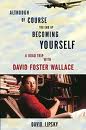
[READ:April 21, 2010] Although of Course You End Up Becoming Yourself

As I mentioned, I was super excited to get this book and I treated it like the artifact it is: trying to read it in one sitting (impossible) or at least in as compressed a time as possible to preserve the stream of consciousness attitude of the book.

For, as the subtitle doesn’t quite state, this is five-day conversation between David Lipsky and David Foster Wallace.  The tape recorder was running for most of these five days and what we get is a literal transcript of the conversation (with much of Lipsky’s parts excised).  It is an all-access pass to the mind of the man who wrote Infinite Jest as the hype of the book was really taking off and as his brief promotional tour for the book was winding down.

Lipsky was (is) a reporter for Rolling Stone. DFW’s Infinite Jest was the huge media hit (#15 on the bestseller list) and the hype was outrageous.  DFW had begun a (sold out) reading tour which actually began the day before the book came out, so he rightfully notes that no one could have actually read the book by then, they were just there because of the hype.  And Lipsky himself is part of this hype.

Lipsky was sent to do a profile of the wunderkind, literature’s next great hope (RS hadn’t (hasn’t?) covered a young author like this in a decade at least).  The idea was that Lipsky would tag along with DFW, go to the last readings on the tour, an NPR interview, and spend most of their time together: planes, rental cars, hotel rooms, etc generally just hanging out with tape recorder running. (more…)

Read Full Post »

SOUNDTRACK: VAMPIRE WEEKEND-Contra (2010).

I absolutely loved Vampire Weekend’s debut album (and still do).  It was my favorite record of last summer and always makes me think of summer fun and hijinx.  Critics trotted out the “world/ethno/Paul Simon” vibe when discussing the album.  But I really didn’t hear it.  I mean, yes  I suppose it was there but the album felt more like a punky ska album of fun.
On this, their follow up, it’s as if they took all those critics to heart and decided to make the album that everyone was describing. This disc emphasizes all of the ethnic music sounds,  and downplays the guitars and more rock elements.  I was a little disappointed by this on the first listen or two.  However, subsequent listens showed me that the songwriting was still there and it was just as strong.

There’s still lots of rocking elements, it’s just that they are hidden under the other divergent influences.  But for the most part, the album is still bouncey and full of fun summer tunes.  There are three songs that slow down the pace, “Taxi Cab” and “Diplomat’s Son” (at 6 minutes, it’s a little long).  And the final song “I Think Ur a Contra” is a bit too divorced of beats (it works as an end to the disc, but I’d never listen to it on purpose).

The rest of the disc however, is very enjoyable, and I find that the 7 other songs work just as well as anything off the debut. “Horchata” is a delightfully fun world music treat (I hear Paul Simon, yes, although come on, Graceland came out 24 years ago!).  “White Sky” has delightfully catchy falsetto screams.  “Holiday” is practically classic ska and “Cousins” has a delightfully tricky guitar riff.

This feels like a band who has matured and experimented and yet not lost track of who they are.  I’m really looking forward to their next release.

[READ: Week of April 12, 2010]  2666 [pg 702-765]

Last week I concluded that

It almost seems as though Bolaño is saying that even Nazi Germany is better than Santa Teresa.

Oh how wrong I was.  Despite the fact that I found the bulk of this section enjoyable and fascinating (twisted and dark certainly, but fascinating nonetheless), the ending killed me.  The opening’s entire writers among writers, within writers, with communist party members and secret diaries was completely captivating.  And then it is all shattered by the reality of WWII. (more…)

Read Full Post »

SOUNDTRACK: THE DEAD MILKMEN-Soul Rotation (1992).

And lo, the Milkmen grow up.

This disc is not funny (well maybe, a little funny); mostly it is  “thoughtful” (and sometimes absurd).  But what is most striking about it is how mature (mellow) it is.  For this is the first album by The Dead Milkmen on Hollywood Records (a subsidiary of Disney).  This combination raises far more questions than is worth looking at.  But suffice it to say that even though this disc is the Milkmen, its a very different Milkmen.

The most obvious difference is that the majority (10 out of 13) of the songs are sung by the artist formerly known as Joe Jack Talcum, now known as Butterfly Fairweather (perhaps Hollywood knew that “”Punk Rock Girl” was their big hit?).  Past DM records were mostly sung by Rodney Anonymous (who goes by H.P. Lovecraft on this disc).  And his were the heavier, weirder, funnier, absurdist tracks, for the most part.  So, when the first four songs here are sung by Butterfly, you know something different is afoot.  Oh, there’s horns on the disc as well!

The disc feels like a pretty typical alt-rock band from the 90s.  But it’s missing the sass, it’s missing the vulgarity.  Basically, it’s kind of dull.

That’s not to say there aren’t good songs on here, because there are.  “If I Had a Gun” is a great screamy Butterfly song, and “Wonderfully Colored Plastic War Toys” is full of Lovecraft’s snark. As is “The Conspiracy Song” a lengthy rant of absurdity.

The rest of the songs drift between mellow and alt-rock rockers.  And it works as a product of the alt rock 90s.  It’s just not much of a DM album.

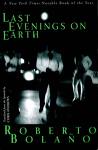
[READ: April 8, 2010] Last Evenings on Earth

I have been reading Bolaño’s short stories for a while now.  And so I have read a couple of the stories in this collection already. The stories in this collection were taken from his two Spanish collections of short stories: Llamadas telefônicas (1997) and Putas aseinas (2001).  And I have looked at about a dozen sources but I can’t find which stories came from which original collection (I like  to know these hings).  I can’t even find a table of contents for the original books.  Anyone want to help out?

I enjoyed these stories more than I expected to.  I have read some of his stories in The New Yorker and elsewhere, and I’ve been okay with them, but this collection blew me away.  Whether it’s being immersed in his writings or just having them all in one place, I was thrilled by this book.

There so many delightful little things that he does in his stories that I find charming or funny or something.  Like that his narrators are usually two or three people removed from the details.  Or if they’re not, they act like its been so long they doesn’t need to get all the details right:  “U insults and challenges him, hits the table (or maybe the wall) with his fist” (“Days of 1978”).

I also get a kick out of all the stories with the protagonist named B.  Which seems a not so subtle way of saying he’s the narrator (even though I ‘m sure these things never happened to him quite like it says (despite all the biographical consistencies with his own life).

The opening story “Sensini” has the narrator working as a night watchman at a campground (much like Enric in The Skating Rink…a bit of biography perhaps?).  A number of his stories are simply biographies of interesting characters (something he went to extremes with in Nazi Litearture in the Americas): “Henri Simon LePrince” a failed writer in Post-WWII France.  “Enrique Martin” a delightfully twisted story about jealousy (aren’t they all, though?) and acting impulsively and foolishly (aren’t they all though?).  This one featured  a riddle that I’m not even sure we’re meant to get:

3860+429777-469993?+51179-588904+966-39146+498207853

which the narrator thinks is a word puzzle. (more…)

Read Full Post »

« Newer Posts - Older Posts »