Feeds:
Posts
Comments

Archive for the ‘Culture Shock’ Category

SOUNDTRACK: SURFER BLOOD-Live at SXSW (2010).

I really enjoyed Surfer Blood’s album Astro Coast.  There was something familiar about it, yet it never aped any sound exactly.  It’s a fun collection of upbeat almost-summer music.

This live set is a great representation of the band.  They don’t break from the CD all that much, but the band is lively and generous.  They play 7 songs, all of them fast and fun (they say that one song is going to be slow, but it seems to wind up as fast as the rest-and someone in the crowd shots “Play another slow one”).

There’s some good banter and the audience is very appreciative.  It’s great set and worth checking out even if you don’t know them yet.

[READ: March 28, 2011] “Pericles”

This story is set in Greece in 1941.  Bulgarians have occupied the land.  And as the first few paragraphs explain, a thief has come to steal some goats.  The goatherds catch the man (a Bulgarian) and kill him.

When the Bulgarians find out, they take it very seriously.  The army travels to the village and rounds up every single male and all of the young females and intend to shoot them in the center of the city.

The story pulls back to explain that during the occupation all of the men were forced to do labor.  This even includes Pericles, the strongest man in the village.  Before the occupation, he was a helpful giant, able to throw four bundles of hay at a time.  Of course, Pericles was also fearsome, and if he got drunk (which he did from time to time) everyone in the town hid until he sobered up (except for his diminutive wife who could calm him down with a look). (more…)

Read Full Post »

SOUNDTRACK: SONIC YOUTH on World Cafe, August 21, 2006 (2006).

Travelling back even further on the NPR timeline, Sonic Youth appeared on World Cafe in 2006 to promote Rather Ripped.

This is a brief session (only three songs) but as with the interview with Thurston Moore, David Dye does another great interviewing the band here.  Although it must be said that saying the band is once again a four piece (when clearly there are five people in the picture and in the studio and when he later says two guitars, two basses and drums–which I also think is incorrect, as I’m pretty sure Kim switched to guitars at this point, although I don’t know if she did during this set) is not a great way to start the interview.

Facts aside, the interview is informative and interesting and provides a glimpse into the band’s psyche all these years into their career.

The set is also good (although Thurston’s voice sounds a little off on the opener “Incinerate”).  The surprising thing about the set is that even with the five of them, the feeling is one of restraint. True, the songs on Rather Ripped are not as noisy as previous records, but this feels like they are trying not to wake anybody up the NPR folks.  It’s a weird feeling for a Sonic Youth set, but the plus side to it is that you can really hear everything clearly.

The other two songs are sung by Kim: “Jams Run Free” and “What a Waste” (why do they never promote any of Lee’s songs??).  And there’s the very amusing comment that the first time they played “What a Waste” Thurston and Kim’s daughter said it sounded like the theme from Friends.  Ha!

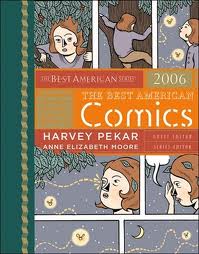
[READ: April 15, 2011] The Best American Comics 2006

I just recently learned about this series from The Best American line of books.  I had known about the Best American Short Stories and Essays and even Non-Required Reading (which I have not yet read).  But once I found out about the best comics, I knew I had to check it out.

The first issue came out in 2006.  The series editor is Anne Elizabeth Moore and the Guest Editor for this volume was Harvey Pekar.  Each of them has an introductory essay in the book.  To me the amazing thing about Pekar”s essay is how aggressively defensive he sounds (a sort of, “you may not like this one, but try this one” attitude) about these comics and comics in general.  I don’t know much about Pekar’s work.  I know he’s a kind of underground icon, but I seem to have missed him.  My impression of him is that this sort of antagonistic/defensive attitude seems to go along quite well with his comics, so I guess that makes sense, but I didn’t find it very welcoming.

But that’s okay, because I really enjoyed the comics.  And quite a few were by artists that I had never read before, which is even better! (more…)

Read Full Post »

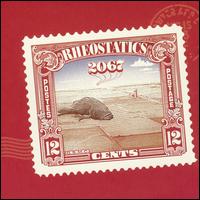
SOUNDTRACK: RHEOSTATICS-2067 (2004).

This was the Rheostatics’ final release.  I’m not sure if they knew this would be their last disc, but it kind of feels like they are throwing everything they can into it.

It opens with a delicate song from Martin which reminds me of Jane Siberry (the “row upon row” section).  Although at about 4 minutes it starts rocking out.  It’s a kind of meandering song, which is odd to open an album with.

It’s followed by “Little Bird Little Bird” a great folky song form Bidini.  But the disc really come alive with “Marginalized” a song that reminds me in some ways of “Horses,” as it is rocking and a little twisted (it seems surprising that it came from Tim Vesely).  It’s got some great guitar and an impressive keyboard solo (!) from new member Michael Phillip Wojewoda.

“The Tarleks” follows (with some fun frog noises). It opens slowly (as Martin songs tend to do) but once it really takes off, its got a great riff with his wonderful dramatic pauses and really funky sound from the bass/keyboards.  Then we get the wonderfully odd “Power Ballad for Ozzy Osbourne.”  It’s a kind of joke (but not really) about rock performers aging gracefully.  Bidini gets a bunch of songs on this disc, and here he gets two in a row, with the bizarrely wonderful “I Dig Music.”  The subtitle is “The Jazz Animal” and it tells you a lot about the song…it is indeed a kind of high-octane jazz.  But it has many different segments (and a lyric that references Squarepusher).

“Here Comes the Image” is a 6 minute track from Vesely which sounds very much like his more mellow tracks.  I’m not sure his tracks belong in the middle o f a disc because they tend to really bring the momentum to a halt.  Although it is a pretty song, it’s quite mellow (the organ solo at the end is pretty sweetly retro).  It’s followed by the five-minute slow instrumental “Who is This Man and Why is He Laughing?”  It really feels like an album ender.

So when “The Latest Attempt on Your Life” comes in, it revitalizes the sleepiness that those two songs imbue.  This track has the wonderful repeated chant “Everyone hates you, you sing like a woman”).  “Polar Bears and Trees” follows and it’s another kind of crazy song from Bidini.  It has such simple verses but the chanted “hey hey ho ho” rocks hard and is wonderfully fun.  (The lyrics are clever too).

Vesely returns with the beautiful, wonderfully catchy “Making Progress” which has another great retro keyboard solo at the end. The final track “Praise This Mutilated World” is one of the most beautiful songs in their output.  It starts as a fairly simple acoustic track (Bidini knows a good melody).  At about two minutes in, the band joins in with amazing harmonies.  The quiet parts keep coming back only to be overwhelmed by the harmonies once again.  The last two minutes are a spoken section.  It goes on a bit long, but is redeemed by another gorgeous chorus.

There’s a bonus track which is a very electronic version of  “Record Body Count.”  So this disc is definitely overly long in some places.  There are some great parts to the disc, but it feels like it could have used a good editor.  Nevertheless, since it’s the band’s final release, respect is due.

[READ: March 15, 2011] “Water Spider”

This very short (three-pages) story turned very dark rather quickly.

It opens with an African man, Bokarie, settling into his life as a convenience store clerk in Ottawa.  We learn that he was granted asylum, and that he has the scars to prove it.  He was quite nervous about leaving his country, and he still puts cinder blocks behind his door, to discourage uninvited guests.

At the same time, the action of the story concerns the accidental drowning of Caitlin, a young girl who presumably got too close to the creek when it overflowed.  The town is obviously distraught that one of their youngest and most innocent kids was killed, and they are planning a memorial service.  They are encouraging everyone to wear pink to the service and are even hoping to get a wreath put on the town’s crest.

Bokarie looks on this entire scene with a kind of bemusement.  His life in Africa was full of death.  Most of it horrifying.  So he seems somewhat unsure of what to make of the town’s outpouring for one lost child.  And then the story slowly reveals a shocking truth.

The truth is NOT that he killed Caitlin.  That’d not how the story is going (I didn’t really think it would go there, but it was a possibility).  Rather, the truth comes out about Bokarie himself, and his life back in Africa.  And it’s frankly horrible.

As the story draws to a close, Bokarie makes a decision that is going to impact the community.  It’s a little unclear what his motivation is, but it opens so many possibilities, that it really brings out a whole new realm to the story,

In some ways this story reminded me of Damon Galgut’s “An African Sermon (from The Walrus July/Aug 2004)  which also had an African character whose past has a hidden element and which turns out to be much darker than originally laid out.

Read Full Post »

SOUNDTRACK: FLEET FOXES-Live at The Black Cat, Washington, DC, July 7, 2008 (2008).

I still love the Fleet Foxes debut album, and I listen to it quite often.  One of the most impressive aspects of the band is their amazing harmonies.  So how does a band that is so vocal-centric perform live?

In an interview included with the concert, Bob Boilen asks that question.  They explain that the bigger venues are a bit harder because they have to crank up their monitors.  They also try to stay close to each other to be able to hear the harmonies clearly.  Well, they did something right because the harmonies sound very impressive here.

The main problem comes because lead singer Robin Pecknold is sick.  As in, just getting over a major cold, sick. As in, he admits that their last few shows were something of a rip off for the attendees.  Tonight’s show, he says is half a ripoff.  And that is most evident in my favorite Fleet Foxes song, “Mykonos” in which Pecknold’s voice cracks with abandon.  I would feel bad for the audience if the band wasn’t so personable and friendly and generally cool.  They make the best of a rough situation, and again, the backing vocals sound fantastic.

There are also a ton of delays in this show.  Most of them seem technical, although there seems to be a lot of tending to Pecknold’s voice, too.  But as I said, the band is engaged with the audience, telling stories (someone in the band is from DC and he asks if anyone went to high school there), and generally keeping everyone entertained.  It’s probably not their best show ever, but it still sounds great.  You can listen and download at NPR.

[READ: March 27, 2011] Miss Peregrine’s Home for Peculiar Children

Quirk Books, publishers of mash-ups like Pride & Prejudice & Zombies (as well as many other, well, quirky, titles) has published this fantastically exciting novel.

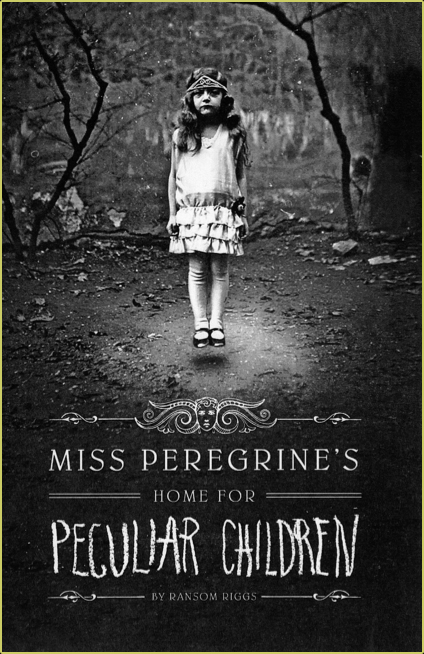
The cover depicts a creepy girl who is hovering off the ground.  But the girl herself is SO creepy that I didn’t even notice the hovering part.  She is just one of the peculiar children within the book.  And this picture is one of 50 included within the book (I’m only bummed that two pictures were not available in my copy).

So the story opens with Jacob Portman talking about his grandfather.  His grandfather (Abe) was a young boy in Poland during the 1940s.  When the Nazi’s invaded, his family was killed and he was sent to Wales, to the titular Miss Peregrine’s Orphanage (not widely known as a home for peculiar children).  But as details emerge from his grandfather’s version of the tale, things seem not right.

Abe talks about the monsters that chased him out of Poland–but he wasn’t describing Nazis, he was describing actual monsters, with multiple tongues and horrifying faces.  They followed him to Wales and were actually chasing him to that very day, in America.  And when he talked about Miss Peregrine’s house, he talked about the special kids who live there: the girl who could call forth fire out of thin air, the girl who could levitate, and the boy who had bees living inside of him.

Of course, that was all nonsense, just post traumatic stress from being attacked by Nazis, right?

That explanation works until the night that Abe is murdered.  He calls Jacob for help (they think he is going senile).  When Jacob gets to his house, he finds the screen door torn open and Abe missing.  The follow a trail and find Abe, bleeding in the woods.  Jacob thinks he can see the same kind of monster that Abe had always described lurking right nearby in the woods.  Although Jacob’s friend (who drove them to Abe’s house), didn’t see anything.

And now, Jacob’s dreams are plagued by scary monsters.  And he can’t get his grandfather’s cryptic last words out of his head.  Time to see a therapist, obviously. (more…)

Read Full Post »

SOUNDTRACK: MOGWAI-Come on Die Young (1999).

Mogwai’s second full length record goes in a slightly different direction than Young Team. Although it is still full of somewhat lengthy instrumentals, for the most part, the loud and quiet dynamic that they’ve been mastering over their EPs and Young Team is dismissed for a more atmospheric quality.  There’s also a few vocal aspects that comprise some tracks.  One in particular is very puzzling.

The disc opens with “Punk Rock.”  The music is actually not punk at all; rather, it’s a pretty melody that plays behind a rant about punk rock spoken by Iggy Pop. It’s followed by “Cody,” a kind of  sweet slow song.  This one surprises even more because it has gentle vocals which are actually audible.  The track is surprisingly soporific for Mogwai.

And then comes the real puzzler, “Helps Both Ways” is another slow track. But this time in the background is a broadcast of an American football game.  The announcers begin by telling us about an 89 yard run that was called back due to a penalty, but the game stays on throughout the track.  And I have to admit I get more absorbed in the game than the music. After these few quiet tracks,”Year 2000 Non-Compliant Cardia” is a little louder (with odd effects).  It’s also much more angular than songs past.

“Kappa” is the song in which I realized that much of the songs here are more guitar note based rather than the washes of sounds and noise.  “Waltz for Aidan” is indeed a waltz, another slow track.  It’s followed by “May Nothing” an 8 minute track which, despite its length, never gets heavy or loud or noisy.

“Oh! How the Dogs Stack Up” changes things.  It features a distorted piano which creates a very eerie 2 1/2 minutes.  And it leads into the 9 minute “Ex Cowboy.”  Although the general feeling of “Ex Cowboy” is mellow, there are some squealing guitars and noises as well.  By about 6-minutes the song turns really chaotic, its “Chocky” is another 9-minute song (the disc is very backheavy), there’s noise faintly in the background as a simple piano melody is plucked out.  It’s probably the prettiest melody on the disc, and the noisy background keep its unexpected.  The disc more or less ends with “Christmas steps.”  This is a rerecording of the awesome track from the No Education = No Future (Fuck the Curfew) EP.  It is shorter but slower and it sounds a little more polished than the EP. I actually prefer the EP version, but  this one is very good as well (it’s honestly not that different).

“Punk Rock/Puff Daddy/Antichrist” ends the disc with a fun track sounds like a drunken Chinese western  It’s two minutes of backwards sounds and is actually less interesting than its title.

This is definitely their album I listen to least.

[READ: March 15, 2011] Icelander

It’s hard to even know where to begin when talking about this story.  So I’ll begin by saying that even though it was confusing for so many reasons, I really enjoyed it (and the confusions were cleared up over time).  This story has so many levels of intrigue and obfuscation, that it’s clear that Long thought quite hard about it (and had some wonderful inspirations).

The book opens with a Prefatory note from John Treeburg, Editor (who lives in New Uruk City).  The note informs us that the author of Icelander assumes that you, the reader, will be at least a little familiar with Magnus Valison’s series The Memoirs of Emily Bean.  As such, he has included notes for clarification.  He has also included a Dramatis Personae.  The characters in the Dramatis Personae are the characters from Valison’s series (not necessarily Icelander), and are included here for context.  He also notes that his afterward will comment on the disputed authorship of this very novel.

The Dramatis Personae lists the fourteen people who Valison wrote about inThe Memoirs of Emily Bean.  Except, we learn pretty early on that the The Memoirs were based directly on the actual diaries of the actual woman Emily Bean Ymirson.  Emily Bean died in 1985, but before she died she was an extraordinary anthropologist and criminologist.  She kept meticulous journals of all of her exploits, and Valison fictionalized it (to some people’s chagrin, but to general acclaim).

Emily Bean was also the mother of Our Heroine.  Our Heroine is, indeed, the heroine of Icelander, although her real name is never given.  We learn pretty early on is that Our Heroine’s friend Shirley MacGuffin has been killed.  MacGuffin was an aspiring author (whose only published work appears on a bathroom wall).  Her final text was meant to be a recreation of Hamlet.  Not Shakespeare’s Hamlet, but Hamlet as written by Thomas Kyd.  And, indeed, Kyd’s Hamlet predated Shakespeare’s.

There’s also a lot of excitement with The Vanatru.  The Vanatru lived underground, and had a serious quarrel with surface dwellers who worked hard at keeping them down. The Queen of the Vanatru is Gerd.  She controls the Refurserkir, an inhuman race of fox-shirted spirit warriors who appear literally out of nowhere.

Okay, so how confused are you now? (more…)

Read Full Post »

SOUNDTRACK: THE HEAD AND THE HEART-“Winter Song” (2010).

Sarah intended to get this disc for me for Christmas.  But evidently Sub Pop bought out the disc and put it out of print.  It’s now available as a download.  But a personal email from Sub Pop headquarters said they’d be releasing the disc in physical format sometime in April.  (Yay!)

This is a beautiful folk song which features wonderful harmonies.  It’s a simple guitar-picked song.  It opens with a male vocalist who sounds very familiar (I can’t quite place who he sounds like), but the end of the verse has a beautiful, brief blast of multi-part harmony.  The second verse is by a different vocalist (he sounds close to the first, I only noticed he was different after a few listens). The final verse is by a female vocalist which comes as a wonderful surprise as her voice brings a whole new shape to the sound.

The harmonies continue throughout the song and really flesh it out.  There’s not a lot to the song itself: a simple verse/chorus structure, but the execution and vocals are really lovely.

[READ: February 21, 2011] The Sword Thief

I can’t believe it has been five months since I read Book Two of this series.  It wasn’t for lack of enjoyment, sometimes other books get in the way!  But now that I’ve jumped back in, I’m in for a while (I’ve already started book 4).

One thing that I wanted to point out before talking about the book itself, was the way the various destinations are described in the book.  While I haven’t been to all (or really any) of the locations described, I have seen enough (in books and online) to know that the authors aren’t simply placing the kids in a generic location that pretends to be a city.  They really try to give each environment a full-bodied realism.  And I hope that young readers can really appreciate the sights and smells of the different countries.  It’s especially effective in Egypt (in book 4), but Tokyo really comes to life and Korea, although not fully explored, really shows the rural regions well.  Maybe this will encourage people to travel, but if not at least it’s instructive that not every place looks the same.

What I especially liked about this book is that the kids form a (brief) alliance (or two).  The first two books emphasized how all of the different family lines were in such competition with each other for the clues.  And, obviously that is the point of the books.  But it would be very tedious to simply have them run from place to place being chased by the different families.  So in this one, the kids form an alliance with Alistair Oh.  Better than that though is that Lerangis gives a detailed background of Alistair which makes him a more sympathetic, human character (even if we don’t fully trust him). (more…)

Read Full Post »

SOUNDTRACK: RHEOSTATICS-Double Live (1997).

After mentioning the two live shows that comprise the majority of this disc, I figured I’d mention the disc itself.  Rheostatics are a great and engaging live band: Dave Bidini has wonderful repartee with the audience and Martin Tielli’s live guitar work is amazing. The band sounds tight but not stiff and there are a number of tracks here that are goofy (but not throwaway) like the acoustic version of “Bread, Meat, Peas & Rice” and the weird and wonderful “People’s Republic of Dave.”

The songs that were taken from the two Bathurst Street concerts have been professionally mixed and mastered (of course) so even if you’ve listened to the bootleg concerts, you’re going to hear a different quality (and mix, as boots tend to be recorded from one side, usually missing some aspect).

My only gripe is something that they’d never really be able to accomplish live anyway.  It’s in “King of the Past” which is one of my favorite Rheos songs.  On the album, after the break, there’s an electric violin (or something) that plays a really cool dramatic melody.  But live they never play it like that, they rely on Tielli’s guitar.  The guitar sounds fine, but that majestic string section provides such a great contrast that the live version lacks just a little.

On the other hand, the live version of “Horses” is stunning.  As are “A Midwinter Night’s Dream,” “Palomar,” and “Christopher.”

[READ: February 8, 2011] Tropic of Hockey

I bought this book when I was in Toronto sometime in 2001.  I was pretty excited to get another book by Dave Bidini.  And then I proceeded to not read it for a decade.  Hey, these things happen.

But I have to say in many ways I’m glad I waited this long to read it.  The book was written pre 9/11 and as such it has a kind of sweetness about international travel that I miss now.  And I can appreciate it all a lot better with a decade’s distance from everything.  As of 2011, I know that I never want to go to the UAE, but reading Bidini talk about the UAE circa 1999 it sounds like a really fun place to go.

So anyhow, this book, as the subtitle suggests, is Bidini’s attempt to find hockey in weird places around the globe.  Bidini has gotten tired of the NHL: it is bloated, is it full of obnoxious rock anthems during stoppage and the spirit of the game has been overwhelmed by the Almighty dollar (specifically the American dollar).  And so, he wanted to see if he could find people who played hockey the way he and his pickup team play on the weekends: for the love of hockey.  And he was amazed to find hockey fans in these four unexpected places: Hong Kong, China, The United Arab Emirates and Transylvania.

The book is really three things though: it is the story of hockey in different places, it is a chance for Bidini to play hockey in these places and write about the experience and it is a history of Canadian hockey. (more…)

Read Full Post »

SOUNDTRACK: THE TRAGICALLY HIP-Road Apples (1991).

A cleverly designed cover signals an amazing album inside. After the vast improvements of Up to Here, Road Apples rocks and is the first of the Hip’s most great and cohesive records from this period.

The one-two punch of the opening rockers “Little Bones” and “Twist My Arm” is sublime.  And Downie has really found his voice at this point.  Those initial two songs show the kind of complexities the band will add on future discs.

The rest of the disc is really successful raw, bluesy rock.  The guitar solos are longer and more substantial (songs like “Bring It All Back” showcases Rob Baker soloing skills).  And the bulk of the rest are songs that could be staples of any classic rock station.

But they mix up the styles a bit as well.  “Cordelia” is a brooding, intense song, that builds from a quiet intro into a rocking chorus, the kind of song which later albums will showcase.  “Long Time Running” is a grooving ballad.   And “Fiddlers Green” is a pretty acoustic number.  The final track, “The Last of the Unplucked Gems” is another mellow acoustic track, but it foreshadows some of the great songs the band would write in the future.

Road Apples is a hugely successful disc, although for my tastes it’s on the next two albums that The Hip really hit their excellence.

[READ: January 26, 2011] “Not Enough Horses”

This second flash fiction of The Walrus’ 2004 Summer Reading Issue has a similar “problem” as the first one. It actually feels too long to be flash fiction.  True it is only one page and, since it is mostly conversation, it is very brief.  But the story is actually rather detailed, something which I feel doesn’t quite belong in flash fiction.

Indeed, it is a simple enough story:  a young man would like to marry a Native woman.  He goes to the woman’s father and begins offering him gifts for his blessing.  The father says that in the past the gift would have been horses, although the boy’s first gift is kittens. (more…)

Read Full Post »

SOUNDTRACK: JIAN-The First 6 Songs (2001).
Being American and apolitical in my youth, I had no idea who Pierre Trudeau was until about 2001.  And my first real introduction was through this album by Jian Ghomeshi.  Jian was one of the four guys in Moxy Früvous (and man has his career skyrocketed since then…watch his great interview show Q online–in particular, check out the crazily uncomfortable interview with Billy Bob Thornton or the wonderful hour long interview with Rush).

Moxy Früvous had just broken up and Jian, who was one of my faves in the band, put out the optimistically title The first 6 songs (no other songs have arrived yet).

Jian is a mostly folk rock album which features Jian’s gentle voice.  And gentleness is one of Jian’s trademarks, it would seem.  But more than gentleness, his songs are about accountability and justice.  And yet lyrically, he’s not naive or obvious.  “Quebec City” is about the Summit of the Americas in Quebec City in 2001 (“the whole world is watching”).

I’ve always felt connected to the last track, “Lousy Boy”:

“And a man Is a man If he’s got a gun in his hand
Well I never wanted to destroy I always made a lousy boy….  And I know guys who are just like me
They like hockey and poetry
I think in retrospect that we have won
I’m a full-grown man and I don’t own a gun.”

Früvous has similarly thoughtful lyrics but in addition to the lyrics, the music is always interesting.   So the unexpected chord changes in the bridge to “Astronaut” turn the song from a simple folk song into a moving rocker.  And “Baby Don’t Lie” is a 5 minute track that builds on a folk base and is a catchy sing along.

of course, this all leads to the song “Father (For Pierre Trudeau)” the song that first taught me a little bit about the Prime Minister.  The song covers a few moments of his media-saturated leadership.  But mostly it’s a reflection about Trudeau on the day of his death.  The personal touch of course is that Ghomeshi’s father wanted to meet him (as did Jian) but now they w0uld never get to.  It’s a very touching song, and I have a hard time imagining someone writing a similar song about a President.

It was this song that got me to investigate the life and leadership of Trudeau.  (I even wrote an email to Jian, to which he quickly responded…I only wish I still had that email account active).

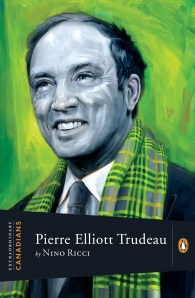
[READ: January 12, 2011] Pierre Elliot Trudeau

This is one of the more exciting biographies that I’ve read.  Which is pretty great.  Although one of the reasons it is so exciting is because he presumes that the reader knows a lot about Trudeau already.  And to be fair, I assume most Canadians would know the global picture (and most of the details) about him already.  So, basically, you get a summary picture of Trudeau, but instead of a quick outline that glosses over details, we get a lot of details, but no gloss.

What I’m getting at is that there are a number of places where Ricci talks about events and movements as if we know them.  So this makes for incredible fluency even if the novice is left puzzling exactly what all the fuss was about.  In fairness, contextually it’s easy to figure out, it’s just a bit surprising.

Another fascinating thing: Ricci skips over Trudeau’s childhood pretty much completely.  The book opens with Ricci’s memory of seeing Trudeau in 1967 when he (Ricci) was a young boy and seeing the way his teachers an adults seemed mesmerized by him.

Nostalgia aside, Ricci quickly explains what a polarizing figure Trudeau has been.  Warmly loved by many and yet (according to Macleans) ranked 5th of all Canadian Prime Ministers (despite being re-elected several times).  Actually, the way that Ricci words it it sounds like he came much lower than that (he says “third tier” which seems much mower than 5th).  And, judging by comments on YouTube videos, utterly hated by others.

The next chapter continues in 1968 at the beginning of Trudeaumania. Treudeaumania sounds a lot like Obamamania–a young, relatively inexperienced politician makes some noise and is thrust into prominence.  (Of course, in 1968, Trudeau only ran for office for a month and a half before being elected–ah the bliss of a short campaign season).

A video of Trudeaumania shows people swooning over him.

The biography does cover some of Trudeau’s earlier years (taken largely from Young Trudeau by Max and Monique Nemni).  He was a somewhat rebellious youth and his teen behavior was full of the usual (and not so usual) rebellions.  But the thing with Trudeau is that it is never clear whether he seriously held certain beliefs or if he was just trying to get a reaction out of people.

He established a society called les X whose purpose was to create an independent Quebec (organized under fascist principles).  les X faded from Trudeau’s life and existence with very little fanfare, and evidently radical groups like that sprang up all the time in Quebec at that time.  Really, it seems to point to his growing bored at his school and with the provincialism of Quebec.

When he left Quebec for Harvard and later for Europe, his mind was expanded and his beliefs opened up accordingly.  He had written many anti-Semitic things in his Montreal youth but once he actually met some Jews, he quickly changed his tune. Indeed, Harvard seems to have really shaped his later outlook in life.  And his exposure to vastly different attitudes during his studying Paris and then later in London exposed him to so much more in the world.

When he returned home to Quebec he found everything small and narrow (which is exactly how it (and he) was when he left it).  And he quickly finds himself embroiled in politics with the Asbestos Strike of 1949.  He took a position (and offered free legal assistance to anyone striking) which raised his profile and quickly made him persona non grata in his province.

This led him to leave for Ottawa, where he was less known and (since his credentials were great) where he could easily get a low position in politics and establish his career.  The main thing he learned, though, was that Ottawa was not the enemy (as is generally held to be true in Quebec).

Trudeau eventually returned to Quebec for Cité libre.  This is one of the things that Ricci glosses over…I’m still not exactly sure what Cité libre is (okay, an influential political journal), but I’m well aware of Trudeau’s involvement in it.  And how it helped him to state his principles and beliefs.

There’s a lengthy passage where Ricci explains how Trudeau’s federalism came to blossom so powerfully for him.  And this argument is one of the reasons why I am in the camp of Trudeau, because even though his piece is meant to be just about Quebec, I find it holds true for the U.S. as well (substitute out Quebec for any special interest).

The sort of independent Quebec he had dreamed of as a young man, he saw now, would only have given greater rein to the ruling elites to exploit nationalism for their own end, as Duplessis has done. In a Quebec obsessed with the survival of French-Canadian culture it was too easy for leaders to manipulate the electorate by promoting vague ideological goals rather than more practical ones, such as those providing infrastructure and employment (103).

Trudeaumania quickly swept him into office, but he was most reviled by his home province which felt betrayed by his turning his back on separatism.  He was the target of an attack by the FLQ, which captured and killed Trudeau’s friend and cabinet minister Pierre Laport. This was known as the October Crisis.  Trudeau’s reaction was swift and hard, he called for martial law (and the Mounties certainly abused their rights). But when questioned about whether he should or could step so hard on a province his answer was “Just watch me”

Now, it turns out that that quote comes at the end of a lengthy interview and makes for a glib soundbite when in fact Trudeau was anything but glib.
The next big moment of excitement for Trudeaumania was when he married Margaret Sinclair.  For a brief time, they were the it couple.  He was 51, she was just 22, and she was beautiful.  Trudeau seemed to be a confirmed bachelor or at least a consummate playboy, so to have him settled down was quite a story.  But how hard must it have been to be a young woman suddenly thrust into the political spotlight.

Naturally, cracks would surface in their marriage.  In fact, in 1977, Maggie decided to party with The Rolling Stones rather than attend her sixth wedding anniversary party (read the wonderful article in People about it–I love the tsk tsk tone!).

But the penultimate chapter is, mostly, about Trudeau’s disappointments.  He had taken office in a hail of excitement but really had not a lot to show for it.  He was even set for retirement, until he was drawn back in.  And in this final term, he was finally able to achieve his legacy.  And this legacy seems to be summarized by two words: federalism and patriation.  (With the downside being summed up in the word “notwithstanding”).  Now, this is obviously something that Canadians know all about, and it seems foolish to summarize what this meant for readers who lived it.  But for me, who knows precious little about the mechanics of Canadian politics, I was a little lost in the details.

I got the Federalism thing, but the constitution is a bit confusing.  And the whole notwithstanding clause really kind of lost me.  Nevertheless, the chapter that covered this was rather exciting because Ricci writes as if there is one man whose mission is to see him fail.  And this nemesis is Rene Lévesque.  It’s a classic mano a mano battle between two Quebeckers and it’s really rather exciting (especially if you didn’t know the results).

The final chapter talks of Trudeau’s legacy.  And in this chapter Ricci seems to side with Trudeau.  He cites specific examples of being the best man at a same-sex wedding ceremony, something that would not be possible without Trudeau (even though Trudeau never envisioned it).  Indeed, there’s a comment that:

during the 1968 leaders’ debate, Réal Caouette, leader of the Ralliement créditistes, joked that Trudeau’s Criminal Code amendments might lead to a situation where “a man, a mature man, could in the future marry another mature man” Caouette had his joke while Trudeau, awaiting his response time, smiled civilly and held his tongue.

Because I’m not part of the culture, I don’t know to read Ricci’s take on the man.  He is not afraid to show off all of Trudeau’s faults.  In fact, in many instances he rather highlights them.  For instance, the debt under Trudeau expanded exponentially.  When Trudeau took office in 1968 Canada had a debt of $18 billion; when he left office in 1984, that debt stood at $200 billion, an increase of 83% in real terms.  And yet at the end of a nasty passage he will present some evidence which ameliorates Trudeau either in whole or (more typically) in part.

I guess in that sense it is an excellent primer on Trudeau’s political life.  But it’s also personal enough that you can see how one man impacted people.  Not citizens, but people.  And when he describes the people lined up for Trudeau’s funeral it ties right back to Jian’s song.  It really shows the impact that one person can have on the lives of so many.

And, here’s a shameless plug to the folks at Penguin Canada–I will absolutely post about all of the books in this series if you want to send me the rest of them.  I don’t know how much attention these titles will get outside of Canada, but I am quite interested in a number of the subjects, and will happily read all of the books if you want to send them to me.  Just contact me here!

For ease of searching I include: Fruvous, creditistes, Real Caouette, Rene Levesque, Cite libre

Read Full Post »

SOUNDTRACK: SARAH HARMER-Oh Little Fire (2010).

I found Sarah Harmer when she had a left field hit (“Basement Apt”) in the states.  I went back and discovered her band Weeping Tile (who are quite good and recorded a version of the song on their EP Eepee) and have been following her continued solo career.

Since that first record, she released a killer second disc, followed by a re-release of an intimate 1999 record she made for her dad which let her revel in her country roots.  She followed this up with I’m a Mountain, a very country, but very catchy album.  Finally, four years later, she put out Oh Little Fire.

Although she hasn’t lost her country roots, this album returns to more of the rock sound that first attracted me to her.  It’s not hard or heavy by any stretch, but it’s moved beyond the country of I’m a Mountain.

Sarah and I listened to this album a lot at night when it first came out, and it slowly seeped into my system.  I had kind of forgotten about it for a while, and upon rediscovering it I was delighted to hear that the melodies were fresh and still with me.  The album seems like a simple indie folk or the work of an adult alternative singer songwriter, but the thing with Harmer is that she has that wonderful background with Weeping Tile, a band that was always slightly off-center.  So, she writes beautiful melodies but puts little grace notes into them to keep them from being disposable.  And yet they are still super catchy.

The only hard thing about this disc is wondering which song will be stuck in your head after listening to it.

[READ: January 7, 2011] L. M. Montgomery

I’ve never read any L. M. Montgomery (although I’ve seen the miniseries of Anne of Green Gables) and I’ve never read any Jane Urquhart (but I love her name!).

This biography is so radically different from the other three I’ve read so far.  I wondered immediately if it was because Montgomery (and Urquhart) are women.  It deals with subjects that the other books didn’t at all: lost loves, mental incapacitation, family crises.  But it becomes clear through the book that these issues were THE issues that a woman at Montgomery’s time would have dealt with.  Unlike the men in the other books, Montgomery did not have a professional life (outside of being an author, which she did at home).  She was hardly a public figure, and since she was a woman, she was always in danger of losing what she had.

This biography is also vastly different from the others in the way it is constructed.  You can tell by some of the chapter headings: Her Death (the first chapter), Orphan, Sorrow, Madness.  You can also tell by these chapter titles that Montgomery did not have a happy life.

Indeed, between a husband who believed he was destined for Hell (he was a preacher!) and children whose life choices she disapproved of, not to mention terrible insomnia coupled with nightmares, her late adult life was nothing but torment.  But, sadly for her, her early life was nothing but torment either.  Her mother died when she was two, she was sent to live with her aunt and uncle (which was never a happy place).  But the most depressing of all of these events is when she lost her dearest friend at a terribly young age, a death she never really recovered from.

So how is it possible that Montgomery wrote such charming stories?

The answer to that (and the basis for most of this biography) is in her diaries.  Montgomery kept meticulous diaries (which she wrote and rewrote and then rewrote with posterity in mind).  She wrote about her childhood and her life as (sort of) an orphan.  She wrote about the places where she lived and the beautiful outdoors which impressed her.  She wrote about the sadness and the happiness.  Nothing was lost on her, and she saved it all (she also took photos of everything she loved, which are a beautiful and sometimes contradictory records of her diaries), and there are many published volumes that we can read to learn even more about her.

To me, the most fascinating (and horrible) part of the story was when she finally had Anne of Green Gables published.  The publishers took complete advantage of her.  They forced her to write sequels that she didn’t want to (although they are still quite good) and even compiled a final book from castoffs of the previous books (Return to Avonlea) that they published in her name.  Eventually the case was settled in her favor, phew, and she was able to write new characters that inspired her.

Montgomery had a rough life, and as her diaries come to an end, she stopped writing about things.   It’s hard to know exactly what she went through towards the end, but it doesn’t seem very positive.  And yet for all of her disappointments in life, she left us with some engaging and memorable stories.

The last chapter is a fascinating personal account of how Montgomery’s stories impacted Urquhart’s family.  It was incredibly touching and convinced me that Urquhart’s fiction would be enjoyable too.  Some day, some day.

This was a really enjoyable (but major downer) biography.  And, more than anything it has really inspired me to read Montgomery’s stories (and even one or two or Urquhart’s).

And, here’s a shameless plug to the folks at Penguin Canada–I will absolutely post about all of the books in this series if you want to send me the rest of them.  I don’t know how much attention these titles will get outside of Canada, but I am quite interested in a number of the subjects, and will happily read all of the books if you want to send them to me.  Just contact me here!

Read Full Post »

« Newer Posts - Older Posts »