Feeds:
Posts
Comments

Archive for the ‘Culture Shock’ Category

walrus huneSOUNDTRACK: Rheostatics Tribute Show (AGO, September 3, 2015).

06Sep2015Almost exactly one year ago, my family traveled to Toronto as a mini-vacation.  The impetus was my scoring tickets to see The Rheostatics live for the first for me (and potentially–but not in reality–last) time.

They had called it quits 8 years earlier and were reuniting for the 20th Anniversary of their Group of 7 album–a soundtrack of sorts that was created to celebrate the works of the great Group of 7 artists.  They were scheduled to perform three nights at the Art Gallery of Toronto.  The night before their first show, Thursday the 3rd, there was a tribute show.

As the Rheostatics live site explains:

Thursday night was sponsored by First Thursdays at the AGO. The theme was Music Inspired by Rheostatics and featured a band of musicians comprised of Paul Linklater (Guitar), Thom Gill (Guitar), Phil Millotson (Drums), Charles James (Bass), and a series of guest vocalists including Laura Barrett (The Hidden Cameras), Terra Lightfoot, Casey Mecija (Ohbijou), Mike O’Brien (Zeus), Chris Cummings, Sandro Perri, plus a special performance by Canadian folk legend Mary Margaret O’Hara.

The site has the show available for download with the caveat: “Sound for both shows is a bit crackly in places and lots of crowd noise.”

So yes, the sound isn’t great (the AGO isn’t meant for concerts, anyhow), but it’s still a fun listen.  Although as a friend of mine once said about tribute albums–they sure do make you appreciate the original band more.

And that’s definitely the case here.  It’s hard to know if the lack of intensity is from the recording or if the band was simply playing more delicate versions of the songs.  The energy is missing on a lot of the versions–or maybe they just couldn’t do what the band can.

They start with “Who,” an unexpected but delightful choice.  Their version is a little slow, as most of the songs seem to be, and they leave off those last two drum snaps, but it’s still a fun thing to hear.  Then the guest vocalists proceed. Terra Lightfoot, no relation to Gordon, sings over a rather slow and somewhat undramatic version of “Northern Wish.”  In the original, I love when they really rock, but that doesn’t ever seem to happen here.

Casey Mecija sings “Claire.”  There are some interesting vocals and I like the way the song seems to start new wavy at first, but it turns a little smooth jazzy by the end.

“We Went West” is sung by Mike O Brien.  It’s quite similar to the original, although I actually like it a little better somehow–the words are a little clearer, I think.  Chris Cummings plays the unexpected Martin Tielli solo song “From the Reel.”  It is quite lovely and his voice is deeper than Martin’s allowing you to hear the words a little better.

Laura Barrett plays “Stolen Car” with amazingly operatic vocals.  It sounds great in the “I’ll be okay!” line but it seems to take a lot of the intensity out of the song because it doesn’t rise and fall like the original.

Mary Margaret O’ Hara comes out to thunderous applause.  MMOH is pretty crazy in general and she walks out and says.  “You people smell…nice.”  I would love to hear a better recording of this version of “Rock Death America” (and would have loved even more to have seen it).  She seems to be channeling her old spirits as she wails the lyrics.  She slips in a chorus or two of “They dont give a fuck about anybody else.”  Then she starts ranting about “the land of the free and the home of the brave amerikkkkkkkkkkkkah.”  It’s intense and I can only imagine how great it was to see.

Then Constellation guitarist Sandro Perri plays a sweet and slow “Take Me in Your Hand” apparently with MMOH (although I don’t hear her).  They play the melody on a penny whistle at the end, which is fun.

And then MMOH stays out to do a kind of long version of “Bad Time to Be Poor” (she seems to be mostly doing backing vocals and keening).  The version is a little too slow for my tastes, but is otherwise cool.

At the end of the set, someone mentions that the Rheos are going to come out and test out a few songs on everyone.  Lucky bastards.

Since the whole family was with me, I wasn’t going to go to this tribute show, although I have to admit it would have been very cool to see MMOH (who I assume I’ll never see) and to get the surprise Rheos show.

[READ: August 19, 2016] “The Rainbow Festival”

The last few stories that I’ve read in The Walrus have been real downers.  And this story had as a summary blurb: “in which a family waits for the joy that never comes”  What the hell The Walrus?

But with such a dour hint, this story wasn’t as miserable as it could have been.  I do wish that that line hadn’t been there though, because it did spoil the truth (which was not the end, but whatever).

This story is about a little boy who grew up in small town which was sometimes very large.  He lived in Malin a town that hosted the Malin Hering-Gutting Festival every June.  And during that festival their small town was overrun with fishermen and tourists.   His mother turned their house in to a B&B and she seemed really happy when the house was full of people.  (Her husband had died on a fishing boat some time ago and their house was way too big for just her and her son). (more…)

Read Full Post »

newSOUNDTRACK: DANISH STRING QUARTET-Tiny Desk Concert #399 (October 25, 2014).

danishI always enjoy hearing a string quartet that I’m unlikely to hear anywhere other than a Tiny Desk Concert.  It’s fun to listen to them before reading anything about them to try to imagine where they’re coming from musically.   The opening notes of the first song made me think they were a modernist quartet playing music that was repetitive and mildly atonal.

But they quickly swing it around into what turns out to be the first of many traditional Danish wedding folk songs!

While the quartet does play classical pieces as well, for this Tiny Desk Concert, they focus only on songs from their then recent album Wood Works.  The blurb says “the group recently took a musical detour that landed them in the foggy inlets of the Faroe Islands (a Danish outpost halfway between Norway and Iceland) and various Nordic hamlets where folk tunes are played and passed on.”

The first piece is actually three melodies: “Traditional: Ye Honest Bridal Couple — Sønderho Bridal Trilogy Parts I & II”  The piece begins somewhat atonally, but about 2 and a half minutes in the somber tones give way to a spritely melody that sounds like a great lost Irish jig.  But soon enough with the addition of the other strings it sounds very romantic indeed.  In what I presume is part II, around 6 minutes, the cello plays a wonderfully upbeat and catchy rhythm. The violins play staccato notes that keep the rhythm going while the viola and cello continue the melody–it’s pretty awesome.  Especially as the song fades and each of the strings plays the riff in succession.

The second piece is in fact two pieces: Traditional: Sekstur from Vendsyssel — The Peat Dance.”  Once again the two melodies sound kind of like Irish dances (I guess it’s time to call them Danish dances).  The second half of the first part sound great as the full quartet plays a wonderful melody.  But when the second part of the set comes and the super fast fiddling begins, it s hard not to dance (you can even hear someone tapping his foot as he plays).  The big difference between this and Irish dance is the rather formal sounding and lovely ending melody.

The final piece is the third part of the Bridal Trilogy from the first piece: “Traditional (arr. Nikolaj Busk): Sønderho Bridal Trilogy Part III.”  He says that these melodies date back many 100 years and are still used today.  It begins very slowly and almost somberly.  It doesn’t feel very wedding-like to me and of the three this is my least favorite.

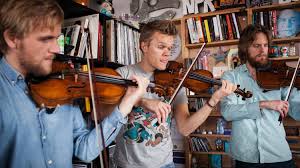
The quartet sounds amazing. The players are Violinists Rune Tonsgaard Sørensen and Frederik Øland, violist Asbjørn Nørgaard and cellist Fredrik Schøyen Sjölin.  It’s also kind of funny since three of the four have beards–not something you typically see on a string quartet. They acknowledge this on their website: “We are simply your friendly neighborhood string quartet with above average amounts of beard.”

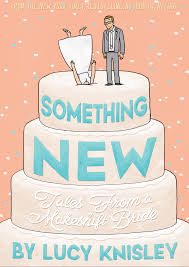
[READ: June 20, 2016] Something New

Knisley has made a rather successful career out of writing graphic novel memoirs.  She has covered food and travel.  And, in a somewhat surprising twist (if you have been following her books), she just got married.

This is surprising because the man she married is the man she broke up with in one of the previous books.  The story basically tells how they were on an off sorta kinda for years until they finally tied the knot.

So this book is the story of their relationship and their engagement. But beyond that it is also an interesting and helpful guide-book for those who want to get married but who may not be totally on board with all of the conventions and trapping of the wedding industry. (more…)

Read Full Post »

dirkSOUNDTRACK: ANTHONY D’AMATO-Tiny Desk Concert #398 (October 20, 2014).

damatoI’d never heard of Anthony D’Amato before this Tiny Desk Concert, and yet his music sounds vaguely familiar.  D’Amato sings fast, upbeat acoustic folk rock with a full band behind him.

“Was a Time” starts out with just him and his guitar.  But after the first verse the whole band kicks in and the song really takes off.  There’s some harmonica between verses and a big Whoo! before the end of the song.  The song is a fun romp, fun to sing along to until you realize the chorus: “there was a time that I loved you / I don’t love you any more.”

He introduces the second song “Good and Ready” and says “we’ll start whenever Derek is… good and ready.”  This song sounds very different as it opens with a cool soulful bassline.   After that opening the song proper begins with Amato’s acoustic guitar and the electric guitar playing a loud slide guitar riff.  This song is a bit more positive, despite the repeated line of I don’t wanna wake up,” the chorus is “I don’t wanna wake up if it ain’t next to you.”

All three of these songs use the same verse style with the first words of every line being repeated over and over.  In the first song, every libe starts, “There was a time….” In the second, each line begins “I don’t wanna wake up….”  The final song, “Ludlow,” changes things a little bit although each verse stats with the opening “First the…  then the….”

I felt a little  for his backing vocalist Katy Pinke, because while everyone else is doing things, she’s just standing there occasionally sinking a word or two.  Although for “Ludlow” he and Katy sing a quiet duet.

D’Amato writes catchy, rather pleasing songs.  I wonder why I haven’t heard of him before.

[READ: July 2, 2016] Delilah Dirk and the King’s Shilling

Much like I wrote about the first book: I enjoyed this story quite a lot.  Cliff’s drawing style which was peculiar but ultimately very satisfying.  And more importantly, he tells a great story.

But this book was even more satisfying than the first.  I have also changed my opinion of Cliff’s artistic style somewhat in that I think it is really fantastic.  It is definitely unusual–realistic but not exactly–and he has such amazing control of expressions.  Even moreso in this book in which Delilah goes into polite society and so much must be conveyed through expression.

Plus there’s a lot of action, too. (more…)

Read Full Post »

2008_03_03-400SOUNDTRACK: FOREIGN EXCHANGE-Tiny Desk Concert #370 (July 5, 2014).

FeIt’s amusing how “religious” lead singer Phonte Coleman comes across in this set given how profane his language is.  He begins the set by telling us what a “church clap” is: a church clap is when you clap for someone when they sing in church but they suck.  It’s a slow clap that says keep trying, baby.

Foreign Exchange is Phonte on vocals, guitarist Nicolay, keyboardist Zo! and percussionist Boogie.  Their music (in this setting anyhow) is a kind of mellow stripped down soul pop.

“On A Day Like Today” is a kind of acoustic r&b with acoustic guitar and gentle keyboards. Phonte is an engaging and fun performer enticing people to clap and singing that he’s gonna wipe the sweat off his face as he does so.

He says he’s “sweating like a preacher here.”  After the first song he hits the gong ans says “when you hear this sound, that means turn the motherfuckin’ page.”   he describes the second song, “Listen to the Rain” as when you need to wind down and things ain’t going right.  It is a delicate ballad full of nice percussion.

Before the final song he says, “You never get a second chance to make a first impression so I hope this is a good motherfuckin impression.”  Then as he is ramping up the song, he tells everyone to turn to your neighbor and say “‘Neighbor, put home in your heart,’ goddamn right.” “Call It Home” is a pretty, smooth rocker.  Phonte has a good solid voice and these songs are all pretty enjoyable.

Phonte is a great front man having fun right up to the end as he jokes about how he “felt it” and was overcome during the final song.

[READ: January 29, 2016] “Leaving for Kenosha”

Richard Ford is a famous writer whom I have never read.  I think of him as writing very large books, so I’m surprised to see this short story here.

I have this image of what Ford writes, but I was rather surprised that this was set in New Orleans soon after the flood.  Interestingly, the main character is not the one leaving for Kenosha.

Walter Hobbes (which is the name of the dad in Elf, by the way) is a lawyer.  He is picking up his daughter from school before taking her to the dentist.  His daughter, Louise, is thirteen and trying to be independent.

I really enjoyed the way the Ford set up the family dysfunction–Louise needs a sleep guard to keep her from grinding her teeth–which she has only started doing since her parents got divorced.  There’s some back story about Walter’s wife leaving him and the fact that she still lives in town.  (more…)

Read Full Post »

3shadSOUNDTRACK: ANDREW BIRD-Tiny Desk Concert #536 (May 31, 2016).

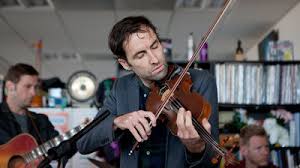
andrewbirdI haven’t known too many of the recent Tiny Desk performers, but I do know Andrew Bird.  I heard him on NPR and was quite taken with his whistling (one of his trademarks).  I bought his album, but learned after listening to it that I prefer him more in small doses and single songs rather than a whole album.

And while I didn’t love the album (it’s good but didn’t blow me away), these three songs are pretty great.

That whistling is present a lot during this Tiny Desk Concert.  The first song “Are You Serious” has a lot of whistling and is an incredibly catchy song (possibly because it has a very similar melody to “Oops I Did It Again”?).  Regardless of the reason, this song is really fun.  One of the delightful things about Bird, in addition to his whistling is that he also plays violin in number of different ways.  He strums it like a guitar for the beginning of the song and even plays a plucked solo (while still holding it like a guitar).  There’s also some “proper playing” by the end of the song.

“Roma Fade” also opens with his whistling and violin plucking and then shifts to s much more uptempo violin bowing.  It’s got a very catchy melody and again I love how he switches from plucked violin notes to bowed melody.

“Capsized” is a song I have been hearing on WXPN quite a bit.  I had no idea it was him and I really liked it so it was a surprise treat to hear it here.  I don’t recall if the radio version opens this way but in the Tiny Desk, there’s a great fast violin intro and some bowed upright bass rumbling.  The verses are great but it’s the the catchy chorus “and when you wake up” that rules the song.  There’s a cool plucked violin solo and some more nice bowing.

The band he has (bass, guitar and drums) also sings great harmonies which really make these songs sound big.  It’s a great Tiny Desk and means I’m going have to dig out the album I have and give it another spin.  And actually it is good, just a bit more mellow than I like.

[READ: March 10, 2016] Three Shadows

I really liked just about everything in this graphic novel.  I was struck almost from the start by Pedrosa’s drawing style, which relished in loops.

The first page has a boy and his father walking in the garden.  The tree is comprised of circles, the man’s pipe is producing circle smoke rings, even the apples in the trees are swirling circles.  The whole pages looks to be in motion.  And it has a very interesting folk-art feel.  On the next page the trees are simply big swirling circles.  It’s really visually striking.

However, once a story begins “Back then life was simple and sweet,” you know that the story isn’t going to be a happy one.

But it does start off peaceful.  This small family–mom dad and little boy live in an idyllic little house far from the world.  But one day, their dad sees three shadows on the top of the hill.  He gets really freaked out about them even though they don’t come close.  His wife thinks that he is overreacting, but every time he sees them, he knows they are up to something.  And then one night they come in adn try to take the little boy. (more…)

Read Full Post »

425 SOUNDTRACK: JULIA HOLTER-Tiny Desk Concert #524 (April 22, 2016).

Jjuliahulia Holter also has a theatrical style although her touchstone would be someone more like Regina Spektor (I found a similar style in their delivery).

“Sea Calls me Home” has a cabaret style in her delivery and songs structure.  She plays piano with a small band of upright bass, violin and drum.  I really like the sound (and solo) of the violin later on in the song.

“In the Green Wild” has a very jazzy feel with the upright bass playing a jazz line and the drums playing a jazzy rushed sound.  The violin plays some random high almost dissonant notes that work very well.  For the beginning, Julia doesn’t play piano, she sing-speaks kind of like Laurie Anderson—including the unusual intonation and emphases.  The rest of the band sings backing vocals that are higher and ethereal.  About half way in, she begins playing piano and the song settles sown a bit. The way she sings is unusual and a little unsettling—she looks up at the ceiling more or less the whole time.  Her piano notes are simple and I like the way she plays without looking at the keys.

After that song she speaks briefly.  Her personality is pretty nonexistent–she doesn’t smile or even seem to look at anyone. She sounds rather bored as she says okay we’ll play another song.  Thanks for listening.  That turned me off of her music a bit.

The final song, “Betsy on the Roof,” is the longest, about six minutes long.  It sounds similar to the first one–theatrical and somewhat operatic.  There’s a story in the song, but my favorite part is the middle where she sings a scale up to the roof and then the band rocks out.  The end of the song is fascinating as she sings her nice melody and plays atonal tones on the piano.  I enjoyed t he theatricality of this music a lot, but I would have preferred not to see her performance.

[READ: June 10, 2016] “Waiting for the Miracle”

This is the story of Vadik and his arrival in New York from Moscow.  It was a snowy day as he landed at J.F.K.  Despite the snow blanketing the skyline, it was still exciting. as he descended.  He had just received his work Visa authorizing his stay in the U.S. for three years.  He was staring work in Avenel, NJ.

His friend Sergey, who lives in Staten Island, came to pick him up.  All that Vadik wanted to do was explore the city–walk aimlessly and see what happened, but Sergey wanted to take him to his house.  And Sergey’s wife Vica wanted to see him too–in their past Vadik and Vica had been an item although and Sergey stole her away.  Vica made dinner for him and so he agreed to go to the Island.

On the way to the house, the most improbable thing is that Sergey is listening to a Leonard Cohen CD and singing along.  (Vadik likes Sergey and admits that he is still handsome, but his voice is terrible and has always been terrible.  And it’s especially bad especially for Leonard Cohen.  I say this is improbable because Cohen’s music appears later in the story  too. (more…)

Read Full Post »

  karlove5SOUNDTRACK: RAGA ROCKERS-“Slakt” [“Slaughter”] (1988), “Hun er Fri” [“She is Free”] (1988) and “Noen å hate” [“Someone to hate”] (1990).

ragaKarl Ove mentions many bands in his books.  Raga Rockers appeared twice in this one.  I can’t find a ton about them online, because they never really made it beyond Norway, but the Google translated version of their website says:

Raga Rockers is an ingenious rock ‘n roll band that has existed since 1982.

Today the band consists of: Michael Krohn (vocals, lyrics), Hugo Alvar Stein (keyboards / guitar), Eivind Staxrud (guitar), Arne Sæther (keys), Livio Aiello (bass) and Jan Kristiansen (drums).

The band came out of the punk community in the early eighties, but became such a “poppy” large parts of the Norwegian people have founded acquaintance with them.  Songs like “She is free” and “Someone to hate” is almost singalong classics! Their greatest triumph came perhaps in 1999 when they played for thousands of ecstatic Norwegians at the yellow stage at Roskilde Festival. (Reviews of the show by Dagbladet (which Karl Ove wrote for) and Dagsavisen–both are in English.

Despite their punk roots and the rather violent song titles, the songs are almost poppy–heavy guitars but simple chords and a singer who doesn’t sound angry at all.  In fact, if I didn’t read about their punk roots, I’d swear these songs are kinda goofy.

“Slakt” is a simple song, opening with a 4/4 drum and splashes of guitar.  The middle is a bluesy riff with a chorus of “ah ha ha”  The lead singer’s voice is mostly kind of deep–not quite what I expected from the heavy guitars.

“Hun Er Fri” is quite different from the others songs.  It’s only 90 seconds long and features a piano.  The chords are still simple the piano may be playing single notes in fact).  The lyrics are pretty much nonstop and kind of fast.  It seems like a silly pop trifle and I can see why it’s popular among their fans.  The first time I listened to it, I was surprised it ended when it did.  This bootleg live version is certainly fun.

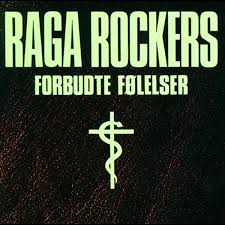
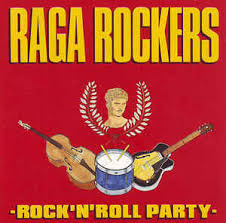
rocknrollThese two songs came from their 1988 album Forbudte følelser [Prohibited feelings]

“Noen å hate” has a bit more of a metal sound, but is essentially the same kind of heavy rock with simple chord progressions.  There’s a good solo at the end.  A black metal band called Vreid has done a cover of this song (which really only sounds different because the Vreid singer is more growly).

This song comes from their 1990 album Rock n’ Roll Party.

And yes, they are still around.  They took a hiatus in the 2000s but came back with three albums 2007’s Übermensch, 2010’s Shit Happens and 2013’s Faktor X.

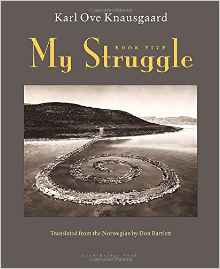
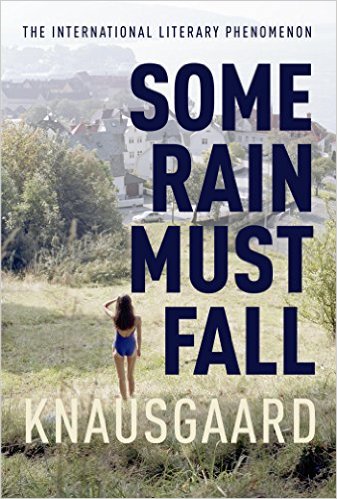
[READ: May 1, 2016] My Struggle Book Five

karlove 5ukI realized as I read this fifth book that I should have been keeping a vague sense of the timeline of these books.  Specifically, because he opens this book with this: “The fourteen years I lived in Bergen from 1988 to 2002 are long gone.”  So if he was born in 1968, this book covers roughly ages 19-33.

So my general outline for the other volumes:
Book Five: 1988-2002 (19-33)
Book Four: 1987 (18)
Book Three: 1968-1981  (1-13)
Book Two: 2008 (40) (with flashbacks to meeting his second wife in 2003 or so)
Book One: 2008 (40) (with flashbacks to his father’s death in 1998 or so)

What era could Book Six possibly be about?

We’ll find out next year in what is said to be the 1,200 page final volume.

So as I mentioned above, Karl Ove talks about the fourteen years he lived in Bergen.  And it made me laugh that he says:

The fourteen years I lived in Bergen, from 1988 to 2002, are long gone, no traces of them are left, other than as incidents a few people might remember, a flash of recollection here, a flash of recollection there, and of course whatever exists in my own memory of that time.  But there is surprisingly little.

And then he proceeds to write 600+ pages about that time. (more…)

Read Full Post »

augSOUNDTRACK MAREN MORRIS-“I Wish I Was” NPR’S SOUTH X LULLABY (March 18, 2016).

marenMaren Morris was a buzz artist at SXSW.  I listened to about 45 seconds of her single “My Church” and determined it was way too country for me.  So I wasn’t really looking forward to this Lullaby.

However, Morris’s sound strips down nicely.  Although she still sings with a rich country twang, she also adds levels of soul to her singing (particularly after the guitar solo).  There’s two guitars (Morris in rhythm), and her two supporting dudes singing very nice harmonies.

And the setting for this video is quite lovely–the chirping insects would agree.

[READ: February 10, 2016] “Curling Parents and Little Emperors”

The August 2015 Harper’s had a “forum” called How to Be a Parent.  Sometimes these forums are dialogues between unlikely participants and sometimes, like in this case, each author contributes an essay on the topic.  There are ten contributors to this Forum: A. Balkan, Emma Donoghue, Pamela Druckerman, Rivka Galchen, Karl Taro Greenfeld, Ben Lerner, Sarah Manguso, Claire Messud, Ellen Rosenbush and Michelle Tea.  Since I have read pieces from most of these authors I’ll write about each person’s contribution.

Druckerman’s name sounded familiar.  It turns out she wrote the book Bringing Up Bébé in 2012.  The book compares the child-rearing practices of middle class parents in France with those of the United States.  She says that US parents tend to have a more anxious, labor-intensive child-centric style of parenting.  And that today, college educated American mothers spend nine more hours per week on child care than they did in the mid-1990s.  This style has taken hold in most countries.  Except France. (more…)

Read Full Post »

2292015SOUNDTRACK: AMANDA SHIRES-Tiny Desk Concert #146 (August 3, 2011).

shiresAlthough the blurb suggests that I might know Amanda Shires, in fact I do not.

Shires has a powerful non-vibratoed voice and she plays several different instruments–what looks like a giant ukulele as  well as the fiddle.  She’s accompanied by Rod Picott on the guitar.  He really seems to flesh out her instruments very well.

As to her sound, she explains before the final song, “I do have one happy song, we’re just not going to do it.”

The most remarkable thing about the first song, “Swimmer…” is her excellent whistling of the main melody.  It is piercing and very catchy.  Actually the whole song is quite pretty

Before starting the second song she asks if they are in a fast mood or slow mood.  When the answer is fast, she immediately says they’ll play “Shake the Walls.”  I really liked how the opening notes were plucked and strummed on the violin.  The song is pretty simple and quiet until she plays a noisy violin solo in the middle which really livens things up.

Before the final song she asks if they’d like a song about suicide.  Someone whoops in assent and they laugh.  So she says they’ll play a song about trains. (“when you need a train, it never comes”).  I really like the chord progression in the chorus.

Despite the downer music, the duo clearly had a fin time.  Picott ends by saying “Its hard playing for smart people instead of our usual crowd.”

[READ: March 6, 2015] “Total Solar”

The protagonist of this is a journalist in Afghanistan.  He has been speaking with a researcher from the United Nations Ornithological Department, who keeps introducing conversations with “If you really want something to write about…”

But rather than taking notes, he is drawing pictures of himself committing suicide in various gruesome ways.  This relates to his writing a story about a contractor who’d been executed in a new way–using wire rather than a knife.

Yes the story is pretty brutal. (more…)

Read Full Post »

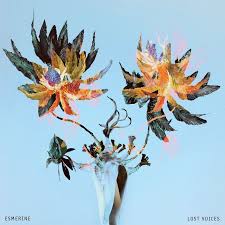
dirkSOUNDTRACK: ESMERINE-Lost Voices [CST116] (2015).

esmerine 2Esmerine’s previous album was recorded in Istanbul and featured a lot of Middle Eastern instruments.  This album was recorded in France and has an incredibly different tone than the previous one.   It doesn’t really have any unusual instruments.  Well, except for the darbuka (a drum) and the riq (a kind of tambouine), both of which appear on the track “Funambule.”  And these interesting items: the ekonting (a West African lute) and the sarod (an Indian lute).

This album has moments that rock a lot harder and louder than anything they’ve done before, but it also has some lengthy mellow moments too.

“The Neighbourhoods Rise” opens the disc with staccato strings and bass.  Then the cello and violin come in.  The song builds and grows more dynamic as drums enter the song, but at 3:30 the song bursts forth with big chords and loud drums.  There’s a great violin melody running through the exuberance.  Then the music all falls away leaving a lovely, sad cello and violin melody to take the song out.

“A River Runs Through This Town” opens with the most conventional sound of an Esmerine record–simple (loud) drumming and an acoustic guitar melody.  More instruments come in, adding complexity. I love that each instrument that comes in–marimba, cello–adds a new layer of notes to the mix until about 3 minutes in when it switches over to big chords.   The song works back and forth between these two styles and rocks much harder than any of their other songs.

“Pas Trop Pas Tropes” is a song of quiet marimba and lots of strings–the cello and violin are once again rather mournful, but very cinematic.  It doesn’t travel very far in its four minutes but it’s beautiful while its there.

“19/14” (can that be a reference to the time signature?) opens with marimba and drums and a deep upright bass (and I believe plucked cello).  When the staccato guitar (or is that the cello?) starts picking out notes the song gets even more interesting.  And then at 3 minutes an electric guitar solo bursts through the melody.  It’s probably the loudest thing the band has recorded yet.  Until the end of the song which gets even louder with pounding drums.  It’s fantastic.

After that, the album mellows out somewhat.

“A Trick of the Light” is but 2 and a half minutes.  It’s washes of keyboards and quiet cello/violin parts.  And then comes–a first for Esmerine, I believe–piano (played by Becky Foon).  The piano is simple but it stands out so dramatically on this track that it sounds amazing.

“My Mamma Pinned a Rose on Me” opens with a cool marimba melody and some ominous keyboard chords.  Some of the middle eastern instruments mentioned come out on this song.  It plays with variations on that simple marimba pattern with different instruments taking turns playing simple chords the top of it.  Somewhere round 5 minutes the song gets so mesmerizing that it nearly puts me in a trance.

“Funambule (Deux Pas de Serein)” opens with some thumping bass and rocks drums along with the Middle Eastern drum playing some cool accompaniment.   And then the nearly 8 minute song is off.   This song revisits the Middle Eastern sounds of the previous record, but with a difference–the drums make the song feel bigger and more intense until about 2 minutes in when the song shifts to a kind of screeching solo.  And then the song resumes with a much faster rhythm.  By 4 minutes the whole song is thudding away, powerful drums and a wall of sound.  When the wall wears itself out, the song’s denouement is more layers of cello and violin–beautiful intertwining melodies.

The final two songs are short.  “Our Love We Sing” is 3 and half minutes of synths and slow cello.  This song also features Becky Foon’s voice, singing wordless passages.  It builds and builds but has no grand climax.   The disc ends with “Lullaby for Nola” a simple piano twinkling and then strings accompany the lovely voice to create this slow, beautiful lullaby.

This album is not as cohesive as the previous one, but it really lets the band explore lots of different avenues.  I’m certainly looking forward to whatever they come up with next.

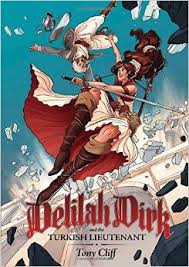
[READ: February 2, 2016] Delilah Dirk and the Turkish Lieutenant

I enjoyed this story quite a lot.  Cliff’s animation which was peculiar but ultimately very satisfying.  And more importantly, he tells a great story.

It opens in Constantinople in 1807.  The King has just begun a game in which the strongest men fight for as much gold and riches as they can grab

Then Chapter 1 shows us Delilah Dirk in prison.  And the guard Selim is reading off the extravagant list of charges against her.  These include–marksman, acrobat, swordsman, world traveler (alone!) and a woman with the ability to fly.  As we flashback to her meeting Selim in prison, we see her being quite cross at getting caught and just about to tell him.  Until she tastes his tea.  Then she reappraises him.

Turns out that Selim’s quite the man with a pot of spices.

As he relates Delilah’s exploits to the king, the king bursts out laughing–primarily because Delilah is a woman.  He doesn’t even think twice that she might try to escape until (and wee see this behind the scenes) she bursts through the wall to her rescue.  And takes Selim with her. (more…)

Read Full Post »

« Newer Posts - Older Posts »