Feeds:
Posts
Comments

Archive for the ‘Corporate skewering’ Category

[WATCHED: October 10, 2012] Close Personal Friend

While I was browsing Coupland’s bibliography on Wikipedia I saw this movie: Douglas Coupland: Close Personal Friend.  There is no information on Coupland’s site about it and there is precious little information about it anywhere else, frankly.  However, it has been uploaded to YouTube!

It’s a 24 minute film made for commercial TV.  It was made in 1996 and is very much of that time.  I’m not sure if Coupland was working on Girlfriend in a Coma at the time, but ideas in the film inform that book as well.

Basically it has Coupland, looking very clean-cut and smart–suit, skinny tie, hair parted hard–sitting in a white chair (a rounded chair that swivels–very “futuristic” looking).  He is sitting in front of  a white  background so his chair disappears from time to time (I’m willing to accept that that could just be the effect of a poor video transfer though).

There is an interviewer who asks him puffball questions, because it’s basically a chance for Coupland to talk about the his views of the late nineties and the future.  For instance: Do you consider yourself a citizen of the late 20th century?  (That’s just a weird question).  She asks him what the two dominant activities will be 20 years from now (which would be 2016).  His answer? Going shopping and going to jail.   Not too far off.

Coupland has always been concerned with the future (or more specifically, the millennium–I’m not sure how he has wrapped his head around the 21st century).  As I mentioned about his short story yesterday, he is very like-minded with Vonnegut about the state of humanity as we reach the millennium.   So he talks about lot of different topics including: individuality (and how we have lost it–he talks about a flock of birds seeing a group of people and finding them indistinguishable); the idea of not having a life–this was interesting, because as he points out even 20 years ago (1976), that expression would have been meaningless; consumerism; the uselessness of pop culture (how reading about Burt and Loni uses brain cells that could have been used to cure cancer).  And how technology can dehumanize us. (more…)

Read Full Post »

SOUNDTRACK: SILVERSUN PICKUPS-Live at KEXP October 27, 2006 (2006).

I liked Silversun Pickups’ album Swoon quite a bit.  True, the singer sounds uncannily like Billy Corgan, but the shoegazer swirls of music were so sonically interesting that I couldn’t resist.

The lead singer/frontman is very funny and very engaging–he has great patter, and it’s clear that they all feel comfortable at KEXP (who were major promoters of the band).  This set comes from their first album, which I don’t know at all.  And I found it a little samey.

The production–washes and layers of music kind of flattened it out a bit.  It’s true that the melodies are good and his voice is compelling in the way that Billy Corgan’s is, but this set just never sticks with me.  I don’t know if that’s to do with the songs from the first album or if maybe live they’re not that interesting, but I didn’t love this set as much as I wanted to.

You can hear it here and a bunch more sets from them here.

[READ: October, 10, 2012] “Fire at the Ativan Factory”

Now that I’ve finished with Vonnegut for a while, I was planning on turning my attention to some new books, and then I stumbled upon this short story by Douglas Coupland–another author whose oeuvre I plan to read (I’ve actually read most of his books already, but they were over a decade ago so I’m going to go through them again).

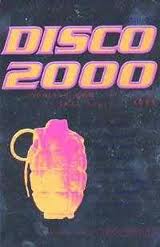
Douglas Coupland is not one for short stories.  As far as I can tell this is one of the few stories he has published.  (this is going by Wikipedia, because his own homepage, which one would assume would celebrate all things Coupland, leaves out quite a lot of things).  This short story was published in a U.K. released fin de siècle  compilation called Disco 2000.  I’ve never heard of the collection.  And I certainly wasn’t going to hunt too hard to track it down, even if there are a bunch of interesting writers in it (end of the century malaise is so twelve years ago).  But fortunately and somewhat inexplicably to me, Barcelona Review has a full text copy (in English and Spanish(!)) on their site. (more…)

Read Full Post »

SOUNDTRACK: JAPANDROIDS-Live on KEXP, June 16, 2009 (2009).

Back in 2009,  one of the guys from Japandroids had surgery and they had to cancel some dates.  That’s only relevant to this because when this set is over, the guitarist is bleeding from his scar.

Japandroids are two guys and they make a lot of noise.  I can recall jamming on guitar with my friend on drums and even when we were totally in synch, we never sounded this good.  It really sounds like there are four or five people playing.  This set has three songs from their debut album and an amazing cover of Big Black’s “Racer X.”

The three  songs are very good and the guys pay hard and fast and, as I said, they sound amazing.  It’s a great set.  You can hear the whole thing here.  There’s also video of the performance.  It’s broken  into two parts.  This is part two, with the blistering cover of “Racer X.”

[READ: September 17, 2012] Bluebeard

I’ve mentioned this book a few times in the last couple of days as something that I’d been struggling with.  And, indeed, I found it to be a little slow going.  I was excited to start reading it because, as the subtitle says, this is an autobiography of Rabo Karabekian, an artist who appeared in Breakfast of Champions–I love that Vonnegut keeps working within his own universe.  But there was something about the early pages of the story that were just not that compelling.

Rabo is having a hard time getting his book going, and while that is a dramatic effect, I had a hard time getting into the book too.  It’s not that complicated of a story.  There are really only about a half dozen characters in the book:

Rabo–he is an American Abstract Expressionist painter (contemporary of Jackson Pollack, Jasper Johns, et al).
Circe Berman–she is an author who writes under the pseudonym Polly Madison (ha).  Madison’s books look at the real life of American young people and are staggeringly popular.
Paul Slazinger–Rabo’s next door neighbor who spends most of his time in Rabo’s house, although he and Rabo mostly ignore each other.  Slazinger is a writer with a decades long writer’s block.
Dan Gregory–a famous artist for whom Rabo apprenticed.  Gregory was such a good detailist that he once created a perfect forgery of a bill (on a dare).  Gregory was also a terrible racist and philanderer and treated Rabo with contempt at best.
Marilee Kemp–Gregory’s mistress and sometime muse.  She inadvertently sends Rabo an encouraging letter on behalf of Gregory and then she and Rabo begin a writing relationship which blossoms when they eventually meet. (more…)

Read Full Post »

SOUNDTRACK: …AND YOU WILL KNOW US BY THE TRAIL OF DEAD-Live on KEXP, March 12, 2009 (2009).

Back in 2009, …And You Will Know Us by the Trail of Dead had been hit by a truck.  Really.  Evidently no one was hurt too bad, but they did have to cancel a show in Salt Lake City. 

Nevertheless, they managed to get to KEXP to play a four song set from their latest album The Century of Self.  The opener “The Giant’s Causeway” is full of bombast and noise  and has a surprisingly catchy melody in the middle.  It merges into “The Far Pavillion” (just like on the album) which sounds like pretty typical Trail of Dead–rocking and yet melodic, with some good screaming parts.

“Luna Park” is something of a surprise to me as it’s a piano-based ballad (which I suppose Trail of Dead plays, but which I don’t associate with them).   “Bells of Creation” also opens with a piano, but it quickly grows very loud.  It’s a cool song with lots of depth.

I had actually stopped listening to Trail of Dead after Worlds Apart (and album I liked, but I guess the band fell off my radar) so it’s nice to hear they’ve still got it.  At least as of three years ago.

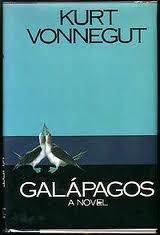
[READ: September 17, 2012] Galápagos

Each of these 1980’s era Vonnegut books gets darker than the last.  In this one the entire human race is wiped out (except for a few people who spawn what eventually becomes of the human race in a million years).  For indeed, this book is set one million years in the future and it is written by a person who was there, one million years in the past when the human race destroyed itself.  It’s not till very late in the book that we learn who the narrator is and, hilariously, what his relationship is to the Vonnegut canon.

In typically Vonnegut fashion, the story is told in that spiral style in which he tells you a bit of something and then circles back to it again later and comes back again later until finally 200 or so pages into the book you get all the details of what is happening.  Interspersed with the respawning f the human race (and flippers) is the story of the Adam and Eve and Eve and Eve and Eve and Eve who created the human race–how they got to be together, what their lives were like before and what contribution they made to humanity, such as it is now.

In another bizarre and fascinating twist, every character who is going to die in the near future gets a star next to his name so that the reader knows that that person is going to die.  We get a lot of things like ★Andrew MacIntosh for many pages until the character finally dies.  And pretty much everybody does die.  Well, obviously if it is set a million years in the future, but aside from that part, only a few of the characters survive.

So here’s how these few people managed to create a new human race in the Galápagos Islands.   (more…)

Read Full Post »

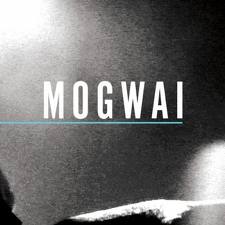
SOUNDTRACK: MOGWAI-Burning DVD (2010).

What might one expect from a Mogwai DVD?  Well, what one gets is a high contrast black and white concert with excellent sound (I have since burned the audio on a CD).

The film zooms in on the players–the guitar necks, the cymbals–and occasional two or three person shots (but very rarely faces).

The faces come in the interstitials, where the filmmakers show the band walking around (getting on subways–walking in rain), and where they talk to fans.

The film is gorgeously shot, but I have to admit it’s not the kind of live show that I enjoy watching.  It’s a little dull–not in individual moments because just about every shot is gorgeous, but in five-minute blocks.  Don’t get me wrong, I love seeing how these guys make this wall of music.  I love watching Stuart’s hands on the neck of his guitar, but this is not a very mobile bunch.  Indeed, many of the people in the audience seem to just be closing their eyes and absorbing the music rather than watching them.  And I found myself doing the same thing (in which case, I would just get an audio concert, right?).  This is compounded by the fact that the camera is in so tight, any big movements are missed.

This is not to say that there aren’t moments of brilliance to see.  Watching the band wait and wait and wait as the chords from “Fear Satan” fade out before they blast into the finale is pretty darn awesome.  And there are moments like that–crisp clarity where everything comes together.

Some kind souls have put the entire show on YouTube.  Here’s part 3 (with “Fear Satan”)

And the fan who speaks over the closing credits is trippy but cool.

[READ: July 31, 2012] “The Places You Find Yourself”

I found this story because a reader left a comment that Junot Díaz’ story ”The Cheater’s Guide to Love” was just like this one.

I have to disagree almost entirely with that sentiment because Díaz’ story talks about what it is like after someone has broken up with you and this story is about being stuck in a relationship that you feel compelled to get out of.

Edwards’ story (which won the 2009 Open City Rrofihe Trophy) is about settling.  And it’s a very realistic portrayal of the frustrations of life: relationships, job, commute–it’s a rather cathartic story.  It is especially cathartic because there is no main character, only “you.”  And Edwards keeps this second person narrator throughout the story.

The story is set up as a series of monogamous relationships: “Then one morning you’ll wake up and there will be another one lying next to you, maybe this one a brunette…” (more…)

Read Full Post »

SOUNDTRACK: SIX ORGANS OF ADMITTANCE-“Even If You Knew” (2012).

Lars from NPR’s All Things Considered picked this as his summer music preview song.  I don’t know a thing about Six Organs of Admittance, but their discussion of this song makes it seem like this is atypical for the band (which has a massive output).  Evidently they’re usually more droney sounding. But man, this song is pummeling and wonderful.

It’s seven minutes long and opens with a simple, plodding heavy bass riff.  The vocals are kind of whispered and strained.  But then comes the guitar solo–a raging piece of distortion that complements the bass.  And that’s just the first three minutes.

The second half of the song features a quieter section–the bass is quieter, while the guitar noodles around and the vocals play over the rhythm.  The song slowly builds again, and by the last minute or so there’s another fierce guitar solo. Until the song is exhausted by the final distorted notes.

This is some beautiful noise.  And, no I have no idea what the band’s name means.

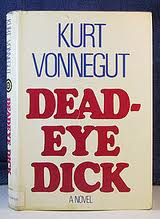
[READ: June 27, 2012] Deadeye Dick

Deadeye Dick is the last Vonnegut book that I was completely unfamiliar with.  I had no idea what it would be about.  So I didn’t realize until very late in the book, and then I looked online and confirmed that this book is set in the same location as Breakfast of Champions, Midland City, Ohio.  Indeed, some of the same characters appear in this book as appeared in that book.  But more about that later.

Vonnegut is not known for his happy books.  Misanthropy is pretty rampant in his pages.  But this book is one of his bleakest books yet.  The story concerns the Waltz family–Rudy (the protagonist) and his brother Felix are the only children of Otto and Emma Waltz.  Pretty early in the story we learn that Rudy is a double murderer.  Yipes!

As with most Vonnegut stories, this one is told in a convoluted and non-linear fashion.  He foreshadows (and really just casually mentions) a lot of crazy things that are going to happen in the book.  Like the fact that Midland City is going to be devastated by a neutron bomb.  In fact, his preface (like with many of his prefaces) tells us a lot about what’s in the book and who the characters are based on and the fact that there is a neutron bomb (but the reality of a neutron bomb is different from what he says).  There is something about knowing this information ahead of time that impacts the way you read the story.  Whether you think maybe he’s not telling the truth about what will happen (can the narrator really be a double murderer?) or maybe somehow the foreshadowing makes it even worse when it actually happens–the revelations are perhaps more deliberate.  But the style–a recursive style in which he says what happens and then he goes back and fills in the details, makes the events that much more powerful.

The funny thing about this story is that a lot happens to the characters in the beginning of the story and then not too much happens to them after that.  But that early stuff is pretty exciting and it has an impact all the way through. (more…)

Read Full Post »

SOUNDTRACK: MOGWAI-Special Moves (2010).

This is Mogwai’s first live album and it really captures the band in all of its intense glory.  This is a good year for a Mogwai live recording because they play some of their newer song which are a bit more melodic (and sometime have words) but they also revisit their older songs–which still sound intense.  It’s a great overview of their career so far and it’s a great testament to how different their music sounds over the course of so many years–even though they still sound like Mogwai

We get two songs from Their (then) latest The Hawk is Howling –“I’m Jim Morrison I’m Dead” and “I Love You I’m Going to Blow up Your School.” Two songs from Mr Beast “Friend of the Night” and the stunning set closer “Glasgow Mega Snake.” Two from Happy Music “Hunted by a Freak” and “I Know You Are But What am I.” Two from Rock Action “You Dont Know Jesus” and “2 Rights Make 1 Wrong.”  From Come On Die Young we get “Cody” and from their debut, two classics: “Like Herod” (which is amazing live) and “Mogwai Fear Satan” (also amazing)–each one over 10 minutes long and full of the emotional release that we’ve come to expect from Mogwai.

This is a great place to start if you want to hear what Mogwai is all about.

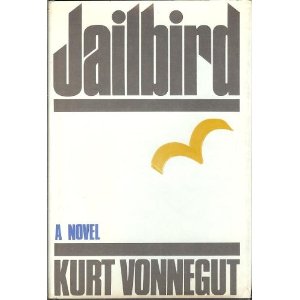
[READ: June 4, 2012] Jailbird

First off I want to say how neat it is that I took this book out of the library and that it’s from 1979.  Thirty-three years old!  Books are cool.

Anyhow, I have a stack of dozens of books I want to read, and yet somehow Vonnegut said, no, read me now.  In addition to Vonnegut books being relatively short, they are also very quick to read.  I read this in a couple of days, which is very satisfying.

My old boss at the library told me that she thought Vonnegut more or less stopped writing good books after Breakfast of Champions.  I disagree, but that has certainly colored the way I look at his later books before I read them–which one had she read that turned her off?  I kind of suspect it was this one.

In some ways this is a minor novel.  It’s fairly brief (240 pages, although there’s  30 page Prologue which I gather is from Vonnegut himself (you never know, he has so many layers going on)).  He explains some of the details that are in the book and several other interesting preface-type things.  I enjoyed the bit about the fan who wrote to Vonnegut and (Vonnegut claims) summed up all of his works in just seven words: “Love may fail, but courtesy will prevail.”  And that is the basic plot of this book. (more…)

Read Full Post »

SOUNDTRACK: PINK FLOYD-the final cut: a requiem for the post war dream (1983).
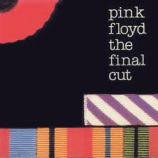
My college experience seems very unlike many people’s (especially the stories I hear from you young kids today).  And I’m just talking musically.  I went to college in the late 80 and early 90s.  And my freshman year, the most popular albums on campus  were Steve Miller’s Greatest Hits, Squeeze’s 45s and Under and Pink Floyd’s The Wall.  My friend John also loved this album.  And I think we listened to it hundreds of times, blasting out of dorm room windows.

It’s kind of strange that college freshmen would embrace an album about (more or less) Roger Waters’ father dying in WWII, especially since none of our fathers had died at all, much less in WWII.  But angst finds its home I suppose.

This album is not a sequel to The Wall, but it has echoes (see what I did there) from that album.  There were touches of WWII in The Wall.  And sonically a lot of this album sounds similar.  The big difference is that Roger Waters wrote pretty much the whole thing, long time keyboardist Richard Wright left the band and David Gilmour, sings on only one song.  So, it’s practically a solo project (and it fees a lot like Waters’ solo album The Pros and Cons of Hitch Hiking).

This album seems to have alienated fans of Floyd. But I happen to like it quite a lot.  And, I it a lot while reading Gravity’s Rainbow.

“The Post War Dream” opens with military sounding horns and funereal organs, as befits an album about the war.  It also has an intriguing assortment of sound effects (I wonder where he gets most of this stuff).  It sounds very Pink Floyd–Roger Waters’ voice is pretty unmistakable).  But “Your Possible Pasts” sounds even more Pink Floyd.  Evidently this album has a number of songs that were cast offs from The Wall.  If that’s true, this is probably one of them, as it sounds like it could easily fit on that album–especially when the keyboards kick in during the second chorus (even if Richard Wright wasn’t on the album).  And the guitar solo is so David Gilmour–that’s what you call a signature sound.

“One of the Few” has something I love from Floyd–whispered vocals (“teach”) and creepy laughing; it works as a nice transition to the louder “The Hero’s Return.”  This track is very complex–all kinds of tonal shifts, echoed vocals and bitter lyrics.  It explodes into “The Gunner’s Dream,” a gentle piano ballad about a soldier being shot down.   It’s a surprisingly tender song (although not really given the topic of the album) and lyrically it is really impressive.  I don’t really care for the saxophone solo–it’s not my thing, but I think it actually works well for the song.  And, again the end sounds like it came from The Wall (Waters is amazing at angsty screams).

“Paranoid Eyes” is a delicate song that works, for me, as lead in to the wonderful “Get Your Filthy Hands Off My Desert” a short, string-filled somewhat goofy song that is very bitter under its seeming jocularity.  It’s followed by “The Fletcher Memorial Home,” a really dark track about old age with a lot of current political commentary thrown in (although the “group of anonymous Latin American meat-packing glitterati” always confused (and amused) me.  So even though it is “about” WWII, there’s plenty of anger at current political climate, right Maggie?.  Boom boom, bang bang, lie down, you’re dead–take it away David…

“Southampton Dock” is another gentle song, more of a story with musical accompaniment.  It segues into “The Final Cut” a fitting piano end to a sad album about death and loss, that also happens to reprise song elements from The Wall.

But that’s actually not the last song.  We get the incongruous “Not Now John.”  It really doesn’t fit with the album at all (I happen to love it, even if it doesn’t).  It’s way over the top, including the how-in-the-hell-did-they-think-this-would-be-a-single? opening lyrics: “fuck all that we gotta get on with this. (fuck all that).”  And yet, single it was, reaching #7 in the US.  Man it rocks.  Oi, where’s the fucking bar, John?

The album ends properly with “two suns in the sunset” a mostly acoustic track that returns the mood to more sombre feelings (except for the rocking section where you drive into an oncoming truck).  Never has futility felt so upbeat.  For an album as personal as this is, it really draws the listener in.  Of course, if you don’t want to be drawn in, it’s easy to resist, as many have.

The reissue (which I don’t have), includes the cool song from The Wall movie, “When the Tigers Broke Free.”  Which I imagine would work quite well contextually.

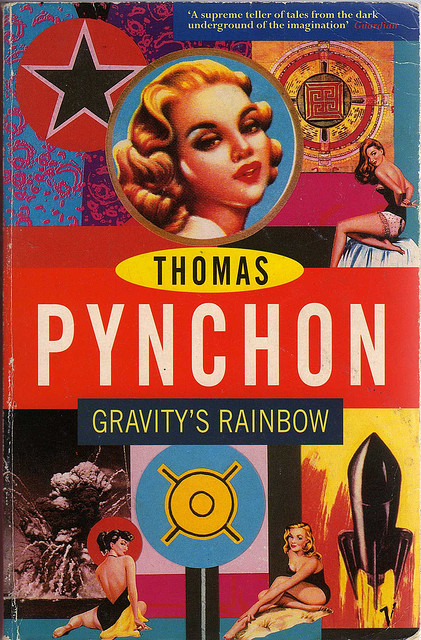
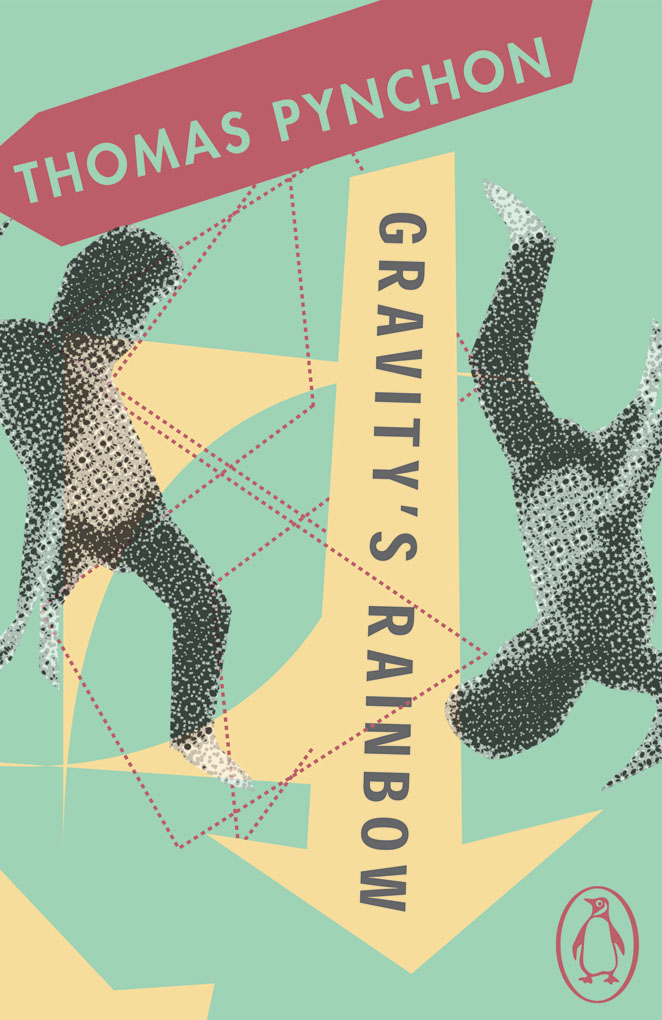
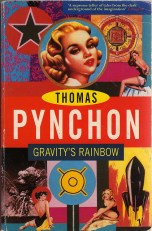
[READ: Week of April 30] Gravity’s Rainbow 4.7-end

And the book ends with a bang and a lot of leftover questions.  My first reaction is that I can’t get over Pynchon spent so much time in the last 60 pages talking about things that had nothing to do with the “plot” per se.  I never really felt like the story was all that hard to follow until the end, when Pynchon let loose the dogs of war on his writing.  There are several pages of stream of consciousness reverie where I was completely at a loss.  Of course, this has been true for much of the book–Pynchon would talk about something and then cycle back into it, filling in the gaps that he left open.  The whole book seemed to have this kind of coiled effect (perhaps a slinky). He would set up a scene as if you had been there all along.  And while you were puzzling over just who the hell he was talking about, he would flashback to whatever you needed to fill in the missing pieces.  And he is still doing that as the story comes to a close.

And although it starts out with a familiar figure, he quickly takes something and has a massive hallucination.  Is this even true? (more…)

Read Full Post »
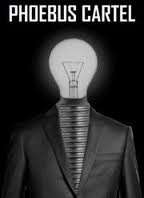
SOUNDTRACK: PHOEBUS CARTEL-“Difficult,” “Asylum Energy,” “November”

If I had any idea how many bands were named after things in Gravity’s Rainbow, or were perhaps tangentially related to it, like this one, I would have never bothered mentioning bands that I actually know.

Phoebus Cartel is a heavy metal band based out of Denmark.  And…  well, that’s really all I know about them.  I found this image for them online which linked me to their site on bandbase (if you must, you can also get it in English–although there’s no extra information).

There are three songs here on the site.  They are all sung in English and all have heavy guitars.  The band is clearly heavy metal inspired, but they also classify themselves as “alternativ.”

“difficult” has elements of Marilyn Manson in the singing (and even the melody). It’s a very catchy interesting song and very heavy.  “asylum enemy” has some great heavy chugging guitars. I like the part in the middle where we just get two heavy notes and a pause.  It reminded me a lot of Tool.  “November” has the most normal sounding singing in the bunch–it’s also the least metal sounding–more like heavy alt rock.  Although the break in the middle with slow guitars is nicely atmospheric.

I really enjoyed all three songs.  I’d like to learn more about these guys but I literally can find nothing else about them anywhere.

[READ: Week of April 23] Gravity’s Rainbow 4.1-4.6

Section 4, the final section is here at last.  We are out of The Zone and into The Counterforce.  The epigram here is by Richard M. Nixon.  Hilariously it is simply, “What?”  Unfortunately, I found it to be way too apt for my own feelings while reading this pretty confusing section.  While some sections advanced the “plot,” there were a ton of new characters added and, even more confusingly, a bunch of scenes that were either hallucinations or fantasies  or both.  And none of these do much for you sense of what the hell is going on. (more…)

Read Full Post »

SOUNDTRACK: MERCURY REV-Deserter’s Songs (1998).

Mercury Rev has changed a lot as a band over the years.  They began as a noisy punk outfit who was getting kicked off of airplanes, and by this album (seven years after their debut), they’ve turned into a kind of sweet orchestral pop band (a transformation not unlike The Flaming Lips).  I got into them with their album before this See You on the Other Side with the seriously rocking song “Young Man’s Stride.”  This album came as something of a shock, it is often so delicate.

I used to really love this album a lot and then one day I thought that it was a little irritating sounding, and that has stuck with me ever since.  The irritation comes from a combination of the really high-pitched vocals and the musical saw that seems to accompany most songs.  However, I hadn’t listened to it in quite some time and hearing it now, I found it enjoyable once again.

It opens with “Holes” a five-minute song that layers many different instruments (musical saw, of course, and horns) over Jonathan Donohue’s timid and wavery voice and gentle keyboard washes.   “Tonite It Shows” continues in the pretty vein–a beautiful song that name checks Cole Porter.  “Endlessly” features more unearthly soprano singing (there’s a lot of high-pitched music on this disc).  It has a lovely melody and references “Silent Night” on the flute.

The first highlight has to be “Opus 40” which tempers all of the potential irritants but maximizes the beauty and wondrous songwriting.  It soars to the heavens but stays grounded with a cool retro organ solo.  The other major highlight is “Goddess on a Hiway.”  “Hiway” is even better than opus 40 at blending the wonderful elements of this album.

“Hudson Line” is an anomaly on the disc–raw saxophone solo and low vocals change the pace of the album quite a bit.  “The Funny Bird” actually sounds like a Flaming Lips song circa 2008.  The Flaming Lips comparisons aren’t all that surprising since Donahue played with the Lips back in the early 90s.  And “Delta Sun Bottleneck Stomp” is a pretty raucous song (“stomp” is correct).  It has a traditional feel and ends the disc on an upbeat note.

So, yes, although some of the effects on the disc veer into annoying, it’s still a great disc overall.

[READ: Week of April 16] Gravity’s Rainbow 3.25-3.32

We have finally exited The Zone this week.  The lengthy Section 3 has come to a close with an unceremonious send off to Slothrop, who I assume we’ll see in Section 4, with the reintroduction of old characters and with a chance meeting that made me go wow!

I’m really amazed at the interconnectedness of the book.  While I didn’t think that things would be unrelated, the number of unexpected connections is really tremendous.  And while I missed many of the other characters, seeing the occasional one pop up is pretty exciting.

I’m happy to leave the Zone, not because I didn’t like it (although I admit I Slothrop’s slog from one place to another was getting a little tiring), but because I really want to see how he wraps all this stuff up.  Connections are popping up everywhere, and I feel like he’s doing a whole lot more than I initially thought. (more…)

Read Full Post »

« Newer Posts - Older Posts »