Feeds:
Posts
Comments

Archive for the ‘Corporate skewering’ Category

krausSOUNDTRACK: THE FLAMING LIPS-The Terror (2013).

terror After the distortion heavy and heaviness of At War with the Mystics and Embryonic (to say nothing of their other experimental releases), I wasn’t sure what to expect from an album called The Terror.  Yet with a title like that the album is far more invested in psychological terror than in pummeling you with scary noises and music.  The album is more unsettling and spooky with existential dread.

Wayne Coyne has always been a pretty optimistic guy–weird, sure, dealing with feelings of dread, sure, but never so dark and insular.  But I learned that before recording this album and most likely as an impetus to record it,  Coyne separated from his partner of 25 years, Michelle, and Lips multi-instrumentalist Steven Drozd temporarily relapsed into addiction.

In an interview, Drozd says the album is like a crisis of life confidence.  He also says that the uniformity in sonic style was intentional: “Instead of writing songs and then figuring out sounds, we’d write the other way around: create sounds then make songs out of those sounds.”

So the vocals are quite low in the mix, and there is not a lot of “music” in the album.  Rather there are layers of sounds–swishing synths, spiraling noises, percussion effects that seems to almost cover up the vocals, giving it a very claustrophobic effect.  “Look… The Sun Rising” opens the disc.  It is primarily percussion with some noisy sounds and really sharp piercing guitars (that play noisy counterpoint to the soothing chorus of Oh Oh Ohs).  And yet after all of that noise and chaos, the very lovely “Be Free, A Way” surfaces as a quiet introspective song.  There are gentle keyboard notes (not unlike on Yoshimi) that propel this song along.  “Try to Explain” is a pretty song with some unusual sound effects swirling around it (The Lips can’t so straight up pretty, right?).  And yet lyrically, this song, along with the rest, is very dark indeed.

“You Lust” is a 13 minute (!) invocation about various forms of lust.  It opens with the couplet: “You’ve got a lot of nerve/A lot of nerve to fuck with me.”  The middle of the song is a kind of Pink Floydian keyboard workout.  It’s a  lengthy jam that’s kind of samey, but I’ll bet if you can really sit (with headphones) and close your eyes and focus it’s pretty intense.  After about ten minutes of that repetitive claustrophobia, some lightening occurs with sprinkled keyboard notes.

“The Terror” is primarily in Coyne’s falsetto, and it seems gentle until the mechanized noises come bursting forth.  “You Are Alone” is the shortest thing here, under 4 minutes of squeaking noises.  And again, a lovely melody despite the title.  I feel like this song summarizes the album pretty well.  In it, Coyne sings “I’m not alone” while a deeper voice replies, “you are alone.”  Whose voice will ultimately win?

  “Butterfly, How Long It Takes to Die” returns to that abrasive guitar of the earlier tracks, but the main body of this 7 minute song is just bass, keening keyboards and Coyne’s whispered voice.  There’s a recurring synth line that is magical and/or creepy depending on your frame of mind.  It, along with many of the other songs, have a kind of coda that links the songs.  This one is mostly just choral voices, but it twists the ends of the songs in a different direction. “Turning Violent” is a quiet track, in which Coyne sounds nearly defeated until the second half of the song grows louder and more animated with layers of vocals.  The disc ends with “Always There…In Our Hearts” which seems to offer some hope…maybe.  There’s signs of uplift in the melody, and when the drums kick in at the end, it seems to propel the song into a more intense frame of mind.

And lyrically, despite all of the darkness that is always there in our hearts, there is a light peeking out: “always therein our hearts a joy of life that overwhelms.”

Although most reviewers find this album unremittingly bleak, I find the music to be beautiful in an aching sort of way–a beautiful way to deal with pain (better than getting the same tattoo as Miley Cyrus, anyway).

[READ: October 31, 2014] The Kraus Project

The title page of this book read: The Kraus Project: Essays by Karl Kraus translated and annotated by Jonathan Franzen with assistance and additional notes from Paul Reitter and Daniel Kehlmann.

So just what is this thing anyhow?  Well Karl Kraus was a German writer (1874-1936) whose main contributions to letters were some essays and a newsletter Die Fackel (The Torch).  The authors compare the newspaper (favorably) to a blog (while also complaining about what blogs have done to letters).  He started Die Fackel in 1899 and he continued to direct, publish, and write it until his death.  He used the paper to launch attacks on hypocrisy, psychoanalysis, corruption of the Habsburg empire, nationalism of the pan-German movement, laissez-faire economic policies, and numerous other subjects.  For the first ten or so years, Kraus was the editor, accepting contributions from around the German speaking word.  But in 1911, he became the sole contributor to the newsletter.

He also wrote many essays (he did not care much for fiction), including the two main ones that compression this book: “Heine and the Consequences” (1910) and “Nestroy and Posterity” (1912).  The book also includes two follow up essays: “Afterword to Heine and the Consequences” and “Between Two Strains of Life: Final Word to Heine and the Consequences” (1917) and a poem: “Let No One Ask…” (1934).

The essays themselves are quite brief.  Despite the first coming in at 135 pages, note that the left pages are all in German (so reduce 135 by half), nearly all of the English pages are filled with footnotes (reduce by half again) and some of the footnotes run for several pages.  So the essay could be said to be about 25-30 pages.

The same is true for all of the pages in the book.  The left sides are in German (except the footnotes) and most pages are split in half because of the footnotes.  Which means that Franzen and friends write far more than Kraus did.  Ultimately, this book is actually three things: It is a collection of Kraus’ essays with Franzen’s fine translation; it is an explication of Kraus’ attitude and about life in Germany during Kraus’ life and finally it is an insight into Franzen as a young man living in Germany and why Kraus was so appealing to him.

The first part: Kraus’ essays. (more…)

Read Full Post »

bonusSOUNDTRACK: DAN MURPHY-“Drinion” (2013).

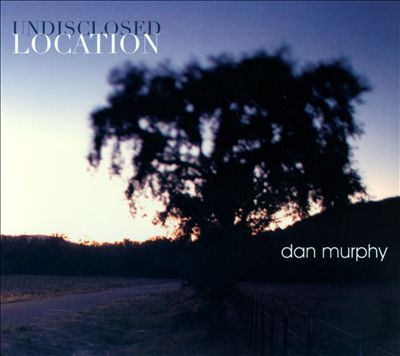
danmurphyI never would have guessed that there would be a song called “Drinion.”  But there it was, on Dan Murphy’s album, Undisclosed Location.  Now, I don’t know anything about Dan Murphy.  In fact, when I looked him up there also seems to be a country music singer named Dan Murphy (or maybe he is the same person?).

Anyhow, Undisclosed Location is mostly jazz piano.  “Drinion” is instrumental (so there’s no clue for me about why it is called this–if it has any connection  to The Pale King or what).  There’s no levitating that I can hear.

I do hear a bit of the “All Things Considered” theme (the jazzy version, naturally), in part of it.

I like jazz piano a bit but I’m not knowledgeable about it at all.  So, this was a fun find, and an enjoyable 6 minutes of jazz.  Thanks Dan.  Can you really be a country singer, too?

[READ: September 8, 2014] Pale Summer Week 9 (Notes & Asides and Bonus chapters)

As has been stated many times, The Pale King was unfinished.  It was assembled by editor Michael Pietsch. Pietsch decided, based on the evidence given to him, what this book would look like.  It’s an unimaginably daunting and thankless task, especially given how many ideas DFW was tinkering with.  The Notes and Asides not only change the book, they change characters, emphasize nonexistent plot lines and basically make it seem like perhaps what we have here is but a small fraction of the overall work (rather than seemingly like a mostly completed book with a few pieces left out).

The final ten pages of the hardcover edition collects these notes and collates them in section by section fashion, with some overall notes about the book included at the end.

Since the notes are just notes, I’m not going to really go into them (otherwise I’ll just be copying the notes), but I would like to stress some that I think are interesting or revealing about what we might have gotten had he finished the book. (more…)

Read Full Post »

backSOUNDTRACK: TOADIES-“Summer of the Strange” (2012).

summerstrageToadies had a hit (which is still played on “Modern Rock” radio today) in 1994 called “Possum Kingdom.”  I really liked the song because the tempo was way off kilter and the lyrics were inscrutable (“Do you wanna die?” “So help me Jesus.”).  And the singer had a screamy kind of voice that sounded like he might be unhinged.  It was a very improbable hit and yet there it was.  And then Toadies went away.

When I heard that they had put out other albums I was surprised, so I looked them up and saw that they got into all kinds of legal grief with their record label during the (abandoned) release of their second album.  And they basically broke up for like ten years. And then they got back together and then re-recorded their delayed album and then put out the album that this song is on.

I’ve only listened to couple of songs from Play.Rock.Music.  I didn’t like the one with the horns (that may have been a remix actually), but overall the albums sounded quite Toadies-like.  And this song (with the very weird–perhaps too intentionally weird) contained some of the craziness of that first single.  It opens with a simple bass and drum set up.  Then there’s some odd ball vocals and some fuzzy smattering of guitars.  Then the guitars roar in and the chorus is strangely catchy, and the lead vocalist sounds like he still might be a bit unhinged.

By the end of the song, the guitar solo is a wild affair and the rest of the band is noisy and distorted and a little sleazy and you kind of leave the song feeling just a bit dirty–a perfect Toadies song.

[READ: September 1, 2014] Pale Summer Week 8 (§48-§50)

Because I was on vacation, I didn’t notice that the Pale Summer group read had stayed on an earlier chapter and were just getting the read rolling again.  So, I’m already ahead of the spoiler line.  But since I have this post written and I’m anal retentive, I’m going to post my final sections on the originally slated date (okay a day late for Labor day).  But as a concession to everyone else, I’m going to save the end pages and my thoughts on the book for next week.

So this week’s post is about the end of the book proper.  And next week will contain the comments from Pietsch at the end of the book as well as the additional materials that were included in the paperback.

A lot of information is handed out in these first two sections.  However, it’s not entirely clear what happened. And as with the unfinished book we’re left wondering if any more of the story would have clarified anything. (more…)

Read Full Post »

tpk5SOUNDTRACK: INTERIOR DISPOSITION-“Fornix” (2008).

Critical Injuries Five Years of RehabilitationIt was challenging to find a related song for this week’s reading, although frankly a band called Interior Disposition would fit with just about any DFW passage.  But having a song called “Fornix” paired nicely with the computer problems that the author faced this week.

From the online information, it seems like Interior Disposition is a metal band.  And yet when I tracked down their full album and listened to a bit it’s largely trippy outer space noodling, or as one of the sites labels them: dark ambient.  There’s bubbling sounds and sounds of what I think of as deep space.  It is strangely relaxing and yet with a hint of tension all the way through (so yes, dark ambient is a pretty good sum).

Okay a little more digging tells me that the band is actually a guy, Oleg Hurvatov, who is Russian and also records under several other aliases: the wonderfully named Exploplasmatic Coagulation, and the puzzling Lanceolaria Im Licht Der Laterne

“Fornix” is only 1:46 and is probably a good introduction to the band/album.  If you like the 2 minute sound, the rest is pretty darn similar, just much longer.

[READ: August 18, 2014] Pale Summer Week 6 (§35-§45)

This weeks read was mostly a series of smallish sections.  some of them are entertaining, some of them provide interesting insights into the organization of the Service and of some of the characters.  And some of the sections are just downright funny.  The more I read of this book this time, the more bummed I am that it was never finished.  I even just wish I knew how much more he had planned.  There’s potential for this book to have spiraled out to 800-900 pages, there just seems to be so many things he could have followed up on–the Sylvanshine transformation to mastering RFI; the whole business with the infant, I love it; learning more about Mr. X (although likely there wouldn’t be much more about him); and of course what led to David Wallace leaving the Service and what compelled him now to write about it (which I don’t think is really addressed).
(more…)

Read Full Post »

tpk4SOUNDTRACK: NEGATIVLAND-“Nesbitt’s Lime Soda Song” (1987).

limeThere are multiple references to Nesbitt’s soda in this book.  I am unfamiliar with Nesbitt’s except in this funny little song from Negativland (on their album Escape from Noise).  I have always liked this song, perhaps because it is so simple (and is an actual song) amidst the chaos of the album.

A simple strummed guitar introduces this quaint song about everyday frustrations:

We spent a lovely summer, my wife Elaine and me,
We bought us a great big motor home, with a shower and TV,
We was camping and having a great time, watching Brokaw on Today,
Till a bee flew into the Nesbitt’s Lime Soda, and we had to throw it away.

Now most of the time I’m a peaceful man, but I lost my temper that day,
Just one last bottle of Nesbitt’s Lime Soda, and we had to throw it away.

I’m including the second verse not only because of the sodas listed, which I find endearing, but also because of the phrase “good old Mountain Dew” which reminds me of something DFW would say:

I brought a case of Nehi, and Double Cola, too,
A half a dozen Upper 10’s, and good old Mountain Dew,
I bought a quart of cola-a, to get me through the day,
But just one bottle of Nesbitt’s Lime Soda, and we had to throw it away.

I think most of the Nesbitt’s in the story is orange (that was their big seller) but Nesbitt’s did actually did have a Lime (or I guess Lemon-Lime) soda as well

[READ: August 4, 2014] Pale Summer Week 4 (§23-§26)

After last week’s massive 100 page section inside of one person’s head, it’s nice to get back to some of these smaller sections.  I’m particularly pleased to have another David Wallace section, as I find his the most entertaining.

§23

This is a brief First person section that begins: “Dream:”  Rows of foreshortened faces, many blank doing endless small tasks. It was his psyche teaching him about boredom.  He was often bored as a child, but that boredom was not actual boredom.  Back then he worried and fretted a lot, feeling the “sort of soaring, ceilingless tedium that transcends tedium and becomes worry” (253).  It was anxiety with no object.

He was the nervous delicate son, as opposed to his brother, the gifted driven son whose nightly piano practice coincided with their father’s return from work.  I section that says “after the incident with my own son” (254) reminded me that someone suggested that “Incarnations of Burned Children” may actually fit into this book and it seems like that could be applicable here, although I shudder to think it.  In psychotherapy he realized that his family was Achilles.  His brother was the shield and he was the heel. His father was a warrior, but his mother’s role was unclear. (more…)

Read Full Post »

tpk3SOUNDTRACK: OBETROL-“The Sound Machine” and “Chopped an Dropped”(2011).

obetrrolObetrol is a band that I can find out very little about. They seem to have 5 songs out and each one is quite different. My favorite is “The Sound Machine” which has a lush sound with twinkly guitars and a wispy female vocalist singing over the top of it.  It has a very trippy slow motion quality to it.  The singer sings a bit like a delicate Kim Gordon (in that shes not always exactly on key).

It’s hard to get more out of this song since it’s only 2:25, but I think it would make a cool intro to any record.

“Chopped and Dropped” on the other hand opens with buzzy guitars (and a “Kick Out the Jams” sample).  The vocals are sung (screamed) by a man. It is a fast-moving tinny punk song with trippy female echoed vocals in the background.

Hard to pin them down, but you can check them out here.

[READ: July 28, 2014] Pale Summer Week 3 (§22)

This week’s read is only one section because it is almost 100 pages of one person’s testimony.  Presumably, this is also part of the testimony on videotape which was broken down into smaller sections.  But there is no “context” for this section;  no ID number.  Although it does address very similar issues and questions.  I was on the fence about how much to include here.  So much of it is “irrelevant,” that I hate to get bogged down in details.  So I think it will be a basic outline of ideas until the more “important” pieces of information surface.

§22

For the most part, this is all inside one man’s head as he talks about his life in college, after college, and into the Service.  In terms of advancing the “plot,” there’s not much (until the end).  Mostly this is simply a wonderful character study, full of neuroses and problems that many people face at some point (to one degree or another).  We don’t know who this author is (very minor spoiler: we will learn who it is in §24 [highlight to read]).

The interviewee states that “A good bit of it I don’t remember… from what I understand, I’m supposed to explain how I arrived at this career.”

Initially he was something of a nihilist, whose response to everything was “whatever.”  A common name for this kind of nihilist at the time was wastoid.  He drifted in and out of several colleges over the years, taking abstract psychology classes.  He says that his drifting was typical of family dramas in the 1970s–son is feckless, mother sticks up for son, father squeezes sons shoes, etc. They lived in Chicago, his father was a cost systems supervisor for the City of Chicago. (more…)

Read Full Post »

tpk2SOUNDTRACK: SYLVANSHINE (2014).

sylvanOne of the fun things about doing these summer posts is finding appropriate music to each week’s write up. I like to find something related to what’s down below.  Last week it was an artist named Pale King.  This week it’s a band called Sylvanshine.

Sylvanshine is a cover band from Texas.  According to their web site, they play covers of Collective Soul, Van Halen, The Black Crowes and Stevie Ray Vaughn. I didn’t listen to any of their live tracks, but the excerpt of their version of The Toadies’ “Possum  Kingdom” is pretty spot on.

Learn all about them (or book them) at their website.

[READ: July 21, 2014] Pale Summer Week 2 (§10-§21)

Week two continues some of the characters’ lives and introduces us to them at the Service.  It also has a couple of very lengthy passages in which people spout their opinions about aspects of the country and the Service which are thoughtful and, frankly, very interesting and would work as good meme quotes, if you liked that sort of thing.

§10

This is a two-paragraph chapter about bureaucracy “the only known parasite larger than the organism on which is subsists.”

§11

A list of syndromes/symptoms associated with Examination Postings in excess of 36 months (ending with “unexplained bleeding”).

§12

Leonard Stecyk is back in this short chapter.  He is an adult now. He is walking door to door to introduce himself to his presumably new neighbors, and to offer to the neighbors the Post Office’s 1979 National Zip Code Directory–“his smile so wide it almost looked like it hurt.”

§13

An unnamed character is inflicted with nervous profuse sweating.  (This character will be identified later).  This chapter also has footnotes (as did the Author’s Foreword), although these footnotes are in the third person (as is the chapter).  Does this mean it is written by Dave Wallace too?  It is another thoroughly detailed chapter that I find very enjoyable to read even if it doesn’t advance the “story” much. (more…)

Read Full Post »

tpk1SOUNDTRACK: PALE KING-“An Airing” (2013).

paleNope, I never heard of the musician Pale King until I searched for a song to put here.

This song begins as a piano instrumental (with some keyboards layered over).  It swells and lifts through some simple chord changes.  A martial beat comes in from time to time to give it some urgency.

This might actually work as a the opening credits to the never-to-be made movie of The Pale King, or perhaps a soundtrack to §1 (which is a short prose poem type of thing).

At about 1:45, some guitars burst through (adding some drama), and the drums grow louder.  It builds slowly until it starts to taper off and ends much like it began

I don’t know much or anything about the artist except that he’s from Toronto and he has a bandcamp site where you can hear this track.

[READ: July 14, 2014] Pale Summer Week 1 (§1-§9)

In other Summer Reading Group posts, I have tried to summarize chapters, make connections between characters that I may have missed in earlier readings of the book and, just tried to be more microscopic about my reading.  I don’t usually philosophize too much about the stories, but I do wax poetic from time to time.  Having said all that, The Pale King presents its own unique challenges because the book is unfinished.  So it’s not always clear if any connections can be made from chapters that are elliptical. DFW in particular likes to write scenes without naming characters, giving the reader something to discover later on, perhaps.  So you may have a scene that has no named people in it, but their speech patterns or details are referenced later, allowing you to piece things together.

There is definitely some of that piecing going on here, but as I said, when a book is unfinished, and this one was largely pieced together by editor Michael Pietsch, it’s not clear if you are missing something or if it simply isn’t there.  So there will be some speculation, and some omissions for sure, but we press on.

A further complication is the collection of Notes and Asides at the end of the book.  Some reveal information about characters that is not necessarily evident in the book, some talk about things that might have happened or even might have been removed if DFW had played around with the text more.  In general I am not going to read these now, so as to avoid spoilers.  But I may insert them later (with spoiler warnings) to make it easier to make sense of the book later.

The primary setting for the book is the IRS Regional Examination Center in Peoria, IL set in 1985.  Editor Michael Pietsch (in his thoughtful and helpful Editor’s note which is mandatory reading if you are going to read the novel) says that DFW described the book as “torandic,” with elements coming in and going out over and over.

The other key question is just how unfinished is this?  We have no idea.  It feels like it could go on for a ton longer, and yet it no doubt would have been edited down to a more manageable size afterwards.  There are sections that seem like they could have more and others that seems like they would have been trimmed a lot.  And then of course, there could be other things that never even saw the light of day.  None of that should keep anyone from reading the book though. (more…)

Read Full Post »

 emikoSOUNDTRACK: DIANE CLUCK-Tiny Desk Concert #343 (March 17, 2014).

cluckI know of Diane Cluck only from one song that was played on an NPR show.  I really liked it (it’s called “Sara” and she plays it third here). Cluck has an unusual yet very compelling voice and a guitar style that is simple yet also unusual.

“Trophies” has a kind of Joni Mitchell feel to it–the whole thing feels kind of sixties, although not in the way she sings or plays, there’s just something about it that skews sixties–perhaps its the unusual vocal melodies in the verses?

For “Grandma Say,” Cluck switches to the piano and plays a bouncey but dark song with a fantastic vocal delivery and rather funny (but meaningful) lines.  For “Sara,” Diane puts some bells on her boots.  And when asked where she got them she sheepishly admits the truth.  “Sara” sounds as good live as it did on record–Cluck’s voice is just as compelling in this setting.

I really enjoyed this brief set.  And I was really struck by Cluck’s appearance.  She is quiet tall and extremely thin, and she seems even more stretched out by her tall hair and long neck.  And yet she seems to be putting no effort into anything that she’s doing.  She makes for as mysterious a figure as you might expect from these songs.   I was as captivated by watching her as I was listening to her.

[READ: June 26, 2014] Emiko Superstar

As part of this recent influx of graphic novels, I also scored Emiko Superstar.  This title looked familiar from the Minx sampler that I have, so I was excited to read it.

The story is by Mariko Tamaki and is about a young Japanese-American girl named Emily.  We meet her family right away–her father is a big burly American guy and her mom is a demure Japanese woman.  She is named for her grandmother Emiko, who was a vivacious and fun dancer (although Emily’s mother now frowns on dancing and public fun).  As might be expected, Emily is a quiet, nerdy girl, hanging around with the nerdiest kids in school.

She doesn’t really mind being a nerd until before one summer break, when all the other nerds plan to go to a convention that will help them land great jobs.  Emily doesn’t know when nerd meant being a corporate sellout, and she refuses to go.  Rather, she decides to stay around town and get a crummy job at a coffee shop.  But after one regrettable (or not) incident, she realizes she may be unemployed for the rest of the summer.

Her mother will have none of that, and finds her a job babysitting most days during the summer.   The family she babysits for seem pretty perfect.  The husband is an athletic happy, loud guy who is proud of his life, his wife, his kid and his house.  The wife is much quieter and seems a bit embarrassed by her husband, but otherwise seems reasonably content with her son and her life.  And there’s the baby, who is drooly but pretty easy to deal with.

One day at the mall, Emily sees a wild-looking girl dancing around, making a racket and advertizing a place called The Factory, where the freaks all go.  Before being dragged away by security, she throws flyers out into the crowd and Emily grabs one.  And Emily feels an electric shock in her body at the thought of going to this place. (more…)

Read Full Post »

bothfleshSOUNDTRACK: SIGUR RÓS-Von brigði [Recycle Bin] (1998).

recycleAfter releasing their first album, Sigur Rós was approached by Icelandic musicians to remix the album. And thus came Recycle Bin.  I realized too late that I really just don’t like remix albums all that much–they’re mostly just faster drums plopped on top of existing songs.  And such is the case here.  Despite the interesting musical pedigrees of the remixers, there’s nothing anywhere near as interesting as on Von itself.  There are ten tracks, but only 5 songs.

”Syndir Guðs” gets two remixes:

Biogen keeps the bass but adds some more drumlike sounds.

Múm removes the bass, adds some wild drums and trippy textures and reduces the 7 minutes to 5.  It is quite pretty but very far from the original.

“Leit að lífi” gets three remixes

Plasmic takes a spacey 3 minute wordless noodle and turns it into a heavy fast dance song with speedy drums, big bass notes and with spacey sounds.

Thor brings in some fast skittery drums and keeps the spacey sounds (which sound sped up).  And of course bigger bass noises.

Sigur Rós recycle their own song into a dance song by adding funky bass and drums.

“Myrkur” gets two remixes.  the original is a fast-paced groovy track.

Ilo begins it as a spacey non-musical sounding piece.  After two minutes they add a beat of very mechanical-sounding drums.  It’s probably the most interesting remix here.

Dirty-Bix adds big, slow drums.  It keeps the same melody and vocals as the original but totally changes the rhythm and texture of the song, (removing the guitar completely).

The remaining three songs get one remix each.

The original “18 Sekúndur Fyrir Sólarupprás” is 18 seconds of silence.  Curver turns it into “180 Sekúndur Fyrir Sólarupprás” and makes a muffled drum beat and some other samples from the album, I think.  It constantly sounds like it is glitching apart until the end where it practically disintegrates–an interesting remix of silence.

“Hún Jörð” 7 min Hassbræður increases the drums and adds a more buzzsaw guitar sound and makes the vocals stand out a bit more.

“Von” has delicate strings and Jónsi voice.  The remix by Gusgus adds low end bass and drums making it a thumping rather than soaring track.

I prefer the original, but I much prefer their next album to the first one.

[READ: end of October to early November 2013]  original articles that comprise Both Flesh and Not

As I mentioned last week, I decided to compare the articles in Both Flesh and Not with the original publications to see what the differences were.  I had done this before with A Supposedly Fun Thing… and that was interesting and enlightening (about the editing process).

This time around the book has a lot more information than the original articles did.  Although as I come to understand it, the original DFW submitted article is likely what is being printed in the book with all of the editing done by the magazine (presumably with DFW’s approval).  So basically, if you had read the original articles and figured you didn’t need the book, this is what you’re missing.

Quite a lot of the changes are word choice changes (this seems to belie the idea that DFW approved the changes as they are often one word changes).  Most of the changes are dropped footnotes (at least in one article) or whole sections chopped out (in others).

For the most part the changes were that the book version added things that were left out or more likely removed from the article.  If the addition in the book is more than a sentence, I only include the first few words as I assume most readers have the book and can find it for themselves.  The way to read the construct below is that most of the time the first quote is from the original article.  The second quote is how it appears in Both Flesh and Not.  At the end of each bullet, I have put in parentheses the page in BFAN where you’ll find it.  I don’t include the page number of the article.  And when I specifically mention a footnote (FN 1, for example), I am referring to the book as many times the articles drop footnotes and they are not always in sync.

Note: I tried most of the time to put quotes around the text, but man is that labor intensive, so if I forgot, it’s not meant to be anything significant. (more…)

Read Full Post »

« Newer Posts - Older Posts »