Feeds:
Posts
Comments

Archive for the ‘Corporate skewering’ Category

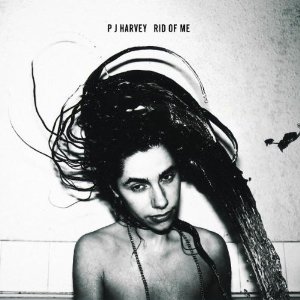
SOUNDTRACK: PJ HARVEY-Rid of Me (1993).

For Rid of Me, PJ Harvey jumped to the big leagues (relatively) by enlisting maniac Steve Albini as a producer.  And he takes the rawness of Dry one step further into a sound that is both raw and sharp.  He really highlights the differences between the highs and lows, the louds and quiets.  And man, when this came out I loved it.

Like NIN’s “March of the Pigs,” the opening of “Rid Of Me” is so quiet that you have to crank up the song really loud.  And then it simply blasts out of the speakers after two quiet verses.

“Legs” turns Harvey’s moan into a voice of distress, really accentuating the hurt in her voice.  And Harvey hasn’t lightened up her attitudes since Dry, especially in the song “Dry” which has the wonderfully disparaging chorus: “You leave me dry.”

“Rub Til It Bleeds” is a simple song that opens with a few guitars and drums but in true Albini fashion it turns into a noisy rocker.  “Man Size Quartet” is a creepy string version of the later song “Man Size” (I’ll bet the two together would sound great).  And the wonderful “Me Jane” is a great mix of rocking guitars and crazy guitar skronk.   Albini really highlights the high-pitched (male) backing vocals, which add an element of creepiness that is very cool.

For me the highlight is “50 Foot Queenie”.  It just absolutely rocks the house from start to finish.  The song is amazing, from the powerful…well…everything including the amazing guitar solo.  “Snake” is a fast rocker (all of 90 seconds long) and “Ecstasy” is a song that feels wrung out, stretched to capacity, like they’ve got nothing left.

It’s not an easy record by any means, but it is very rewarding.  This is a CD that really calls for reamastering.  Because it is too quiet by half, and could really use–not a change in production–just an aural boost.

[READ: end of February and beginning of March] A Supposedly Fun Thing I’ll Never Do Again

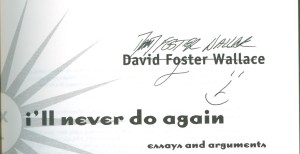
This is a collection of 7 essays that DFW wrote from 1990-1996.  Three were published in Harper’s, two in academic journals, one in Esquire and the last in Premiere.  I devoured this book when it came out (I had adored “Shipping Out” when it was published in Harper’s) and even saw DFW read in Boston (where he signed my copy!).

click to see larger

[Does anyone who was at the reading in Harvard Square…in the Brattle Theater I THINK…remember what excerpts he read?]

The epigram about these articles states: “The following essays have appeared previously (in somewhat different [and sometimes way shorter] forms:)”  It was the “way shorter” that intrigued me enough to check out the originals and compare them to the book versions.  Next week, I’ll be writing a post that compares the two versions, especially focusing on things that are in the articles but NOT in the book (WHA??).

But today I’m just taking about the book itself. (more…)

Read Full Post »

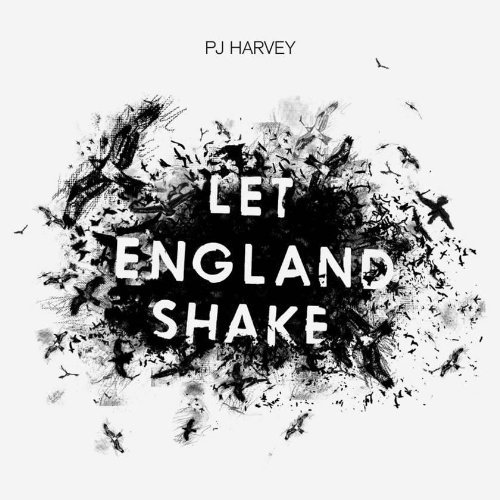
SOUNDTRACK: PJ HARVEY-Let England Shake (2011).
I’ve listened to this disc several times online; I have no details about the recording.  There’s samples, but I don’t know what they are and I can’t really tell what all the lyrics are (it’s obvious she’s pretty angry, but the details are lost to me).

The first question for me on hearing this disc is what happened to PJ Harvey’s voice?  It comes as such a shock when you compare it to Dry.  But once I accepted that this is not the PJ Harvey of Rid of Me, I listened to it as a new artist and I really like it.  But it’s a weird record to be sure.

The title track is played on an autoharp (!).  In fact the autoharp is a dominant instrument here.  It’s got a cool melody and, once you accept that she sounds like the singer from Rasputina, you can really appreciate what’s going on.

The second track, “The Last Living Rose,” returns somewhat to the PJ of old (the opening “God damn” sounds like she’s about to bust out some good-ol’ invective).  And there are guitars, but the music is upbeat (as are the vocal melodies) and there’s even a horn!  “The Glorious Land” has samples from the cavalry (I can see the horses riding across the plains) and a cool, slinky guitar (or is that the autoharp?).  There’s male vocals in the middle of the song, and it makes for disconcerting harmonizing (especially when PJ,’s voice ratchets up the weirdness and sounds more like Kate Bush).  But musically this song is great, it’s got a wonderful 80’s alt-rock feel.

“The Words That Maketh Murder” also has horns and some interesting male vocals chanting the lyrics.  This has one of the least subtle lyrics I’ve heard in a long time, although the re-imagining of the “Summertime Blues” refrain is pretty genius.

“All and Everyone” opens with more autoharp, and I think I’m realizing that the autoharp is what I think of as the interesting guitar sound (this song opens like a Smiths’ ballad.)  There’s more horns on this track which adds a weird dimension of sadness to it.  “On Battleship Hill” is a fast but delicate track in which PJ pulls out an astonishing falsetto–completely unexpected.  After the first verses, the rest of the song has, again, a kind of slinky 60s vibe.  “England” brings out the Kate Bush voice in PJ again.  This is a very delicate song, the music is mixed so low in the background that it feels like acapella–I guess Harvey has grown much more confident in her voiuce.  The music builds and builds though and there’s an unexpected middle eastern sounding vocal in the background.

“In the Dark Places” brings out Harvey’s guitar (in this case the Harvey is Mick Harvey, I believe) and her lower register vocals. While “Bitter Branches” is probably the loudest song on the disc, with a bunch of screamed vocals.  It’s rather startling considering the rest of the disc, but it’s nice to know just how much fire PJ still has.

“Hanging in the Wire” is another delicate song, with quiet pianos and Harvey’s sedate voice.  “Written on the Forehead” returns to that middle eastern vibe (“people throwing dinars at the belly dancers”) and that Kate Bush vocal–the backing vocals remind me of Peter Gabriel.  The album ends with “The Colour of the Earth.”  It’s the most disconcerting song of the bunch becuase it opens with a male singer (John Parrish?) singing what sounds like an old trad song (the melody is very traditional).  Then PJ joins in and makes the song her own.

It’s obvious that the lyrics are the main aspect of this disc, and I know that I’m missing something by not having them. I’m also missing a lot by not knowing all that much about England’s history.  It sounds like she has a lot of gripes with Eng-a-lund, and I’m curious to know what she’s on about.  But more than that, I’m totally hooked by the music.  It’s a great reinvention of a great artist.

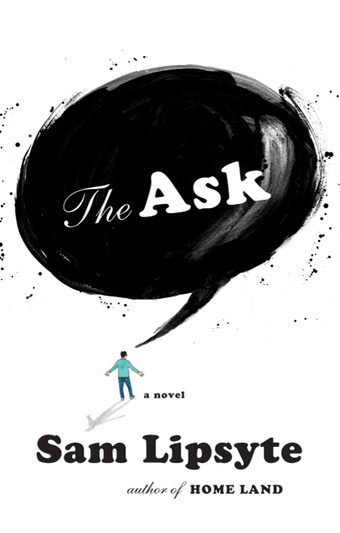
[READ: February 9, 2011] The Ask

I was planning to read nothing except books from the pile by my bed for the foreseeable future.  And then, as if calling to me, I saw this book, which I was planning to read eventually, on a display right in front of me called Booklist Editor’s Choice (a new display for our library).  I stared at it for three hours and just had to check it out.

And I’m glad I did.  For the most part I really enjoyed this book, it was quite funny and the main character, kind of a schlub, was completely relatable.  I say for the most part because I felt like it dragged a bit about 2/3 of the way through (more on that later).  But its possible that it dragged because the first half of the book was just fantastic–fast paced and clever with lots of wonderfully funny lines (more on that later too).  And a setting that I found very entertaining.

The story is about Milo Burke. He is married to Maura and they have a going-on-four-year-old boy Bernie who is nothing if not precocious.  The titular ask concerns Bernie’s job.  He works for a small arts college in New York (which he called Mediocre University).  His job is to basically ask (hence the title) rich people for money for the college. We see him in his office as the book opens and we meet the rest of the staff: the surprisingly unslacker slacker Hubert (with whom Milo shares space and ribald jokes…this section is the funniest; many paragraphs end with sentences that hilariously undermine what he just described.

We often called it, with what we considered a certain amount of panache, the Mediocre University at NewYork City.  By we, I mean Horace and I.  By often, I mean once (4).

His supervisor is Vargina.  (This name, which is obviously over the top and childish and which I absolutely laughed at and then felt was maybe too easy of a laugh, has a great origin story and is really never not funny no matter how often you see it).  Milo has obscene fantasies about Vargina, but he is a (somewhat) happily married man and would not cheat on his wife.

He’s not very good at his job, but the other askers do alright so his job is safe.  Until, that is, he insults the daughter of one of the university’s biggest donors and he is summarily let go, without severance.  And then we get to see a lot about his home life. (more…)

Read Full Post »

SOUNDTRACK: BIG DIRTY BAND-“I Fought the Law” (2006).

I just found out about this “supergroup” which was created for the Trailer Park Boys Movie.    The group consists of Geddy Lee and Alex Lifeson from Rush, drummer Jeff Burrows from The Tea Party and three people I don’t know: the singer from Three Days Grace, the singer/guitarist from Thornley and on lead vocals Care Failure from Die Mannequin.

I have to say that I’m not that excited by this cover.  The song has been covered so many times (some very good: The Clash, some very clever: The Dead Kennedys, and some terrible: many others).  And frankly there’s not much that you can do with this song.  It’s simple in structure with potential for shouting (which everyone likes), but little else.

For Rush fans, you can’t tell that Geddy or Alex are even on it.  So really it’s just a kind of metal-ish version of this old song.

Oh well, they can’t all be zingers.  You can hear it here.

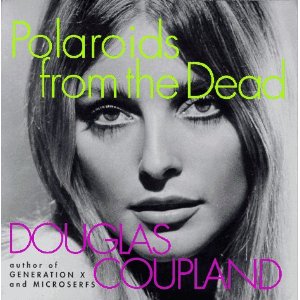
[READ: February 1, 2011] Polaroids from the Dead

After reading Shampoo Planet, I wanted to see if I remembered any of Coupland’s books.  So I read this one.  It’s entirely possible that when I bought this book I was disappointed that it was not a new novel and never read it.  Because I don’t remember a thing about this book.  (This is seriously calling into question my 90’s Coupland-love!).

But I’m glad I read it now.  It’s an interesting time-capsule of the mid-90s.  It’s funny to see how the mid 90s were a time of questioning authority, of trying to unmask fame and corporate mega-ness.  At the time it seemed so rebellious, like everything was changing, that facades were crumbling.  Now, after the 2000s, that attitude seems so quaint.   Reading these essays really makes me long for that time when people were willing to stand up for what they believed in and write books or music about it (sire nothing changed, but the soundtrack was good).

So, this collection is actually not all non-fiction.  Part One is the titular “Postcards from the Dead.”  It comprises ten vignettes about people at a Grateful Dead concert in California in 1991.  As Coupland points out in the intro to the book, this was right around their Shades of Grey album album In the Dark, and huge hit “Touch of Grey”, when they had inexplicable MTV success and it brought in a new generation of future Deadheads.  He also points out that this is before Jerry Garcia died (which is actually helpful at this removed distance).

These stories are what Coupland does best: character studies and brief exposes about people’s lives.  The stories introduce ten very different people, and he is able to create a very complex web of people in the parking lot of the show (we don’t see the concert at all).  As with most Coupland of this era, the characters fret about reality.  But what’s new is that he focuses on older characters more (in the first two novels adults were sort of peripheral, although as we saw in Shampoo, the mother did have millennial crises as well).  But in some of these stories the focus is on older people (Coupland was 30 in 1991, gasp!).  And the older folks fret about aging and status, just like the young kids do. (more…)

Read Full Post »

SOUNDTRACK: MONEEN-The World That I Want to Leave Behind (2010).

I’ve liked Moneen’s discs; they played an interesting mix of grungey noisey rock and incredibly poppy emo.  And their song titles were really long and often funny (“The Frightening Reality Of The Fact That We Will All Have To Grow Up And Settle Down One Day,” “There Are A Million Reasons For Why This May Not Work… And Just One Good One For Why It Will”).

The first sign that The World I Want to Leave Behind is different is that their song titles are all really short.  The longest one is the title of the album–which is the shortest song: a 2 minute quiet intro that features some noisy guitars at the end.   The rest are 1-3 words long.  Now, perhaps you can’t judge a band by that; however, their music, like thier song titles, has eschewed complexity and embraced pop.  (“Believe,” “Waterfalls,” “Lighters”).

Okay Moneen always had this component to it.  So it’s not like suddenly the band is all pop.  Take “Are We Really Happy with Who We are Right Now?” from the album of the same name .  The song is all emo vocals (including harmonies) but the music is punky and noisy.  It’s also got a lot of dissonance.  Similarly, “The Start to this May be the End to Another” (from their debut), opens with really blasting noise and then turns into a heavy emo track with loud and quiet sections.  They are certainly poppy, but there’s at least nods to noise.

This album removes all of that noise and chaos and settles into to some tried and true emo.  If you hate emo, you will hate this album.  There’s virtually no dissonance on the disc at all.

Okay, that’s not entirely true.  The second song, “Hold That Sound” opens with some noiy aggressive guitars (and interesting noisy effects) and “The Long Count” has some noisy heavy opening chords which propel through the track.  But unlike earlier records, the noise gets pushed to the background pretty quickly.  “The Monument” also shows some remnants of heaviness–there’s even screaming vocals at one point.

And yet, the aforementioned “Wateralls” and “Lighters” sound like Guster-lite (and I like Guster quit a bit).

The final song, “The Glasshouse” does rock pretty hard (although the harmonies are all still there and the emo certainly seeps in by the end with a piano break and the final 2 minutes being all gang vocals).

Okay so in fairnes to the band, they haven’t smoothed off all the rough edged, but the polished bits are really polished now.  The thing is, I kind of like emo, so despite my tone, I don’t really dislike this record.  I’m always diasppointed when a band moves more commerical, especially if they cut off their more interesting bits, but Moneen make good emo (if you allow that such a thing exists).  I don’t like all emo bands, but there’s still enough interesting stuff here to keep me coming back to it.  In fact, for all of its poppiness, “Believe” is a really fantastically catchy alt rock song which should be in heavy rotation somewhere, if it’s not already.

[READ: February 13, 2011] A Place So Foreign and 8 More

When I saw that Cory Doctorow had a book of short stories out, I was intrigued. I’ve enjoyed two of his books quite a bit, so what could he do with short fiction?

This is some of his earliest work and I found it a mixed bag.

The first story “Craphound” was great (and the origin of his website name).  It concerns going to flea markets and buying all kinds of crap.  When you do it a lot, you become a craphound.  But when you take a fellow craphound’s crap of choice for yourself, you break the unwritten rule.  That’s all well and good.  But in this story one of the craphounds is an alien, like from another planet.  And what he trades for his crap is pretty wild.  But why would he break the unwritten rule?  The story is a fun look at what happens when extra-terrestrials are a part of your life.

“A Place So Foreign” was my absolute favorite story in the book, and one of my favorite short stories in quite some time.  I’m happy to say that I read it last, so it totally ended the book on a high note. Despite the cover picture with an “alien” hand holding a suitcase, the story has nothing to do with that at all. (more…)

Read Full Post »

SOUNDTRACK: RHEOSTATICS-Double Live (1997).

After mentioning the two live shows that comprise the majority of this disc, I figured I’d mention the disc itself.  Rheostatics are a great and engaging live band: Dave Bidini has wonderful repartee with the audience and Martin Tielli’s live guitar work is amazing. The band sounds tight but not stiff and there are a number of tracks here that are goofy (but not throwaway) like the acoustic version of “Bread, Meat, Peas & Rice” and the weird and wonderful “People’s Republic of Dave.”

The songs that were taken from the two Bathurst Street concerts have been professionally mixed and mastered (of course) so even if you’ve listened to the bootleg concerts, you’re going to hear a different quality (and mix, as boots tend to be recorded from one side, usually missing some aspect).

My only gripe is something that they’d never really be able to accomplish live anyway.  It’s in “King of the Past” which is one of my favorite Rheos songs.  On the album, after the break, there’s an electric violin (or something) that plays a really cool dramatic melody.  But live they never play it like that, they rely on Tielli’s guitar.  The guitar sounds fine, but that majestic string section provides such a great contrast that the live version lacks just a little.

On the other hand, the live version of “Horses” is stunning.  As are “A Midwinter Night’s Dream,” “Palomar,” and “Christopher.”

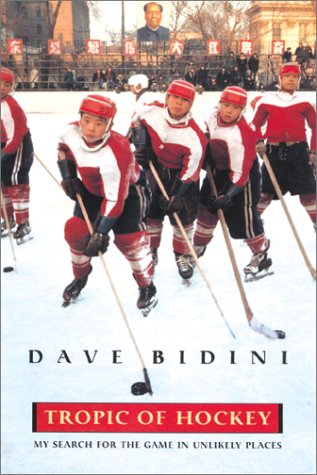
[READ: February 8, 2011] Tropic of Hockey

I bought this book when I was in Toronto sometime in 2001.  I was pretty excited to get another book by Dave Bidini.  And then I proceeded to not read it for a decade.  Hey, these things happen.

But I have to say in many ways I’m glad I waited this long to read it.  The book was written pre 9/11 and as such it has a kind of sweetness about international travel that I miss now.  And I can appreciate it all a lot better with a decade’s distance from everything.  As of 2011, I know that I never want to go to the UAE, but reading Bidini talk about the UAE circa 1999 it sounds like a really fun place to go.

So anyhow, this book, as the subtitle suggests, is Bidini’s attempt to find hockey in weird places around the globe.  Bidini has gotten tired of the NHL: it is bloated, is it full of obnoxious rock anthems during stoppage and the spirit of the game has been overwhelmed by the Almighty dollar (specifically the American dollar).  And so, he wanted to see if he could find people who played hockey the way he and his pickup team play on the weekends: for the love of hockey.  And he was amazed to find hockey fans in these four unexpected places: Hong Kong, China, The United Arab Emirates and Transylvania.

The book is really three things though: it is the story of hockey in different places, it is a chance for Bidini to play hockey in these places and write about the experience and it is a history of Canadian hockey. (more…)

Read Full Post »

SOUNDTRACK: RHEOSTATICS-Live at the Bathurst Street Theatre, Toronto ON, April 4, 1997 (1997).

This concert is free as a download on the Rheostatics Live website.  According to the on-stage banter, the band had just finished a string of live dates with the Inbreds that were recorded for their amazing Double Live album.  They even say that this night’s show is also being recorded for the disc.  And the set list is pretty amazing.

Which is why this show is such a disappointment.  Part of the problem is obviously the quality of the recording, and you can’t fault anyone for that…a bootleg is a bootleg after all.  But the band makes some really odd flubs and some of the songs seem really lackluster.  This is all the more surprising because the band seems in really good spirits –making jokes with each other and with the crowd (they make someone take off a Mr. Bean T-shirt!).

The biggest gaff comes in “King of the Past” where (I think Dave) begins the chorus a measure early (yipes!).  “Fan Letter to Michael Jackson” for some reason removes the loud rocking “Michael!” and “Jackson!” sections and replaces them with whispers.  It’s an interesting change, but the intensity is completely lost.  Something is also missing from “Sweet Rich Beautiful Mine,” there’s no oomph to it.  And, my favorite song “Claire” sounds off to me (I think it’s the recording though).

On the plus side, “My First Rock Concert” is great and well-received.  Dave introduces it as if it was the first time they’ve played it, which is very exciting.  The end of the show picks things up and the band sounds better.  In fact the last two songs are really great (and you can really hear Neil Young’s influence on the guitar).  I’m willing to blame some of my disappointment on the sound quality…it’s missing a fullness that you really need to appreciate the band, but this is not an A+ show.  They played another show the following night there (also available online).

Heh, I just learned that they used a number of recordings from this show on Double Live.  They used “Torque, Torque,” “Claire,” “Bread Meat Peas & Rice” and “Feed Yourself.”  Listening back, “Torque” and “Peas” sound great in the set and “Jesus Was Once a Teenager, Too” is a fun, light version.  “Claire” still sounds funny to me (even on Double Live), but it’s definitely worse on this bootleg.  The mixing is so much better on Double Live (of course!), that it really accentuates the guitar solo and backing vocals much more.

[READ: February 1, 2011] Shampoo Planet

On the inside cover of my copy of Shampoo Planet, I scribbled my name and “December 1992.”  I was in a phase of putting my name on all my books (which is kind of cool looking back, but really rather silly).  This is Douglas Coupland’s second book, and I remember being very excited when it came out.

I’m sure I read it then, but upon re-reading it (admittedly almost twenty years later), I didn’t remember anything from it.  Does that mean I didn’t read it, or that the book was just ephemeral?  Well, in some ways it is ephemeral, because it’s such a document of its time.  It also seems to me that either Coupland is (or was) unique in his writing style, or that very few writers dealt with 90’s culture as directly as he did.  Off the top of my head, I can’t think of another writer who approached 90s culture in the same way

In many ways, this book is all about dealing with the wealth of the 90s, when money was everywhere and people felt free to experiment with their lives.  And, yes reading this now the story feels so light and free and I wish that I had the problems that these kids deal with.  I also wondered if anyone could write a story like this now, with youth culture being so very different.

The inside front and back cover are (different) periodic tables that he has personalized with 103 elements of the 90s.  (Lu=Moon, A=Ambition, Dd=The Dead).  This is the only nod to unconventional book tropes here (where Gen X had all of those definitions that he footnoted).  In fact, the novel is fairly straightforward and conventional.

The main character, Tyler, is a twenty year old who cares more for his hair (he has a vast array of products–my favorite observation: “always better to buy well-advertised products–preferably those products endorsed by a celebrity” (133)).  He was raised in a hippie commune off on Vancouver Island (the only real nod to Canada in the book), but when his parents divorced, his mother Jasmine took the kids to Lancaster, a suburb of Seattle.  And, as seems to happen, the children of hippies became proto-yuppies. (more…)

Read Full Post »

SOUNDTRACK: RADIOHEAD-OK Computer (1998).

The Bends showed amazing maturation for Radiohead, but OK Computer was like going from black and white to color.  It opens with “Airbag” a blast of music, oddly off kilter and unsettling but which immediately brings you into a great riff.  About midway through, the song splits in stereo with two competing solos vying for attention.   It ends with a loud stretched out chord.  And then comes one of the most bizarre singles around.  A nearly 7 minute multi-segmented song which, the first time I heard it, I couldn’t even find a melody.  I rather wish I could go back to that naive time, because my mind was blown away by the outlandishness of the song.  Now I know all the melodies and I think it’s just brilliant.

The minor chords of “Subterranean Homesick Alien” are accented with outer space sounds and yet despite its subject (alien abduction), the song is pretty well grounded: a simple, easy rocking track.  It’s followed by “Exit Music (for a Film)”, a gorgeous building minor chord song that opens with simple acoustic guitars and slowly builds to a scorching rocker (when the drums kick in at nearly 3 minutes, it’s like a wake up call).

“Let Down” is another slow builder, although it features a much more singable verse and chorus structure (it’s incredibly catchy).  It’s followed by “Karma Police” another catchy monster of a song.  It starts with a pleasant enough piano riff and features the politely sung threat: “this is what you get when you mess with us” and the beautiful falsettoed apology: “for a minute there I lost myself.”

It segues into the odd 2 minute computer-voice-recited (and barely listed as a track) “Fitter, Happier.”  This song foreshadows future Radiohead experiments.  It seems like a blow-off track, a filler, and yet like so many of the newer Radiohead songs, it works like glue holding the big hits together.  Check out how weird, wild and intricate the music behind the voice is.

“Electioneering” is one of the noisiest, most raucous songs in the Radiohead catalog.  It opens with this steel guitar sounding riff and crashes in with loud, distorted guitars and all kinds of drums.  Thom Yorke’s vocals are really loud in the mix, so when he gets to the bridge it’s practically a wall of noise, but listen to the great ascending and descending guitar riffs behind his vocals.  They’re really intriguing.  As is the skronking noisy guitar solo.

“Climbing Up the Walls” has all kinds of insane sound effects going on in the background of one ear (as befitting the title).  It’s a drum-heavy track with eerie almost unadorned vocals (until the very end when Yorke goes berserk).  It segues into the most delicate track on the disc, “No Surprises.”  The chorus of “no alarms and no surprises, please,” has always been very affecting.  And the delicate bells that adorn the verses are a very nice touch.  The penultimate track, “Lucky” is a sort of optimistic track, despite its mellow music and, I suspect, really not very optimistic ending. But the utterly uplifting scream of “it’s going to be a glorious day, I feel my luck could change” is spine tingling.

I feel like “Lucky” is such a great ending song that I tend to forget the final track, “The Tourist”.  It’s a slow, drawn out  track…”idiot, slow down.”  It’s probably my least favorite song on the disc, but it’s kind of a good ending after all of the high points of the disc.

And with the final bell of the final song, Radiohead became untouchable.

[READ: December 29, 2010] “Escape from Spiderhead”

George Saunders must live in a dark, dark world.  His comedy is dark (but very funny) yet I feel he is often quite under-served when people refer to his as a funny storyteller.  This story, which actually has many funny elements, is incredibly dark.  And even though I laughed out loud at a few things, no one comes away from this story happy.

One of the great things about Saunders is his almost obsessive mockery of corporate/medical culture.  He has more trademarks in his story than anyone I’ve ever read (even if they are all for things he has made up).  Now to me, that’s funny in itself (especially the names he gives them), but it serves a much more telling purpose: a portent of a very dark future.

This story is set in a lab, where the main character, Jeff, is being communicated with by Mr Abnesti (a very hard name to keep straight).  Jeff is in a room with Heather, and both are being fed the experimental drug ED556, a shame inhibitor.  And so they rip off their clothes and have at it (he was obviously given some Visistif™ because they do it three times).  They are also given some Verbaluce™ which helps them elucidate their experience (from more than just grunts and moans).  This Verbaluce™ is essential to all of their experiments because without their comments, the proceedings are undocumented. (more…)

Read Full Post »

SOUNDTRACK: All Songs Considered Year End Music Roundup (2010).

Every year, I like to check various sources to see if there were any albums that I missed.  My definition of good resources: allmusic, amazon, pitchfork.  (There’s another fascinating list available here at Best Albums Ever, a site I’ve never seen before, and I have a large portion of the Top 50 albums.  I didn’t buy a lot of music this year, but evidently I chose wisely!).  I don’t necessarily agree with these lists, but if I see the same album on a few lists, I know it’s worth at least listening to.

This year, since I spent so much time on All Songs Considered, I thought I’d see their Best of Lists.  What’s awesome about the site is that you can hear not only selected songs in their entirety, you can also download the audio of the original show…where the DJs talk about their selections and play excerpts from them.   There are many different lists to investigate.

The most obvious one to star with is 50 Favorite Albums of 2010.  This shows the staff’s 50 favorite albums in all genres.  I admit that there’s going to be a lot on this list that I won’t bother exploring (I’m not really that interested in new classical or jazz and I’m not too excited by most pop music, although I was pleasantly surprised by how much I enjoyed the Kanye West songs here).

But some albums did stand out that I hadn’t heard, and I will investigate them further in 2011:

Buke And Gass, ‘Riposte’
Deerhunter, ‘Halcyon Digest’ (I know, this is on many best of lists)
The National, ‘High Violet’ (This is also on everyone’s list)

Bob Boilen, All Songs Considered’s most awesome host, picks his Top 9 of the year.  I’m on board with about 1/2 of his list (haven’t heard the other half).  Sufjan Stevens is his #1.

Robin Hilton, Boilen’s partner in crime, has a Top Ten which is remarkably similar to Boilen’s.  It has most of the same albums just appearing in a slightly different order.  Lower Dens is #1. (I’ve never heard of them).

Carrie Brownstein (of beloved Sleater-Kinney and now evidently a permanent member of the NPR team) has a Top Ten (Plus One)–funny that she liked more than ten when Boilen liked less than ten.  I’m really surprised by her selection of albums because her own music is so punk and abrasive, but her top ten features R&B and some folky bands.  Her top album is by Royal Baths, a band I’ve never heard of.

Stephen Thompson also picked his Top Ten.  He has an interesting mix of alt rock and jazz.  His number one is by Jonsi from Sigur Rós. (A great album).

Perhaps the best list comes from 5 Artists You Should Have Known in 2010.  I didn’t know any of the 5.  Sarah bought me two CDs for Christmas (and she was pleased to have gotten me good music that I hadn’t heard of!).  The Head and the Heart hasn’t arrived yet, but The Capstan Shafts is great.  I’m also really excited by Tame Impala.

Another great list is Viking’s Choice: Best Metal and Outer Sound (stay tuned for much more from this list).  It is dominated by black metal, but there are a few surprises in there as well.

Even the All Songs Considered Top 25 Listener’s List was great.  I had most of the list (except for The Black Keys who I simply cannot get into).

Although I enjoyed a lot of new music this year, it’s always nice to see that there is some new (to me) stuff to investigate.  Who knows maybe some day I’ll even have listened to enough new music in a year to make my own Top Ten.

[READ: December 31, 2010] McSweeney’s #36

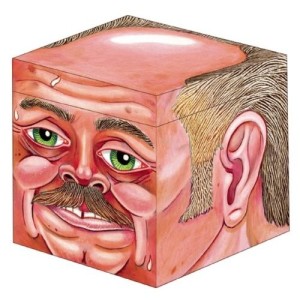
With McSweeney’s #36, it’s like they made my conceptual ideal.  Its weird packaging is fantastic and the contents are simply wonderful.  But let’s start with the obvious: this issue comes in a box.  And the box is drawn to look like a head.  You open up the man’s head to get to the contents.  Brilliant.  The head is drawn by Matt Furie (with interior from Jules de Balincourt’s Power Flower.

Inside the box are eleven items.  The largest are smallish books (postcard sized) running between 32 and 144 pages.  The smaller items are a 12 page comic strip, a nineteenth century mediation (8 pages) and 4 postcards that create a whole picture.  The final item is a scroll of fortune cookie papers.   The scroll is forty inches long with cut lines for inserting them into your own fortunes (I wonder if they will sell this item separately?)

Aside from the bizarre head/box gimmick (and the fact that there is ample room in the box for more items), the contents are really top-notch.  For while many of the books included are individual titles, there is also an actual “issue” of McSweeney’s (with letter column and shorter stories) as well.  So let’s begin there

ISSUE #36: New Stories and Letters.  The resurrected letters page continues with more nonsense.  I’ve often wondered if these are really written like letters or if they are just short pieces that have no other place to reside.  (Oh, and the back of this booklet contains the bios for everyone in here as well as assorted other folks who don’t have room for a bio on their items).

LETTERS (more…)

Read Full Post »

SOUNDTRACK: DAVID CROSS-Bigger and Blackerer (2010).

I’ve liked David Cross for years, both in Mr. Show and everywhere else he’s been (I love comparing his nebbish character in Arrested Development to his obnoxious hippie in Running Wilde). And his standup is just fantastic.

This new(ish) CD (which has the same name but different content as the DVD) is wonderfully obscene and profane and all around hilarious.  What’s particularly fun is the nonsensical “titles” he gives to his bits (although these are more accurate than on his previous disc): “REALLY Silly Religious Crazies, I mean, Double, Triple Crazy!!” and “Random Goofabouts”

The disc opens with a song(!), a swinging song ala Tom Jones which Cross sings (his voice isn’t very good, but he’s never off key, which is something) which actually features some cool time changes and a bit of pathos.  But the jokes are very funny.  He opens with an extended bit about drugs (mostly about drugs he has taken).  It’s a bit long, but the details are hilarious and the payoffs at the end are wonderful.  I also enjoyed that the drug bits are a cautionary tale, yet he never turns preachy, in fact, he inverts expectations throughout.

The race jokes are really great too, especially the MLK license plate bit.  But indeed, Cross really shines when it comes to religion.  I’ve never really heard a riff on Orthodox Jews before, and his dismissal of Catholicism is brutal and short, but it’s the Mormons who get the bulk of his abuse (mostly because of the awesome power they wield), especially since the religion is a sham.

He’s also not afraid to make observations that will offend some (although no one who listens to him) but are spot on.  There’s an excellent bit about Obama haters who bemoan the state of the country but who will immediately fight any “elitist” who bemoans other aspects of the country.  And it very funny, indeed.

Cross has spent some time in England (filming The Increasingly Poor Decisions of Todd Margaret) and his British accent is quite good now (it’s used to excellent effect in heaven).  He also has great rapport with the crowd, who are exuberantly noisy.

This CD is an excellent introduction to Cross’ standup.  The jokes aren’t really timely (although the health care yelling bit will date it somewhat, except that the debate itself will go one for years to come, so maybe it won’t), so even if it’s five years from now, the jokes will still be funny.

Cross is not a delicate comedian and his jokes are not for the faint of heart, but, man, is he funny.

[READ: November 9, 2010] It is Right to Draw Their Fur

Polymath Dave Eggers is back with another fascinating (and fascinatingly bound) title.  This time, the collection contains a series of drawings.  Most of the drawings are of animals and they all feature words on them.  (This sort of thing: Picture + words + humor (from many different artists) is presented in a book that I am currently enjoying called More Things Like This).  Similar items also appeared in McSweeney’s 27 (you can see my Post about that issue here)).

Eggers explains in the introduction that he went to art school.  He was an aspiring painter and then a cartoonist and illustrator.  And in his down time, he spent a lot of time drawing animals.  And they are quite good.  Eggers’ art has an odd quality to it that I can’t quite put my finger on.  All of his pictures seem off in a small way.  It doesn’t make them bad at all, in fact, it actually makes you want to look at them more to see what is off about them.  (I think some people call that “compelling”).

The project comes in a hugely oversized cardboard sleeve (14 inches x 19 inches).  There are 26 large sized posters (they are folded and their unfolded size reaches something like 27″ x 37″).  There’s also a booklet which features even more of these drawings.  The booklet has an appendix with some drawings that are not animals (well, they are humans, so yes, they are animals).  And, the most peculiar part, there’s a bibliography.  The bibliography goes on for four pages and includes all manner of things from Sartre’s Being and Nothingness to Auel’s Clan of the Cave Bear to Gara’s The Presidency of Franklin Pierce to The Collected Poems of William Carlos Williams to Saint-Saens’ Le carnaval des animaux.

You can see two examples here.  In my opinion these are not the best combination art/words in the book (although the drawings are very good).  There are some other ones where the juxtaposition appealed to me much more.

The package is quite expensive (and justified–it is a lot of stuff and beautifully put together), but I have a hard time believing someone would spend $42 on it.  (I received mine as part of the McSweeney’s book club, so that’s nice.)

Read Full Post »

SOUNDTRACK: A CAMP-Studio Sessions on WFUV [available on NPR] (2009).

I rather enjoyed A Camp’s latest album Colonia.  I discovered this session while browsing through NPR’s archives.  There’s a pretty lengthy (and amusing) interview with the band and then they play three acoustic songs: “Love Has Left the Room,” “Stronger Than Jesus” and “I Signed the Line.”

Nina’s voice sounds fantstic, and in such a simple acoustic session it’s her voice that really sells the music.  But this is another instance where an acoustic, stripped down session reveals the strength of the songs themselves.  The album has a lot of production, but when it’s just bare bones guitar and bass, the melodies still hold up.  And again, Nina’s voice just soars through these meloides.  Anyone who got sick of The Cardigans needs to hear what Nina Persson can do in other settings.

Check it out here.

[READ: October 29, 2010] “The Comfort Zone”

The subtitle gives the foundation of the article: Franzen loved Peanuts when he was growing up.  This article was timed to coincide with the release of the awesome Fantagraphics collection of original Peanuts cartoons. I’ve only read the first of these Peanuts books, but it was really eye-opening and quite fascinating to see that such odd thoughts were published on a daily basis on the comic section!  And, I hate to sound curmudgeonly (that’s Charlie Brown’s job) but Franzen is right, the original Peanuts cartoons are far more existentially dark and satisfying than the fluffy Snoopy & Woodstock cartoons of the late 70s and 80s.

Anyhow, Franzen loved these early comics (and he makes a wonderful comment about spending a lot of time (probably age-inappropriate time) with talking animals: Snoopy, Narnia, A.A. Milne).   But as with all of these longer Franzen articles, it’s about much more than just Charlie Brown.   One night when he was a young boy, his older brother Tom had a huge fight with their parents and stormed out.   Franzen sets this up in the context of generation gap that was sweeping through the country in the late 60s/early 70s.

And it’s this unsettledness that also explains the popularity of the Peanuts cartoons. Despite all of the differences between generations, everyone agreed that they loved Peanuts (except for Franzen’s parents, evidently–his dad never read the funnies, and his mom only liked a strip called The Girls, which sounds like a prototype of Cathy).

The other angle that this article takes is about losers.  Charlie Brown was a loser, there’s no doubt.  But Franzen himself was a winner.  He was the king of spelling bees in his school. (This relates to Charlie Brown misspelling “maze” as MAYS, a perfect misspell for a sports fan).  And when a new kid comes to challenge him he steps up his game…and makes the kid cry.

This, of course, leads to guilt. Charlie Brown one said, “Everything I do makes me feel guilty.” And now Franzen feels guilty about the boy in his class, and about being mean to a frog as a kid and about the wash cloths at the bottom of the closet which don’t get used enough (Sarah and I have jokey guilt about that too) and even about the stuffed animals who don’t get cuddled enough. (more…)

Read Full Post »

« Newer Posts - Older Posts »