Feeds:
Posts
Comments

Archive for the ‘Children’s Books’ Category

SOUNDTRACK: LOW-Tiny Desk Concert #129 (May 22, 2011).

In March, I reviewed (and loved) Low’s new single, “Try to Sleep.”  That song and two others are presented here in this Tiny Desk concert.

The band for this gig is just Alan Sparhawk on guitar and vocals and his wife Mimi Parker on backing vocals (and thigh slaps).  It’s a very stripped down sound, but it really suits these songs (I don’t know the originals of the other two–“Nightingale” and “Something’s Turning Over”) which all come from their new album C’mon.

Their harmonies are wonderful (they are quite striking on “Something’s Turning Over” where I thought she was playing a keyboard, but it is her voice!) and the melodies are pretty terrific too.   As I said last time, I’ve never really listened to Low very much (I’ve been sort of turned off at the idea of their being spare and depressing).  Strangely, this session which is just the two of them is the opposite of spare.  I don’t know if this is a good introduction to the band, but it’s a wonderful introduction to this album.   And it’s a surprisingly catchy collection of songs from a bunch of ol’ mopesters.

Although, perhaps the biggest surprise comes at the end of the show when, before leaving, Sparhawk starts playing “Sweet Home Alabama” and Parker even gets the “turn it up” part right.

I wasn’t expecting to listen to this more than once or twice, but I’m really entranced by this session.

[READ: May 10, 2011] Emily of New Moon

Sarah loves the Anne of Green Gables and Emily of New Moon book series.  She still has the books from when she was a kid (the copy I read has her signature and phone number (several area code changes ago) written on the inside front cover).  After reading the L.M. Montgomery biography, I figured it was time to look into these books. I was going to start with Anne, but we watched the movie not too long ago so I decided that I’d start fresh with an unknown subject.

Emily is a 12-year-old girl whose mother has died and whose father is deathly ill.  Indeed, within a chapter or two, Emily finds herself an orphan.  I don’t know a thing about 100 year old adoption laws in Canada, but the upshot is that someone from Emily’ mother’s family, the Murrays, will take care of her until she is old enough to do so on her own.  However Emily’s mother ran off with a boy when she was very young (which was a disgrace to the family name), and Emily herself is a willful and strong child.  Frankly, no one wants her.  So, with Emily eavesdropping, the Murray clan discusses her future and decides to make her draw straws for her fate. (more…)

Read Full Post »

SOUNDTRACK: THE AMOEBA PEOPLE-“Cosmology, Your Futon and You” (2010).

I found out about The Amoeba People from the Kids Corner Top Ten Songs of 2010 list (this was number one).

The Amoeba People are a fun, weird kids band who write clever, often science-based songs.  This song has a wonderful bass line that opens the song.  There’s suitably weird space sounds (theremin) and a nice choral chorus).

Lyrically it’s a distorted spoken story full of clever word play.  It features a whole lot of facts about outer space (and jokes about futons).   And while you won’t get all the lyrics on the first try, it rewards repeated listens.

You can hear the track here.

[READ: April 16, 2011] Babymouse: Our Hero

This is the second Babymouse book (nope, I’m not reading these in order, which goes against a lot of my neuroses, but I think I can handle it).

As this story opens, Babymouse oversleeps and misses her bus.  And right from the start the fantasy/dream sequence kicks in.  The voices that try to wake her are not her bratty sister, but her adoring fans!  And when she misses the bus, the walk to school is really a trudge through the desert…will she survive???

It’s all quite funny, especially the “voiceover” which she can obviously hear, and with which she argues from time to time. (more…)

Read Full Post »

SOUNDTRACKKids Corner on WXPN (2011).

Kids Corner is a great radio show on WXPN (88.5 Philadelphia).  It airs Sunday through Thursday night at 7PM.  It’s also available online (you can listen live at 7PM!).  In addition to some smart radio for kids (Science Thursday!), there’s quizzes and call in stuff and lots of music.

Most of the music is funny/novelty stuff.  From standard bearers like “Weird Al” Yankovic, to great bands like Trout Fishing in America, to the ancient novelty song “Star Trekkin” and my new favorite kids’ band The Amoeba People.

Every night they have a contest for song of the day, which anyone can vote in (democracy in action!).

Check out the last six years of Ton Ten songs (Steve Martin’s “King Tut!”).  And be sure to tune in, you just might just learn something.

[READ: March 2, 2011] Beyond the Grave

This fourth book in the series excited me because it broke with the format of the kids traveling to two cities with no help.  When they land in Egypt, they are greeted by an old friend (whom they never met before).   This old friend,  Hilary Vale, is actually a friend of their grandmother, Grace.  Grace went to Egypt every year and spent her time with Hilary, traveling, seeing the sights and, of course, looking for clues (although Hilary didn’t know any details of what Grace was up to).  Hilary (and her grandson, Theo) play a helping role in the book, and I have to say that it was nice to let the kids have a little breather with some people that they can trust.

They also get to go to a super fancy hotel room (using Alasdair Oh’s frequent number card).  Of course, as is the way with cool spy stories, the super fancy hotel turns out to be the stronghold for the branch of the Cahill family that Alasitar Oh is part of (I still can’t keep those branch names straight).  They pretty easily access the super spy area of super cool hotel suite.  (Because they have Alastair’s card, they are given the fancy suite).  Of course, once they are in the secret room, Alastair’s uncle, the sinister Bae Oh, knows that they’re there (he owns the hotel).  And they are suitably trapped.

While in the stronghold, the kids learn a little bit about the items they are seeking in Egypt (there is a fake statue in the room).  But mostly they’re concerned about trying to escape.  Thanks goodness thier au pair (who getts cooler with each book) has been paying attention. (more…)

Read Full Post »

SOUNDTRACK: Y-Not Radio (2011).

I received an email recently from Josh Landow.  I know, who?  Well, he went on to tell me that he and some friends had started Y-Not Radio.

I’m still trying to piece together all the details, but Landow was a DJ for WXPN’s Y-Rock radio.  His email states that he and a bunch of other DJs left (or were asked to leave?) WXPN and started Y-Not Radio as Philly’s “real alternative.”  What they have going on is strangely impressive for a station that has only an online presence.  There’s also a disclaimer that (despite lifting and modifying the Y Rock logo) they are not affiliated with The U of Pa of WXPN.

The YRock Branch of WXPN is still operational.  And, looking at the music they still play, it’s not that radically different from the music of Y-Not Radio (in other words, it’s all great current indie rock and old school alternative music).  So, basically what we have is an embarrassment of riches from alternative radio online.  Of course, I don’t really like listening to the radio online (except at work).  I only wish I could get them both in on my actual radio.

It’s all a fascinating fight about indie rock and online radio.  Let’s see how it plays out!

[READ: March 12, 2011] Babymouse: Heartbreaker

The kids at the library love Babymouse.  And since I am greatly influenced by the opinions of fourth graders, I decided to read it as well.  This is the fifth book in the series (but relax, they don’t appear to have any kind of thread that makes it hard to follow).

The basic set up of the stories is that Babymouse is a mouse in school.  Her classmates are other animals.  It’ hard to determine very much about the school or even the setting of where Babymouse lives because this whole book is about Valentine’s Day.

The most fun aspect of the book for me was the dream sequences.  I’m not even entirely sure if the targeted audience would get all of the references, but I sure liked them.  For instance, while Babymouse is wondering if anyone will invite her to the dance, she has a Cinderella dream sequence and a Snow White Dream sequence (which goes astray) and, my favorite, a Dirty Dancing sequence (“Nobody puts Babymouse in the corner,”) complete with a Swayze quiff on the male mouse. (more…)

Read Full Post »

SOUNDTRACK: THE HEAD AND THE HEART-“Winter Song” (2010).

Sarah intended to get this disc for me for Christmas.  But evidently Sub Pop bought out the disc and put it out of print.  It’s now available as a download.  But a personal email from Sub Pop headquarters said they’d be releasing the disc in physical format sometime in April.  (Yay!)

This is a beautiful folk song which features wonderful harmonies.  It’s a simple guitar-picked song.  It opens with a male vocalist who sounds very familiar (I can’t quite place who he sounds like), but the end of the verse has a beautiful, brief blast of multi-part harmony.  The second verse is by a different vocalist (he sounds close to the first, I only noticed he was different after a few listens). The final verse is by a female vocalist which comes as a wonderful surprise as her voice brings a whole new shape to the sound.

The harmonies continue throughout the song and really flesh it out.  There’s not a lot to the song itself: a simple verse/chorus structure, but the execution and vocals are really lovely.

[READ: February 21, 2011] The Sword Thief

I can’t believe it has been five months since I read Book Two of this series.  It wasn’t for lack of enjoyment, sometimes other books get in the way!  But now that I’ve jumped back in, I’m in for a while (I’ve already started book 4).

One thing that I wanted to point out before talking about the book itself, was the way the various destinations are described in the book.  While I haven’t been to all (or really any) of the locations described, I have seen enough (in books and online) to know that the authors aren’t simply placing the kids in a generic location that pretends to be a city.  They really try to give each environment a full-bodied realism.  And I hope that young readers can really appreciate the sights and smells of the different countries.  It’s especially effective in Egypt (in book 4), but Tokyo really comes to life and Korea, although not fully explored, really shows the rural regions well.  Maybe this will encourage people to travel, but if not at least it’s instructive that not every place looks the same.

What I especially liked about this book is that the kids form a (brief) alliance (or two).  The first two books emphasized how all of the different family lines were in such competition with each other for the clues.  And, obviously that is the point of the books.  But it would be very tedious to simply have them run from place to place being chased by the different families.  So in this one, the kids form an alliance with Alistair Oh.  Better than that though is that Lerangis gives a detailed background of Alistair which makes him a more sympathetic, human character (even if we don’t fully trust him). (more…)

Read Full Post »

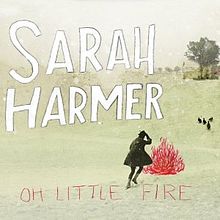
SOUNDTRACK: SARAH HARMER-Oh Little Fire (2010).

I found Sarah Harmer when she had a left field hit (“Basement Apt”) in the states.  I went back and discovered her band Weeping Tile (who are quite good and recorded a version of the song on their EP Eepee) and have been following her continued solo career.

Since that first record, she released a killer second disc, followed by a re-release of an intimate 1999 record she made for her dad which let her revel in her country roots.  She followed this up with I’m a Mountain, a very country, but very catchy album.  Finally, four years later, she put out Oh Little Fire.

Although she hasn’t lost her country roots, this album returns to more of the rock sound that first attracted me to her.  It’s not hard or heavy by any stretch, but it’s moved beyond the country of I’m a Mountain.

Sarah and I listened to this album a lot at night when it first came out, and it slowly seeped into my system.  I had kind of forgotten about it for a while, and upon rediscovering it I was delighted to hear that the melodies were fresh and still with me.  The album seems like a simple indie folk or the work of an adult alternative singer songwriter, but the thing with Harmer is that she has that wonderful background with Weeping Tile, a band that was always slightly off-center.  So, she writes beautiful melodies but puts little grace notes into them to keep them from being disposable.  And yet they are still super catchy.

The only hard thing about this disc is wondering which song will be stuck in your head after listening to it.

[READ: January 7, 2011] L. M. Montgomery

I’ve never read any L. M. Montgomery (although I’ve seen the miniseries of Anne of Green Gables) and I’ve never read any Jane Urquhart (but I love her name!).

This biography is so radically different from the other three I’ve read so far.  I wondered immediately if it was because Montgomery (and Urquhart) are women.  It deals with subjects that the other books didn’t at all: lost loves, mental incapacitation, family crises.  But it becomes clear through the book that these issues were THE issues that a woman at Montgomery’s time would have dealt with.  Unlike the men in the other books, Montgomery did not have a professional life (outside of being an author, which she did at home).  She was hardly a public figure, and since she was a woman, she was always in danger of losing what she had.

This biography is also vastly different from the others in the way it is constructed.  You can tell by some of the chapter headings: Her Death (the first chapter), Orphan, Sorrow, Madness.  You can also tell by these chapter titles that Montgomery did not have a happy life.

Indeed, between a husband who believed he was destined for Hell (he was a preacher!) and children whose life choices she disapproved of, not to mention terrible insomnia coupled with nightmares, her late adult life was nothing but torment.  But, sadly for her, her early life was nothing but torment either.  Her mother died when she was two, she was sent to live with her aunt and uncle (which was never a happy place).  But the most depressing of all of these events is when she lost her dearest friend at a terribly young age, a death she never really recovered from.

So how is it possible that Montgomery wrote such charming stories?

The answer to that (and the basis for most of this biography) is in her diaries.  Montgomery kept meticulous diaries (which she wrote and rewrote and then rewrote with posterity in mind).  She wrote about her childhood and her life as (sort of) an orphan.  She wrote about the places where she lived and the beautiful outdoors which impressed her.  She wrote about the sadness and the happiness.  Nothing was lost on her, and she saved it all (she also took photos of everything she loved, which are a beautiful and sometimes contradictory records of her diaries), and there are many published volumes that we can read to learn even more about her.

To me, the most fascinating (and horrible) part of the story was when she finally had Anne of Green Gables published.  The publishers took complete advantage of her.  They forced her to write sequels that she didn’t want to (although they are still quite good) and even compiled a final book from castoffs of the previous books (Return to Avonlea) that they published in her name.  Eventually the case was settled in her favor, phew, and she was able to write new characters that inspired her.

Montgomery had a rough life, and as her diaries come to an end, she stopped writing about things.   It’s hard to know exactly what she went through towards the end, but it doesn’t seem very positive.  And yet for all of her disappointments in life, she left us with some engaging and memorable stories.

The last chapter is a fascinating personal account of how Montgomery’s stories impacted Urquhart’s family.  It was incredibly touching and convinced me that Urquhart’s fiction would be enjoyable too.  Some day, some day.

This was a really enjoyable (but major downer) biography.  And, more than anything it has really inspired me to read Montgomery’s stories (and even one or two or Urquhart’s).

And, here’s a shameless plug to the folks at Penguin Canada–I will absolutely post about all of the books in this series if you want to send me the rest of them.  I don’t know how much attention these titles will get outside of Canada, but I am quite interested in a number of the subjects, and will happily read all of the books if you want to send them to me.  Just contact me here!

Read Full Post »

SOUNDTRACK: SHARON VAN ETTEN-Tiny Desk Concert #91 (November 14, 2010).

I was introduced to Sharon Van Etten via NPR’s All Songs Considered, so it’s no surprise that they would have her on a Tiny Desk Concert as well.  I loved her song, “Save Yourself” more than I could imagine.  There was something about the way the intensity built and built that really blew me away.  The rest of her album is really enjoyable, but it has less intensity. It’s almost like an acoustic album.

So it’s funny that I find her Tiny Desk show mildly disappointing because it is also an acoustic set. In fact, it is just her and her guitar (and her singing partner who sings wonderful harmonies).

Okay, I shouldn’t really say disappointed because the set is quote good.  Her guitar laying is fine and her voice, he unique and slightly unsettling voice is in fine form here.  There’s just something about the stripped down nature that takes away that extra sparkle that I really love about the disc.  I imagine that if I hadn’t heard the whole CD first, I would have been blown away by this live recording.

The four songs (“Peace Signs,” “Save Yourself,” “One Day,” “For You”) are all from Epic, and they’re all really good.  It’s a nice accompaniment to the album, but I think the album is a bit better.

[READ: December 13, 2010] I Live Real Close to Where You Used to Live

Back in early 2009, McSweeney’s published Thanks and Have Fun Running the Country: Kids’ Letters to President Obama as a friendly kick off to the President’s new term. We’re now at the end of the second year of that term and the “Have Fun” part seems to be rather unlikely.  But just in time for the rise of Boehner, McSweeney’s has published this companion piece, letters to the rest of the Obama family.  And it is just as sweet, clever and at times odd as the first.

The kids from 826 National in several cities were asked to write letters to the first family.  It’s interesting to see how the different regions ask different questions, but perhaps more interesting is how some things seem to resonate no matter where the kids are from.  Two kids ask about Pokémon Black and White (this must be the hot new game).  Several kids ask how many rooms there are in the White House.  Naturally, several ask about her garden (what she has in it or what kind of fruits and veggies she likes).

But the most fun is the advice the kids give.  My favorite is the girl who says that her aunt thinks Mrs Obama should have one more child (but only if she wants to).

Sadder are the children who are clearly having a rough time.  One child talks about her parents’ separation, and another’s entire letter is: “Can you help my family? We’re about to lose our house. Make the world a better place. What is your favorite food?”  It must be tough to be a prominent person who clearly wants to help yet who is for the most part, impotent to do anything.

And for me that has to be the hardest part about writing to the first lady.  She has no clear “role.”  She’s a public figure and she advocates for good, but she can’t really “do” anything.  And that has to be hard to grasp.  Although judging by what the kids say, maybe they have no problem with it. (more…)

Read Full Post »

SOUNDTRACK: SPOON-Transference (2010).

The first thing I think of when I think of this disc is staccato.  I’ve read that the disc sounds like a demo, which I don’t quite agree with, although it does sound very raw and spare (in the way the Peter, Bjorn and John’s Living Thing does).

Although the opener “Before Destruction” has a lot of guitars washing around, the dominant sound is a loud short chord and drum combination.  And from the second song on pretty much, things get very chunky.

“Is Love Forever?” has a riff based on tight military beat with guitar chords that match.  There’s very little in the way of extended notes or washes of sound.  “Mystery Zone,” an insanely catchy little ditty, has a similar staccato/spare sound.  Britt Daniel’s voice is pretty much the only instrument that holds a note for more than a beat.  (That’s not literally true, but it seems like it).  Meanwhile, “Who Makes  Your Money” is all drum beats and single keyboard notes.

It’s surprising that this spare musical accompaniment works so effectively, but it does.  Especially on “Written in Reverse” a predominantly pizzicato piano track that rocks in a maniacally-echoed fashion.  Or even more so on the 5 minute “I Saw the Light” which is basically drums and a propulsive bass.  There’s occasional guitar chords which build until the 2 minute mark, when a  3 minute minor chord piano & drum coda takes over.

“Good Night Laura” is a simple piano ballad (again with pizzicato piano chords), while the final song “Nobody Gets Me But You” is full of cacophonous piano runs, most of which sounding precariously on the verge of being random and out of tune, but which always manage to be weird and cool.

Spoon’s last album had a pretty big hit with “Don’t Make Me a Target” which was similar in style to these songs but which had more orchestration.  These songs feel like an attempt to strip away as much as possible and see what remains.  And I guess it’s a testament to the quality of the songs that it works.

[READ: December 1, 2010] This Isn’t What It Looks Like

Is it the nature of children’s books in the 21st century that they are all parts of a series?  Do authors write singular books with no plan of a sequel?  I don’t know.  And I’m not sure that I mind all that much.

This is the fourth book in the “Secret” series, and Bosch hasn’t lost any steam or quality for this part of the saga.  When we last left our heroes, Cass was in a “coma,” induced from eating a time traveling chocolate bar.  Max-Ernest has more or less given up speaking (which is impossible for him) because he feels so guilty about encouraging Cass to eat the chocolate.  And, Yo-Yoji, their erstwhile third member, is off in Japan with his family.  What is M-E to do?

Luckily for M-E, an old friend has returned to school, and he’s causing quite a stir.  Benjamin Blake (the awkward synesthetic artist from the first book) has returned from his finishing school.  He is polished and refined, he uses words like “chum,” and people seem to be well, interested, in him.  And most interesting of all (as only M-E knows), he seems to be able to read people’s minds!  And that’s just what M-E was hoping to do with Cass while she’s in the coma.

For Cass, you see, is “living” in the past.  In our time, she is in the coma, but her mind has traveled back in time to meet The Jester, the man who holds “The Secret” and the man who is her great- great- great- (etc) grandfather.  She is fully conscious in Renaissance times.  The big difference, though, is that she is invisible!  And, in a wonderful publishing joke (the kind of thing that Bosch does so well) all of the chapters that are about Cass are listed as negative (so the book starts with Chapter “-Ten”).  M-E’s chapters start at one, mind you, so you have positive and negative chapters which all converge at a hilarious interlude called Chapter Zero.

The bit about the Renaissance also works very well because their school is having its annual Renaissance Faire (I wish I went to THAT school!) which is sponsored by a theme restaurant which features jousting and medieval times (but which is not Medieval Times, ha ha–I love that everyone says how bad the burgers are but they love the experience).  The Ren Faire is a wonderful plot set-up because with Cass lost in “real” Renaissance, the parallels to the Ren Faire are very clever and often very funny.  (I also love that M-E keeps trying to explain that there is a big difference between Renaissance and Medieval but no one will listen).

And, indeed, cleverness is the word of the book (and the series).  Bosch is having continued great fun with word play (and footnotes!).  He also has some clever puzzles to solve.  The biggest one is the “Hint to the Secret” that the Jester leaves for Cass (and which even a fortune teller tells her about).  I was convinced I had the puzzle sorted out but I was wrong (and it was so obvious when it was revealed!).  And, there’s also a revelation as to the true identity of Pseudonymous Bosch (not the real life author, but the “author” of the books).  I had put a little of this together myself when reading the dialogue in M-E’s head.  But I won’t spoil the revelation of that.

The only secret I will reveal is to say that this is not the final book in the series.  For awhile it seemed like it was heading towards a conclusion.  But as we dramatically learn, there will be more adventures to come.  And that’s pretty cool.

I love an exciting series, but I especially love an exciting series that doesn’t talk down to its readers.  The footnotes and clever games are very fun and thought-provoking (there’s even two emails that are written in code that you need to decipher (unless you cheat and look in the appendix).  And speaking of the Appendix, there’s also a one-way staring contest and directions on how to make a camera obscura (which features in the book and seems like a fun project).

I honestly have no idea how nay books Bosch plans to write in this series (and I have no idea who Pseudonymous Bosch (the author) is for real.  It’s all part of the mystery that I enjoy quite a lot.

Read Full Post »

SOUNDTRACK: “WEIRD AL” YANKOVIC-Tiny Desk Concert #65 (June 22, 2010).

I can remember when Weird Al’s first album came out.  I heard about it on the radio (but hadn’t actually heard the song…I think they just talked about it being very funny) and went to my local Pathmark (which sold LPs) and asked the clueless clerk where the album with “Another One Rides the Bus” is.  Of course, he brought me to Queen.  I think I learned how to be sarcastic that day.  That was back in 1983.  Here it is 27 years later and Al is still popular enough to be invited to do an acoustic show on NPR (well, actually, the number of links about Al indicate that he may just be a perennial guest).

The Tiny Desk series is a 15 minute (or so) concert that’s all acoustic and appears to be in front of an audience of about ten (how lucky!).

This set is a fascinating look at three of Al’s songs.  The first song is “You Don’t Love Me Anymore.”  This was the ballad whose video was a parody of Extreme’s “More Than Words” video.  It is perfectly appropriate in this setting and still gets a number of laughs even though it’s from 1992.  I was astonished to hear the next song, “Good Old Days” (from 1988!).  It’s not one of my favorite songs by him, but it works well in this context.  I just can’t believe they dusted it off for the set.

The final song is a new one (he says it’s from “The Leaked Project,” ha ha) called “CNR” which is about Charles Nelson Riley.  What’s especially amusing about this performance is that the original is a style parody of The White Stripes.  Now, an acoustic version of a White Stripes song completely undermines the parodic nature of the song.  And yet it still shows the songcraft (it is an original tune after all) but also that his vocal skills are still top-notch.

These three songs aren’t his best songs, but this is a fun (albeit brief) tour through some of his more esoteric tracks.  You can listen (and download) and watch the video of it!! here.  There’s also a leaked copy of an Al song that never made it to an album.  “You’re Pitiful,” a parody of James Blunt’s “You’re Beautiful” can be streamed here.

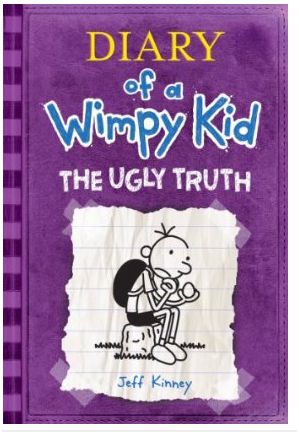
[READ: November 25, 2010] The Ugly Truth

As I’ve said before, I love the Diary of a Wimpy Kid series.  It never fails to make me laugh.  I’m kind of impressed at how many knock-offs it has spawned.  And all for simple line drawings and really funny pre-teen observations.

I was a little down on the previous book because it was about the summer, and I think the really funny bits are school related.  This book returns to school, and within the first few pages it had me laughing really hard again.

The “Ugly Truth” of the title is alluded to on the cover (Greg holding an egg); it’s that time for the girls and boys to have their own separate talks.  And there’s very little that is funnier than kids and “the talk.”  Unless of course, you’re having a kids overnight lock down at the school. (more…)

Read Full Post »

SOUNDTRACKPUGWASH-Giddy (2009).

I found this CD through a connection to The Divine Comedy (Neil Hannon plays on a few of their tracks).  Pugwash (what a crazy name–it comes from a series of children’s books (and a TV show) called Captain Pugwash) is an Irish band with four CDs (and this collection).  And man, it’s hard to find their stuff over here (although their website has a wonderful collection of videos and such).

Giddy is a collection of songs from all of their albums.  Their first album is represented by two songs here “The Finer Things in Life” and “Two Wrongs.”  These two songs sound, with no disrespect intended, like great Oasis ballads.  Say what you will about Oasis’ originality, they wrote some great songs, and these two sound like the best Oasis songs you’ve never heard.

Their other three albums sound far less like Oasis and far more like XTC.  In fact, the XTC comparisons are well-founded as Andy Partridge eventually co-wrote a song with them and eventually signed them to Partridge’s Ape House records (which is how this collection was released in the U.S.).

The XTC comparison is unavoidable on a few tracks.  The opening of “Song for You” (the “when we die” part) sounds like an uncanny XTC outtake, but when the chorus kicks in it sounds nothing like them and moves into more of the gorgeous orchestral pop that overflows on this disc.  And the Partridge co-written “My Genius” is also a wonderful near-XTC outtake, clever, witty, and perfect.

And the song “It’s Nice to Be Nice” is just a wonderful cheery pop ditty.  It sounds retro and charming; if the simple lyrics (and gorgeous harmonies) don’t bring a smile to your face you must be made of stone.

Although the album is primarily orchestral pop, there’s a wonderful array of styles on here.  “Anyone Who Asks” has chipper keyboard bits in the verses, but the chorus is a wonderful mix of dark minor chords.  And then, the absolutely bizarrely wonderful “Monorail” sounds like a fantastic Beck song (with lyrics that are as decidedly unusual as anything Beck himself might write).   It even opens and closes with wonderful circa 1920s banjo.

Despite the obvious nod to XTC, Pugwash does something that XTC doesn’t.  XTC is a very mannered band.  They always seemed very rigid and formal (and were wonderful because of it).  Pugwash uses XTC as a springboard, but Thomas Walsh seems like a guy who likes to let loose with unchecked silliness, so he can move past the strictures of XTC (and sound like Beck!)

And the packaging is just wonderful. The carnivalesque appearance of the cardboard case is enhanced by not just a cardboard sleeve but also by a second cardboard half-sleeve that you slide on top.  Depending on which way you slide it on, it creates a different set of pictures.  It’s a little thing but it’s a nice nod to the fun of non-digital products.

This is certainly one of my favorite albums this year (even if it came out last year).

[READ: September 21, 2010] One False Note

I enjoyed the first book of the series so much, I couldn’t wait to get to Book Two.  In particular, I was interested to see if Gordon Korman’s writing style would differ much from Rick Riordan’s.  As I said last time, I hadn’t read Riordan before, (although I have read a few by Korman) and while I wasn’t expecting them to write in the same manner, I wondered if they would try to keep the style the same (or if it would be really obvious that they were different writers).

I have to say that I didn’t notice the difference between the two.  Korman’s seems a bit faster paced (but he had no exposition to deal with), and it’s possible that he made things seems a bit more scary/dangerous than Riordan, but not much.

The question I have with the series is three-part: Is the basic plot given to each new writer–like the writer is told what the 39 Clues are–or, possibility two, are they told very specifically, the clue is this and it is here and the writer has to figure out how to get the kids there, or possibility number three, they are free to do whatever they want.

Either way, this is an exciting series, and I’m looking forward to Book Three.

So in Book Two, Amy and Dan continue their adventure.  This time, they go to Saltzburg and Venice.  The Saltzburg trip leads them to the Mozart house.  There’s a wonderful sorta subplot about Mozart’s sister, Nannerl (real name Maria Anna), who was also a great pianist and harpsichordist, oftentimes getting top billing when they played together.  I’s never heard of her, and didn’t know of her talent, and that’s the point of the subplot–how Nannerl had to put her musical skills to the side because she was a woman.   This works nicely with the pairing of Dan and Amy and how they are both good at different things and are both very useful on the quest. (more…)

Read Full Post »

« Newer Posts - Older Posts »