Feeds:
Posts
Comments

Archive for the ‘Children’s Books’ Category

SOUNDTRACK: ALSARAH & THE NUBATONES-Tiny Desk Concert #585 (December 9, 2016).

The Tiny Desk Concerts have introduced me to a ton of bands I’ve never heard of before.  They’ve also introduced me to styles of music I’ve never heard before.  Alsarah and the Nubatones play music inspired by her home country of Sudan.  But I believe she (they) include pop elements to make the music more accessible (and danceable).

And this Concert was great–I listened to it over and over.

The instrumentation is all fairly simple: Rami El Aasser plays all kinds of percussion.  I love the sound that he gets out of that hand drum.  Brandon Terzic plays an amazing oud and  Mawuena Kodjovi’s bass holds the whole thing together in an incredible way–something that I think this traditional music lacks.

But most important are the singers’ voices.  Alsarah sounds great by herself but when she and Nahid harmonize, it is enchanting.  Especially in the chorus of the first song, “Ya Watan” when their voices work together so perfectly

But what’s Alsarah’s deal?  The blurb is really helpful:

When singer Alsarah left her native Sudan, she was just a child who’d shown an interest in music. She’s said it served as her coping mechanism during a subsequent transition to life here in the U.S. That passion led her to a university degree in ethnomusicology.

It also drew her to musicians who were passionate about the intersection of culture, music and migration. Together, their one-of-a-kind expression has been called “East African retro pop.” But that tag only scratches the surface: In their hands, the music pulses, breathes and comes alive with a mix of tradition and contemporary influences.

I don’t know what the song names mean, but I love “Ya Watan.”  The song is really catchy, but when the bass did a big slide at the end of the middle slow section to announce the final part, I was hooked.

I have no idea why there’s a 3 in this titular word, but that makes me even more intrigued by “3roos Elneel.”  Before the song she says (in perfectly unaccented English), “I’m going to tell a story because I think I can do whatever I want.”

She says that the song is inspired by “girls music” performed at wedding ceremonies in Sudan.  But she tries to merge it with an old myth.  The Nile River would flood every season because the gods were angry and lonely.  So the Sudanese people would sacrifice the most beautiful maiden in the village.  But she wonders what happens after she goes in the river.  And what happens next season when there’s a new girl–that’s a lotta wives.  So, she likes to think there’s trade off.  You go in to the river and do 3 months as a Nile god bride and then you swim off.  Maybe the bottom of the Nile is full of ex-Nile-god-divorcees giving birth to mermaids.  Yes, she claims mermaids as a Nubian invention.

The song begins with a call and response. It sounds rather traditional.  But after a few lines, the song stops with a four-beat clap-along section.  And then everything shifts.  First the bass plays a cool riff then the oud joins in with some fast playing and then the percussion makes it utterly danceable.  There’s even a cool oud solo.

The first section of “Fulani” is the chorus repeating the word Fulani over and over (in call and response style), but it’s done in wonderfully melodious fashion, including a catchy stop start section with more clapping.

The song is really great and I love the way all the instruments are able to make the song fade out.

This music was totally captivating.

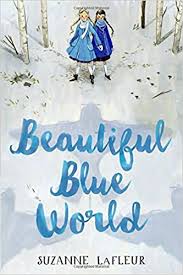
[READ:January 27,2017] Beautiful Blue World

Sarah brought this book home and read us a little bit of it and I decided I had to read it, too.

The part she told us about was about a girl taking a test to see if she would be useful for the army.  But it was no ordinary test, it was more like Bletchley Circle–puzzles and observations more than facts.  That sounded great.

What she didn’t tell us was the general set up of the story.

So, this story feels like a World War II story, with a country like England being attacked by a country like Germany.  But what makes this book special is that these are not the countries. The countries are called Sofarende (the attackees) and Tyssia (the attackers). But despite these countries having fantastical names, the story feels very real.

(more…)

Read Full Post »

SOUNDTRACK: THE ATTACCA QUARTET-Tiny Desk Concert #580 (November 18, 2016).

The Attacca Quartet are a fascinating group. The group consists of Amy Schroeder and Keiko Tokunaga (violins), Nathan Schram (viola) and Andrew Yee (cello).  And they play a huge variety of music (and really get into what they are playing).

The first two pieces are modern and a little wild, so I assumed that that was the kind of music they played.  But then they told us about a Haydn quartet that they loved as well.   The blurb says:

They revere the old school, having recently completed a performance cycle of all 68 string quartets by Joseph Haydn, the man who invented the genre. They also hunger for the new, exploring the music of three living composers each year in a project called Recently Added.

The composer of the first two pieces is John Adams, who I know a little because of the Kronos Quartet.  But I like the blurb’s comment:

One contemporary composer the group continues to champion is John Adams. The head-banging pulsations of “Toot Nipple” (titled after a character in an Annie Proulx story) contrast with the slippery and funky episodes in “Alligator Escalator.” Adams has said he imagined such a creature waddling up and down the floors of Macy’s department store. The two movements belong to John’s Book of Alleged Dances from 1994.

I love the beginning of “Toot Nipple” as the cello is sawing away furiously and then passing off that fast sawing to the viola.  The piece is only a minute and 13 seconds long.  The second piece plays with quiet squeaky sounds as the strings progress up and down the fretboard almost randomly.  When things settle down I enjoy watching how aggressively the cellist plays the heavy notes before returning to some smooth notes high up the fretboard.  The violins also show some really fast fingerwork near the end.  This piece is all of 4 and a half minutes long.

Haydn seems really traditional when compared to Adams, there’s still some intensity on his piece:

Next to Adams, Haydn sounds positively genteel, but you needn’t look far to find the composer’s own feisty side. Sunny skies suddenly turn threatening at the turn of a phrase — a trend in Haydn’s time known as Sturm und Drang, or “Storm and Stress” — when moods can swing wildly with impunity.

Of all of the 68 string quartets, this is their favorite part to play.  It is pretty with a lot of really fast fingerwork as well.  I’m most surprised by the note it ends on–it doesn’t go down a note as you might expect.

The concert ends with “Smoke Rings.”

Measured by the cello’s tick-tock pizzicato, the mood of Michael Ippolito’s Smoke Rings is languid, even a little trippy. Inspired by a 14th-century French song about a smoking society, the composer employs long, slow strokes and light bow pressure for a hazy texture. The music heats up dramatically midway through, only to drift back into the smoke.

While the blurb talks about the cello, I was more taken with the pizzicato violin that ends the piece.  But after listening as second time I see that the pizzicato passes around to different musicians, beginning with the cello and the moving from one violin to the next.  But it’s not all pizzicato, there is a an aggressive middle section with notes the gradually ascend and grow more rapid.  It’s when this section ends that the pizzicato violin comes in to bring us home.

[READ: May 6, 2016] Hilo: Book 1

Judd Winick is a cartoonist whom I have liked for a really long time.  He has done a bunch of really funny cartoons and a very serious graphic novel called Pedro and Me.

Winick (and Pedro) and Winick’s wife Pam were all on The Real World San Francsico.  I don’t believe that that has anything to do with Winick’s success as a cartoonist (how could it, really?), but it is fun to remember him from the show.

Anyhow, this story is outstanding.  Winick has an amazing sense of comic timing and pacing.  He uses repetitive jokes to excellent result here.  On top of that, the story is compelling, funny and bittersweet.  It’s a great start to what I hope is a long series. (more…)

Read Full Post »

SOUNDTRACK: THE WESTERLIES-Tiny Desk Concert #576 (November 2, 2016).

The Westerlies call themselves “an accidental brass quartet,” (two trumpets and two trombones).  I don’t know if a brass quartet has a “standard make up,” but having only two instruments seems to make for an unexpected sound–one that feels more like a marching band than a swing or big band, but which is clearly not playing marching band music.  “Trumpeters Riley Mulherkar and Zubin Hensler and trombonists Andy Clausen and Willem de Koch can blow hard — after all, this is a brass band — but the surprise comes in their soft tones and subtle phrasing.”

The band doesn’t only play standards either.  For this Tiny Desk, they play three originals:

Clausen provides two tunes, beginning with “New Berlin, New York,” which sports a snappy theme, standing out like a bright tie on a smart suit. A scurrying pattern of interlocking notes furnishes the underlying fabric.  [I really like the staccato trombone notes which are really fast and bouncy.  Mulherkar  gets a pretty cool solo in the middle of the piece, but it sounds best when the two trumpets play together.  And yet there is another moment later on where it’s just one trumpet and one trombone and it sounds very cool.  I love watching the trombone play all of those fast notes].

Hensler’s “Run On Down” evokes the calm beauty of Washington’s San Juan Islands, north of the band’s former home base. [I love that he can get a different sound out of his trumpet without seeming to do anything different in his playing style. The song opens with two lonely sounding trumpets.  Midway through Clausen plays a sound like a person talking or humming.  I didn’t know you could change the tone and sound of a trombone like that].

Clausen ‘s closing number, “Rue Des Rosiers,” conjures up the circus-like vibe of a Parisian street scene. A whimsical theme gradually coalesces from fragments and grows into a rollicking amusement. [He introduces the piece by saying it was “inspired by a crazy old man riding a tricycle down the street of Paris. It was a giant tricycle and was wearing a beautiful bejeweled vest and there were windmills and horns and was something straight out of the circus.”  And boy, does this ever evoke circus music with the opening bass notes and the screaming trumpet.  The song slows down before building up into a rollicking circus piece.  And when one trumpet and one trombone put a mute on the sound gets all the more wild.  The piece ends with a variation on the traditional circus music before concluding].

[READ: June 2, 2016] Copper

After enjoying Kabuishi’s Explorer series I saw this book by him.

Copper was his first “comic strip” creation.  The story follows a boy named Copper who is quiet adventuresome and his dog Fred who is practical–and tries to keep him out of trouble.

In the introduction, Kabuishi says that the first comic (called Rocket Pack Fantasy) reflected his inner life at the time.  This proved to be his first published comic.  It was pretty dark (and black and white).  In that first one, he imagines wearing a rocket pack and then dropping bombs on a city.

But after a few more strips, Copper became more optimistic and Fred was there to question that optimism.  Kabuishi also added color. (more…)

Read Full Post »

SOUNDTRACK: JOSHUA BELL & JEREMY DENK-Tiny Desk Concert #568 (September 30, 2016).

After hearing a pianist and then a violinist, it was fun to hear a duet of the two.

Joshua Bell and Jeremy Denk are masters of their crafts.  Although I did not know that:

Bell and Denk have been chamber-music partners for 10 years, and they’re a bit wound up on Brahms these days. They’ve released a new album, For the Love of Brahms, and they’re performing the music, along with that of Brahms’ friend Robert Schumann, in concerts.

They play three pieces, two Brahms, and one Schumann.  And they all sound spectacular.

Brahms: Violin Sonata No. 3, IV. Presto agitato
“You gotta love Brahms,” Joshua Bell says, a little short of breath. He’s wiping sweat from his brow after the big rock ‘n’ roll conclusion to the composer’s D minor Violin Sonata. Bell and the astute pianist Jeremy Denk play it with all the turbulence and tenderness Brahms demands, and it’s an invigorating way to open this Tiny Desk concert. [I love that the focus jumps back and forth from violin to piano, with interesting riffs and trills from one then the other.  I also love the way the melodies seem to creep around and sneak up on us].

Schumann: Romance, Op. 94, No. 2
Contrasting with the fiery Brahms, Schumann’s Romance, Op. 94, No. 2 unfolds like a song without words. Bell makes his 1713 Stradivarius sing, capturing the bittersweet tone of the music. When the theme comes around for the second time, he lightens bow pressure for a more intimate, almost whispered disclosure.

Brahms (arr. Joachim): Hungarian Dance No. 1
Another of Brahms’ close friends figures prominently in Bell and Denk’s final offering. Violinist Joseph Joachim was something like the Joshua Bell of Brahms’ day, as well as the man for whom the composer wrote his Violin Concerto. Joachim’s gift to Brahms was creating piano and violin arrangements of the composer’s Hungarian Dances.  Brahms’ Hungarian Dance No. 1, powered by a sweeping theme and chugging piano topped with pearly descending runs, whisks you to a smoky café where gypsy fiddlers battle for supremacy. Starting off on the low G string, Bell’s tone is as rich as dark chocolate, the feeling a touch wistful.  [I really love Hungarian dances.  It seems like every composer’s take on Hungarian music is excellent.  I love how the violin plays a very simple yet dark melody and the piano sprinkles in all of these descending notes in a fairly dramatic scale.  And then of course as all the dances do, it speeds up, careening around in wild abandon and fun.  Wonder what made Hungary such a lively place].

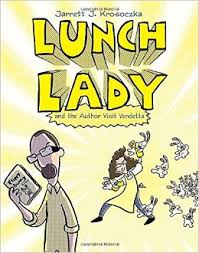
[READ: June 13, 2016] Lunch Lady and the Author Visit Vendetta

I rather like that the Lunch Lady books are sequential and mildly dependent on each other. Of course you can read them in any order you like, but reading them in the proper order allows you to see some continuity between books.

In the previous book, Dee mentioned that the author of the Flippy Bunny series was coming to the school. And in this book he does.

The kids are super excited that Mr Scribson is going to be there to read and sign books.  He is something of a primadonna though as he is upset that the reading will be taking place in the gym.  After his presentation, he signs books, but when Hector brings him a very old copy of the book Scribson says “I don’t sign opened books.”  Hector who has always love the Flippy Bunny books is devastated). (more…)

Read Full Post »

SOUNDTRACK: RACHEL BARTON PINE-Tiny Desk Concert #555 (August 5, 2016).

I’ll let the blurb do the introduction:

Violinist Rachel Barton Pine began playing Bach in church at age 4. Ever since, she’s been mastering and re-mastering Bach’s set of six Sonatas and Partitas—more than two hours of solo violin music that looms like a proverbial Mount Everest for any serious fiddler. The trick is getting the details down. Bach left us with the notes but not much else. Pine recently analyzed every measure of these works, and prepared a new edition of the music with her own dynamic markings, phrasing indications, bowings and fingerings.

For this performance, Pine chose three contrasting movements from the set and plays them on her Guarneri del Gesu violin, which was built in 1742 — eight years before Bach died. She highlights the spirit of the dance in the “Tempo di Borea” (a Bourée from the First Partita). She unfolds a serene melody, just lightly accompanied, in the “Largo” (from the Third Sonata), and she closes with the intertwining “Fuga” (from the First Sonata), which sounds like three violinists in deep discussion.

And the music is gorgeous (Bach is truly sublime) and Pine’s violin playing is stunning.

She plays three pieces:

  • J.S. Bach: “Tempo di Borea” (from Partita No. 1)
  • J.S. Bach: “Largo” (from Sonata No. 3)
  • J.S. Bach: “Fuga” (from Sonata No. 1)

The first she describes as dance music.  She says that even though this was not created for the dance, you can sense the implicit choreography.

She describes the second piece as the sorbet course in between the exciting stuff.  It is in the key of F major, which historically is an intimate key.  This piece is calm and peaceful with the sparest of accompaniments.

For the final piece she says she will finish by playing the most complex of violin pieces.  Bach wrote it as a fugue for solo instrument.  She describes a fugue as a musical pattern that the voices toss around in conversation with each other.  So this little four string violin sounds like a full string ensemble.  And it absolutely does.  The opening melody is followed by the same melody on a lower string (while the first string is playing something else at the same time).  And then that riff is continued on the next string while the other two continue.  It is amazing.  And then near the end, she plays some incredibly fast dervishes of flying fingers and that crescendo is not even the end.

You might say that Bach was cruel, except it sounds so amazing, it’s worth it.

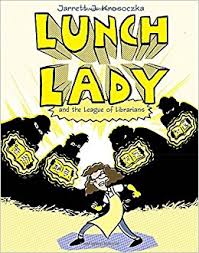
[READ: June 13, 2016] Lunch Lady and the League of Librarians

Librarians don’t really like when librarians are portrayed as villainous–unless they are done well.  And these librarians are pretty evil.

I enjoyed how this book also started out with a short clip of Lunch Lady stopping some bad guys before we even get to the story proper.

This book sees the Breakfast Bunch split between wanting to play video games (Hector is excited about the new X-Station 5000) while Dee is excited for the Read-a-thon contest.  Of course when they go to check out the Book Fair, the librarians insist that it starts tomorrow, not today.

Things seems calm and quiet for Lunch Lady.  In the meantime, Betty has come up with a new gadget: taco-vision night goggles. (more…)

Read Full Post »

SOUNDTRACK: EDDIE PALMIERI-Tiny Desk Concert #559 (August 19, 2016).

Eddie Palmieri is a jazz legend although I’m not exactly sure if I’ve heard of him or not (his name sounds familiar, but..).

But the blurb fills me in:

Eddie Palmieri is that once-in-a-lifetime musician, bandleader, composer and arranger. An icon for both modern and Latin jazz, he continues to break tradition and innovate within many musical styles, including salsa, fusion, Latin funk and more.

He is, indeed, a magnificent player.  A few minutes into “Iraida” you can hear him start to growl (I actually thought it was a buzzing on the piano at first).  I love watching him slide his fingers slow up the keys at the end of he song and then play a deep low note to end it.

He has an amusing introduction to “The Persian Scale.”  This next composition is called The Persian Scale and it’s quite an interesting composition….  It has a cool, interesting riff with staccato and counterpoint.  And he lays fast and loud (with grunts), although it does slow down.  Eventually, for such a wild opening. the song mellows out by the end with some very pretty, delicate trills.

“La Libertad” is uptempo and he says “if you want to dance, do it.”  He plays a brief intro and then when the melody kicks in on the low notes, it’s pretty great.  In the middle, he starts playing a very typical Latin American melody on the bass notes (is that a mambo?) and when an audience member starts clapping along (a rather complex pattern), he smiles and say very good.

This is a fun piano concert with lots of variety and different styles and he handles them all with much skill.

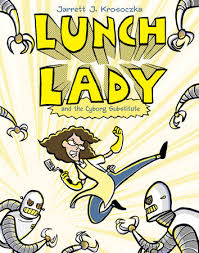
[READ: June 11, 2016] Lunch Lady and the Cyborg Substitute

I learned about Lunch Lady from the Comics Squad books which Krosoczka and the Holms’ edited.

Since I enjoyed the Lunch Lady mini comic, I decided it was time to read the real thing–Tabby also loved them (she’s a big fan of Babymouse as well).

Despite the fact that the title of the book kind of gives away the plot of the story, I suspect that the plot wasn’t really the main point. Rather, it was all meant to be good fun that Lunch Lady turns out to be a crime fighter complete with her own assistant who comes up with awesome gadgets. (more…)

Read Full Post »

SOUNDTRACK: RENÉ MARIE-Tiny Desk Concert #557 (August 12, 2016).

René Marie has a classic jazz singer’s voice.  She has the tones and bounce perfectly.  In fact, her entire performance is timeless–one would be hard press to guess when this was recorded (if you didn’t know).

Her first song “Colorado River Song” was inspired by an NPR coincidence:

René Marie was answering phones at Denver’s jazz radio station KUVO when she sat down across from a fellow volunteer fundraiser. He would soon invite her on a canoeing trip and, without yet having seen the eponymous river, she wrote the giddy “Colorado River Song” on the way there.

She said had never been canoeing before and she was so excited that wrote this song on the way to the river.

Her voice sounds great, especially when she does some mild scatting in the middle of the song.  There’s a great jazzy piano solo, too.  She accompanied by her Experiment In Truth band (John Chin on piano, Elias Bailey on bass, Quentin Baxter on drums).

“This is (Not) a Protest Song” covers serious topics, but sing in a gentle and caring way.   She sings of her homeless brother and her crazy Aunt who fell through the health care cracks (not sure if these are actual relatives, but it doesn’t matter).  This song is a bit less jazzy (although it has some cool jazzy bass lines).  It’s a surprisingly upbeat song although none of it is in a hurry to get anywhere, it just sounds great.

“Sound Of Red” is a bit faster with a pretty wild (relatively) piano solo. She also has a lot of fun teaching everyone to do her dance moves–put your weight on it.

And the sweet canoeing trip has a very sweet ending:

In the audience [for this Tiny Desk Concert] was the bold KUVO volunteer from that day 10 years ago. His name is Jesse, and they’re now married and live in her home state of Virginia;

[READ: April 1, 2016] Sunny Side Up

The Holms siblings are responsible for the Babymouse series.  It took me a little while to get used to their artistic style in such realistic story (no mice or amoebas), but it doesn’t detract from the story at all.

I especially loved this story because it reflected my childhood in the settings (although not the story).  I loved seeing the images from the 1970s (like Tab in the soda machine and going to the iron-on T-shirt store down at the shore).  There’s even a Polaroid camera!

The story is told in flashbacks, and I have to say that if I hadn’t been told that there was a sad element to the story, I wouldn’t have guessed that at first.  But once I knew there was a sad section, my anticipation of the sadness proved to be worse than what the actual sad part was, so phew. (more…)

Read Full Post »

SOUNDTRACK: KEATON HENSON-Tiny Desk Concert #293 (August 3, 2013).

Keaton Henson is a quiet guitar player.  He plays delicately (although his amp is turned up pretty loud so we can hear everything clearly).  He sings quietly as well.

After the first song, he even speaks quietly and apologizes for bringing everyone down on a Friday afternoon.

The blurb jokes:

The day before Keaton Henson arrived to play the Tiny Desk, we hosted a group called The No BS! Brass Band, a nearly dozen-piece horn section with an almost brutal (and totally amazing) sound. It was one of the loudest and most thrilling, heart-pounding Tiny Desk sets we’ve ever had.

Keaton Henson’s performance could not have been more unlike the show the day before. When a cozy crowd of curious listeners showed up the next day to see him play, I asked everyone to get as close as they could, without freaking out the admittedly shy singer from London. Don’t let the presence of this fantastic recording (by our engineer Kevin Wait) fool you. Henson’s voice was so fragile and hushed, if you were 10 feet away you would have barely heard a peep from him.

Remarkably, Henson has only been playing music for a couple years; he took up the guitar to help heal his broken heart after a failed relationship. He’s also a poet and illustrator who’s released one graphic novel called Gloaming and is already at work on another. For this Tiny Desk performance, Henson performed three songs from his new album, Birthdays.

“You Don’t Know How Lucky You Are” opens with some pretty, vibratoed harmonics before the guitar strumming comes in properly.  “Sweetheart What Have You Done To Us” has a very cool section in which the chords shift up by a half step which changes the tone of the song quite a bit.  It’s interesting that he’s recorded so closely and loudly that you can hear everything–mildly errant strings or unexpected note playing (he uses his thumb as a pick).  You can also hear how carefully he is miked for this set because you can practically hear the water going down his throat as he drinks it.  “You” plays with a rising and falling melody as it rumbles under Keaton’s delicate voice.

[READ: June 20, 2016] Sidekicks

I recognized Santat’s style from the fun picture book Oh No!  Sarah brought home this book and I thought it looked really fun.  And it was.

The premise is by now familiar (although since he did it 5 years ago, this book might be more original than it seems).  And it does take the whole idea of superheroes at home in a rather new direction.

The book opens on Roscoe, a large dog, waiting for his master to get home.  His fellow pet, a hamster named Fluffy, is chowing down on snacks while they watch TV.  Roscoe gets mad at Fluffy since Harry will be home soon and they are just sitting around.  Then Harry appears on the TV, crashing to the ground.  For Harry is in fact Captain Amazing.  He ensures the TV viewers that everything is under control.

But then he sees that he has crashed into a Nuts cart.  And he freaks out because he is allergic to peanuts (a hilarious premise for a superhero weakness). (more…)

Read Full Post »

SOUNDTRACK: ALICE RUSSELL-Tiny Desk Concert #288 (July 15, 2013).

I read the name Alice Russell and pictured some kind of folk artist.  Boy, was I surprised to see a woman with  bleached blonde hair, a leather jacket and a funny t-shirt.  And then her band started playing low groovy soulful music.

Turns out:

Russell is a classic soul-infused singer — close your eyes and it’s easy to hear a Southern drawl, but truth be told, she’s a Brit. American-style R&B from Britain has a long history dating back to the 1960s with Dusty Springfield and on up through 21st-century artists like Adele. As for Alice Russell, she’s been making great soul music for 10 years, and her arrangements on To Dust often include a dose of electronics.

I didn’t love her voice when the first song “To Dust” started.  But as soon as the chorus kicked in I was hooked–wow, what a great voice she has and with the full band playing behind her it sounded amazing (the sampled backing singers was a bit flat, but otherwise OK).  And by the second chorus, man she is belting out the song—it’s great.  The Adele comparisons are spot on.

Then she hit Bob’s gong at the end of the song and told us that it was an ode to the taxman.

“For a While” is a great big soul song.  The drummer gets some great sounds out of that one drum he has.  And they keys sound great too.  I love the middle part where there’s some seriously long pauses in between beats–they are all wonderfully in sync.  At the end of the song she yells “I didn’t gong!” and then makes a peculiar hand gesture about a turtle.

“Heartbreaker” has such a classic-sounding riff it’s hard to believe it’s a new song.  I like it a lot (although I don’t care for the chanted “when it falls, when it breaks” by the guys).

I have to agree with this blurb about her:

To Dust is Russell’s fifth album, but the hiatus that followed 2008’s Pot of Gold may be the reason too many people don’t yet know what she’s doing. This stuff is as powerful as the work of any American singer making soul music in the 21st century. If you haven’t heard of her yet, think of this as a well-overdue introduction.

[READ: May 15, 2016] I Kill the Mockingbird

I bought this book from the bookstore in Bethlehem, PA.  I don’t buy too many books these days but I saw this one in the PA authors section (and it was 20% off) and the title sounded intriguing.  So I grabbed it.

And I’m I glad I did. This book was outstanding.  I loved it from the first chapter and was thrilled that the ending was also very satisfying–not easy given the way the story was heading for a conclusion that could have gone in many different directions.

So what’s this about?  Well, there are three kids, Lucy Elena and Michael.  They are at the heart of the story.  I loved loved loved that these three were great friends who’d known each other forever.  And they were all big big big readers. Such an awesome start to a story. (more…)

Read Full Post »

SOUNDTRACK: LYDIA AINSWORTH-“Afterglow” NPR’S SOUTH X LULLABY (March 23, 2017).

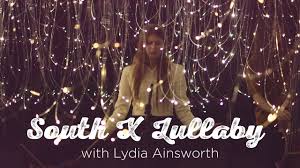
I was unfamiliar with Lydia Ainsworth, but I was instantly struck by the setting of her lullaby.

We asked Lydia Ainsworth to perform in Raum Industries’ Optic Obscura installation. Surrounded by dim, long-hanging optical fibers that look like an infinity room of cat’s whiskers, she sings a stripped-down version of the slow-burning “Afterglow,” accompanied only by an upright bass and light percussion.

I’m not sure what the original song sounds like, but this version is moody and intense.  The upright bass opens the song as Lydia’s whispered, sensual vocals come forth.  She has a beautiful voice and it is especially haunting in this setting.  It reminds me a bit of someone else although I can’t decide who.

The starkness of the silence when she stops singing is intense.  And I really like the way the song ends, not abruptly exactly, but rather unexpectedly.

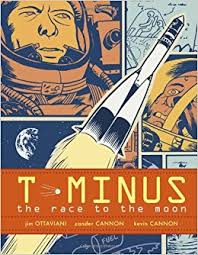
[READ: March 21, 2016] T-Minus

Jim Ottaviani did the amazing graphic novel Feynman, and in the blurb about him in that book, it said that he also wrote T-Minus.  Coincidentally I had just brought T-Minus home for Clark and I to read.  He read it quickly and said it was very good.  It took me a little longer to read (I’m sure he didn’t read all the details) because Ottaviani jam packs this book with interesting facts.

As the title says, this is about the race to get a man to the moon.  It begins 12 years before the actual date occurred.  And it toggles back and forth between the United States and the Soviet Union.

On the margins of many pages there are drawings of all of the various attempts each country had to get a rocket into the air.  The drawings show the design and then at the bottom it states the duration of the flight, the date and some other details.  The USSR’s first rocket (1957) lasted all of 20 seconds before exploding.  The U.S’s first rocket lasted about 7 seconds.

We meet a handful of people who were instrumental in the design and origination of these rockets.  (Ottaviani explains that many of these people are composites of real people involved–if he wanted to include everyone, there would be 400 people in every panel). (more…)

Read Full Post »

« Newer Posts - Older Posts »