Feeds:
Posts
Comments

Archive for the ‘Cancer as plot device’ Category

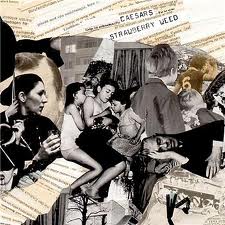
SOUNDTRACK: CAESARS-Strawberry Weed (2008).

This Caesars disc is the final of the donated library discs that I received.  And the guy who donated these has some great taste. I feel like I need to track him down and see what else he likes.  I was initially skeptical of this disc because it is so crazy poppy, but it has a few cool elements to it that make it more interesting than typical pop music.  I’ll claim that it’s because they’re from Sweden, where they skew things a little differently.

The melodies are wonderfully catchy, and yet “Fools Parade” starts with some crazy noises and wild drumming before switching over to pure pop sensibilities.   “Waking Up” features that sure-fire sign of a pop hit, the word “alriiiiiiiiiiiiiiiight” sung with many changes in pitch.  It’s not always easy to pull off but they do it perfectly.

“Boo Boo Goo Goo” is as crazily catchy as its title suggests it would be.   The lyrics aren’t as inane as the title suggests with the catchy ender: “you’re not gonna get that far climbing those monkey bars”.  “Crystal” has some great old-time Farfisa organs on it which make it sound simultaneously retro and (because of the guitars and such) very contemporary.

It’s actually hard to write about this disc effectively because there are so many great catchy pop songs on it–it would just be “this is poppy and fun” over and over again.

I think the poppiness of Caesars can be summed up by “Stuck with You” in which there’s a wonderful “ooh ooh ooh ooh” section, but it’s a little fuzzy and distorted, just slightly off from pristine.  Similarly, “No Tomorrow” has great fuzzy guitars and more oh oh ohs, this time ending in a super catchy “oh yeah!”  Or how about the “oooh wee oooh” that opens “In Orbit” which sounds spacey and otherworldly.

“Up All Night” introduces a minor key song to this intrinsically poppy album, and even the minor key song is upbeat.

This is a great album if you’re looking for something catchy and easy to sing to, but which isn’t completely made of bubblegum.

[READ: March 11, 2012] “Citizen Conn”

Michael Chabon does not shy away from comics.  I almost fear he’s endangering himself as being the guy who writes about comics (fortunately he has written very well about other topics too).  But for this short story he’s back in that familiar realm.

This story is about two men, Morton Feather and Artie Conn.  They were comic book artists back in the day, writing failing books for a failing company.  But they’re in the right place at the right time when an accidental mailing reveals that men in tights are making a comeback.

So Feather and Conn work together to creator some of the most powerful and long-lasting comic book superheroes.  They ride so high that they are offered to sell their creations to a very high bidder.  Feather refuses but Conn accepts.  And so begins the rift between them.  Later, since Feather lost the fire of his convictions after the sell-out, he is fired and Conn becomes solely responsible for these creations. (more…)

Read Full Post »

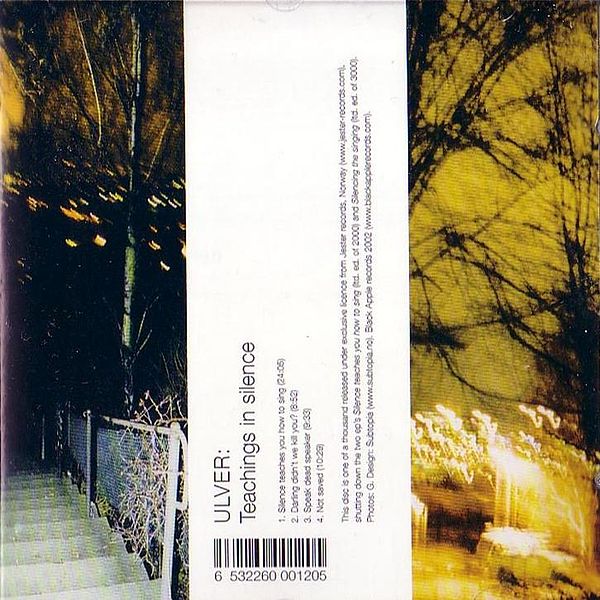
SOUNDTRACK: ULVER-Teachings In Silence (2002).

This EP is a collection of Ulver’s two previous limited edition EPs: Silence Teaches You How to Sing and Silencing the Singing.  It was originally released as a limited edition of 1000 copies, but has since been given wide release.  The two EPs that it replaced were officially retired (after print runs of 2000 and 3000 respectively).

“Silence Teaches You How to Sing” seems like perhaps Ulver has pulled a fast one.  The song starts with static…waves of static.  And you think, what, 24 minutes of THIS?  But after about four minutes, some quiet guitars layer through the static.  By 5 minutes a melody emerges, rather Twin Peaks theme-like.  Static resumes and then another wave of music bursts through and then, around 11 minutes, distant voices can be heard.  As the track nears the end you can hear a distant choir.  And by the end you’re listening so intently that you hear all kinds of things.

That was the only track on the first EP.  The second EP had three shorter tracks.  They are in a similar style to Silence, although there is more music.  “Darling Didn’t We Kill You” has a somber guitar melody and distant choral voices or a buzzing drone.

“Speak Dead Speaker” is more static (it’s easy to see why these two EPs were bundled together).  There’s more Twin Peaks style washes over the static.  I keep picturing the Pacific Northwest.  The last two minutes are a surprise cello version of the themes from the first 7 minutes.  It’s lovely and sorrowful.

The final track is a beautiful melody that repeats itself more and more quietly (with a wonderful loud funeral bell keeping time).  It repeats its cycle three times before ending.

Ulver continues to confound listeners.  Neither one of these EPs is really essential, but they are both interesting and really create a mood.

[READ: November 3, 2011] “Nilda”

This is the final uncollected story (according to Wikipedia anyhow) by Junot Díaz that I was able to access online.  There are two more stories “Invierno” (Glimmer Train 1998) and “Flaca” (Story, Autumn 1999) that I can’t seem to access online.  The rest of the listed short stories appear in Drown

This story is about longing and making the wrong choices.  Having read a bunch of Junot Díaz stories lately, this feels very much like a story he would write (I probably should have read Drown before I read these stories, but when I get to it, I’ll be able to confirm my suspicions).

In this story, Yunior, who is evidently the constant narrator in his earlier works (and in Oscar Wao) knows Nilda from school.  She was a friend of his–a kind of teasable friend–until puberty hit and her chest was to die for.  Unfortunately for Yunior, they were already friends, and she was off with other boys.

Indeed, Nilda was trouble more or less from the start–“brown trash,” he calls her.  Her mother was an alcoholic and Nilda was defiant.  She even spent time in a group home.  But she was nice and easy to talk to.  Dammit, why did she have to start dating Yunior’s brother Rafa? (more…)

Read Full Post »

SOUNDTRACK: KISS-Unmasked (1980).

It was hard to like Unmasked, but, being an 11-year-old boy, who loved Kiss, I never doubted its awesomeness.  Despite kids in school telling me Kiss sucked and, peculiarly, even the cover of this album telling me they stink (whose idea was that?) I knew in my heart of hearts that Kiss was the best.

In a stroke of marketing genius, this album teased the audience with the idea of finally seeing who was under these “masks” (which is weird since everyone knew they weren’t wearing masks, but whatever).  There’s even a poster that came with my vinyl copy!  Yahoo.

I just recently found out that “Is That You?” is a cover.  I always liked the high-pitched part of the song (“you always get the boys you like”), although in retrospect it’s really not very good–simplistic in a way that Kiss songs weren’t but then became.   I always joke about Kiss doing a tour and playing “Shandi.”  It’s such a cheesy ballad and yet I think it’s really good (for a cheesy ballad–Paul sings this type of song so well).  I constantly have the “there’s another mess I’ve got myself in” line in my head all the time.

I liked “What makes the World Go ‘Round” but even I can acknowledge that the song is pretty poor.  “Tomorrow” sounds like another song off of Paul’s solo album and probably should have been a huge hit.  In fact, they could have re-released it in the 80s and it would have fit right in with their non-makeup success–Paul’s soaring choruses are always a hit.  “Easy as it Seems” is kind of the album encapsulated in one song–very sleek, very soft, lots of choruses vocals and really kind of bland.   There’s even a wimpy keyboard solo (gasp!).

Ace was the star of Dynasty, and he gets three more songs on Unmasked.  “Talk to Me” is one of his repetitive songs that drives me a bit nutty (never liked that “talk to me-e” part).  It’s interesting how much Ace moved into prominence on these albums, especially since he was headed for the door soon.  “Two Sides of the Coin,” is a decent rocker, but listen to those crazy synth drums during the instrumental break.  “Torpedo Girl” is the most interesting track on the disc.  It has the cool opening “man battle stations torpedo,” a really funky (!!) bass line from Gene (who knew he had that in him) and a cool weird riff at the opening.  It’s then got a very catchy chorus (although honestly, “c’mon get your feet wet”?).

Gene has a bit more prominence here.  “Naked City” has a pretty menacing riff to open with, but Gene turns in one of his more melodic turns (with some pretty high notes in the chorus)!  The solo, while not blistering, is pretty great (as with Dynasty, the solos are too short).  “She’s So European” aside from being a really stupid title and lyric is the song that really puts this album over the edge–the twinkly keyboards, the “you ought to see her” falsetto, and, basically the same chord structure as “Living in Sin” on the verses.  Gene ends the disc with “You’re All That I Want,” a rather uninspired song that reminds me of the songs on side 4 of Alive II.

You’ll notice that Peter doesn’t get a vocal turn on this album.  In fact, he didn’t play anything on it at all (Anton Fig on drums again), but he was contractually obligated to appear on the cover (perhaps that’s why they did a cartoon).

No matter how much I listened to it back then, I can still admit that this album isn’t really very good.  Although interestingly, some of the songs and sonmg styles foreshadow the kind of music they’d play on Lick It Up: simple songs without a lot of substance, and that album was huge!

[READ: November 2, 2011] “Wildwood”

After reading “The Brief Wondrous Life of Oscar Wao” in the New Yorker, I saw that they had also published Lola’s “Wildwood” adventure as an excerpt from Oscar Wao the novel.

As you can see, this excerpt came out around the same time as the novel.  And as far as I can tell, this excerpt is exactly the same as the novel except for one line that was in the excerpt but not in the novel (the part in italics):

Hija de Liborio she called you after you picked your tia’s winning numbers for her and when you guessed correctly how old to the day she’d been when she left home for the U.S. (a fact she’d never told anyone).  You assumed….

The only other noticeable difference is that the first section of this excerpt is not really separated from the rest of it.  The first section is told in the second person, while the rest is in the first person.  In the novel, the second person section is set off by itself, so it’s a little less jarring when you jump to first person, but I think any reader could cope with that pretty well. (more…)

Read Full Post »

SOUNDTRACK: MY MORNING JACKET-“Touch Me, I’m Going to Scream (Part 1)” (From the Basement) (2009).

My Morning Jacket is one of the few bands that has two videos up on the From the Basement site.  The two videos are parts one and two to the song “Touch Me, I’m Going to Scream” (which is kind of funny as the two parts are really quite unrelated and they seem to have been recorded not consecutively in the show.

As I mentioned in the Fleet Foxes review, I love seeing bands singing harmonies.  And the voices in My Morning Jacket songs are often soaring and, sometimes unbelievable (how does Jim James hit those notes?).  So this “concert” is visually satisfying in this regard.  Not to mention, Jim James wears a cape throughout the song!

It’s also very satisfying musically.  The band sounds great (as have all of the bands during these sessions).  “Touch Me” is a great catchy, sing along song from Evil Urges.  And this version is quite perfect.

[READ: August 30, 2011] “The Aquarium”

This is the first of the longer articles in the New Yorker’s 2011 Summer Fiction issue.  But despite the issue’s title, this is not a work of fiction (at least I hope it isn’t because it’s a shitty thing to make up).  So, assuming it is true:

Hemon found out that his nine-month old daughter had a brain tumor.  This essay details his life while dealing with this unthinkable issue and also trying to maintain a normal life for his three-year old daughter.  He tells this story in a surprisingly roundabout way.  Meaning, we don’t learn the fate of his daughter till nearly the end of the essay.  And in this way it mimics his own experience of finding out the fate of his daughter: one hundred and eight days after the initial diagnosis.  (more…)

Read Full Post »

SOUNDTRACKMETRIC-Fantasies (2009).

I was hooked by the song “Gold Guns Girls.”  I liked it so much, I bought the disc, and I was absolutely not disappointed.  This disc reminds me of all of the best things about late 90s alt rock (one of my favorite musical periods).  There are echoes of later period Lush, or of Garbage or some other slickly produced commercial alt-rock.

I’m led to understand that this disc would merit cries of sell-out from older fans (their earlier stuff it a bit rougher, I gather), and yes, this is a pretty commercial release, but I don’t mind.  The songs are all top-notch: great songwriting, catchy choruses, wonderful production.  And there’s something slightly uncommercial about the lyrics which I think is what keeps this album from being too slick for its own good.

I have listened to this disc dozens of times at this point and I never get tired of it.  And, there’s no reason why I shouldn’t go back and get some of their earlier releases too.

[READ: May 15, 2011] Fraud

I’ve seen Rakoff on the Daily Show, and his name has been cropping up in various places lately.  So I decided to read his actual published work to see what he was all about.

Fraud is his first book.  It is mostly funny, although it also dwells on serious matters by the end of the book.  In many ways Rakoff is like a slightly wilder, slightly edgier version of David Sedaris (the two have a long history of friendship and working together, so this may not be totally surprising).

I’m not going to compare him to Sedaris in any meaningful way, just to say that there are similarities of temperament and style; I don’t think either one of them is hilarious, but that I enjoy both of them and often laugh pretty hard at their material.

I’m also not going to review each essay in this book.  It seems to be constructed in a vague sort of narrative arc.  Well, actually, the second half of the book has the narrative arc (I suspect that the essays that were published previously were modified slightly and that the new essays allude to some of the incidents mentioned there.

The first few essays of the book are the funnier ones (insert joke about Woody Allen’s early funny movies here), and they stick more to the idea of Rakoff as a “Fraud.”  In them, Rakoff, a Canadian ex-pat (he’s from Toronto), somewhat neurotic, gay, New York Jew goes to different locations where he is an atypical person and then reports on them. (more…)

Read Full Post »

SOUNDTRACK: PAVEMENT-“Gold Soundz” live on the Colbert Report (2010).

Philistine alert: I never loved Pavement.
Yeah, let that sink in.  It’s shocking, I know.  I have liked a great many of their songs, and I could definitely see myself enjoying the entirety of their new greatest hits record.  But even though I have their first three discs, and I adore them in theory, in practice I just don’t love all of their output.

When they broke up in 2000 or so I wasn’t really that bummed.  I felt they’d done a number of great (and by now) classic alt rock songs, but I didn’t really feel like music had ended or anything.

Having said that, the fact that they’ve reunited makes me happy.  It’s nice to see yet another “classic” alt rock band banging out some tunes together.  And, in this case, it means that I get to hear them play a great classic track live on The Colbert Report.

This song is a kind of The Platonic Form of Pavement songs.  It features everything: noisy guitars, vocals that go from mid-range to high pitched with almost no warning, inscrutable lyrics and, in spite of itself, a catchy liquid center. I’ve never seen them live (and I missed a chance in Central Park recently, sorry Al) but this clip sure makes me think they’d be a great show to see.

And who knows, maybe I’ll have to actually get Terror Twilight.

Colbert’s interview with Stephen Malkmus is hilarious, too.

[READ: September 20, 2010] “Bodies”

As with a previous time that I scoured a New Yorker back issue, I found a short story that came directly after the article I wanted.  The name Jessica Shattuck sounded familiar (and her debut novel The Hazards of Good Breeding also rang a bell), but apparently I’d never read her before.

This story opens with a woman named Anna who we learn has recently been diagnosed with Stage III Hodgkins lymphoma.   She is currently living in her bosses’ house with her boss’ husband and five-year old son.  The arrangement is not ideal, but Anna had nowhere else to turn.  And, since she is not working, while she is recovering she is acting as the boy’s nanny (the boss is away a lot and the husband spends much of his time working out).

She is beginning to feel better, stronger, and is even feeling confident enough to leave the house for a little while.  And so, to me, the last thing I expected was for this story to grow sexual.  And yet it does. (more…)

Read Full Post »

SOUNDTRACK: THE DEAD MILKMEN-Big Lizard in My Backyard (1985).
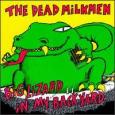
My friend Alison said the other day that she had “Bitchin’ Camaro” stuck in her head.  And soon thereafter, so did I.  So Philadelphia’s Dead Milkmen are a bratty punk band.  They skewer all kinds of things: pop culture, racists,  right wing pigeons, junkies and, quite possibly, music itself.

This first record showcases quite a breadth of song styles.  Although they stay comfortably within the realm of two-minute punk, they plays “blues,” “jazz,” and even “surf.”  Interestingly, their guitars are quite treble-filled which is a bit unusual for a punk band (typically pretty bass heavy). And yet a song like “Swordfish” (“I believe in swordfish!”) has a pretty wild and creative bass line running through it.

But I think the Milkmen are most well-known for their lyrics.  So Big Lizard starts in right away with lyrics that could easily offend the wrong target: ‘Cause we hate blacks and we hate Jews/And we hate punks but we love the F.U.s.”  Of course, the chorus reveals the truth: This is a tiny town and we don’t want you hanging round.”

“V.F.W.” stands for veterans of a fucked up world.  “Beach Song” opens up like a beach song until you get the bratty, screamed lyrics: I don’t wanna be on the beach NO FUN!.”  Of course, “Violence Rules” tackles a real issue: “violence rules, guns are cool and we’ve got guns in our school.”  And there’s the twisted, “Takin’ Retards to the Zoo.”

We also get one of my favorite catchy lyrics (from “Nutrition”): “I’ve got nowhere to go/Just hang out on the street/My folks say I’ve got no ambition/ At least I give a shit/About the stuff I eat/Yeah! I care about nutrition.”

Only 6 of the 21 songs are over 2 minutes, so musical styles definitely come fast.  Rodney Anonymous’ vocals are snotty and funny (even when the lyrics aren’t especially funny, the delivery is).  We only get one song with Joe JAck Talcum singing (he’s the whiny guy).  It’s so hard to tell if his delivery is serious at all, and yet I find it very endearing (and he’ll get much more prominence on later discs).  So, this disc is fairly simple, but it works very well for what it is: in your fast, bratty music, that is quite often very funny.  It’s not perfect, but it’s pretty darn good.

And it features “Bitchin’ Camaro.”  I’m going to go to a hardcore show and see F.O.D.

[READ: March 23, 2010] “The Pura Principle”

I have been intending to read Díaz’ The Brief Wondrous Life of Oscar Wao for quite some time.  I just haven’t yet.  So I was pleased to get a chance to read one of his short stories to get a feel for his writing.

One thing I had been told about Oscar Wao was that it mixes English, Spanish, Spanglish and a kind of ghetto slang which makes the book shall we say, more difficult to read if you’re a suburban gringo like myself.  But hey it’s set in New Jersey, so at least I know the towns he’s talking about!

This story is like a short story version of that summary of the book.  The writing is indeed in English, Spanish and Spanglish (and when the second sentence–the crux of the story– is “No way of wrapping it pretty or pretending otherwise: Rada estaba jodido” you know this is not your typical English short story.  I still don’t have an exact translation for that sentence (and it took a while to realize that Rafa was a person’s name) but I got the gist, and I was delighted by how much I followed the story. (more…)

Read Full Post »

SOUNDTRACK: BLUE ÖYSTER CULT-Cultösaurus Erectus (1980).

BOC came back with a vengeance on this disc.  From the cool title (c’mon that’s a cool title) to the futuristic fossil on the cover, this album is all heavy.
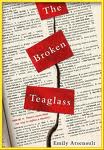
The opener, “Black Blade” puts us firmly back in the heavy sci-fi world of BOC.  There’s cool time changes, there’s a wild end section with weirdo distorted vocals.  And the lyrics are by Michael Moorcock.  It’s followed by my favorite BOC track of all time: “Monsters.”  This is a fairly straightforward metal song.  It’s starts with a fast riff and big power chords but after the second verse it bursts into a full on jazz section: walking bass, wailing sax solo (!)  for several measures, until it jumps right back into the song as if nothing happened.  Thre’s even a third, even heavie part that comes later.  It a terribly underrated song.

The next two songs flirt back with their more recent gentle releases.  “Deadline” is keyboard fueled little ditty (and the general BOC rule is, the more keyboards, the less metal.)  Yet, in small doses, Allen Lanier’s keyboards really define BOC’s sound.  “Hungry Boys” and “Fallen Angel” show the band really trying to find its sound (and not being terribly successful there).

“The Marshall Plan” gets the band back on heavier terms, with that classic theme of metal songs: playing in a metal band.  (There’s a humorous musical quote from “Smoke on the Water” AND a spoken line from Don Kirshner).  Finally, the wonderfully weirdly titled “Lips in the Hills” gets the band back on familiar rocking territory.

While this isn’t their best disc, it is certainly better than the previous one, and ranks up pretty high in their catalog.

[READ: March 7, 2010] “Paul Farenbacher’s Yard Sale”

This was a cool story with a bunch of twists.  The simple premise is that the story is set at a yard sale.  The sale is being held by the wife (and new boyfriend) of Paul Farenbacher, a recently deceased man.  The narrator was the family’s neighbor (and on one occasion kissed their son).

In the intervening years she has become closer to the family.  She helped sell some products that Farenbacher was selling, and also sold new (home made organic cleaning products) to Farenbacher’s wife (and the rest of the community).

The story is a way for secrets to get revealed and truths to be told. (more…)

Read Full Post »

SOUNDTRACK: ELFIN SADDLE-Ringing for the Begin Again [CST059] (2009).

This is a fascinating disc from our friends at Constellation Records. It defies ready classification and offers elements of folk music, eastern instrumentation, klezmer and Asian influences.

The most obvious Asian influences come from Emi Honda who sings in Japanese.  In a most misunderstanding, on “The Procession,” which sounds Middle Eastern, I actually thought she was singing in Israeli or something until I realized it was Japanese.

Jordan McKenzie, the other half of the band, sings in English and has a variety of vocal styles. He also plays accordion banjo and xylophone, which complements Emi’s own accordion and singing saw (!).  There is also a feeling of random percussion (or as the Constellation website puts it: junk percussion).

The opening track, “The Bringer” begins quietly, building in a gentle staccato with both members singing until it reaches its full height of intensity.  “Running Sheep” sung in Japanese, actually feels like a running song, while “Hammer Song” is almost, almost, a straightforward folk song (in which Jordan sounds Scottish) except for perhaps the tuba accompaniment.  Yet for all of these disparate elements, the disc holds together amazingly well.  These are not nine individual track  glued together, they all work together to create a very solid composition.

It should also come as no surprise that Jordan and Emi are visual artists.  The cover depicts a sculpture of theirs (and the liner notes are beautifully illustrated).  Lyrics are included and the Japanese is translated for us.

The disc doesn’t feature the dramatic highs and lows of some other Constellation releases, but as a solid, slightly avant garde folk release, it’s quite terrific.

[READ: February 14, 2010] The Broken Teaglass

[UPDATE: Sarah just reviwed the book here.  We don’t often read the same books, so this was fun.]

Sarah’s friend Denise said I would really like this book.  Upon hearing that this book was right up my alley I had to investigate immediately (I always wonder what people think I would like).  And she was totally correct.

So what makes this book perfect for me?  Well, it is set in a dictionary.  Actually, it is set in the editorial department of the offices of the Samuelson Dictionary, one of the premiere dictionaries in the world.  The protagonist is Billy, a recent college graduate (in philosophy) whose first job comes at Samuelson.  The offices are located in the small town of Claxton, Mass.  Billy moves away from home (although it is still driving distance) to a small apartment in this very small town.

I have no idea if the descriptions of working in a dictionary office are in any way accurate, but it certainly is enticing.  Essentially, everyone works in silence all day.  They are assigned several magazines to read to see if there are any new words that are coming into common usage which might wind up in future editions of the dictionary.  Eventually they are assigned words to define as well (for future supplements to the dictionary).

They are also responsible for correspondence with dictionary users.  People write (or call) with questions about word usage, misusage and even suggestions for additions to the dictionary.  How fascinating is that? (Oh and these correspondences were absolutely hilarious!). (more…)

Read Full Post »

SOUNDTRACK: BLACK SABBATH-Sabotage (1975).

Sabotage seems to be somewhat forgotten (maybe because of the creepy cover art 0f Ozzy in a kimono and fascinating platform shoes, Bill Ward in red tights with a codpiece (and visible underwear on the back cover), and Geezer and Tony’s mustaches).
But this album rocks pretty hard and heavy.
“Hole in the Sky” is a sort of spastic rocker with Ozzy screaming vocals over the top of the rocking track.
“Don’t Start (Too Late)” is the by now obligatory acoustic guitar piece.  But this one is different, for it has some really wild and unpredictable aspects to it.

“Symptom of the Universe” is another classic Sabbath track, a blistering heavy fast riff with the wonderful Ozzy-screamed: “Yeaaaaaahs!”  It then surprises you by going into an extended acoustic guitar workout for a minute and a half at the end.

“Megalomania” is a slow ponderous piece. Unlike the psychedelic tracks from the previous records, this one moves along with a solid back beat. It also has a great bridge (“Why doesn’t everybody leave me alone?”). They definitely had fun with the effects (echoing vocals, etc.) on this one.  And, like their prog rock forebears, this song segues into another rhythm altogether when we get the wonderfully fast rock segment.  And the humorous point where the music pauses and Ozzy shouts “Suck me!”

“Thrill of it All” is a pretty good rocker, which after a  pretty simple opening morphs into a slow, surprisingly keyboard-fueled insanely catchy coda.  “Supertzar” is a wonderfully creepy instrumental.  It runs 3 minutes and is all minor-keys and creepy Exorcist-like choirs.  When the song breaks and the bizzaro Iommi riff is joined by the choir, you can’t help but wonder why no horror film has used this as its intro music.

“Am I Going Insane (Radio)” is a very catchy keyboardy track.  It clearly has crossover potential (although the lyrics are wonderfully bizarre).  But it ends with totally creepy laughing and then wailing.    “The Writ” ends the album. It’s another solid rocker and it ends with an acoustic coda with Ozzy’s plaintive vocals riding over the top.

Sabotage has some truly excellent moments.  It’s just hard to fathom the amount of prog-rock tendencies they’ve been throwing onto their last few discs (we’ll say Rick Wakeman had something to do with it).

Black Sabbath made two more albums before Ozzy left.  I haven’t listened to either one of them in probably fifteen years.  And my recollection of them is that they’re both pretty lousy.  Maybe one of these days I’ll see if they prove me wrong.

[READ: December 16, 2009] McSweeney’s #7

This was the first McSweeney’s edition that I didn’t buy new.  My subscription ran out after Issue #6 and I never saw #7  in the stores.  So, I recently had to resort to a used copy.

This issue came packaged with a cardboard cover, wrapped with a large elastic band.

Inside you get several small volumes each with its own story (this style hearkens back to McSweeney’s #4, but the presentation is quite different).  7 of the 9 booklets feature an artistic cover that relates to the story but is done by another artist (not sure if they were done FOR the story or not).  I have scanned all of the covers.  You can click on each one to see a larger picture.

The booklets range from 16 to 100 pages, but most are around 30 pages.  They are almost all fiction, except for the excerpt from William T. Vollman’s 3,500 page Rising Up and Rising Down and the essays that accompany the Allan Seager short story. (more…)

Read Full Post »

« Newer Posts - Older Posts »