Feeds:
Posts
Comments

Archive for the ‘Books about writers’ Category

SOUNDTRACK: FOO FIGHTERS-Wasting Light (2011).

The Foo Fighters are huge.  Duh.  But when I think of that, it amazes me that a) the Foo Fighters are the band from “the drummer from Nirvana” and that b) while Dave Grohl knows his way around a melody, he is a metal dude at heart, and some of his most popular songs are really heavy.  He can scream with the best of them.

I’ve enjoyed the Foos for many years, but I didn’t listen to their previous discs all that much (or at least I didn’t listen to the mellow disc from In Your Honor and I don’t remember anything off of Echoes…), but this new one is fantastic.  There’s not a dull song on the disc, and Grohl has hit new heights of catchiness and singalong-ness. 

I also like how noisy the disc is.  It opens with some great discord before turning in a majorly heavy rifftastic scream fest in “Bridge Burning.”  Despite the screaming and noise of the opening, the chorus is super catchy.  “Rope” was said to be inspired by Rush.  Knowing that, I can hear a lot of little Rush-isms in the track: The main riff is very Rush-like, there’s a cymbal tapping that reminds me of Neil Peart in the verses, as well as a little drum solo in the middle (with a cowbell!) and the solo is very Alex Lifeson. (It also feels longer than 4 minutes).

“Dear Rosemary” features Bob Mould on backing vocals (but you can hardly tell it’s him).  It’s got a great chorus as well.  “White Limo” is a wonderful punk song, completely incomprehensible lyrics and all.  Meanwhile “Arlandria” (whatever that means) is another totally catchy track (I find myself singing it a lot).

“These Days” should be the next single: catchy and easy on the ears.  I wonder why it hasn’t been released yet.  “Back and Forth” has another great noisy riff.  One thing that I like a lot about the Foos is that they put different things in the same song:  so “A Matter of Time” has a very simple verse and a catchy chorus, but there’s some really buzzing heavy guitars too.  “Miss the Misery” has a kind of sleazy feel which I think is new for the Foos.  And “I Should Have Known” is a kind of angry ballad (I’d like to see Richard Thompson cover it). 

The final track, “Walk” is a fast rocker that sums up the album really well.  Bravo Dave Grohl.  I can’t get enough of this disc, regardless of how popular it is.

[READ: July 2, 2011] Five Dials Number 15

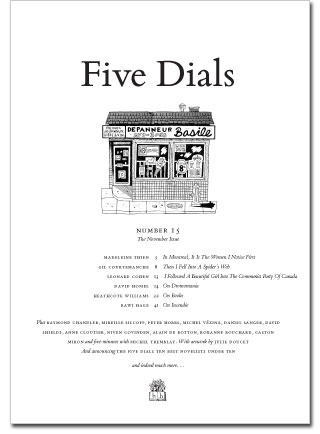
After the brevity of Number 14, Five Dials Number 15 comes back to a fuller size.  It’s strange to me that the issue is titled The November Issue, in part because they never tell us when the issues were published, but even more because this is actually the Québec Issue.  Most of the authors are Quécbecers and the issue release party was in Québec as well.

I’d like to point out that while I was looking something up about this issue (more later) I discovered the Five Dials News Page.  There are currently 43 pages worth of posts.  But most of them are short.  If there are any especially noteworthy ones, I’ll add them to reviews of future issues, but for the most part so far they’re just announcements of how well received their books are (I’ve already made notes to read two of them).  They also give release dates for the issues, which is how I have been able to retroactively attach dates to some of them.

There are many Québecois writers included in this issue (thoughtfully translated into English), as well as some standard features by Alain De Botton and frequent contributors David Shields and Raymond Chandler.

CRAIG TAYLOR-On Our Québec Issue, and Young Novelists
Taylor’s introduction discusses many Canadian’s attitudes about Québec and their (seemingly perennial) vote concerning separation from the country (“so, let them go”).

creepy beard

The confusing thing here is that it appears that Taylor is Canadian (or at least lived there in 1995/6).   But surely he is British, no?

There’s lots of information about Québec in here but no grand statement (except that Celine Dion’s husband’s beard is still creepy).

He also introduces a new section called “Our Town” which is all about London.  The final section of the note says that

we are releasing our second Five Dials list of Top Ten Novelists Under Ten (or ‘Ten Under Ten’,or ‘Ten-Ten’, or as some of the writers themselves call the list: ‘Tintin.’) As you know, many of the writers we chose for our first Ten Under Ten list went on to things such as high school.

This is how I discovered the Five Dials News page, because there certainly was no Ten Under Ten section in a previous issue of the magazine.  Of course, nor is there any mention in the news that I have seen.  So I can’t decide if the whole thing is just a big joke or what.  I assume it is (but I’d hate to not give credit to the waaaay precocious kids at the end of the issue). (more…)

Read Full Post »

SOUNDTRACK: THE HEAD AND THE HEART-Sasquatch Music Festival, May 28, 2011 (2011).

This is the fourth live recording from The Head and the Heart that NPR offers.  Not bad for a band with only one album out.  This set finds the band even more confident and relaxed (despite their genuine excitement at playing the festival).  The band sounds fantastic and I’ve really grown to appreciate the female harmonies on most of the songs now (I’ve not always liked them on every song).

This set has two as yet unrecorded songs in it (one of them was listed as untitled).  There’s some banter between the band and the fans (the band is nothing if not jovial) including a great story about how someone in the band went to Sasquatch the year before and swore he wouldn’t remove his backstage pass wrist band until The Head and The Heart band played Sasquatch.  I like to imagine there was ceremonial wrist band cutting ceremony on stage, but that is lost in the audio version.  Of course the story would be better if it was two or three years later, but it’s still a pretty good one. [See the Five Dials review below for a similar story!]

I found the sound quality of the show to be less than perfect.  The sounds are a bit muddied.  I don’t blame the band.  The Sasquatch venue may be beautiful (so many performers comment on it, I’d love to see the view) but I suspect that maybe the audio was less than stellar.

Nonetheless, The Head and the Heart continue to amaze in a live setting.

[READ: July 3, 3011] Five Dials Number 14

If Five Dials 13, The Festival Issue, was a double live CD, jam-packed with photos and stories and all kinds of wonderment, Five Dials Number 14 is an EP.  Even though it contains only one item, it’s more than a single, because the item is long and a lot is packed into it.  And that ends my metaphor.

One of the fun things about Five Dials is that it can be whatever length it wants to be. Many magazines offer double issues, but they never offer tiny issues afterwards.  And sometimes it’s nice to have a short issue that you can enjoy leisurely, without having to sift through filler.

So this issue consists of exactly two items: Craig Taylor’s introduction and the nobel prize acceptance speech by Orhan Pamuk. (more…)

Read Full Post »

SOUNDTRACKS. CAREY-Live at Sasquatch Music Festival, May 29, 2011 (2011).

I learned about S. Carey through NPR.  S. Carey is the drummer for Bon Iver and he set out on his own playing these cool, atmospheric songs.  What I like best about them is that they feature the vibes.

The whole set has a cool, chilled out sound.  The vocals are slow and dream-like (I’m sure there are lyrics, but I don’t know them) and at times he sounds not unlike Dallas Green from City and Colour.

When Sean (he is the S.) Carey banters with the crowd, he’s very friendly and relaxed.  I especially like the anecdote about going to the Twin Peaks Cafe and hearing Audrey’s music from the show (which the band then plays).  The Twin Peaks sounds melds perfectly with their own sound, which should give you an idea of what the band sounds like.

The songs are about 4 or five minutes except for “Mothers” which tops out at over 8 minutes and actually gets pretty raucous by the end.  For this band it’s a wild song ending.  It’s a good set.  And the surprise cover of Björk’s “Unravel,” which melds perfectly with “All We Grow” is a nice treat.

I don’t know if I’d want to see them live (I like my shows a bit more uptempo) but it’s a great relaxing set.  Of course, having said that, the final track, “Leave” is the most conventional-sounding with a really catchy chorus and a somewhat faster pace.  It’s my favorite song of theirs.

[READ: July 13, 2011] “Homage to Hemingway”

Like the students in this story, I was initially put off by the title of this book because I have grown to dislike Hemingway (probably unfairly, more of a decades-long, knee-jerk reaction to him). But I’m glad I read it because of a couple of things.  One: it was a good story.  Two: it is actually an homage to one of Hemingway’s stories (called “Homage to Switzerland”) so it’s doubly meta-.

In “Homage to Switzerland,” there are three brief stories.  In each one an American man waits for a train in a Swiss station.  Each man follows the same basic trajectory in the story, meeting a waitress but having no real resolution.  Perhaps the men, even though they had different names, were maybe the same person.

Barnes’ story also has three parts, although it is pretty clear that the man is the same in each part, despite their different section titles.  In 1. The Novelist in the Countryside he helps students with their fiction (I rather like reading stories about fiction writing classes, as odd as that sounds). (more…)

Read Full Post »

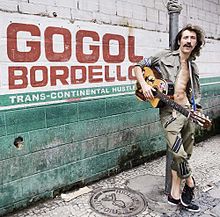
SOUNDTRACK: GOGOL BORDELLO-Trans-Continental Hustle (2010).

When I first heard Gogol Bordello, they were touring for this album (thanks NPR).  Consequently, I knew this album pretty well when I bought it.  At first I felt that it didn’t have the vibrancy of the live show (how could it?).  But after putting it aside for a few weeks, when I re-listened, I found the album (produced by Rick Rubin) to be everything I expect from Gogol Bordello: loud, frenetic fun, a bit of mayhem, and some great tunes that sound like traditional gypsy songs, but which I assume are not.

While I was listening to the album, I kept thinking of The Pogues.  They don’t really sound anything alike but they have that same feel of punk mixed with traditional music.  For The Pogues, it’s Irish trad, and for GB it’s a gypsy sound–I’m not sure if it is attributable to any specific locale.  But they have a common ground in a kind of Spanish-based trad style.  From the Pogues, you get a song like “Fiesta” which is overtly Spanish.  From GB, you get songs like “My Companjera” or “Uma Menina Uma Cigana.”  Singer/ringleader Eugene Hutz has been living in Brazil, and he has really embraced the culture (and the accent).  He also sings in a kind of drunken tenor (his accent is probably more understandable than MacGowan’s drunken warble, but not always).

I’m led to understand that previous albums were a bit more high-throttle from start to finish.  This disc has a couple of ballads.  At first they seem to not work as well, but in truth they help to pace the album somewhat.

It’s obvious this band will not suit everyone’s tastes, but if you’re looking for some high energy punk with some ethnic flare, GB is your band (and if you like skinny guys with no shirts and big mustaches, GB is definitely your band.  It is entirely conceivable that Hutz does not know how to work a button).

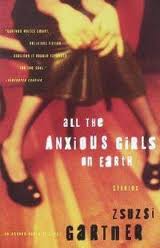
[READ: June 20, 2011] All the Anxious Girls on Earth

I’ve really enjoyed Zsuzsi’s stories in recent issues of The Walrus.  So much so that I wanted to get a copy of her new book.  It wasn’t available anywhere in the States yet, so I went back and got her first collection of short stories.

This collection felt to me like a younger, less sophisticated version of Zsuzsi’s later works that I liked so much.  This is not to say that I didn’t like them.  I just wasn’t as blown as w.

“How to Survive in the Bush”
I had to read the opening to this story twice for some reason.  The second read made much more sense and I was able to follow what was going on (I think there were a few terms that I didn’t know–a 1941 Tiger Moth, East Kootenays–that were given context after a few pages.  It transpires that this is a story o a woman who has given up her life to move to the boonies with/for her husband.  The whole story is written in second person which while typically inviting, I found alienating.  It made the story harder to read for me, but once I got into the groove of it I found it very rewarding. (more…)

Read Full Post »

SOUNDTRACK: GUSTER-Easy Wonderful (2010).

This Guster album is confusing.  It’s rather short (compared to their other discs).  Combined with the (kind of flimsy) cardboard packaging, it feels almost like an EP.  It also seems to be kind of religious (although I don’t think it is)–like a themed EP.  And yet it isn’t off-putting or anything (a few mentions of Jesus is all, although that’s a lot more than usual).

But, like most of Guster’s releases, it’s super catchy kind of alternative jangly pop.  After one or two listens the songs are instantly recognizable.  There isn’t a bad song in the bunch.  However, they’re also mildly underwhelming compared to their previous releases.  The songs feel a bit more subtle, but really it seems like they might be just a little too smooth.  The dynamics aren’t quite as exciting as they have been.

Having said all that, the disc is still pretty great and I find myself humming a lot of these songs all day long.

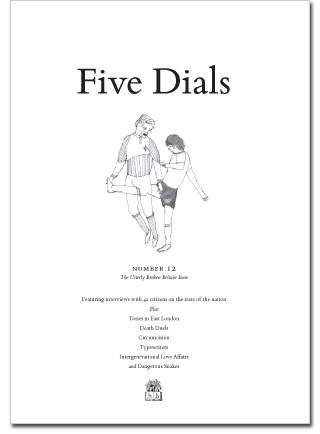
[READ: June 18, 2011] Five Dials Number 12

Five Dials Number 12 has a theme explicitly stated on the cover.  The premise of the theme is that the Conservative Party of Britain had been claiming (in their TV ads and billboards) that Britain was broken.  This idea was relentlessly pushed across Britain.  And Five Dials wondered if people thought that that was true in general.  So they asked 42 citizens (no idea what kind of random sample it may have been, realistically) and they recorded the results.

The rest of the issue has some of the standard Five Dials material we’ve come to expect: essays and fiction, advice and lists.  The theme gives an interesting tone to the proceedings.

CRAIG TAYLOR-A Letter from the Editor: On Broken Britain and Nick Dewar
Taylor addresses much of what is said above.  David Cameron (I still can’t get used to him being Prime Minister, it’s still Gordon Brown in my head–I guess Cameron hasn’t done much yet) is the man who keeps trying to “mend our broken society.”  Even though (and statistics are similar in the U.S.):

They found that violent crime had almost halved since 1995, while crime generally fell by an extraordinary 45%. The figures for teenage pregnancies – a favourite of those talking about social decay – remain constant since Labour came to power in 1997; so too do those for teenage abortions.

The rest of the letter is devoted to the passing of Nick Dewar.  Dewar drew the illustrations for Five Dials Number One.  I really liked Dewar’s style, and his absurdist sensibilities.  Taylor says that Dewar’s color work was even better.  And I think he’s right. (more…)

Read Full Post »

SOUNDTRACK: THE KOPECKY FAMILY BAND-Tiny Desk Concert #131 (June 6, 2011).

I’d never heard of The Kopecky Family Band, but the write-up about them was pretty interesting, so I decided to give the Tiny Desk concert a listen.  The band (all 7 of them) play a great collective of music: two guitars (acoustic & electic) bass, cello, violin, drums and keyboard.  They play a sort of traditional folk with a very full sound.

Indeed, they remind me an awful lot of The Head and the Heart (the singer’s voice in particular), although they are from different edges of the continent and have been playing music about as long as each other (indeed, The Kopecky Family Band released an EP in 2008 whereas Head and the Heart formed in 2009).

And the Kopecky website offers lots of free music (which is very cool).

“Howlin’ at the Moon” is a full acoustic sounding track.  “Birds” has a simply gorgeous whistle/xylophone melody that is as beautiful as it is catchy.  “Disaster” is a tender ballad with wonderful harmonies.  And “Red Devil” is a somewhat more rocking song, which really helps to demonstrate the bands’ diversity.

And the band is charming.  Keyboardist/singer Kelsey admits to having left a trinket of some kind of the office bookshelves (which are littered with things).  It’s a wonderful set, and because of it, I downloaded the band’s first EP from their site.

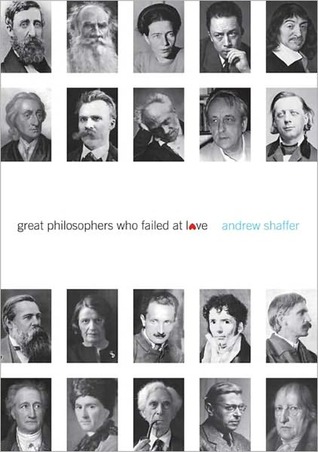
[READ: June 5, 2011] Great Philosophers Who Failed at Love

Shaffer was signing books at BEA this year.  My coworker told me that he was very funny and that he signed her book in an amusing way.  He happened to be signing at the table next to the line I was on. Sadly, he finished before I was able to get to him.  But I was pretty close to the beginning of the line, so I asked if I could grab a copy of his book, which I did (although no autograph for me).

This is a silly book of nonfiction.  It looks at thirty-seven philosopher or thinkers and their utter failure at love.  Each man (and occasional woman) has had some distinguishing characteristic that made them pretty lousy in the emotional range.

The title of the book is funny and is meant to be kind of surprising: these smart folks were terrible at love.  Of course, spending a minute or two thinking about who these people were and what they did, it’s not surprising that they were lousy at love.  These were intellectuals, people who spend most of their time in their own mind.  Of course they couldn’t have a serious relationship.

Nevertheless, these stories are all more or less amusing (Louis Althusser accidentally strangled his wife to death(!) which isn’t amusing per se, but the story of it is, kind of).  Shaffer does a great job at keeping each entry brief but really retaining the salient points of the thinker’s philosophy and a cogent example of his or her lousiness at love.  He also throws in some amusingly snarky comments of his own as he goes along.

I was delighted that the book order was done alphabetically rather than chronologically.  A chronological list would have been a little too samey in terms of each person’s context.  The alphabetical list allows for jumping around from say Plato to Ayn Rand which keeps the stories interesting and fresh.

At the end of each person’s piece, there’s an “In His Own Words” which offers a quote that details his or her written philosophy regarding love.

Dare I say that this is an ideal bathroom book?   It certainly is. And it makes you feel a little better about yourself (if you haven’t for instance, adopted your mistress as your daughter (Sartre)).

Read Full Post »

SOUNDTRACK: THE RESIDENTS-Meet the Residents plus Santa Dog EP (1973/1972).

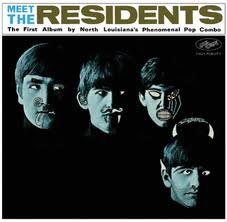
Like a proto- Negativland meets Primus, The Residents took the world by storm in 1973.  Their debut album (pictured here) bore the unmistakable tagline: The First Album by North Louisiana’s Phenomenal Pop Combo.  And so it is.

Read more about the album in the Jon Savage essay below.

“Boots” is a sampled and remashed version of “These Boots Are Made for Walking.”  “Gylum Bardot” sounds like a Primus demo.  “Breath and Length” is noise and noise and effects and a soothing female vocal singing the title.   “Consuelo’s Departure” is a noisy soundtrack to nothing and “Smelly Tongues” sounds like a hammered dulcimer with a menacing bassline behind it until the vocals come in: “Smelly tongues looked just as they felt”.   And all 6 of these songs last less than ten minutes total.

“Rest Aria” changes tempo of things.  It’s five minutes long.  It starts as a simple piano track (slightly out of tune) but it slowly adds crazy horns and what sounds like children’s instruments.  The other longish song, “Spotted Pinto Beans” comes with a kind of faux chorus (female and then male) singing a kind of call and response which is overtaken by noise.

The one-minute “Skratz” comes between these two longer songs and is mostly  mumbling spoken vocal.  “Infant Tango” sounds like a normal song.  It opens with a funky wah wahed guitar.  Of course, the skronking horns and mumbled bass vocals tell you this is not going to be a hit.  It runs 6 minutes long with a strange little “guitar solo” in the middle.

“Seasoned Greetings” (with it’s weird holiday wishes at the end) segues into the 9 minute “N-Er-Gee (Crisis Blues”).  “N-Er-Gee” is a piano “melody” which is really someone banging the same notes very hard on the piano.  The voice on both tracks sounds like the aural equivalent of blackface until the sample (a very long sample that apparently voided placement on some releases) of “Nobody But You” morphs into a manipulated sampling of the word “boogaloo” and eventually becomes a dissonant chant of the title.

The appended Santa Dog is a bit more song-like.  Totally weird songs yes, but there’s actual melodies and lyrics.  Like on “Fire”: “Santa dog’s a Jesus fetus.”  “Aircraft Damage” is mostly a bunch of people reciting bizarre lyrics over each other.  The whole EP was about 12 minutes.  It’s weird but more palatable than the LP.

Despite how much this album foreshadowed loony alternative bands in the future, there is a clear predecessor in Trout Mask Replica.  Although Captain Beefheart followed a (relatively) more conventional song structure, you can hear elements of the Beefheart within.  This album is also notable for being made in the early 70s when the technology to do this easily was very far away.  You could whip this album up in a few minutes now, but back then with splice and paste, it would take ages.

It did not sell as well as the similarly titled Meet the Beatles.

[READ: June 16, 2011] Five Dials Number 11

Five Dials Number 10 was a special issue, but Number 11 goes back to the format we know.  It sort of has a theme about lists.   It contains half a dozen short essays and one long short story by Paul Murray (author of Skippy Dies).  This issue is also something of a surprise as it weighs in at a fairly small 16 pages (sometimes smaller is perfectly fine).  The issue also raised a couple of totally weird coincidences which I will point out as they come up.

CRAIG TAYLOR-A Letter from the Editor: On Wilton’s and Lists
Number 10 was designed to be ready for an evening at Wilton’s Music Hall on February 26th.  But the real theme of the issue is lists.  In part this is inspired by the Raymond Chandler entry, it’s also inspired because Taylor keeps lists around the office.  At the end of the letter he provides a list of all of the notes he’d left to himself in the office.  Some are about the issue (Paul Murray manuscript), other are seemingly more random (USA 5 Canada 3, men’s Olympic ice hockey result;  Canada 7-Russia 3, men’s Olympic ice hockey result; ‘Range Life’–Pavement).  And the one that is most coincidental to me–(The Umbrellas of Cherbourg–Jacques Demy).  This is coincidental because on the day that I read this, my friend Lar wrote a post about this very movie, which was completely unknown to me. (more…)

Read Full Post »

SOUNDTRACK: GOGOL BORDELLO-East Infection (EP Extra) (2005).

I learned about Gogol Bordello from some live shows available on NPR.  I enjoyed their sets so much I decided to check out their albums as well.  And I love them.  The albums are full of frenetic energy (they give Sarah agita, she says).  But everything that I love about fun, spirited, gypsy music is present here.

The band is essentially a band of gypsies, headed by wonderfully-mustachioed Eugene Hutz.  And their live show (as demonstrated by the included video) is a wild circus of fun (curtains and dancers and fire buckets and bowling pins and musicians jumping out of boxes), it’s like a wild party.  The video is for “Never Young Again” which would appear in full on their next album. It’s a fun song that reverses the age-old lament of wanting to be young again.  But mostly you watch this for the live footage.

This EP is probably not the best place to start as an introduction to Gogol Bordello (but it was really cheap so I bought it first).  Although it does offer many of the different aspects of Gogol’s music.  The EP features 6 songs and the video.  The songs are intense, hyper, crazy and wonderful.  “East Infection” opens with some nonsense lyrics (“Lee lee lee lee lee, la la la la la”) and morphs into what may be more nonsense, although there’s actual lyrics here.  “Ave B.” (which is also on their following album Gypsy Punks) is a more acoustic-based song, but it still has loud parts to it.

“Mala Vida” is a cover of a song by Manu Chao.  This version is a super fast punky track sung in Spanish (despite Eugene Hutz’ origins in the Ukraine, he has lived in Brazil for years and sings many songs in Spanish).  The original is very similar in temperament, although GB version is a bit more frenetic.

“Copycat” is the odd track on the disc, it’s a kind of dub track with big fat bass and a very slinky sound.  It and “Mala” were produced by Steve Albini.

“Strange Uncles from Abroad” is to me a very typical GB song: lots of violin, lots of dah dah dahs and a great melody.  It has a total gypsy feel, and goes through some loud and quiet moments.   The final track, “Madagascar-Roumania (Tu jésty fáta)” is the longest track by far (6 minutes).  It sounds like a demo and lacks the punch of the rest of the disc, but it showcases the softer side of the band (and yes there is one).

So, maybe this EP is a good place to start after all.  It’s certainly not throwaway material.  And the EP cover alone is pretty outstanding.

[READ: June 14, 2011] Five Dials Number 10

This is the issue of Five Dials that introduced me to the publication.  It is a special issue devoted to the memory of David Foster Wallace.  The entire issue is comprised of the eulogies given at the DFW memorial.  [The details are a little sketchy here…I’m not sure if these are all of the eulogies or just the eulogies from well known people.  I’m not even sure who would have been in the audience for this memorial.  The notes say “These tributes were given on 23 October, 2008 at the Skirball Center for the Performing Arts, New York University” and yet the Jonathan Franzen entry says “here at Pomona.”  So… details are sketchy].  Nevertheless, the tributes are heartfelt, informative and very moving.

Of course, I’m not going to ‘critique’ them, I’ll just try to summarize them.  But really, they’re all worth reading if you’re a fan. (more…)

Read Full Post »

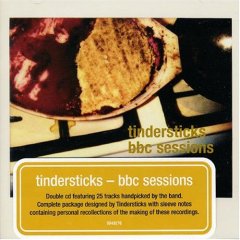
SOUNDTRACK: TINDERSTICKS-BBC Sessions (2007).

Another great entry in the BBC Sessions series, this collection of 26 recordings, shows the band in fine form.  This works as a pretty excellent Greatest Hits collections (and surprisingly for a BBC Sessions recording there is only one duplicate song).

On the other hand, there’s not a whole lot of difference between these recordings and the originals.   Some notable exceptions include “Traveling Light” and “Buried Bones” which do not feature the female duet.  “Her” is also notably different since it’s on piano and not guitar.

But I have no criticism about the quality of the recordings. The band sounds wonderful.  Staples’ voice is great and the orchestration is perfect.  And, of course the recording quality is superb (as are all of the BBC sessions that I have are).

If you have the Tindersticks records already, there’s no compelling reason to get this set, but if you’re a fan of the band, it’s nice to have some slightly different versions of these great songs.

[READ: May 18, 2011] 2 book reviews

This month’s review is of two books.  The first is Paula Fox’s new book, News from the World: Stories and Essays.  (The book is also reviewed by Joan Acocella in The New Yorker, May 16, 2011 issue–she takes a much different angle than Zadie, and has a lot more biographical background, so the reviews work in conjunction very nicely).  I don’t know Fox (although perhaps I should, she has written a number of adult books and tons of children’s books), but Fox’s Desperate Characters has been championed by Jonathan Franzen and David Foster Wallace.

Fox sounds like an interesting character (her father was “a writer and a drunk”) and her granddaughter is Courtney Love.  And Zadie asserts that Fox has cultivated self-control and empathy and (in Fox’s own words) “a living interest in all living creatures.”  And in this new collection the interest spreads across fiction, memoir, lecture and essays (with no formal distinction between genres).

Although Zadie is fond of Fox (especially her fiction) she’s harder on Fox the essayist.  She suggests that many of Fox’s essays seem to boil down to the cliché: things were better back then.  But Zadie does make her fiction sound wonderful.  Acocella’s review is similar, saying that no one should start reading Paula Fox with this collection–the reader should go back and start with Fox’s earlier, better works. (more…)

Read Full Post »

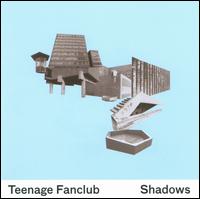
SOUNDTRACK: TEENAGE FANCLUB-Shadows (2010).

Back in the 90s, Teenage Fanclub released a few noisy, feedbacky records that were quintessential 90s alt rock.

Since then they have mellowed considerably, and this album is one of their most mellow to date. Usually for me this kind of mellowing is a sign that I’m done with a band; however, Teenage Fanclub’s songwriting gets better with every disc.  And these folky tracks are all fantastic.

What’s neat about the arrangement of the album is that each of the three members of the band writes four songs.  They are collated so that you cycle through each singer before repeating. You get maximum diversity–and it’s easy to tell which songwriter is your favorite.

The opening two songs, “Sometimes I Don’t Need to Believe in Anything” and “Baby Lee” are two wonderful upbeat pop confections.  They sound very different and yet both are infused with wonderful pop chops.

It seems that Blake is my favorite songwriter on this disc. He did “Baby Lee”, “Dark Clouds” (a pretty piano based number) and by far the prettiest song on the disc “When I Still Have Thee.”  It’s an amazingly catchy folk song that sounds timeless (and even has the great couplet: “The Rolling Stones wrote a song for me/It’s a minor song in a major key.”

That’s not to dismiss the other songwriters at all.  In fact, hearing their different takes on pop music is really pretty amazing.  It’s a shame that it takes them so long to put albums out (about 5 years these days).

[READ: June 10, 2011] Five Dials Number 9

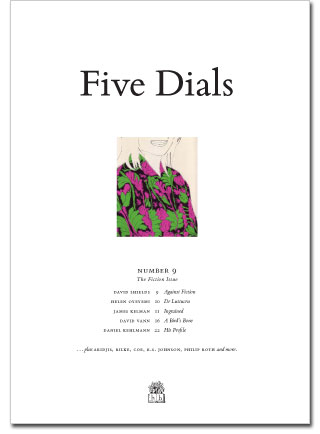
Five Dials Number 8, The Paris Issue, was pretty big (45 pages), but it had a lot of pictures.  Five Dials Number 9 is also pretty big (41 pages) and it’s (almost) all text.  For this is the Fiction Issue, and there are a lot of short stories in here.

CRAIG TAYLOR-A Letter from the Editor: On ‘Summer Reading’ and Fiction Issues.
Since most of what I talk about in the introduction to these posts is covered in Taylor’s Letter from the Editor, I figured I’d switch formats and start talking about his letter right away.  In this letter, Taylor talks about the serious pitfalls of  ‘Summer Reading’: We pledge to read mammoth books over the summer, but really we never finish War and Peace over the summer, do we? (except those of us who finished Infinite Summer, am I right?).  And so, this Fiction Issue was released in December (finally, a date is given to a Five Dials!).  Taylor briefly talks about all of the authors who contributed (including a pat on the back to Five Dials for securing the rights to a Philip Roth contribution in its first year of publication).  He also talks about the essay from David Shields that is decidedly anti-fiction.   And the final note is that Taylor’s own father has a piece in this issue (nepotism is alive and well!) (more…)

Read Full Post »

« Newer Posts - Older Posts »