Feeds:
Posts
Comments

Archive for the ‘Books about writers’ Category

SOUNDTRACK: WILD FLAG-SXSW April 1, 2011 (2011).

Wild Flag has released one of the best albums of 2011.  I can’t stop listening to it.  So, it’s funny that this show has been sitting on NPR’s download page for months without me checking it out because I didn’t know who the band was until the album came out.  Wild Flag is Carrie Brownstein, Mary Timony and Janet Weiss (and a keyboardist who I will never remember because I never heard of the band she was originally in). 

This show at SXSW is one of their earlier shows.  It’s so early that one of the songs in the setlist appears on the album with a different title.  And the band is full of raw energy and passion. 

Although research shows that they’d been touring since November, Mary Timony seems somewhat hesitant in a few songs.  But Carrie Brownstein seems fired up to be playing again, and she rages and jumps around the stage, her voice as aggressive and fun as it was in Sleater-Kinney.  Janet Weiss, as ever, kicks massive ass on the drum kit.  man can she wail–she is a vastly underrated drummer. 

The band has great cohesion and they seem like they’re really enjoying themselves. 

 In many respects this band sounds like Sleater-Kinney (2/3 of the band are here).  But the addition of Timony’s lyrics and more gentle voice bring a cool change.  And the keyboards flesh out the songs in wonderful ways as well–for a band with no bassist, it’s funny that the most pronounced keyboards riffs are at the high end of the register.

There’s a few flubs during the set, in one of the more pronounced keyboard riffs, there’s a pretty major gaffe.  And sometimes it seems like they don’t know exactly how they should be harmonizing with each other (not true on the record at all).  And during the extended soloing of “Glass Tambourine” (6 minutes), I’m not really sure what Mary is up to.  But that’s okay.  The band is all about rawness, so that can be forgiven. 

While the album is better, this live show is a good introduction to the band. 

Since Carrie Brownstein worked for NPR I almost expect all of their shows to be available here.  But for now, watch the whole show here.

[READ: January 17, 2012] “Old Mrs. J”

Stephen Snyder translated this story that was originally written in Japanese.  It’s interesting to me when a work is translated from another culture.  Does the translator intend to keep the other culture obvious or does the translator try to make the story, in this case, more European or American.  There’s some inevitability in that, since the language is changed, and yet the sensibility of the original often remains.

I bring this up because I tend to think of Japanese writing as being very distinctive.  And yet this story didn’t really “read” very Japanese to me (Kiwi fruit aside).  It did read a little bizarre, but that was the fun part.

The story starts out simply enough: a young writer (who is a woman, although you don’t find that out until very late in the story unless, unlike me, you assume the main character is a woman because the author’s name is Yoko).  The author works late and sleeps in til noon or so.  It’s a quiet, peaceful place.  The landlady is older and somewhat feeble.  Until, that is, she gets into her garden and then she seems possessed by a fire. 

The landlady hasn’t really talked to the writer.  Then one day the writer hears the landlady in the garden cursing at a stray cat.  The landlady hates cats and curses them up and down.  Finally the writer tells her to put pine needles down, that cats hate prickly things on their feet.  This I did not know.

And they strike up a friendship.  The landlady reveals that her husband was no good and that he left her.  She also reveals that she gives massages.  And she begins leaving the writer vegetables from her garden.  Then one day, the landlady brings her a strange carrot with 5 “fingers” coming off of the central stalk.  The carrots are quite special.  And she keeps them a secret until sure enough, she begins growing lots and lots of them.  Even the newspaper comes to take a picture.

This idyllic story is interrupted in the last few paragraphs.  First by what seems like metaphorical scariness and then, ultimately, with reality.  It is a wonderfully realized story, wonderfully told and with enough hints of magical realism throughout that the ending isn’t totally unbelievable–even if it is quite unexpected.

Read Full Post »

SOUNDTRACK: THE DIVINE COMEDY-BANG goes the Knighthood (2010).

I’ve really enjoyed The Divine Comedy since their earliest Michael Nymanesque music.  I loved the orchestral pop that Neil Hannon seemed to effortlessly create.  His last few records have been less exciting to me.  He has toned down the orchestration and made his songs more subtle.  They’re still beautiful but they’re not always as immediately arresting.  I thought that was true of this album as well, although I found that when I sat down and really listen to the music and words together (what a novel idea) the music played so well with the lyrics that the album overall is easily one of his best.  Although I still prefer the pomp and full orchestration of the earlier music, this newer stuff is very interesting. An artist has got to grow, right?

The new sound is more Tin Pan Alley.  It’s piano with guitars and occasional horns–very limited strings are present at all.  And, as any fan knows, Neil writes wonderful songs about love, and the songs on here are some more great love songs.  The non-love songs span the gamut of ideas–from emotionally wrenching to downright silly.  Neil is definitely a “get to know him” kind of songwriter.  And it’s rewarding when you do.

“Down in the Street Below” is a piano based song that morphs into a jaunty little number after some quiet verses.  It features yet another of his great melodies.  “The Complete Banker” is a jaunty piano song that mercilessly mocks the banking industry.  Not terribly original but certainly fun and lyrically it’s quite clever.  “Neapolitan Girl” is a faster song (reminds me of a Broadway musical or movie instrumental) which is (as they all are) very fun to sing along to).  “Bang Goes the Knighthood” is a musical hall song that is really quite funny despite the somber sound of the music (it’s about a knighted man who indulges in certain proclivities that might cost him what he has).

“The Indie Disco” is the exact opposite, it’s bouncy and shuffly and yet understated as only an indie disco can be (this may be the softest, least excited “yea!” in any song ever.  Name checking Morrissey may not be original but it would be a less real picture without him.  The songs he mentions are kind of dated, but are probably pretty accurate to what gets played in an indie disco these days.  “Have You Ever Been in Love” could be used in any rom-com film montage.  Although maybe it’s too obvious?  Sweetly filled with strings (yes strings).

“Assume the Perpendicular” is a slightly faster song, as befits lyrics, “I can’t abide a horizontal life while “The Lost Art of Conversation” is another bouncy tune with a whistle for an ending!

“Island Life” is one of the first duets I can think of from the Divine Comedy–it sounds like something out of the movie Brazil.  “When a Man Cries” is an emotionally wrenching song.  It seems somewhat out of place for Hannon’s usual topic, but it’s quite beautiful.  The silly fun of “Can You Stand Up on One Leg” is the perfect antidote.  Each verse provides something that’s harder to do than you think.  The final verse offers, “can you hold a singing note for a stupidly long time…. Let’s see how long you can hoooooooooo….oooold on to a note.” For the record, Neil’s note is 29 seconds long….stupidly long!  Is that really him holding that high note for 29 seconds?

The final song “I Like” is a wonderful poppy ditty, in which the full band rocks out (more or less) to another great melody.  It’s a perfect love song (even modernized to include a kind of rhyme with sexy and texting).

Initially I was a little disappointed by this disc, but it really proved to be fantastic.  More, Neil, more!

[READ: December 28, 2011] Is Everyone Hanging Out Without Me?

Is Mindy Kaling a big enough celebrity to write a book (memoir or otherwise?).  To use her own in-book comparison, she’s nowhere near Tina Fey’s level of fame, right? (although I actually think she is funnier).  I mean, she’s a minor character on a popular show.  True, she’s also a writer and producer, but that’s not going to lead you to fame or anything.  The more I read about her in the book, the more I wondered exactly who would know her aside from fans of The Office.

None of that is to say that Kaling isn’t awesome.  She is.  She’s funny and talented and I am thrilled she wrote a book–sometimes within an ensemble your individual voice will get lost.  But I have to wonder how much name recognition she has.  And the book doesn’t do a lot to dispel this sense for me.  I mean, she tells about everything she’s done, and really all she had done was write Matt & Ben (which sounds awesome and which I remember hearing about back in the day) and work (a lot) for The Office.  Not minor accomplishments by any stretch, but not a fame-inducing resume.  Nevertheless, good for her that someone was interested in letting her write a book.  And good for us who read it.  If you are amused by the use of the subtitle of the book (which I am) you will like enjoy the humor here.

I had read some excerpts from the book so I assumed it was all funny essays and whatnot, but it’s not.  It’s actually a memoir with funny essays mixed in.   Of course, Mindy’s life before Matt & Ben isn’t really very “interesting” (the book is very funny during this time of her life, even if she really didn’t do much more than babysit for rich folks and watch Comedy Central).

In the Introduction, Mindy provides a FAQ about the book.  One of the questions is if she is going to offer advice and she says yes.  And here’s the thing, Mindy’s advice is outstanding.  She offers advice about many topics and I don’t think I disagreed with her about anything (except maybe pea coats).  She’s like the voice of reason in a world gone mad and an excellent role model for anyone. (more…)

Read Full Post »

SOUNDTRACK: DANKO JONES-Below the Belt (2010).

I love Danko Jones.  He’s bad, he’s cruel, he’s crass and he rocks.  He’s everything a 15 year-old boy loves in rock.  And yet there’s something about him that even I (far older than 15) think is wonderful (perhaps he’s the thinking man’s Andrew W.K.?). 

I’m sure it’s because his early stuff was short, fast blasts of over the top machismo.  He hasn’t started too far from that template (his songs are now three minutes, but that’s okay).  And I still love him even if every song is a cliché (and that he still thinks a Cadillac is the height of coolness).

“I Think Bad Thoughts” is a stupid balls-out rocker about how bad Danko is.  Best line, “That’s how it is as a knight in Satan’s service.”  A nice nod to Kiss.  And this song is followed by the very early-Kiss sounding “Active Volcanoes.”  “Tonight is Fine” is a heavy rocker (okay they all are, that’s redundant), but “Magic Snake” is surprising because it seems to be addressing impotence (“It’s friday night but your magic snake don’t slither no more”.)–not doing anything about it, just addressing it.  “Had Enough” has a great sing-along chorus (when Danko is not yelling at you, he croons with the best of ’em).

Of course a song title like “I Can’t Handle Moderation” should tell you all you need to know about Danko (he must have his tongue in cheek, at least I hope he does.  I’ve never seen him in anything other than album covers, so I have no idea what his off-stage life is like).  It’s always a surprise when Danko reveals a softer side.  And even though “Full of Regrets” seems like it would show that softer side, it’s actually about how he’s full of regrets about any lonely nights he spent.  Heh.  “The Sore Loser” is a not very nice song about a woman.  But it’s funny.  “Like Dynamite” is all about sex, of course.

I love the aggressive riff of “Apology Accepted,” it’s faster and more furious (even if it is about accepting an apology).  And the final song “I Wanna Break Up with You” cracks me up.  It’s a song about wanting to break up with someone.  Did he imagine it as a breakup anthem?  Something you play in the background when you dump your significant other?  I particularly like the chanting “break up break up everybody break up” at the end.

There are two bonus songs on the disc (an idea as antiquated as his lyrics, but which is strangely charming).  Neither sounds like it shouldn’t be on the record–they continue what he does so well.  They’re both about guest lists, but I particularly enjoy “Rock n Roll Proletariat.” It sounds a lot like AC/DC but who fits the lyric “I pledge allegiance to the Rock n Roll Proletariat” into a chorus?  Genius!

Yup, his album covers are as sexist as his lyrics.  But there is something just cartoonish enough that I can’t help but think hes a really nice guy under it all (maybe it’s because he’s Canadian).

[READ: December 28, 2011] “Creative Writing”

Sometimes a very short, very well written story can really make your day.  I read this story this morning (because it was so short–a page and a quarter) and I was immediately hooked. 

It opens with a woman, Maya, taking a creative writing course (at the suggestion of her mother).  Maya just had a miscarriage and has been just sitting in the house not doing anything, and her mother thought that an activity wold be beneficial.  Maya’s first story was quite interesting.  [In fact, I LOVE the conceits behind each of her stories and while I immediately thought I’d like to read them, I’m not sure how will they would work beyond the simple concept presented here.  But the ideas are so clever that I wanted to read the full things right then!–maybe make this story longer and include Maya’s full works?]

All of her stories have to do with love or marriage or birth, but in wonderfully metaphorical ways.  The first story, about people who split in half to generate offspring has an ending that her teacher calls wonderful but which her husband finds quite dull.  [Incidentally, I’m all for reading stories from other cultures.  It’s fun and interesting.  But man, sometimes it’s so hard to tell the  gender of a person by his or her name is you don’t know the culture.  This story was written in Hebrew (translated by Sondra Silverston) and the secondary character’s name is Avaid.  In addition to not really knowing how to say the name, I had no idea if it was a male or female name.  I suppose it is not really up to the writer to compensate for ignorant audiences, but perhaps sometime earlier in the story an author can subtly hint at the gender of the person?  (We get the “he” in paragraph three).  Shy of a dramatis personae, there’s little that you can do organically for the story, I suppose. ] (more…)

Read Full Post »

SOUNDTRACKPEARL JAM-Austin City Limits (2009).

Pearl Jam records (and sells) most of their shows and they occasionally videotape them as well.  But they don’t do TV all that much (excepting the recent Late Late Show episodes).  There seemed to be something special, or at least different, about Pearl Jam on Austin City Limits.  Think of it almost like Unplugged Updated.

It opens slow with Eddie on an acoustic guitar and strings behind him.  In fact, the whole set seems less heavy than many of their sets.  But that’s not to say that the band doesn’t rock out, because they do.

The first six songs of the set come from Backspacer.   And then they bust out “Army Reserve” (which makes sense given who is in the audience, see below).  Then there’s a wonderfully raucous version of “Do the Evolution” (one of my favorite PJ songs).

After that riotous track, they bring the strings out for one more song.  It’s a rather funny little joke because it’s just the strings and Eddie on acoustic guitar playing “Lukin,” the 80-second song that is so fast you can barely hear the words.

For an extra treat, touring mate Ben Harper comes out to play slide guitar on “Red Mosquito” (which is always a treat).  And the set ends with an amazing version of “Porch” with a super long guitar solo in which Mike McCready really shows off his chops.  There’s even a moment where Mike and Stone are riffing off each other, classic rock style.
The set ends the Eddie talking about playing for the wounded veterans in the audience and how it was quite moving for him given all they have done for us.  Over the closing credits you see the band mingling with the veterans (including a guy who has lost a leg).  It’s all surprisingly touching for a rock show.

[READ: November 20, 2011] “Perchance to Dream”

A while back I read all of the Jonathan Franzen articles that were published in The New Yorker.  I thought I had read everything he’d published until I realized I had forgotten to read this piece (possibly his most famous) that was published in Harper’s.  It fits in well with this weekend’s theme because it was mentioned in Evan Hughes’ article that I talked about yesterday and because David Foster Wallace is mentioned in it.

As with most of Franzen’s non-fiction, it’s not easy to write about critically unless I want to argue with him, which I don’t necessarily want to do.  So instead, I’ll try to summarize.  Of course, this is a long and somewhat difficult article, so let’s see what we can do with it.

The first surreal thing is when you see the byline: “Jonathan Franzen is the author of two novels, The Twenty-Seventh City and Strong Motion, and is writing a third.”  It’s hard to imagine he got a huge article in Harper’s before he wrote The Corrections.

The second surreal thing comes in the text: It opens with “The country was preparing for war ecstatically, whipped on by William Safire (for whom Saddam Hussein was ‘this generation’s Hitler’) and George Bush, whose approval stood at 89 percent.”  And it is only a few paragraphs later when he mentions Patriot missiles that it clicked that this was written in 1996 and not 2001 and that he was talking about the 1991 Iraq invasion.  He mentions this as a prelude, saying that he was trying to sequester himself in order to start writing again.

Then he talks about Paula Fox’s novel Desperate Characters as a benchmark in terms of insight and personal conflict, even if it is so crazily outdated (that someone would throw an inkwell!).   He talks about this book quite a bit. I’m, not sure I found it compelling enough to want to read, but it’s always interesting to hear a fan write about a book I’ve never heard of.  He will return to this book throughout the essay. (more…)

Read Full Post »

SOUNDTRACK: BOOKWORM-Jeffrey Eugenidies: The Marriage Plot (December 1, 2011) (2011).

Since “Just Kids” mentions  Eugenides’ book, and since Eugenides happened to appear on Bookworm at around the same time as I read this article, it seemed like a good pairing.

Obviously, from the title of the episode you can tell that this is all about Eugenides’ new book, The Marriage Plot.  Michael Silverblatt raves about this book like no other book I have heard (granted I haven’t listened to all that many episodes of Bookworm, but still).  In fact while listening to this episode, I put The Marriage Plot on hold at the library.  I always planned to read it but figured I’d just get around to it some day.  Now I feel more of a sense of urgency.

They talk at length about the state of marriage in the 21st century.  Not as in its decline but in how it differs so much from classic literature in which women had to get married by 21 or risk spinsterhood.  Eugenides set out to write a book about people getting married without having the trappings of classical literature.

It sounds wonderful.

The reason I mention this interview at all is because in the article below, Hughes talks about contemporaries of DFW using DFW as the basis for a character in their books.  So, in Franzen’s Freedom, there is character who is very much like DFW (I haven’t read Freedom yet so I can’t say). 

And in The Marriage Plot, there is a character who resembles DFW.  When I read the excerpt of this story in The New Yorker, I had to admit he did seem an awful lot like DFW–a tobacco chewing, bandanna wearing philosopher.  Eugenides had been mum about it for a while, but now, under the gentle nudging of Michael Silverblatt, he comes clean. 

He admits that there are some characteristics of DFW in the character.  However, he says that he didn’t know DFW all that well and the character has been kicking around since he went to college (long before he knew DFW).  Tobacco chewing was rampant at Brown in the 80s apparently.  But it’s a nice revelation and it ties in very well with the article.

You can listen to the show at KCRW.

[READ: December 7, 2011] “Just Kids

I have always grouped together certain authors in my head.  When there were a bunch of Jonathans publishing, I kind of lumped them together.  I think of Mark Leyner and Bret Easton Ellis in the same breath.  It’s fairly common, I suppose.  But I never really thought of David Foster Wallace in terms of a group of authors.  He seems so solitary that it’s funny to even think of him as having friends.   But according to Hughes, many of today’s established authors prove to have been a part of a kind of nebulous writer’s circle.  A kind of 1990’s update of Dorothy Parker’s vicious circle.  But more insecure.

The article bookends with Jeffrey Eugenides.  In 1983 he and Rick Moody drove to San Francisco with the intent of being writers.  Five years later with no written works, Eugenides moved to Brooklyn, alone.  In that same summer, Jonathan Franzen was in Queens, also feeling alone (even though he was married–unhappily) and desperate for friends and peers.  And then Franzen got a fan letter from David Foster Wallace (that’s after he had written Broom of the System, but before Girl with Curious Hair) praising The Twenty-Seventh City

Franzen and DFW became friends.  To this friendship was added William T. Vollman, and David Means, also Mary Karr (whom DFW dated) and Mark Costello (who co-wrote Signifying Rappers with DFW).  Later they would connect with Eugenides, Rick Moody and Donald Antrim.  (more…)

Read Full Post »

SOUNDTRACK: THE COLIN McENROE SHOW-The Life & Legacy Of David Foster Wallace (December 5, 2011) (2011).

This NPR show features an interesting discussion about David Foster Wallace:  his fan base, his cronies and his archive.   The guests were Donald Brown (New Haven Review), Evan Hughes, Ryan Walsh (who created the David Foster Wallace Audio Project) and Maria Bustillos.  Evan Hughes recently wrote a piece in New York that I’ll look at tomorrow and Maria Bustillos wrote the main piece for today’s post.  The other two guys I admit I don’t know.

This show looks at some interesting aspects of DFW’s life in the wake of his suicide and the release of The Pale King.  Although really the impetus seems to be Hughes’ article (which was published in Oct).  McEnroe asks him about the state of literature today and how both Jonathan Franzen and Jeffrey Eugenides have created characters that “resemble” DFW in some way.

They talk about the cult of DFW and play some audio clips.  Brown is an older reader and so does not embrace DFW as much as others.  He is of the same age as DFW and so loves the people DFW loved more than DFW himself.  I get the feeling that he is a curmudgeon.

But they can all agree that fans of DFW feel that he was their buddy.  Super-intelligent but very human, almost speaking like they would (if they were that smart).  They conclude that the Kenyon commencement speech is something of the pinnacle of his project of earnest warmth in humanity.

At the half way point, Maria Bustillos comes in to talk about going to the archive (which you can read about below).  She explains her own interest in self-help books and how DFW was a person who needed help.

The end of the episode has them talking about DFW’s voice.  They wonder why DFW has an “audio project” but other writers do not.  They talk about DFW’s voice and his presence during interviews and how he is very warm, even when he’s being cold (it’s an odd clip they choose). I’ve mentioned the Audio Project before.  It’s wonderful.

For anyone interested in reading books that are in a similar vein to Infinite Jest, Bustillos recommends Under the Volcano (Malcolm Lowry) and wholeheartedly recommends The Last Western (Thomas Klise).

A fascinating thing about this show was finding out that McEnroe was the author of a pretty funny piece in McSweeney’s many many years ago called “I Am Michiko Kakutani.”  He offers an anecdote about originally mentioning DFW in the story but that the McSweeney’s guys asked him to change it to someone else.

But I have to say that the show seems a bit too much about Colin McEnroe (the McSweeney’s anecdote was just one of many involving McEnroe).  He talks a lot about himself and about how he’s “afraid” that the Awl will make fun of him or that Franzen (who was with McEnroe in a green room backstage at some show) will put him in his next book (because he was discussing Neti Pots).  But I’m just not sure that Colin McEnroe rates enough to warrant the concern. 

It’s an enjoyable show, although unlike other interviews by people like Charlie Rose or Michael Silverblatt, McEnroe’s questions and comments aren’t very well informed.  If you know a lot about Wallace, this show is a bit frustrating because it takes a tone that Wallace is basically a “postmodern ironist” or that he sees everything as “a big dark joke.” And even when the guests are showing that that is not the case, he seems to try to keep reverting back to this trope.

Oh well, it led to some interesting articles at least.  Like the one below.

[READ: December 7, 2011] “Inside David Foster Wallace’s Private Self-Help Library”

For no reason in particular, I’m devoting this weekend to articles that are specifically or tangentially about David Foster Wallace (it’s been awhile, and I have yet to finish my Consider the Lobster project, so, why not). 

I actually read this because of the above radio show.  I know Maria Bustillos because we’re both in a newsgroup.  “Newsgroup” is so 90s, I wonder what they’re called these days).  Anyhow, Maria has always proven to be smart, funny and very articulate.  And the only reason I didn’t read this article when it came out was because I wasn’t sure I wanted to dive into this topic. 

After listening to the above radio show, however, I felt that this would be a very interesting article. And so it was.  It’s available at The Awl.

As it opens, Bustillos lets us know that she visited the DFW Archives Ransom Center at the University of Texas at Austin and pored over all of the materials they have there (undergrad papers, drafts of fiction and non-fiction, syllabi, tests and quizzes, and juvenilia among other things). 

Wallace was a major note-taker.  And he loved to take notes in a book as he was reading.  Just look at some of these books

But what surprised Maria (and me) is that among Wallace’s collection of wonderful fiction was a collection fo self-help books which were equally annotated and marked up. 

Much of the set up of the article concerns why DFW had self-help books at all.  The answer is, of course, because he was a depressed person (obviously) and because he had been in rehab for a pretty long time.  None of this background information is new, but Maria offers insights into DFW and his life that I had never heard before (Maria and DFW had corresponded, although I don’t know if they were “friends” or not).  (more…)

Read Full Post »

SOUNDTRACK: DAVE BIDINI-“The List” (2007).

This song appears as a bonus track on the Bidiniband album.  But I’ve been aware of it since 2007 when he played it on his solo tours.  It is essentially a list of 4 Canadians who are “killing us, killing us now.”  The list includes Tim Horton’s (purveyor of delicious donuts), Chad Krueger (from Nickelback), Zack Werner (a judge on Canadian Idol), and Stephen Harper (I shouldn’t have to tell you).

But the key to the song is the chorus: “where are the angry young ones….”  This song should become the unofficial song from Occupy Wall Street.  It would be very easy to modify.  Hey Dave, if you’re free you should head on down and serenade these angry young ones.

Here’s a great live version done in a record store in which he is close enough to have a casual chat about the very song he is singing in the middle of the song.

He also ends it a little differently than the original.  It’s catchy and easily adaptable.  Good on ya, Dave.

[READ: November 19, 2011] “Who Wrote Shakespeare?”

No one has traded off of his Monty Python fame as much as Eric Idle.  All of the other Pythons have moved on in one direction or another, but Eric keeps the torch alive (see Eric Idle Sings Monty Python and Spamalot).  He even has a little nod to MP in this essay with the asterisk next to his name which leads to (*Most likely Michael Palin, really).  This refusal to let go of Python has at least kept his wit sharp, as we see in this Shouts & Murmurs.

My main problem (as I’ve said before) with the Shouts & Murmurs is that they are usually too long.  But, as Python knew, keep it short and funny and you’ll succeed.  So this two-column piece never really flags in its simple premise.

Which is that everyone knows that Ben Jonson really wrote all of Shakespeare.  Idle presents a list of all of the famous books that were really written by someone else.  For example, “Simone de Beauvoir wrote all of Balzac and a good deal of ‘Les Misérables,’ despite the fact that she was not born yet when she did so.”   And my favorite: “‘Moby Dick’ was written not by Herman Melville but by Hermann Melbrooks, who wrote most of it in Yiddish on the boat from Coney island.”  The joke about Henry James is very funny and too good to spoil. (more…)

Read Full Post »

SOUNDTRACK: OKX: A Tribute to Ok Computer (2010).

OK Computer is one of the best records of the 90s.  Every time I listen to it I hear something new and interesting.  So, why on earth would anyone want to cover the whole thing?  And how could you possibly do justice to this multi-layered masterpiece?

I can’t answer the first question, but the second question is more or less answered by this tribute which was orchestrated by Stereogum.

The answer is by stripping down the music to its bare essentials.  When I first listened to the songs I was really puzzled by how you could take a such a complex album and make Doveman’s version of “Airbag,” which is sort of drums and pianos.  Or gosh, where would you even begin to tackle “Paranoid Android?”  Well Slaraffenland create a bizarre symphonic version that excises many things–in fact half of the lyrics are missing–and yet keeps elements that touch on the original.  But it’s an interesting version of the song and shows  a bizarre sense of creativity.  And that is more or less what this tribute does–it makes new versions of these songs.

Mobius Band make a kind of Police-sounding version of “Subterranean Homesick Alien.”  Again, it radically changes the song, making it a fast and driving song (although I don’t care for the repeated “Uptights” and “Outsides” during the verses).

Vampire Weekend, one of the few bands that I actually knew in this collection (and whom I really like) do a very interesting, stripped down version of “Exit Music, for a Film.  The “film” they make is a haunted one, with eerie keyboards.  Again, it is clearly that song, but it sounds very different (and quite different from what Vampire Weekend usually sound like).

“Let Down” (by David Bazan’s Black Cloud) and “Karma Police” (by John Vanderslice) work on a similar principle: more vocals and less music.  The music is very stripped down, but the vocals harmonize interestingly.  Perhaps the only track that is more interesting than the original is “Fitter Happier” by Samson Delonga.  The original is a processed computer voice, but this version is a real person, intoning the directives in a fun, impassioned way.  There’s also good sound effects.

Cold War Kids take the riotous “Electioneering” and simplify it, with drums and vocals only to start.  It’s hard to listen to this song without the utter noise of the original.  “Climbing Up the Walls” is one of the more manic songs on this collection, with some interesting vocals from The Twilight Sad.

There are two versions of “No Surprises” in this collection.  Interestingly, they are both by women-fronted bands, and both treat the song as a very delicate ballad.  Both versions are rather successful.  Marissa Nadler’s version (the one included in sequence) is a little slower and more yearning, while Northern State’s version (which is listed as a B-Side) is a little fuller and I think better for it.  My Brightest Diamond cover “Lucky.”  They do an interesting orchestral version–very spooky.

Flash Hawk Parlor Ensemble (a side project of Chris Funk from The Decemberists) do a very weird electronic version of the song (with almost no lyrics).  It’s very processed and rather creepy (and the accompanying notes make it even more intriguing when you know what’s he doing).

The final B-side is “Polyethylene (Part 1 & 2),”  It’s a track from the Airbag single and it’s done by Chris Walla.  I don’t know this song very well (since it’s not on OK Computer), but it’s a weird one, that’s for sure.  This version is probably the most traditional sounding song of this collection: full guitars, normal sounding drums and only a slightly clipped singing voice (I don’t know what Walla normally sounds like).

So, In many ways this is a successful tribute album.  Nobody tries to duplicate the original and really no one tries to out-do it either.  These are all new versions taking aspects of the songs and running with them.  Obviously, I like the original better, but these are interesting covers.

[READ: November 5, 2011]  McSweeney’s #8

I had been reading all of the McSweeney’s issue starting from the beginning, but I had to take a breather.  I just resumed (and I have about ten left to go before I’ve read all of them).  This issue feels, retroactively like the final issue before McSweeney’s changed–one is tempted to say it has something to do with September 11th, but again, this is all retroactive speculation.  Of course, the introduction states that most of the work on this Issue was done between April and June of 2001, so  even though the publication date is 2002, it does stand as a pre 9/11 document.

But this issue is a wild creation–full of hoaxes and fakery and discussions of hoaxes and fakery but also with some seriousness thrown in–which makes for a fairly confusing issue and one that is rife with a kind of insider humor.

But there’s also a lot of non-fiction and interviews.  (The Believer’s first issue came out in March 2003, so it seems like maybe this was the last time they wanted to really inundate their books with anything other than fiction (Issue #9 has some non-fiction, but it’s by fiction writers).

This issue was also guest edited by Paul Maliszewski.  He offers a brief(ish) note to open the book, talking about his editing process and selection and about his black polydactyl cat.  Then he mentions finding a coupon in the phonebook for a painting class  which advertised “Learn to Paint Like the Old Masters” and he wonders which Old Masters people ask to be able to paint like–and there’s a fun little internal monologue about that.

The introduction then goes on to list the 100 stores that are the best places to find McSweeney’s.  There are many stores that I have heard of (I wonder what percentage still exist).  Sadly none were in New Jersey.

This issue also features lots of little cartoons from Marcel Dzama, of Canada. (more…)

Read Full Post »

SOUNDTRACK: PUBLIC ENEMY-Fear of a Black Planet (1990).

NPR recently broadcast a PE show from the All Tomorrow’s Parties Festival.  I didn’t know that PE was still touring, so that was a surprise to me.  The show was largely a celebration of Fear of a Black Planet, which meant that I had to go back and listen to the original.

Man, is this a solid album.  The lyrics pack a punch even twenty years later and what is perhaps more amazing is that the sound collages that Terminator X created, which were something of an oppressive sonic assault are now fairly mainstream-sounding (forward thinking or what?).

What I like about this (and most PE) albums, is that  they have little skits between songs, but unlike most rap skits they’re not one-not jokes that you listen to once and then skip every future time.  A wonderful skit (for lack of a better word) is “Incident at 66.6 FM” in which we hear an amazing amount of racist epithets thrown at PE apparently on the radio.  Or the rather disturbing “Meet the G That Killed Me.”  “Anti-Nigger Machine” is a great collage of samples like “Think” and James Brown and a dozen more songs.

“Can’t Do Nuttin for Ya, Man!” is a (sort of) comic song from Flav that is catchy as anything. While “Reggie Jax” is a confusingly titled song that has nothing to do with baseball, but everything to do with funk.

Of course, this disc has some of PE’s best songs as well.  From the awesome “911 is a Joke” to one of the best rap songs ever, “Welcome to the Terrordome” (my favorite story of this song is when I was wearing a  Welcome to the Terrordome shirt and my philosophy professor asked me quite pointedly, “What in the hell is a terrordome.”  That was a fun conversation).  “Terrordome” is still amazing–powerful, musically intense and for all of its lyrical acuity, it still has funny moments….boing.

And of course, “Burn Hollywood Burn” is an amazing critique of the movie industry (and it’s catchy too).  I got Black Caesar back at the crib, right Lar?

I’ve always been a little confused by “Pollywannacracker.”  Not lyrically, but vocally, as Chuck’s (is it really Chuck?) voice is treated in a surprisingly tinny way.  I liked the song more on this listen than any other, I guess in the past it just kind of snuck by me.

The album is a little front loaded with greatness.   “Power to the People” is another powerful song, but it’s not quite as memorable as the other tracks.  “Fear of a Black Planet” has some really cool sounds on it (where did they get that “black man, black woman, black baby” sample?).   “Revolutionary Generation” is a great track in which Chuck and Flav stand up for black women: “R-E-S-P-E-C-T, my sister’s not my enemy.”  Not your average rap subject.

And the last couple of proper songs, “B Side Wins Again” and “War at 33 1/3” are fast paced and furious, but they don’t really have much in the way of a hook.  Nevertheless, lyrically they are really great, and I love to hear Chuck D flow that quickly.

The biggest surprise for me is the censored version of “Fight the Power” (the song that got me into PE in the first place, thanks Spike).  It’s really surprising to me that PE allowed their music to be bleeped–unless it was just for a deliberate radio play (which I can accept).  Although they also list a title as “Leave This Off You Fu*Kin Charts” (did I buy a Columbia House version or something?)

This is an amazing album, one that still sounds fresh and sadly, is still relevant.

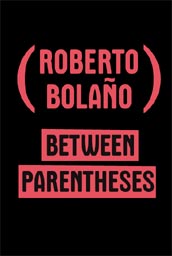
[READ: October 15, 2011] Between Parentheses

I never expected to get so addicted to Roberto Bolaño.  And despite his death, there is no shortage of works coming out in English (that is one of the advantages to reading a translated author–even death doesn’t cease the available materials).  Indeed, this year alone, New Directions is publishing Between Parentheses, and Tres and FSG is publishing The Third Reich (a collection of non fiction, a collection of poetry and a novel respectively).

When I really get into an author, I fall for his or her works, not necessarily him or her as a person (heck, some author are downright jerks).  But there are some authors that I want to know about, personally.  Bolaño is a pretty polarizing figure–he seems obnoxious, his works don’t shy away from very specific opinions, and sometimes it’s unclear what kind of views Bolaño himself has in his works (or if he’s even telling the truth about his so-called truths).  One thing in particular is the constant use of the word “faggot.”  It is used often in 2666 (and I know that is a translator’s choice, but still) and used derogatorily.  Now, clearly the context is everything for something like that.  But it seems to speak badly of Bolaño.  And yet, when reading these essays he is not homophobic in the least.  He is obviously well aware of institutionalized homophobia in Latin America, and he is obviously not supportive of it.

But that’s just one interesting thing about this book.  So let me back up. (more…)

Read Full Post »

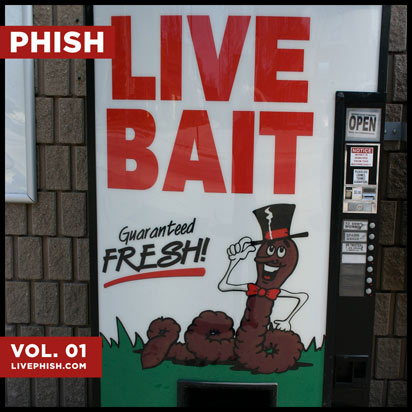
SOUNDTRACK: PHISH-Live Bait, Vol 1 (2010).

This first Live Bait release contained songs from Phish’s 2010 tour.  It was a good way to see how the band sounded these days and, as the title suggests, it was a good way to bait the fans into buying full shows.  The sampler covers shows from NJ, NY, GA and MA and it runs about 80 minutes.

Although it features primarily older tracks (a great version of “Tweezer” and a lengthy “Slave to the Traffic Light”) it also includes my first exposure to a live version of one of their new songs: “Backwards Down the Number Line.”  It also contains “Show of Life” a song that’s really a Trey Anastasio solo song–although frankly it doesn’t sound any different from a Phish song here.

The band sounds great–the hiatus did them wonders and it’s an auspicious beginning to a whole bunch of free music.

[READ: September 25, 2011] 3 Book Reviews

When I first discovered that Zadie was going to be writing the New Books column at Harper’s I deliberated about whether or not to write about each one here.  I mean, first off, it’s book reviews, how much can you say about someone else’s book reviews?  But second off, would I be writing about her reviews forever?  I mean, it’s a monthly column, it would be exhausting.

Well, it was exhausting–for her anyhow.  At the end of the column she admits that she can’t keep up the schedule (and frankly, reading that many books a month would be exhausting for me, but she’s also trying to write a novel, teach classes and “bring up a kid.”)  So this is her last one.  She had a pretty decent run from March-October 2011.

And she ends unexpectedly (for me anyhow) by talking about science fiction! (more…)

Read Full Post »

« Newer Posts - Older Posts »