I had always assumed that Damien Jurado was someone else entirely. I had no idea that he was (as the blurb describes him) “a big dude playing sad songs.”
And he is.
For this Tiny Desk it’s just him and his guitar. He keeps his eyes closed tightly as he sings these sad songs. His guitar playing is simple–just strummed chords and his voice is simple as well–there’s no tricks. It’s all about his songwriting.
I liked all four of these songs: “Cloudy Shoes,” “Newspaper Gown” (that was my favorite), “Arkansas,” and “Beacon Hill.”
The strangest thing about him was how uncommunicative he seemed to be–almost nervous. He barely spoke and when he did it was hard to hear. And as soon as the set was done he immediately stood up to leave.
Although he does say it’s “nice.”
His songs were lovely although I don’t think I’ll be seeking him out anytime soon.
[READ: January 12, 2016] “The Story of a A Painter”
This story was translated by Anna Summers and, as the title suggests, it is about a painter.
But this story delves into surreal territory pretty quickly. It may even be a fairy tale as the opening line is “There once lived a painter….”
This painter has had some bad fortune as of late. His landlord promised to get him a lot of money if he would sell his large apartment. But the landlord sold the place and kept the money (a lawsuit is pending). Then the landlord offered him a place under the stairs–no running water–which the painter accepted. But he can’t pay the landlord, so the landlord gives him grief every day.
On another day a man asked if he would rent him his “apartment.” The painter said yes for money up front. The man gave him the money then moved his entire family into the tiny, below-the-stairs place and planned to never leave. Now the painter was destitute and homeless. (more…)
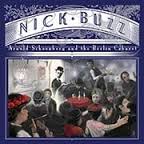
SOUNDTRACK: NICK BUZZ-Arnold Schoenberg and the Berlin Cabaret (2003).
In 1901, Arnold Schoenberg wrote eight Brettl-Lieder (Cabaret Songs). The songs were short and fun with naughty (cabaret influenced) lyrics. Some 100 years later, inspired by the Art of Time Ensemble who commissioned Nick Buzz to play pieces for their Schoenberg show.
So the guys from Nick Buzz got together and recorded four of the eight pieces. Then Martin Tielli released this disc as number 2 of his Subscription Series. Some of us were a little disappointed when this came out since it was only 15 minutes of music, but the art is wonderful and I have recently rediscovered this disc and have enjoyed it immensely.
Basically the Buzz guys have interpreted the songs in their own style, but they have remained faithful to the original melodies and lyrics (which were in German but are now in English).
“Gigerlette” explores electronic manipulations (presumably by Hugh Marsh) and offers lots of fun samples (what I assume is some earlier recordings of the song in German). It opens with sampled female singing and staccato piano as well as other unusual effects. Then Martin’s vocals come in and the effects clear out and the song becomes simple piano ballad for a brief moment. Then the noises come back in again, playing around with this amusing song. It’s a song of romance and love with the sweet punchline being that cupid is driving their coach and four. At over 5 minutes this is the longest song by far, even if the basic song is just over two minutes.
“Der genugsame Liebhaber” (The Modest Lover) opens with what sounds like a distorted harp (presumably the piano) and scratchy records (from Marsh). This song is about a man going to see his lover, but his over’s pussy loves his bald head so much that she continually climbs atop it. It is charmingly naughty. There’s some wonderful violin from Hugh Marsh on this song
“Galathea” is the most conventional of the three songs. A lovely piano ballad to Galatea.
“Arie aus dem Spiegel von Arcadien” (Aria from the Arcadian Mirror) is super fun. The music is weird and goofy with a very drunken feel. And the chorus is just wonderful “my heart begins to thump and dance just like a hammer’s blow it goes boom boom boom boom boom boom boom boom boom (getting faster and faster). I’ve listened to the original and it is very much the same, although Nick Buzz’s version is much better.
You can find some of these songs on line from a recording at Lula’s Lounge (Dec 9, 2010)
It’s cool to see how they recreate the album so faithfully in a live setting. It’s only a shame that the video isn’t a little closer so you could see just what they are doing.
Nick Buzz-December 9 2010 Lula’s Lounge
[READ: September 1, 2015] My Documents
I have enjoyed some of Zambra’s stories in other locations, so I was pretty excited that McSweeney’s released this collection (translated by Megan McDowell). The book is pretty much all short stories, although the first items feels a bit less fictional and more memoirish.
“My Documents”
This is a brief historical account of Alejandro as a child and as a writer. He talks about when he started working on computers and what happens when the computer dies with the information inside. He explains that this file is in his My Documents folder and he’s going to publish it “even though it’s not finished. Even though it’s impossible to finish it.”
“Camilo”
I read this story in the New Yorker. It concerns the relation of a man and his godfather, whom he has not seen since his father and godfather had a falling out years ago. See my link for a more complete synopsis. I enjoyed it just as much the second time.
“Long Distance”
The narrator worked as a phone operator in 1998. He liked the job–his boss was cool and would let him do anything he wanted so long as he answered the phones quickly. The job was in a travel insurance office and one day he received a call from a man named Juan Emilio. After speaking for a time about various things, the narrator realized it had been 40 minutes since they first started talking. They were expected to call clients back 14 days later as a follow-up and this time Juan Emilio talked with him foe a while and, upon learning that the narrator studied literature, asked if they could meet and discuss books. The narrator was already teaching classes at night, and these two situations overlapped somewhat. I loved the way all of this information is used as backdrop to a romance he has with a student known as Pamela. And the final line is great.
“True or False”
The titular phrase is uttered by a boy, Lucas, who declared, based on an inscrutable internal feeling, that things were True or False. An armchair might be true, while a lamp might be false. Hid father Daniel had a cat, Pedra, even though pets were forbidden in his building. Lucas loved the cat. Then the cat had kittens. There is a metaphor at work about the fatherless kittens and Daniel’s own behavior toward his son. I really enjoyed this story and the strangeness of the true or false brought a fascinating childlike quality to the story
“Memories of a Personal Computer”
The conceit of this story is great. A PC remembers what it was like to observe a relationship as it begins and then ebbs–and how the PC was moved around into different rooms as things changed in the relationship.
“National Institute”
At the school where the narrator went, they were called by number. He was 45. The main subject of his story was 34, although he doesn’t know the boy’s real name. 34 had failed the grade and was made to repeat it, but rather than being sullen about it, he was popular and fun. All of the students were worried about failing–the final test was very hard. But one day 34 approached 45 and told him he had nothing to worry about. The other students didn’t know what to make of it, but he slowly assessed everyone and told them whether they had anything to worry about. By the end of the story, when 45 is brought to the inspector of schools, he is told a lesson he will should never forget.
“I Smoked Very Well”
A look back on smoking and how quitting smoking made him a different (though not necessarily better) person.
“Thank You”
She is Argentine, he is Chilean and they are not together (even though they sleep together). They were in Mexico City when they were kidnapped together. The incident has unexpected moments. It’s a weird story (with some really unexpected moments) but a really good one.
“The Most Chilean Man in the World”
A Chilean couple has decided to separate once she was accepted to school in Belgium. After several months he is convinced that she wants him to visit, so he spends a ton of money and heads out to Belgium. Without telling her. And it goes very badly. But he can’t just leave Belgium, now can he? So he goes to a pub where he meets some new friends who call him the chilliest man in the world. The story hinges on a joke, but the story itself is not a punchline.
“Family Life”
I read this story in Harper’s. I thought it was fantastic–it was one of the stories that made me want to read more of his works. This is story of a man house sitting and the false life that he constructs around him. It was surprisingly moving.
“Artist’s Rendition”
I loved the way this story began. It tells us that Yasna has killed her father. But we slowly learn that Yasna is character in a detective story that an author is trying to write. We learn how the author constructs details about this character and the things that she has experienced which make her who she is. As this story unfolds we see how those first lines proved to be true after all.
This was a great collection fo short works and I really hope to see more from him translated into English.
SOUNDTRACK: SEU JORGE-Tiny Desk Concert #79 (September 13, 2010).
Seu Jorge was the melancholy singer in Wes Anderson’s movie The Life Aquatic With Steve Zissou. He sang the David Bowie songs and was amazingly soulful and brought a completely unexpected quality to the Bowie songs.
He plays these five songs with his band Almaz. For reasons unclear to me only one of the songs is on the video, but the other four are available in audio format.
He sings three songs in Portuguese, and his voice is husky and passionate, so even if you don’t know what he’s singing about, you can feel the emotion.
The first song in English “Everybody Loves the Sunshine” has a cool trippy 70s vibe, with some cool keyboards. Although I don’t love his version of “Rock with You” which I imagine was super fun to sing, but it’s so different from the Michael Jackson version that it’s hard to reconcile the tow.
Cirandar” (Audio Only)
“Saudosa Bahia” (Audio Only)
“Everybody Loves The Sunshine” (Audio Only)
“Pai Joao”
“Rock With You” (Audio Only)
[READ: October 19, 2015] The Last Interview and Other Conversations
I have never really read any Borges (a piece here and there sure, but I have his Collected Fictions waiting for me and just haven’t gotten to it. However, when I saw this book at work I decided to give it a read. I have very much enjoyed the other books in The Last Interview series (there are ten and I have read four) so I thought I’d like this too, and I did.
Borges is a fascinating individual. He was legally blind from a youngish age and was completely blind by the time of the last interview. He was humble (but not exactly humble—he genuinely didn’t think he was that great of an author). He was a pacifist (remaining neutral even in WWII) and basically spent his whole life immersed in books.
This book contains three interviews
“Original Mythology” by Richard Burgin (from Conversations with Jorge Luis Borges, 1968)
“Borges and I” by Daniel Bourne, Stephen Cape, Charles Silver (Artful Dodger 1980)
“The Last Interview” by Gloria Lopez Lecube (La Isla FM Radio, Argentina, 1985) [translated by Kit Maude] (more…)
SOUNDTRACK: BELA FLECK, EDGAR MEYER, ZAKIR HUSSAIN-Tiny Desk Concert #70 (July 26, 2010).
Bela Fleck is a rather legendary musician, and yet I realized I don’t really know that much about him. And somehow I never knew he was a banjo player (that’s a pretty serious omission on my part). I had never heard of the other two musicians, although they are apparently world-class masters of the bass fiddle and the tabla.
I also didn’t expect this Tiny Desk Concert to be so interestingly world-musicy.
This set is only two songs but each is about 7 minutes long and they are both very cool (and from the album The Melody of Rhythm).
Fleck’s playing is amazing, with a tone that is often unlike a standard banjo sound. And I absolutely love the tabla–I am fascinated by this instrument. The first song, “Bubbles” is an amazing demonstration of Fleck’s banjo. About midway through he is playing in a decidedly middle eastern style (which works great with the tabla). And when the bass starts getting bowed around 1:50, it adds an amazing richness to this already cool song. There’s a cool bass solo (I love that the tabla pauses a few times during the solo). The ending is just wonderful.
Before the second song, “Bahar” (which means “springtime”) they talk about being nervous, which is pretty funny. This song opens with the bass fiddle’s bowed notes (including a very very high note). This one seems to be a more solo-centered, with some elaborate work from Fleck after the introduction. And the tabla solo, while brief, is really cool to watch. I prefer the first song, but the more traditional nature of the second song is a nice counterpart to the first.
[READ: August 24, 2015] Grantland #12
I enjoyed this issue as well. This was mostly the spring and summer of 2014, which sounds so long ago, and yet so many things seem so current.
CHUCK KLOSTERMAN-“The Life and Times of Kiss”
I love this article about Kiss. And I wrote about it back here.
WESLEY MORRIS-“Poison Candy”
This is about the disastrous state of female comedies. It focuses on the movie The Other Woman which is ostensibly a female centered comedy but is entirely other.
BILL SIMMONS-“Sterling’s Fold”
A drumming down of Donald Sterling. It’s hard for me to believe that this happened over a year ago.
ZACH LOWE-“Building the Brow”
An article about Anthony Davis of the Pelicans, who is proving to be better than anyone imagined. (more…)
After a few quiet Tiny Desk Concerts, it was fun to get something big and bouncy. I don’t know Blanchard, but I really enjoyed his band set up. Blanchard plays trumpet, and with the E-Collective, he’s got a guitarist, bassist, pianist and drummer.
In the first song “Soldiers”, I was sort of amused because when Charles Altura (a guitarist he met online) plays his 2 minute guitar solo, Blanchard isn’t doing anything. It was funny way to start the concert with the main guy doing nothing. But Altura has a great sound–jazzy and interesting with a flair not unlike Frank Zappa. It continues with a lengthy solo from Blanchard. I like the jagged edges of this song–the funky bass and the angular rhythms. It’s about 8 minutes long and it’s fun to watch Blanchard just digging the music when he’s not actually playing.
“Confident Selflessness” begins with a cool drum setup by Englishman Chris Bailey. Over the great beat, Donald Ramsey, (Blanchard’s high-school classmate) lays down a great funky bass line. And then it’s a wild solo from pianist Fabian Almazan. I love the way the song switches back to that angular/funky sound during the refrains. Blanchard seems to be playing the trumpet with some kind of effect on it during the first part–or he’s playing very quietly. But later, he gets a good solo in. Bailey also plays some wild drums fills while the rest of the band repeats the staccato motif. This song is also about 8 minutes long.
He introduces the final song, “Breathless” by saying that there is typically a spoken word section, but he’s not going to do that. The title references the police brutality and the dying words “I Can’t Breathe.” This song is much more mellow, with a lengthy piano solo. There’s a soaring, uplifting trumpet solo in the middle of the song (which is about 10 minutes long in total). It’s a really pretty song, although I do prefer the more lively bouncy tracks.
As I was saying after the last two, quieter Tiny Desks, it’s fun to hear the audience whoop it up so much. And Blanchard even plays a jokey riff at the end.
[READ: May 15, 2015] The Last Days of Stefan Zweig
This is one of those interesting books that I find at work whose pedigree takes some time to unravel. This is a graphic novel. It is based on the novel by Laurent Seksik called “Les Dernier Jours de Stefan Zweig” (2010) which was released in English as “The Last Days.” This graphic novel was illustrated by Guillaume Sorel and translated by Joel Anderson.
I didn’t know who Stefan Zweig was when I read this book (more shame on me, i suppose). Zweig was an Austrian novelist, playwright, journalist and biographer. According to Wikipedia, in the 1920s and 1930s he was one of the most popular writers in the world.
When Hitler came to power, Zweig left Austria for London (where he was considered an enemy because he was German). He was Jewish, although in an interview he said “My mother and father were Jewish only through accident of birth.” Yet he did not renounce his Jewish faith and wrote repeatedly on Jews and Jewish themes.
He traveled with his second wife Lotte to Petrópolis, a German-colonized mountain town 68 kilometers north of Rio de Janeiro known for historical reasons as Brazil’s Imperial city. And this is where the story actually begins. (more…)
Soak is Bridie Monds-Watson. I hate to mention this, because it’s not the focus, but it is impressive that she’s only 19. And her voice is really lovely.
I recently bought her album Before We Forgot How To Dream, and it’s really good. The arrangements are complex and thoughtful. And the album is beautifully orchestrated. So this stripped down performance shows that she’s not all about production.
Her voice is pretty heavily accented and is almost a mumble, but not quite–it’s the kind of quiet voice that makes you lean in to hear.
The opening track, “Sea Creatures” (an amazing single) sounds pretty with just the acoustic guitar (I prefer the album version, but this is a really neat rendition). For “B a noBody” and “Wait” she switches to an electric guitar. It’s got a cool echo effect on it, but it is still quiet and hushed.
She says that she’s nervous playing at the Tiny Desk, but that looking around at all the CDs and poster it “feels like my bedroom.” This is another delightfully intimate performance behind the Tiny Desk.
Bob Boilen did an interview with her a few weeks ago and she really won me over with her musical knowledge and sense of humor.
[READ: June 4, 2015] Jane Austen
This book also comes from the series called Life Portraits.
This is a very brief (128 pages, but mostly one sentence per page) biography of Jane Austen. But the real “selling” points of the book are the beautiful illustrations/paintings by Nina Cosford. They are lovely watercolors which do a great job illustrating whatever detail is listed on the page.
We get basic birth details–born Jane Austen on 16th December 1775. She grew up on a farm with six brothers and one sister. There’s even an illustrated family tree.
Her parents turned their farm into a boarding school so she knew lots of children. But it was her cousin Eliza, a fantastic woman married to a European Count who spoke French and wore continental fashions who became Jane’s lifelong friend. With Eliza around, all the girls talked about marriage and money. (more…)
Shamir has an amazing voice–a high countertenor that is unsettling and pretty at the same time. He usually creates dance music, but in this Tiny Desk it’s just him and his guitar (on a stool).
The notes say that they asked the interns and staff to sit around him like at a campfire since he looked so alone up there by himself (and after the first song he says he is quite nervous).
He sings three songs. I don’t know the originals (I only know the one dance song from his record “On the Regular” which he doesn’t play here). But these versions are so different from that one that it’s quite shocking.
“In for the Kill” has a lot of intensity in his delivery and the chord structure (even if he plays he guitar rather softly).
The story of his writing “Demons” is very funny. He was at work at Ross’ and he ran to the changing room when this melody came to him to write it down. So he was hiding tin the dressing room plinking out notes and humming to himself while trying to get it down before he forgot. I really like the twist in a song about demons: “If I’m a demon, you’re the beast that made me.”
I’m not sure I’d ever get his record, but I enjoyed hearing this acoustic version of such a dancey singer.
[READ: June 4, 2015] Virginia Woolf
This book comes from a series called Life Portraits.
This is a very brief (128 pages, but mostly one sentence per page) biography of Virginia Woolf. But the real “selling” point of the book are the beautiful illustrations/paintings by Nina Cosford. They are lovely watercolors that do a great job illustrating whatever detail is listed on the page.
Although the biography is short it is still quite comprehensive–skimming over many details in her life to get to the heart of the matter.
We get basic birth details–born Virginia Stephen on 25th January 1882. We learn about her parents (ferociously intellectual father and philanthropic mother). There’s even an illustrated family tree.
Then we learn that death followed her everywhere. Her mother died when Virginia was young. And that a few years later her half-sister and her father also died. She remained with her sister Vanessa and her brother Thoby as companions. (more…)
This is the only time I have heard of Abaji. He is an unimposing man with roots in Greece, Turkey, Armenia and France. He sings gently (often in Arabic with some English) and he plays while he sings.
The impressive thing about Abaji is his skill and love of musical instruments. The notes say “when recording his latest album, Origine Orients, he played 10 different instruments, many of them simultaneously, with no second takes or overdubs. It took him just two days.”
“Min Jouwwa” (which means “From Inside”) is played on what looks like a normal guitar but which sounds so very different. The notes say it’s “a tricked-out Western-style guitar with extra strings, giving it the sound of an Egyptian oud.”
“Steppes” is a brief haunting instrumental. It’s played by bowing a soft-toned kamancheh (a three-stringed instrument that you hold upright on your lap for a scratch, middle eastern sound). He often times rocks the instrument instead of the bow back and forth.
The final song is played on the Greek bouzouki (with whistling as accompaniment). “Summertime” is the Gershwin song (which is only recognizable from the words–the first verse anyhow, which he sings in English–the second verse he sings in Arabic). It sounds nothing like the original with the serpentine riffs and that unique bouzouki sound.
I only wish the cameras were still rolling after the set because “he demonstrated a large duduk (an Armenian cousin of the oboe), an Indonesian suling (flute) and a Colombian saxophone (of sorts) made from bamboo that looked more like a snake.”
This is what I love about the Tiny Desk–seeing very different instruments and unconventional performers up close. Abaji is fun to watch.
[READ: May 7, 2015] The Secret of Evil
This has got to be the final posthumous collection of writings from Bolaño. The Preliminary note from Ignacio Echevarria explains that this book is a collection of the final fragments that were found on Bolaño’s computer. As such, the book consists primarily of works that are unfinished (some barely even started).
This isn’t as disappointing as it sounds because Bolaño seemed to write very thoroughly right form the beginning with his stories. So even though they are incomplete, the section that is written feels fully fleshed out–and you can imagine that more will be coming. Echevarria says that “Bolaño rarely began to write a story without giving it a title and immediately establishing a definitive tone and atmosphere.” This of course made it difficult for Echevarria to know what to compile here.
Not everything in this collection if unfinished. And indeed, with Bolaño sometimes it’s unclear if the unfinished things were actually unfinished. (more…)
Karl Ove mentions many bands in this book, but the deLillos are the only Norwegian band that he plays. They sing in Norwegian and play sprightly, jangly guitar pop–they would fit in very well with some of the lighter alt bands from the late 80s and early 90s.
I have no idea what they’re singing about (well, the title translates to “love” so I guess I know what they are singing about.
The singer has a high, delicate voice and there’s some interesting harmonies. I really like the way the song transitions from verse to chorus with the picked guitar notes–very catchy.
It comes from their second album, Før var det morsomt med sne (Beforeit was funin the snow), which along with their first was quite popular and was reissued with a bonus disc in the 90s. Having said that I see that Amazon has one copy of the disc and no album cover listed. Worse yet, I can’t find many other songs online (Spotify lists the album, but I can’t get it to play).
Sorry, deLillos (even searching for you gives us more Don DeLillo than you guys).
[READ: June 24, 2014] My Struggle Book Four
I started including the British edition page numbers because at my work we received both editions of the book, and I received the British one first so I grabbed it and started reading. I noticed the page numbers were quite different (the British book is taller and the print is quite bigger, although this doesn’t explain why the previous books have fewer pages).
I had been interested in the differences between editions from the get go. I had enjoyed the American editions, but I enjoyed reading this British edition more (bigger print?). But when I noticed on one of the pages that the word “realise” was spelled as I typed it, it made me wonder if the American edition changed that to the American spelling. [Actually, I see that Don Bartlett lives in Virginia, so perhaps he translates it into American first]. While I wasn’t about to go into a deep inspection of the topic, when I saw the American edition on a shelf at work, I had to do a little comparison.
And what I found out was that even though Don Bartlett is the (amazing) translator for both editions, someone (perhaps Bartlett himself?) is translating the American into British (or vice versa). I looked at a couple of pages and noticed these changes from British to American:
BRITISH EDITION = AMERICAN EDITION
Pack it in, now = Give it up, now
roll-up = rollie [about hand rolled cigarettes]
looked daggers at = gave her a dirty look
a complete prat = completely useless
is that possible? = really?
to cook and wash up = cooking and doing the dishes
I had got = I’d gotten
had penned = had written
and yes, realised = realized.
Other than select phrases, every word is exactly the same. So somebody goes through the books and changes them to British english idioms and spellings. That’s fascinating.
I also see that this is the first book I had not read an excerpt from first. Not that it would have made any difference as to whether I read the fourth one. I couldn’t wait to get my hands on it.
So book four is set in Håfjord, a town in Northern Norway near Finnsnes (a five hour flight away–okay I had no idea Norway was so big!). Karl Ove is 18 and has decided to become a grade school teacher there for one year. The tax breaks are great if you teach, and he plans to teach and write his masterpieces and then get out. He has no interest in teaching, but the town is small (most grades are 3-7 students), so he figures it can’t be too hard.
As in most of Karl Ove’s books, the stories jump around and flash back and do not stay all in this one time, but it is largely set in this locale.
My first thought was that I have never read a story with as much semen (both nocturnal emission and premature ejaculation) in my life. It is a strange take away from the book, but there it is. Karl Ove is 18 and really wants to have sex for the first time. About 3/4 of the way through the book he reveals that he never masturbated (it just never occurred to him, apparently, and at 18 he’s too old to start–what!?). As such, he seems to have wet dreams every night. And every time he gets near a woman, he has an orgasm too soon. He is horny all the time–it’s a bit disconcerting.
And since I mentioned that, I don’t know if Karl Ove’s life is typical of Norway, but I am shocked by the number of women who take their clothes off around him (he may have never had sex, but he was about to on at least a half-dozen occasions). And he says that all through school (from around age 13 and up) it was common place for the boys to lift up the girls’ shirts and kiss and or fondle their breasts. It is mind-boggling to me. And the 16 year olds all seem to be having sex all the time–this may be skewed from Karl Ove’s perspective, but that’s what I now believe happens in Norway.
But while sex is the main theme of the book–sex, sex sex, there is more to it.
Karl Ove’s parents have split up and his father has started drinking in earnest. The dad has remarried and has just had a baby. Incidentally, I was also shocked to read that Karl Ove’s father, who is an abusive stodgy old man who is cranky and mean and abusive and all the stuff that we read about in the other volumes was only 43 at the time that Karl Ove was 18. So the old man who I pictured as a gray-haired curmudgeon in this book is actually younger than me. Great.
In Håfjord, Karl Ove is teaching kids who range from age 13 to 16. It’s disconcerting to read about him thinking lustful thoughts about his students, until he reminds us that for most of the students, he is only 2 years older than them. I am pleased to say that he behaves himself (except in his mind) with all of the students. There’s even a really interesting flash forward to eleven years later when he runs into two of them again.
He proves to be a pretty decent teacher it seems. The kids mostly like him (the girls all think he is hot) and he is young and tries to make it fun (he himself hated school and everything about it). He even seems to help out an awkward boy (although that is never resolved). We see him teaching, trying to interact with the kids and generally being a pretty good guy.
Until the booze comes out.
For in addition to semen, this book is chock full of alcohol. Before graduating from gymnas (high school), Karl Ove basically stopped caring about anything. He spent most of his time drunk. It is astonishing the amount of drinking he does–it’s practically like an Amish Rumspringa how crazy he goes. But even in this retrospective look, he talks about how much he likes it, how it loosens him up and makes him less nervous.
But really he just spends most of his time drunk, hungover or sick. He even got into the hash scene for a while. He was living with his mom at the time and she was appalled at the way he acted–especially when he threw a party which trashed their house. She even kicked him out for a time.
He seemed to be over the drink in Håfjord, but it turns out that there’s precious little else to do except drink up there, especially when it grows dark for most of the day. So there is much drinking–he only misses class once or twice because of it but he comes very close a lot.
The irony that he is appalled at his father’s drinking, while drinking so much himself, is apparently lost on him.
The other main preoccupation with Karl Ove is music. He talks a lot about his great taste in music (he reminds me of me–a little insufferable). Back when he was in gymnas, he spent a lot of time discussing his favorite bands and favorite songs. He got a job (at 16) writing reviews for a local paper (holy crap, jealous!) and then later gets a job writing a column for another paper. For the previous book I listed a lot of the bands he mentioned, and I wish I had written them down for this one. U2 features prominently (this is 1987, so I’m guessing Joshua Tree), but also Talking Heads, a Scottish post-punk/new wave band The Associates and their album Sulk which he describes as “an utterly insane LP.” he and his brother really like The Church and Simple Minds (before they got so commercial). He also has a whole thread in which he makes connections with albums:
Briano Eno, for example, started in Roxy Music, released solo records, produced U2 and worked with Jon Hassell, David Byrne, David Bowie, and Robert Fripp; Robert Fripp played on Bowie’s Scary Monsters; Bowie produced Lou Reed, who came from Velvet Underground, and Iggy Pop, who came from the Stooges, while David Byrne was in Talking Heads, who on their best record, Remain in Light, used the guitarist Adrian Belew, who in turn played on several of Bowie’s records and was his favorite live guitarist for years. (64).
He also specifically raves about “The Great Curve” from the Talking Heads album, and of course, he raves about the first Led Zeppelin album as well.
Music is a huge part of his life (and he dresses accordingly too). It’s unclear whether the kids think this is awesome or not, but he may be a bit too much for some of the locals. The locals are mostly fishermen (which makes sense), and Karl Ove is a bit intimidated that he is so wimpy compared to them–one of the women even teases him about his tiny arms.
But his main focus is writing. He writes a few shorts stories (to my knowledge he has never published any of them). We see some excerpts and they seem fine–he fancies himself Hemingway. But he also mentions a bunch of Norwegian authors (I love when he does that). Sadly again, not too many of them have been translated into English. [I really hope that some mega fan creates a database of all of the bands and authors he mentions]. He also talks briefly about his first novel which alludes to his time teaching here. I happened to read a small summary of said novel (Out of the World) and feared that it spoiled what was going to happen. But, in fact there does appear to be a difference between his fiction and non-fiction.
The book moves very quickly–from party to party, from failed sexual attempt to the next, even from his staying up all night long trying to write. And most of the time he comes off as kind of a dick–he is also very self-critical, which somehow tempers that dickishness.
As with the other books I cannot figure out exactly why I am so addicted to his writing. I brought the book home on Thursday night and finished it (all 548 pages of it) Monday night. This really completes the picture of himself as he moved from childhood to adulthood and really lays the foundation for whatever is to come next. Early in the book he talks about the books that he loved at that age, books that talk about the move from childhood to adulthood. And thus, this book becomes something of a bildungsroman as well. Although whether or not Karl Ove actually grew up at the end of this book will have to wait until volume 5 (which I have to assume is still another year away as there is no information about it online at all!).
For ease of searching, I include: Hafjord, For var det morsomt med sne.
I had never heard of Beach Slang before watching this Tiny Desk Concert. Evidently they are a new band with only a couple EPs out. The write up says they are a punk band. But in this Tiny Desk show, it’s just lead dude James Snyder and his guitar.
He plays four songs. They are all sort of jaunty acoustic songs. They are almost anthemic, but not quite. The strangest thing is Snyder’s super-raspy singing voice, especially since his speaking voice is gentle and his laugh is kind of high-pitched. He is very funny and nervous when he talks, which I enjoyed quite a bit.
Exploring a little their bandcamp site, I see that they do a cover of the Psychedelic Furs’ Love My Way, and that sound is pretty apt.
Their recorded versions are heavier and actually sound a bit like the Goo Goo Dolls.
This is a brief but enjoyable set. I find him so charming that I like it more than I might normally.
[READ: April 1, 2015] Five Dials 31
It has been quite a while since I’ve read a Five Dials. And that’s no fault of the magazine–its all on me. I always think, I’ll just put it off till I have time, and then I realize that I can always find something to read…so I just need to actually make time for Five Dials because it is totally worth it.
So this issue came out about a year ago. Maybe that’s not too bad?
It begins with the contributors page and is followed by the Unable to Contribute page which lists five journalists who are currently in prison (find out more at the Committee to Protect Journalists). Page 5 is a Table of Contents which I feel they haven’t done before. It has a cool drawing on the bottom. All drawings from this issue came from The Public Domain Collection of the British Library.
Then there’s a Frequently Asked Questions page. Many pertain to corresponding with Five Dials, but others, well: (more…)
 SOUNDTRACK: DAMIEN JURADO–Tiny Desk Concert #114 (February 28, 2011).
 I had always assumed that Damien Jurado was someone else entirely. I had no idea that he was (as the blurb describes him) “a big dude playing sad songs.”













 I Just Read About That...