Feeds:
Posts
Comments

Archive for the ‘Biography’ Category

karl2SOUNDTRACK: BRASS BED-Tiny Desk Concert #339 (February 24, 2014).

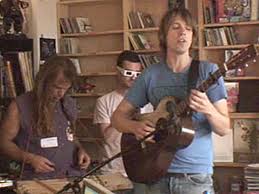
brass bedI expected Brass Bed to be a goofy band because of the snapshot image of them singing into toy microphones.  I was initially disappointed by how normal they were, but I was soon won over by their interesting floating sound. They have this overall trippy underwater vibe (which seems to be accomplished by a bowed slide guitar). This is especially notable on “Yellow Bursts of Age” their best song in the set.  Later the guitar solo is echoey and also underwatery. It’s a very wild sound for a fairly simple song.

They tell a funny story about being from Louisiana and encountering Washington DC snow and (of course) not having an ice scraper (although they did have bag of sand).

“Cold Chicory” is an upbeat sounding song musically although it is kind of a bummer lyrically, but again there’s the great sound of the bow on the slide guitar and the echoey lead guitar. “Please Don’t Go” is a slow song—with more interesting effects from singing into that slide guitar.

The plastic mikes do come out in the last song “Have to be Fine” in which they sing into the echoey mikes for the intro (with very nice harmonies).  They sing the intro for about a minute, and then the slide guitar player takes lead vocals on this simple but pretty song (I don’t know any of their names).

At the end, the NPR folks gave them an honorary NPR ice scraper.

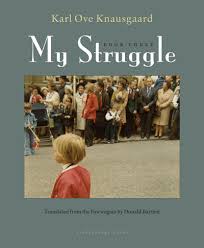
[READ: June 24, 2014] My Struggle Book Three

boyhoodI read an excerpt of Book Three just a few weeks ago.  And in the post about it I said I wouldn’t be reading this book for quite some time.  But then the book unexpectedly came across my desk and I couldn’t resist grabbing it while it was here.  So it appears that I will now have to wait well over a year before Book 4 (which is, I think about 1,000 pages–yipes).  I also see that Book Three is fully called “Boyhood Island” in Britain.

At the end of Book Two, Karl Ove was more or less caught up to the present–writing about what he was then up to (with a few years gap, of course).  So it makes sense that this book is about his childhood–showing us how he came to be the man he is.

The book, amusingly enough, starts off with memories that he cannot possibly remember, and he even says as much.  He is using memories of his parents and piecing together pictures from when he was an infant.  In 1970, (Karl Ove was born in 1968) his family moved to the island of Tromøy tromo(and check out the idyllic picture that Wikipedia had).  This is where Karl Ove spent his (rather traumatic) formative years.  Their island is small, so he knows everyone in his school, but there are some amenities around like the Fina station and the B-Max, and there’s lots of soccer to be played and bikes to be ridden.

Things seem normal at first–he runs and plays with his friends, there is ample green space to run around in, and they have boats to sail on.  And we meet two of Karl Ove’s earliest friends: Geir and Trond (so many people are named in the book, I’m very curious to know if any of them remember him).  In an early scene they chase the end of a rainbow looking for a pot of gold (and have a discussion about what happens to it when the rainbow vanishes (the boys even play a prank on Karl Ove that they actually found the pot,a dn while he doesn’t initially fall for it, he is compelled to go back and they tease him).

But the looming figure here and throughout the book is Karl Ove’s father, who, at least according to Karl Ove’s memory, is pretty much a monstrous dick.  He is demanding and exacting, unforgiving and seemingly uncaring.  He is either bipolar or a drunk, jumping from goofy to outright rage in a mater of seconds.  Karl Ove and his brother Yngve fear him unconditionally and, by the end of the book they both seem to hate him.  The scene where their dad tries and fails to teach Karl Ove to swim is heartbreaking, especially when the dad goes home and tells their mom right in front of him “He’s frightened of water.”  There are dozens of instances of fear and intimidation (often accompanied by a wrenching of Karl Ove’s ear).  Like when Karl Ove turns on the TV for his grandparents (he wasn’t allowed to touch the TV but he wanted to do something nice for them).  After a few minutes, the TV fizzed out and, naturally, he was blamed for it and sent to bed without supper (after some minor physical abuse). (more…)

Read Full Post »

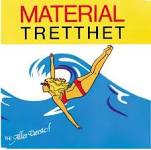
CV1_TNY_02_17_14Columbo_spine.inddSOUNDTRACK: THE ALLER VÆRSTE!-Materialtretthet (1980).

matThe Aller Værste! were a Norwegian new waves/punk band with elements of ska thrown in.  I only know of them because of this story, but I decided to check out some of their stuff since it is so relevant to the story.

This was their debut album, which has been ranked as the number 6 best Norwegian album of all time (by Morgenbladet, a Norwegian weekly newspaper).  The album opens with lounge piano and trombone before breaking into a ska-inflected “Du sklei meg så nær innpå livet.”  Lead singer Chris Erichsen sings in some unusually deep voices (some of which seem comical) in “Dødelige drifter.”  “Døgnflue” is a two-minute punk blast with a loud Farfisa organ running throughout.

“Bare du som passer på” has a distinctly Clash feel in the vocals.  “For dem betyr det lite” is powered by that organ sound, while “Bare en vanlig fyr” is very guitar heavy (and may have a different singer).  This is probably my favorite song on the album, there’s some great sections in it.

This sound of punk sensibility with a prominent organ (an vocals in Norwegian) really make The Aller Værste! stand out in 80s rock.  “Må ha deg” has some interesting backing vocals and sounds like a Clash inspired ska song (with more crazy vocals).  It has a slow instrumental section with a twangy guitar solo.

“Igjen” is 90 seconds of punk (but not very harsh punk).  The next few songs are all about 3 and a half minutes long.  “Bare ikke nok” has call and response vocals and an unexpected beat.  “Hong Kong” slows the sound down, with a prominent bass riff.  “De invalide” is an upbeat song with horns.  “Hekt” has some dissonant guitar over almost funky bass and a serious breakdown at the end.  “Discodrøv” has very fast drums as it opens, but it turns into a rollicking song with disco bass and big horns.

“Oppvekst” follows those horns with some fast (ska-like) guitars.  “Materialtretthet” opens with some great, wild bass and continues wit a very fast-paced song.  This is another favorite (it’s interesting that the title track is also one of the shorter songs on the record).  “Menneskelig svikt” sounds quite raw, with echoey distant guitars and vocals.  “Blank” is the final song on the album (reissues have added more tracks).  It has a distant echoey harmonica acting as a melancholy sound behind the vocals.

I hope that Karl Ove’s book somehow gets this disc in print, I’d like to listen to it on more than YouTube.

There’s a live version of the song mentioned at the end of the story here:

[READ: June 11, 2014] “Come Together”

I know that this is an excerpt form the third part of My Struggle which I plan to read in say six or eight months.  But I decided to read it anyway in part because I was intrigued by the cover picture, which is of a record sleeve with a man on a bicycle and the wheel is the inner label of an album.  That, coupled with the title “Come Together” made it pretty apparent that this would be about music.   And so it was.

As I said, this is excerpted from Karl Ove’s third book in the My Struggle series, which is called Boyhood.  I’m intrigued that this book is set in his teenage years since the first two were set much later–it actually felt like Book 2 caught us up to the present).  At any rate, this is one small section (chock full of details) about being young and being in love with music and with girls. (more…)

Read Full Post »

karlove1SOUNDTRACKWHITEHORSE-“Pins and Needles” and Kickstarter campaign (2014).

photo-mainI really enjoyed seeing Whitehorse live.  I would absolutely see them live again.  I was delighted then that their album was also fantastic (I didn’t think it could match their live show…and it doesn’t but it is great in a different way).  In a very short time I became a big fan of the band.

THey havea  new song, “Pins and Needles” and a Kickstarter campaign.  The song begins with Melissa McClelland’s voice singing in it beautiful way–there’s guitar in the right ear and bass in the left ear.  Then Luke Doucet comes in for verse two.  And when their voices fill the bridge it feels so complete.  Until they get to the chorus when they push it even further and it sounds amazing.

  They sing so well together.  Her voice has a slight country twang, and his is a low baritone.  Their harmonies are superb as they sing the compelling chorus: “Fake Your Death and I’ll Fake Mine”

Lyrics are certainly interesting for the band.  How many times do you hear a woman singing a line like: “I’m the villain in this piece  And back when I was a thief, I broke hearts like they were teeth.”

I love this song.  And it may or may not end up on the new album for which there is a Kickstarter campaign.

And I’m in.  I’m a little unclear about exactly what they aim to do with the money they raise.  They say quite plainly that there will be an album regardless of whether they raise the funds.  And their label, Six Shooter, is totally behind the band.

Rather seems to be a way to raise some money and some attention for the band.  And, apparently it will give fans a glimpse of the album as it is being made–a sort of behind the scenes featurette that comes before the disc itself.  The prizes are varied and moderate–from a download, to the CD, to a T shirt, to sheet music (all for reasonable donations), all the way to the grand prize–for $8,000 they will play a private show for you.

I’m in for a CD, and I’m happy to pay regular ticket price when they come around again.

Check out the Kickstarter campaign for more details where you can also hear “Pins and Needles.”

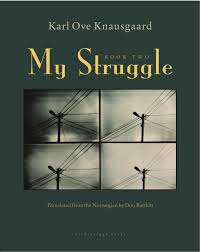
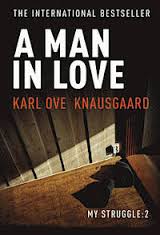
[READ: April 24, 2014] My Struggle Book Two

maninloveI read an excerpt of Book Two in Harper’s well over a year ago So when I got to that section again (it’s the end of the book) I was trying to remember why it sounded so familiar–an accident during a soccer match that leaves Karl Ove with a broken collarbone and an unhappy girlfriend (who will be looking after three kids without him), and then I remembered the excerpt that started it all.

The translation of Book Two by Don Bartlett is fantastic, just as in the first book–I can only assume the original Norwegian is just as compelling.  Book one was 430 pages and now book two was 573, so I’m in to Karl Ove’s life for 1003 pages, and there’s four more books due (Book Three comes out next month).

As I mentioned for Book One, this series has caused some controversy because it is given the same title as Hitler’s Mein Kampf (Min Kamp in Norwegian), and also because he says some pretty mean stuff about people who are still alive.  Book One was about the death of his father.  It was pretty dark.  Book Two is about his first daughter and about falling in love with Linda, his children’s mom (although not yet his wife).  And it is also pretty dark.

I was trying to figure out why I like this series so much.  Not a lot happens, Karl Ove is not a very nice person and he seems to be pissed off most of the time.  And I think what I realized is that I share a lot of opinions as him, but he takes everything to the extreme.  And he is kind of an asshole.  I mean, anyone who writes a six part autobiography called “My Struggle” (okay, really it’s called My Head) is kind of an asshole.  But so when I see things that I would only think in my deepest recesses of my mind printed on a page, it’s strangely visceral to me.  I realize this means that I’m kind of an asshole too, but the key difference is that I don’t act on the things that I think, nor do I write 4,000 pages about them.

I told Sarah that she might laugh at some of the opinions that he lists but that she would not enjoy reading the books.  Indeed, this book, this series, is not for many, I’m sure.  But to me there is something strangely engaging about him and his strange life and his writing style.  And I really flew through this book, finishing it in about a week.

So this book begins (started in July 2008) with Karl Ove being pissed off.  He talks about finishing the first part of the novel (which I have to assume is Book One, given when this was written and how this book ends) just last month (in other words he is really churning this stuff out!).  He and Linda have been fighting (as the book opens they have three children, Vanja, Heidi and John–it’s also hard to believe that his children are young enough to not really know much about this series). The tension is high between them–glares, comments, nasty sniping.  Karl Ove says that he is afraid to say things around her because he knows how she’ll react.  But at the same time, some of things he desires are simply not defensible in a relationship or when you are parent.  And the main conflict seems to be that Karl Ove is selfish and Linda is (at least according to him) mildly suicidal and possibly bipolar).  And mind you, at the time of his writing this, I think they are still together….  (I could look that up, but it seems kind of fun not exactly knowing). (more…)

Read Full Post »

gorey SOUNDTRACK: 1-SPEED BIKE-Droopy Butt Begone [CST014] (2000).

1speed1-Speed Bike is a remix project by Adian Girt who has played in Godspeed You Black Emperor and Exhaust for Constellation Records.  This is his first release as 1-Speed Bike.  He has released several more on other labels but I haven’t heard any of them.

The most interesting thing about this disc are the titles of the songs.  And those titles are so clever that it gives one high hopes for the album.  I don’t know who Mauro and Elwy are (track 1) but the rest are certainly interesting if not confrontational.

1. The Day That Mauro Ran Over Elwy Yost
2. Seattle/Washington/Prague 00/68 Chicago/Nixon/Reagan Circle-Fighting Machine
3. Yuppie Restaurant-Goers Beware Because This Song Is For The Dishwasher
4. Just Another Jive-Assed White Colonial Theft
5. Why Are All The Dogs Dying Of Cancer?
6. My Kitchen Is Tiananmen Square
7. Any Movement That Forgets About Class Is A Bowel Movement

But what’s disappointing is that the album is comprised almost entirely of a drum machine and some other sounds.  The drums are very very loud in the mix, and there’s very little variation in each song (which befits a remix, I suppose).  And yet, the “musical” section is largely nonexistent.  There’s a lot of spoken word stuff, which is fun, but it also seems randomly thrown on there. The disc opens with him asking someone to be quiet because he has to flush the toilet.  There’s a lengthy declaration of love for his family and war against capitalism.  And that everyone else can fuck off if they don’t want to hear him talk politics.

There are samples sprinkled around the disc, but most of them are inaudible or played with so much that it renders them hard to figure out.  There are some interesting sounds in “My Kitchen is Tienanmen Square,” but the rest is kind of dull.  The end of the last song offers a voice mail message that gives you the title of the album.

Overall, not an exciting debut for 1-Speed Bike.

[READ: April 12, 2014] The Strange Case of Edward Gorey

I bought this book many years ago when I was on an Alexander Theroux kick (which actually means I wanted to read some of his books but did not, although I do hope to).  Anyhow, this book has been staring at me for some time so I decided to just dive in.  I actually know precious little about Theroux except that his novel are supposed to be weird or difficult or something.  I know slightly more about Edward Gorey, although little more than his drawing style (which I love) and his sense of humor (which I share).

So this book is a sort of a biography of Gorey by Theroux.  Theroux was one of Gorey’s close friends.  This is saying something because as a rule Gorey was rather a recluse and didn’t much like people (he did like cats, though).  The book is not a proper biography–a biography of his works or even of his life.  It is more of a biography of the man and his quirks.  There’s very little about his childhood, and not a lot about his books (except for Theroux’s admiration).  But mostly its about what it was like to hang out with Gorey–and to delight in the baroque and fun turns of phrase that Gorey used.

We learn a lot about what he liked (soap operas, classic movies [Metropolis, M, Sunrise, Gold Digger series], obscure horror films [The Town That Dreaded Sunrise, Women of Straw, Suspiria (at least I’ve heard of that one)], TV shows [The X-Files, The Golden Girls, Matlock, Buffy the Vampire Slayer] and of course, classic literature [he was well versed in many original languages].  We also learn what he most assuredly did not like.  He did not like Star Wars, he did not like Mel Brooks, he did not like Robert Altman or Woody Allen [Gorey was a film critic for a time].  And as for our foremost actress, Meryl Streep, he has this to say:

“Oh please!” said he, every time she opens her mouth, the critics insist Dostoevsky’s speaking!” He paused. “And who’s even dippier is Glenn Close. Sexless as a teabag. Neither man, not woman, nor in-between! Julia Roberts’s face looks like it’s made of rubber — remember those Snap, Crackle and Pop cartoon faces? And of course Streisand. God help us, I won’t even go to see.”  Gorey loathed her with a passion, even more than John Waters does.  I once heard him fulminate for a good half-hour on the impossible stupidity of her 1962 hit, “People,” a song that, with its mawkish, politically correct soul-sharing, shrinkingly embodies to a T everything that Edward Gorey utterly loathed:  “Pee-pull, pee-pull who need pee-pull are the luuu-kiest pee-pull in the wooooooorld!.”  I cannot honestly think of a single sentiment that would have driven Edward Gorey battier faster than the flaccid lyrics of that song with its, to him, canasta-closeness, hideous interconnectedness, and ultimate meaninglessness.

He also hated Andrew Lloyd Webber, the Marquis de Sade’s writing, right-wing talk show hosts, every movie Al Pacino ever made [Of Bobby Deerfield he cried out during the movie, “oh for Christ’s sake…what is this in aid of?”] and Martha Stewart.  And while he had great disdain for Barbra Walters and Maya Angelou, he was especially appalled by “the invincible vulgarity of the preposterous Kathie Lee Gifford and the host of miniature faces she was constantly pulling” (20) saying: “her facial contortions would be excessive on Daffy Duck” (44).

One thing to note about the book.  As you can see form the page numbers above, similar sentiments about Gifford are on page 20 and 44.  Theroux tends to circle back onto the same topics a number of times.  So the same names tend to pop up three or four times (Buffy comes up at least 3).  It feels like Theroux (who published this soon after Gorey died) wrote it in fits and just needed to get down as much as possible.  And while the book feels repetitive, it never feels flaccid or like it’s full of padding.  It just feels like a huge outpouring of information.  Or like an essay collections by a person who tends to revisit similar material.

Interestingly, the book isn’t necessarily for fans of Gorey.  I honestly haven’t read any of his works in years, but I found this book funny and strangely cathartic (if you like bitchy, opinionated scholar-types).  If any of the above appeals, you’ll get a kick of out Gorey, whether you like his drawings or not.  The book is also full of Gorey’s drawings (although nothing new), from his books and from some of his posters.

I was also intrigued by the fact that Gorey, clearly no friend of people, did not shy away from the outside world.  He lived on Cape Cod and New York City where his number was in the phone book the whole time.  He walked around Manhattan in a big beard and fur coat (until he gave up the coat for animal rights reasons).  When he moved full time to Cape Cod, he lived in a residential area and did not turn away any fans (he always had manners even if he knew the whole thing was kind of silly).  And apparently his house was simply chock full of fascinating geegaws and gimcracks.

For all of his proclamations about others, he did not have a large ego about his own work.  And the book gives the impression that he was just an opinionated guy who knew what he liked and was happy to share his thoughts with others (or his cats).

I just found out that Theroux reissued this book in 2011 and updated it from 68 pages (my version) to 168 pages.  I don’t know how much has changed.  In looking online it seems like maybe all he has done is make the original pictures larger, but there may be other textual changes as well.


Read Full Post »

tintinSOUNDTRACK: BECK-Stereopathic Soulmanure (1994).

soulmanureDepending on who you believe, this was Beck’s first or second or even third album.  Certainly it was recorded earlier than the other records but who knows what the actual release date was, or if it even matters (it doesn’t).  This album plays like a demo tape of home recordings of a talented folksinger who doesn’t want to be labelled as a folk singer ans is experimenting with all kinds of other sounds, including tape manipulation, home recording and utter noise (there’s a Sonic Youth sound connection here, before they ever did anything together).

But anyway, that’s got nothing to do with this album.  My version has 23 listed tracks and two bonus tracks.  And since I’ve no intention of doing a track by track analysis of the album, I’m going to group some tracks together.

There are a few styles of music on the record.  There are about a half-dozen noise/nonsense tracks–distorted guitar, distorted voices, sometimes sheer noise–like the “bonus” track which is some ten minutes of just nonsense.  There are about a half a dozen tracks that are basically just talk–old home recordings from when he was a kid, and other spoken tracks.  There are even a few tracks from a guy named Ken who is apparently an older guy singing what sounds like hobo songs (which I suspect Beck does not play on at all).

There are also a number of different instruments which (I assume) Beck is playing. He plays banjo very well, there’s an accordion track, and of course guitar.

What sets this apart from being a simple nonsense album is that there are nearly a dozen “real” songs.  There are a couple of well sung country tracks, with a slide guitar. There’s also some anti-folk, rap and live numbers.  These are fleshed out, proper songs–musically complete.  It’s in the lyrics that you can hear Beck fighting the folk/country pigeonhole.  He has three songs that are more or less rapping (like “Loser”).  There’s a couple of songs that were recorded live (in a club with half a dozen people), and are mostly silly.  And then there’s a series of anti-folk songs.  These are pretty traditional sounding songs, but with layers of noise or weirdness that keeps them from being traditional folk.  Like “Satan Gave me a Taco” which is complete song but is obviously quite silly.  And yet, Johnny Cash covered the song “Rowboat” on one of his Americana albums.

None of the recordings sound more than lo-fi, but the good songs all sound good.   It honestly sounds like a guy trying desperately to show off what he can do–and hoping desperately to get accepted by just about any genre.  Except that he clearly has his own identity (as varied as it may be).  This record is certainly not for everybody (as suggested by the incredibly low sales), but if you like Beck’s early experimental stuff, there’s enough really good stuff here that’s worth checking out.

[READ: March 9, 2014] Tintin: The Art of Hergé

Sarah bought me this book for our tenth anniversary (which is “tin”, get it?).  We’ve both enjoyed Tintin over the years, more as an icon than as a collection of stories (which I believe she has not read and which I’ve read about 1/3 of).  The Spielberg film and subsequent video game are both really cool too.  This book is an amazing look at Hergé as an artist and at the Hergé museum, which looks amazing.

When Sarah and I were in Belgium, we went to an animation museum which featured Hergé heavily.  Since it was a decade ago, I actually thought that this book was about that museum, but no, the Musée Hergé opened in 2009 and was designed by French architect Christian de Portzamparc.  The first chapter of the book is dedicated to the Museum, and do de Portzamparc’s designs and execution in the spirit of Tintin.  And I have to say the building looks amazing.  The facade alone is beautiful, and his explorations light and dark and shape look really awesome. (more…)

Read Full Post »

filigreecoverSOUNDTRACK: FRANKIE VALLI AND THE FOUR SEASONS-“Can’t Take My Eyes Off of You” (1967).

20140115_093859This was our wedding song.  Sarah and I took ballroom dance classes and we choreographed a dance to this song using the moves that we knew.  And that is one of the things people still talk about our wedding.  It was a fun and feisty dance.

But it was also sneaky because it starts out slow (we heard someone comment “swaying” as the song started out.

And then the horns kick in and we pulled out all of our best moves.  It was a huge hit.

We did not video our wedding, and our one regret is that we kept our big dance a secret so no one filmed it.  It now just lives on in memory.

[MARRIED: January 17, 2004] Paul Debraski & Sarah Cornish

Ten years ago today Sarah and I were married.

It was a glorious day, a little cold (but who could feel it?).  We had a brief but wonderful ceremony and then an amazing party afterwards full of friends and relatives.  The food was great, the company was great, even the cake was great (ask anyone who was there).  It even snowed that night.

filigree2Six months before that I proposed using this book.  I can’t remember what the actual book was that I cut up and modified–it would be interesting to see if I ever wanted to read it.

filigree1I drew my own cover (full of personal secrets), made an inside cover with our photos and even put some blurbs on the back.  And then I glued the pages together and cut out an opening for the engagement ring.  (There’s also a page of personal stuff that you aren’t allowed to see).

And here it is ten years later.  It’s hard to imagine how much has changed in ten year.  We’ve got two wonderful kids, a bunch of chickens, other small animals and jobs that are completely different than they were a decade ago.

Happy anniversary, my love, and here’s to ten more.

And, yes, since this post is a surprise for Sarah, i hope to update the pictures when we get back from our anniversary vacation.filigreeback

Read Full Post »

  hyperSOUNDTRACK: SHEARWATER-Tiny Desk Concert #9 (November 14, 2008).

shearwaterI didn’t really know Shearwater before this Tiny Desk Concert.  I’d heard of them but wasn’t familiar with their music (I assumed it was more countryish).  I was also really surprised to find that Thor Harris was in the band (he is currently playing with Swans–it doesn’t get too much more different between Swans and Shearwater (even if they are both birds).

Jonathan Meiberg is the singer–he was formerly in Okkervil River for a number of years before Shearwater became too big to be a side project.  The setting is perfect for the band as they get to showcase some really quiet insturments.  Like the Waterphone (designed by Richard Waters, although Thor Harris made the one they are using).  It is based on the calimba and they describe it as the sound you hear when something weird happens on Lost.  Thor also plays the clarinet (!).

Meiberg has a great voice, and it perfectly complements these delicate songs.  “Rooks” has melodies on xylophone and Hammered dulcimer (which also looks homemade).  “Leviathan, Bound” is based on the documentary “Blue Water White Death” about great white sharks and whalers.  They explain that this is a new version of the song with banjo.  And before they start the song they nearly knock something over (it is a Tiny desk after all).

“North Col” is the less commonly use approach to Mt Everest.  And this song is just as spare and pretty.  Before playing the final song, they show the album cover (of Rook) and talk about Kahn & Selesnick, the artists who made it (it’s quite striking).  Then he explains the origins of “I Was a Cloud” which he wrote when he was in the Falkland Islands.  They were birding and found a tiny bird living under the wreckage of a fighter jet.  It’s a beautiful image and a beautiful song.

And I definitely need to hear more Shearwater after this.

[READ: December 29, 2013] Hyperbole and a Half

The whole blogs-into-books thing is weird.  You can read everything in these blogs for free on the internet, so why do they come out in books?  Is the internet insecure when it comes to publishing?  Are these things more legitimate as books?  Is it just a way to make money?  Are they in print just in case the internet explodes?  It certainly undermines the concept that books are dead.  Well, whatever, some blogs translate very well to print.  Like this one.

I have enjoyed Hyperbole and a Half a number of times, but I never thought to check it regularly.  So I had no idea that Allie had taken a year off.  And I had no idea that she suffered from Depression so people were concerned about her.  I always just thought her strips were very very funny and didn’t read anything in them.  Of course, knowing she was Depressed (she admits as much in the book) makes the darker stories seem darker, but the funny ones are still really funny.

I mean, just look at drawings! No really, look at the drawings–they are so weird and creepy and so freaking funny.  It seems like she can’t really draw, because the pictures are crazy.  And yet she is so consistent with her lines and styles that I have to assume she is a masterful artist and has chosen this crazy style to accentuate her crazy stories.  And it is genius. (more…)

Read Full Post »

fivedials_no30SOUNDTRACK: Random songs at the roller rink (December 29, 2013)

skateWe went rollerskating on Sunday and they played all kinds of pop hits.  They played “Dancing Queen” and “YMCA,” sure, but they also played a lot of recent big hits.  And I said to myself either I have grown more tolerant of pop songs or pop songs are simply better than they were in the 80s and 90s.

Because I thoroughly enjoyed hearing “Gangnam Style” (perhaps a pop song where you don’t know the words is really the way to go) and “What Does the Fox Say?” (or perhaps when the words are so preposterous).  “Blurred Lines” is incredibly catchy (although it would be better without the offensive lyrics).  I also enjoyed “Call Me Maybe” which is treacly sure, but the melody is super catchy and “Rolling in the Deep” because Adele kicks ass.

Of course when I looked at the list of #1 hits for 2013, I literally didn’t know any of them (except “Blurred Lines” and “Royals,”) so maybe pop is not what I think it is.  Maybe I just like YouTube sensations.

Ring-ding-ding-ding-dingeringeding!  Happy New Year.

[READ: December 27, 2013] Five Dials #30

I was surprised to get this issue of Five Dials just as I was reading the other recent ones.  It allowed me to finish up Five Dials and the year at around the same time.  This issue introduces a new graphics editor: Antonio de Luca and he really changes the look of the magazine.  (He also used to work for The Walrus).  Rather than pictures being centered in the page, they spread from one page to another (which works well online but less so if you print it out).  The illustrations are also much bolder.

This is a short issue (which I appreciated).  And it does what I especially like about Five Dials–focusing tightly on one thing, in this case Albert Camus, who I like but who I have not read much.  It’s his centenary and many things have been said about him, so what else is there to say?  They find two things worth saying.

CRAIG TAYLOR-A Letter from the Editor: On Tony, On Dean, On Camus, On Algiers
Taylor talks about the illustrations of the issue–they were spray painted on walls by an Algerian-French collective known as the Zoo Project.  The new editor took photos and then Photoshopped away the extraneous stuff to leave us with just the graphics–giving them a permanence that they would normally not have.  Taylor also says goodbye to Dean Allen, the outgoing art director.  Then he gets to the heart of this issue: Albert Camus and Algiers (where Camus is from).  Curtis Gillespie decided to go to Algiers to find out how much the people there know and love Camus (and he found it to be a much more difficult trip than he imagined). (more…)

Read Full Post »

bomarsSOUNDTRACK: SIGUR RÓS-“Ný batterí” (2000).

nyThe single opens with “Rafmagnið búið” a kind of brass introductory piece.  There’s lots of horns building slowly, growing louder but not really playing a melody.  By the end of five minutes, it segues into “Ný batterí” which opens with horns as well.  Then the bass comes in, a slow, deep rumble of simple melody.  After 4 and a  half minutes, the drums are a powerful counterpoint to the sweet melody.

“Bíum bíum bambaló” is a slow piece (aren’t they all) that is mostly percussion.  Apparently it is an Icelandic lullaby.  The final track, “Dánarfregnir og jarðarfarir” was a theme used for death announcements on Icelandic radio.  I love the way it builds from a simple melody into a full rock band version and then back again.  It’s very dramatic.

Both tracks were used in the film Angels of the Universe (and appear on the soundtrack).

That certainly makes this single less interesting than the first one (although I’m not sure that the soundtrack was readily available at the time).

[READ: December 1, 2013] Breakfast on Mars

This is a collection of 38 essays (and an introduction by Margaret Cho).  It also includes an introduction geared toward teachers–an appeal that essays do not need to be dull or, worse yet, scary.  The editors encourage teachers to share these essays with students so they get a feel for what it’s like to write compelling personal nonfiction.  The introduction proper gives a brief history of the essay and then talks about the kind of fun and funny (and serious) essays that are included here.

This was a largely fun and largely interesting collection of essays.  When I grabbed it from the library I didn’t realize it was essays (I was intrigued by the title and then looked at the author list and immediately brought it home).  I know it says essays on the cover, but I chose to ignore that apparently.  When Sarah saw the authors (she knows more of them than I do) she had to read it first.  This proved to be a great counterpoint to the very large novel that I was reading at the same time.

The essays each take on different topics.  And what I liked was that before each essay, they include the question that inspired the essay.  I have included the questions here. (more…)

Read Full Post »

febSOUNDTRACK: BEN FOLDS FIVE-The Sound of the Life of the Mind (2013).

bffThe first Ben Folds Five album in over a decade opens with a big noisy sound and then quickly shows the diversity of the band by pulling back and showing a mellow verse with Ben’s piano and occasional bass.  But then the chorus comes in and Robert Sledge’s bass is once again masterful.  While Ben is clearly the leader of the band, there is something about the BFF’s bass that is so notable.  And this album rocks in BFF’s unique way–rollicking piano, and noisy buzzy bass.

“Michael Praytor, Five Years Later” has some great harmonies (the kind that BFF do so well).  “Sky High” is the kind of social commentary ballad that Ben excels at. And the title track is a fast moving rocker that has more great harmonies.

“On Being Frank” is a Sinatra inspired song with strings.  While “Draw a Crowd” continues Ben’s humorous vulgarity in a very unexpected way: “if you’re feeling small, and you can’t draw a crowd…draw dicks on a wall.”  “Do It Anyway” the single, which inexplicably wasn’t huge, gets more and more fun with each listen–to scream along with “OKAY!” is very cathartic.

“Hold That Thought” is one of those mellow but speedy numbers that I love from Ben.  And when then bass plays that high solo bit near the end (oh that bass), the song kicks into new levels of excellence.  “Away When You were Down” is another string-filled mellow song.  The final track “Thank You for Breaking My Heart” reminds me of “Boxing”, a mellow piano ballad which is, obviously, heartbreaking.

This is a great return to form.  There’s some heavy rockers and some pretty ballads. It’s nice to hear the Five back together again.

[READ: October 5, 2013] 3 book reviews

This month Bissell reviewed three books.

The first book is a biography of Flavius Jospehus called A Jew Among Romans jar by Frederic Raphael (who also wrote the screen play for Eyes Wide Shut).  I had never heard of Flavius Jospehus but evidently without him we would have no historical accounts of time from around the beginning of the Common Era.  His writings are pretty much the only works that have survived.

And his story itself is interesting too. In 70 A.D. the Romans destroyed Jerusalem. This attack has had more impact on current life than can be explained.  Judaism lost the Second temple, Jewish Christianity soon disappeared beneath the waves of Gentile Christianity, even Islam was shaped by this because a Mosque now stands where the Second Temple was.  And nearly all modern forms of anti-Semitism can be traced back to this attack in some way.  Flavius Jospehus chronicled this time as a Jew in a reasonably impartial way (which led many to call him a traitor).  His books Jewish Antiquities and The Jewish War are the sources for almost all of our knowledge of that era, including about Pontius Pilate. (more…)

Read Full Post »

« Newer Posts - Older Posts »