Feeds:
Posts
Comments

Archive for the ‘Big Books’ Category

SOUNDTRACK: BASIA BULAT-“In the Night” (2008).

I recently came across Basia Bulat via NPR.  She played a Tiny Desk concert and I discovered that she had several other entries in the NPR canon.

Basia is Canadian (of Polish descent); she has a beautiful strong mid-range/throaty voice and a great sense of melody.  She also has a bit of a gimmick: she plays all kinds of instruments (guitar, piano, sax, etc) including some really weird and unexpected instruments: Zither, pianoette (!) and autoharp–a couple of years before PJ Harvey brought it back to the mainstream.

pianoette

“In the Night” is a wonderfully chipper poppy song.  And that autoharp gives it just a tinge of “huh?’ that makes it more than just a simple pop song.  The beat is fast and energetic, the harmonies are wonderful and the melody is top-notch.

I really like this song a lot, and the other snippets of songs that I’ve heard from her are equally wonderful.   I’ve even noticed that lately she’s been singing a song in Polish!

[READ: July 12, 2011] “Gastronomania”

I’m not going to go crazy reviewing all of the book reviews in Harper’s (that way lies madness), but occasionally an author I like writes a bit that I want to mention.  So Will Self, who I like but have not read a lot of, wrote this essay/book review about food.  He reviews three books, but what I especially liked about it was his introduction, which uses Luis Buñuel’s Le fantôme de la liberté [The Phantom of Liberty] as its starting point.  In the film (which I have not seen), the house’s dining room is actually a well…watch this clip:

It’s a wonderfully bizarre introduction to an essay about food.

It was unclear to me what made Will Self suitable to review three books about cooking.  And then (news to me) he revealed that he used to be a food critic (columns are collected in his book Junk Mail) and that Anton Ego in Ratatouille (yes that Ratatouille) bears “an uncanny, if not legally actionable” resemblance to him.

This essay was so much fun.  Self is as viciously negative about these books as he apparently was about food back in the day.  But he’s not dismissive of them as cookbooks per se, he’s more about trashing the current worship of food (and many other things too of course). (more…)

Read Full Post »

SOUNDTRACK: THE DECEMBERISTS-Tiny Desk Concert #135 (June 20, 2011).

NPR has loved the Decemberists for years, so it’s no surprise that they made it to Bob Boilen’s office for a Tiny Desk concert.  And yet they are probably one of the biggest bands to appear at the Tiny Desk, so I was quite excited to hear this show.  They play 3 songs, all from The King is Dead: “Down by the Water” (naturally), “Rox in the Box” and “The June Hymn.”

Colin is in good chatty form (after almost getting hit in the face by a violin bow) and makes a very funny comment about thinking that everyone would be working while they played.  He also—I think a first in Tiny Desk history—screws up a song (“The June Hymn”) and has to restart the whole thing—it’s a very minor flub, only noticeable if you listen a few times, but he noticed and clearly felt bad (and didn’t curse either).

The songs sound great even if they’re not radically different from the recorded version (the harmonica solos are the big “improv” moments).  And this set confirms what a solid bunch of songs The King is Dead is.

[READ: July 7, 2011] Wildwood

I had this book signed by Colin and Carson at BEA.  I was so psyched to see that they were signing there, that I got up super early, took the bus into Manhattan and got to the convention center before it opened (I thought they were signing at 7:30, but it was actually 8:30). Of course, I didn’t see the fine print that said I needed a ticket to meet the author and illustrator.  In fact, I didn’t even realize that people were holding tickets until I was next on line. I asked the nice BEA worker if I could still go.   She said they wouldn’t sign a book, but that I could say hello.

I told Colin and Carson that I loved their stuff and I gushed over them like a little fanboy (even mentioned having a Tarkus album) and they gave me a copy of the book anyway (signed by them both).  How cool!

So this book is an older children’s book (I would say on a level of The Mysterious Benedict Society–which the book reminded me of because Carson did the illustrations for that series as well, although the books are nothing alike in content).

I have always loved Colin’s lyrics (yeah, he signed my book, we’re on a first name basis now). They are fantastical and fantastic, and he has a great vocabulary, pulling out obscure words for rhymes.  There’s a generally accepted tenet in writing that poetry is more powerful than prose because poems are typically honed with perfect word choices, whereas prose tends to be a bit lazier because there’s so many more words to play with (ideally, prose should also be finely honed, but it’s much more noticable in poetry).  And so given this, I guess it’s no surprise that Wildwood is not as impactful as Colin’s songs.  There are couplets from Decemberists songs that run through my head all the time, but there weren’t any great phrases in the book that really stuck with me.  Of course, at 540 pages you wouldn’t expect too many phrases to jump out at you (images and scenes and chracters yes, but phrases, no).

All of this is a long way of saying that I really enjoyed the story, but I wasn’t blown away by the language of the book.

The story follows Prue McKeel, a young girl who is pretty ordinary.  She lives in Portland (the Wildwood of the title is in Oregon, not New Jersey, which isn’t surprising since they’re from Oregon, but a Jersey kid can hope), goes to school and has a pretty happy home life.  Her mom and dad are nice (I love that her parents are suffused with all the trappings of hippie Oregon–it’s like Portlandia in print!) and her baby brother, Mac, is pretty okay too.  The image that will stick with me is of Prue taking her brother for a bike ride: she transports him through the most peculiar (and reckless and dangerous) way I can imagine–she attaches a Radio Flyer wagon to her bike and plops him in the wagon.  I just have to ask–how did he not fall out??

The story immediately announces itself as fantastical when a murder of crows swoops down out of the sky and grabs Mac from the ground and flies away with him.  Now, Prue was supposed to be watching Mac, so although it’s not her fault a bunch of birds grabbed Mac and flew away with him, it is her fault, you know?  So Prue hops on her bike and follows the birds through the city (a very exciting scene of reckless bike riding).  She skids to a halt when she sees them fly into The Impassable Wilderness. (more…)

Read Full Post »

SOUNDTRACK: BLACK FLAG: The Process of Weeding Out (1985).

Fans of Black Flag were (justifiably) freaked out by this EP.  It’s a four songs that clock in at almost 30 minutes (from the band who gave us the one-minute long hit “Wasted”).

This album is all instrumental and it provided Greg Ginn yet another outlet for his experimental guitar workouts (see also: Gone, October Faction, Saccharine Trust, Tom Troccoli’s Dog etc.)

So what you get is Kira’s fantastic and unusual bass riffs (she did amazing work with Black Flag), Bill Stevenson’s intense (and cymbal fueled) drums and Greg Ginn’s what the hell? guitars.  I’ve always found Ginn’s guitar work to be somewhat off.  It always struck me that maybe he didn’t exactly know how to play the guitar.  And yet he was always right on with his riffs and chords, it’s just that his solos never conformed to any standard version of guitar solo I’d ever heard.

So this EP comes across more as fee jazz than punk.  “Your Last Affront” is 9 minutes of chaos all under-girded by an interesting if unconventional riff.  It’s followed by the two-minute “Screw the Law” a much faster song, with an intense riff repeated for much of it.  The last 30 seconds or so has some screaming solos from Ginn, but of all the tracks, this is probably the most user-friendly.

The second side has the title track starts with a lengthy solo from Ginn.  A few minutes in, Stevenson’s drums come clacking around the place and Kira is somewhat relegated to the back as her bass is steady but not that exciting.  Until about 3 and a half minutes in, when the band takes over and Kira plays a super cool riff and when Ginn joins in, the song is really solid.  “Southern Rise” ends the disc with 5 minutes of relative quiet.  Although the main instrument appears to be the drums.

The whole things sounds like they were jamming in Greg’s garage.  And I’ll bet lots of fun was had in that garage.

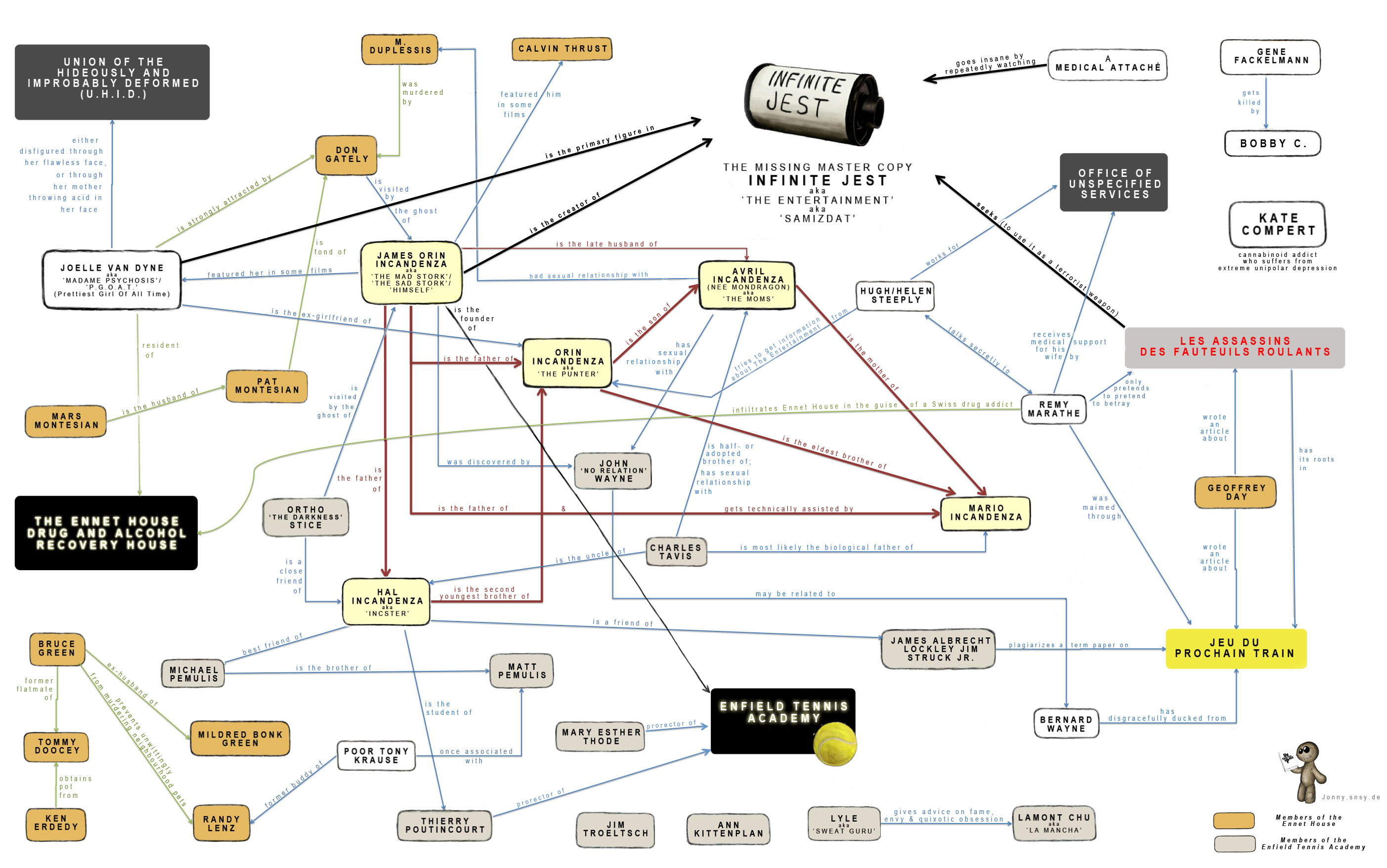
[READ: March 15, 2011] three items about what didn’t make it into Infinite Jest

In honor of The Pale King’s release this week, I’m doing this post on Infinite Jest-related stuff.  This is all of the stuff that we lay people have access to without going to the Wallace archives to find all of the cool DFW stuff.

After finishing IJ this summer, I found out that it was initially much much longer (I think around 300 pages longer).  I grew mildly obsessed with wondering what had gotten cut.  And I had to wonder, if you have an 1100 page book, what difference would an extra 500 pages make, really?  Initially, I thought that the things that were cut were just minor changes, but then I heard about fairly large things that were removed.  And I dreamed of a “director’s cut” of the book.  That will never happen, and that’s fine (I’m less obsessed now).  But these little glimpses into scenes that didn’t make the book are fascinating.

And all told, they confirm that most of the cuts were minor, although there were some large scenes that were left on the cutting room floor. (more…)

Read Full Post »

SOUNDTRACK: RADIOHEAD-Hail to the Thief (2003).

After the claustrophobia of Amnesiac, Hail to the Thief was a nice compromise between their earlier guitar rock and the ambience and the technology of Kid A.  “2 + 2 =5” is one of their most satisfying songs, opening with a nice guitar lick and Thom Yorke’s keening vocals, it abruptly jumps into a full-fledged rocker.  “Sit Down Stand Up” has similar properties–it opens quietly with a distant guitar riff.  The song builds and builds into a manic intensity.  By the end, when the pace is much faster and the lyrics are repeating “the raindrops” over and over, it’s a glorious mess.

“Sail to the Moon” is a keening piano-based ballad.  Not one of their best, but with very nice melodies.  “Backdrifts” flashes back to the experimental side of Kid A, with lots of percussive noises tapping into the electronic groove.

The band surprises everyone with a very acoustic sounding song, “Go to Sleep.”  It’s a really wonderful track, especially placed amidst the electronica of the other tracks.  The bridge brings Yorke’s vocals into the stratosphere (and the guitars get noisier and noisier).  “Where I End and You Begin” is a noisy staccato piece of fun with effects and more effects trying to hide Yorke’s voice.

“We Suck Young Blood” is a spare, almost completely stripped song composed of pianos and handclaps.  It is eerie and not a little disturbing.  While “The Gloaming” is practically all electronics.  It’s one of those transitional songs, not terribly exciting in itself, but not throwaway either.  And it leads into the gorgeous quintessential Radiohead of “There There” which could be an OK Computer outtake.

“I Will” is mournful dirge with just guitar and multitracked voice that lasts only 2 minutes and leads into the experimental “A Punchup at a Wedding.”  “Punchup” opens with that rarest of Radiohead sounds: a solo bass.   But it is quickly swallowed by more electronica.

“Myxamytosis”  is a nother great rollicking track with a great slinky keyboard riff that propels the song through the murky depths.  “Scatterbrain” features a cool guitar motif that shows that they can still play pretty music and which leads to the album closer, “A Wolf at the Door.”  “Wolf” ends the disc wonderfully with a cool guitar song and awesome almost-spoken lyrics.  It is kind of sinister and kind of sad at the same time.

This is a disc that rewards repeated listens (and headphones). If OK Computer was difficult, Thief is much more so, but for very different reasons.  But it pays wonderful dividends.

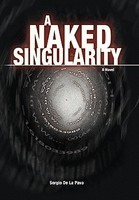
[READ: January 6, 2011] A Naked Singularity

I received a copy of this book about a year ago in March.  It is self-published and seems to have been sent to many folks who blogged during Infinite Summer (because it’s a big book, you see).  I was interested in reading it, but I had a lot of other things that I was reading first, so I put it aside until last month.  And I am really bummed that I waited this long.

A Naked Singularity is a wondrous, beautiful mess of a book that I was so absorbed in, I couldn’t put it down.  The writing style is great: funny, clever, funny, philosophical, funny, legal, funny and at times rather violent.

I’m torn when writing this how much of the “story” to give away.  I didn’t know anything about the book (the blurb on the back is just a quote from the book–there’s no summary or anything).  So I’m going to rob you a little of the “what the hell is going on in this story” aspect that I had, but I’m not going to give anything major away.

The story opens in a the middle of a conversation between a prisoner and a lawyer.  It’s a bit confusing until the story pulls back and we get the whole deal.  The story is about Casi.  He is a wunderkind lawyer who has never lost a trial (in 14 attempts).  He plays the system, but he’s also dedicated to getting his clients off (even though he–and everyone else on staff–knows they are guilty) mostly because he is undefeated.

The entire first Part of the book (320 pages) introduces us to Casi, to his workload, to his clients, to his coworkers and to his family.  His clients are mostly drug dealers. His coworkers are mostly jaded and are no longer excited by their jobs.  His family is wonderful, a group of Colombian immigrants who love each other and fight with each other loudly.  (The early scene at his family’s house is hilarious scene in which unattributed dialogue overlaps–it’s wonderful).

And yet for all of that, the first part never quite gives us a plot.  This might be a problem for some books, but the whole set up is so compelling that you just go with it, from one amusing (or hilarious) segment to the next.

In addition to introducing us to his cast of drug addicts and low level criminals, Casi also indicts the New York Justice system (in hilarious detail).  There are quite a few chapter spent talking about “bodies” (criminals) and how many of them sit in jail for 72 hours until they see a lawyer.

Of course, when he gets home, all is not normal there either.  His apartment is free (because his downstairs neighbor’s father owns the building and Casi squats there).  The neighbors are a curious bunch of college students.  One of them is a total TV junkie.  And, there’s a bizarre, wonderful subplot about him trying to bring Ralph Kramden from The Honeymooners to life in his room by watching the shows nonstop for weeks.  Yes.

Textually, the story also plays with lots of styles.  In addition to the dramatic scene with his family, we also see many court transcripts.  The second one with Mr McSlappahan is quite funny not least of which because the judge cannot get the poor man’s name right and the official transcript changes his name throughout the case.  There are also letters to and from one of the clients.   There’s a chapter-long epic poem (which was probably the hardest thing in the book for me to digest).  There’s even a recipe for empanadas (which sounds delicious).

In addition to some wonderful wordplay and punning there is also childish gross-out humor.  A scene with frozen burritos (pp. 150-158) had me laughing out loud for several pages.  But there’s also a lot of commentaries on society.  For instance Television is always capitalized and treated as a proper noun.  The mayor of New York is named Toad.  There are street vigilantes with cameras everywhere and, most amusingly, there’s an in-the-making TV show: Clerical Confessions.

By the time Part Two comes around a plot starts forming.  I was concerned that all of part two would follow this nascent plot, but it doesn’t. The book continues in a similar vein with the plot-instigator [coworker and lawyer, Dane, one of the most consistently amusing characters I’ve read in a long time] continually popping up on Casi’s periphery to try to get him to help him with…the perfect crime.

And that’s when boxing comes into play.  Casi is a fan of boxing, specifically a fan of Wilfred Benítez (who I didn’t know was a real boxer, but whenI looked him up I found this part of the story even more compelling).  And so, interspersed throughout the rest of the book is Benítez’ biography and fight history. It’s a rather lengthy character study of the man himself and boxing in general.  Now, I’m not a fan of boxing, I’ve never watched a fight, but I was totally engrossed by the storytelling.

Because he is setting up a whole story about muiddleweight champiosn, the novel follows many boxers who I had heard of and knew from pop culture (I checked and even Sarah knew who most of these boxers were, so they really must get into the pop culture world): Sugar Ray Leonard, Marvelous Marvin Hagler, Thomas Hearns (I didn’t know him, but De La Pava’s description of the 3 round Hearns-Hagler fight is so exciting that I’m going to watch them on You Tube) and Roberto Durán (she didn’t know him).  And so the story of these middleweight fighters trying to knock each other over for the title becomes something of a metaphor for the Casi’s life pre- and post- crime.  In fact, when they go to execute the perfect crime, the first half of that chapter is taken up with a story about Benítez…that’s quite unexpected.

While the crime is beign set up, Toom, one of Casi’s coworkers asks him to help with a case in Alabama.  A severely mentally retarded man is to be executed and Toom has taken on the case to rescue the man.  This plot adds a surprising amount of pathos to the story, especially when Casi flies to Alabama and meets the man.  But even that sequence is lightened by a wonderfully absurd hotel scene.  I totally want to stay at this hotel.

Part Three of the story is where the whole thing devolves into a crazy quilt of insanity.  The crime has happened, and it is messing with everything. There is a city-wide blackout, Casi has no heat, no cars are allowed on the streets so he can’t even escape to his mother’s house.  There’s also a strange guy in is building who looks and sounds suspiciously like Ralph Kramden.  And, Casi is accused of contempt (and is about to be ousted by his law office’s morals group, the childish but amusingly named Committee to Oust Casi Kwickly). Both trials are as absurd as a Marx brothers movie (Karl of Groucho?).

The lead up to the end is very satisfying will all kinds of loose ends tied together (things that I thought he’s never address were in fact cleared up!).  But with a story this all over the place, it’s hard to imagine how you would finally end it.  The ending goes in a direction that is supported by the title (and is a little overwhelming).  It’s a little unsatisfying, but aside from a tidy happy ending (which you knew you weren’t getting) I don’t know how else you could have ended the book.

Ending aside, this is a fantastic novel.  There is just so much going on in it (I didn’t even mention the discussion of Hume vs Descartes “I guessed there was nothing wrong with Hume provided it was acknowledged that Descartes was The Man” (510)) or the whole subplot about the two kids who kidnap a baby), and it is very well constructed and tied together.

Somebody please publish this book officially!  Yes it’s long, yes it’s multifaceted, yes it demands a lot of the reader,but the payoffs are wonderful and, frankly, this is the kind of unexpected story that could be embraced by, well, not the general public, but a niche market who enjoys clever books (and yes, probably fans of David Foster Wallace (and his progenitors)).

Give De La Pava a contract, huh!  You can read an excerpt here.

Read Full Post »

SOUNDTRACK: THERION-Theli (1997).

I bought this disc when I was living in Boston and I immediately fell for it.  I seem to recall I was doing a lot of driving at the time, and this mix of extreme metal, orchestral accompaniment and twinned vocals was very captivating.  It was also really fun to play very loud on a dark highway.

I’d read a very good review of this disc that claimed it was a big step forward in styles of thrash/black metal (and if you Google reviews for this album they are pretty universally great).  The disc is exemplified by the track “To Mega Therion” which is almost entirely a full choir singing what I guess is the chorus.  The verses are populated by a guy screaming in a guttural voice who is answered by an almost mechanically twinned voice which sounds great but is even harder to understand.  Follow this with a beautiful piano (!) solo not unlike something Randy Rhoads put together for Blizzard of Oz, and add a pounding double bass drum all the way through (truth be told the album could be a little heavier in the bass) and you get a crazy mix of styles which is catchy and creepy at the same time.

It’s hard to match a song like that.  And, admittedly, the band doesn’t quite manage to do so, but the rest of the album keeps up this orchestral death metal throughout.

Reading about Therion has taught me that this album is something of  touchstone for a new genre of metal, called variously symphonic or operatic metal (I suppose we have this to blame for the Trans Siberian Orchestra?).

In addition to the choirs and guitars there are a lot of keyboards. They are disconcerting when you’re thinking death metal and yet really they add an even fuller sound, even if at times they are not as grand or powerful as anything else.  At times the album seems cheesey, but that may have more to do with thirteen years distance than the music itself.

Anyone who has seen The Exorcist knows that choirs can be spooky.  And when you mix it with the heavy guitars and guttural vocals, you get a really cool sinister yet catchy (and possibly uplifting) album.  There are certainly a lot heavier albums, but this one is pretty stellar.

[READ: Summer of 2010, finished December 12, 2010] Lords of Chaos

My brother-in-law gave me this book for my birthday this year.  I was familiar with it as it is fairly well-known in heavy metal circles as a fascinating read.  And so it was.

This book is basically a history of black metal in Norway and how some bands’ antics went beyond music into burning churches and even murder.  The authors present a pretty neutral account of the story.  They let the main participants (criminals) have their say and the interviews don’t comment on their answers, they just let them tell their side of the story.  The authors also know a lot about the music scene.  Of course, in the end, the authors (thankfully) disapprove of the violence.  It makes for an interesting and somewhat conflicting read. (more…)

Read Full Post »

SOUNDTRACK: TIJUANA NO!-Transgresores de la Ley (1994).

In the mid 90s, when I was living in Boston, I discovered MTV Latino, and the Rock en Español resurgence.  Since I’m always interested in new music, I bought a few CDs by these Spanish-singing bands.  For most of my life I’ve thought about the rabid Japanese audiences who loved bands that sand in English.  Did they understand the lyrics?  And did it matter?  Well, here was a test for me.

Tijuana No! was the first band I bought and I really liked it (and still do).

The disc opens with a rollicking ska rocker “Goples Bajos” which features a wonderful horn filled breakdown and ends with a blistering guitar solo.  The title track, “Transgresores de la Ley” opens with a military beat and a military sounding flute before taking off with a heavy verse and, more impressively, a punk/shouty chorus.

My favorite song is “Tu y Yo,” it’s funky all over the place and has a super heavy midsection.  And “Borregos Kamikazes” has a wonderful juxtaposition of speedy, almost loco lyrics in the verses with some great group vocals in the chorus.

The first surprise (for me) comes with “La Esquina del Mundo” because suddenly there’s a female vocalist on lead.  She sounds great (her voice has a cool echo on it) and although she doesn’t quite convey the heaviness of the rest of the track, it’s an interesting juxtaposition.

The second surprise is that the track “Conscience Call” is mostly in English (I got so used to not understanding the lyrics that I was quite surprised to hear words I understood).

The final surprise comes with the penultimate track: an excellent cover of The Clash’s “Spanish Bombs.” Again sung by the female vocalist, her voice works wonderfully with the track.  The chorus, sung in Spanish, is really perfect.

So, in answer to the question, do you need to understand the lyrics to enjoy the music?, I’d say no.  Although it is nice once in a while.

[READ: November 20, 2010] The Savage Detectives

This was the Bolaño novel that I had initially wanted to read because the reviews were so glowing (amusingly enough it turns out to be virtually the last book of his that I read).  And now that I have read almost all of his books, it’s obvious how this book fits into his larger scheme of writing (I wonder what I would have thought if I hadn’t read the other books, too.  In fact, I wonder if I would have liked 2666 more at the time if I had read this one first.  As it is, I think I enjoyed this more having read 2666 first).

[DIGRESSION: When I was reading 2666 I found a fantastic review of 2666/The Savage Detectives by Daniel Zalewski, which reviews 2666 and The Savage Detectives in context of Bolaño’s life].

In a previous post I noted how Bolaño doesn’t really write conventional novels.  And this one is no exception.  Part I is the diary of Juan Garcia Madero, a 17-year-old aspiring poet.  It covers from November to December 31, 1975 .

Garcia Madero talks about his introduction to the visceral realists, a group of Mexican poets whose legacy is more or less unknown to us now (in the book–in reality there was no such group).  The two main visceral realists are Arturo Belano and Ulises Lima, and we will follow or look for these two for the rest of the book.

As with other Bolaño books, there is a massive obsession with sex.  At first Garcia Madero is a virgin and thinks about sex a lot.  Then he finally has sex with first one woman and then many women.  And he writes about them in his diary and spares no details.  (Many entries reveal him having sex with one of his girlfriends 5 or 6 times a night).  And there are of course whores and other deviant sexual individuals (including a guy who carries a large knife by which he measures his penis–we never see this, it’s all hearsay, but it’s in there).

And during this time, he is writing poetry as well–a fully welcomed member of the visceral realists.   (more…)

Read Full Post »

SOUNDTRACK: FRANK ZAPPA-Does Humor Belong in Music? (1995).

Frank Zappa made money and found fame by writing dirty, funny songs.  Yet he was really a great guitarist and a serious composer.  But hey, when you need the money to make your studio, you write songs about “Penguins in Bondage.”  When I was in high school my friend Al introduced me to Shiek Yerbouti, and I was hooked.  I’d never heard songs that were so intentionally funny.

So, this live collection is kind of an odd assortment, given the title.  I mean the first song is an instrumental (ie. not funny at all except for the title “Zoot Allures”).  “Tinseltown Rebellion” however is pretty darn funny.  The mockery that goes on (and the call-outs range from The Scorpions to Culture Club and The Tonight Show) is nasty and offensive, but never really wrong.  And this is when you find out how good a Zappa stage show was.  The band was tight, they could play all kinds of crazy things and, as in this song, they were always in sync even when improvising.

This disc is a collection of songs from a 1984 tour.  I rather like this incarnation of the Zappa band (Ike Willis is pretty amazing at any time).  And they play tracks from across Zappa’s output.  Although there’s times when the disc sounds really abrasive (some of the solos–like on “Bondage”–are really piercing and not very smooth, and the drums can be very electronic sounding).

Of course, that’s the kind of music that Zappa wrote (“What’s new in Baltimore” is very electronic sounding–beautiful but mechanical–which is why it’s so amazing to hear it live–even if it doesn’t sound human, exactly).

And just so you know it’s not only Zappa showing off (although he kind of is since he hired all the musicians) in “Let’s Move to Cleveland,” everyone gets a solo…keybaords, drums…everyone.  And the final track “Whipping Post” sees his son Dweezil taking the lead guitar solo (which feels really human and rocks the dickens off the place).

For many of Zappa’s later “live” records, he compiled songs from all over the place (a very common practice for live records).  On some of the collections he even mixed a tour from the 70s with one from the 80s.   Now the thing that I just recently realized (even though it’s spelled out in the liner notes) is that these songs are cribbed together from different songs (!) (on “Cleveland” the piano solo is from St. Petersburg, the drum solo is from Vancouver, and the guitar solo is from Amherst College…weird, eh?  And what about the backing music, where does that come from while the solos are spliced in?)).  So, they’re not really live, except they kind of are.  And, heck that’s kind of funny too.  If you care about things like that it kind of ruins the “authenticity” of the recording.   But if you don’t, they sound pretty darn good anyway.

So this is not his funniest stuff, but it’s still an interesting live collection.

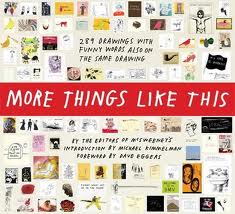
[READ: November 12, 2010] More Things Like This

I don’t know where I learned about this book, but I recently found it used for about $4 and I was pretty psyched to both find it and to pay a pittance for it.

As the subtitle indicates, this book is a collection of drawings that have words on them and are funny (but which are not “cartoons” (although some kind of are)).  The impetus for the book was a show at apexart of exactly this sort of thing.  The book expands on the show and includes many artists who were not in the show (including several very famous artists).

The Foreword by Dave Eggers offer the rationale behind the show & the book: Image + Text (usually referring to the image) + Humor = Good enough for us.  And it also asks pertinent questions: Why is it that so many of these artists can’t spell?  And why is it that when they screw up a word, instead of starting over, they just cross the word out and write it again?  Why is it important to some of the artists that the drawings appear casual, even sloppy?

And more. (more…)

Read Full Post »

SOUNDTRACK: DAVID CROSS-Bigger and Blackerer (2010).

I’ve liked David Cross for years, both in Mr. Show and everywhere else he’s been (I love comparing his nebbish character in Arrested Development to his obnoxious hippie in Running Wilde). And his standup is just fantastic.

This new(ish) CD (which has the same name but different content as the DVD) is wonderfully obscene and profane and all around hilarious.  What’s particularly fun is the nonsensical “titles” he gives to his bits (although these are more accurate than on his previous disc): “REALLY Silly Religious Crazies, I mean, Double, Triple Crazy!!” and “Random Goofabouts”

The disc opens with a song(!), a swinging song ala Tom Jones which Cross sings (his voice isn’t very good, but he’s never off key, which is something) which actually features some cool time changes and a bit of pathos.  But the jokes are very funny.  He opens with an extended bit about drugs (mostly about drugs he has taken).  It’s a bit long, but the details are hilarious and the payoffs at the end are wonderful.  I also enjoyed that the drug bits are a cautionary tale, yet he never turns preachy, in fact, he inverts expectations throughout.

The race jokes are really great too, especially the MLK license plate bit.  But indeed, Cross really shines when it comes to religion.  I’ve never really heard a riff on Orthodox Jews before, and his dismissal of Catholicism is brutal and short, but it’s the Mormons who get the bulk of his abuse (mostly because of the awesome power they wield), especially since the religion is a sham.

He’s also not afraid to make observations that will offend some (although no one who listens to him) but are spot on.  There’s an excellent bit about Obama haters who bemoan the state of the country but who will immediately fight any “elitist” who bemoans other aspects of the country.  And it very funny, indeed.

Cross has spent some time in England (filming The Increasingly Poor Decisions of Todd Margaret) and his British accent is quite good now (it’s used to excellent effect in heaven).  He also has great rapport with the crowd, who are exuberantly noisy.

This CD is an excellent introduction to Cross’ standup.  The jokes aren’t really timely (although the health care yelling bit will date it somewhat, except that the debate itself will go one for years to come, so maybe it won’t), so even if it’s five years from now, the jokes will still be funny.

Cross is not a delicate comedian and his jokes are not for the faint of heart, but, man, is he funny.

[READ: November 9, 2010] It is Right to Draw Their Fur

Polymath Dave Eggers is back with another fascinating (and fascinatingly bound) title.  This time, the collection contains a series of drawings.  Most of the drawings are of animals and they all feature words on them.  (This sort of thing: Picture + words + humor (from many different artists) is presented in a book that I am currently enjoying called More Things Like This).  Similar items also appeared in McSweeney’s 27 (you can see my Post about that issue here)).

Eggers explains in the introduction that he went to art school.  He was an aspiring painter and then a cartoonist and illustrator.  And in his down time, he spent a lot of time drawing animals.  And they are quite good.  Eggers’ art has an odd quality to it that I can’t quite put my finger on.  All of his pictures seem off in a small way.  It doesn’t make them bad at all, in fact, it actually makes you want to look at them more to see what is off about them.  (I think some people call that “compelling”).

The project comes in a hugely oversized cardboard sleeve (14 inches x 19 inches).  There are 26 large sized posters (they are folded and their unfolded size reaches something like 27″ x 37″).  There’s also a booklet which features even more of these drawings.  The booklet has an appendix with some drawings that are not animals (well, they are humans, so yes, they are animals).  And, the most peculiar part, there’s a bibliography.  The bibliography goes on for four pages and includes all manner of things from Sartre’s Being and Nothingness to Auel’s Clan of the Cave Bear to Gara’s The Presidency of Franklin Pierce to The Collected Poems of William Carlos Williams to Saint-Saens’ Le carnaval des animaux.

You can see two examples here.  In my opinion these are not the best combination art/words in the book (although the drawings are very good).  There are some other ones where the juxtaposition appealed to me much more.

The package is quite expensive (and justified–it is a lot of stuff and beautifully put together), but I have a hard time believing someone would spend $42 on it.  (I received mine as part of the McSweeney’s book club, so that’s nice.)

Read Full Post »

SOUNDTRACK: FUN BOY THREE-“Our Lips Are Sealed” (1983).

In an interview with David Foster Wallace’s sister, she says that David spent an entire summer listening to this song.  Most of us know the Go-Go’s version which is bubbly and playful (even though the lyrics–which are the same–are quite dark).

I’ve had this song on some compilation or other for years and I’ve alway thought of it as a kind of novelty.  And yet the more I listened to it, the more I liked it (and the more I liked it more than the Go-Go’s version).

Terry Hall, the singer of Fun Boy Three (and The Specials), co-wrote the song with Jane Wiedlin.  And it’s funny to hear how very different the two cowriters made their versions.

There’s definitely a new romantics vibe to the Fun Boy Three version, but the great bass backing vocals bring a coolly mysterious element to the song.  And if you check out the live version, you can see the polar opposite stage manner from Belinda Carlisle.  Terry Hall makes Robert Smith seems gregarious and silly.  And yet, for all of the darkness of the song, it’s still hard not to bop along to.  It’s pretty wonderful.

[READ: November 7, 2010] Consider David Foster Wallace

A group read of Consider David Foster Wallace is currently underway.  I had planned to read along and contribute weekly posts here.  I read the first two articles and, as it turns out, I have literally nothing useful to say about them.  And I certainly don’t have enough to contribute a weekly opinion about them.

It’s not that they are bad, not at all.  The onus is mine.  I am out of academia for something like a decade now.  I am totally out of practice for coming up with clever arguments and rebuttals to well researched pieces.  I have also seen a few people’s comments and critiques of these pieces and I realize that I am just not in the right mindset to be a productive member of the academic community.

But that doesn’t mean that I’m not going to read it and write a post when I’m done (I’ll likely follow along with the discussions, so this book won’t get posted for quite some time).

In the meantime, I wanted to say a few words about the preface and introduction.  (more…)

Read Full Post »

SOUNDTRACK: BROKEN BELLS-Broken Bells (2010).
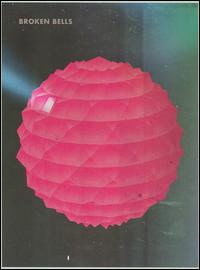
When I first played this disc I was really disappointed by it.  I’ve grown to expect crazy magic from Danger Mouse, and I assumed that this collaboration with James Mercer of The Shins would be crazy awesome.  But it seemed very mellow to me.  Mellow in a way that just kind of sat there.  So I put it aside for a while.

Then I listened to it again a little later and I found that I really liked it this time.  In fact, it rapidly grew into one of my favorite releases of 2010.

The disc is a wonderfully paced mixture of acoustic guitars, interesting keyboard sounds and, often, downright bizarre electronic choices (subtle, yet bizarre).  The weird sounds that open the disc, a kind of backwards keyboard, are disorienting but also very catchy.  And the song itself is instantly familiar.  It’s followed by “Vaporize” a simple acoustic number that bursts out with some great organ and (very) distorted drums.  It also features a fascinating horn solo!

“Your Head is on Fire” settles things down a bit with a mellow track which, after some cool introduction, sounds like a  pretty typical sounding Shins track (ie, very nice indeed–and more on this in a moment).

“The Ghost Inside” feels like a ubiquitous single.  I’m not sure if it is or if it’s just so catchy (with dancey bits and hand claps and a great falsetto) that it should be everywhere.  “Sailing to Nowhere” reminds me, I think, of Air.  And the great weird drums/cymbals that punctuate each verse are weird and cool.

One of the best songs is “Mongrel Heart” it opens with a western-inspired sound, but quickly shifts to a quiet verse.  The bridge picks up the electronics to add a sinister air (and all of this is accompanied by nice backing vocals, too).  But it’s the mid section of the song that’s really a surprise: it suddenly breaks into a Western movie soundtrack (ala Morricone) with a lone trumpet playing a melancholy solo.  And this surprise is, paradoxically, somewhat typical of the disc: lots of songs have quirky surprises in them, which is pretty cool.

Having said all this, there are a few tracks where it feels like the two aren’t so much collaborating as just playing with each other.  And that may have been my initial disappointment.  I was expecting a great work from a combined powerhouse, and I think what we get is two artists writing great stuff while seemingly respecting each other too much to step on each others toes.

There is another Broken Bells disc in the works.  And I have to assume that they’ll feel more comfortable with each other and simply knock our socks off next time.  But in the meantime we have this really wonderful disc to enjoy.

[READ: October 21, 2010] The Broom of the System

It dawned on me sometime last summer that I had never read DFW’s first novel.  I bought it not long after reading Infinite Jest and then for some reason, never read it.  And by around this time I had a not very convincing reason for not reading it.  DFW seemed to dismiss his “earlier work” as not very good.  I now assume that he’s referring to his pre-Broom writings, but I was a little nervous that maybe this book was just not very good.

Well I need not have worried.

It’s hard not to talk about this book in the context of his other books, but I’m going to try.  Broom is set in the (then) future of 1990.  But the past of the book is not the same past that we inhabited.  While the world that we know is not radically different, there is one huge difference in the United States: the Great Ohio Desert.  The scene in which the desert comes about (in 1972) is one of the many outstanding set pieces of the book, so I’ll refrain from revealing the details of it.  Suffice it to say that the desert is important for many reasons in the book, and its origin is fascinating and rather funny. (more…)

Read Full Post »

« Newer Posts - Older Posts »