Feeds:
Posts
Comments

Archive for the ‘Zadie Smith’ Category

SOUNDTRACK: EXPLOSIONS IN THE SKY-Take Care, Take Care, Take Care (2011).

I found out about Explosions in the Sky because of the events of 9/11.  Back when everyone was looking for albums to point fingers at in some kind of hysteria (that’s also how I found out about I am the World Trade Center who are not as exciting as Explosions…).

EITS make beautiful epic instrumental music (as well as the soundtrack for Friday Night Lights).  They play music in a similar vein to Mogwai, but they take their epic instrumentals in a different direction.  And this album is perhaps their most commercial to date (as commercial as you can be when you write 10 minute instrumentals).  And while “commercial” is not usually an adjective that I give as praise, for this album it is indeed.

Take Care, Take Care Take Care is a terrific album.  It ‘s not as visceral as past releases; rather, it seems like a more experienced band playing with their sound and tweaking it in subtle ways to make it less obviously dramatic but somehow more powerful.

On “Last Known Surroundings,” there are soaring guitars that give way to simple, pretty guitar riffs.  Martial drums propel the songs forward, even if they lead to unexpected places.  It’s soundtrack music that’s not background music.

Perhaps the biggest difference with this album and previous ones is that this album doesn’t quite live up to the band’s name.  There’s no major explosive crescendos.  There are noisy bits but they’re not climactic per se.   “Human Qualities” slows to a quiet drum beat and while you’d expect to come out of that with a cacophonous explosion, it doesn’t.  The explosion does come later, but only after it has worked up to it again.

“Trembling Hands” features “voices.”  Or maybe just one voice.  It’s on a loop that becomes more of a sound than a voice.  The song is only 3 minutes long, but it’s an intense 3 minutes–more great drum work on this one.

“Be Comfortable, Creature” has a beautiful delicate guitar opening that drifts into a kind of solo.  After 3 minutes it settles into the main riff, a winding guitar line that send you on a journey.  “Postcard from 1952” is a great song. It begins as quiet intertwining guitars and slowly builds and builds into a gorgeous rocking conclusion.  7 minutes of steady growth with a nice epilogue at the end.

The final song, “Let Me Back In” also has kind of spooky voices that appears throughout the song (distorted and repeated).  But you know this song is a winner from the get go (even if the opening chord structure is a bit like Duran Duran’s “Come Undone.”)  It’s a slow builder, a cool, moody ten minute piece.  When you get to the beautiful descending guitar riff that shoots out after about 2 minutes, it’s an ecstatic moment–air guitars are mandatory.

And let’s talk packaging.  The album comes in a gate-fold type of cardboard.  If you open it up all the way it can be folded into a little house (with windows and a door and a chimney).  That’s pretty cool, guys.

If I have one compliant about the album it’s that the quiets are really quiet and he louds are really loud.  That makes this a very difficult album to listen to say, at work, or basically anywhere where other people will be blown away by your speakers.  The middle of “Human Qualities” for instance, is really quiet, you feel like you need to turn it up to hear the drum beat–there’s too much volume fiddling (listening in the car by yourself negates any reason for this complaint, of course).

Keep it up, guys.

More “controversy” from the band

[READ: September 10, 2011] New Yorker essays

Ten years ago, The New Yorker published several short essays by famous and (to me anyway) not so famous writers.  They were all written directly in the aftermath of the attacks and they were moving and powerful.  I was going to wait until today to re-read them and post about them, but for various reasons, I decided to do it on May 12.

Now, ten years later, The New Yorker has published several more essays by famous and (to me anyway) not so famous writers.  I note that none of the authors are the same (that might have been interesting) although Zadie Smith does quote from John Updike’s piece of ten years ago.

The strange thing to me about these pieces is that ten years seems to have hindered the writers’ ability to focus on the incident and to talk about What It Means.  In this collection of essays, we have a few that talk about an individual and how his life has changed since 9/11.  These are pretty powerful, although it’s odd that they would talk about another person and not themselves. We have a couple of essays that talk about the writer him or herself, but these seem kind of unfocused.  And then we have ones that talk about the state oft he world; honestly, what can you say about that.

It’s possible that I’m jaded or in a bad mood and that’s why I didn’t appreciate these essays.  Or perhaps I’m just facing the futility of things.

This is not to say that I think that writing about 9/11 is easy (you’ll notice I’m not doing it).  Indeed, I think talking about it in any kind of meaningful, non-strident, non-cliched way is nigh impossible.

But these writers do give it a try.  And I am grateful for that. (more…)

Read Full Post »

SOUNDTRACKSUPER FURRY ANIMALS-“Let the Wolves Howl at the Moon” (From the Basement) (2007).

[DISCLAIMER: This post was published on September 6th see that post for details].

Continuing this exploration of the From the Basement series, I found this unlikely video from Super Furry Animals.  SFA have never been big here (well, that had a fluke hit but that doesn’t count).  I have no real idea how big they’ve been back home.  So maybe it’s not a surprise that they are playing here.

SFA were a bunch of crazy psychedelic indie rockers.  Their early albums are totally nuts (like the EP Llanfairpwllgwyngyllgogerychwyndrobwllantysiliogogogochynygofod (in space)).  But over the years, they have mellowed considerably. This song is the final track from Hey Venus!, an album that returned the Furries to their more rocking roots.  Despite the album’s overall rockingness, this song is the mellow ender to the album. 

This live version is very good, with Gruff Rhys sounding in fine form.  Visually, it’s more interesting than say Neil Hannon’s in that there are five of them, but they’re not exactly putting on a crazy show. What’s nice is the chance  to see just what the recording space looks like (there’s lots of wide shots) and to see just which hairy Welshmen are making which sounds. 

This is a wonderful song that could easily have been on anyone’s mellow folkie playlist.  The album version has a little bit more going on, but it’s not missed in this someowhat stripped down form. 

[READ: August 29, 2011] 3 Book Reviews

After last month’s tour de force about one title, this month returns to Zadie’s typical 3 books/month schedule.

The first book is Ian Thomson’s The Dead Yard: A Story of Modern Jamaica.  Zadie makes the amusing observation that this book, a very good and very well researched cultural study of Jamaica was written by a white Scotsman; she notes that a sense of remove from the culture was probably essential in order to create this book. 

Thomson offers historical context for the dangerous world that Jamaica occupies now (it’s not all “Jah, ganja mon” in the country.  In fact, five people are murdered every day (on this island of 3 million).  Fascinatingly, there is much racism in Jamaica—people seen as too black are often looked down upon in favor of lighter-skinned people.  Because of this, respect is very important.  Indeed, any kind of disrespect can cost you your life—just about everyone packs a gun (hence the stat above.  Of course this racism also may be why the Jewish, Indian and Chinese Jamaicans are thriving while the majority black are not.

Zadie says the only place where Thomson falls flat is in his utter dismissal of dancehall music (he likes reggae but can’t stand dancehall).  He dismisses Sean Paul and although Zadie’s not a huge fan of Sean Paul, she finds this dismissal a poor oversight possibly due more to his age (culture being a young person’s game) than anything else.  I especially enjoyed her dissection of one of Sean Paul’s videos. (more…)

Read Full Post »

SOUNDTRACK: NEIL HANNON-“A Lady of a Certain Age” (From the Basement) (2008).

[DISCLAIMER: This post was published on September 6th, see that post for details].

This video comes from the From the Basement series.  As I mentioned, the Radiohead live show comes from this series, but initially, rather than recording a whole album, more often that not they recorded a few songs.  The bad news is that many of the videos are no longer available on the site (there’s a DVD, but I’m unclear exactly what it includes).  But for each artist, there seems to be one streaming video.

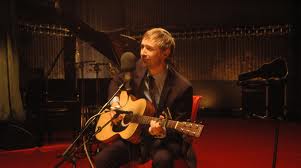
This is a mellow song from The Divine Comedy’s Victory for the Comic Muse album.  It’s probably my favorite track on the album.  It’s a literate and clever song about an older woman.  This version is simply Neil and his acoustic guitar.  I tend to think of The Divine Comedy as being a heavily orchestrated band (their music is wonderfully symphonic) so it’s surprising for me to hear a DC song in this simple acoustic format. 

And yet, Neil’s voice is stellar and it easily holds up i this intimate setting.  Visually it’s not that exciting (it’s just Neil sitting, playing and singing), but musically it is wonderful. 

[READ: August 31, 2011] One Book Review

Unlike previous columns, Zadie only reviews one book in this one.  And she sets up her reading by talking about summer books.  I recently posted about Summer Books, and this would have been a nice addendum.  Zadie talks a bit about the fun and joy of Summer books.  Her assessment is that a summer book should really engross you: 

If every few minutes you find yourself laying it flat upon your chest and wondering about lunch then it is probably not a summer novel. 

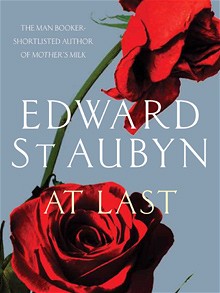
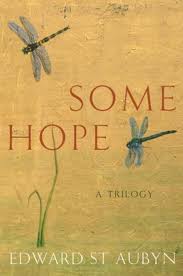
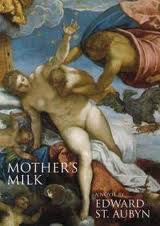
Zadie’s summer book is a continuation of a series.  The author is Edward St. Aubyn and this third book is called At Last (the culmination of the confusing “Patrick Melrose Trilogy” Some Hope, Mother’s Milk and At Last–confusing because the first book of the trilogy (Some Hope) was actually released in England as three separate books–Never Mind, Bad News and Some Hope, making this the fifth book in the series)He has also written other books, but I’m not sure of any of them deal with the same family or not.

At last (and the series in general) is a semi-autobiographical story of a good family in name only.  There is an alcoholic mother, a pedophiliac father, and a main character, Patrick, who has shot heroin and chugged whisky and yet still manages to recite poetry.

Despite the darkness (and the fact that At Last focuses on Patrick’s mother’s funeral), the story sounds like a wonderful mix of dark humor and scathing wit.  Indeed, the previous book, Mother’s Milk was short listed for the Booker Prize in 2006 (he has written two novels in between). 

Zadie quotes extensively from the book and the quotes are really good: long  sentences that are well constructed and contain a bit of humor in almost every piece.  But it’s a subtle humor, and it seems like it takes a careful reading to make sure you get it all. (more…)

Read Full Post »

SOUNDTRACK: MY MORNING JACKETZ (2005).

I’ve enjoyed My Morning Jacket since I bought their live album Okonokos.  I’ve enjoyed all of their releases since, but I never listened to Z, the album that forms the basis of much of Okonokos. Finally, I saw it cheap and picked it up.

And I was really surprised.  The reason I hadn’t gotten it was because I figured I had all of the songs already in live format, so who needed the studio?  Well, it turns out that the studio versions are quite different from the live ones.  In fact, on my first listen, I didn’t really like the studio versions all that much.  After a few listens of course, I like them just fine, but they are indeed quite different.

There are three songs here that didn’t make the live record: “Into the Woods,” “Anytime” and “Knot Comes Loose.”  But the other seven songs appear (often in slightly longer form) on the live disc.  And the live disc is fuller, louder and more energetic than the studio.  That’s what a live album is supposed to sound like.

Z, on the other hand, sounds a bit more polished, more almost dancey–reflecting the kinds of sounds they would incorporate down the road (like on Circuital).  But Z isn’t quite as full-sounding.  Despite that, the songs are top-notch.  And Jim James’ voice is truly a thing to behold (check out that crazy high note at the end of “What a Wonderful Man”).

I hate to sound like I’m down on this disc, because indeed, I am not.  It’s a really fascinating mix of psychedelia and Prince-inspired keyboard rock (I’m not going as far as funk, but it’s certainly Prince-y.  There’s some folk tracks, there’s the amazing “Wordless Chorus” which has a kind of 70;s soft rock feel, which is followed by the Prince-titled “It Beats 4 U” which sounds nothing like Prince, but has a great subtle guitar intro.  “Gideon” doesn’t match any of the over the top epics of earlier records, but it sure feels close.  And “Off the Record” is a practically ska.  The album even has a near 8 minute closing track, the awesome “Dondante.”

All in all, Z is pretty great.  But I still like the live versions better.  That’s what happens when you listen to things out of order, I guess.  But when do live albums count for anything?

 [READ: July 11, 2011] 3 book reviews

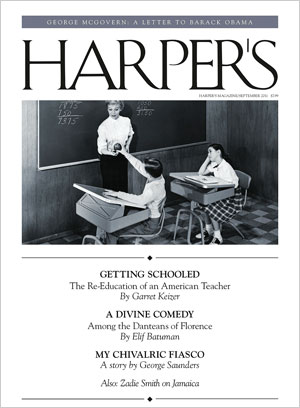
According to Five Dials, Zadie Smith is an official member of Harper’s staff now (funny I found out about it from Five Dials, but they really do have tentacles in all aspects of my life).  Congratultions, Zadie.

I can’t imagine having to review two or three books a month (I know I review a lot here, but most of them are short stories).  Zadie plows through a lot of books for this column, but what is wonderful is that the diversity of what she reads is really pronounced.  Just witness this months’ books.

MELA HARTWIG-Am I a Redundant Human Being?
Zadie takes a great angle on this novel.  She (with the help of an online reviewer) compares the protagonist of this novel (written in the 1930s) with Carrie Bradshaw from Sex in the City.  Why?  Because both protagonists seem to live their lives in the male gaze.  And yet they both also continue on their merry way regardless of what the men say or do.  True, Hartwig’s novella has much more angst, but really, there is a similar attitude present.

I especially like Zadie’s argument that women writers have never really had they way to express the bragging rights that men have employed time immemorial “We can’t, as the saying goes, pull it out and slap it on the table.”  And as such, women have had to achieve their victories through more roundabout means.  I rather liked this analysis.  And, I think it makes for more interesting reading most of the time. (more…)
Read Full Post »

SOUNDTRACK: MOGWAI: GovernmentCommissions: BBC Sessions 1996-2003 (2005).

It’s unlikely that Mogwai will ever release a greatest hits (well, someone probably will, but the band themselves don’t seem likely to do so).  As such, this compilation of BBC Recordings will certainly work well as one.

As I’ve mentioned many times, the BBC recordings are universally superb.  The quality of the recordings is unmatched.  And, typically the band takes the sessions very seriously.  The major different between these sessions and the official studio release is that the band is playing these songs live.  They are mixed well and sound great but they are live, so you can catch occasional subtle differences.

Mogwai, despite their seemingly improvised sound (all those noises and such) can recreate everything they do perfectly, and their live shows are tight and deliberate (except for the occasional moments where they really let loose).

The ten songs here span their career and are not played in chronological order.  This allows all of these wonderful songs to play off the tensions of each other.  And it shows that their later songs, which are less intense than their earlier ones, are still quite awesome and in a live setting don’t really lack for intensity after all.

The highlight of this disc is the scorching eighteen minute version of “Like Herod.”  The original is intense and amazing, and this live version allows them to play with the original in small ways, including allowing the quietness to really stretch out before they blow the speakers off the wall with the noise section of the track.

Even though I’m a fan of Mogwai, I don’t hear a radical difference between these versions and the originals.  Or should I say, it’s obvious which song they are playing.  There are some obvious subtleties and differences as befitting a live album, but unlike some live discs you don’t immediately notice that this version is “live.”

And that works well for both fans of the band (because as you listen and you hear the subtleties) and for newcomers–(because you’re not listening to weird, poorly recorded versions or versions that are for fans only).  And so, you get ten great Mogwai tracks.  Just enough to make you want to get some more.

[READ: June 11, 2011] The Burned Children of America

I found this book when I was looking for other publications by Zadie Smith.  This book kept cropping up in searches, but I could never really narrow down exactly what it was.  As best as I can tell, it is a British version of a collection of American authors that was originally published in Italy (!).  Editors Marco Cassini and Martina Testa work for minimum fax, an Italian independent publisher.  In 2001, they somehow managed to collect stories from these young, fresh American authors into an Italian anthology (I can’t tell if the stories were translated into Italian or not).

Then, Hamish Hamilton (publisher of Five Dials) decided to release a British version of the book.  They got Zadie Smith to write the introduction (and apparently appended a story by Jonathan Safran Foer (which was not in the original, but which is in the Italian re-publication).  This led to the new rather unwieldy title.  It was not published in America, (all of the stories have appeared in some form–magazine or anthology–in America), but it’s cool to have them all in one place.

The title must come from the David Foster Wallace story contained within: “Incarnations of Burned Children,” which is one of his most horrific stories, but it sets a kind of tone for the work that’s included within (something which Zadie addresses in her introduction): why are these young successful American writers so sad?  So be prepared, this is not a feel good anthology (although the stories are very good).
Oh, and if you care about this kind of thing, the male to female ratio is actually quite good (for an anthology like this): 11 men and 8 women.

ZADIE SMITH-Introduction
Zadie Smith was a fan of David Foster Wallace (she wrote a  lengthy review of the ten-year anniversary of Brief Interviews with Hideous Men which is republished in her book Changing My Mind), so she is an ideal choice to introduce this book.  Especially when she provides a quote from DFW’s interview in 1995 about how living in America in the late 90s has a kind of “lostness” to it.  With this in mind, she sets out the concerns of this collection of great stories: fear of death and advertising.

Zadie gives some wonderful insight into each of these stories. The introduction was designed to be read after the book, and I’m glad I waited because while she doesn’t exactly spoil anything, she provides a wonderful perspective on each piece and also offers some ideas about the stories that I hadn’t considered.  And it’s funny, too. (more…)

Read Full Post »

SOUNDTRACK: GOGOL BORDELLO-East Infection (EP Extra) (2005).

I learned about Gogol Bordello from some live shows available on NPR.  I enjoyed their sets so much I decided to check out their albums as well.  And I love them.  The albums are full of frenetic energy (they give Sarah agita, she says).  But everything that I love about fun, spirited, gypsy music is present here.

The band is essentially a band of gypsies, headed by wonderfully-mustachioed Eugene Hutz.  And their live show (as demonstrated by the included video) is a wild circus of fun (curtains and dancers and fire buckets and bowling pins and musicians jumping out of boxes), it’s like a wild party.  The video is for “Never Young Again” which would appear in full on their next album. It’s a fun song that reverses the age-old lament of wanting to be young again.  But mostly you watch this for the live footage.

This EP is probably not the best place to start as an introduction to Gogol Bordello (but it was really cheap so I bought it first).  Although it does offer many of the different aspects of Gogol’s music.  The EP features 6 songs and the video.  The songs are intense, hyper, crazy and wonderful.  “East Infection” opens with some nonsense lyrics (“Lee lee lee lee lee, la la la la la”) and morphs into what may be more nonsense, although there’s actual lyrics here.  “Ave B.” (which is also on their following album Gypsy Punks) is a more acoustic-based song, but it still has loud parts to it.

“Mala Vida” is a cover of a song by Manu Chao.  This version is a super fast punky track sung in Spanish (despite Eugene Hutz’ origins in the Ukraine, he has lived in Brazil for years and sings many songs in Spanish).  The original is very similar in temperament, although GB version is a bit more frenetic.

“Copycat” is the odd track on the disc, it’s a kind of dub track with big fat bass and a very slinky sound.  It and “Mala” were produced by Steve Albini.

“Strange Uncles from Abroad” is to me a very typical GB song: lots of violin, lots of dah dah dahs and a great melody.  It has a total gypsy feel, and goes through some loud and quiet moments.   The final track, “Madagascar-Roumania (Tu jésty fáta)” is the longest track by far (6 minutes).  It sounds like a demo and lacks the punch of the rest of the disc, but it showcases the softer side of the band (and yes there is one).

So, maybe this EP is a good place to start after all.  It’s certainly not throwaway material.  And the EP cover alone is pretty outstanding.

[READ: June 14, 2011] Five Dials Number 10

This is the issue of Five Dials that introduced me to the publication.  It is a special issue devoted to the memory of David Foster Wallace.  The entire issue is comprised of the eulogies given at the DFW memorial.  [The details are a little sketchy here…I’m not sure if these are all of the eulogies or just the eulogies from well known people.  I’m not even sure who would have been in the audience for this memorial.  The notes say “These tributes were given on 23 October, 2008 at the Skirball Center for the Performing Arts, New York University” and yet the Jonathan Franzen entry says “here at Pomona.”  So… details are sketchy].  Nevertheless, the tributes are heartfelt, informative and very moving.

Of course, I’m not going to ‘critique’ them, I’ll just try to summarize them.  But really, they’re all worth reading if you’re a fan. (more…)

Read Full Post »

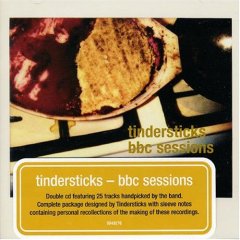
SOUNDTRACK: TINDERSTICKS-BBC Sessions (2007).

Another great entry in the BBC Sessions series, this collection of 26 recordings, shows the band in fine form.  This works as a pretty excellent Greatest Hits collections (and surprisingly for a BBC Sessions recording there is only one duplicate song).

On the other hand, there’s not a whole lot of difference between these recordings and the originals.   Some notable exceptions include “Traveling Light” and “Buried Bones” which do not feature the female duet.  “Her” is also notably different since it’s on piano and not guitar.

But I have no criticism about the quality of the recordings. The band sounds wonderful.  Staples’ voice is great and the orchestration is perfect.  And, of course the recording quality is superb (as are all of the BBC sessions that I have are).

If you have the Tindersticks records already, there’s no compelling reason to get this set, but if you’re a fan of the band, it’s nice to have some slightly different versions of these great songs.

[READ: May 18, 2011] 2 book reviews

This month’s review is of two books.  The first is Paula Fox’s new book, News from the World: Stories and Essays.  (The book is also reviewed by Joan Acocella in The New Yorker, May 16, 2011 issue–she takes a much different angle than Zadie, and has a lot more biographical background, so the reviews work in conjunction very nicely).  I don’t know Fox (although perhaps I should, she has written a number of adult books and tons of children’s books), but Fox’s Desperate Characters has been championed by Jonathan Franzen and David Foster Wallace.

Fox sounds like an interesting character (her father was “a writer and a drunk”) and her granddaughter is Courtney Love.  And Zadie asserts that Fox has cultivated self-control and empathy and (in Fox’s own words) “a living interest in all living creatures.”  And in this new collection the interest spreads across fiction, memoir, lecture and essays (with no formal distinction between genres).

Although Zadie is fond of Fox (especially her fiction) she’s harder on Fox the essayist.  She suggests that many of Fox’s essays seem to boil down to the cliché: things were better back then.  But Zadie does make her fiction sound wonderful.  Acocella’s review is similar, saying that no one should start reading Paula Fox with this collection–the reader should go back and start with Fox’s earlier, better works. (more…)

Read Full Post »

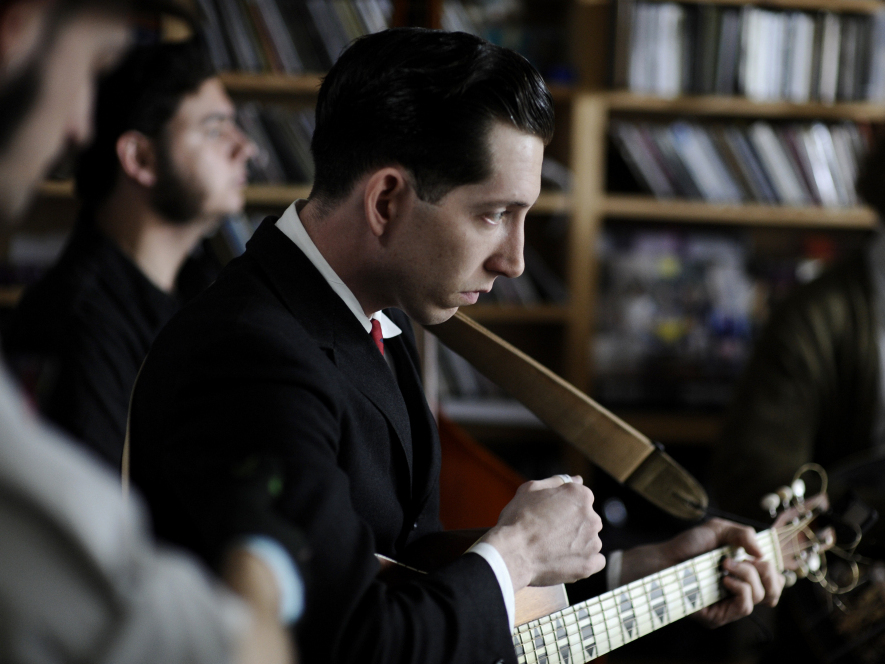
SOUNDTRACK: POKEY LaFARGE-Tiny Desk Concert #122 (April 20, 2011).

I had never heard of Pokey LaFarge before this Tiny Desk concert was sitting in my download folder.  In fact, the notes on the page say that they had never heard of him before they saw him wandering around SXSW.  And then he climbed onstage and played a great set.

LaFarge plays an old-timey style of music.  It’s a kind of Squirrel Nut Zippers retro sound.  As with the Zippers, I love their music in small doses.  And so, this Tiny Desk set is a perfect little sample of LaFarge’s music: happy, bouncy, jazzy.  There’s an upright bass solo, songs about being happy and singing “La La La” and other upbeat stuff.  It’s quite satisfying.

Especially if, as the notes say, you use it as a kind of antidote to the raucous music that you generally listen to.  A Pokey LaFarge song will perk you out of any self-inflicted gloom.  I just don’t need to hear more than three.

[READ: April 15, 2011] 2 book reviews

It looks like Zadie Smith has become a regular fixture at Harper’s.  I’m undecided if I’m going to review all of her book reviews from now on (perhaps I’ll lump some together in one post).  But in the meantime, I’m mentioning this one primarily because she reviews the story that I mentioned in yesterday’s post: Edouard Levé’s Suicide. (more…)

Read Full Post »

SOUNDTRACK: SEONA DANCING-“Bitter Heart” (1983).

I can’t believe it took me all these years to learn that Ricky Gervais was in a synth pop band in the 80s.  The band was called Seona Dancing and they released two singles (four songs in all). This is the first song I heard from them and I really like it.  (I may be biased, but I also went in expecting to mock, I mean look at him!).

In one of the Extras episodes, David Bowie makes a guest appearance.  And you can tell that he’s been influenced by Bowie since the beginning. This song could be a David Bowie B Side (and who knew that the man with that girlie laugh has such a deep baritone singing voice.)  I kept expecting the song to turn cheesy but it never did.  In fact, the riff from verse into chorus is really cool.  The “block” sounds in the middle remind me of Tears for Fears, and really so many other synth bands from the 80s.

There’s two videos on YouTube. The 2 minute one (below) is an actual video. The other clip is 6 minutes long and is some kind of extended version.

I’m fascinated!  Much of everything that you need to know about Seona Dancing is here.

[READ: March 27, 2011] two book rviews

This is the second month in a row that Zadie Smith has done some book reviews for Harper’s.  I’m not sure if this is going to be a long-standing assignment or if she was just especially excited to talk about these books.  But regardless, I’m willing to mention them here.

Even though I was intrigued by last month’s books, I haven’t sought any of them out (The Pale King is coming/out as I write this).  But now here are two more books that I would be interested in looking at (although I probably wouldn’t actually read either one in full). (more…)

Read Full Post »

SOUNDTRACKMOGWAI-No Education = No Future (Fuck the Curfew) (1998).

This is a 3 song EP. The opener “Xmas Stripes” is one of my favorite early Mogwai songs.  The opening melody is really great, with a cool interesting bass and a nice guitar over the top.  At about 3:30 the song grows from a silent track to a menacing, growing beast until the drums start and the song and the main riff begins.  By 5 minutes it’s all out rock noise.  By 6 minutes the song is scaled back for the violin solo.  The remaining 7 (!) minutes are a denouement for the song.  Even though I love the track, I mostly love the first 8 or 9 minutes.  The ending tends to drag a bit.

But for all of their noise, Mogwai’s early releases were really quieter instrumentals, meditative songs that were really quite pretty.  “Rollerball” is a beautiful, sad three-minute track.

The last song “Small Children in the Background” continues in this quieter vein.  At nearly 7 minutes, it allows for a noisy middle section.  This noisy section is indeed mostly noise.  And yet the pretty melody of the rest of the track is just as loud throughout the mix, making for a very cool and very brief explosion mid-song.

Not all EPs are essential, but this one is pretty fantastic.  And I have Lar to thank for getting it for me.

[READ: March 10, 2011] Changing My Mind

It’s funny to me when that when I get into an author, I seem to wind up not reading the books that people most talk about until much later.  Take Zadie Smith.  Her debut, White Teeth, is something of a touchstone for many readers.  I missed it when it came out, but I loved On Beauty and figured I’d go back and read it.  That was almost a year ago.  And in that time I have read lots of little things by her and now this collection of essays.

Regardless, this collection of essays is a wonderful look in to the nonfiction world of a writer whom I admire.  And it was quite a treat.  Zadie is an intellectual, and that comes across in all of these paces.  Whether it’s the subjects she’s writing about, the footnotes she uses or just the acknowledgment that she likes art films and not blockbusters, we know where she’s speaking from.  And, of course, I’m right there with her.  The funny thing about this book then is how few of the subjects I know.

The book is broken down into five sections: Reading, Being, Seeing, Feeling and Remembering.  The Reading section is basically book reviews.  The Being section is about her experiences.  The Seeing section is about films.  The Feeling section is about her father and the Remembering section is about David Foster Wallace. (more…)

Read Full Post »

« Newer Posts - Older Posts »