Feeds:
Posts
Comments

Archive for the ‘Vladimir Nabokov’ Category

SOUNDTRACK: DIVINE FITS-“Would That Not Be Nice” (2012).

This song was KCRW’s Today’s Top Tune on August 13, 2012.  Divine Fits are a supergroup of sorts with Spoon’s Britt Daniels, New Bomb Turks drummer Sam Brown and Wolf Parade/Handsome Furs member Dan Boeckner.  When I heard who was in the band, I was pretty excited to hear the track.  But I have to say that this sounds kind of like a over-polished Spoon song with keyboards.  Daniels’ voice and musical style are individual enough that he pretty much dominates whatever he does.  But at the same time, I feel like the jagged edges that make Spoon so interesting have been removed.

I assume that Boeckner is responsible for the keyboards and the interesting echo effect on the vocals.  They add an interesting balance to Daniels, but this doesn’t excite me the way Spoon does.

[READ: August 10, 2012] “Signs and Symbols”

I discovered this story because in my post of Lorrie Moore’s “Referential” someone commented that her story was plagiarized from this one.  I had intended to read this Nabokov story immediately so Moore’s would be fresh and I could lay down the “J’accuse.”  It’s been a couple of months but I can say that while her story is obviously inspired by this Nabokov–to the point where she uses elements from this story in her own, it’s a different take on the same idea.

But before we do any comparison, let’s look at this story.  The story begins by stating that for the fourth time in as many years, a young man’s parents don’t know what to take him for his birthday.  The problem is that he is in an institution and many things are forbidden.  And also, for their son man-made objects are either hives of evil or gross comforts–more on that shortly.  They knew they couldn’t get him a gadget of any kind, so they settled on a basket with a set of colorful jellies.  When they travel to him with the gift, everything goes wrong–the train breaks down, there are no busses, and when they finally get there, the nurses inform them that there has been an incident and he cannot see them now.  So they return home with the jellies.

The story describes what is wrong with their son as referential mania.  It’s an interesting situation, and an article about him had appeared in a scientific monthly.  It says that the patient believes that everything happening around him is somehow related to himself.  So clouds transmit details about him, trees talk about him, etc.  And this was driving him crazy (obviously).  He had even tried to kill himself via, what the doctor described as “a masterpiece of inventiveness.” (more…)

Read Full Post »

SOUNDTRACK: OKX: A Tribute to Ok Computer (2010).

OK Computer is one of the best records of the 90s.  Every time I listen to it I hear something new and interesting.  So, why on earth would anyone want to cover the whole thing?  And how could you possibly do justice to this multi-layered masterpiece?

I can’t answer the first question, but the second question is more or less answered by this tribute which was orchestrated by Stereogum.

The answer is by stripping down the music to its bare essentials.  When I first listened to the songs I was really puzzled by how you could take a such a complex album and make Doveman’s version of “Airbag,” which is sort of drums and pianos.  Or gosh, where would you even begin to tackle “Paranoid Android?”  Well Slaraffenland create a bizarre symphonic version that excises many things–in fact half of the lyrics are missing–and yet keeps elements that touch on the original.  But it’s an interesting version of the song and shows  a bizarre sense of creativity.  And that is more or less what this tribute does–it makes new versions of these songs.

Mobius Band make a kind of Police-sounding version of “Subterranean Homesick Alien.”  Again, it radically changes the song, making it a fast and driving song (although I don’t care for the repeated “Uptights” and “Outsides” during the verses).

Vampire Weekend, one of the few bands that I actually knew in this collection (and whom I really like) do a very interesting, stripped down version of “Exit Music, for a Film.  The “film” they make is a haunted one, with eerie keyboards.  Again, it is clearly that song, but it sounds very different (and quite different from what Vampire Weekend usually sound like).

“Let Down” (by David Bazan’s Black Cloud) and “Karma Police” (by John Vanderslice) work on a similar principle: more vocals and less music.  The music is very stripped down, but the vocals harmonize interestingly.  Perhaps the only track that is more interesting than the original is “Fitter Happier” by Samson Delonga.  The original is a processed computer voice, but this version is a real person, intoning the directives in a fun, impassioned way.  There’s also good sound effects.

Cold War Kids take the riotous “Electioneering” and simplify it, with drums and vocals only to start.  It’s hard to listen to this song without the utter noise of the original.  “Climbing Up the Walls” is one of the more manic songs on this collection, with some interesting vocals from The Twilight Sad.

There are two versions of “No Surprises” in this collection.  Interestingly, they are both by women-fronted bands, and both treat the song as a very delicate ballad.  Both versions are rather successful.  Marissa Nadler’s version (the one included in sequence) is a little slower and more yearning, while Northern State’s version (which is listed as a B-Side) is a little fuller and I think better for it.  My Brightest Diamond cover “Lucky.”  They do an interesting orchestral version–very spooky.

Flash Hawk Parlor Ensemble (a side project of Chris Funk from The Decemberists) do a very weird electronic version of the song (with almost no lyrics).  It’s very processed and rather creepy (and the accompanying notes make it even more intriguing when you know what’s he doing).

The final B-side is “Polyethylene (Part 1 & 2),”  It’s a track from the Airbag single and it’s done by Chris Walla.  I don’t know this song very well (since it’s not on OK Computer), but it’s a weird one, that’s for sure.  This version is probably the most traditional sounding song of this collection: full guitars, normal sounding drums and only a slightly clipped singing voice (I don’t know what Walla normally sounds like).

So, In many ways this is a successful tribute album.  Nobody tries to duplicate the original and really no one tries to out-do it either.  These are all new versions taking aspects of the songs and running with them.  Obviously, I like the original better, but these are interesting covers.

[READ: November 5, 2011]  McSweeney’s #8

I had been reading all of the McSweeney’s issue starting from the beginning, but I had to take a breather.  I just resumed (and I have about ten left to go before I’ve read all of them).  This issue feels, retroactively like the final issue before McSweeney’s changed–one is tempted to say it has something to do with September 11th, but again, this is all retroactive speculation.  Of course, the introduction states that most of the work on this Issue was done between April and June of 2001, so  even though the publication date is 2002, it does stand as a pre 9/11 document.

But this issue is a wild creation–full of hoaxes and fakery and discussions of hoaxes and fakery but also with some seriousness thrown in–which makes for a fairly confusing issue and one that is rife with a kind of insider humor.

But there’s also a lot of non-fiction and interviews.  (The Believer’s first issue came out in March 2003, so it seems like maybe this was the last time they wanted to really inundate their books with anything other than fiction (Issue #9 has some non-fiction, but it’s by fiction writers).

This issue was also guest edited by Paul Maliszewski.  He offers a brief(ish) note to open the book, talking about his editing process and selection and about his black polydactyl cat.  Then he mentions finding a coupon in the phonebook for a painting class  which advertised “Learn to Paint Like the Old Masters” and he wonders which Old Masters people ask to be able to paint like–and there’s a fun little internal monologue about that.

The introduction then goes on to list the 100 stores that are the best places to find McSweeney’s.  There are many stores that I have heard of (I wonder what percentage still exist).  Sadly none were in New Jersey.

This issue also features lots of little cartoons from Marcel Dzama, of Canada. (more…)

Read Full Post »

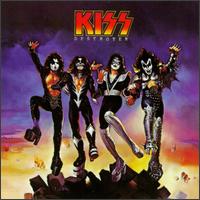
SOUNDTRACK: KISS-Destroyer (1976).

Although this is not the first Kiss album I heard (that would be Love Gun) it was probably the one I listened to most (it had “Beth” on it after all).  It is also full of some of the most over the top theatrical music of any heavy metal band at the time (is it any wonder that I also enjoy Meat Loaf and other over the top bands if I was raised on this?)  Kiss has always been about theater, and how much more theatrical do you need? (How about a cartoon of the band standing on a pile of ruins?).  But this album is such a classic, it’s hard to even think critically of it

“Detroit Rock City” is, well, it’s “Detroit Rock City.”  An amazing, iconic (albeit simple) guitar solo, great effects in the beginning (with Paul (I always assumed) singing along to other Kiss hits on the radio) and an awesome crash at the end.  Fill it out with an amazing riff and great work from the whole band.  What more need be said?  How about the way it leads perfectly into “King of the Night Time World.”  This song is overlooked despite its greatness.  It opens so loud and full then the verses get awesomely tinny until the galloping chorus kicks back in (Petter Criss plays drum rolls mid-song like no one else).  It also has great riffs and a memorable solo.  Oh and then a little song called “God of Thunder.”  Awesome bombast, creepy kids’ voices (I remember some kind of rumors about who the kids were and how they were held captive by the band or something).  It’s a wonderfully memorable song.

“Great Expectations” slows things down but adds the bombast.  I’ve always enjoyed this egocentric song, even as a kid singing along in a mirror.  Although the extra musical notes (keyboards and such) are kind of wimpy.  But it’s followed by the electrifying “Flaming Youth,” a hard-edged guitar song that is pretty simple, but pretty potent.  Again, the keyboard bits undermine the heaviness, but the repeated “higher and higher and higher” is pretty bad ass.

“Sweet Pain” is a great dark Gene-sung song (evidently about S&M, although I never knew that quite so specifically–I never understood the first two lines until I looked them up just now: “My leathers fit tight around me/My whip is always beside me”).  “Shout It Out Loud” is one of the great Kiss anthems.  I actually prefer it to “Rock and Roll All Nite” although that could be just because of the over exposure of “RaRAN.”  Of course, “Beth” is next and it is impossible for any Kiss fan to say anything about “Beth”.  This was the first song I ever memorized the lyrics to, and I sang it to my no doubt confused grandmother when I was 9 years old–my first and only live performance until college.

I always liked “Do You Love Me” (I think these Kiss fantasy songs were pretty big for me).  I was always confused by the tinny voice in the final verse of the song.  It was very strange to my young mind, but it really stands out in the song–as does Paul’s ending rant.  The overall sentiment of the song  is kind of funny coming from the guys who would soon be singing “Love Em Leave Em” but it is nice that they feel insecure once in a while too.

My LP of this album (or maybe it was an 8 track?) did not have the “bonus” track, which is just 90 seconds of a crazily processed version of “Great Expectations” with some lifted vocals of Paul in concert.  Apparently even though it is untitled, it is called “Rock and Roll Party” by most fans.  It appears to be a joke about all of the backwards masking that was supposedly on Kiss records.  Huh.

This is still one of my favorite albums of all time.

[READ: September 30, 2011] “The Russian professor

Nabokov did not secure the teaching position at Wellesley where he had been creative writing professor the year before (Lolita would not come out for a nother 13 years, so he was working via his Russian book reputation).  So instead, he went on a several-month speaking tour of Unites States colleges, many of them in the South.  These (excerpts from) letters to his wife detail some of the indignities that he suffered and reiterate his love for her and his son.

On his way to Coker University in South Carolina, his train car was double booked, his taxi didn’t show up and he wound up going to the wrong hotel.  When he finally was picked up: “Feeling that I wouldn’t have time to shave before the lecture…I went in search of a barber” [what kind of time management is that??].  Nabokov writes of the shave:

He shaved me horribly, leaving my Adam’s apple all bristly, and since in the next chair a wildly screaming five-year-old child was grappling with the barber who was trying to touch up the back of his head with the clippers, the old man shaving me was nervous, hushed the child, and finally cut me slightly under the nose.

(more…)

Read Full Post »

SOUNDTRACK: CITY AND COLOUR Live at the Sasquatch Festival, May 29, 2011 (2011).

City and Colour have a new album coming out soon.  So it’s kind of surprising that this seven-song show is three songs from their previous album, two from their first album, a cover, and only one new track (“Fragile Bird”).

This is the first time I’ve heard City and Colour live with a band (most of the recordings I have by them are just Dallas Green solo).  It’s nice to hear how powerfully they work together (giving some of those songs an extra push).

Despite the brevity of the set (and the amusing banter about airport etiquette) you get a pretty good sense of what the “pretty-voiced guy” from Alexisonfire can do on his own.   I found the cover, Low’s “Murderer,” to be a really perfect choice–one that suits the band and their slightly-off harmonies, rather well.

I’m looking forward to their new release–“Fragile Bird” is another beautiful song.  But in the meantime, this is a good place to hear what they’ve been up to.

[READ: early June 2011] 2011 Fiction Issues

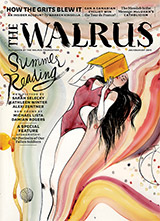
Five Dials seems to always generate coincidences with what I read. Right after reading the “”Summer’ Fiction” issue from Five Dials, I received the Fiction Issue from the New Yorker.  A few days later, I received the Summer Reading Issue from The Walrus.

I’m doing a separate post here because, although I am going to post about the specific fictions, I wanted to mention the poetry that comes in The Walrus’ issue.  I have no plan to write separate posts about poetry (I can barely write a full sentence about most poetry) so I’ll mention them in this post.

The main reason I’m drawing attention to these poems at all is because of the set-up of The Walrus’ Summer Fiction issue.  As the intro states: “We asked five celebrated writers to devise five guidelines for composing a short story or poem. They all traded lists–and played by the rules.”  I am so very intrigued at this idea of artificial rules imposed by an outsider.  So much so that I feel that it would be somewhat easier to write a story having these strictures put on you.  Although I imagine it would be harder to write a poem.

The two poets are Michael Lista and Damian Rogers.  I wasn’t blown away by either poem, but then I don’t love a lot of poetry.  So I’m going to mention the rules they had to follow. (more…)

Read Full Post »

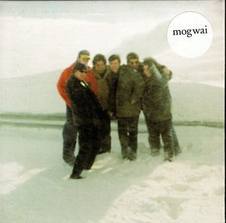
SOUNDTRACK: MOGWAI-Come on Die Young (1999).

Mogwai’s second full length record goes in a slightly different direction than Young Team. Although it is still full of somewhat lengthy instrumentals, for the most part, the loud and quiet dynamic that they’ve been mastering over their EPs and Young Team is dismissed for a more atmospheric quality.  There’s also a few vocal aspects that comprise some tracks.  One in particular is very puzzling.

The disc opens with “Punk Rock.”  The music is actually not punk at all; rather, it’s a pretty melody that plays behind a rant about punk rock spoken by Iggy Pop. It’s followed by “Cody,” a kind of  sweet slow song.  This one surprises even more because it has gentle vocals which are actually audible.  The track is surprisingly soporific for Mogwai.

And then comes the real puzzler, “Helps Both Ways” is another slow track. But this time in the background is a broadcast of an American football game.  The announcers begin by telling us about an 89 yard run that was called back due to a penalty, but the game stays on throughout the track.  And I have to admit I get more absorbed in the game than the music. After these few quiet tracks,”Year 2000 Non-Compliant Cardia” is a little louder (with odd effects).  It’s also much more angular than songs past.

“Kappa” is the song in which I realized that much of the songs here are more guitar note based rather than the washes of sounds and noise.  “Waltz for Aidan” is indeed a waltz, another slow track.  It’s followed by “May Nothing” an 8 minute track which, despite its length, never gets heavy or loud or noisy.

“Oh! How the Dogs Stack Up” changes things.  It features a distorted piano which creates a very eerie 2 1/2 minutes.  And it leads into the 9 minute “Ex Cowboy.”  Although the general feeling of “Ex Cowboy” is mellow, there are some squealing guitars and noises as well.  By about 6-minutes the song turns really chaotic, its “Chocky” is another 9-minute song (the disc is very backheavy), there’s noise faintly in the background as a simple piano melody is plucked out.  It’s probably the prettiest melody on the disc, and the noisy background keep its unexpected.  The disc more or less ends with “Christmas steps.”  This is a rerecording of the awesome track from the No Education = No Future (Fuck the Curfew) EP.  It is shorter but slower and it sounds a little more polished than the EP. I actually prefer the EP version, but  this one is very good as well (it’s honestly not that different).

“Punk Rock/Puff Daddy/Antichrist” ends the disc with a fun track sounds like a drunken Chinese western  It’s two minutes of backwards sounds and is actually less interesting than its title.

This is definitely their album I listen to least.

[READ: March 15, 2011] Icelander

It’s hard to even know where to begin when talking about this story.  So I’ll begin by saying that even though it was confusing for so many reasons, I really enjoyed it (and the confusions were cleared up over time).  This story has so many levels of intrigue and obfuscation, that it’s clear that Long thought quite hard about it (and had some wonderful inspirations).

The book opens with a Prefatory note from John Treeburg, Editor (who lives in New Uruk City).  The note informs us that the author of Icelander assumes that you, the reader, will be at least a little familiar with Magnus Valison’s series The Memoirs of Emily Bean.  As such, he has included notes for clarification.  He has also included a Dramatis Personae.  The characters in the Dramatis Personae are the characters from Valison’s series (not necessarily Icelander), and are included here for context.  He also notes that his afterward will comment on the disputed authorship of this very novel.

The Dramatis Personae lists the fourteen people who Valison wrote about inThe Memoirs of Emily Bean.  Except, we learn pretty early on that the The Memoirs were based directly on the actual diaries of the actual woman Emily Bean Ymirson.  Emily Bean died in 1985, but before she died she was an extraordinary anthropologist and criminologist.  She kept meticulous journals of all of her exploits, and Valison fictionalized it (to some people’s chagrin, but to general acclaim).

Emily Bean was also the mother of Our Heroine.  Our Heroine is, indeed, the heroine of Icelander, although her real name is never given.  We learn pretty early on is that Our Heroine’s friend Shirley MacGuffin has been killed.  MacGuffin was an aspiring author (whose only published work appears on a bathroom wall).  Her final text was meant to be a recreation of Hamlet.  Not Shakespeare’s Hamlet, but Hamlet as written by Thomas Kyd.  And, indeed, Kyd’s Hamlet predated Shakespeare’s.

There’s also a lot of excitement with The Vanatru.  The Vanatru lived underground, and had a serious quarrel with surface dwellers who worked hard at keeping them down. The Queen of the Vanatru is Gerd.  She controls the Refurserkir, an inhuman race of fox-shirted spirit warriors who appear literally out of nowhere.

Okay, so how confused are you now? (more…)

Read Full Post »

SOUNDTRACKMOGWAI-No Education = No Future (Fuck the Curfew) (1998).

This is a 3 song EP. The opener “Xmas Stripes” is one of my favorite early Mogwai songs.  The opening melody is really great, with a cool interesting bass and a nice guitar over the top.  At about 3:30 the song grows from a silent track to a menacing, growing beast until the drums start and the song and the main riff begins.  By 5 minutes it’s all out rock noise.  By 6 minutes the song is scaled back for the violin solo.  The remaining 7 (!) minutes are a denouement for the song.  Even though I love the track, I mostly love the first 8 or 9 minutes.  The ending tends to drag a bit.

But for all of their noise, Mogwai’s early releases were really quieter instrumentals, meditative songs that were really quite pretty.  “Rollerball” is a beautiful, sad three-minute track.

The last song “Small Children in the Background” continues in this quieter vein.  At nearly 7 minutes, it allows for a noisy middle section.  This noisy section is indeed mostly noise.  And yet the pretty melody of the rest of the track is just as loud throughout the mix, making for a very cool and very brief explosion mid-song.

Not all EPs are essential, but this one is pretty fantastic.  And I have Lar to thank for getting it for me.

[READ: March 10, 2011] Changing My Mind

It’s funny to me when that when I get into an author, I seem to wind up not reading the books that people most talk about until much later.  Take Zadie Smith.  Her debut, White Teeth, is something of a touchstone for many readers.  I missed it when it came out, but I loved On Beauty and figured I’d go back and read it.  That was almost a year ago.  And in that time I have read lots of little things by her and now this collection of essays.

Regardless, this collection of essays is a wonderful look in to the nonfiction world of a writer whom I admire.  And it was quite a treat.  Zadie is an intellectual, and that comes across in all of these paces.  Whether it’s the subjects she’s writing about, the footnotes she uses or just the acknowledgment that she likes art films and not blockbusters, we know where she’s speaking from.  And, of course, I’m right there with her.  The funny thing about this book then is how few of the subjects I know.

The book is broken down into five sections: Reading, Being, Seeing, Feeling and Remembering.  The Reading section is basically book reviews.  The Being section is about her experiences.  The Seeing section is about films.  The Feeling section is about her father and the Remembering section is about David Foster Wallace. (more…)

Read Full Post »

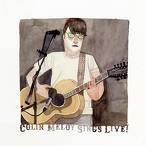
scan0014SOUNDTRACK: COLIN MELOY-Colin Meloy Sings Live! (2008).

colinColin Meloy is the lead singer and songwriter for the Decemberists.  This is a recording of Meloy’s solo acoustic tour from 2006.  The recording is from several venues on the tour, although it is mixed as if it were one concert.
Meloy is a great frontman, and this translates perfectly into the solo atmosphere.  He is completely at ease, telling stories, bantering with the crowd, and generally having a very good time.

The set list includes some popular Decemberists songs as well as a track from Meloy’s first band Tarkio (whom I have never heard, but figure I’ll get their CD someday).  Meloy also adds a couple of covers, as well as snippets of songs added to his own (Pink Floyd’s “Fearless” gets a couple of bars, as well as a verse from The Smiths’ “Ask.”)

This disc is not going to win anyone over to the Decemberists, as Meloy’s distinctive voice is a love it or hate it deal.  However, if you’re on the fence about them, hearing these songs solo can only convince you of what great songs they are.  The Decemberists add a lot of arrangements to their songs.  You get a lot of interesting and unusual instruments.  Which I like a great deal.  But to hear that these songs sound great with just an acoustic guitar is testament to Meloy’s songwriting.

The intimacy of the venues also really lets these songs shine.

[READ: May 29, 2009] McSweeney’s #4

This is the first time that McSweeney’s showed that it might be something a little different. #4 came, not as paperback book, but as a box full of 14 small, stapled booklets. Each book (save two, and more on those later) contains a complete story or non-fiction piece.

There is something strangely liberating about reading the stories in this format. It gives me a sense of accomplishment to finish a book and put it down, so having 14 makes it seem like I’ve accomplished a lot.
This was also the first issue that I’m certain I didn’t read when it originally came out, for whatever reason. So, it’s all new to me.

DIGRESSION: When I was looking up publications for my Wikipedia page about McSweeney’s publications, I kept encountering records for these individual booklets.  This was rather confusing as I couldn’t find any other records or ISBNs for these booklets.  Rest assured they are all collected here. (more…)

Read Full Post »

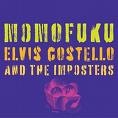
pnin1SOUNDTRACK: ELVIS COSTELLO AND THE IMPOSTERS-Momofuku (2008).

momfukuI’ve enjoyed Elvis Costello for many years.  I’m not a die hard fan, but his Best of is often in play in our house.  I got into a little phase where I was buying a bunch of his things, but that has more or less subsided now.  And, since he has become somewhat more classically oriented I’ve basically just stopped listening.  So, when I heard that on this release he was returning to his rocking days, well, I figured I’d give it a go.

My initial reaction was somewhat muted as I thought I’d be getting a whole disc of “Pump It Up”s and “Oliver’s Army,” which you don’t.  But what you do get is almost costelloa condensation of his albums from My Aim is True through to about Spike (a long period, granted, but it makes sense).

The album opens with a few rocking tracks that hearken back to his earlier punkier songs.  Although “No Hiding Place” sounds “fuller” than his 1970s records, it doesn’t sound out of place with classic tracks.  But really, it’s “American Gangster Time” that brings back that classic Costello organ sound.  This track could have been written thirty years ago and would easily fit on any Best Of.  “Harry Worth” hearkens back to Costello’s ballads.  It’s a bit less punchy than say “Everyday I Write the Book,” but the wit is in high marks. “Drum & Bone” has the fun tongue twisting chorus of “I’m a limited, primitive kind of man.”  One of the highlights is “Flutter & Wow” a potentially timeless love song that somehow rings of Van Morrison.  It’s really stellar track.

Side Two (his phrase not mine) starts off rocking once again, and, while “Stella Hurt” rocks pretty hard, it tends to drag on a bit long.  But it quickly moves to another beautiful ballad, “My Three Sons.”  The album ends with “Go Away” another organ-heavy rocker.

And so the album is mixed nicely with some rockers and ballads balancing out the totality of the disc.  Lyrically, the songs are tight and witty.  The ballads are lovely.  I don’t know if Costello’s work with more more mature performers has affected him a lot, but it certainly hasn’t impacted his ability to write good rock songs.  Welcome back Elvis.

[READ: November 20, 2008] Pnin

pnin2

I harp on the appearance of book covers a lot.  I know that the contemporary covers are fine and they try to retain a consistency for each author.  But, I love this early cover.  I especially like that there’s an artist’s rendering of Pnin himself.  It really paints an immediate picture of the man.

I bought my copy of Pnin many, many years ago, probably right after I had read and enjoyed Pale Fire so much (I had a coworker who really loved Nabokov and insisted that I keep reading him).  It has been sitting on my bookshelf for all this time just waiting for me to read it.  About three months ago, I decided I would like to read all of Nabokov’s works, so I brought it out of the basement and left it next to my bed.  Then, I got the October 2008 Believer.  The first article, “Amerikas,” by Adam Thirwell (excerpted here) was about novels and translations.  And, since Nabokov is a novelist and translator, he was included in the article.  About seven pages into the article is an excerpt from Pnin.  And the excerpt was quite amusing, so, I took it as a sign to read Pnin next.

The most fascinating thing to me about the book is that is told by a narrator whose name we never learn, and whom we don’t actually meet until the last chapter. (more…)

Read Full Post »

ny060913SOUNDTRACK: [REVISITED] LOUDON WAINWRIGHT III-Strange Weirdos: Music from and Inspired by the Film Knocked Up (2008).

loudoWe used Loudo’s “Daughter” from this soundtrack in the birthday video that we made for my daughter.  (We also used Dolly Parton’s “Shine” for the first half).  Because we were listening to the song, I listened to the rest of the disc as well and wanted to make a few extra comments from the last review.

Overall, the disc seems much more upbeat lyrically than his usual fare.  He’s almost always funny, but on this disc, the humor isn’t as sarcastic.  Also, his voice seems gentler, too.  Is this the dawning of a kinder Loudon?  I haven’t heard his latest disc, so I don’t know.  But I really enjoy this whole disc.  The only exception is two tracks which are full band with backing vocals.  There’s something about the tracks being so polished that seem to take away from Loudon’s voice…and really its all about a guy with a guitar. But it’s a small complaint given how good the rest of the disc is.

As for our daughter’s video, we spent I’d say about ten or twelve hours editing, syncing, and making sure the video was more than just picture one, fade, picture two, fade.  We’ve made a video for each of the kids birthdays, but we’re especially proud of this one.  You can see it here:

[READ: November 25, 2008] “Natasha”

I read this story a few months ago, but felt I should re-read it given how little I remembered. So, I re-read it last night.  I think I was surprised by it because of how un-complicated it was (especially compared to Nabokov’s novels).  Well, I learned that the story was written in the 1920s, long before he had written Lolita or Pale Fire, or anything in English.  (more…)

Read Full Post »

nabokov.jpgSOUNDTRACK: MICRODISNEY-Big Sleeping House: A Collection of Microdisney’s Finest Moments (1995).

micro.jpgMicrodisney was founded by Cathal Coughlan and Sean O’Hagan. These two then went on to form respectively, the Fatima Mansions and the High Llamas (and O’Hagan worked with Stereolab as well). If you’ve ever heard Fatima Mansions and High Llamas, you will not understand how these two ever worked together.

If you haven’t heard them, then let me explain. High Llamas play beautiful, multi-layered, somewhat orchestral extended pieces. Their CDs, including Hawaii hawaii.jpg and Gideon Gaye gideon.jpg are really beautiful. Meanwhile, the Fatima Mansions play angry noisy rock, and perpetuate the slogan “Keep Music Evil.” Viva Dead Ponies fatima.jpg is certainly recommended, if you can find it! Clearly, these men started in one place together and drifted apart. However, you can see the kernels of these future bands in Microdisney.

Microdisney was a small Irish band (clearly flying under the radar of Disney, as they never seemed to get sued because of their name). They wrote short, pretty songs that often had bitter, funny lyrics. Cathal Coughlan has a great crooning voice, and a striking speaking voice (when he speaks, rather than singing, during the songs). It gets taken to pretty far extremes in the Fatima Mansions, but in Microdisney, for the most part he sings quite beautifully. And, when you put his voice with O’Hagan’s music, the tunes are catchy, the melodies are infectious, and you find yourself singing along. It’s only when you start to listen to the words that you realize how off center Cathal is.

Like the amusing lyrics of “Town to Town”: “She’s nervous and her; Best friend is waiting, She’s trying to pronounce my name,” that catch you off guard. Then, when you start singing the super catchy chorus “When the daily parade of the troubles you made gets you down, Just consider the fate of the wide open space from town to town,” you get lulled in. Until the verse: “Get Olso, get Glasgow. Hit Bonn and hit Bordeaux, Fry Dresden, miss Dublin; Why don’t you call me?I’ve got nobody.” Then you realize what you’re up against.

This is a greatest hits collection of a sort. They released five or so albums that are pretty much unavailable here (even the greatest hits may not be available). But they’re worth checking out nonetheless. And remember: Keep Music Evil!

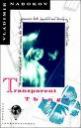
[READ: February 6, 2008] Transparent Things.

Everyone has a thing to say about Lolita, whether they’ve read it or not. I read Lolita about ten years ago and I was surprised at how good it was. (I’d been led to believe that it was basically just porn–which it isn’t–or that you couldn’t or shouldn’t sympathize with a pedophile–but you might.) A coworker at the time told me to check out Nabokov’s Pale Fire, which I did, and which I really really liked. It’s a weird book, full of literary fun, and lots of quirks. A good summary is available here.

(more…)

Read Full Post »

« Newer Posts