Feeds:
Posts
Comments

Archive for the ‘Tom Bissell’ Category

ornerSOUNDTRACK: PHISH-Hoist (1994).

hoistI always think of Hoist as a kind of goofy album because of the way they are dressed on it (and the crazy cover).  But it is absolutely not.  Indeed, opener “Julius” sounds like a ZZ Top song.  In fact, every time they’ve played it live I assumed it was a cover.  It is less restrained in the live setting, because this version has more acoustic guitar.  There’s even backing vocalists and horns.  “Down with Disease” has that great watery bass, but the song (which sounds good) here is a little stiffer than the live version.  It also has something of an R&B feel (with backing vocals) even if the guitar is certainly not R&B at all.  It bleeds right into “If I Could” a pretty harmony-voiced mellow song.  The big surprise comes from the Alison Krauss vocals–she gets a solitary line or two and then harmonies.  The song is very pretty but the strings are overkill.

“Riker’s Mailbox” is indeed a reference to the Star Trek character, although the 30 second burst of noise is pretty hard to explain. Nevertheless, the trombone is played Mr Riker himself, Jonathan Frakes.  It jumps into the rocking “Axilla, Pt. 2” which is usually a little faster live (I like the sloppier crazier live version better). There’s some vulgar dialogue in the middle of the song.

“Lifeboy” is a mellow acoustic song that builds from just guitar.  Lyrically it’s interesting: “God never listens to what I say…and you don’t get a refund if you overpray.”  It folds into “Sample in a Jar,” which is just as good here as any live set.  “Wolfman’s Brother” ahs horns thrown on top and some interesting sound effects.  Although overall l don’t like this version nearly as much—I don’t care for the horns or the backing vocals plus in the live version they emphasize the bruh of brother more which is cooler.  (Although I do enjoy the weird “Shirley Temple” line at the end).  “Scent of  Mule” opens so strangely with crazy guitars and a thundering drum.  The singing is very silly (with silly voices) and has a very twangy style (complete with banjo and yeehah).

“Dog Faced Boy” is a sweet (but weird) acoustic guitar number.  “Demand” is a ten minute song which I don’t really know at all.  It has a strange, staccato style riff.  At 2 minutes in, a car starts and after a commercial on the radio the driver pops in “Split Open and Melt” (a nod to “Detroit Rock City,” perhaps?).  This goes on until 9:30 at which time there’s a car crash and choir of angels (sick!).

I don’t car for the horns and R&B flavoring of this album, but the song selection is really quite good.

[READ: September 24, 2013] Last Car Over the Sagamore Bridge

I read about this book in Tom Bissell’s reviews recently.  He really made it sound like an interesting book.  So when I saw that we had just received a copy, I grabbed it and brought it home for the weekend.

There are 52 short stories in the short book (which is less than 200 pages).  Some of the stories are very short (1 page) with a few coming in at 5 or 6.  The 1 page stories are like flash fiction but they seem to be more of snapshots than actual full stories and they seem like they might be diary entries or something. The fact that a number of them are italicized with dates at the end make them seem like a selection from the same person rather than individual stories.

The stories are set all over the world, although they tend to focus on Chicago and Boston.  They are pretty universally dark with themes of death and loss permeating the collection.  And yet despite their overall negative feeling, the stories aren’t really depressing, exactly.  Bissell described the narrators as like someone telling a story about someone telling a story.  And that is true and that distance seems to take some of the edge off the stories.

But what’s impressive is the consistently strong and powerful writing.  The way that Orner is able to convey so much with such few words.  Some stories are just a scene, others are a whole lifetime.  But either way they are all really gripping.

I wasn’t going to write about each story, but it would have nagged at me if I didn’t, so here’s a few words about 52 stories. (more…)

Read Full Post »

sep2000SOUNDTRACK: PHISH-Rift (1993).

riftRift has a kind of story to it (albeit it’s not a real concept album) and you can tell by the full cover (see the bottom) that the story is complex–thank you gatefold sleeves).  The album starts with “Rift” a fast guitar spiral that opens with a harmony vocals on the opening lyric and then a call and response between I believe, Page and Trey as they each take a line of the verse—it’s a cool and surprising opening.

“Fast Enough for You” is a slow country-tinged song (with slide guitar).  This is the first song of their early records that I really don’t know that well.  So it must not get played very much.  It’s a pretty song.  “Lengthwise” is a cute little a capella song (with snoring and clock ticking) which I think about whenever I am alone in a bed: “When you’re there I sleep lengthwise and when you’re gone I sleep diagonal in my bed.”

“Maze” is one of my favorite Phish songs and it sounds great here.  I love the bomp bomp at the end of the verses and the fugue vocals at the end of the song.  This version is fantastic.  “Sparkle” also features fugue and barbershop type vocals (with Mike’s deep voice added in) in a funny silly roping song.  It’s another highlight.  “Horn” has a great opening guitar line (that reminds me of Pearl Jam for some reason).  I’ve always enjoyed this one.  It sounds great here (because you can actually hear what the harmony voices are saying (something you usually can’t in the live setting).  “The Wedge” is a mid tempo song that sounds different from their live versions.

“My Friend My Friend” is a pretty dark song (“My friend, my friend he;s got a knife”) but the opening is a beautiful instrumental with lovely guitar sequences until at 2:30 when the piano takes over and the song becomes slightly menacing.  “Weigh” is a weird song that I rather like.  It’s very piano heavy and very boppy despite the crazy lyrics:  “I’d like to cut your head off to weight it, whaddya say?  5 pounds, 6 pounds, 7 pounds.”  “All Things Reconsidered” a nice NPR joke.  This is a 2 and a half minute instrumental of guitar and keyboards that sort of plays with the NPR “All Things Considered” music.

“Mound” starts with some wonderful out of time signature riffing—4/4 drums and bass and then super fast guitars that don’t quite match until the drums and bass then catch up.  It’s hard to believe that that unusual opening leads to the big catchy bouncy chorus: “And it’s time, time, time for the last rewind.”  “It’s Ice” is a little slower here than live but I kind of like it in this slightly slower version (you can really hear the riffs).  This is another song with fugue-like vocals (they do all of their vocal tricks very well).  “The Horse’ begins as a beautiful Spanish style guitar piece and morphs into a simple acoustic song (it’s al of 90 seconds) which bleeds into “Silent in the Morning,” another highlight from their live shows and a standout here.

Rift might just be my favorite Phish album.

[READ: October 23, 2013] “Escanaba’s Magic Hour”

Once I found out that Tom Bissell had written a number of articles in Harper’s I decided to read them all, especially since some of them already appeared in his book Magic Hours.  This was his first piece for Harper’s and it is the one I remembered most from the book.  So I enjoyed reading it again.

I’m also glad I read the Harper’s version because although I don’t think it varies from the book version at all (and I’m not willing to check), it had pictures from the movie and from Escanaba, which brought a bit more reality to the article.

So, what’s this about a movie?

Well, this article is about Jeff Daniels making a movie in Escanaba, Michigan called Escanaba in da Moonlight (which I haven’t seen, but as I said after reading this the first time, I now feel invested enough in it to want to watch it–reviews are mixed).  And it sounds kind of interesting.  I also really enjoyed the comment that Daniels’ appeal “has something to do with the fact that many men, if asked to cast their lives without undue conceit, might settle on Jeff Daniels to play themselves.” (more…)

Read Full Post »

dec2004SOUNDTRACK: AWAY-Cities (2013).

awayAway is Michel Langevin, the drummer for metal band Voivod.  But on his first solo album he eschews all conventional music.  Rather, he has created an exercise in found sound and released it on the small label Utech Records.

The album is described as

Strong field recordings capture more than just the sound of an area, they capture a mood and spirit of the place and people. On Cities, local color and nature recordings clash with riots and discord, capturing the full human experience across the world. Literal and metaphorical “found music” appears: the booming stereo of a passing car or distant church bells, as does the rhythmic engine hum of a bus or the chirping of birds. This tour is a fast paced one, rapidly weaving through the geographic locations building a diverse, yet consistently engaging experience. The audio journey captured here perfectly reinforces the fact that, regardless of one’s location, the presence of music is never far, nor should it be.

What we get is a collection that sounds like a tour through the streets of the respective cities (nothing more specific than Europe is given, sadly).  We hear street noise and buskers playing (interestingly just about every type of music I have heard in Boston subways as well).

I only wish more information was given about just what Away was up to.  Where he was and, more importantly, how he recorded these sounds. The recording quality is amazing—the panpipes and harmonicas sound crisp and clean with no other ambient noise.  Did he ask the performers if he could record?  How did he get them so pristine especially since I assume they are in the streets?  And for the Europe ones, was there any given order to the way they were edited?  Is it the progression of their Voivod tour, or is it just random?  The mixing and sequencing is quite good, especially in the shorter pieces which really take you on a journey.  Not knowing what’s happening is maddening and part of the fun as you try to picture (especially if you use headphones) exactly what you are hearing.

“Montreal 2010” opens with the sound of travel until we zoom in on panpipes (for a few seconds).  This switches to a lurching shanty (sung, I suspect in French—it’s a little hard to hear).  Then from the shadows comes the sound of someone playing Leonard Cohen’s “Hallelujah” on the harmonica.

“Europe 2012” opens with someone playing what I suspect is a hammered dulcimer (exactly the kind of thing that buskers play in subway stations), it shifts to a jazz trio (sax, bass, drums) wailing away with traffic noises in the background.  After some busses and an accordion solo, there are delicate chimes.  Finally a bagpipe melody leads us away from the delicate chimes until we hear announcements in what sound like Russian and then French.  The track ends with fans chanting “Voivod Voivod.”

Montreal 2012 returns Away to near his home city.  This time the scene is much nosier—it could be joyous, it could be angry—there are whistles and horns, and by the end it seems like a joyous parade.  The noise diminishes as an operatic voice pierces through briefly until the drums return.  More street noises, including police sirens, French chanting and a train passing by as we return to yet more street drumming.  If this track had more context for the title it would probably be more enjoyable. And yet as the parade (for surely that is what it is ) marches past you feel like you’re there.

“Mexico City 2012” opens with a truck honking and street noise until we hear what sounds like an indigenous band playing, then some more flute music and church bells pealing. Then there are announcements in Spanish (by both a man and woman presumably in the church) and church organ music.  Pan pipes and drums bring us back into the street and what sounds like a market scene which ends with some Mexican music playing.

“Europe 2011” opens with some beautiful guitar or perhaps an Indian stringed instrument playing and some traditional Indian singing.  There’s some more music playing and cheering and then some peace as birds take us out of this short track.

“Montreal 2011” opens with banjo music (!).  And then the more typically French sounding violin moves us along.  More pan pipes and traffic noise progress us through the city.  Then two very different examples of accordion music meld until the noise of the train wipes them out.   The track fades out with a band playing a  jaunty accordion inspired track.

“Chicago 2012” ends the disc with a symphony orchestra tuning up (I presume) for a few minutes.  It’s a shocking cacophony.  Until someone shushes the noises and the birds return, playing us out of this aural tour.

You can stream, download or buy the CD  here.  Buying the CD gets you some of Away’s cool art (although I wish there was more).

[READ: October 8, 2013] “War Wounds”

Since I’ve been enjoying Tom Bissell’s book reviews, I thought I’d see what else he had written in Harper’s.  He seems to have a storied career with the magazine as a traveling journalist.  And this article dates back to 2004.

It is a personal article about himself and his father.  What I found fascinating about this is that his father was a Vietnam veteran, and I don’t know too much in the way of writing that concerns being the child of a Vietnam veteran.  There are a lot of books and films about the Vietnam experience for the soldiers, but not so much about the families that they returned to (as far as I know).  So it was interesting to read Bissell’s account of growing up with his father–who was a hard man and who wasn’t afraid to fight with his children (especially when drunk).

The man that Tom grew up with had a temper and didn’t much approve of Tom’s chosen profession.  But unlike many people of his generation, Tom didn’t feel that he had a particularly estranged relationship with his father.  What on earth possessed him to invite his father on a trip to Vietnam–to visit the sites where he lost friends and was himself wounded, is the stuff of journalism. (more…)
Read Full Post »

april 2013SOUNDTRACK: RICHARD THOMPSON-Electric (2013).

electRichard Thompson is remarkably consistent in his albums.  Especially his most recent ones.  The songs are all solid—both musically and lyrically.

Despite the name Electric, this album is no more or less electric than his other records.  Indeed, while this name may imply a much faster, heavier album, there are a number of ballads (and acoustic guitars) as well.  But if you like Richard for his amazing solos, you won’t be disappointed.

“Stony Ground” and “Sally B” are dark rockers (both mention gutters) with great fast solos.  “Treadmill” is one of RT’s class/money songs which are always spot on, even if he’s singing about sheet metal rather than playing guitar (great riff on this one too).

“Salford Sunday” is a more gentle rocker and “My Enemy” has a wonderful circular-feeling delicate melody and a gorgeous solo.  Both songs have female harmonies from Siobhan Maher Kennedy.  Indeed, Siobhan sings backing vocals on “Where’s Home” (an acoustic guitar ballad complete with violin solo), “Straight And Narrow” (a rocking song with aggressive guitars) and “Saving The Good Stuff For You.” “Good Stuff” Is a beautiful album ender, a sweet and tender ballad which I enjoyed even more live.

Alison Kraus sings backing vocals on “The Snow Goose,” a slow, somber song–the kind of which RT does so well.  “Good Things Happen to Bad People” is so unfailingly catchy, practically an earworm, that if there were any justice, this song would have been huge.  It’s got a great melody, cool lyrics and a really rocking solo.  “Another Small Thing in Her Favour” is a mellow acoustic/country song.  The end of the album goes a little too mellow.  Even though I like the songs individually, as a record it kind of trails off, which is a shame since “Good Stuff” is such a beautiful song.

I enjoyed this album tremendously and hearing him play some of those songs live was a treat.

[READ: October 10, 2013] 3 book reviews

This month Bissell reviewed three novels.

grossmanyouThe first is YOU by Austin Grossman.  Bissell explains that this is a book about a middling video games company circa the 1990s (Grossman was born in 1969 so he knows the territory well).  Bissell really enjoys the philosophical attitude of the book, specifically the narrator’s thoughts on making and playing games, although he fears that some of the characters are rather two-dimensional (and can’t decide if this is a flaw or if it’s intentional since the book is about video games).

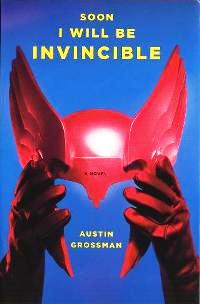
grossman soonBissell is largely very positive about the book although the excerpt he quotes about human duality and videogames was not terribly exciting to me.  However he casually raved about Grossman’s first book Soon I Will Be Invincible (which is a literary work about superheros) which I think I’d be more inclined to read. (more…)

Read Full Post »

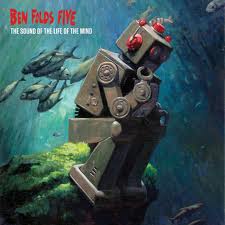
febSOUNDTRACK: BEN FOLDS FIVE-The Sound of the Life of the Mind (2013).

bffThe first Ben Folds Five album in over a decade opens with a big noisy sound and then quickly shows the diversity of the band by pulling back and showing a mellow verse with Ben’s piano and occasional bass.  But then the chorus comes in and Robert Sledge’s bass is once again masterful.  While Ben is clearly the leader of the band, there is something about the BFF’s bass that is so notable.  And this album rocks in BFF’s unique way–rollicking piano, and noisy buzzy bass.

“Michael Praytor, Five Years Later” has some great harmonies (the kind that BFF do so well).  “Sky High” is the kind of social commentary ballad that Ben excels at. And the title track is a fast moving rocker that has more great harmonies.

“On Being Frank” is a Sinatra inspired song with strings.  While “Draw a Crowd” continues Ben’s humorous vulgarity in a very unexpected way: “if you’re feeling small, and you can’t draw a crowd…draw dicks on a wall.”  “Do It Anyway” the single, which inexplicably wasn’t huge, gets more and more fun with each listen–to scream along with “OKAY!” is very cathartic.

“Hold That Thought” is one of those mellow but speedy numbers that I love from Ben.  And when then bass plays that high solo bit near the end (oh that bass), the song kicks into new levels of excellence.  “Away When You were Down” is another string-filled mellow song.  The final track “Thank You for Breaking My Heart” reminds me of “Boxing”, a mellow piano ballad which is, obviously, heartbreaking.

This is a great return to form.  There’s some heavy rockers and some pretty ballads. It’s nice to hear the Five back together again.

[READ: October 5, 2013] 3 book reviews

This month Bissell reviewed three books.

The first book is a biography of Flavius Jospehus called A Jew Among Romans jar by Frederic Raphael (who also wrote the screen play for Eyes Wide Shut).  I had never heard of Flavius Jospehus but evidently without him we would have no historical accounts of time from around the beginning of the Common Era.  His writings are pretty much the only works that have survived.

And his story itself is interesting too. In 70 A.D. the Romans destroyed Jerusalem. This attack has had more impact on current life than can be explained.  Judaism lost the Second temple, Jewish Christianity soon disappeared beneath the waves of Gentile Christianity, even Islam was shaped by this because a Mosque now stands where the Second Temple was.  And nearly all modern forms of anti-Semitism can be traced back to this attack in some way.  Flavius Jospehus chronicled this time as a Jew in a reasonably impartial way (which led many to call him a traitor).  His books Jewish Antiquities and The Jewish War are the sources for almost all of our knowledge of that era, including about Pontius Pilate. (more…)

Read Full Post »

harper juneSOUNDTRACK: JOHN ZORN-“The Dream Machine” (2013).

dreamThis is the title track to the third installment of instrumental albums by composer Zorn (as opposed to wild sax-player Zorn).  The new album is called Dreammachines.  Evidently this trilogy is somehow related to William S. Burroughs (sure, why not).  The first was called Interzone (and was three 15 minute-plus suites), the second was Nova Express (which was shorter pieces) and now Dreammachines (which is also shorter pieces).

It’s impossible to know what Zorn will throw at us next, but this song proves to be a beautiful jazz piece with the quartet of pianist John Medeski, bassist Trevor Dunn, vibraphonist Kenny Wollesen, and drummer Joey Baron.  It opens with a quick but pretty vibraphone melody.  The melody shifts keys but stays in the same pattern until the main melody kicks in.

Variations on the theme continue until about 2 minutes in when Medeski gets a big piano solo and this sounds more like traditional jazz than most Zorn pieces.  Then there’s a very cool vibes solo.  It’s pretty standard jazz and it’s really quite beautiful.

[READ: September 20, 2013] 2 book reviews

Bissell reviews two books this month.

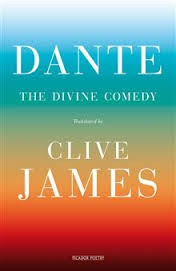
danteThe first is Dante’s Divine Comedy as translated by Clive James.  James has decided that since Italian is so easy to rhyme “For an Italian poet it’s not rhyming that’s hard,” rather than following Dante’s linked terza rima rhyme scheme, he chose the rhyming quatrain.  Bissell expects that academics and traditionalists will be very suspicious of the book because of that, but he says that for the average person (the average person who wants to read Dante, of course), it will be more fun and enjoyable.  Especially, James popularizes the book.  I have always resisted The Divine Comedy but this one sounds like it might be a bit more fun, and isn’t that what reading is all about?

magicalThe second book is The Magical Stranger by Stephen Rodrick.  When Rodrick was 13 his father died in a military plane crash.  His carrier was en route home when it was told to reroute to help with the hostage crisis in Tehran.  But his plane was destroyed.  The hardest part for Stephen was when he read that the accident was deemed “pilot error.”

This book is Stephen’s attempt to learn more about his father.  Through the course of the book, he discovers more and more unpleasant facts about his father—from the lies his father told his mother to a pilot who knew his father who calls his an asshole.  Bissell finds this part of the book very moving but not quite warranting a novel length treatment.

But there is a secondary story about the man who now commands his father’s squadron James Hunter “Tupper” Ware.  Bissell says that this part of the story is far more engaging (Stephen is a journalist and this section is more investigative).  Stephen more or less tries to live his father’s life through Ware, a man who finds the same level of difficulties in his job and his life as Rodrick’s father did.

This is definitely not the kind of book I would read, but for those with an interest in the military and pilots its sound like a good warts-and-all investigation.

Read Full Post »

aug2013SOUNDTRACK: JIM GUTHRIE-Tiny Desk Concert #294 (August 10, 2013).

jimgI was unfamiliar with Guthrie before this set and I almost didn’t play it because of his mustache–he just looks so country to me.  But then I read that he and his band drove 9 hours from Ontario just to do the show (which is 11 minutes long, so that’s pretty crazy).  But the set is really good.

The three songs come from Guthrie’s new album Takes Time (his first solo album in ten years).  And I was hooked…not right from the start, but 15 seconds into “The Difference a Day makes” when the guitar plays the chorus riff.  There is something so… Canadian about the melody line.  It reminds me of Neil Young, Sloan, Rheostatics, even Kathleen Edwards, all of these great Canadian songwriters who play with slightly different melodies.  The fact that he sings “doubt” and “out” with an Ontario accent solidifies it.  It’s one of my favorite mellow songs of the year.  “Before & After” sounds a bit like  Barenaked Ladies mellow song, like something  written by Kevin Hearn.  I tend to not like the Hearn songs, but I thin kit’s that I don’t like Hearn’s voice, because I like this song quite a lot.

Guthrie has a delicate but strong voice–I can’t imagine him screaming, but he conveys a lot.  Especially in the final song, the more mellow (and minor key) “Like a Lake.”  I’ve heard Tiny Desk shows that go on for five or six songs.  I wish that Bob and Robin had let them play for ten more minutes. Now I’m off to find his records.  Check it out.

[READ: September 10, 2013] 3 book reviews

Tom Bissell reviewed three new books in the August 2013 issue of Harper’s.  I like Bissell in general and since I’ll probably wind up writing about these when they get collected anyway, why not jump the gun here.  Especially when there’s three good-sounding books like these.

sagamoreThe first is Peter Orner’s Last Car Over the Sagamore Bridge.  I know Orner from McSweeney’s mostly, where I’ve read a few of his things  But one of the stories that Bissell mentions from this short story collection sounds familiar and yet it doesn’t seem to be something I’ve read.  Hmmm.  Well anyhow, he says that Orner’s previous book (with a title that Bissell assumes he had to fight to keep–The Second Coming of Mavala Shikongo) was a great piece of fiction about Africa, and that his previous collection Esther Stories was also very solid.

This book is a little stranger—bundled into 4 sections, it includes more than fifty “stories” and is all of 200 pages.  (Sounds like just the kind of thing I can get into).  Bissell suggests that the stories have a layer of remove, like someone telling a story about someone telling a story.  Or, if they were about a bank robbery, the story would actually be about someone describing having once met the guy who sold the robbers their ski masks.  But the real selling point for me was this pithy description of the collection: imagine Brief Interviews with Hideous Men written by Alice Munro.   That sounds hard to pass up. (more…)

Read Full Post »

speakSOUNDTRACK: STONE GOSSARD-“I Need Something Different” (2013).

stonegossardmoonlanderStone Gossard is the rhythm guitarist for Pearl jam.  He’s also one of their major songwriters.  He has one or two songs that he sings with the band.  This is a solo effort which indicates that he might be a heavier influence on the band.

Stone Gossard last released a solo album 12 years ago.  There’s a new Pearl Jam album in progress and Stone’s other band Brad put out an album not too long ago, so why not release a solo album?

I don’t know how much Gossard does on this song, but I rather imagine he plays everything (the solo is fine but not amazing and the drums are solid but don’t really standout).  And while that sounds dismissive, it’s not meant to be.  Gossard creates a solid sound of simple rock.

The guitars are loud and bouncy.  Stone’s voice is rough and workmanlike—there’s a reason he’s not a lead singer.  But his voice works great for this aggressive slice of rock.

The riff is continuous and non stop, while he sings I need something different.  And then at the mid way part the keyboards start—perhaps this is the something different.  The keys break the propulsion with a poppiness that you wouldn’t expect in the song.

Then the song returns to its original style.  It’s not a terribly original song, but it would be a fun bar anthem.

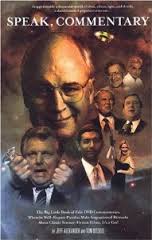
[READ: June 10, 2013] Speak, Commentary

When this book first came out I was pretty delighted.  What a funny concept—overblown writers and political pundits do DVD commentary about films they had nothing to do with.  It seemed like it would be very funny indeed.

And here’s the thing.  It is. For a few pages. But each one of these things feels as long as the actual movie they are commenting on.  Alexander and Bissell have done their research—they know what these figures will say.  And say.  And say.

As I said the premise is awesome, check out these wonderful combinations:

  • NOAM CHOMSKY & HOWARD ZINN on The Fellowship of the Ring
    ANN COULTER & DINESH D’SOUZA on Aliens
  • TERRY DWIBBLE & STEVEN McCRAY on Start Trek II: The Wrath of Khan
  • JERRY FALWELL & PAT ROBERTSON on Planet of the Apes (1968)
    WILLIAM BENNETT & DICK CHENEY on Star Wars Episode I: The Phantom Menace

[Terry Dwibble & Steven McCray are (presumably) fictional characters—die hard Trekkies who are thrilled to be able to add this commentary and, frankly, this is the best one of these pieces.]

I think part of the problem with the book is the sequencing.  The first piece is incredibly dry.  I recall reading this when I first got it.  I don’t know if I read all the way through Chomsky and Zinn.  And I know I didn’t make it through all of the second one (Coulter and D’Souza)—my d0g eared page failure still lingers to this day.

But I finished this time. (more…)

Read Full Post »

[WATCHED: December 16, 2012] McSweeney’s #11

11

THE DVD that came with Issue #11 was listed as a “Deleted Scenes” bonus feature for this issue.  The colophon of the book explains in great detail what they wanted to do and how they went about doing it all.  And that’s all quite amusing in itself.

Now, of course, there are no “deleted scenes” up front.  The DVD is, at first glance, authors reading from the works in the book.  But as you scroll down the menu, there are some deleted scenes, as well as behind the scenes features and audio commentary.  All in all there’s about two hours worth of stuff crammed in here and some of it is quite interesting.

DELETED SCENES

This is where the authors read from their works.  They each read between 3 and 6 minutes, with some of them reading different sections (Samantha Hunt), but most of them reading a chunk.   (more…)

Read Full Post »

11SOUNDTRACK: THE ANTLERS-Live at the Black Cat, Washington DC, May 11, 2009 (2009).

antlersI mentioned that I was uncertain about my appreciation of this band.  And I wondered how they would hold up to a longer show.  The answer is surprisingly well.  The sound quality of this set isn’t great–the levels seem way too loud (not sure if that’s the band or the recording) and I really can’t understand the words, but the music is very moody and evocative and I like it quite a lot.

This set comes from the album Hospice, which is a concept album about a person dying of bone cancer (with lyrics like “they told me that there was no saving you” and song titles like “Kettering”).  Earlier descriptions made me think the album was a major drag to listen to– I mean the subject alone is exhausting–but musically it’s a different story.  There’s lush strings and interesting guitars.  And, at least live, the band can make a holy racket.

I’m a little surprised by the number of keyboard errors in “Atrophy.”  I mean an occasional bum note is fine, but there’s a bunch in that track.  It’s very weird.  But that is made up for by the vocals which are angsty and impassioned, especially on the final song “Cold War.”  The NPR site has three tracks available for viewing and I must say that watching the band is more exciting than just listening to them.  But I have really gained an appreciation for The Antlers.

Check out the show here.

[READ: December 16, 2012] McSweeney’s #11

This crazy title for this Issue/Post comes because the cover and spine of the book are all text.  Indeed, the book is gorgeously bound in black leather(ish) with shiny gold print.  Each author gets a summary of his or her work and a note that he or she is free (see each story below).

I did not read Issue #10 yet because it came out as a thrilling paperback, and I’ve been putting it off for a reason even I can’t quite fathom.  I anticipate reading that one last.  Again, no idea why.  In some ways, Issue #11 picks up where Issue #9 left off.  There’s lots of text on the cover, there’s letters and everything else that makes it look like McSweeney’s.  But as I said this one seems more somehow.  It’s the hardcover.  And, it’s also the DVD that accompanies the book.  I have a hard time believing I’ve owned this book for almost ten years and never watched the DVD but I finally got around to it.  More on that soon.

This issue contains letters, fiction, non-fiction and a play that picks up from Issue #9 (more…)

Read Full Post »

« Newer Posts - Older Posts »