Feeds:
Posts
Comments

Archive for the ‘Authors’ Category

SOUNDTRACK: BUSCABULLA-Tiny Desk (Home) Concert #66 (August 18, 2020).

I know of Buscabulla from some glowing reviews of their debut album.  Their story is an interesting one as well.

Buscabulla is made up of husband and wife Luis Alfredo Del Valle and Raquel Berrios, two Puerto Rico-born musicians who were based in New York until 2017. When their birthplace was devastated by Hurricanes Maria and Irma that year, they decided to leave New York and go back to where they were born. It was an emotional journey, one that inspired the songs of Regresa and which they chronicled for an upcoming mini-documentary.

Despite that setup, their music is soft and gentle–ethereal and beautiful.  Raquel Berrios’ voice is delicately echoed and sexy without being over the top.

Their setting for this Tiny Desk (Home) (Beach) Concert is the trunk of their van.  Luis del Valle has created a studio within the car that perfectly reflects the band’s sound.  So two of them are

sitting inside their car at the beach in Aguadilla, Puerto Rico performing their Tiny Desk (home) concert. It’s as if the bubble of being inside the car will protect them from any chances of encountering the virus on the beach. But it’s also a reflection of how the band’s atmospheric sonic textures get inside your head when we listen with headphones. Buscabulla set up shop in New York years ago, but returned to their home to help support the island’s redevelopment — thus their entry from the beach.

It looks almost like a Zoom meeting background, with the gentle waves lapping against the shore, although in the beginning of the video you can see some people walking on the beach.

The set starts with “Mio” which has a cool slinky bass line from Luis Del Valle and an inset video of JD Matías playing timbales and cowbell.  And although LD Valentín is laying down some nice backing keys (also in an inset), it’s Berrios who plays the trippy keyboard solo.

“Nydia” has a funkier bass line and layered spacey keys from Valentín. Berrios’ voice floats above all of it.

The duo have to maneuver a bit in that cramped space to play the final song.  Luis puts his bass outside of the car (!) and switches to keys.  Berrios also plays keys and this lovely set ends as beautifully as it began.

I’m not sure what kind of car this is, but it’s a pretty decent ad for trunk space–maybe Buscabulla could make some cash.  It’s also a pretty nice ad for the gorgeous beaches of Puerto Rico.

[READ: August 20, 2020] “You Are  My Dear Friend”

I thought this story was going to be about a British couple living in India, because it opens with a British couple living in India.  They are hosting a party and their daughters’ au-pair, Geeta, brings their two little girls to meet everyone.

One of the party goers is a middle-aged Indian man sitting by himself.  He looks old and tired.

A few days later Geeta is at the markets and she runs into this man.  She has trouble placing him at first then she realizes that this man, Srikanth, was the man from the party.  He talks with her and she resists engaging with him at first.  Then she rethinks, and turns to talk to the man.

They met a few more times and then decided to get married. (more…)

Read Full Post »

june2020SOUNDTRACK: NORAH JONES-Tiny Desk (Home) Concert # 65 (August 17, 2020).

Norah Jones is a musical force.  Even though her songs are simple and tasteful, she has pretty much conquered or at least dabbled in many genres.

The blurb notes:

I’ve always wished to hear just her voice and her piano in a room. The unfortunate circumstances of our times have given us something beautiful. For this Tiny Desk (home) concert, Norah Jones sits in her music room; it’s just Norah, her upright piano, her poetry, and that golden voice.

I don’t know these songs (I’m sure they are lush), but even with this simple old-school piano, they sound lovely.  All four of these songs are from her seventh record, Pick Me Up Off the Floor.

“How I Weep” and “Heartbroken, Day After” are pretty songs with lovely melodies.

My favorite song of the set is “I’m Alive,” which she co-wrote with Jeff Tweedy.  I don;t know if it’s the Tweedy connection, but I love the melodies in this song–both vocal and musical.  I’ve been hearing this on the radio a bunch and while I do prefer the full on recorded sound, this stripped down version is quite nice.  “I’m Alive” is

a song that at once feels the pain of politics and a pain that is personal.

“You feel your soul / Get hollowed-out / While the world implodes / You just live without.” Yet the refrain is what lingers, “Oh, I’m alive / Yes, I’m alive / But I’m alive / Oh, I’m alive.”

“To Live” sounds like an old spiritual.

Jones is not very animated in this session.  Indeed, if her hat didn’t keep falling off (why not just leave it off?), she’d have very little to talk about.

But I assume one doesn’t listen to Norah Jones for wild storytelling.

[READ: August 4, 2020] “Terrace Story”

This story started out with a young couple moving out of a beloved apartment and into a smaller one.  The couple (Annie and Edward) had a little girl, Rose, and they talked about many things as if they were Proper Nouns: the tree outside the window was Yellow Tree, the place where the pigeons landed was Pigeon Tunnel.  But the most pressing new Noun was Closet Mystery.  The mystery was what would fall out of the tiny closet the next time you opened it.

Annie worked with Stephanie. Stephanie took on some of Annie’s work while she was having the baby.  Annie wanted to thank her, so she invited Stephanie to their tiny apartment.

Stephanie was delightful and funny.  And when she opened the door to Closet Mystery, the door opened onto a Terrace–a terrace that obviously had never been there before.

The terrace was gorgeous–amazing views, plenty of room, a grill, fantastic weather.  It was fantastic.

When Stephanie left, Annie and Edward tried to recreate the Terrace in so many ways.  But it only happened when Stephanie opened the door.

So they invited her over a lot.

They had a great time on the Terrace.  They told Terrace Stories which were stories that were not really true, but it didn’t matter because the Terrace didn’t really exist either.

But soon, Annie grew suspicious of Stephanie.  She felt that the stories Edward was telling Stephanie were more intimate, more detailed (even if false) than they should have been.

Edward told her he would never lie to her outside of the Terrace.

But on the Terrace, the lies were growing too big.  Stephanie started calling Edward, “Eddie” and Rose “Rosie,” and Annie felt that Stephanie was trying to take over their lives.  Annie had once been Anne until someone had started calling her Annie.

It didn’t help that her boss at worked continued to give Stephanie more and more of Annie’s work.

Just what was going on with this Terrace and why oh why couldn’t Annie find it on her own?

I was really delighted in the way this story turned surreal and wonderful and yet still seemed realistic.


Read Full Post »

download (92)SOUNDTRACK: VÍKINGUR ÓLAFSSON-Tiny Desk (Home) Concert #63 (August 12, 2020).

download (91)Víkingur Ólafsson has a fantastic name.  But even better is his way of talking about the music he plays.  He adds so much detail and information about these songs that they really come to life.  I don’t often buy classical music anymore, but I absolutely want to get his new record of Rameau and Debussy pieces).

Ólafsson  has moved from strength to strength, releasing three terrific albums in a row (Philip Glass, J.S. Bach, Debussy-Rameau). And now that he has a young son, he wants to spend as much time with the family as possible these days.

So he tells us that he is leaving Berlin after living there for eight years, to return to Iceland with his wife and son.

He opens with a beautiful slow and stately piece from J.S. Bach (arr. Stradal): “Andante” (from Organ Sonata No. 4).  The piece runs about five minutes and after four slow lines, he throws in some amazing speed near the end.  he says that Bach is a good idea whether you are happy or sad–whatever it is, Bach makes things better.

Then Ólafsson offers a crash course in the fascinating music of Jean-Philippe Rameau and Claude Debussy, two French composers who lived nearly 200 years apart. Ólafsson connects the dots between the two seemingly strange bedfellows, illustrating his points with demonstrations on his Steinway.

Introducing Jean-Philippe Rameau, he says the music will go in a very different direction (than Bach).  Rameau was two years older than Bach and was dubbed the Newton of harmony.  He defined harmony and opened musical doors.

For Rameau: “Le rappel des oiseaux” (“The Recall of the Birds”) he says that he is playing two birds: one in his right hand and one in his left.  They are calling to each other–one imitating the other with perfect recall.  Then they take flight and we see the landscape under their wings.  When he plays it, it absolutely comes to life.

He says that was first piece of Rameau that he had ever heard.  The version he heard was by a Russian pianist who played it “more sad, more Russian.”  He plays it like that original version and you can hear the remarkable difference and how both versions work so well–although I like Ólafsson’s better.

Introducing Claude Debussy, he says it’a unusual pairing since they lived 200 years apart.  But Debussy’s idol was Rameau.  They were both musical outsiders, reinventing music, bringing life to a tired scene.

He plays a simple Debussy melody–harmony in space, a timeless beauty.  But Debussy did not like being considered an Impressionistic.  He was interested in the baroque, and there is a baroque structure to his music.

For Debussy’s: “The Snow is Dancing” (from Children’s Corner), he describes the driving rhythm that never stops as he explores harmonic inventions.  This song wa written for his four-year-old daughter as he was exploring the snow with her. You can absolutely hear the textures of the snow in the song.

Ólafsson has a penchant for making transcriptions, taking pieces written for other instruments and making them his own. He closes with “The Arts and the Hours,” his mesmerizing arrangement of a scene from Rameau’s final opera, which he plays as a farewell to his Berlin apartment.

Ólafsson says that he wrote his last masterpiece (an opera) a year before he died and he never heard it performed.  Indeed, it didn’t get a world premiere until 200 years after he died in 1960.  This is a transcription he made because he was jealous of all the conductors and orchestra players who got to play this music.   Rameau (arr. Ólafsson): “The Arts and the Hours” (from Les Boréades) is more loveliness from a composer who I feel may be quite under appreciated.

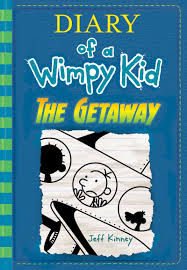
[READ: 2017 and August 15, 2020] Diary of a Wimpy Kid: The Getaway

I read this book when it came out in 2017 but never posted about it.  Then I recently realized that Kinney had written two more Wimpy Kid books that I hadn’t read (and two books written by Rowley, that I don’t know at all).  So it was time to get Wimpy again.

This book is a Christmas book and yet it’s not a typical Christmas story–no annoying relatives, no bad gifts, not even snow.  For The Heffleys have decided to go on holiday for Christmas.    Their Christmas planning was going very badly (a funny picture of the tree on its side with Manny playing with tinsel), so when they saw an ad for Isla de Corales, where Greg’s parents went on their honeymoon, they decided to get out of town for Christmas and celebrate in the warmth of the holidays.

Now, unlike shows where the place is far worse than the advertisement shows, Isla de Corales proves to be a wonderful paradise.  However, the place has now been divided into the mild side for families and the wild side for couples.  Obviously, the wild side is better but the Heffleys have no way to get there.

But before they arrive, they have to get there.  Their entire trip to the airport is one terrible moment after another–bad traffic, lost luggage, late shuttle.  Not to mention terrible lines and a hilarious pile of confusion at the security line–I love that it’s not Greg’s fault that things went so badly but the Heffleys had to pay for it anyway.  And of course Manny is a nightmare. (more…)

Read Full Post »

SOUNDTRACK: BORIS-Archive Volume Four “Evil Stack Live” (2014/2020). 

In early August, Boris digitally released six archival releases.  Volume Four is called “Evil Stack Live” and it is a fantastic-sounding concert from 2003.  Boris released their fourth and fifth albums in 2002 and 2003.  This fifty minute set picks songs from both of these albums: Heavy Rocks and Akuma No Uta.

Full set live recording [NHK Tokyo, 15th May 2003] that was broadcast on Japanese government-owned radio. The setlist is compiled from songs representative of their “Uppercase BORIS” distinction, including tracks from “Heavy Rocks” (2002) and “Akuma no Uta” (2003).  (Originally released on March 5, 2014. Included in Archive 2, limited to 1,000 copies)

The show open with some splashing gong and two songs from Heavy Rocks (2002).  That instantly recognizable riff from “Heavy Friends” kicks in as Atsuo screams to open the show.  The riff continues, eventually picked up by Takeshi on the bass while Wata unveils a soaring guitar solo.  It’s segues into the fast and heavy “Korosu.”  This song has a catchy chorus that’s punctuated by a nifty riff from Wata.

The set shifts to the blazing rocker “Ibitsu” from Akuma No Uta.  The song is three minutes long and has some great guitar licks and solos from Wata while Atsuo and Takeshi sing the lyrics.  The really fast riffing at 2 minutes is energizing as they then return to Heavy Rocks for “Death Valley” which combines a classic riff with some great droning verses.  The song stretches out to almost seven minutes with some heavy jamming in the middle.

There’s a slight pause before the start of the epic 11 minute “Naki Kyoku.”  It starts slowly with some lovely picked guitar from Wata.  After two minutes, Wata begins her extended solo.  Atsuo and Takeshi jam a simple rhythm while Wata plays her soaring solo.  Atsuo sings a catchy line (although I don’t know what he’s saying) as the song jams out around a thumping bass line and Wata’s chill noodling.  The middle has a kind of call and response with the guitar and drums as Wata intersperses her licks between Atsuo’s drum fills.

They jump out of the slower song with two from Akuma.  First is the fury of “Furi,” a ripping heavy song with lots of chaotic drums and yelps and screams (I think Takeshi is singing lead).  A few gong crashes introduce the beginning of “Akuma no Uta.”  It’s a slow grooving song with Takeshi’s heavy bass and Wata’s simple riffage.  After two minutes the song takes off in a classic heavy jam–ripping guitar work and fast bass and drums.

They end the set with two songs from Heavy Rocks.  “Dyna-Sore” is a fast rocker with a catchy guitar riff and chord pattern.  The call and response between Takeshi and Atsuo while Wata plays the soloing riffs is only exceeded by the heavy middle drum section that turns into a super fast end riff.  The set ends with “1970” another great riff-based rocker.  This song features Takeshi and Atsuo singing together and a great rumbling solo bass moment before Wata ends the song with another ripping solo.

The quality of this recording is top notch and the selection of songs is just fantastic.  This is a great archival release.

Takeshi: Bass, Guitar & Vocal ; Wata: Guitar & Echo ; Atsuo: Drums & Vocal.

[READ: August 15, 2020] “Knife Play”

This is yet another fragment from Franz Kafka collected in The Lost Writings.  The one big surprise for me is how well fleshed-out the part of the story that exists is.   It’s unfinished, but the sentences that are there are well composed (depending on how much translator Michael Hofmann has added to or spruced up the original German).

It feels like he he plotted and executed the beginning of the story very thoroughly and then just stopped.

In this fragment, the narrator is sitting next to his wife in a theater box.  The play was exciting–a jealous man was raising a knife to stab his wife.

The narrator leaned over to his wife, but what they thought was curtain was actually a man.  He and his wife jumped in shock. (more…)

Read Full Post »

SOUNDTRACK: BORIS-Archive Volume Three “2 Long Songs” (2005/2020). 

In early August, Boris digitally released six archival releases.  Volume Three is called “2 Long Songs” and that’s what it contains.

There are two songs in this live recording, one is 15 minutes, the other is 22 and this whole recording is just fantastic.

Originally released in 2005 from the US label “aRCHIVE”, limited to 600 copies which sold out immediately. A precious live recording from their early days, of Boris’s 1996 debut single song release, “Absolutego”, and “flood”, released in 2000, performed live together as “1 song, 1 production”.
(Reissued as part of Archive 1 on March 5, 2014. Limited to 1,000 copies).

Like the other Archive releases, this one was also recorded at Koenji 20000V.  This time in 2001–so the band and the quality of the recording are much improved.

“Absolutego” is a sixty minute song released as one long track on Boris’ debut album.  So a 15 minute version is quite truncated.  This version has a slow three-note bass line that slowly adds feedbacking guitars and cymbals.   At two and a half minutes, the drums loudly pound in–like Atsuo is introducing himself to the set.  But five minutes, the full on washes of noise have taken over the song and a few minutes later, Atsuo starts scream/singing.  The song starts speeding up and by 12 minutes there’s lots of cymbal crashing as the song crescendoes into a conclusion of feedback and warped sounds.

“flood” is a 70 minute song (!).  It is their third album (which was recorded in four parts).  This song is much prettier and far less abrasive and here is only 22 minutes long.  It opens with a pretty, quiet melody.  It is slow and moody punctuated by cymbals and echoing noises.  At four minutes the vocals come in–quietly singing in harmony.  Then the drums come crashing in, building to waves of guitar noise and cymbals as the loud bass pushes the song along.  A break introduces a high three note riff as the singing continues.  Is that Wata singing?  By fifteen minutes, Atsuo is making judicious use of the gong–a great punctuating sound.  The last seven minutes are a conclusion as the song drones out to the end.

This is one of my favorite archival releases.  The band sounds great and they perfectly jam out these long songs.

Takeshi: Bass & Vocal ;  Wata: Guitar & Echo ; Atsuo: Drums & Vocal

[READ: August 15, 2020] “The Report”

This is a short story and I agree with the first sentence: “The report is bizarre.”

A woman has hired a man to bring information about her husband.  The man followed the woman’s husband who worked at an office in Barcelona.  But he spends a lot of his time in Madrid.  With another woman.  They meet every Thursday and Friday

The wife does not want to know the other woman’s name.

But the man tells her that the other woman is very ugly–her husband turns off the light as soon as he can because, “her face frightens him.”  He takes long showers after lovemaking.

Then the man stands up and says that there are solutions to problems like this–we know how to get rid of people.   But the wife is not interested. (more…)

Read Full Post »

[LISTENED TO: August 2020] Furthermore

The pandemic pretty much nixed our summer plans.  But we decided to look for someplace close by, in a low-infection rate area, for a short getaway.  It only amounted to a two night trip, but it was well appreciated.  We traveled to the Lake George region and that meant we needed an audio book.

I absolutely love Bronson Pinchot as a narrator.  I will listen to literally anything he reads.  He tends to read darker materials, so the only trick is trying to find something family-friendly.  Fortunately, he reads a lot of those as well.  I’d never heard of this book before (although I was vaguely aware of Mafi’s other series “Shatter Me”).  But as soon as I saw that Pinchot was reading it, I checked it out.

The only bad thing about Pinchot’s narration in this story is that there aren’t all that many characters in it.  Pinchot has an astonishing range of voices at his disposal.  So, to only show off 8 or so means you can’t fully appreciate how great he is.  But the voices he chose were outstanding.

And the story was really interesting.  Mafi has taken a fairly common idea–travelling to another world–and has infused it with all kinds of novel ideas and conceits.

First off, the original world that the characters start in is not our own.  Alice Alexis Queensmeadow lives in Ferenwood, a land full of magic.  Magic is so integral to Ferenwood, that it is a part of everything–including the people who live there.  And that magic is displayed through color.  Color that is abundant and vibrant and breathtaking.

Except for Alice.  Alice was born without color.  She is pale as anything.  Her hair is white, her skin is white–she is unlike anyone else in Ferenwood and she hates that about herself. (more…)

Read Full Post »

download (89)SOUNDTRACK: BORIS-Archive Volume Two “Drumless Shows” (2005/2020). 

a2895361933_2

In early August, Boris digitally released six archival releases.  Volume Two is called “Drumless Shows” and that’s what it contains.

I tend to think of drummer Atsuo as the leader of the band–he’s the mouthpiece after all. Plus, he’s the most larger than life of the three.  And, his drum sound is huge.

To have 46 minutes of drummless Boris music is quite a change.  It is, as the blurb says, the beginning of Drone Metal history.

Originally released in 2005 from the US label “aRCHIVE”, limited to 600 copies which sold out immediately. Includes 2 songs recorded live from Boris’s 1998 studio album “Amplifier Worship” and 1 song from “Early Demo”, all arranged for a drumless performance. The beginning of Drone Metal history in 1997.
(Reissued as part of Archive 1 on March 5, 2014. Limited to 1,000 copies)

The first of two songs from Amplifier Worship is “Huge” which was also on Archive 1 (this version was recorded at Nagoya Music Farm 9th Aug 1997).  It is 17 minutes long and is very different sounding without the drums.  It’s all drone with one of the instruments sounding almost like a didgeridoo.  After ten minutes echoing screamed vocals comes in but the drone remains.

The final two songs were recorded at Koenji 20000V 8th Aug 1997.  “Mosquito” was also on Archive 1.  It was three minutes there, but it is stretched out to 17 minutes of slow pummeling chords and guttural noises from Atsuo (I assume).  After ten minutes Atsuo starts chanting slowly with the thumping chords.  The final chords echo and feedback as they segue into

“Vomitself” also from Amplifier.  This track is only 12 minutes of drone.  About six minutes in the melody changes briefly before reverting back to the original sound.  For the final two or so minutes, squealing feedback brings this archive to a close.

Takeshi: Bass & Vocal ; Wata: Guitar & Echo ; Atsuo: Drums & Vocal.

[READ: August 12, 2020] Peep Show

Thirteen years ago I read Braff’s The Unthinkable Thoughts of Jacob Green and really liked it.  Then I forgot all about him.

This book was nothing like his more whimsical first novel.

It is set in the mid 1970s.  The main character is David Arbus, a seventeen year old high school student in New Jersey.  His main interest is photography.  He has a younger sister, Debra, whom he loves very much.  But his parents are something else entirely.

David’s father owns “real estate” in New York City.  This means that he owns The Imperial, a burlesque theater where women strip for money.  But this is the 1970s and men don’t just want tame strip shows anymore–they want to see everything.  They want porn flicks.  They want peep show booths.  They want sex toys.

But David’s father doesn’t want any of that.  He wants his business to stay “classy,” even though all of his friends and partners think he’s crazy for passing up the opportunity to make a lot more money.

David is aware of his father’s business although Debra is not. (more…)

Read Full Post »

SOUNDTRACK: BORIS-Archive Volume One “Live 96-98” (2005/2020)

In early August, Boris digitally released six archival releases.  Volume One is called “Live 96-98” and that’s what it contains.  There’s eight songs all recorded in the same place Koenji 20000V, once a year or so.

Originally released in 2005 from the US label “aRCHIVE”, limited to 600 copies which sold out immediately. Compiled from live recordings during Boris’s “Power Violence” period 1996 – 1998, including songs from the 1998 studio album “Amplifier Worship” and Archive Volume Zero “Early Demo”.  (Reissued as part of Archive 1 on March 5, 2014. Limited to 1,000 copies).

The first two songs were recorded in December 1996.  They are not for the faint of heart.

“Huge” is a ten minute drone.  It’s full of feedback and slow chord progressions that repeat until after five minutes, when Wata hits a high note and Atsuo starts screaming along with the thumping drums.  It segues into “Hush” which is 53 seconds of thrash: pounding guitar and drums, including something of a drum solo by the end while someone sings to it.

The next chunk of songs were recorded six months earlier.  “Soul Search You Sleep” is nearly 9 minutes of crashing chords with lots of screamed vocals.  There’s a brief fast section before the slow drones return.  Wata takes a guitar solo near the end which segues into “Vacuuum” which is a minute and a half long.  It starts with that wailing guitar solo until the pummeling drums and screamed vocals take over.  It ends with feedback that segues into “Mosquito” a slower song that has chanted vocals from both Atsuo and Takeshi.

“Mass Mercury” was recorded almost a year later.  Things aren’t radically different, but they allow some of the noise to drop away a bit more.  It opens with feedback and fast riffing guitars.  After a minute and a half everything drops out but some pulsing bass and guitar effects from Wata. The pulsing runs through to the end after a middle section of growls and drums.  It segues into “Scar Box,” which is a big slow riff.  Unexpectedly, mid song it briefly turns into a crushing hardcore song with shouted growly vocals until it slows back to crashing heavy chords.

The final track is the newest of the bunch.  It’s 8 minutes long and starts as a fast hardcore song.  Then a bass and drum rumble takes over and things slow down while Wata makes some airplane-like sounds it her guitar.  The solo loops and phases through to the end until about a minute left when both singers start shouting through to the crashing end.

I’m not sure if they are singing in Japanese or just growling, but it’s a pretty intense 45 minutes of live music.

[READ: August 12, 2020] A Very Punchable Face

I wasn’t really sure how I felt about Colin Jost.  I like him on Saturday Night Live’s Weekend Update and yet as the title of his book says, he has a very punchable face.  And, as I say every time I read a memoir–I don’t really care about memoirs all that much.  And yet here’s another one I’ve read.  And it’s yet another one from a cast member of Saturday Night Live–a show that I don’t think is all that great (but the memoirs are usually quite good).

There was an excerpt form this book in the New Yorker and it made me laugh at loud, so I looked forward to reading the rest of the book.

The beginning is interesting in that he says he had a hard time learning to speak–an odd thing for a TV news presenter.  But really the most fun part starts when he tells us about the astonishing amount of bad fortune he has had–his delivery about it all is hilarious.

The chapter “You’re Gonna Need Stitches” lists the six times (throughout his life) that he has had to get stitches–one was from getting a surfboard to the face!  Indeed there are two stories of surfing –not something I expected from a guy from Staten Island.  The second one involves being saved by Jimmy Buffet (and how much Jost enjoys eating at Margaritaville restaurants–I can’t get over how much alcohol must be consumed at a this franchise).  There’s also a crazy story about him visiting Google and getting injured by the VR machine.  He even somehow managed to possibly have insect eggs laid under his skin.  Ew! (more…)

Read Full Post »

download (71)SOUNDTRACK: THAO NGUYEN-Tiny Desk (Home) Concert #56 (July 28, 2020).

download (70)I have enjoyed a lot of music from Thao Nguyen and her band Thao and the Get Down Stay Down.  She plays an idiosyncratic type of indie rock that’s catchy but also quirky.  Although I haven’t heard much from her lately.

She plays three songs here and she talks a lot between songs.  What she has to says is both powerful and meaningful.

For her Tiny Desk (home) concert, Thao Nguyen opens with a somber version of “Temple,” the dance-oriented title track from Thao & The Get Down Stay Down’s new album. The song is an homage to her parents, who were refugees of the Vietnam War. Thao sings from the perspective of her mother, honoring their hard-fought freedom and their hopes that their daughter is blessed with the ability to pursue her own happiness. She recorded it as a trio with cellists (and neighbors) Elisabeth Reed and Andy Luchansky. It’s a powerful rendition that celebrates, in Thao’s words, “being queer and being out in my career, something that being out publicly has caused a lot of turmoil and unrest in my own life.”

I hadn’t heard the original of “Temple” before this, but after, I had to give it a listen.  The recorded version is faster and a lot more dancey.  This spare version is quite striking and really brings the lyrics to the fore.  Thao plays the guitar and the addition of Reed and  Luchansky makes the song far more somber.  She said they created this version just for Tiny Desk “because you deserve nice things.”

She says she’s been reading about addressing anti-black racism in Asian and Vietnamese culture.  She has become more educated about what has allowed Southeast Asian refugees to settle in America. Black civil rights leaders, the Black Power movement for directly and informed change in immigration law and made it less racist.

We also hear “Pure Cinema” from Temple which has another interesting twisting riff that she plays quietly as she sings.  She also plays a slightly atonal guitar solo which is really interesting, too.

She ends with a mandolin version of “Departure” from her 2016 album, A Man Alive.  Once again there’s a cool riff and she does some really cool slides up the fretboard as she plays.  I’ve not heard mandolin playing like this before.  I’d love for her and Chris Thile to do a mandolin show together.

[READ: July 31, 2020] “Heirlooms”

This story felt a lot like an excerpt.  I often wonder if pieces in the New Yorker are excerpts–usually when a story doesn’t feel like it ends properly.  This one actually ended pretty satisfyingly, but it just felt like there could be a lot more.

So this is an excerpt from Washington’s forthcoming novel Memorial.

I had read a story from Washington back in January that I really liked.  I’m not sure if that story is also from the novel, but it features a main character who is similar to the one in this excerpt.

The narrator is a man named Ben.  His boyfriend Mike has just left for Japan to be with his dying father.  Although the same day that Mike left, Mike’s mother Mitsuko came to visit.  This is not, apparently, a coincidence.

So this excerpt shows Ben trying to cohabitate with his boyfriend’s mother whom he has never met before.

Ben is angry at Mike.  Both because he has left his mother here, but also because Mike’s father left him for Japan when Mike was a teenager.  Mike hadn’t heard from him in over a decade, but he rushed off to him. (more…)

Read Full Post »

SOUNDTRACK: BECCA MANCARI-Tiny Desk (Home) Concert #62 (August 11, 2020)

I saw Becca Mancari open for Joseph a couple of years ago.  She really won us over with her diverse musical sound (even though it was just her and a pedal steel guitar player on stage).

This set, with a full band, sounds very different and even better.

At the show, she was funny and thoughtful.  That attitude continues now.

She postponed this concert when the Black Lives Matter protests began in May: “I wanted to be so careful of respecting an extremely important movement in our country both now and then. So, we decided to all wait, learn, grow, protest, and listen.”

She has a new album The Greatest Part from which these four songs are taken.

The band she has assembled is terrific.  Zac Farro on drums (he is also in Paramore) plays many terrific flourishes and fills.  Bassist Duncan Shea (this is filmed in his woodsy home studio) doesn’t show off, but adds some great accents and lines as needed.  Guitarist Juan Solorzano plays perfectly off of Mancari–whether it’s leads or just interesting sounds.

Mancari’s songs often seek to reveal the unspoken, and you can hear that process in the way Caleb Hickman’s inventive keyboard parts respond to Mancari’s voice and Juan Solorzano’s searching guitar lines. And keyboardist Caleb Hickman fleshes out the sound.

Several of these home concerts have featured a full band, but

It’s a joy, in this time of isolation, to see her band connect and build something beautiful, despite the masks. “The band and I have been in our own little Corona-pod, but we wanted to be extra safe,” Mancari says of the protective gear.

“Hunter” starts with quietly sung vocals and guitars. I love the way the drums kick in about a minute into the song with six slow, powerful thumps followed by Solorzano’s raw, rough guitars.  The surprising pitch shift into the catchy “whoo”-filled chorus really makes the song special.

Introducing “First Time,” she says, “I came out when I was pretty young and it went pretty badly.”  This slower song is written for people like her to feel included.  The song is simple, but once again, the band fleshes it out wonderfully.  I love the cool theremin-like sounds from Solorzano and the super catchy middle part with a guitar solo and fun bass lines that make the chorus sound even catchier.

“Bad Feeling” has a gentle echo on this more down-tempo song.  It has a nifty retro feel.  And so does “Like This” which opens with a slow thumping bass line and some wah wah guitars.  The synths sound like a flute and you could easily see a flute solo floating over the middle of the song.

She introduces the last song, “I’m Sorry,” by saying, “When I wrote this record it was about my own personal journey towards transforming from anger into forgiveness.  It’s about learning to say that you’re sorry to yourself and others around you.”  The song is slow as befits the title.   The middle of the song has surprisingly catchy chorus and a fun dah dah dah dah dah part.  As the song ends it really rocks out again with great drums from Farro.

I’m looking forward to seeing her again.

[READ: August 10, 2020] “Annunciation”

This story is about Iris and it seems to race through her life, focusing on a few moments of significance.

It starts with Iris on a plane.  Her seat mates are a married couple sitting on either side of her.  The wife likes the window, the husband liked the aisle, Iris in the middle.  But they are not fighting–when the woman comes back from the bathroom, she happily shows Iris and her husband a birth control strip–they are pregnant!

On the way home from the airport, Iris tells her mother about this and her mother is appalled. How could they say something so early?  That baby could still die (Iris believes that the baby has died from the way her mother says that).

Years later, when she is about to graduate from college, Iris is dating a virgin, Ben.  She can’t figure out why he is still a virgin–he’s not ugly or weird.  On the night before graduation, she changes that.

A few days later Iris’ friend Charlotte laughs at her: A one-night stand with a virgin and she gets pregnant.  The movie writes itself.  She doesn’t tell Ben.

Iris is staying at Charlotte’s house.  Charlotte’s parents paid for the abortion and she promises she’ll pay them back even though they say she doesn’t have to.

Iris finds a place to live–it’s a room in the apartment of a married couple.  A married couple who sleeps with another married couple.  Iris doesn’t ask anything about this arrangement but Charlotte wants to find out all that she can. So on New Years Eve, instead of going to Charlotte’s family’s house, Charlotte comes to Iris’ weird set up.  By the end of the night Charlotte has had sex with the married couples.

A few days later, Iris is walking down the street and she sees Ben in a restaurant.  He is with an old lady and seems just as surprised to see her as she is to see him,.

The old lady insists that Iris sit with them.

I’ve only read one other story by Sestanovich and I really liked the open ended nature of it.  It felt incomplete in an intriguing way.  This one felt incomplete in a frustrating way.  There was just too much left out and I didn’t really care about any of the characters.

Read Full Post »

« Newer Posts - Older Posts »