Feeds:
Posts
Comments

Archive for the ‘Authors’ Category

tinI’m popping this updated review into its own post because it’s quite different from my original review and it seems like it should be by itself.

The first time I read this story, I was too conscious of DFW’s own fight with depression and his suicide.  And since this piece is about someone with depression (and it’s in the first person) it really seemed a little too nonfictiony to be actual fiction.

As I thought about it more, though, I realized that this was not a nonfiction piece.  There were obviously things that didn’t happen to DFW; even if they seemed thinly veiled, this narrator was obviously not him.  So I decided to re-read the story with this new attitude. (more…)

Read Full Post »

coprseSOUNDTRACK: ERIC CHENAUX-Sloppy Ground [CST052] (2008).

sloppy

It took several listens before I fully enjoyed this disc.  There’s something about Chenaux’s voice that is very calming, almost soporific.  And, since his general songwriting style is kind of ambient and almost formless–with no real choruses or even rhythms, the disc tends to get lost in the ether.  There’s also some unusual instrumentation (electric harp & guitarjo (!)) too, which continues the otherworldly feel of the disc.

What really hooked me into the disc though was the three “funk marches” that distinguish themselves from the rest of the disc.  “Have I Lost My Eyes” comes in like a raging gust of fresh air after the first three drifting tracks.  It’s got a strong melody and raw drums that propel this fantastic track.  “Boon Harp” & “Old Peculiar” have a similar strong vibe.  And they are really the anchors of this disc.

The rest of the album isn’t bad, I just find it hard to listen to in one lengthy sitting.  The opening three songs tend to drift a round a little too much.  But one at a time, these songs are pretty cool.

[READ: Last Week of September 2009] The Fifth Column & The Flexicon

These two pieces were part of the list of uncollected David Foster Wallace publications.  The difference with thee two pieces is that he plays a small role along with several other authors.  Both of these pieces are sort of a exquisite corpse idea. Although unlike a true exquisite corpse, (in which the author sees only a little of the end of the previous author’s work) it’s pretty clear that the authors had access to the entire work.  The quotes in bold are from The Howling Fantods.

For a delightful exquisite corpse piece that I authored see the untitled comic strip on my website.  About ten years ago I started an exquisite corpse comic strip and sent it to a number of people who all had a lot of fun continuing the story.  I have finally put it online at paulswalls.com/comic.  (See, artists, I told you I’d do something with the cartoons some day!) (more…)

Read Full Post »

rapperSOUNDTRACK: SCHOOLLY D-Smoke Some Kill (1988).

schoolySince this disc is featured so prominently in Signifying Rappers (and the book is named after the best track on this disc) I thought I’d dust it off and listen to it again.  I got this disc probably in 1989 at the suggestion of my friend Al.  He recommended “No More Rock N’ Roll,” I think.

I haven’t listened to the disc in years, probably a decade.  The last time I listened, I think I wasn’t all that impressed by it, which is why it’s funny to me how much significance the book gives this disc/track.  In listening again, I felt more or less the way I did last time, although interestingly, after reading the book, I agreed that some of the tracks are pretty good.

“Signifying Rapper” in particular, seemed better after DFW’s analysis of it (he discusses it in the tradition of the trickster narrator, and I agree it’s a good one).  Although, at one point in the book DFW decries the misogyny in a lot of rap, but he doesn’t mention the homophobia.  And, despite the trickster style in this song, the homophobia is pretty outrageous (even if, in a surprising twist, the “faggot” kicks the “pimp’s” ass).  But really, the thing that upsets the pimp so much, that he went off to fight the faggot about is this rather absurdly childish set of insults:  your dad’s a faggot, your mom’s a whore, your granny’s a dyke and your brother’s a faggot too.  Now, homophobia aside, would these insults really get anyone so angry?   Hard to say.   But regardless of the whole thing, the song is set to the riff from Led Zeppelin’s “Kashmir” so, that’s pretty fun.

The rest of the disc is a mix of kind of lame tracks and a few good ones.  “Here We Go Again” has some great scratching on it (in fact the scratching throughout the disc is quite good), and there’s some really good background samples on “Gangster Boogie II.”  Although I think the best tracks come near the end: “Treacherous” (which samples or reinterprets Gil Scot-Heron’s “The Revolution Will Not Televised”) and “Black Man” which features the cool shout-out “What’s the Word?  Johannesburg!).

A few tracks are kind of flat.  “Mr Big Dick,” is, at best, silly and even the title track “Smoke Some Kill” is sort of uninspired.  What’s interesting about somewhat flat style is that this disc has come out after Public Enemy’s wall of sound changed the face of rap.  But Schoolly is sticking with the very sparse Run D.M.C. style.  The difference is that with Run, you had two vocalists, but Schoolly is by himself.  It’s just not quite as exciting.

And, then there’s the aforementioned “No More Rock N’ Roll” which is a companion to “We Don’t Rock, We Rap”.  The whole anti-rock trope rings hollow especially since he samples from it so freely.

It was still early days, but rap has progressed pretty far from this CD.  It also turns out that this disc is really hard to find.  It’s discontinued and lists on Amazon for $50.  How lucky for me!

[READ: October 2, 2009] Signifying Rappers

I wasn’t planning on reading this book this soon.  (I’m  not turning into a DFW addict, I swear).  But this showed up all because of the whims of the interlibrary loan system.  I put holds on books for people all the time, and usually it’s for new, popular books, so it’s often several weeks, sometimes months before the books come in.  I tend to forget that a 19 year old book that nobody is clamoring to read will show up in about 3 days.

So, those of you thinking about reading this book because you want to complete the DFW ouvre were probably wondering if this co-authored book should really count.  And, like, how would you know what he wrote?  Well, I didn’t immediately figure out the patently obvious system that they used in the book: When Mark Costello writes a section it is introduced with a large M.  When DFW gets a section it starts with a large D (see, obvious).   You can also tell because DFW’s section are laden with footnotes and very large words (no, really?)

I think for all readers, the main question is what are these two white, educated, twentysomethings doing writing about rap.  And, they both answer in their own way that, well, they like rap.  A lot.  In fact, DFW goes on to say that rap circa 1989 is the only musical genre that is interesting after some five years of commercial pap (and he’s pretty accurate with that, actually).  He also notes that as of their writing of the book there had been no real in-depth treatises written on rap.  Oh, and lastly, in the spirit of rap itself, they did it because they wanted to do it. (more…)

Read Full Post »

928

SOUNDTRACK: CLUES-Clues [CST057] (2009).

cluesThis is another of my favorite recent Constellation Records CDs.  Clues remind me of Mercury Rev, if they had remained a more indie/underpolished band instead of their more recent orchestrated pop.  The lead singer sounds a but like Jonathan Donahue (and sometimes Wayne Coyne from the Flaming Lips) and the band in general plays the sort of unusual pop that these bands have made common.

Every song on this disc is a winner.  It’s even hard for me to pick a favorite, although track number 8 “Cave Mouth” (I have no idea what the songs are about lyrically) is just fantastic: great musical riffs, great breaks, infectiously catchy melody, and yet the whole thing feels just a hair off balance.  It’s sublime.  And the rest of the disc works in a similar way: things are a little off kilter, but that make you listen even harder to find out what’s going on.

The best example of this is the last song: “Let’s Get Strong.”  The song is a pretty, simple piano ballad.  It’s very catchy and quite pretty.  But a few measures into the song, you become convinced that the piano is out of tune.  And as you listen attentively, you can’t decide what’s going on that makes the song sound off.  And by the end, you’re hooked.

Clues is definitely a quirky band.  And yet they are not offputting.  They’re just following their own muses.  And we’re all the better for it.

[READ: September 28, 2009] “Temporary”

This story concerns two women living in Los Angeles. They met when they were both applying for a temp position.  Shelly, the more outgoing of the two invited Vivian to live with her in her new place. The rent is cheap.  The only problem is that it’s a room in a factory, and technically it’s illegal, so if the police ever come they will be evicted on the spot.

And so, the title really conveys the lives that these women lead.

While Shelly’s back story is not really divulged, we learn a bit about Vivian and her upbringing.  When she was young her mother became very ill. They assumed she wouldn’t make it, but, amazingly she pulled through. This incident of more or less self sufficiency led Vivian to lead a rather sensible life, growing up faster than she probably should have.   As such, she is constantly surprised by Shelly’s behavior and lifestyle.

When Vivian landed the temp job, Shelly gave up her job hunt.  And yet Shelly always seems to be able to make the rent with no trouble.  She also has a habit of giving Vivian anything that Vivian complemented her on (which makes Vivian uncomfortable).  Shelly also walks around the apartment in loose robes, and tends to leave her “boyfriends” lying around the same way she leaves her extra cash lying around.

It’s Vivian’s temp job that provides the emotional heart of the story.  She works at an adoption agency transcibing the interviews of prospective adoptees.  One couple in particular grabs her attention.  The man seems like a bully and the wife seem too deferential to be healthy.  Since she listens to their tapes over and over for transcription purposes, she gets the man’s voice ingrained into her head.  It is inevitible that she will encounter these voices in real life, but the where and how are too good to spoil.

The main plot ends before the story ends.  The ending is a coda that ties the whole story together.  It feels extraneous at first and yet upon reflection it works very nicely to wrap up the story.

This was the first story I’ve read by Marisa Silver, and I enjoyed it quite a bit.

Read Full Post »

federeerSOUNDTRACK: SONIC YOUTH-The Destroyed Room: B-Sides and Rarities (2006).
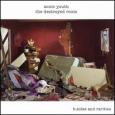
destroyedIt’s hard to imagine what gets relegated to a Sonic Youth B-side.  Not that they are indiscriminate in their selections, but unlike many bands, their discs (as of late) haven’t been all that long, so it’s not like they couldn’t squeeze the extra track on there). Of course, I rather prefer when they don’t force extra tracks onto a disc, and so, a collection like this is a good place for these songs.

Fortunately, the liner notes give a context and explanation for all of the songs, which really helps to locate them in time (and in what SY were doing at the time).  The disc opens with the 11 minute jam “Fire Engine Dream.”  It’s loud and raucous and yet also beautiful.  And the liner note comment:  “Let’s see who’s here and who’s not” is just fantastic.

The surprising track for me is “Razor Blade” a folky singalong by Kim (she’s done a few of these, so I’m not sure why I’m surprised).  The next piece is also one of Kim’s.  “Blink” is one of her more ambient/talking pieces.

There’s a couple of interesting noise experiments “Loop Cat” and “Campfire,” and they are followed by the beautiful “Kim’s Chords,” an amazing, amazing instrumental.

The last few tracks are all furniture themed (as evidenced by the cover of the disc).  According to the liner notes, the furniture was essential in that they played them and sat on them.  The titles don’t actually reflect the furniture involved, however.   The instrumentals are surprisingly melodic and, for a first or second take, sound very complete.

The disc ends with a 25 minute version of “The Diamond Sea” (as if the 20 minute version on Washing Machine weren’t long enough!).  It’s not too revelatory, but it is a great song nonetheless, so why not add a few extra minutes to it!

As with most B-side collections, this is mostly for SY fans.  Although anyone interested in esoteric pieces (nothing too outlandish like on the SYR series) would find plenty to enjoy on this disc.  Since the pieces all come from 1994 and later, if you like this period SY, it’s a worthy addition.

[READ: September 27, 2009] Federer as Religious Experience

The anal retentive part of me wishes that I had written about this article in the same post as “Democracy and Commerce at the U.S. Open,” because they would serve as a very interesting contrast in styles from an early essay to a later one. However, this piece is so marvelous that it really does stand on its own.

In the years since DFW was last paid to go to a tennis match (at least I assume that a) he was paid to go to this one and b) that he was actually at this match,) his persona has evolved from the golly-gee, so-much-to-see naif of the first piece to the I’m-here-to-watch-this-phenomenal-guy of this piece. And I have to say, his enthusiasm is infectious. (more…)

Read Full Post »

adidasSOUNDTRACK: TV ON THE RADIO-Dear Science, (2008).

sciencThe problem with TV on the Radio for me is that their first EP is so damned good that anything else they do pales in comparison.  Having said that, Dear Science, comes really close to topping that EP.  I liked Cookie Mountain (their previous disc) but I felt like they put so many elements into the mix that it detracted from the best part of the band: Tunde Adepimbe & Kyp Malone’s vocals.
And so, on Dear Science, the vocals are back up front where they belong.  This disc is a lot less busy, which may seem a little like selling out, but instead, it just heightens the complexity and originality of the band’s work.  The disc rocks hard but it also heightens some really cool jazz and dance elements.    But it all comes back to the melodies and vocals for me.  And on Dear Science, they pretty much outdo themselves.

And you can dance to it!

[READ: September 30, 2009] Shiny Adidas Tracksuits and the Death of Camp and Other Essays

After reading David Foster Wallace’s essay in this book, I looked at the other articles here and decided to read the whole thing.  And I’m really glad I did.  It’s an interesting book full of, funny and often thought-provoking pop culture articles circa 1996.  As with some of the other pop culture/political books that I’ve read several years after they were relevant, it’s often weird to look back and see what things fully occupied the popular landscape at the time.  And, when a piece is completed dated, it’s pretty obvious, and sometimes unintentionally funny.  But there are many pieces here that are timeless (or at least hold up for a decade), and those are still really good reads.

This book also does a good job of summarizing the tenor of the defunct Might magazine.  A dose of irony, a splash of humor and a lot of criticism of what’s trendy.

The strange thing to me about this book, though is the targets that they chose to go after sometimes.  Rather than critiquing right-wing attitudes or corporate shenanigans (which they do touch on), they really seem to be after pop and rock celebrity.  For instance, there are two separate articles which take a potshot at Eddie Vedder (this was around the time of the Ticketmaster fiasco which didn’t put him in the best light but which could hardly be seen as only self-serving).  This seems rather unfair, unless his sincerity could really be called into question by a bunch of ironic jokesters.  Magazines like Radar and Spy used to do snarky articles like this. I’d always thought that Might was a little better than that.  But indeed, there’s one or two pieces here that have a holier- (or perhaps indier)-than-thou attitude.   Which may have been fine in the 90s but which seem petulant now.

But aside from those, the irony-free pieces are very enjoyable.  (more…)

Read Full Post »

glist1SOUNDTRACK: DEERHUNTER-Microcastle/Weird Era Continued (2008).

deerSomehow, I can never remmeber what this disc is going to sound like when I pop it in.  Once it gets going the songs are all familiar and very good, its just that initial listen, where I forget that the band is rather delicate and poppy.  I tend to forget this because well, the bands name doesn’t sound delicate, and the album artwork has skulls all over it.  So, to put it on and hear pleasant keyboard songs is alwaya  bit of a surprise.
The guitarsd are jangly and have an almost 60s folk rock sound and yet the drums are very electronic  (I presume its a drum machine) and the vocals stick out as rather unlike the 60s style.  There is also a wonderfully low budget/hazy quality that pervades the disc.  It sort of envelopes the disc in a layer of cotton keeping the sound consistent and sometimes narcoleptic.

And yet despite that sort of sleepy feel, the catchciness of the songs shines through.

The last few songs of Microcastle especially provide a really strong set of songs.  And they lead into Weird Era very nicely.  For although it is clearly the same band, Weird Era is a very different disc.

It is a far more rocking/noisy affair.  And although there area  number of very short instrumental pieces, for the most part, the songs are catchier and a bit more fun.  Ideally, mixing the two discs together would provide an overall more well rounded listening experience.

[READ: September 15, 2009] Glister 1-3

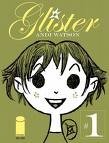
This is a strange little series from Andi Watson.

I’ve enjoyed just about everything he’s written/drawn, mostly for his artistic style, but really because of his off-kilter and wholly fascinating sensibilities. So what makes this series so odd is the rather almost-sloppy style he uses for the backgrounds and other characters.  Maybe it’s not sloppy so much as “fuzzy” which lend an air of spectralness to this supernatural tale.

The other thing that is odd about the series is that everything suggests that this will be a long running story.  The story has a convoluted set up and a weird plot (and Issue #1 even includes an unrelated sub-story).  The inside back cover also has all manner of things that suggest we’re in for the long haul: a letter-writing address, a contest to design a teapot, etc.  But no, the series ends after three issues. Weird. (more…)

Read Full Post »

hideousSOUNDTRACK: TOPLESS WOMEN TALK ABOUT THEIR LIVES soundtrack (2006).

topI learned about this soundtrack from a very cool article in The Believer (the beginning of which is online here).  In the piece, the author claims to have never seen the film (he was given the soundtrack by a friend) and he doesn’t want  to change his associations with the music by watching the film.  And now, I too can say I have never seen the film, and likely never will.  And I really enjoy the soundtrack too.

The soundtrack is sort of an excuse to showcase a bunch of bands from New Zealand’s Flying Nun record label.  Featured artists are The 3DS, The Bats, The Clean, Superette, Snapper, The Chills, Straightjacket Fits, and Chris Knox.

It’s nigh impossible to give an overarching style to these songs.  Even when the bands have multiple songs on the soundtrack, they are not repetitive at all.  Even trying to represent a genre would be difficult.  The opener “Hey Suess” is almost a surf-punk song, while Chris Knox’s gorgeous “Not Given Lightly” is a stunning ballad.  There’s a cool shoe-gazer song “Saskatchewan,” and some great simple indie rock (a bunch of other tracks).

The only thing these bands have in common is that they’re all from New Zealand.  And as with any large body of land, no two bands are going to sound alike.  Nevertheless, all of the bands fall under the indie rock umbrella.  It’s a great collection of songs that many people probably haven’t heard.  It’s worth tracking down for the great collection of tunes and, if all you know about New Zealand is The Flight of the Conchords.

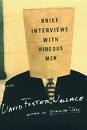
[READ: September 24, 2009] Brief Interviews with Hideous Men

After finishing Infinite Jest I wasn’t sure just how much more DFW I would want to read right away (of course, seeing as how I have now read almost all of his uncollected work, that is a rather moot point).  But when I saw that John Krasinski (of TV’s The Office) was making a film of this book, I had to jump in and read it again.

Obviously, there are many questions to be asked about this film ().  Is it going to be based on all the stories in the book?  (Surely not, some are completely unrelated).  Is it going to be just the interviews? (Probably, and yet there’s no overall narrative structure there).  And, having seen the trailer, I know structure is present.  I’m quite interested in the film.  In part because I didn’t LOVE the stories.  Well, that’s not quite right.  I enjoyed them very much, but since they weren’t stories per se, just dialogue, I’m not afraid of the stories getting turned into something else.  The text isn’t sacred to me, which may indeed make for the perfect set-up for a film.

Anyhow, onto the stories.

The obvious joke is that the author of Infinite Jest has created a book with “Brief” in the title!  But indeed, many of these stories are quite brief.  Some are only a couple of paragraphs (which true, from DFW that could still be ten pages).  But, indeed, most of the interviews in the book are brief too (except the final one in the book, which is nearly 30 pages).   (more…)

Read Full Post »

genxSOUNDTRACK: THE DEAD SCIENCE-Villainaire [CST054] (2008).

villainThis is probably the most fascinating album that Constellation has released recently.  I’d never heard of The Dead Science, but evidently they have a few disc out already.

The main thing one notices about this disc is the lead singer.  His voice is fascinating: a sort of slow, whispered falsetto laced with an incredible vibrato.  It almost sounds like he’s struggling to sing (although clearly he isn’t).  So take this delicate voice and put it over a series of songs (each one very different) that feature rapid time changes, punk breaks, mellow guitars and/or a harp.

The music is definitely strange and yet I found it very engaging.  I also thought that I wasn’t really absorbing the music since it was so esoteric, and yet after listening to it again today I realized I knew when all the breaks and interesting bits were coming up.  The disc definitely needs repeated listens to get what’s going on, but it is a fascinating collection.

[READ: September 23, 2009] Generation X

As with many books with multiple covers, I never seem to be able to find a picture of my cover online (my copy is a nuclear green, which I’m sure I spent a few minutes selecting back then).  I bought this book in November 1992 (I know this because that was back when I wrote the date I bought a book on the inside cover of the book). I know that I loved the book when it came out because it made me an instant fan of Douglas Coupland (I bought Shampoo Planet just one month later).

And Gen X is a generation-defining book. The margins of the book are filled with cartoons and slogans and definitions of Gen-X speak.  Now, I’m not sure if anyone ever used these definitions or if Coupland made them up.  I certainly never heard anyone say them.  Nevertheless, real or not, they work well as a frame of reference for the way (some) 20somethings in the 90s thought about culture and their place in it.

And so, by proclamation, this book speaks to every slacker and is ever so grunge and slacker and ironic and slacker and…well, no.

I’m actually surprised that I enjoyed this story as much as I did back then, because I’m not sure how it spoke to my 23-year-old self.  And from a vantage point of 17 years later, I’m surprised at how earnest and honest the book turns out to be. (more…)

Read Full Post »

dfwshelfSOUNDTRACK: LAND OF KUSH-Against the Day [CST058] (2008).

kushLand of Kush is a huge orchestra created by Sam Shalibi.  Shalibi is a maniac of independent releases, creating everything from orchestral pieces to solo records all with his unique blend of middle eastern tinged music (featuring his oud playing).

This album is inspired by Thomas Pynchon’s Against the Day, a book I have not read.  As such, I can’t say if the music works with the book, or indeed if the songs with lyrics have anything to do with the book at all.  The liner notes essay that Shalibi wrote reveal his deep appreciation for the book and how it made him hear this music.  Pretty neat.  Against the Day the book is over 1,000 pages, so I won’t be getting to it anytime soon.

The CD has 5 tracks: three of them about 8 minutes, one at 14 minutes and the centerpiece comes in at 21 minutes.  To read more than I’m going to say about this band and the album, check out the Constellation Records page.

In general, I find Shalibi’s music to be fascinating, but sometimes a bit much.  He is not afraid to pull out all the stops.  And I think that’s to his credit.  He does free jazz, psychedelic and middle eastern phrasing, often within one song.  And while it’s often very enjoyable, it can also be exhausting.

And that is the case with this disc. The 21 minute “Bilocations” is such a brilliant piece of music.  The main musical line is just fantastic: middle eastern instruments playing a sort of James Bond type suspense theme.  And the vocals are simply amazing.  The singer (and I regret to say I’m not sure which one she is) is snarling and sexy and brings the whole piece to life.  I’ve never heard anyone say “economics” with such emotion before.  And I enjoy probably the first 15 or 16 minutes of it.  The last five drifts into a sort of solo for voice which gets a bit tiresome, actually, especially after the intensity of the first part.

And yet it is then followed up by the last two songs, each about 8 minutes long, again with fantastic motifs that propel these weird and wild pieces beyond the middle eastern psychedelic soundscapes into actual songs.

Despite my amorphous criticisms (I think that the disc is just too long to appreciate in one sitting (and I find middle eastern music is hard for me to digest in more than small doses)) this is my favorite of Shalibi’s releases.  And some day I hope to read the book, too.

[READ: September 19th ish 2009] short uncollected pieces

This is my second (and final, I think) review of multiple DFW uncollected pieces.  There are a few uncollected pieces left that I’m going to read, but they’re all longer and will likely deserve their own post.  Most of these pieces are very short, and I don’t have all that much to say about them.  But, heck, I’m a pseudo-complestist, so I want to have them all here.

All the text in bold, including the links comes from (where else?) The Howling Fantods.  Thanks! (more…)

Read Full Post »

« Newer Posts - Older Posts »