 SOUNDTRACK: RUSH-Caress of Steel (1975).
 Despite the fact that this album is largely considered a failure, it’s one of my favorite Rush albums. There’s so much weirdness about it that I can see why it isn’t terribly popular but there’s so much goodness that it makes me a bit bummed that some glorious tracks are overlooked.
It opens with the one track people know from the disc: “Bastille Day,” a rough raw rocker that is heavy and really sets the tone for the first side of the disc. The heavy heavy riff is reminiscent of Black Sabbath and other early metal pioneers. I also learned that they were touring with Kiss around this time, so maybe that’s where they got some of their heavy riff ideas from. I of course cannot imagine Rush and Kiss touring together. That must have been a real trip.
The second song, the amusing “I Think I’m Going Bald” is rather obvious, especially the way he delivers the title line, but man the guitar solo just rocks and rocks and rocks. “Lakeside Park,” a real location outside of Toronto is a gentle tribute to youth. This quote amuses me no end, and is something I just read about.
The first real highlight for me is “The Necromancer,” a wacked out 12-minute mini epic. It opens with a spoken word introduction, setting the tale of three travelers fording a river. The first part is pure psychedelia, with screaming guitars going from ear to ear. The second part is heavy with a slow pounding riff and Geddy’s screamed vocals It features a long headphone-happy guitar solo. And just when you think it’s over, there’s some crazy sound effects and, yes more guitar soloing.
The third and final movement sees the return of By-Tor from “By-Tor and the Snow Dog.” By-Tor is now a good guy and he scares off the Necromancer. I always enjoyed playing this part on the guitar as the chord progression is really pretty.
Side Two is one song, a full side, their first proper epic. Called “The Fountain of Lamneth” it focuses on a man’s quest for this elusive Fountain. It has six parts. The first, “In the Valley” is a pretty, acoustic ballad that expands into a loud rocker. It introduces our anonymous narrator, and by the end its sets the tone with a loud/quiet explanation of his satisfaction and dissatisfaction with his life.
It’s followed by the insane “Didacts and Narpets” (Teachers and Parents (anagram on Narpets). It’s just drums and shouting. Evidently it’s designed to show a young man fighting with teachers and parents, and sure why not. It’s pretty out there, but it’s only 90 seconds long. (I’ve always enjoyed it).
The middle sections are really quite mellow. More of that beautiful classical guitar that Alex does so well. The songs don’t remain mellow the whole time, with “No One at The Bridge” adding some loud aggressive bits. But “Panacea” stays quite mellow, with some beautiful guitar harmonics. The next bit, “Bacchus Plateau” is a really pretty song despite its ultimately downer message, and probably could have been a hit if tit weren’t part of 20 minute song..
The song ends with him finding the fountain. And yet rather than rejoice, he’s exhausted. But I’ve always enjoyed the “message” of the song: “Life is just a candle but the dream must give it flame.” It’s inspirational and depressing at the same time. It ends with a reprise of the opening acoustic bit. It’s a tidy song and a wonderful first attempt at an epic track.
The only reason I’m surprised this didn’t sell well is that it works so well as a trippy 70s disc, ideal for sitting around with headphones on in one of those round chairs. I assume its the heaviness that turned away fans of Pink Floyd and the like. And, well, probably the downer message and really weird title of the disc (what does Caress of Steel mean anyhow?) might have had something to do with it.
[READ: March 10, 2010] Rush, Rock Music and the Middle Class
I read about this book in an article from The Walrus. And I thought to myself, it’s geeky enough to love Rush, but how about reading an academic treatise about Rush? I’m so there.
Well, I haven’t really read a truly academic (as in published by a University Press) book in a while, but it didn’t take too long to get back in the swing of things. Plus, if I may be so bold, ethnomusicology seems like a lot more fun than philosophy.
As the subtitle implies, this book looks at Rush as music for the middle class. The only thing I had a hard time with the book was the definition of middle class. It is specifically aimed at a U.S./Canadian middle class (although the UK does enter into it too), and with all of the definitions thrown around, middle class seems very broad. The easiest breakdown to see was based on employment and the most prominent type of employment among Rush fans was “professional” (including librarians and IT people). So, evidently I am middle class. I only say this because for the most part classes are hidden in the US (they aren’t, of course, but there are many attempts to try to keep them hidden).
This concept of class obviously pervades the entire book. But before we get too hung up on that, we must not forget that the real focus of the book: the music of Rush. (more…)

 SOUNDTRACK: BLUE ÖYSTER CULT-Imaginos (1988).
 I think of this as the last BOC album (although they have released two since this one) because it was the last one that I was really aware of when it came out. My roommate Glen was super excited about it and we listened to it all the time. And even though I’ve said that Fire of Unknown Origin is my favorite BOC disc, I think this one may be better.
 SOUNDTRACK: BLUE OYSTER CULT-Club Ninja (1986).
 My roommate Glen is the only person that I know who not only owned this record but also played it a lot. No doubt it was his relentless playing of this disc that now leads me to think of it rather fondly, even if it is pretty poorly regarded as far as BOC discs go.
 SOUNDTRACK: BLUE ÖYSTER CULT-The Revolution by Night (1987).
 After the amazing Fire of Unknown Origin, BOC, returned (retreated?) into keyboard-fueled tracks. And we know that where BOC is concerned, keyboards=crossover attempts. Now I don’t know if it’s just my own preferences, but I feel like the lightweight pseudo-metal here is better than their earlier stabs at lightweight pseudo-metal (Mirrors, etc). I assume it’s because I grew up listening to metal around this time, so even if it’s not terribly original, it’s at least comfortable.
 SOUNDTRACK: BLUE ÖYSTER CULT-compilations and live releases (1978-2010).
 For a band that had basically two hits (“Don’t Fear the Reaper” and “Burnin’ for You”) and maybe a half a dozen other songs that people might have heard of, BOC has an astonishing number of “greatest hits” collections.


 This doesn’t include any of the “budget price” collections: E.T.I. Revisited, Tattoo Vampire, Super Hits, Then and Now, The Essential, Are You Ready To Rock?, Shooting Shark, Best of, and the 2010 release: Playlist: The Very Best of).
 The lesson is that you evidently won’t lose money making a BOC collection.


 And, although none of them have “Monsters” for the average person looking for some BOC, any disc is a good one.


 Then, in 1994 we got Live 1976 as both CD and DVD (which spares us nothing, including Eric Bloom’s lengthy harangue about the unfairness of…the speed limit). It’s the most raw and unpolished on live sets. 2002 saw the release of A Long Day’s Night, a recording of a 2002 concert (also on DVD) which had Eric Bloom, Buck Dharma an Allan Lanier reunited.

 They also have a number of might-be real live releases (fans debate the legitimacy of many of these). Picking a concert disc is tough if only because it depends on the era you like. ETLive is regarded as the best “real” live disc, although the reissued double disc set of Some Enchanted Evening is hard to pass up. Likewise, the 2002 recording is a good overview of their career, and includes some of their more recent work.

 If you consider live albums best of’s (which many people do) I think it’s far to say that BOC has more best of’s than original discs. Fascinating. Many BOC fans believe that if they buy all the best of discs, it will convince Columbia to finally reissue the rest of the original discs (and there are a number of worthy contenders!) in deluxe packages. I don’t know if it will work, but I applaud the effort.
 SOUNDTRACK: MARK EITZEL-Candy Ass (2005).
 I’ve liked Mark Eitzel since my friend Lar played me “Johnny Mathis’ Feet” back in college. I got some of his solo discs, but by around 2000, I’d more or less given up on him. Someone donated a copy of this solo album to the library, and since we weren’t keeping it, I brought it home.
 SOUNDTRACK: BLUE ÖYSTER CULT-Cultösaurus Erectus (1980).
 BOC came back with a vengeance on this disc. From the cool title (c’mon that’s a cool title) to the futuristic fossil on the cover, this album is all heavy.
 SOUNDTRACK: TORI AMOS-“Juarez” (from To Venus and Back) (1999).
 This song was the first that I had heard of what was happening in Juarez, Mexico. In AP Magazine (Oct 99) Tori Amos said:
 SOUNDTRACK: BLUE ÖYSTER CULT-Fire of Unknown Origin (1981).
 This was the first BOC album that I bought. The video for “Burnin’ for You” was all over MTV (although I don’t remember it at all, now). And I was an instant convert to BOC. I listened to this disc constantly.
 SOUNDTRACK: A CAMP-Colonia (2009).
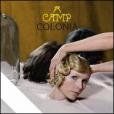 This is the second album from the side project of The Cardigan’s Nina Persson. This disc was created with her husband Nathan Larson from Shudder to Think. Their first album had a country flair to it, but this one eschews that entirely for a pop feel that is entirely different from The Cardigans’ two main styles: the “cheesy” happy pop of “Lovefool” and the bitter guitar pop of their later discs.
 I Just Read About That...