Feeds:
Posts
Comments

Archive for the ‘Authors’ Category

SOUNDTRACK: THE DEAD MILKMEN-Beelzebubba (1988).
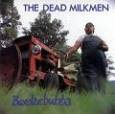
Why the hell do you think they call it a burrow owl anyway?

Beelzebubba is pretty close to the pinnacle of The Dead Milkmen’s career.  Of the 17 songs, there’s only one or two that fall flat.  But there are so many that rise to greatness.  The wholly un-PC James Brown-mocking song “RC’s Mom” which is pretty much all about beating your wife is in hugely questionable taste, but the funk is quite funky.

The brilliant “Stuart” is the culmination of all of the white trash mocking/spoken word nonsense songs.  And then there’s the outstanding single “Punk Rock Girl.”  It is simultaneously catchy as all hell and yet whiny and kind of off-key.  It’s really magnificent and was suitably lauded.

The strange thing to me is that the actual released “single” was for “Smokin’ Banana Peels” (an EP with that title was released with an absurd number of dance remixes).

“Sri Lanka Sex Hotel” is an angry rant that references The Killer Inside Me and talks about having sex with everything.  It’s pretty bizarre, but is musically fantastic.

True, the back half of the disc suffers somewhat (“Howard Beware” and “Ringo Buys a Rifle” are just okay), but the disc ends with the sublimely vulgar “Life is Shit” a gospel-tinged song that matches Monty Python’s “Always Look on the Bright Side of Life” for faux uplift.

Future DM discs would feature some good songs, but the band pretty much peaked with this one.  I’m so bored I’m drinking bleach.

[READ: Week of April 5, 2010]  2666 [pg 637-701]

What a difference a week makes.  The style and writing of Part 5 is markedly different from Part 4.  It is far more laid back and focuses primarily on one individual, Hans Reiter (who we know from Part One is Archimboldi).

The Part opens with information about his parents: his father had one leg (he lost the other in WW1) and his mother was blind in one eye.

Hans’ father, after losing his leg, was in the hospital, expounding on the greatness of smoking.  (He even gives a smoke to a man wrapped head to toe in bandages–and smoke pours out from all the cracks).  When he left the hospital, he walked home–for three weeks.  And when he arrived back home he sought the one-eyed girl in the village and asked for her hand in marriage.

Hans Reiter was born in 1920. He proved to be unreasonably tall: (At 3 he was taller than all the 5 year olds etc).  And he was most interested in the seabed.  There is much information from his childhood of his love of the sea (when his mother bathed him, he would slip under the water until rescued).  At six he stole a book, Animals and Plants of the European Coastal Region, which he more or less memorized and was the only book he read.  And then he began diving, investigating the shoreline.

His father evidently hates everyone and thinks all nations are full of swine (except the Prussians).

Hans also enjoyed walking and he would often walk to the surrounding towns: The Village of Red Men (where they sold peat), The Village of Blue Women , The Town of the Fat (animals and butcher shops); or in the other direction, he went to Egg Village or Pig Village.  Or even further along was the Town of Chattering Girls (who went to parties and dances).

He almost drowned twice.  The first time he was initially mistaken for seaweed as he was floating in the water.  (After he had discovered laminaria digitata).  He also began to draw seaweed in his book.  (The seaweed connection is pretty thorough as he was described as looking like seaweed when he was born).  The tourist who saved him was named Vogel.  He believed in the general goodness of humanity, but he felt that he was a bad person for initially mistaking Hans for seaweed.  Vogel also talked endlessly about the virtues of masturbation (citing Kant as an example). (more…)

Read Full Post »

SOUNDTRACK: THE DEAD MILKMEN-Bucky Fellini (1987).

C’mon, I’m the walrus, damnit.

Bucky Fellini ups the ante from Eat Your Paisley in that the band sounds really accomplished at this point.  The songs are still silly, but they’re not quite as jokey (except for the hit single, but more on that in a second). There’s even lap steel guitar, violin and backing vocals!

Dave Blood’s bass is really something of a force at this point, propelling songs with interesting riffs.  Rodney  “Cosloy” Anonymous sounds great.  And, Joe Jack Talcum gets quite a number of songs to sing: the mellow (and very twisted) “Watching Scotty Die” and the more rocking “Rocketship.”

“Big Time Operator” is a supremely silly song based on a very simple blues riff.  It features the first (utterly wretched) DM guitar solo (look out Stevie Ray Vaughn!) and even showcases a “humming” solo from Rodney (just me!).  While  on the other end of the spectrum, “Surfin’ Cow” is mostly instrumental which is catchy and full of surprising intricacy.

“Instant Club Hit (You’ll Dance to Anything)” was indeed a club hit.  It’s snarky and silly (complete with a drum machine) and it name-checks some of the most prominent college radio bands of the time.  You could easily have built a good collection of British college rock from their list of who you’ll dance to. (instead of giving your money to a decent American artist like himself).

The Dead Milkmen keep getting better and better.  They’re still funny, but they’ve proven themselves to be far more than a novelty act.  Blow it out your hairdoo cause you work at Hardees.

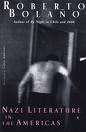
[READ: April 1, 2010] Nazi Literature in America

I’ve read a lot of books that are, shall I say, weird.  But this one is definitely the most unusual when I think:  what would possess a person to write it?

Nazi Literature in the Americas is written as an encyclopedia of Nazis writers who have lived in North, Central and South America.  Except that all of the writers are fake.  So, essentially Bolaño has invented 30 characters, and created rich, fully detailed biographies about all of them.

Some of them are very short (a couple of pages) while a few are over ten pages long, with details of books/poems published, critical reception and even untimely deaths.   The biographies are grouped according to categories (The Mendiluce Clan; Itinerant Heroes or the Fragility of Mirrors, Forerunners and Figures of the Anti-Enlightenment; Poètes Maudis; Wandering Women of Letters; Two Germans at the End of the earth; Speculative and Science Fiction; Magicians, Mercenaries and Miserable Creatures; The Many Masks of Max Mirebalais; North American Poets; The Aryan Brotherhood; The Fabulous Schiaffino Boys; The Infamous Ramírez Hoffman).

And although they are not chronological, Luz Mendiluce (whose bio I read separately) features prominently as a constant “reference point” and creator of one of the prominent Nazi publishing houses.  She had created a publishing empire where Nazi works were spread throughout the continent, and it seems that everyone had a title published by her company Fourth Reich.

What’s so weird about the book is that the people are fake, everything about them is fake (although they are placed firmly within history) and yet their stories are still compelling.  Bolaño has employed a mildly sympathetic tone to these people.  Not sympathizing with the Nazi aspect, but sympathizing with them as humans.

There were one or two who I didn’t really enjoy.  And I admit that I enjoyed the North Americans more; since I know more about North than South America, the facts surrounding these authors resonated more.  But I thoroughly enjoyed most of these biographies.

Of course, just when you think the book is all the same, the final biography changes everything.  In this one, Bolaño himself appears as the writer of the book.  He writes about Ramírez Hoffman in the first person, mentioning himself by name and getting personally involved in the story of this final, skywriting author.  It completely subverts the work before it and leaves you more confused than when you started (although a lot happier for having read it).

The final section of the book is an Epilogue foe Monsters.  It provides a brief biography for all of the secondary characters mentioned in the main body.  It also details the publishing houses and magazines, and finally lists  a bibliography of all books published.  The amount of detail that Bolaño created here is staggering.

But aside from all the Nazism, the book can be quite funny.  Like the conclusion for Luz Mendiluce Thompson, which ends with her driving a car into a gas station.  The final line: “The explosion was considerable.”

It’s tempting to say that this “novel” is not representative of Bolaño’s writing, but I think that’s false.  From what I’ve read so far, Bolaño doesn’t conform to any style in his books: each book is designed differently.  But like this one, they all deal with South America, with violence, with politics and are filled with humor.  So, yes, I guess this is pretty representative.

Oh, and the translation by Chris Andrews is, once again, fantastic.

For ease of searching I include: Bolano

Read Full Post »

SOUNDTRACK: THE DEAD MILKMEN-Eat Your Paisley (1986).

Who has angered the volcano gods?

My friend Paula is the only person I know who truly appreciated the Dead Milkmen.  And we spent many a car trip singing/shouting lyrics like “B.F. Skinner has eaten my dinner” (“Where the Tarantula Lives”).  While this may not be great literature or even terribly clever, there’s not too many songs (punk or otherwise) who name check B.F. Skinner.  So there.

Of course, “Beach Party Vietnam” is not quite as clever, although

– Hey Frankie, aren’t you gonna give me your class ring?
– Oh I’m afraid I can’t do that, Annette
– Why not?
– ‘Cause I don’t have any arms!

Never fails to entertain.

This second Milkmen disc jumps light years above the first.  The band sounds more accomplished, the recording is fuller and the lyrics are more bizarre and often funnier.  Rodney Anonymous Melloncamp does wondrous things with his vocal stylings (he’s still very bratty, but he does different “accents” this time).

It even features an interesting instrumental “KKSuck2” which, while under 2 minutes, holds up quite well as a solid song. And there’s some fun being poked at Hüsker Dü on “The Thing That Only Eats Hippies” (“Now it’s got  a sweet tooth for long hair so Bob and Greg and Grant you should beware.”)

Joe Jack Talcum is featured on vocals on “I Hear Your Name.” (a rather tender ballad) and on prominent background vocals on the wonderfully chaotic and super fun to sing along to “Two Feet Off the Ground.”  And “Moron” has the delicious opening verse: “Hanging out on the commode listening to Depeche Mode.”

Only six songs are under two minutes here, and that’s a good thing: their songs seems more fully realized (with actual parts!).  “Earwig” has three  different sections, even.  And while two songs are around 5 minutes long, the bulk are just under 3, the perfect length for a punk pop song (well, not quite pop, but at least pop-skewering.)

This is definitely the album to pick up for early DM fun.  ‘Scuse me while I puke and die (ha ha ha ha).

[READ: March 31, 2010] The Skating Rink

I simply can’t keep away from Bolaño these days.  I don’t even love 2666 and yet I’m very happily tracking down Bolaño’s other books, starting with this one.  (Which I guess technically is his third written novel if this bibliography is true–and why wouldn’t it be?).

This story is written in a fascinating way:  There are three narrators.  Each gets a chapter (from 1 to 10 pages) to tell the next part of the story.  The narrators are: Remo Morán, Gaspar Hereda and Enric Rosquelles.

As the story opens we learn pretty quickly that a murder has taken place.  But we don’t learn any details at all.  We also learn that the titular skating rink is going to play an enormous part in the story.  The story is set in Spain in the city of Z (which is quite close to the cities of X and Y).

In the first story line, we learn that Gaspar has gotten a job from Remo.  He knew Remo a long time ago, and when he returned to town, although he didn’t seek Remo out, it was quite fortuitous that they were acquainted.  And this job is as a night watchman at a local vacation campground.  He hangs out with El Carajillo and learns the ins and outs of the camp.  Eventually he becomes infatuated with two women, an opera singer and her younger charge.  He shares many conversations with the younger woman, and she seems (distantly) fond of him. (more…)

Read Full Post »

SOUNDTRACK: THE DEAD MILKMEN-Big Lizard in My Backyard (1985).
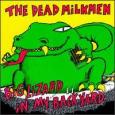
My friend Alison said the other day that she had “Bitchin’ Camaro” stuck in her head.  And soon thereafter, so did I.  So Philadelphia’s Dead Milkmen are a bratty punk band.  They skewer all kinds of things: pop culture, racists,  right wing pigeons, junkies and, quite possibly, music itself.

This first record showcases quite a breadth of song styles.  Although they stay comfortably within the realm of two-minute punk, they plays “blues,” “jazz,” and even “surf.”  Interestingly, their guitars are quite treble-filled which is a bit unusual for a punk band (typically pretty bass heavy). And yet a song like “Swordfish” (“I believe in swordfish!”) has a pretty wild and creative bass line running through it.

But I think the Milkmen are most well-known for their lyrics.  So Big Lizard starts in right away with lyrics that could easily offend the wrong target: ‘Cause we hate blacks and we hate Jews/And we hate punks but we love the F.U.s.”  Of course, the chorus reveals the truth: This is a tiny town and we don’t want you hanging round.”

“V.F.W.” stands for veterans of a fucked up world.  “Beach Song” opens up like a beach song until you get the bratty, screamed lyrics: I don’t wanna be on the beach NO FUN!.”  Of course, “Violence Rules” tackles a real issue: “violence rules, guns are cool and we’ve got guns in our school.”  And there’s the twisted, “Takin’ Retards to the Zoo.”

We also get one of my favorite catchy lyrics (from “Nutrition”): “I’ve got nowhere to go/Just hang out on the street/My folks say I’ve got no ambition/ At least I give a shit/About the stuff I eat/Yeah! I care about nutrition.”

Only 6 of the 21 songs are over 2 minutes, so musical styles definitely come fast.  Rodney Anonymous’ vocals are snotty and funny (even when the lyrics aren’t especially funny, the delivery is).  We only get one song with Joe JAck Talcum singing (he’s the whiny guy).  It’s so hard to tell if his delivery is serious at all, and yet I find it very endearing (and he’ll get much more prominence on later discs).  So, this disc is fairly simple, but it works very well for what it is: in your fast, bratty music, that is quite often very funny.  It’s not perfect, but it’s pretty darn good.

And it features “Bitchin’ Camaro.”  I’m going to go to a hardcore show and see F.O.D.

[READ: March 23, 2010] “The Pura Principle”

I have been intending to read Díaz’ The Brief Wondrous Life of Oscar Wao for quite some time.  I just haven’t yet.  So I was pleased to get a chance to read one of his short stories to get a feel for his writing.

One thing I had been told about Oscar Wao was that it mixes English, Spanish, Spanglish and a kind of ghetto slang which makes the book shall we say, more difficult to read if you’re a suburban gringo like myself.  But hey it’s set in New Jersey, so at least I know the towns he’s talking about!

This story is like a short story version of that summary of the book.  The writing is indeed in English, Spanish and Spanglish (and when the second sentence–the crux of the story– is “No way of wrapping it pretty or pretending otherwise: Rada estaba jodido” you know this is not your typical English short story.  I still don’t have an exact translation for that sentence (and it took a while to realize that Rafa was a person’s name) but I got the gist, and I was delighted by how much I followed the story. (more…)

Read Full Post »

SOUNDTRACK: KATHLEEN EDWARDS: Back to Me (2005).

This is Kathleen Edwards’ middle disc.  It continues in the vein of her first, although I think her voice sounds smokier and better.  The opening two tracks are stellar, catchy, snarky/funny and just fantastic.

She has a few mellower songs on this disc (and I’m not a big fan of mellow country folky music).  But as with some of my other favorite singers, her passion and her lyrics make even a slower song interesting.

“Summerlong” is another song that seems like it was a hit long ago.  It just sounds so comfortable and catchy that I feel like I’ve known it forever.   BUt even better is the slide guitar fueled “What Are You Waiting For?”

Strange as it sounds, I think I like her first album overall better than this one; however, there are more songs on Back to Me that I like more than those on Failer.  Whatever the case, Edwards is a great songwriter with a wonderful voice.  And I certainly look forward to more from her in the future.

[READ: April 3, 2010] Echo

I have been reading Echo since Issue 1.  But my subscription lapsed, and I wound up missing an issue.  So I put off reading it until I managed to get the back issue.  Which I finally did.  Phew!

And now I was lucky enough to read a huge chunk up through issue 20.  And I have to say tit is absolutely preferable to read Terry Moore in large chunks rather than one issue at a time.  (Of course, I’ll still be subscribing and reading as I go, because missing that issue killed me!).

Several new developments have occurred since Issue 11 or so.  The most important one is that it is clear that Annie and Julie’s DNA are merging.  Julie is able to hear more and more of Annie’s thoughts.  But also, because Annie has melded with this alloy (and the alloy is, for lack of a better scientific way to explain it…magic), Julie has gained healing powers (in addition to crazily explosive powers). (more…)

Read Full Post »

SOUNDTRACK: VIC CHESNUTT-At the Cut [CST060] (2009).
Vic Chesnutt died in December.  I have limited exposure to him, although I really enjoyed his previous Constellation release North Star Deserter.

This release (his second to last) shows him playing with much the same line up as North Star.  And it is just as harrowing and passionate as the other.

It opens with the fantastic “Coward” in which, stating how courageous it can be to be a coward her proudly sings “I am a Coward!”.  This track is one of the rocking ones on the disc, which is split pretty evenly between cacophonous rockers and slow moody acoustic pieces.  Another great rocker is “Chinaberry Tree.”  The lyrics are simple and the chorus is just the words Chinaberry Tree, but it is fantastic.

My preferences run to faster music, so I enjoy his noisier tracks to the simpler, acoustic ones.  And yet, lyrically, his songs are so moving that I easily get sucked into the narratives.  The most notable song on the disc is “Flirted with You All My Life” which is about death, specifically about his past suicide attempts.  It’s really moving.  And even the seemingly simple “Granny” is a well-written mood piece.

Chesnutt had all kind of physical problems (when he was 18 he was in a car accident and had been mostly paralyzed) and he had been in pain most of life.  It’s a shame he felt compelled to end his life, but we still have his music to enjoy.

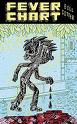
[READ: March 27, 2010] Fever Chart

About half way through this first-person book, the narrator has a mental breakdown and tries to bite his hand off.  That should tell you right off the bat whether or not you want to read the book.  (Add to that that the narrator also has terrible bowel problems).

I had received an excerpt from McSweeney’s over the summer, and of all three books in the sampler, I enjoyed this one the most.  Little did I know how utterly surreal the story would get once that excerpt was over!

The cover of the book shows a man walking down the street with blood dripping from his hand.  This seemed like an odd choice to me.  However, for the bulk for the story, the narrator seems to be walking down streets with blood dripping from his hand (the one he eventually tries to bite off) so it perfectly encapsulates the tone of the book.

The story opens in the middle of a series of events from the narrator’s past (the first few sections are written in a wonderfully disjointed way that keeps the reader off balance).  Jerome Coe is currently living in an Apartment in Boston.  It has no heat.  His toilet is frozen solid and he is sleeping between his mattress and box spring to keep warm.  After ages of complaints to his landlord, one day the heat kicks on.  Full blast.  And Jerome cannot turn it off.  Soon, wallpaper is peeling of the walls and steam is flowing from his windows.  He is naked in his apartment and is preparing to run outside into the freezing weather just to escape the heat.

While he is standing outside, half-naked, a car pulls up and the driver, a woman named Tommy, asks him to jump in. (more…)

Read Full Post »

SOUNDTRACK: RUSH-Permanent Waves (1979).

When my friend Doug and I were hanging out back in the 80s, we both were getting into Rush at the same time.  And because this album was in black and white this was the last Rush LP we bought.  Imagine our surprise when it turned out to contain “The Spirit of Radio” one of the best hard rock anthems ever.

The cover art also featured a newspaper that read Dewey Defeats Truman.  But the band got in trouble for it from the Chicago Tribune!  I’ve never actually seen an actual cover with that headline (or the proposed fix: Dewei Defeats Truman).  Huh, thanks internet, here’s a picture of it.

The disc  also contains some (more) of my favorite Rush tracks.  “Freewill,” a fantastic “smart” song features some insane guitar and bass work in the middle sections.  And side one ends with “Jacob’s Ladder,” a 7 minute mini epic with precious few words that really evokes the simple concept of the sun’s rays bursting through clouds.  It’s surprisingly moving.

Side two features two more short tracks: Entre Nous suffers from side two syndrome: it would have been a hit if it was on side one.  While “Different Strings” is probably the last mellow song the band would write until the acoustic tracks on Snakes and Arrows.

For me, the best song is “Natural Science.”  A three-part mini 9 minute mini epic that features very cool lyrics, acoustic and electric guitar, a mid-song (short) drum solo and an incredibly intense heavy metal section.  And I have been really really psyched that they play this live again.

This disc marks an interesting transition from the prog rock heyday to the poppier commercial side that would soon arrive.  It’s a great mix of truly classic classic rock, real virtuoso performances and a couple of nice pretentious epics.  You’ll but it for Spirit of Radio, but you’ll get hooked by Natural Science.  “A quantum leap forward, in time and space….”

[READ: Week of March 29, 2010]  2666 [pg 565-633]

Before I start with the final week of the Crimes, I wanted to acknowledge everyone else who has been doing a great job in the endurance-o-rama that is the winter/spring 2666 online readathon.  I have been terribly remiss in mentioning (and even reading) as many of these posts as I would have liked (oh where does the time go).  But there’s some folks who have been doing a great job bringing up issues and suffering through The Part About the Crimes with me.

Obviously our friends at Bolanobolano are hosting this event and keeping wonderful track of details that I’m too exhausted to do myself.

And of course, the cohosts in Crimes, Infinite Zombies, are keeping tabs on all manner of thoughtful aspects of this book.

Steve, who I often read on IZ, also posts at his own site: A Solipsist’s 2666.

The Daily Snowman has been offering interesting thoughts, as well as a Paragraph of the Week (often from 2666).

Naptime Writing always offers thoughtful comments as well as a quote of the week.

Bleakonomy offers brief summaries and ideas, as well as non-2666 related thoughtful ideas.

Alone with Each Other offers that rarest of birds: someone who really likes The Part About the Crimes.

I haven’t been reading these blogs as much as I would have liked (and maybe someday I’ll post a comment to one of them long after we’ve all finished reading), but what I’ve read, I’ve appreciated.  So thanks for keeping me company out here.

And on to the last (and best) section of the Part About the Crimes.

I don’t know if the slow plodding death after death was like climbing a hill, but these last 68 pages were like speeding downhill with the top down.  So much was packed into it.  I was totally rejuvenated, thrilled to meet new (!) characters and totally unsurprised when the Part ended and absolutely nothing was resolved. (more…)

Read Full Post »

Sarah and I watched a bit of the third or fourth episode of this show when it aired on CBC.  But jumping into the middle of this show is difficult.  The characters are established pretty quickly, their quirks are all explained in the first episode, and it’s a bit hard to care about them without knowing their whole story.

So, when the show released on DVD, I decided to give the whole series a shot. And it has now given me a new favorite actor of the month: Sherry Miller who plays Mrs Jarlewski is just fantastic.  She’s like an older,  subtler version of perennial  favorite Portia de Rossi.

The show also introduced a cast of relative unknowns (who have all gone on to do more since then), and gave a wonderfully twisted role to former Growing Pains dad Alan Thicke (he’s an alcoholic, a philanderer and a wannabe (but not very good) actor).  And in a (presumably) unintentional nod to Growing Pains, his wife’s name is Carol, too.   (more…)

Read Full Post »

SOUNDTRACK: RUSH-Hemispheres (1978).
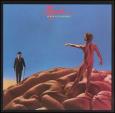
Or maybe this is my favorite Rush album.

And what’s not to like?  A naked man on the cover, a 20 minute song (in 6 parts (which is a sequel to a previous song!)), and a 9 minute instrumental.  It’s prog rock heaven.

The “title” track is a continuation of a song from the last album (and so is called Cygnus X-1 Book II; Hemispheres)).  It’s a thoughtful look at balancing the two halves of the brain: love and reason.  In true epic style, the forces are represented by Apollo, bringer of Wisdom and Dionysus, bringer of Love.  Apollo teaches the people how to fend and care for themselves.  They’re thrilled and delighted with themselves until they feel kind of empty inside.

Dionysus arrives: he teaches them love and music, dancing and drinking.  And they embrace this wholeheartedly.  But this leads to cold and starvation.

And so, as is natural, the people were split with the two sides coming forth [hey this sounds familiar].  And of course, they fight each other.

It gets a little confusing from there when the spaceship from Part 1 arrives and after telling his story of going through the black hole it unites the fighting forces (You can also hear musical snippets from Part 1).  And yet, musically it works wonders.  The epilogue is a peaceful, well-written acoustic bit that sums up the themes of the song quite nicely.

The second side has three tracks: “circumstances,” a short, heavy rocker that I have always loved.  I think the main reason is because each time they enter the chorus, Neil plays either 1, 2 or 3 cymbal crashes depending on which verse they’re in (math geek!).

The next song, “The Trees,” is another classic.  Starting quietly, with a classical style acoustic guitar, we learn that there is trouble in the forest.  As the song rocks to an end, the trees are all keep equal by hatchet, axe and saw.  Over the years I’ve thought of many different explanations for this song.  And to me that’s the mark of a good story.

The final song is probably my favorite Rush song.  “La Villa Strangiato” is a 9 minute instrumental with a dozen sections and is subtitled “An Exercise in Self-Indulgence.” It is a tour de force showcasing all their skills.  I was delighted that they had started playing it live again on their more recent tours.  And, I was even more delighted to see that the middle section featured Alex telling a ranting, random, crazy story.  Alex has always been very silly, but it hasn’t come out all that much musically. So, this was a great opportunity for him to let loose.  I have no idea what he was rambling about in any of his bits, but the snippets I’ve heard have all ben quite funny.

This was definitely the heyday of prog rock, and yes, it is sadly missed.

[READ:  March 28, 2010] “I.D.”

It’s been a little while since I’ve seen a Joyce Carol Oates story anywhere.  For a time, it seemed like I read one every few days.  So it’s nice to have her and her gruesome stories back.

This story focuses on a young girl, Lizette.  As the story opens we learn that she is feeling the effects of a beer buzz and it is making her 7th grade math class drag on.  (We later learn that she had about a quarter of a can of beer, but that’s still too much at 13)!

She is currently concentrating very hard on getting a napkin with her lipstick print to classmate, J.C.  J.C. has been left back and he is baaaad.  Lizette is wearing lipstick because her mother didn’t come home last night.  In fact, Lizette is not sure when her mom last came home.  It’s been a few days at least. But then, her mom has left her alone before, so she’s not terribly concerned. (more…)

Read Full Post »

SOUNDTRACK: Big 4 Thrash Tour (2010).

During my recent trip down metal memory lane, I learned that the Big 4 Thrash bands may be touring together.  The Big 4 would be: Metallica, Anthrax, Megadeth and Slayer.

When I was a young metal dude, these were definitely my big 4.  I own the first 5 or so albums by all of these bands.  Megadeth was the first to fall out of favor (around 1990), then Anthrax (around 1993), then Slayer (around 1994) (although they came back nicely in the last few years) and the Metallica (around 1997 although really they’ve drifted the furthest from the thrash world, and probably I should’ve stopped sooner).

I haven’t really listened to any of these guys’ newer releases (although I did get Slayer’s 2001 release, God Hates Us All–and I wanted to add this wonderful quote from Araya, who sings of ever so much death and destruction: “when you see someone and if you’re a human being you respect them and treat them as human beings”), so I can’t say that I’m the target audience for this tour.  However, I am delighted that these 4 bands, whose music I loved while growing up, are still together and still touring.

I wonder what the audience make up for this show is?  Is it old fogeys like me (who are still younger than the band members, at least) who would have wet themselves for this tour back in 1989, or is it a new generation of thrash kids who would mosh the crap out of me?

Either way, I won’t be going to this concert (in Poland or in Greece for that matter) but nor will I be going should it come to a theater near me.  But I’ll be delighted to hear how it goes.

[READ: March 29, 2010] “Bystanders”

I was prepared not to like this story (actually an excerpt from a novel).  It is set on a mountainside on the border of China and Tibet.  And it was about mountain climbing, a subject about which I care very little.  And as it started  feared it was going to be another story about battling with the elements on top of a mountain, blah blah.

But rather, the story went in a different direction entirely.  While the young protagonist is watching the sun set on the mountains she hears gun shots.  Ad i the distance, she sees a man fall.  The guides come over to offer her a hand but she refuses.  They force her down behind the rocks as they call for her father.  Then she flashes back to another time when her father selflessly came to someone’s rescue.

There were many cool ideas in this story.  I loved the idea that she was sitting in two countries at the same time.  I loved even more the later idea that the glacier has moved the border between the to countries and that soldiers had to remeasure and replace the flag.  But really, it was the final line, “that by making his care, his very life and limb, equally available to all, he deprived [his family] of an exclusivity they had a right to expect” that was incredibly moving.

I don’t know that I’ll track down the novel Every Lost Country, but I did enjoy this excerpt quite a lot.

Read Full Post »

« Newer Posts - Older Posts »