Feeds:
Posts
Comments

Archive for the ‘Authors’ Category

SOUNDTRACK: NEIL HANNON-“A Lady of a Certain Age” (From the Basement) (2008).

[DISCLAIMER: This post was published on September 6th, see that post for details].
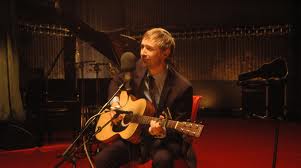
This video comes from the From the Basement series.  As I mentioned, the Radiohead live show comes from this series, but initially, rather than recording a whole album, more often that not they recorded a few songs.  The bad news is that many of the videos are no longer available on the site (there’s a DVD, but I’m unclear exactly what it includes).  But for each artist, there seems to be one streaming video.

This is a mellow song from The Divine Comedy’s Victory for the Comic Muse album.  It’s probably my favorite track on the album.  It’s a literate and clever song about an older woman.  This version is simply Neil and his acoustic guitar.  I tend to think of The Divine Comedy as being a heavily orchestrated band (their music is wonderfully symphonic) so it’s surprising for me to hear a DC song in this simple acoustic format. 

And yet, Neil’s voice is stellar and it easily holds up i this intimate setting.  Visually it’s not that exciting (it’s just Neil sitting, playing and singing), but musically it is wonderful. 

[READ: August 31, 2011] One Book Review

Unlike previous columns, Zadie only reviews one book in this one.  And she sets up her reading by talking about summer books.  I recently posted about Summer Books, and this would have been a nice addendum.  Zadie talks a bit about the fun and joy of Summer books.  Her assessment is that a summer book should really engross you: 

If every few minutes you find yourself laying it flat upon your chest and wondering about lunch then it is probably not a summer novel. 
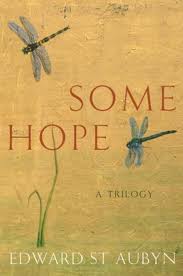
Zadie’s summer book is a continuation of a series.  The author is Edward St. Aubyn and this third book is called At Last (the culmination of the confusing “Patrick Melrose Trilogy” Some Hope, Mother’s Milk and At Last–confusing because the first book of the trilogy (Some Hope) was actually released in England as three separate books–Never Mind, Bad News and Some Hope, making this the fifth book in the series)He has also written other books, but I’m not sure of any of them deal with the same family or not.
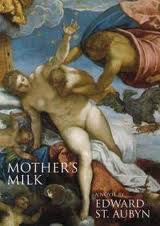
At last (and the series in general) is a semi-autobiographical story of a good family in name only.  There is an alcoholic mother, a pedophiliac father, and a main character, Patrick, who has shot heroin and chugged whisky and yet still manages to recite poetry.

Despite the darkness (and the fact that At Last focuses on Patrick’s mother’s funeral), the story sounds like a wonderful mix of dark humor and scathing wit.  Indeed, the previous book, Mother’s Milk was short listed for the Booker Prize in 2006 (he has written two novels in between). 

Zadie quotes extensively from the book and the quotes are really good: long  sentences that are well constructed and contain a bit of humor in almost every piece.  But it’s a subtle humor, and it seems like it takes a careful reading to make sure you get it all. (more…)

Read Full Post »

SOUNDTRACK:THEM CROOKED VULTURES-Live on Austin City Limits, Feb 13, 2010 (2010).

This set from Them Crooked Vultures is outstanding. I really like the album, but in a live setting these three (technically 4) guys are on fire.  They extend the songs a bit but are always tight as a drum.  Josh Homme is a great front man, even if he’s not that animated.  He shares guitar duties with Alain Johannes who is not on the album, but who gets some great sounds out of his guitar.

Dave Grohl is in his drum-pounding glory back there.  Man, he hits the drums hard.  And he seems to be really enjoying himself .

 And the biggest surprise (sort of, but not really) is John Paul Jones.  He fits in perfectly with the two younguns, and he really shows them how it’s done.  His bass work is phenomenal: fast, furious and accurate to a fault.  He also plays keyboards, an LED pulsing 12-(at least) string bass and a fascinating purple electric slide guitar contraption on “Nobody Loves Me and Neither Do I”.   Matt Rosoff from cnet explains this guitar here:

It looked like some sort of slide guitar with an electronic screen. I’d never seen anything like it before, so I did a little digging and found out from a March interview in Bass Player that it’s a custom-made axe created by Hugh Manson, who has been Jones’ tech for some time and who owns a renowned guitar shop in England. It’s essentially laid out like a lap slide guitar, modified so Jones can sling it over his shoulder and carry it around on stage, and with two extra bass strings at the bottom.

So what about that rectangular screen? According to a forum post on the EMG pickups site, it’s a MIDI controller that Jones can use to trigger stage lights. I imagine it could also be used to trigger various effects, similar to the modified Korg Kaoss controller that Manson built into a guitar for Muse’s Matt Bellamy.

If you’re already a fan of the band, you really need to check out this live show; they are amazing.  And if you’re not a fan, you will be after this show.  This is how I first heard  them and I was blown away.

You can watch the show online on PBS.

[READ: July 27, 2011] Five Dials Number 20

I didn’t expect to get caught up to Five Dials issues so quickly (has it really been 20 weeks already?).  This is the most recently releases issue!  They aren’t getting published as often as I expected.  Which is fine.  But the funny thing with this issue is that there were several printing errors in the initial run of this issue.  I don’t know if this has happened before, but it seemed so noticeable to me, that I had to wonder how it slipped by everyone.  The most obvious was that the front page had many ƒƒƒƒ characters (these were also evident in the Word Cloud later on).  There’s a word missing from the fiction “the thin cold stillness you got [  ] this part of the country” and there’s a crazy typo in the Fiction story later on. The errors have now been fixed.  But, the letter to the editor (and this has not been fixed) promises us a picture which isn’t there. “Here’s a photo of Doni at the reading – he did a brilliant job.”  I’ll assume they were partying too hard at the Port Eliot Festival to make sure  the issue was launch-ready

CRAIG TAYLOR-A Letter from the Editor: On Cable Street and General Interests
There were some serious race riots on Cable Street back in 1936.  Indeed,the head of the British Union of Fascists, Mosley, and his aggressive supporters were turned back by a noisy crowd (Irish women throwing fishy potatoes at them).  The rest of the magazine he says is general Interest, an anachronistic term from the 20th century before all magazines had to specialize in something.  I mentioned in my introduction that there was a photo error here.  Doni Gewirtzman performed a reading at the launch of Five Dials 19.  They couldn’t out the picture there, so they added it here.  Perhaps in Issue 21? (more…)

Read Full Post »

SOUNDTRACK: FLEET FOXES-“English House” (From the Basement) (2009). 

[DISCLAIMER: This post was published on September 6th see that post for details].

I love watching bands do things that I can’t exactly picture when listening to the song.  Sometimes it’s a scorching guitar solo.  Sometimes it’s an inexplicable keyboard sound. And sometimes, like with the Fleet Foxes, it’s gorgeous harmonies. 

I’m not saying I don’t believe that the Fleet Foxes can create such beautiful harmonies, it’s just that sometimes it has to be seen to be believed.  And in that respect, this video for the gorgeous “English House” is perfect.  It’s really neat to see all four of them hitting these sometimes complex harmonies while playing live. 

It’s also great to hear this wonderful song played in the great setting that From the Basement offers.  The only gripe is that it really looks like The Fleet Foxes could use a bath (which is somewhat less welcomed in HD).

[READ: August 30, 2011] “Gilgul”

I had no idea what “gilgul” meant; thankfully, it is explained in the story.  For some reason, I had a really hard time getting this story started.  I read the opening about three times before I could really settle down with it.  Once I did, I enjoyed it quite a bit.

It opens with a man, Ravitch, who was “encouraged” by a friend to sit with a Jewish “witch” who reads his fortune. She tells him things about himself (which he believes his friend had told her in advance) and offers to tell him when he will die.  He says no, blows it off and goes back to his life. Things the witch foretold start to come true, and while most of it is success for him, he is nonplussed and can’t really enjoy his new “happiness.”  He can’t stop thinking about the witch.    (more…)

Read Full Post »

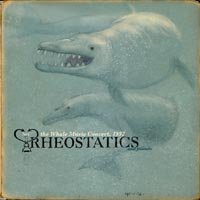
SOUNDTRACK: RHEOSTATICS-The Whale Music Concert, 1992 [Sets 1 and 2] (2005).

This is the second Rheostatics live CD that’s available from ZuniorWhale Music is a simply stellar album, and this concert focuses primarily on that disc, although there are a couple older tracks (and the then-new “Michael Jackson”) as well.  The big surprise about this concert is that they consider it a night of 1,000 stars: there are a ton of guests in this show (the majority of whom are even more obscure than the Rheostatics, I believe–the only two that I knew of before hand were Kevin Hearn and Andy Stochansky (who drummed with Ani Difranco for a while).  But guests like Tannis Slimmon, Doug Feaver, Tim Mech, Kevin Gould, Richard Burgman, Mitch Perkins and The Bird Sisters (and if you like Canadian music, the link for The Bird Sisters is to a cool blog called Raised on Canadian Radio: 1 Song per Day by 1 Uniquely Canadian Artist) add to the party atmosphere.

Anyhow, sometimes guests can really heighten a show.  And that’s the case for some of this show.  Of course, anyone who has read my criticisms of rap knows that I feel that too many guests spoil a good thing. None of these guests are “too much” here, but it does seem odd that there are so many!

The first set of this concert is awesome (the whole show was recorded to DAT and although there are a few weird drop outs, the set sounds great).  It’s like a greatest hits of early Rheos songs; the band sounds tight and they really respond to the audience.  “Rock Death America” is blistering, “Green Sprouts” is a fun little treat and “Palomar” and “King of the Past” sound fantastic.  It’s also funny to me how many great songs Tim Vesely is responsible for.  And they all seem to be featured here.

Set 2 is a little different.  It feels looser, a bit sillier, and is filled with much more Dave Clarke.  I’ve always known that Clarke was the goofball of the band.  He’s the chatty one when they’re onstage–he is full of goofy banter and he introduces most of the guests.  While it’s true that the Rheos aren’t entirely serious, I find Clarke’s goofiness to be a little off-putting.  And by the end of Set 2, he sees to have taken over the show.  He’s an excellent drummer, no doubt, but he hams it up on “Full Moon Over Russia” and I think he rather ruins “Queer” (one of my favorite songs) with his , yes, bad, singing.  And on “When Winter Comes,” the bridge is so beautiful, that his rantings in the verses are just too much for it.  Having said that, while I like the sentiment of “Guns” (although it is oversimplistic), the drum solo bit is quite cool.

The other thing that I kind of dislike in Set 2 is that the songs are really extended, but not in a good way.  I mean, “Queer” is 9 minutes, but it’s a lot of Dave Clarke and Kevin Hearn’ keyboard silliness.  And “Record Body Count” seems really slowed down or something.  However, the band closes strong with a great version of “The Wreck of the Edmund Fitzgerald” and what sounds like an amazing version of “Horses” (the beginning of “Horses” is cut off, which is a shame).

So overall, despite some flaws, this is a really good live release.  And since, it’s only $8.88, it’s totally a bargain.  Plus, there’s some great artwork by Martin Tielli as well.

[READ: August-September 2011] Tree of Codes

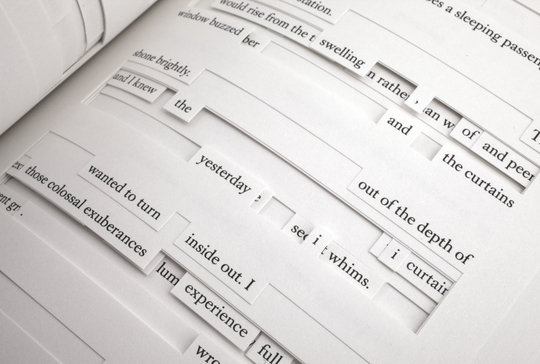
I first heard of this book through the Five Dials news feed (and there’s an excerpt of the book in Five Dials Issue 20 which you can see here).  Anyhow, I read about it and decided I wanted a copy for myself.  It’s not cheap, but you can just look at it to see how complicated it was to make (or you can watch this video) .

So this book follows the exact same logic as Of Lamb.  But unlike Harveys’ execution, in which she wrote out the words and made them into her own pages, Safran Foer creates a story out of an extant book.  The way the book is presented, he literally cuts out what he doesn’t want you to read. It’s also fascinating to me that this book came to my house in the same week as Of Lamb did (even though this came out much earlier–but as Foer says, there was no way for him to advertise the book).  They are absolutely similar ideas and yet their execution is so radically different.

When you open this book, you see holes.  Lots and lots of holes.  The pages have massive squares of text missing.  When you first open it, you can see many layers of text, some penetrating thirty pages down.  So you can read words that comes later in the book (you often read words from the following page if you don’t hold the page up correctly or put a piece of paper under each page).  Don’t believe me?  Here’s a picture:

Safran Foer’s explanation (at the end of the book) is that he loved the book The Street of Crocodiles by Bruno Schulz (which I’ve never heard of and have no idea what it’s about).  And he often saw a story within the story.  So, he decided “to use an existing piece of text and cut a new story out of it,” using only Schulz’s words.  But rather than presenting it in a conventional way (or even in an unusual way like Of Lamb), he wanted to push the boundaries of what a physical book could do. He was “curious to explore and experiment with the die-cut technique.” (more…)

Read Full Post »

SOUNDTRACK: RUSH-“You Can’t Fight It” (1973).

This is the B-Side of the first single Rush ever released (The A Side: a cover of “Not Fade Away”).  It was released briefly but has been long out of print.  Thankfully, people on the internets have access to all kinds of things. It’s pretty clearly Rush–Geddy sounds right, and it sounds like an Alex solo, so I think it’s fair to say that this is genuine.

It’s a pretty decent hard rock song from the 70s.  It sounds like it could be from any of the second tier bands back then.  It’s got some boogie and some swagger and it seems like it’s not about anything important (rock n roll, apparently).

While I’m obviously glad that Rush went on to bigger and better things, it’s fun hearing how confidently they fit into the context of music by their heroes.  This song has a cool riff, it’s quite heavy and it shows promise.

For a band that never releases B-sides or rarities or anything like that, I’ve been pretty surprised to see what is in their internet closet.

Enjoy!

(By the way, I’m not advocating the visuals of the video–I haven’t actually “watched” it–just the audio).

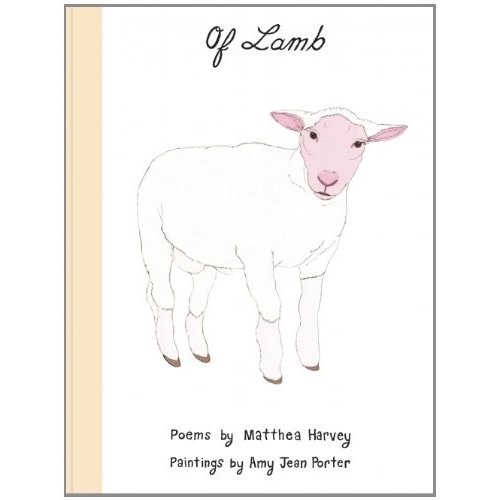
[READ: August 25, 2011] Of Lamb

This book is sort of subtitled: Poems by Matthea Harvey, Painting by Amy Jean Porter.

It’s the “poems” part that I have a hard time with, actually.  But let me get to that in a moment.

This book takes a nifty idea (an idea very similar to one that Jonathan Safran Foer is using in Tree of Codes, which, see tomorrow’s post) and fully realizes it.  But what’s funny is that she doesn’t tell you what this idea is until the afterword of the book.  So while I was reading it I wasn’t really sure what I was seeing.  The afterword made me say Oh, I get it now.  But I don’t feel that I can review it without explaining what she has done.  So, if you don’t want to know anything about the “secret” behind the book, skip the next paragraph.

[Spoiler?  Maybe.]

Okay, so essentially what Matthea has done is, she has taken a book at random (literally one she bought for $3 at a used book store), in this case, A Portrait of Charles Lamb, and she has created her poems out of that book.  In other words, on every page, she would find the words that she wanted to keep and she whited-out everything else (you can see an example in the book).  But rather than presenting the work like that, she had Amy Jean Porter make weird and cool paintings to go with every page’s worth of text (I assume Porter did the lettering as well?).  Since the book is about Charles Lamb, it was very convenient that his sister’s name was Mary.  So there was a Mary and a Lamb on almost every page.  Hence this sort of update of the Mary Had a Little Lamb story.

[end possible spoiler warning] (more…)

Read Full Post »

SOUNDTRACK: RUSH-“Not Fade Away” (1973).

I never understood this song.  Grammatically it drives me nuts.  “Love is real, not fade away.”  Why would someone write that?  Anyone with even a rudimentary grasp of English would know that that is just a horrible way to speak.  Okay, I got that off my chest.

So this is the first single that Rush ever released.  You can find out information about it on the web (of course, I didn’t know it existed until a couple of days ago).

What we get here is a pretty rocking version of this rock n roll standard.  The band has some nice group vocals on the chorus.  I like the echoed chanting of the chorus before the solo kicks in.  And I love the rough sound that Alex’s guitar has as the song opens.

As I noted the other day with the concert from circa 1974, the band was really all about Alex’s guitar work back then.  Geddy doesn’t do anything impressive on the bass (a couple of fills, but nothing special).  But Alex’s guitar solo is amazing (and you can hear snippets of future guitar solos buried in this solo).

It’s funny to me that when they recorded their covers EP Flashback, that they didn’t include this song, too.

Check it out:

The B-side comes tomorrow!

[READ: March 12, 2011] Babymouse: Skater Girl

Well, fair enough, I said that I liked Babymouse: Dragonslayer because it had a plot.  This story has a plot, too.  Interestingly, it ties in kind of nicely to the Dragonslayer story, too.  (It’s all about winning something).

As the story opens, Babymouse feels bad because she never wins anything.  She’s looking at all of the trophies which she has not won; then there’s an amusing fantasy of all the things she has won (honorable mention for spelling the word “the” correctly; honorable mention at the swim competition for “getting wet”; and amusingly, archenemy Felicia Furrypaws’ trophy for worst whiskers).

But despite her complaints about not being good at anything, we quickly see that she is actually very good at ice skating.  She rules the pond in town–until the big hockey players crash into her, that is).  She even daydreams of winning a skating trophy. (more…)

Read Full Post »

SOUNDTRACK: METRIC-Live at the 9:30 Club, June 18, 2009 (2009).

I love the new Metric album and this tour supported that disc, so, it’s a win-win for me!  Metric sound great live, and the notes on the NPR page where I downloaded this give a fascinating history of the band.  Evidently they burnt out in 2005 while touring for Live It Out.  So they made solo records and kind of went their separate ways.  Then:

in March 2008, Haines was on stage, in the middle of a live solo performance, when she had an epiphany: She was tired of being sad. While playing one of the standout cuts from her gloomy but beautiful album Knives Don’t Have Your Back, Haines stopped, turned to the audience and said, “I don’t want to play these songs anymore.” Instead, she spent the rest of the show performing her favorite Metric tunes.

The band reunited and made Fantasies, the poptastic album that I love so much.

This show plays pretty much all of the album (except “Collect Call” and “Blindness”) and they rock the house!  The only odd part for me is the opening track, “Satellite Mind.”  The band chose to have the first half of the song performed with just the keyboards, so it has no bottom end at all.  It sounds kind of tinny and weird.  Then when the guitars and bass kick in (for the rest of the show, thankfully), the band sounds whole again.

The other weird thing is Emily Haines’ banter.  I like chatty lead singers (–The Swell Season’s banter is great, Wayne Coyne’s banter is emotional but enjoyable), but there’s something about Haines’ musing that are just kind of…lame.  She’s very earnest, but her thoughts are kind of, well, vapid.  So, I just skip past all the chatter and enjoy the music.

It’s a really great, rocking set and the crowd is very into it.

[READ: August 25, 2011] Atlas of Remote Islands

If you need an unusual but doubtlessly cool book, my brother-in-law Ben is your man.  For my birthday and Christmases he often gets me books that I have never heard of but that are weird and interesting.

This book is no exception.  As the subtitle states, this is a book about fifty remote islands that virtually no one lives on.  True, some are inhabited, but many are not.  And a goodly amount of them are little more than icebergs (I wonder how they will survive global warming).  There’s even one that the accompanying story implies was created from bird droppings. (more…)

Read Full Post »

SOUNDTRACK: THE FLAMING LIPS-Live at Summer Stage, Central Park, NY, July 26, 2010 (2010).

This was a cool show that the Flaming Lips played in Central Park.  It came during the Embryonic tour and the setlist focuses on that album, but they play tracks from many of their more recent discs.  We get “The Yeah Yeah Yeah Song,” “Yoshimi Battles the Pink Robots” and “Do You Realize??” as well as “She Don’t Use Jelly” (has the band ever not played this song?).

Wayne Coyne is in good form, enjoying the weather and ranting or raving when appropriate.  The dis of George Bush that introduces “The Yeah Yeah Yeah Song” is rather cathartic.  And the lengthy but enjoyable intro/explanation of “I Can Be a Frog” is really great–drummer Cliph gets to give examples of the proper sound effects for a motorcycle, the breeze, a bumblebee and a sneeze.  And multi-instrumentalist/godlike figure Steven Drozd just plays the hell out of everything–I can’t imagine what the show would be like without him.

I have two problems with this show–I’m spoiled by the NPR downloads, so this bootleg recording from about fifteen rows out isn’t crystal clear.  NYCtaper did a great job setting up in a close location, but while the music sounds good, as he points out:

I recorded this set with my best mobile unit from literally within the first fifteen feet of the crowd — great for atmosphere, but not so good for avoiding much crowd participation. I was so close as to literally be underneath Wayne’s bubble during “Fear”. The listener should understand that this recording was captured from a prime experience location at this show. With that caveat, enjoy!

As I said, the music sounds great, and you can really hear all of the instruments and effects quite well, but Wayne’s voice is not so clear.  There are some bits where you can hardly hear him at all (but hey it’s a free bootleg so shut up), and two–the Lips are one of the most visually stunning bands around, so hearing a live show with no visual, where you know something awesome is happening onstage is a major bummer. I know this is true for every concert that you listen to, it just feels moreso here–I mean, I didn’t even know that he walked around in the bubble during the intro to the set. 

I read some complaints about the setlist–that there were only 13 songs played.  I can see the complaint, but what you’re getting during the show is extended versions of lots of the songs.  Many of the songs have codas at the end or interactive introductions, so “The Yeah Yeah Yeah Song” comes in around 7 minutes and “The Sparrow Looks Up At The Machine” clocks in about 9 minutes total (that’s a combined time of 4 or 5 songs usually).  And yes, Wayne does tend to chat a lot.  But he’s so sincere and his emotions are so genuine, it’s hard not to get wrapped up in them.  When I saw them live about eight years ago, it was one of the most joyous concerts I had ever seen.  And I’m sure they are only more so now (man I’m bummed I missed them with Weezer this summer).

[UNFINISHED: August 23, 2011] “El Morro”

It’s very rare that I don’t finish a story.  I was educated as a reader to carry on and to finish things.  You cant’ criticize something, I was told, if you don’t watch/read/see the whole thing.  But you know what, sometimes you just don’t likes a story. So why should I have to devote time to something if  I’m not enjoying it?

All this is leading to me saying that I didn’t like this story and I didn’t finish it.

I read about two pages of it and I will say this for it: I really liked the dramatic structure and the dramatic risk that Means took.  He has two characters in a car.  One of them won’t stop talking (about the same 4 topics) the other one is sick of him talking.  By the second page, she is actually putting her fingers in her ears to block out the man’s voice.  That’s brave writing because we hear a lot of what this man is saying.  And, while I’m not entirely sure why she didn’t want to hear it, I didn’t want to read it because it was really dull. (more…)

Read Full Post »

SOUNDTRACK: NEIL YOUNG-Trans (1982).

By most standards this Neil Young album is a disaster.  It’s so bad that despite updating his entire catalog and releasing all kinds of bootleg concerts, he has never issued this disc on CD in the States.  So, just what’s so awful about this disc?

Well, mostly it’s awful as a Neil Young disc.  Meaning, if you like Neil Young (either flavor: country/folk or hard rock/grunge) this disc is a big fat HUH??  Neil Young has gone all synthy?  And not just synth but computerized synthy–sometimes his voice is utterly like a computer.  It’s a travesty, it’s a shame, it’s an incredible surprise.  Unless you listen to it without thinking of it as a Neil Young record.

But after all that introduction, the biggest surprise is the first song.  You’ve been prepped for this weird album full of computer nonsense and you get the fairly standard (if a little dull) rockabilly type music of “A Little Thing Called Love.”  It’s a pretty standard Neil Young song for the time.  Hmm, maybe the album isn’t that weird.

Well, then comes “Computer Age” and the keyboards kick in.  Interestingly, to me anyhow, this is the year that Rush released Signals.  Signals was the album where Rush fans said Woah, what’s with the keyboards guys.  Similarly, “Computer Age” makes you say, geez, was there a sale on keyboards in Canada?  The keyboards are kind of thin and wheedly, but the real surprise comes in the processed vocals (Rush never went that far).  The vocals are basically the 1980s equivalent of auto-tune (no idea how they did this back then).  Because the song is all about the computer age it kind of makes sense that he would use this weird robotic voice.  Sometimes it’s the only voice, although he also uses the computer voice as a high-pitched harmony over his normal singing voice.

“We R in Control” sounds like it might be a heavy rocker (anemic production notwithstanding) until we get more computer vocals.  Again, conceptually it works (its all about the dominance of CCTV), but it is pretty weird as a Neil Young song.

And then comes yet another shock, “Transformer Man.”  Yes, THAT “Transformer Man,” except not.  This original version of the song is sung entirely in a processed super high pitched computer voice that is almost hard to understand).  The only “normal’ part of the song is the occasional chorus and the “do do do dos.”  It sounds like a weird cover.  Sarah, who loves Neil Young, practically ran out of the room when she heard this version.

“Computer Cowboy (aka Syscrusher)” continues in that same vein.  Musically it’s a bit more experimental (and the computer vocals are in a much lower register).  Although I think it’s probably the least interesting of these songs.

Just to confuse the listener further, “Hold On to Your Love” is a conventional poppy song–no computer anything (aside from occasional keyboard notes).  Then comes the 8 minute “Sample and Hold” the most computerized song of the bunch and one of the weirder, cooler songs on the disc.  It really feels like a complete song–all vocodered out with multiple layers of vocals, not thin and lacking substance like some of the tracks.  It opens with personal stats (hair: blonde, eyes: blue) and proceeds through a litany of repeated “new design, new design” motifs.

This is followed by a remake of “Mr Soul” previously only on Decade.  This is a new vocodered-harmonies version of the song.

The biggest failure of the disc to me is “Like an Inca” it’s nine minutes of virtually the same guitar riff.  The chorus is pretty wonderful, but it’s a very minor part of the song itself.  It is fairly traditional Neil song, I just wish it were much shorter.

So, this travesty of a disc is actually pretty interesting and, for me, pretty enjoyable.  Most of these synthy songs sound kind of weak but I think that has more to do with the production of the time. I’d love to hear newly recorded versions of these songs (with or without the vocoder) to see what he could do with a great production team behind him.

Trans is not a Neil Young disc in any conventional sense, but as an experiment, as a document of early 80s synth music, it not only holds up, it actually pushes a lot of envelopes.   I’m not saying he was trying to out Kraftwerk Kraftwerk or anything like that, but for a folk/rock singer to take chances like this was pretty admirable.  Shame everybody hated it.

[READ: July 5, 2011] Five Dials 19

Five Dials 19 is the Parenting Issue.  But rather than offering parenting advice, the writers simply talk about what it’s like to be a parent, or to have a parent.  It was one of the most enjoyable Five Dials issues I have read so far.

CRAIG TAYLOR & DIEDRE DOLAN-On Foreign Bureuas and Parenting Issues
I enjoyed Taylor’s introduction, in which he explains that he is not very useful for a parenting issue   That most of the duties will be taken on by Diedre Dolan in NYC.  They are currently in her house working while her daughter plays in the next room.  His ending comment was hilarious:

Also, as is traditional at most newsweeklies, someone just put a plastic tiara on my head and then ran away laughing at me.

I resist Parenting magazines, from Parents to Parenting to Fretful Mother, they all offer some sound advice but only after they offer heaps and heaps of guilt and impossible standards.  So I was delighted to see that Five Dials would take an approach to parenting that I fully approve of.  Dolan writes:

Nobody knows what works. Most people just make some choices and defend them for the next 18 to 50 years – claiming nurture (good manners) or nature (crippling shyness) when it suits them best.

And indeed, the magazine made me feel a lot better about my skills (or lack) as a parent. (more…)

Read Full Post »

SOUNDTRACK: President Obama reading Where the Wild Things Are (2009).

A President who is literate!

Apparently my video won’t fit here unless I space this section out better.

I don’t really have anything to say, except that I enjoyed hearing him read this.

And it’s fun to watch the Secret Service pretend to be invisible.

One more line should do the trick.

See the video here.

[READ: August 24, 2011] Wild Things

Okay, so this is a novel.  It is based on Where the Wild Things Are, the film by Spike Jonze and Where the Wild Things Are, the book by Maurice Sendak.  Obviously, Sendak’s book came first.  But, it’s only got about 60 words in it.  So, how do you make a film based on it?  Eggers and Jonze worked together for a long time to craft a screenplay and then (as Egger’s Acknowledgments explain) Jonze more or less took over the film and Eggers went off to write this book.

Hence, the book is fully titled:

The Wild Things: A Novel by Dave Eggers Adapted from the Illustrated Book “Where the Wild Things Are” by Maurice Sendak and Based on the Screenplay “Where the Wild Things Are” co-written by D.E. and Spike Jonze

I had read Egger’s except “Max” that was printed in the New Yorker ages ago and I liked it well enough, but it seemed so much like WTWTA, that I wasn’t sure what the point was (I didn’t realize it was an excerpt and, strangely enough, it’s an excerpt from several sections).  And since I had seen the film not too long ago (and honestly was kind of bored by it) I wasn’t really that excited about reading this.

But since I loved Zeitoun and this fur-covered book has been sitting near my bed for a couple of years now, I decided it was time.  And I really enjoyed it.

Well, here’s the thing.  This book is not a novelization of the film.  You notice that right away because the first chapter (which is awesome) is not in the film at all.  In it, Max rides his bike to his neighbor’s house.  His friend is not home but his mother is and when she sees Max all by himself and on his bike without a helmet she freaks out (even though they live about four houses apart).  His reaction and her overreactions are really very funny.

There are scenes from the movie in the book, of course.  It is adapted after all.  Indeed, it is more or less the same as the book, but there are many scenes which Eggers has added that really help to flesh out the story and give depth to everyone involved.  As a matter of fact, Max doesn’t reach the Wild Things’ Island until page 100 (out of 285 pages). (more…)

Read Full Post »

« Newer Posts - Older Posts »