I found this song through a fascinating series of clicks. Yesterday’s song from Real Estate was a pick for Fall. And next to it was a link entitled Ridgewood, N.J., Why Here? Why Now? I grew up right next to Ridgewood and I spent a lot of time there as a kid. So it’s pretty exciting to hear that there’s a mini-music scene happening there. With Senses Fail, Vivian Girls, and Real Estate coming from Ridgewood and Titus Andronicus coming from Glen Rock, Bergen County is totally hip (even my hometown of Hawthorne seems to be considerably cooler than it was when I left ten years ago–there’s a coffee shop!).
Back back to the song. I don’t enjoy this track quite as much as yesterday’s song from their new album. It’s missing a little of the fuzz that I really enjoyed from “It’s Real” (I find the picked guitar a wee bit too clean for my tastes). Indeed, for me, “It’s Real” is a small change but a giant leap sonically. Neverthleess, the verses and chorus are really quite pretty. And yes, the song does feel very summery and beachy.
Because they’re from my neck of the woods, I’m giving them the very curious distinction of having their song paired up with a letter from Issac Newton. Imagine the search results that will bring people here. Imagine, crazier still, that an image search for this Letter from Newton could produce their album cover. Woah.
[READ: September 15, 2011 (three hundred and thirty-nine years after publication!)] Letter to the Publisher
What better way to start off a Sunday than with a letter from Issac Newton? Yes, this is really an article from Issac Newton. And it’s available pretty freely just by searching for the title words, although JSTOR has a nice searchable version of it available. (This is the final JSTOR article for a while, after this it’s back to the 21st century).
What I especially loved about this letter was that the “long s” is used throughout the letter (like the word Congrefs in the bill of rights–see right). It makes it a challenge to read, but that is by no means the only challenge. According to the introduction, this letter contains “some more suggestions about his New Telescope, and a Table of Apertures and Charges for the several Lengths of that Instrument.”
And if you think that the wording of that is ungainly, try reading the letter itself. (more…)
Right from the start, the combination of the fuzzy guitar picking and the whacking drums was a major draw for me. Finding out that these guys are from Ridgewood, NJ (a town away from my hometown) was a little icing.
This is a charming little pop ditty. It propels along at a nice clip, it’s got a catchy chorus and it makes me feel warm and sunny. And for all of that it’s not even three minutes long. That’s a nifty little trick.
Interestingly, in NPR’s discussion of the song, the guys play the song “Easy,” but for some reason the full length song is for “It’s Real.” And I actually like “It’s Real” more, so good for the mix up.
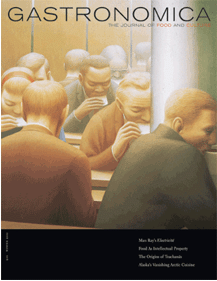
[READ: September 15, 2011] “The Patented Peanut Butter and Jelly Sandwich”
I actually read this Gastronomica article before the other one, but this seemed like a good Saturday subject. This article is the kind of thing I don’t normally write about. I read a bunch of non-fiction and for the most part I don’t bother ever posting about it because, really what’s the point of summarizing a nonfiction piece. Most of them I don’t have an opinion about, I just say hmm, interesting. But since I’m doing some special articles that were pointed out to me from JSTOR, I’m going to include this one for historical amusement (even if unlike the hobo memoir, this article is less than ten years old).
Anyhow, this brief article looks at the patented Smucker’s Uncrustable Sandwich. At the time, these were novel, but now they are ubiquitous. Smucker’s had taken two discs of white bread, filled them with an inner casing of peanut butter and then stuffed the PB with a splooge of jelly. It’s the shell of PB, which keeps the jelly from touching the bread and the crimping method to squish the breads together that really seal the patent. And, I admit, that despite the mockery they received for patenting a PB&J, I think they did hit on some novelties and have earned their unique status.
But the article proceeds to tell how other companies tried a similar idea and were summarily sued. So Shih unpacks the patent to see what Smucker’s has protected and how a lawsuit might be avoided (in short, Smuckers covered their bases really well (as you’d expect from a corporation), so it’s unlikely that a mom and pop PB&J machine will withstand the scrutiny). (more…)
This is the final Fall Music song I’m going to mention. “Replicate” was Robin Hilton’s song of choice for the fall, and I can see what he liked about it–there’s a lot of unusual sounds going on (in many ways it reminds me of Sparks or maybe sort of early Depeche Mode, although no one in the discussion mentioned them). It opens with a series of staccato string notes over a repeated lyrics (“it’s gonna, it’s gonna, it’s gonna…happen soon”). The strings build and build, but they stop before any major climax; they are replaced by a fast, kind of spazzing keyboard melody with more repeated vocals, (“it’s gonna, it’s gonna, it’s gonna…happen soon”). The staccato notes come back and both sounds build to another near-climax.
Until the chorus comes in with its supremely catchy but very cold “oohs”. Even the end builds but does not quite achieve the climax one would expect, although it is still satisfying.
It’s a very clinical song, cold and detached (the instrumental break has wood blocks that sound like a woodpecker banging a tree on a winter’s day). But the vocals are so warm, that they disarm the song of its coldness even if the chorus is “Will it replicate inside our bodies now?” At first I really didn’t like the song, but after a couple of listens, I really heard what Robin Hilton enjoyed. And I would like to hear more from them.
The video is pretty neat too:
[READ: September 19, 2011] “Animal Art”
This article was probably the most “academic” and “scientific” of them all five of the JSTOR articles I read. And by that, I mean, that it was researched and tested and full of abbreviations and as a result it reads very dry. Which is a shame (well, actually it’s not a shame, the scientific requirements are essential for there to be an academic article published)–what it needs is a cool popular version to lighten it up a bit (and it needs better pictures as well).
The article looks at the bowers of the bowerbird. The bowerbird is a family of 20 species of bird found in New Guinea and Australia. Bowerbirds are noted and named for the bowers that the males construct to win a mate (see photo at right). What’s interesting is that the different species of bowerbird construct similar nests but do things quite differently (some “glue” the sticks of their nest together with either spittle or insect secretions while others weave their sticks together). But they are all very particular about the nests they build:
When I shifted the position of a decoration, the bower owner either restored it to the original position or else discarded it in the forest. Decorations changed from day to day as birds replaced wilting flowers and rotting fruit with fresh ones.
The articles sets out to discover whether the traits that the male bowerbird develop in their nests are inherited or are learned. Diamond believes that they are learned because birds that are not very far apart use different techniques, but immature birds are often seen observing the adult birds to presumably learn from them. The nests are built by the males, but, similarly, the immature females go with the adult females to inspect the nests, thereby learning what traits to most look for in a nest.
But what seems to have inspired this paper was the bowerbirds’ proclivity for choosing colors to decorate their nests: most use flowers and mosses from the surrounding area, arranging them in beautiful colors. What Diamond did was to take colored poker chips (a series of uniform shape, size and texture) with varying colors to see if the bowerbird would choose based on color (his scientific conclusion is that it’s really impossible to tell because who knows what other variables are at play, but his more satisfying conclusion. is that the birds decorate by color.
So, Diamond put the poker chips in front of their bower (on the moss “mat” that looks like a welcome mat). And with one group of birds:
Within 10-30 minutes [three birds] picked up all chips regardless of color and discarded the in the forest.
While for a different group of birds, they quickly discarded any white chips (and one bird discarded the yellow chips as well). There was a marked preference for colors in this order: Blue>purple>orange>red>lavender>yellow>white. While these birds not only embraced the chips and used them for their decorations, other birds stole chips from their rival makes’ nests:
When I placed three chips of each color at bower W6, bird W5 stole within 3hr all blue, orange and purple chips, two red chips and no yellow, lavender or white.
(Poor W6 bird–he really has nothing). But the study shows that the birds hate the white chips! He even created a chart that showed that most of the birds kept 100% 0f the blue chips, and most of the purple chips while dismissing almost entirely the yellow chips; none of them kept any white ones. (One bird in the study seemed to be quite a pig–this is the one who stole from W6–he kept far more than the other birds, including 100 % of orange an 66% of yellow–i wonder if the females thought he was a gaudy show off?)
Incidentally, this study was done in 1986, so it does not account for the more recent discovery that bowerbirds will basically use any old crap to build their nests, provided it is colorful. Many people find this sad, but the birds don’t seem to mind. In the article, the author says that one of the birds came up to his colleague, stood on his shoe, and tried to steal the blue docks that he was wearing. Here’s a picture of a bowerbird with a whole bunch of blue clothespins.
I’ve enjoyed Los Campesinos!’s records in the past and I’m pretty excited about the prospect of a new release. This song doesn’t deviate too far from their previous releases although to my ear it sounds a bit more musical (more instruments, more vocals) and less abrasive. The basic elements are still there:great lyrics delivered in a more or less spoken way, followed on its heels by big shouty sections (and the whole band seems to be shouting along on this one).
This song also feels a little warmer, although the lyrics “by your hand is the only end I’ve foreseen” is either really dark or really naughty depending on how well it correlates to the verses. Regardless, the chorus is catchy and fun to sing and the lyrics are wonderfully twisted. Los Campesinos! have done it again.
And here’s the video.
[READ: September 16, 2011] “Jean-Baptiste Labat and the Buccaneer Barbecue in Seventeenth-Century Martinique”
I was interested in this article because it talked about the boucan and the buccaneer, and both of these things were mentioned in Book 9 of The 39 Clues. It was a weird sort of coincidence that the boucan which I had never heard of before should appear in two things that I read about week apart (and then this weekend the Pa Renaissance Faire was pyrate themed!). I was also interested because of the way this article was presented in the email to us: “if you have ever wondered on what foods a seventeenth-century missionary from the island of Martinique dined, check out this article from Gastronomica. (Hint: They include manatee, lizard, and parakeet)” made it a must-read.
While the article does, indeed make mention of these foodstuffs, it is by no means the extent of the article. Rather, Toczyski looks at what Labat, a French priest and a missionary, wrote in his extensive chronicle about his stay in the Caribbean. In particular, she focuses on the amazing breadth and depth of his gastronomical accounts (which includes details about all the meals they ate en route (the ship was amazingly well stocked–they even had a garden on board, which was under guard day and night (!); and then on the island he also talks in loving detail (with recipes) of all of the native dishes that he would eventually consume (including turtles, frogs and the palm worm (see picture at right (the picture and an awesome description of eating the palm worm is here at Boots in the Oven, at the bottom of the page).
This song was forecast as a great Fall song on NPR. The band’s name is perhaps too cutesy, but the music is interesting. The verses are jangly and in no way prepare you for the Beatlesesque (ie., soaring harmonies) chorus that follows.
There’s not a lot to the song, and on my first listen I wasn’t all that impressed in the beginning. But by the end of the song I was won over.
The song feels very familiar, but I can’t say that it sounds like anything in particular. The ooo-ooohs in the chorus are really pretty, the intro guitar is more intricate than I realized. And after just a few listens I was totally hooked. It just seems like more of a summer record to me.
I’m curious to see what else is on this record.
[READ: September 15, 2011] “A Hobo Memoir, 1936”
My company provided some links to interesting articles that are available on JSTOR, an electronic archiving resource. If you have access to a university database, chances are you have access to these articles. I was particularly struck by the fascinating subjects of a few of these pieces and for the next few posts I’m going to mention them.
I had to start with this article because for some reason my kids are obsessed with hobos. I don’t really know how it came about–reading older kids’ stories, I suspect. On our first train ride, we saw a freight car with a door open and there was much talk about hoboes sleeping in the cars and, hoo boy, it just escalated from there. And, despite the fact that hobos haven’t really existed in eighty some years, once you keep an ear open for the word, you hear it quite a lot (Craig Ferguson was calling his audience hobos for a while–it’s a good comedy word).
This article contains an introduction by Elizabeth Rambeau, assistant editor of the magazine, who gives us a brief history of John Fawcett and of hobos in general. Including this very informative distinction: a hobo is a transient person who looks for work while he travels, a tramp is a drifter who does not look for work and a bum is a stationary person who does not look for work. So, be mindful of the epithets you use! Fawcett, Rambeau tells us, was unlike most hoboes at the time. Indeed, he wasn’t really a hobo at all. He was the son of a wealthy doctor. But he grew tired of his life at boarding school and decided to take a trip on the rails from West Virginia to Texas. But he lived the hobo lifestyle, hopping trains, getting busted by the police, and not carrying any (or much, anyhow) money. He even hung out with a hobo named Shorty.
The reason that this article is noteworthy (in terms of hobo literature) is that unlike other hobo memoirs from the time, Fawcett was an educated man and a decent writer in his own right (most hobo memoirs were recollections from the hobos themselves, written by ghostwriters). This Memoir comes from meticulous diary entries that he kept during his entire trip. And, of course, the article includes hobo signs, everyone’s favorite piece of folk art. What’s interesting is that there are no extant records of original hobo signs. They were made with chalk and all were ephemeral. All of the signs we have are from people’s recollections and the signs included here were done by an art dept.
Fawcett’s original work comes from an unpublished 1991 book called Awakening of Conscience. What we have is a twelve page excerpt. In the author’s introduction, he explains his life situation, his family situation and his pressing need to have some freedom in his life. In hindsight, he can’t imagine what kind of grief he put his parents through (he left a note saying he was going to a friend’s house but then took a month-long hobo journey) and he regrets that. But he’s also pretty proud of what he did. (more…)
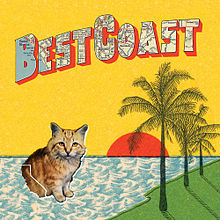
I really enjoyed the Best Coast concert that was downloadable from NPR. I liked it enough for me to rethink my initial skepticism about this album. But I have to say that I fall into a minority in that I really don’t like this album all that much. In concert, the band is loud and raucous–the songs are poppy but they have a kind of growly edge and a punk veneer, and singer Bethany Cosentino has a sneer to her cutesy lyrics that gives them a nice edge.
But all of that is missing from the album. In fact, to me this album sounds like a long-lost relic of girl groups from the 60s. And, blasphemy as it may be, I just do not like girl groups from the 60s. I hate the tinny sound and I hate the “my life sucks without a boy” sentiment that most of those songs project. (I love a good love song, I hate an insecure love song). And, for the first few songs at least, this album conveys both of those things.
Nevertheless, there’s a lot I appreciate about this record. I like that it’s lo-fi. I like that it’s just the two of them making all this music. I even like many of the lyrics (the lyrics that Cosentino describes as “about weed and my cat and being lazy a lot”). I also like that the songs are super catchy and super short ( no songs are over 3 minutes and that most are only about 2 minutes long).
So even if I don’t love the record sonically, I can appreciate the simplicity and ease of singing along that the album presents. And there are a few songs on the disc that I do like. I especially like “When I’m with You” (the bonus song) for being a stupid pop song but somehow transcending the stupidity.
As for the lyrics. They are little more than teen girl diary entries, except when they turn into college girl diary entries (and then they turn funny rather than sad). From a lyrical standpoint I am much more in tune with “Goodbye” (“I lost my job, I miss my mom, I wish my cat could talk. Everytime you leave the house, everything falls apart”) than with “Boyfriend” (“There’s nothing worse than sitting all alone at home. And waiting waiting waiting waiting by the phone. I hope that he’s at home. Waiting by his phone”).
I guess, overall, there’s just something about California pop music that I don’t like as much as my East Coast bands. [NYHC rules!].
[READ: September 14, 2011] The Emperor’s Code
Gordon Korman is back helming the series which is set in China. Now, I have seen pictures and movies of things in China, but the real scale of things has never come across to me until reading this book. Which is kind of sad for me, but it’s really cool for the book. I knew that the Great Wall of China was huge, but I never knew that it could stretch from Boston to San Diego with extra room at the end. I never appreciated the kind of training the Shaolin monks undergo (the description of the statue of Bodhidharma as being well over 750 steps up and taking over an hour to climb really sunk in for me just how big this place is!). In short, while I know that parts of the story disregard history, the historical parts are fascinating and informative!
Dan and Amy’s first stop is the Forbidden City, where they sign up for a tour. Dan sneaks out of the tour to enter an area where they think a clue is. Much like with Pee Wee Herman looking for the basement of the Alamo, Dan Cahill looks for the attic of the Forbidden City. And he finds it. And then he is caught by guards. But this little preview of Dan and Amy working separately doesn’t quite prepare us for the massive change in the series that Korman is preparing for us.
Dan and Amy start talking about what the clues means and the fact that they are Madrigals–are they (and their whole family line) really killers? This leads to much tension which ends with Amy wondering aloud if maybe their parents weren’t good people at all. Dan and Amy fight and Dan storms off. And through a series of scary events, he ends up in the clutches of Jonah Wizard (whom we have not seen for a long time).
And thus, for the bulk of the book, Dan is on his own. Amy, Nellie and Saladin work hard to try to find Dan and maybe even a Clue. Meanwhile, Dan is with Jonah, thinking that Jonah’s father is trying to contact Amy. Dan is still pretty angry so he doesn’t really care what Amy is up to (and he believes she is not trying to find him). But Amy is freaking out thinking of her 11-year-old brother in the most populous, hugest country all alone. But he’s not alone, he’s got Jonah Wizard, yo. And for much of the book, Dan lives the high life. He hangs out with Jonah, plays video games, lives a first class lifestyle and even gets to be backstage to see what it’s like to have tens of thousands of fans screaming at you. (more…)
I learned about Cosmo Jarvis through NPR. The DJs called it a love it AND hate it song. But I find that I mostly love it. The video is a blast to watch, but even without the video, the song is quite catchy and fun. It’s a half punk song and half folkie/trad song.
So who the hell is Cosmo Jarvis? Well, he was born in NJ, but is really from England. He’s a filmmaker and musician and he’s had a hit with the song “Gay Pirates” that Stephen Fry raved about on his Twitter feed! “Gay Pirates” is a fun shanty, but “My Day” is a full-on punk blast.
The song laments the state of things today and talks about how things were back in “my day” (which is of course funny since he’s 21). The verses are a kind of folkie/storytelling style (but with electric guitars) and the end of each verse has a guitar riff that sounds traditional to me. But when the chorus jumps in, it’s heavy, rocking, screaming punk.
Okay so the song is nearly 8 minutes long, which is probably overkill. There’s a fairly lengthy instrumental bridge about 5 minutes in which features guitar and tin whistle solos. And then the final 2 minutes are just fast metal screams of “My Day” with some wild soloing. Yes, it’s too much (I’ll bet the single mix is awesome), but it’s still an enjoyable song. Even without the video.
But you should watch the video, if only because it’s what the guys from Jackass would do if they were in a band and lived in the English countryside.
[READ: July 15, 2011] The Corrections
My company recently asked us if we had read any books over the summer. I was able to pony up this review for our company newsletter. I’ll be fleshing it out, but it’s pretty apt.
I’d put off reading this for a number of years, and I wish I had read it sooner. It’s a very detailed look at one family: Elderly parents, thirty-something kids, and a few grandkids. The depth of character development is amazing (and includes even depth of characters that the main characters interact with). It’s a long book but it is very rewarding—comic scenes, moving scenes and one or two shocking moments. It’s also the first time I’ve read a book where I thought, “even though I like this character, I think it would be better for everyone if he died.” It’s an unnerving thing to think, but Franzen really makes you think about how family members impact one another.
It took me forever to start reading this book, obviously. I wasn’t really interested in Franzen when all of the Oprah commotion came out, so I blew off this book entirely. I’ve recently grown more interested in him. But rather than reading his novels, I had decided to read all of Franzen’s New Yorker pieces. (And even though I wanted to read Freedom when it came out, I felt that I should read this one first). I wasn’t hesitant about reading it, I think I just wanted time to devote to it. Much like I needed time to devote to writing up this post. It’s been well over two months since I finished the book.
The Corrections is a wonderful, engaging story about three generations of the Lambert family (and many of the people they interact with). The matriarch and patriarch of the family, Enid and Alfred, live in the midwestern town of St. Jude. They have three children: Gary, a banker in Philadelphia who is (more or less unhappily) married with three children; Chip, a former school teacher and current playwright who sponges off of his younger sister while he tries to live the high life in New York City; Denise, a very successful chef who also lives in Philadelphia. She has no children. Gary’s children play a small but significant part in the story, keeping the three generations aspect working very well.
I found the first chapter a little slow and somewhat off-putting. I read an excerpt from the novel in the New Yorker, which was a piece about Chip. So I was surprised that the book opened with an older couple. The chapter deals with Alfred and Enid. Alfred’s dementia is hitting their household quite hard but Enid just feels that Alfred isn’t trying very hard. Because Enid has very little in her life, she wants nothing more than to have her whole family together “one last time” for Christmas. Enid and Alfred are long-married and this chapter picks up in the middle of a typical day. So it takes a few pages to get up to speed. Of course, once I did, I felt that the whole family was completely real and believable. (more…)
SOUNDTRACK: JONATHAN FRANZEN-Commencement Speech (audio) (2011).
You can hear the entire speech from the Kenyon College site.
[READ: May 28, 2011] Commencement Speech
On May 21, Jonathan Franzen gave a commencement speech to the students of Kenyon College. When I think about my commencement speech (from Judy Woodruff of CNN), all I can remember is that I had never heard of her (and when I typed her name just now I got it almost entirely incorrect–the only thing right was the “wood” part). I don’t recall a single thing that she said. [It’s also fascinating that I can’t find any record of this speech anywhere online–what a different world it was twenty years ago]. I rather expect that most people feel this way about commencement speakers. I have to wonder, if Jonathan Franzen had spoken at my college, would I have cared? Is there even a chance that I would have read any of his novels (had they been published of course) when I was in college? Would I be treating this any differently than my whatever speech in 1991?
But I like Jonathan Franzen and I wanted to read what he had to say.
His speech is about love. Love is kind of an odd topic for a commencement speech, isn’t it? I mean, aren’t they supposed to talk about the Future and Jobs or something? Or maybe even sunscreen? But really, what is more useful for a 21-year-old to think about than Love. Franzen hits the nail right on the head about Love, how it is a dangerous, risky proposition to put yourself out there, to take off your veneer and reveal all of your flaws–and hope someone will love you. Not new or novel, but still true.
The way that Franzen gets into this subject is through technology. It seems weird and artificial at first, but it’s a wonderful way to get into a young audience’s state of mind. They were probably all looking at their iPhones while he was extolling the virtues of his new Blackberry (the old person’s phone, right?). And when he segues into Facebook (who even knows if he has an account–but he seems to be well-versed with it, so maybe he does) you can imagine students raising their head in familiarity (maybe even updating their status) and wondering (as he puts it) if this 51-year-old guy is going to dis Facebook. (more…)
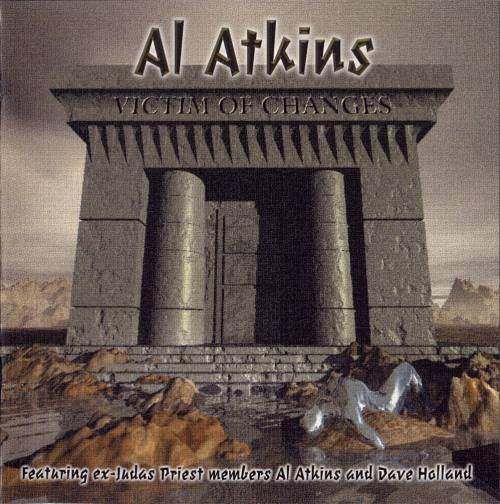
Al Atkins wrote “Victim of Changes,” one of Judas Priest’s greatest songs. And then he left Priest to get a real job. In 1998, he released the album Victim of Changes which contained a number of early JP songs, primarily ones from Rocka Rolla, but also this title track.
This version is quite faithful to the JP version (which is interesting because the early notes say that “Victim of Changes” was a melding of two songs). It’s fascinating, in hindsight to wonder if this is how the song really sounded (there are a few differences in it) or he is now covering the JP version. But the big difference of course if Atkins’ voice. In the middle, slower section he sounds quite a bit like Rob Halford. But he just cannot hit any of the notes that Halford brought to the song. And there’s really just no way to compete with that (even with multitracked and over-processed vocals).
It’s really hard to compare this (and other songs from that album) to the original. I mean, he wrote them, after all. But man, the Priest version is just so much better. Atkins has a strong, gruff voice. It works well for the style of the songs, but it just isn’t anywhere near as compelling as Halford’s. The other problem is the music–the guitars are full of cheesy pyrotechnics that overshadow the songs (I like guitar pyrotechnics if that’s what the song is supposed to be about, but not when it’s meant to “embellish” a song). It sounds like he is trying way too hard here. Atkins has his own solo career and his own band, he really needs to get past the JP thing, especially since he left of his own accord.
This is the version of “Victim of Changes” from Victim of Changes:
But for heaven’s sake, don’t listen to the more recently recorded version of “Victim of Changes” (yes a second recording–he’s got to let it go) from his 2007 release Demon Deceiver (available on Spotify!)–his voice is lower and gruffer (almost cookie monstery) and guitar solos are just covering all of the song.
Yipes.
[READ: September 12, 2011] The Viper’s Nest
When I finished the fantastic Book Six of the 39 Clues, I put it down and immediately picked up Book Seven. It opens with a dramatic rescue from an exploding volcano. When the ash settles, Dan and Amy find themselves on Irina Spasky’s boat. And in this boat they find Irina’s bag, which contains all kinds of spy stuff (like IDs for every one involved in the 39 Clues search and fake fingerprints and whatnot).
They also find a letter with what looks like lyrics. I have to credit Peter Lerangis with the wonderful work on this clue. The clue is a line from a song: “I’m with you and you’re with me and so we are all together.” Nellie (who is still under suspicion, but seems to have been given a free pass) says that she never guessed Irina would be so cool as to listen to the best song ever by Velvet Cesspool (on the album Amputation for Beginners). It’s track three, “The Tracks of My Spit” and it goes: “I’m with you and you’re with me and so we are all together…. We are marching to Peoria!” The kids are all set to go to the exotic locale of Peoria, Illinois when, through a series of events, they realize that the song Irina was referring to was a traditional folk song called “Marching to Pretoria.” And that they are actually headed for South Africa. [Incidentally, I just learned that the opening line of “I am the Walrus,” “I am he as you are he as you are me and we are all together” is actually a reference to this folk song]. Check out this video of “Marching to Pretoria” by a guy who has not doubt gotten a lot of hits because of this book.
Anyhow, this book spends most of its time in South Africa. And Dan, the non-reader of the family, finally finds a book worth reading. It’s all about Shaka the warrior of the Zulu nation. Dan reads a lot of information about the man and his military techniques. Which is a good thing because the kids find themselves in the center of a Tomas family stronghold (the Holt family are the members, so you know their speciality is tough fighting). The details are quite fascinating. In the end, they are able to find a clue and to create some wonderful battle scenes in the process. (more…)
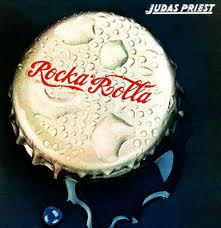
Unlike Sad Wings, Judas Priest’s debut album is more of a curiosity than a cool surprise. I love this original cover–the new release has a crazy drawing on them that doesn’t make any sense with the title. Admittedly the title is kind of dumb, but the riff on Coke works. With the new cover, see below, the title just sounds dumb now.
The album is mostly heavy blues songs. Although the title track has some bizarre disco elements thrown in as well (including the lyrics). The chugga chugga in the choruses is not the chugga chugga of metal, but the chugga chugga of disco.
The biggest surprise comes with the third track, the oddly titled, “Winter/deep freeze/winter retreat/cheater.” It’s 9 minutes long and is not so much an epic as multiple weird little pieces thrown together.
“Never Satisfied” is the closest they get to their future metal sound. But it owes a big debt to Black Sabbath (down to the guitar sound which has the little high note in the chords that Iommi plays on parts of “Paranoid”–a sound I was always confused by but which seems to have inspired K.K. Downing). Nevertheless is rocks pretty hard.
“Run of the Mill” has the potential to be a good rocker. But the 8 minutes of it are rather unfocused and there’s a trippy jam in the middle. (Again with a major Black Sabbath debt underway). “Dying to Meet You” also has a cool sinister sound. Both of these tracks would be well served with a better producer. The second half of this nearly 7 minute song is probably the most metal sounding of the whole disc, although the guitar solo sound has a very Allman Brothers feel to me.
The final track “Caviar and Meths” is a two-minute instrument that is very reminiscent of trippy” Planet Caravan” style Black Sabbath. It’s rather groovy and I’ve always liked it. The reissue has the band’s cover of “Diamonds and Rust.” Because all metal bands should cover Joan Baez!
Wikipedia explains something about this album which make me feel better about it. Apparently the band was really unhappy with the production. Several heavier tracks were left off the album by the producer (they were later recorded for Sad Wings). And that odd little 2 minute instrumental “Caviar and Meths” was originally a 14 minute epic written by the guy who preceded Rob Halford. (He evidently recorded a 7 minute version of the song). Indeed, many of the songs were written by Halford’s predecessor and Downing, so they are lacking Halford’s input. (the page was very helpful for me).
[READ: September 11, 2011] In Too Deep
Since Book Five was so awesome, I couldn’t wait to move on to Book Six. Book Six is the first book written by an author who has written a book already (Watson wrote Book 4 as well). At first I feared that Watson was going to squash my enjoyment of the series; it felt like there was a lot of recapping going on (I know that in a series like this a recap is necessary for people who pick up book 6 instead of book one, but it can be frustrating when you know all that backstory already). However, at the same time, Watson also started the story in the middle of a scene, so everything was brand new, fast paced and a little disorienting.
I’m happy to say that once the story got going Watson really pulled out all the stops and this made Book Six the most exciting book so far. In this book they travel to Australia. As anyone who has looked into Australia knows, most of the deadliest animals on the planet live in Australia (woo hoo!) so that makes Dan quite excited. Australia is also a much looser place to explore than some of the tightly controlled areas they have recently visited–there’s no guards in the outback. And, when the kids hook up with an old friend of the family, Shep, they have access to tasty waves, tasty barbie, and…most awesomely, a plane.
They also have access to Isabel Kabras. Isabel is the mother of Ian and Natalie Kabras–two teens who are rich, spoiled and ruthless. They tried to kill Dan and Amy once, and Ian, who is a hottie, has some kind of sway over Amy–especially when Isabel tells her that Ian secretly likes her. Isabel tells Amy that she has information about how Dan and Amy’s parents died. She will tell her all about it if they can meet in private. And so, for the first time in the series that I can recall, Dan and Amy are separated. She meets the Kabras, and Isabel is looking for a trade. Amy is suspicious, of course, and that leads to the first of many deadly animals. It’s safe to say that Amy survives but I won’t say how–it’s very cool. (more…)
 SOUNDTRACK: REAL ESTATE-“Beach Comber” (2009).
 I found this song through a fascinating series of clicks. Yesterday’s song from Real Estate was a pick for Fall. And next to it was a link entitled Ridgewood, N.J., Why Here? Why Now? I grew up right next to Ridgewood and I spent a lot of time there as a kid. So it’s pretty exciting to hear that there’s a mini-music scene happening there. With Senses Fail, Vivian Girls, and Real Estate coming from Ridgewood and Titus Andronicus coming from Glen Rock, Bergen County is totally hip (even my hometown of Hawthorne seems to be considerably cooler than it was when I left ten years ago–there’s a coffee shop!).
 What I especially loved about this letter was that the “long s” is used throughout the letter (like the word Congrefs in the bill of rights–see right). It makes it a challenge to read, but that is by no means the only challenge. According to the introduction, this letter contains “some more suggestions about his New Telescope, and a Table of Apertures and Charges for the several Lengths of that Instrument.”




















 I Just Read About That...