Feeds:
Posts
Comments

Archive for the ‘Authors’ Category

SOUNDTRACK: TOM WAITS-Blue Valentine (1978).

Waits begins to morph into his later stage persona with this album,  although you wouldn’t know it from the opener, “Somewhere,” yes from West Side Story.   It’s a pretty straightforward Louis Armstrong-style cover, and I wonder what people thought of it.  “Red Shoes by the Drugstore” on the other hand foreshadows some of his crazier songs from later on–it’s kind of a like his beatniky work, but it’s a bit scarier and has less of a jazz feel.  Of course, he hasn’t completed eschewed melody and songwriting with the wonderful “Christmas Card from a Hooker in Minneapolis”–a slow piano ballad.

There’s also the amazing “Romeo is Bleeding” (the inspiration for the title of the movie).  There’s some more wild bluesy songs like “$29.00.”  In fact, Waits seems a bit looser overall (if that’s possible)–his voice is less clipped and beatniky, he’s more wild and perhaps even off beat

“Wrong Side of the Road” merges into later territory although he’s got enough scat style vocals to keep it sounding cool instead of crazy.  “Whistling Past the Graveyard” is one of his most uptempo bluesy songs;  it’s fun and a little crazy.

And yet for all of these forays into the unusual, he still stays firmly footed in what you expect from 1970s Waits: “A Sweet Little Bullet from a Pretty Blue Gun” and “Blue Valentines” are jazzy, smoky, lounge songs, keeping us on solid Waits ground.  He hasn’t stepped far enough away from his original style to alienate listeners yet, but he’s definitely pushing the boundaries of what might be comfortable.

[READ: September 25, 2011] “Starve a Rat”

This story is a sad and lonesome tale (not unlike Torres’ other story that was recently published in the New Yorker–it’s like these two magazines are linked by some kind of fictional umbilicus).

In this one, a 19-year-old boy hooks up with an older man.  The man asks the boy to wear a diaper on their first encounter.  The boy doesn’t but rather, he tries to satisfy him in other ways.  This pickup becomes something more when the man, who initially asked the boy to leave, relents and talks with him through the night.  The boy finds himself being more honest with the man than with anyone else ever.

The leads to some flashbacks about the boy’s history.  Back when he had a girlfriend, what his girlfriend’s parents were like (her mother knew that he was gay) and how much he loved the girl, even though he always knew she was just a beard.

The strange thing about this story is that I couldn’t decide when it was set.  It has a kind of dark tone that makes me think it is a 1970s story, although there is talk of clinics, so maybe it’s the 80s?  He mentions something about albums being not so out of date that they’d be making a statement–so that could be early 90s? (more…)

Read Full Post »

SOUNDTRACK: TOM WAITS- Foreign Affairs (1977).

This album is kind of a split between Waits’ bluesy songs and his “poetic rants.”  The only problem with the album per se is that he’s been doing this kind of stuff for five albums now and while he’s still good at it (great at it, actually), it’s probably time for a change (which he does on the next album).  This is not to say that the songs themselves are weaker than others, or that they are not at least slightly unexpected (the eight minute “Potter’s Field” is quite unexpected), just that when you know what he’s going to be doing,  this album feels like a pre-transition, one might even say a rut.

The disc opens with a pretty piano waltz (“Cinny’s Waltz”) that segues right into his jazzy nightclub sounding (ie. piano and sax) track “Muriel.”  The third track, “I Never Talk to Strangers” is a duet with Bette Midler (which I think makes sense given her persona, but I have simply never liked her–maybe that’s why I don’t like this album as much as I could).

“The Medley of Jack & Neal (about Kerouac and Cassidy) is a long rambling story about the two beats, it ends with a riff on “California Here I Come.”  In a similar vein–alluding to appropriate music–“A Sight for Sore Eyes” opens with the music from “Auld Lang Syne” before turning into one of Waits’ weepy ballads.

The second half of the disc is more storytelling as song.  “Potter’s Field” tells a lengthy story with occasional blasts of saxophone.  About midway through, it begins to sound like more of a musical–with the music adding dramatic effects to the lyrics–this may be a kind of foretelling of his more operatic music from Swordfishtrombones.  “Burma-Shave” is another long story (over 6 minutes).  This one is much darker (a fairly straightforward story of meeting a bad guy and going for a drive), but it’s a pretty good story for all of its noirishness.  “Barbershop” has a great bassline, but it is indeed about getting a haircut.  The album ends with the title cut, a sung ballad.

His next album, Blue Valentine, features electric guitars and keyboards and will change the sound of his songs quite a bit.

[READ: September 25, 2011] “Beatrixpark: An Illumination”

I don’t think I have read too many contemporary Italian authors (Italo Calvino is the only one who springs to mind).  Realistically, this shouldn’t make any difference to anything but this story seemed so off to me that I have to wonder if it’s something about Italian authors or if it is Voltolini is particular.  This story was translated by Anne Milano Appel.

The story begins by explaining that the main character is a man from the south.  Being very conscious of the fact that the author is Italian, not American, I worked hard to think of the bottom of the boot as opposed to Alabama.  Of course, being from Southern Italy doesn’t mean anything to me really, but I kept it in mind.   Then I find out the story is set in Amsterdam.  And then several paragraphs in, we learn that he is from Southern Europe somewhere.  Sigh.  To quote the story, “Gimme a break, provincial middle-aged man from the south!  Fuck off, why don’t you?” (more…)

Read Full Post »

SOUNDTRACK: TOM WAITS-Small Change (1976).

Half-naked woman on the cover and all (Wikipedia say that this might be Elvira, before she was “Elvira”), this is what people thing of when they think Tom Waits: That gravelly voice is in full form here, with poetic rants and bluesy, drunken musings.

The opening track, “Tom Traubert’s Blues (Four sheets to the wind in Copenhagen)” (I love that many of these titles have parenthetical additions) features the repeated chorus from “waltzing Matilda” which is kind of cheating, but which certainly makes this song potent and memorable.  “Step Right Up” is a skit and scat sales pitch for a miracle product.  It’s a wonderful piece of snark aimed at hucksters (this actually makes sense given that nearly 40 years later he still hates advertising (according to this interview on NPR)).

“Jitterbug Boy” is a mournful piano ballad.  It makes me think of William Kennedy’s Ironweed (of course, Waits was in the film of Ironweed, so maybe that’s got something to do with it).  “I Wish I was in New Orleans (In the Ninth Ward)” has a very Louis Armstrong feel to it (I never noticed how close this early style is to Armstrong until I started playing “What a Wonderful World” for my kids (no Tom for them yet). And of course, the Ninth Ward was really devastated by Hurricane Katrina, so maybe they should have used this as their anthem.

“The Piano’s Been Drinking” is forever etched in my mind from Mystery Science Theater 3000–Tom Servo does a wonderful Tom Waits impersonation.  Incidentally, Waits himself had been drinking, quite heavily at the time.  The track “Pasties and G String” is a scat-fueled description of the lady on the cover, more or less.  It’s accompanied by simply drums and a cymbal and is not too dissimilar from “Step Right Up.”  “Bad Liver and a Broken Heart” begins and ends with the melody of “As Time Goes By” and ends with a confession to drinking too much.

A song like “The One That Got Away” is Waits rambling around with his poetry in his gravelly, slurry followed by a sultry saxophone.  It sets a mood faster than anything I know.  Of course, if you don’t want that mood, you won’t want this album.

Of his first four albums, this one is my favorite (just ahead of Closing Time).  I’m not a huge fan of his early work, and I don’t listen to it all that often, but it’s a perfect treat when the mood strikes.  Waits also was beginning to get into something of a rut.  Despite his varied styles per album, all of the albums were beginning to blend a little.   There are still some great songs coming, but it would take until Swordfishtrombones before he went really far afield from this comfort zone.

[READ: September 21 2011] “Dog Run Moon”

This is one of those stories that seems so pointless that you can’t stop reading.  The good thing is that it was so well-written and engaging that its pointlessness is part of its charm.

As the story opens, Sid is running stark naked through a desert landscape–his feet are bleeding, he is covered in the red dust from the ground and there is a white Spaniel running alongside him.

Essentially, the entire story is that Sid has stolen this dog from Montana Bob and his friend Charlie Chaplin.  They caught him and he ran away with the dog through the desert.  As I say, it’s kind of pointless because he’s running naked and barefoot and they are chasing him on ATVs–he’s obviously not going to escape.  But what makes the story worth reading is the way the plot is irrelevant (except that it tells you a lot about Sid), because it’s really the impetus for his actions that comprises the story. (more…)

Read Full Post »

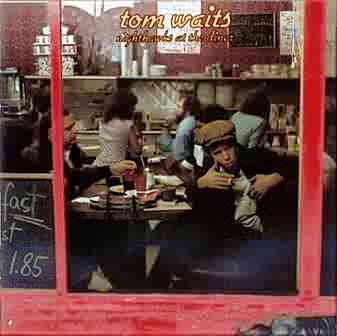
SOUNDTRACK: TOM WAITS-Nighthawks at the Diner (1975).

This is Waits’ third album, a live recording (!) which was actually recorded live in the studio. But not the way most bands record live in the studio. The producers brought in tables and chairs and created a bar-like atmosphere into the (evidently rather large) studio.  Then they invited fans in to watch the performance. Wild, man.

Just as wild is the bebopping and scatting that Waits does here. The opening “Emotional Weather Report” is all kinds of comical phrasing and silliness about himself.  It’s funny and quite enjoyable.  And it makes it feel like a nightclub.  He also introduces mos of his sings with a story, and for most of the songs, the introductions are almost longer than the song.  The two-minute intro to “On a Foggy Night” is full of Tom’s storytelling–but in a much more improv jazzy style.  Indeed, it’s not entirely clear when the intro ends and the song begins.

The intro to “Eggs and Sausage” has the very funny conceit that the food he has eaten in some greasy spoon is pretty frightening.  The veal came down to beat the shit out of his coffee, but the coffee wasnt strong enough to defend itself.  Nice.  “Better Off Without a Wife” he talks about having an evening just to yourself, you know, for pleasure.  We all do it, he says, but I’m not weird about it; I don’t tie myself up or anything.

Overall, this is a fun album.  It’s loose, the crowd is at ease and so is Tom.  It’s long album–about 70 minutes, which might be a little too long, but you get the whole vibe of a night out–good stories and good music.

[READ: September 21, 2011] “Starlight”

This story is four short pieces.  The titles should tell you everything you need to know about the content: “Mrs. Nixon Joins the Final Official Photograph,” “Mrs. Nixon reacts to RN: The memoirs of Richard Nixon,” “Brownie,” and “Mrs. Nixon’s Thoughts, Late-Night Walk, San Clemente”

So, clearly these are four short pieces that delve into the mind of Richard Nixon’s wife, Pat.  I don’t know a lot about her or about Nixon himself, really (I know all the highlights or low lights but I haven’t really ever looked into the man aside from what the sitcoms say about him).

So when I was reading the first excerpt I just couldn’t get into it.  I didn’t know who the people were for sure.  I assumed Ollie was Ollie North, but who knows.  I almost didn’t read any more, I was so uninspired by the first one.  But the next day I decided to try again.  (more…)

Read Full Post »

SOUNDTRACK: TOM WAITS–The Heart of Saturday Night (1974).

What would be more shocking–hearing this and then going to Bone Machine, or listening to Bone Machine and then hearing this. Holy cow. Tom’s voice is so NOT Tom Waits on this record. It kept me thinking of The Eagles or something. The tone, the pacing, I kept expecting him to bust out “Desperado.”  He also has some crazy beat-inspired poetry (what the kids today call spoken-word pieces)  Indeed, these spoken pieces would stay with him in one form or another for his whole career.  But seriously, how much a man can change in thirty years!

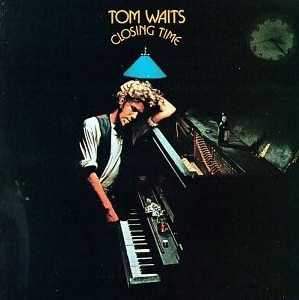
Like Closing Time, this album has several different styles.  Primarily, it has a sloppy, bar sound, the sound that Closing Time‘s cover conveyed.  And that sound is all over “New Coat of Paint.”   But there’s also piano ballads.  And those ballads, combined with Waits’ non-gravelly voice, give “San Diego Serenade” and “Shiver Me Timbers” that Eagles’ ballady sound.  And then “Semi Suite” brings back that muted trumpet. 

“Diamonds on My Windshield” is a beat poem set to a walking bass.  It’s clichéd, except that no one actually does it as well as Waits.  And although I don’t really like the blues in general, I enjoyed “Fumblin’ with Blues” quite a bit.  There’s something about Waits’ sloppy (but not) style  that makes the song interesting.  Even though this is considered a classic, this album is just not really my style and it’s one I listen to quite infrequently.

[READ: September 21, 2011] “An Anonymous Island”

This story is translated from Korean by Heinz Insu Fenkl.  

I felt like the heart of this story was completely unoriginal in content; and yet I can’t tell if it is a common story, if it is a kind of folklorish story, if it’s sort of a story from ancient writings or if it’s just something that happens.

The beginning of the story shows a woman listening to her husband.  He is watching the television,bemoaning the fact that anyone can be anonymous these days (this struck me as a funny sentiment given how much everyone in America bemoans the lack of privacy or the fact that everyone is on the internet).  You can get off at one bus stop past your own and no one knows you.  Back when he was a kid everyone knew everyone else, a village was a family.  And as the woman listens, she flashes back.

The flashback is to when she was a teacher in a small village.  A village where everyone is related.  Everyone treats each other with respect and deference.  Except for one man, Ggaecheol.  Ggaecheol is a bum–he has no job, he has no home.  The village tolerates him because he is an idiot and he is impotent.  But whenever he wants a meal, he simply walks into someone’s house and sits down and says, feed me.  Which they do.  Typically he sleeps outside, but when it’s cold, he walks into someone’s house and sits at the foot of their bed.  He says he wants to keep the woman warm, so the men, amused by his impotence, allow this.

There’s an old Monty Python skit in which the town idiot, despite being mocked by all, does great with women.  The punch line, showing the idiot with a couple of hot girls in bed with him: “I may be an idiot, but I’m no fool.”  And so it is with this story.  The bum is sleeping with everyone in town.  (more…)

Read Full Post »

SOUNDTRACK: TOM WAITS-Closing Time (1973). 

This is the first official Tom Waits release.  There’s a couple “Early Years” collections which are really fascinating for how much he doesn’t sound like the 21st century Tom Waits, but these at least show glimpses of the man to come.  There are some songs on here that I knew of from different artists, and had no idea TW had written them  (Tim Buckley covered “Martha” the same year this came out (that’s pretty amazing), The Eagles covered “Ol’ 55” on their album the following year.  However, Van Halen’s “Ice Cream Man” is not a cover of Tom’s song). The funny thing about the record is how much he sounds like a late 70s lounge singer. How can an album as stripped down as this sound of an era? I don’t know, but it does. It’s also nice to know that his opening song “Ol’ 55” has had such a long life.

My wife does not like Tom Waits, but I think I could sneak this album past her.  You can tell that it’s Tom (before years of abuse to his vocal chords).  His voice is in fine non-gravelly form, just a little bass heavy.  And he is crooning to us.  He even has one of his sweet songs (“Midnight Lullaby”).  It’s hard (but not impossible) to imagine that this man would have turned into the man from Bone Machine.

As I was saying about the mid 70’s, the style of songs here could easily have been played on the same radio station as Springsteen (this album came out the same year as Greetings from Asbury Park–and Springsteen made famous “Jersey Girl” one of Tom’s early songs).  Indeed, many of these songs were covered by other artists.  The funny thing to me about the album is that although Tom is the pianist, I feel like the album is more focused on the trumpet (that muted trumpet seems to be everywhere (giving the album more of a jazzy feel than a rock feel).  And yet, despite this overall jazziness, “I Hope That I Don’t Fall in Love with You” and “Old Shoes (& Picture Postcards)” is a pretty straight-ahead folk song.  There’s also the beautiful ballad “Martha” played only on piano–such a gorgeous melody.  Perhaps the least exciting song is the instrumental ballad “Closing Time.”  It’s a simple piano melody with more trumpet.  There’s nothing wrong with it, it’s just not that inspirational.

I find that as I get older I like this album more (which is somewhat ironic since he recorded it when he was 24).  It’s tempting to say that the album–with its many styles–is unfocused, but Waits’ albums all seem to follow in this multiple-styles vein.  He’s not afraid to try something new (see his entire output since 1983).  But this one is a surprisingly straightforward album.  I can’t wait to see if Sarah likes it.

[READ: September 21, 2011] “Town of Cats”

Murakami is (in my limited experience) a master of the surreal. And yet for his more recent short stories, he seems to be switching into more of a story within a story conceit.  And that’s fine too, because the stories and the stories within the stories are clever and creative and still a bit surreal.

This story starts out a little awkwardly: at Koenji Station, Tengo boards a train with absolutely no destination in mind.  He can get off anywhere that he wants, he decides. He imagines going to the beach and enjoying a nice day.  But then he realizes that all along he has ben heading in one specific direction: to visit his father in a nursing home.  This is especially surprising for Tengo as he has not visited his father in over two years (and Tengo is his only relative).

As Tengo thinks back to his childhood, it is full of nothing but anger.  Anger that his father took him on his work (collecting fees for Japanese TV) every Sunday and that Tengo never had any chance for fun.  In fairness to Tengo’s father, Tengo’s mother died when Tengo was just a baby and his father had to take care of him as best as he could.  But there was no love, no warmth, no emotion.  And the more he thought about his father he realizes that that’s what his father was like–no intellectual curiosity of any kind.  Just work work work.

And yet Tengo can’t shake a memory from when he was only a year and a half or so of his mother standing near hs crib with a man who wasn’t his father kissing her naked breasts.  This memory has always been with him and he can’t help but wonder if his father really isn’t his father at all.  (more…)

Read Full Post »

SOUNDTRACK: TOM WAITS-Live Glitter and Doom tour, Atlanta GA, July 5, 2008 (2008).

I downloaded this concert–which was recorded at the Fox Theater in Atlanta Georgia from NPR.  In the introduction, Bob Boilen says the concert is over two hours, but the page says (and the download comes in) at about 1 hour and 45 minutes, which is still plenty of Tom Waits.

This is a great show.  Although it focuses on the more recent albums, the show covers quite a span of his career: from Real Gone (“Hoist That Rag”) and Bone Machine (the album that introduced me to Mr Waits), all the way back to Heartattack and Vine (“On the Nickel”) and even three songs from Rain Dogs.

His band sounds great, tight as a drum, even playing Waits’ off musical assortments with no problem (is Casey Waits on drums Tom’s son?). There’s clearly some visual stuff going on that we are not privvy to here–the band has a good time towards the end of the set with some musical jokes.  And there’s some fun vamping and a number of good Waits stories (including the “pastika” one from the live album, see below).  He doesn’t play “Day After Tomorrow,” one of the most moving war songs I’ve ever heard, which I think is good.  It is so emotionally charged (unlike his other ballads which are moving but not quite so powerful) that I thin it would bring the whole set down.  Rather, this is more of a rumpus-filled show.  And we’re all the better for it. 

All in all, this is a great document of Waits’ live shows.  His voice sounds great and the band (including a few special guests) is fantastic. 

Later in 2009, Waits released Glitter and Doom Live, a document from this tour.  What’s nice in terms of this show is that the setlist is different for this show than it is for the album.  The album has songs from various venues on the tour, so you get different performances anyhow, but quite a lot of the songs are new here.  So even if you have the album, this is a unique experience.

Also, check out this amusing video interview:

[READ: September 20, 2011] “Dear Life”

This kind of piece is one of the reasons I don’t write about nonfiction that much.  How do you review someone ‘s life?  More specifically, how do you review a short excerpt about someone’s childhood (is this leading to a full length memoir?).  Nevertheless, I love Alice Munro, and this look into her childhood in Wingham, Ontario is fascinating.  I never really conceptualized that Munro is 80 years old.  She grew up with an outhouse and what seems like a one room schoolhouse.

What’s more interesting is that the town where she grew up more or less disappeared once people started building houses on the other side of the river (higher up the hill).  All but the poorest people moved to the new higher elevations, thereby evacuating the town and leaving only the tiny school left (the school she was so excited to get away from!).  Munro remembers many of the bad things in her life–getting whipped by her father for disobeying, walking to school and being teased and even not being allowed to go to a new friend’s house because the friend’s mother was prostitute!  But unlike in a full length memoir, Munro is able to skip past these memories pretty quickly by talking about how when she got older things were smoother (and the room where the whippings took place was converted into something else). (more…)

Read Full Post »

SOUNDTRACK: PEPPER RABBIT-“Alison” (2011).

Pepper Rabbit had NPR’s Song of the Day on September 19th.  “Alison” opens with a kind of circus organ pumping out a steady, thumping beat.  The beat continues until the quieter stated chorus: “You will know my name.”  The song is, as circuses are, light and bouncy with an air of the sinister floating all around it.  By the second chorus, we learn that “it’s all a game to get you to learn my name.”

The vocals are done in a kind of 70’s piano pop style–a bit high-pitched, a bit echoey– and they help to obscure exactly what’s going on.  But it’s the music that is so charming. 

Even if it’s unclear to me what the intention of the song is (stalker or just lost love) it’s a poppy ditty that will keep your toe tapping.  I’m looking forward to hearing more from them. 

[READ: September 14, 2011] Into the Gauntlet

And so the series ends. 

Or, actually, it doesn’t.  This isn’t really a spoiler because there are more books out in the series.  And I’m not going to say what happens at the end of this book, but for those of you wondering just what the heck is going on here with a Book Eleven coming out eight months after Book Ten, I’ll summarize (with no spoilers).  Book Ten ends the hunt for the clues–the goal is reached.  But at the end of the book, it is revealed that there’s another group, another family, who is also hunting for the Answer.  They hadn’t been hunting alongside the Cahill families, they were apparently watching alongside them waiting to see what would happen before setting their plan into action.  And thus….  Series Two.  

Book 11 is a kind of transitional book that fills in some back story on each of the families and shows Grace’s life.  I’m intrigued to read it, especially since most of the writers from the series contribute to it.

So Book Ten was written by the excellent author Margaret Peterson Haddix.  And this book comes in at 326 pages (over 100 pages longer than any other book in the series).  But Haddix earns her extra pages.  She totally breaks with the set-up of the series so far by following not just Dan and Amy but all of the branches of the family.  We actually get into the heads of all of the competitors (including Eisenhower Holt–who has feelings after all, Natalie Kabra–who is not quite as dim as she appears, and Ian Kabra–who might just be as evil as his mom).  Haddix also introduces a huge surprise in the beginning of the book–a surprise that may not have been such a surprise if I’d been reading the books close together but with this much remove from the early books, I was shocked!  And later on, when she doubles up on the surprise, it’s even more shocking! (more…)

Read Full Post »

SOUNDTRACK: DINOSAUR JR.-Live at the 9:30 Club, Washington D.C. October 8, 2009 (2009).

This was one of the first shows I downloaded from NPR.  I’ve been a fan of Dinosaur Jr. since my friend Al turned me on to Green Mind back in college.

This is an amazing show created by the original Dino Jr. members.  This tour is in support of their second album since reuniting, Farm. This set-list is an outstanding mix of old songs, new songs, Barlow-sung songs and even some songs from when Barlow and Murph weren’t in the band.  (Green Mind is still my favorite album by them).

When the band reunited there was much joy, and I’ve said in reviews of the newer albums, I’m not entirely sure why.  I mean, Dino Jr has always been about Mascis, and it’s not like Barlow is such an unusual bassist (although Murph’s drumming is always solid).  I’ve nothing against Barlow (I love Sebadoh and Folk Implosion) or Murph, it just seems odd to get excited about having them back in the band aside from nostalgic reasons.

Having said that, the band sounds amazing (and yes, Barlow does get to sing on “Imagination Blind”).  What never really came across to me until hearing all of these great songs live was that Mascis has always been a great pop song writer.  These songs are catchy as hell. But Mascis buries them under loud squalling guitars and a voice that is almost whiny, almost off-key, a total slacker voice.  (But you’ll notice it is never actually off-key.  He must work very hard at that.)

By the nd of the show Mascis chastises the audience for not moving (we obviously can’t see what they’re doing), saying he forgets that people don’t move in Washington, D.C.  But during the encore break, NPR host, Bob Boilen, points out that Mascis himself doesn’t move either–he just stands in front of that wall of Marshall stacks (Boilen wonders how he can hear anything anymore).  And looking at the pictures it’s comical the way he looks, surrounded by amps.  The picture above doesn’t fully do it justice, but check out the extra photos at the NPR page.  And while you’re there, listen to this show. It is amazing.  For a total slacker, Mascis can rock a guitar solo like nobody’s business.

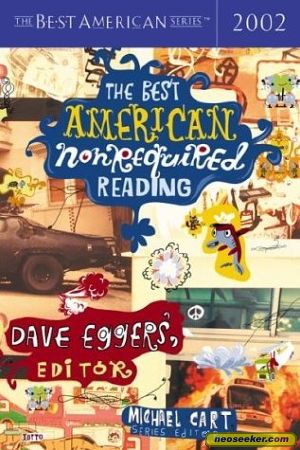
[READ: July 20, 2011] The Best American Non Required Reading

I’d been meaning to read this series for years (yup, Eggers fan), But I have a hard time starting “collections” because I feel like I’d rather be reading a novel.  Nevertheless, I have most of these Nonrequired books, so it seemed like I should dive into one and see what it was like (I don’t think the year really matters all that much–some of the articles are topical but most are not exactly).  Then Sarah said this would be a great book to read on vacation because it’s all short essays, and she was right.  It was perfect for late nights when I wanted something to read but didn’t feel like getting involved in the novel I was reading.

DAVE EGGERS-Introduction
Eggers’ introduction is actually a partial short story about kids who go swimming in pools around town. It reminded me of the opening of Life After God by Douglas Coupland, but of course, lots of kids did that so I’m not saying it was “lifted” from DC.  The story “ends” (it doesn’t really end so much as stop) with an interesting scene between two unlikely kids who get caught.

After this story Eggers includes these three notes about the collection: It’s not scientific, It’s alphabetical, and We had a lot of help with this.  Of the three, it’s the middle one that’s most useful because Eggers says that you shouldn’t necessarily read them in order just because they are printed this way: “In the first half of this collection, you get a good deal of hard journalism, primarily about war and refugees, from Afghanistan to the Sudan, followed immediately by a number of less serious pieces, about malls and Marilyn Manson.  We didn’t group anything by theme , and won’t be offended if you skip around.”  This was good to know (not that we needed the permission of course), but yes, the beginning of the book is pretty heavy. (more…)

Read Full Post »

SOUNDTRACK: JUNE TABOR & OYSTERBAND-“Bonnie Bunch of Roses” (2011).

Two artists that I have heard of for years but who I have never really listened to. This was described in the NPR music review as something The Decemberists might sing.  And indeed, it has a very Decemberists feel to it (which makes sense as this is a traditional song and, evidently, Tabor has been a master of this style for years.  ( I had no idea her voice was so deep–it adds a nice level of malice to this song about Napoleon.

The band is tight as they play this rollicking, dark shanty and Tabor’s voice is haunting (do I detect a similar style to Linda Thompson?) as she sings these lyrics of loss.  The music builds and builds as the song reaches its climax, but what’s neat is that Tabor never really changes her tone.  She is matter of fact, despite how sinister the music becomes.  It’s a very cool song.

I did some research and found out that tabor and the Oysterband got together in 1990 for the album Freedom and Rain, which was a collection of traditional songs as well as covers of Richard Thompson, The Velvet Underground, The Pogues, and Jefferson Airplane (I can’t believe that album is pretty well out of print–it sounds amazing).  This collaboration is more or less a follow-up, with more traditional songs and covers of PJ Harvey, Joy Division and others.

I’m really looking forward to listening to this disc and to what will certainly be the triumphant re-release of their first disc collaboration quite soon.

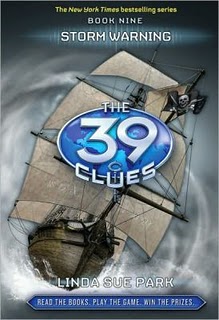
[READ: September 14, 2011] Storm Warning

Book Nine in the 39 Clues series made me feel like a kid again.  I started reading it when I got home from work and I stayed up till way late in the night to finish it.  Unlike when I was a kid, though, I am really suffering for staying up so late last night.

Storm Warning was written by Linda Sue Park, the first woman to write in the series.  And, appropriately, this is a very female-centered book.  We learn a lot about Nellie (finally, her story is explained!), the story focuses somewhat more on Amy than on Dan, there’s more evilness from Isabel Kabra, but most importantly, the clues lead them to two important women in history. 

They head down to the Caribbean–although they are undecided about whether to go to the Bahamas or Jamaica (Dan wants to go to the Bahamas to go to the greatest water park in the world: Oceanus–which is really the Atlantis Water Park) but Amy believes the answer is in Jamaica.  Dan convinces her and they decide to go to the Bahamas and the water park for a few hours of fun.  But the crazy thing is that before they even bought their tickets to the Bahamas, Nellie went into the bathroom and Dan received a message that the Holts were on their way to the Bahamas too.  Could Nellie be ratting them out?

On the flight down, they grill her about what’s going on.  But what happens is that for the first time in the series, we get into Nellie’s head.  Not completely, but we get to hear her thoughts.  So we know that she’s still hiding some truths, but she reveals that she has been working for Mr McIntyre and reporting to him about all of the family’s moves.  She was well paid for her services and she knew that there would be danger, but she had no idea exactly what the kids would be getting up to.  Dan and Amy are stunned.  They are betrayed and furious.  [I have to say I think they totally overreacted–Nellie saved their asses many many times along the way].  They agree to let Nellie come along with them but they’re not going to share any plans with her. (more…)

Read Full Post »

« Newer Posts - Older Posts »