Feeds:
Posts
Comments

Archive for the ‘Authors’ Category

SOUNDTRACK: THE SHINS-“Plenty is Never Enough” from Score! 20 Years of Merge Records: The Covers (2009).

The Shins have taken this song and completely turned it into a Shins song.

It is bouncy and poppy with some nice tempo changes.  It could easily fit onto any Shins album.

The original (I’d never heard of Tenement Halls) is very similar to The Shins’ version.  The big difference is that it doesn’t have The Shins’ vocals and musical sensibilities.  The original feels kind of flat, the highs just aren’t as high.  But it serves as a good stepping off point for the cover.

[READ: March 30, 2012] “Chapter Two”

This story is about A.A.  But, amusingly, Hil is tired of telling her own stories at A.A., so she starts telling the story of her fifty-something alcoholic neighbor (with the wonderful name of), Bergeron Love (the story is set in Houston).

Interestingly, no one at A.A. complains that she is talking about someone else (in fact the blind guy just seems to smile politely).  This is just as well because Bergeron’s story is pretty funny.  Bergeron arrives at Hil’s door, stark naked and invites herself in.  This is not atypical for Bergeron who crashes neighborhood parties and plays ridiculous pranks.  But not everything she does is funny: she also reports overgrown lawns and loose dogs.

Hil lives with her son and a roommate, Janine.  Janine is a very fat woman (see my diatribe about fat characters yesterday).  But Janine is not the victim or the pity-case in this story (well, maybe a little).  Hil figures Janine must eat all day to be as big as she is, but she has never seen her eat.  But then Hil’s son, Jeremy, a shy teenager enjoys playing video games with Janine more than going out with his peers (and more than being with his mom, I believe). (more…)

Read Full Post »

SOUNDTRACK: LES SAVY FAV-“Precision Auto” from Score! 20 Years of Merge Records: The Covers (2009).

This is a cover of a Superchunk song.  The Superchunk song is fast and furious with screamed vocals.  The Les Savy Fav version is faster and more furious with screamed vocals.  It doesn’t sound very different from the original except that they use a high guitar playing a repeating motif which seems to increase the pace and intensity of the song.  They even keep it up through the moody instrumental break

Usually I don’t like a cover that sounds so much like the original, but it’s a great cover.  It basically just intensifies the song, and that’s a good thing.

I don’t know much about Les Savy Fav, so I don’t know if this is why they normally sound like, but it’s pretty darn good.

[READ: April 3, 2012] “P.E.”

Sometimes a title can impact ones desire to read a story.  This title is, well, it’s not bad, it’s just…uninspired.  I can’t see myself saying, “I really want to read, “P.E.”  What’s surprising is that the title is so blah, when the story is so interesting.

I like my short stories to be light and fluffy (even if I read heavy duty novels).  So this one was kind of fun.  In the beginning.  It starts with Freddy waiting for his dad at the airport.

Freddy is fat.  I have to admit right off the start that whenever a character is described as really fat (like really fat, as Freddy is), it irks me.  First off, I always assume that writers are not fat (not really a fair assumption but author photos are often glamorous, right?) so they aren’t writing from a location of truth.  Second, whenever a character is really fat, it always signals that something bad has or will happen to him.  And so it is with this story.

But before we get to that point, we have some more amusing scenarios.

Or, well, really not amusing so much as disturbing (but funny).  Freddy’s mother hanged herself when he was seven.  And his father took it badly (not unusual).  He even took to wearing the noose around his neck like an article of clothing (unusual!). (more…)

Read Full Post »

SOUNDTRACK: QUASI-“Beautiful Things” from Score! 20 Years of Merge Records: The Covers (2009).

I’ve had this CD for a pretty long time just waiting for me to devote some time to listening to it.  The collection is a compilation of non-Merge label bands covers songs by Merge bands.

Quasi was a great band (I guess they are still together, so they are a great band).  I have their records from around the turn of the century (I love writing that!).  Sam Coombs and the wonderful Janet Weiss comprise the band (there’s a bassist, Joanna Bolme, added in 2007). And they sing wonderful, political alt-pop.

This is a cover of a song by the New Zealand band The 3Ds.  I don’t know the original (although I do know (and like) a few songs by them–mostly from the Topless Women Talk about Their Lives soundtrack.  This version has heavy keyboard prominence, but he sweet verses (sung largely by Janet with Tom doing backing vocals) are interspersed with some cool buzzy guitar solos.

  I just found the original online, and the cover is pretty accurate–although the Quasi version is a bit more dynamic.  Nevertheless, it makes me want to listen to The 3Ds a bit more.

[READ: March 15, 2012] “A Cup of Hot Chocolate, S’good for What Ails Ya”

Have you ever wanted to read about the history of hot chocolate?  No, of course not.  No one has.  And yet, when I started flipping through this article, Theobald introduced plenty of ideas that I found not only interesting but compelling.

Theobald explains how the Aztecs called this (at the time) very hearty, spicy and bitter) drink cacahuatl.  The Aztecs got the drink from the Mayans, who got it from the Olmecs.  The first Europeans to try this drink loathed it (one even called it a drink for pigs).

It was the conquistadors who mixed cacahuatl with sugar to make what we now know as chocolate.  Chocolate was a luxury back then–time consuming and difficult to make.

The Spaniards found the drink very hearty–hearty enough to be considered a meal.  This put Catholics in a tizzy about the state of the item.  They feared that if it was food it could not be consumed on fast days–it was ultimately deemed a drink.  The drink made its way through Europe and into England.  The first known English recipe called for sugar, long red pepper, cloves, aniseed, almonds, nuts, orange flower water and cacao. (more…)

Read Full Post »

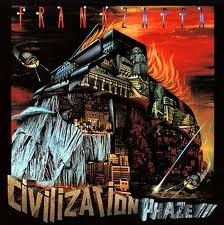
SOUNDTRACK: FRANK ZAPPA-Civilization Phaze III (1994).

There were a number of choices for soundtracks for this week’s read.  I could have chosen the Andrew Sisters (and their wonderful “Don’t Sit Under the Apple Tree”) who get a mention in the book.  And, of course, I could have chosen Elton John’s “Rocket Man.”  But, when I read Trudi tell Magda about her boyfriend Gustav who wants to live inside a piano, well, it was hard not to think of this, Frank Zappa’s final work.

Civilization Phaze III is an opera-pantomime.  According to the libretto, “The speaking characters all wear oversized masks, gloves and shoes.  They live in an abstracted grand piano….”  And musically opens with this introductory spoken passage:

FZ: The audience sits inside of a big piano and they listen to it grow.
Spider: People are going to sit inside of a piano. They’re going to listen to this piano grow.
John: They’re going to listen to the piano grow?

Civilization Phaze III was released posthumously in 1994.  But here’s the weird thing.  Most of the sessions of “piano people” dialogue were recorded in 1967.  Zappa had a bunch of people come into the studio, sit under a piano that was miked and improvise dialogue (sounds like the 60s to me).  He released some of this dialogue on his  late 60s albums, but as far as I can tell, the parts about the piano were never included (in Lumpy Gravy someone talks about wanting to live in a drum).  I’m also not sure how well-known the “piano sessions” were at the time.

So, here’s the question…did Zappa influence Pynchon or did these two people come up with the same idea at roughly  the same time.  The reason Zappa put off using the material recorded in 1966 was because technologies were simply not advanced enough to let him manipulate the dialogue so it would sound decent, much less coherent.  So Civilization Phaze III became his exploration of the past with contemporary technology.

He also recorded new spoken dialogue in 1991 and merged the two.  It’s an interesting idea, but I fear that the new dialogue absolutely misses the vibe of the earlier dialogue.  In the early dialogue, they all sounds like they’re stoned and are talking crazy nonsense about horses, smoke and music.  The later dialogue is much more abrasive (especially Michael Rappaport, the only person who has since gone on to renown).  At the time, Rappaport had been on one TV show as a guest, but by now he is too famous for this.  I find him a distraction (not Zappa’s fault obviously), even more so because he talks as if he is black (he says “Nobody said nothin’ when y’all bought my people, right?”) while he is demonstrably not.  And then ruins it contextually by mentioning Yo MTV Raps, the only thing that places the story in time.  It’s weird that Frank wouldn’t have a black person say these lines, especially since he has so many other races and nationalities represented in his music.  But maybe that’s me intellectualizing that I just don’t like Rappaport.

So, what’s this monstrosity about?  I have no idea.  Improvised stoner dialogue from the 60s is pieced together into a kind of story.  Occasionally Frank’s voice chimes in and prompts them to talk about certain things (which is quite  disorienting).  And the whole “plot” well, I’m not even sure if it can be called a plot, but Frank tries to cobble something together–again, the 1991 dialogue seems to be more pointed, more about conflict, possibly something about overcrowding and racism, and there’s certainly some social criticism at work, but as for a story, well, not so much.

The music, on the other hand, is the culmination of Zappa’s more experimental, atonal “classical” music.  Most of the first disc is performed on the synclavier while most of the second disc contains more actual musicians.  The music is difficult and not to everyone’s tastes, for sure.

Atonal music is far more intellectual than visceral, so it’s hard to “enjoy” this music.   Zappa obviously knew how to write catchy poppy friendly music, so this is a deliberate attempt to write something more challenging.  I like Zappa’s crazy music in small dozes, so listening to this entire thing (over 2 hours) can be a tough in one sitting.  But each piece (especially the two really long pieces “N-Lite” (18 minutes) and “Beat the Reaper” (15 minutes) ) showcases something interesting or satisfying.

The libretto that Zappa includes with the discs explains the story in far more detail and shape than one would ever get from listening to the music.  Without the book, you would know that this is a dark and moody piece, but with the book, you can actually see what the music is showing.  That may be a flaw, or that may be the way of a staged performance.  I have no idea if it was ever staged.

There are certainly easier introductions to Zappa’s music.

[READ: Week of March 26] Gravity’s Rainbow 3.6-3.10

Last week was a bear of a read for me, but this week was so fast (and short) that I just kept going because I was so into the Slothrop story (I won’t go past the spoiler line, I promise).  And yes, it’s (almost) all Slothrop this week.

Section 3.6 begins with Slothrop violently ill.  [I admit I don’t think of novel characters as getting ill very much–unless it’s a plot point–but surely characters get colds and tummy aches just like everyone else, right?].  He drank out of an ornamental pond in the Tiergarten–but, duh, everyone knows to boil water before drinking these days.  This also introduces Slothrop as Rocketman, something we won’t get more details on until later. (more…)

Read Full Post »

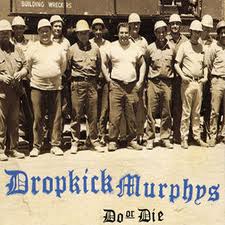
SOUNDTRACK: DROPKICK MURPHYS-“Finnegan’s Wake” (2005).

This song has been around forever and there are dozens of different versions of it.  For your more traditional versions, you want The Dubliners of Christy Moore (if you really want to hear the words).

But The Dropkick Murphys do it the way I like my traditional Irish songs–fast and loud and full of punk.

Although to be honest, The Dubliners’ version has a bit more swagger and fun (it’s hard to beat Ronnie Drew for a hard living singing voice).

Whichever version you choose, be sure to have your favorite ale or lager (or whiskey punch) on hand.

[READ: April 1, 2012] Finnegans Wake

I decided it was time.  How many times have I read the opening line of this book:

riverrun, past Eve and Adam’s, from swerve of shore to bend of bay, brings us by a commodius vicus of recirculation back to Howth Castle and Environs.

And as many times I have read the end of the book:

A way a lone a last a loved a long the

But now it was time to read the other 620-some pages of it.  So I set aside some time this weekend, and, in the spirit of Joyce’s stream of consciousness, I stayed awake until I finished it. And having digested the book, I now get to write all my thoughts about it.

(more…)

Read Full Post »

SOUNDTRACK: FIGURINES “The Air We Breathe” from Viva Piñata! (2008).

Figurines are from Denmark.  This song has a very distinctive Mercury Rev feel (late-period  Mercury Rev) with high pitched vocals and delicate intertwining melodies.

The verses are done on simple piano and the bridge has some nice harmonies.  This is a cool alt rock song that stands up to repeated listens.

[READ: March 28, 2012] “Into the Unforeseen”

The timing of this article is quite amazing.  Having really enjoyed Galchen’s short story, I decided to see what else she had written.  It’s not a lot, but she has written three things published in Harper’s–two essays and one short story.  This first essay is all about César Aira.  I didn’t even know who Aira was when it came out in 2011, but now, I get to read it again having just finished another of his novels.  (The essay concludes with information about Varamo, a novel that was just recently translated into English which I picked up at the library, yesterday).

This essay is about the week that Galchen spent with Aira in and around Aira’s home (but not his birth town of Coronel Pringles which he kind of jokingly forbids her from seeing.  Galchen loves Aira’s writing (and has a kind of crush on him, although they’d never met before).  She doesn’t say in this article but she was a Spanish language major, so she has clearly been reading his books in Spanish.

She lets us know that the day before she met Aira, her ten-year relationship ended (she hints at the reason but is quite discrete).  She brings this up because of an emotional moment later in the article.  And that’s what I loved about this article–it was personal and really invited the reader in to experience this meeting with her.   (more…)

Read Full Post »

SOUNDTRACK: UNDER BYEN-“Samme Stof Som Stof” from Viva Piñata! (2008).

Under Byen is a Danish band and has only one song on Viva Piñata.

I had originally written a review under the impression that it was different song (the CD and even iTunes confuses this song with “Kiss ME” by Uncut.  And you can see my initial impression below).  Now, knowing that this band is not singing in English changes a lot about my perception of what the sounds actually are.

This is one of the few remixes on the disc where I listened to the original first (to make sure I had the right song).  The original is an interesting mix of peculiar instruments and some cool soundscapes.  This remix chops it up into pieces and puts it back together.  It’s an interesting twist on the song but man, the original is so much better.

[Here’s my original thoughts, when I read a bit about the song when I thought it was by the band Uncut and I thought that it was not a remix.  And I saw that they were described as a poppy fuzzy band.

this song comes from one of their official releases.  “Kiss Me” is not a remix but it sure sounds like one.  It is kind of warped and the sounds feel manipulated in crazy ways. The vocals are mostly moans and noises. But it has a catchy beat and some interesting sounds. This is a weird song, and I’m not sure how it fits in with the rest of the album.  I do kind of like it, but I wouldn’t hunt them down for more.

Of course, now that I know it’s supposed to sound like that, I change my tune completely. And I will hunt down some other songs for comparison.

[READ: March 23, 2012] An Episode in the Life of a Landscape Painter

This is the third novel from Aira that New Directions has released (translated wonderfully by Chris Andrews). It’s the first one they published and the first one of his that I had heard of.  I actually heard of it long before I knew of Aira because the Preface is by Roberto Bolaño.  And if you do a search for Bolaño, this title always comes up.

And so now I finally got to read this mythical essay.  Sadly, it turns out to be an essay called, “The Incredible César Aira” which was recently published (2011) in Between Parentheses–bad timing for me.  It also has nothing to do with this novel specifically

But on to the novel itself.

This short book is about the German painter Johann Moritz Rugendas.  Little did I know that he was real.  He was a landscape painter (a profession which became obsolete with the invention of cameras) and he was very well-regarded.   Twice during his career he went to the Americas to paint the land.  On his second journey (from 1831-1847) he went to Mexico, Chile, Peru, Brazil and Argentina, which resulted in thousands of paintings.

The opening of the book is rather philosophical (and a little dry).  But after about ten pages, the book picks up with the titular episode.  Rugendas and a German painter named Robert Krause set off in 1837 from Chile.  They got on well.  Rugendas was far superior technically and Krause, although also quite talented, was always respectful.  Rugendas had sold prints and books and his Picturesque Voyage through Brazil was printed on wallpaper and China. (more…)

Read Full Post »

SOUNDTRACK: NOW,NOW-“Dead Oaks” (2012).

How do you make a song that I want to listen to over and over again?  Easy chord changes?  Sure.  Add instruments as the song goes on?  Absolutely.  Have a simple chorus that’s easy to sing along to?  Indeed.  Bring in a harmony vocal to repeat the chorus?  Definitely.  But the best way?  Do all of those thing and make your song 90 seconds long.

Holy cow.   This song starts with simple acoustic guitars and a charming girly voice (not unlike Juliana Hatfield).  At 40 seconds the drums kick in for the chorus.  After one run through, a harmony vocal comes in with all of the “oh oh ohs” that make this chorus so irresistible.  And just as the song shifts back to the guitars for the verses…it ends.

And I had to listen to it again and again.  As will you.

[READ: March 27, 2012] “Appreciation”

The first thing I thought when I read this story was that it was like David Foster Wallace.  Superficially because it opens with a lengthy segment about finances and taxes and the IRS (which was the subject of his unfinished novel The Pale King).  But once the story started going, it had mannerisms that were similar to DFW’s occasional style–a kind of detached narrator (no names are given in the story) coupled with a very formal style and excessive detail (repeating information, including which “she” the pronoun refers to in parentheses after the pronoun, etc)..

None of this is to say that the story is bad or a rip off of DFW’s style.  Just that I noticed it immediately.  In the Q&A that accompanies the story, no mention is made of DFW.  So perhaps that style has simply been assimilated.  Which is cool.

But beyond style, there’s a lot to like about this story.  The title is a clever play on words.  The story is about a mother and a daughter.  The mother has paid for a lot of the daughter’s expenses in her life, including buying her a house which was worth much more when they sold it.  And so, with the title we have two meanings of the word “appreciate.” (more…)

Read Full Post »

SOUNDTRACK: LAURA BARRETT-“Deception Island Optimist Club” from Viva Piñata! (2008).

This is a musically simple song–it appears to be played entirely on, I gather, a thumb piano or kalimba.

The melody is complicated, however.  And Barrett’s voice is beautifully naked.  I especially like the way her voice doesn’t follow the musical melody exactly–she plays around with sounds and ideas a little bit.

I also just found out this neat little piece of information: Her first public performance was a cover of “Smells Like Nirvana” at a “Weird Al” Yankovic

kalimba

tribute concert.  Okay, who even knew there were “Weird Al” tribute concerts?

I’m very much intrigued by this woman, and you can hear a whole bunch of her stuff at her CBC Radio 3 site.

Oh, and that Weird Al song?  You can hear it (there’s no video) right here:

[READ: March 20, 2012] “Sea-Serpents and Scientists”

This was the second archived article that my company sent around for enjoyment.

I like any article about sea serpents, especially The Loch-Ness Monster.  But I was really surprised at the attitude taken in this article.  It actually seemed like it might be a joke, although upon further consideration, I believe it is entirely serious.

As the introductory line says, “The emergence of a fabulous monster in Loch Ness is greeted with debatable reserve by men of science.”

The first paragraph taught me something i did not know: The Loch Ness Monster’s name is Bobby!  And while Wilson says he is not going to “offer a belated biography of Bobby, the sea serpent of Scotland, as he swims like a submarine in Loch Ness,” he is sure going to take scientists to task for not investigating him.

Wilson does not argue that Bobby exists, indeed he claims not to be an expert, “All my life I have abstained strictly from the alcoholic inducements which on these occasions are said to contribute to what around Loch Ness, is called ‘perfect visibility.'”  Although I gather he does believe in him.

Rather, his point is that scientists have dropped the ball by not even looking into “by far the most interesting event in the modern annals of natural history.” (more…)

Read Full Post »

SOUNDTRACK: THE ACORN-“The Flood Pt. 1” from Viva Piñata! (2008).

The Acorn are a folk band from Ottawa.  This song sounds a lot like later Talking Heads.  Talking Heads are not really a band that many other bands sound like.  And yet they have such a distinctive sound that when a band sounds like them it’s hard not to think “another Talking Heads.”

Having said that, this is a fun and interesting song.  It has a world music feel in the rhythms.  And the vocals are in the vein of David Byrne (but not aping him or anything like that).  The big difference from the Talking Heads comes near the end of the song when a second voice (who sounds a bit like Bono) comes in to do harmonies.

All in all it is a very satisfying song.

[READ: March 20 2012] “Roy Lichtenstein and the Comic Strip”

This is the first of three new articles that my company send around as samples of interesting articles that we have archived.

I’ve always enjoyed Lichtenstein’s comic-book-style art.  It’s kind of pop and very commercial, and I’ve always appreciated it, even if I didn’t really like the comics that he took his inspiration from.

Despite my enjoyment of his work, I never really bothered to investigate how he did it.  I wasn’t sure if he just took a comic page and blew it up or added color or what.  But it turns out that he did actually recreate the pictures from scratch.  This article shows side by side some original cartoon panels and then Lichtenstein’s version.

In most of them he keeps things relatively the same.  But even in those it is quite clear that he is redoing the art with his own lines and style–he is not copying the faces, he is simplifying them even further in some cases or making them more beautiful in others.  You can see that he has changed little things to make them more artistically satisfying–stretching out a window to connect characters, removing background images or zooming in more in a frame to make the image more striking–although the are always recognizable as the original.   The most drastic change, and the focus of the article, is his use of the balloon quote. (more…)

Read Full Post »

« Newer Posts - Older Posts »