 SOUNDTRACK: SIGUR RÓS-Inni (2011).
 I’ve said before that Sigur Rós was one of my favorite live shows ever. They created an amazing atmosphere that went beyond the music and the visuals. It set the bar very very high.
So here is their first official live album and it does not disappoint. It clearly cannot live up to the live experience (there is so much to see after all), but it really conveys just how amazing these guys can sound live.
Sigur Rós feels like they should only be a studio band–they are so atmospheric, so ethereal, that it doesn’t seem like it should translate live. But they do, in fact , it brings a new energy to the music. And the fact that Jonsi can easily hit those unearthly notes just blows my mind.
I’m not sure whether to say that Sigur Rós have hits or not, but this is like a best of playlist from all of their albums. From their “debut” Ágætis Byrjun, we get the ten minute opener “Svefn-G-Englar.” Although the songs all feel long, they run the gamut from two to three minutes through eight and nine up to fifteen. They also play the awesome “Ný batterí” a few songs later.
There’s a number of songs from Takk… “Glósóli,” “Hoppípolla,” “Með Blóðnasir,” and “Sæglópur.” There’s a couple of songs from () as well (of course, since they were untitled it takes a bit of work to know that . “E-bow” ends disc one and the concert ends with the glorious 15 minute “Popplagið”
From Með suð í eyrum við spilum endalaust, we don’t get “Gobbeldygook,” their sort of hit, but we do get “Inní Mér Syngur Vitleysingur,” “Fljótavík,” “Festival,” “Við spilum endalaust” and “All Alright”
The set also includes “Hafsól,” a B-side of “Hoppípolla” (which was a remake of a song of their real debut Von). The best example of how Sigur Rós is not just wispy music comes in “Hafsól.” After a few minutes of their atmospheric stuff, the drums kick in and the song becomes incredibly loud and chaotic with crashing cymbals and grinding guitars and feedback. It’s amazing. That it ends with a tin whistle solo just highlights the what the band is willing to put into just one song.
“Popplagið” closes out the concert with more of that dynamic. At 15 minutes, it takes a while to get there, but somehow the drums feel more grounded. And at the 6 and a half-minute mark when the drums really kick in and guitars get noisy and raw, it’s an unbelievable moment. The song turns tense and intense and doesn’t let up for the rest of the track.
The encore is an unreleased track called “Lúppulagid.” It is a slow, relaxing kind of track (it plays over the credits of the DVD). Yes, there’s a DVD that comes with the two disc set. I have not yet watched the DVD, but I’m pretty psyched to check it out.
This disc can’t convey the magic that is Sigur Rós live, but it really shows what they are capable of.
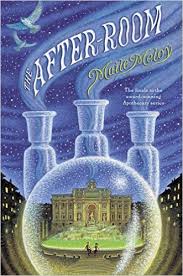
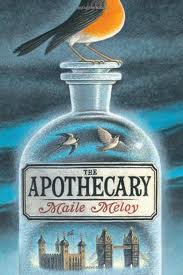
[READ: February 2, 2102] The Apothecary
Maile Meloy has written some of my favorite books (novels and short stories). She is an excellent writer with a wonderful sense of reality–I’ve described her as unsentimental: her characters are typically downtrodden and not likely to follow flights of fancy.
And that’s just one reason why this book is so surprising–it is about magic! It’s also surprising because its written as a YA book (the protagonists are fourteen). And finally, it’s surprising because it is set in England, and previously, Meloy had been a small town America kind of writer (as far as I remember, anyhow).
Although I found the opening a little slow going (more on that in a minute), by about the third or fourth chapter I was totally hooked on this fantastic story.
The book is set just after WWII. The main character (and narrator) Janie and her family live in Hollywood. Her mom and dad are both television writers who are being hunted as Communists. They tell her that they must flee for London. (This was told briskly, and I wonder if teens know about the Communist trials in the 50s).
They move to London (where they have jobs set up as BBC writers) and learn to cope with the move from warm, sunny, prosperous Hollywood to cold, gray and still-under-rationing London.
One problem I had with the beginning (in addition to the Communist part) was that Janie talks a lot about Katherine Hepburn–walking like her, being strong like her. Both of these things seemed like they maybe weren’t explained enough for the intended audience. Perhaps I’m not giving young readers enough credit, but I was very distracted thinking, would a teenager want to read this? I mean I barely know Katherine Hepburn as a young beauty. The other problem I had was that the kids felt too modern to me. Or maybe not modern so much as out of time. It doesn’t really feel like the 50s. It’s not really a problem, but every once in a while I had to remind myself that it was set in the 50 at the height of the nuclear scare.
Of course, once Janie gets to school, those concerns evaporate. Janie goes to a fancy London school–they wear uniforms and learn Latin)–I guess it is timeless. She is immediately introduced to Sarah Pennington, a very very rich girl (she has a butler). What I liked is that even though Janie is different and from California and Meloy shows that they are different, she doesn’t exploit these differences. She doesn’t make it a clique story between Janie and Sarah.
Things are dire in post-war London. It is cold all the time and you need to put pennies in the wall to get the heat to come on–this is why people from England like hot water bottles so much! So Janie and her dad go down to the apothecary to get hot water bottles and pennies. When the apothecary hears that they are American, he offers Janie some homesickness medicine. Janie and her dad don’t believe it will work but she takes some anyhow. And she seems to feel a bit better.
Soon after this, Janie learns that the apothecary’s son is a boy in her class named Benjamin. In school, Benjamin stood up to the lunch lady when she insisted that everyone “duck and cover” when the air raid siren went off. He’s nobody’s fool, he knows how dangerous the Bomb can be.
Janie is surprised that Benjamin and the apothecary are related. The apothecary is nice and mild-mannered whereas Benjamin is strong-willed. And, it turns out that Benjamin wants nothing to do with his father’s business–even though the Society of Apothecaries has paid for his education. He wants to be a spy. (more…)
Read Full Post »
 SOUNDTRACK: KAWABATA MAKOTO [河端一]-INUI 2 (2000).
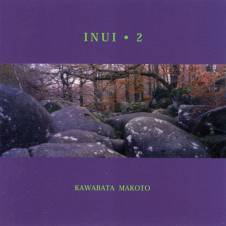 Kawabata Makoto [河端一] is the guitarist and mastermind behind Acid Mothers Temple. The band is hugely prolific. But he still had time to record solo albums. Often times without any guitar.

















 I Just Read About That...