Feeds:
Posts
Comments

Archive for the ‘Don DeLillo’ Category

SOUNDTRACK: THERAPY?-Lonely, Cryin’ Only [single] (1998).
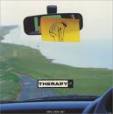
I have a few Therapy? singles, but I wanted to mention this one specifically because it has two “new” recordings on it.  The first is of “Diane” the Hüsker Dü song that they first recorded on Infernal Love.  The second is of “Teethgrinder” their first “hit” off of Nurse.

I’m always intrigued when bands reinterpret their own songs, but I have to say that these two remakes are disappointing.  “Diane” is slowed down quite a lot and is very very crisp.  But it rather removes some of the creepiness of the original (and it’s a very creepy song).

As for “Teethgrinder,” the original of that song is stellar.  Any changes can only be for the worst.  And that’s the case here.  There’s so many great, weird sounds from the original (and those sounds make it wonderful) that without them, the song is fine, but nothing awesome.

Fortunately these tracks are b-sides and not really official or anything.

[READ: May 4, 2010] The Review of Contemporary Fiction

This is my first exposure to this journal.  The only reason I bought it was for the main (and only) title in the book–Damion Searls’ ; Or The Whale (which I’m reading now and will review shortly).

The rest of the journal contains Book Reviews and ads for forthcoming publications.  Since I didn’t plan to talk about that back matter in ; Or The Whale, I ‘ll do it here.

There are 22 book reviews in the back of this journal (which itself is 368 pages and only costs $8.00!).  Each book is not quite an academic book, but certainly not popular fiction or non-fiction.  There are a lot of French writers (either in translation, or of books about them).  There’s also some reviews of books that were long out of print (Robert Walser’s The Tanners and two works by Breyten Breytenbach).

The one surprise is the inclusion of a sort of meta-science fiction title by Christopher Miller called The Cardboard Universe.  It’s an encyclopedic guide to a sci-fi author whose initials are PKD. (Phoebus K. Dank–although Dank does have a fictional character called Phillip K. Dick).  It sounds great and yet it is an encyclopedic-style book of over 500 pages.  I’m just not sure if I’m up for it.

I’ll probably never read any of the books reviewed (I barely have time for the stuff I really want to read), but they all sounded interesting in one way or another.   For the entire list of books reviewed and more info on the journal, click here.

After the Book Reviews, there’s a Books Received list.  I assume this is all of the books that they were asked to review.  I wonder if they’ll review all of them?   The only author I recognized in the list was A.S. Byatt.

There’s then a few ads for like-minded publications: n+1, Chicago Review, Trickhouse, which looks fascinating, and Absinthe (new European writing).  There’s also a listing for new books from University of Delaware Press about Don DeLillo’s Underworld, Thomas Pynchons’ Mason & Dixon and William Gass’s The Tunnel (which I really ought to read as that book was a mystery to me).  There’s even critics I recognize in these essays!

The final pages are ads for forthcoming books from Dalkey Archive Press (the publishers of The Review of Contemporay Fiction).  I know Dalkey for a few obscure titles (mostly from Flann O’Brien, but others as well).  The books in this list are from the Dalkey Archive Scholarly Series and include titles like Phantasms of Matter in Gogol (and Gombrowicz); Reading Games: An Aesthetics of Play in Flann O’Brien, Samuel Beckett, and Georges Perec (which I admit sounds really interesting, but which I will likely never read).  The final title in the list is called Don’t Ever Get Famous: Essays on New York Writing after the New York School.  I’m curious about this one.  The book blurb mentions a number of writers that I’ve never heard of, so I can’t decide how to take that title.  I only wish the blurb explained it.

If I were more studious, if I worked in academics, if I didn’t read so many other things, I would definitely subscribe to this journal.  But as it stands, I’ll be just getting just this one (and maybe an occasional other one if the mood strikes me).

Read Full Post »

SOUNDTRACK: DO MAKE SAY THINK-Other Truths [CST062] (2009).

I’ve always enjoyed Do Make Say Think’s CDs.  They play instrumentals that are always intriguing and which never get dull.

But this CD far exceeds anything they have done so far (and  they’ve done some great work).   There are only four tracks, and they range from 8 to 12 minutes long.  Each track is named for a word in the band’s name: Do, Make, Say, Think.  And each one is a fully realized mini epic.

“Do” sounds like a gorgeous Mogwai track.  While “Make” has wonderfully diverse elements: a cool percussion midsection and a horn-fueled end section that works perfectly with the maniacal drumming.  “Say” is another Mogwai-like exploration, although it is nicely complemented by horns.  It also ends with a slow jazzy section that works in context but is somewhat unexpected. Finally, “Think” closes the disc with a delightful denouement.  It’s the slowest (and shortest) track, and it shows that even slowing down their instrumentals doesn’t make them dull.

It’s a fantastic record from start to finish.  This is hands down my favorite Constellation release in quite some time.

[READ: December 2009 – January 13, 2010] McSweeney’s #33.

The ever-evolving McSweeney’s has set out to do the unlikely: they printed Issue #33 as a Sunday Newspaper.  It is called The San Francisco Panorama and, indeed, it is just like a huge Sunday newspaper. It has real news in (it is meant to be current as of December 7, 2009).  As well as a Sports section, a magazine section and even comics!

[DIGRESSION] I stopped reading newspapers quite some time ago.  I worked for one in college and have long been aware that the news is just something to fill the space between ads.  I do like newspapers in theory, and certainly hope they don’t all go away but print issues are a dying breed.  When I think about the waste that accompanies a newspaper, I’m horrified.  Sarah and I even did a Sunday New York Times subscription for a while, but there were half a dozen sections that we would simply discard unopened.  And, realistically that’s understandable.  Given how long it took me  to read all of the Panorama, if you actually tried to read the whole Sunday paper, you’d be finished the following Sunday (or even two Sundays later).

Their lofty goal here was to show what print journalism can still do. And with that I concur heartily.  Even if I don’t read the newspaper, the newspapers as entities are worth saving.  Because it is pretty much only print journalism that finds real, honest to God, worthy news stories.  TV news is a joke.  There is virtually nothing of value on network TV.  Fox News is beyond a joke.  CNBC is sad (although Rachel Maddow is awesome!) and even CNN, the originator of all of this 24 hour news nonsense still can’t fill their airtime with non-sensationalized news.

Obviously, there are some decent internet sites, but for the most part they don’t have the budget to support real news investigation.  You either get sensationalized crap like Drudge or rebroadcasts of real news.

So, print is the last bastion of news.  And you can see that in journalistic pieces in The New Yorker, Harper’s, The Walrus, Prospect and, yes, in newspapers.

But enough.  What about THIS newspaper?  Oh and unlike other McSweeney’s reviews I’ve done, there is NO WAY that I am writing a thorough comment on everything in here.  There’s just way too much.  Plus, there are many sections that are just news blurbs.  Larger articles and familiar authors will be addressed, however.  [UPDATE: January 18]: If, however, like Alia Malek below, you bring it to my attention that I’ve left you out (or gotten something wrong!) drop me a line, and I’ll correct things.

There is in fact a Panorama Information Pamphlet which answers a lot of basic questions, like why, how and how often (just this once, they promise!). There’s also a Numbers section which details the size, scope and cost of making this (it shows that with an initial start up, anyone could make a newspaper if they talked enough about what the readers were interested in). (more…)

Read Full Post »

SOUNDTRACK: BLACK SABBATH-Black Sabbath (1970).

I’ve talked about Black Sabbath quite a bit, so why not take a look at their records directly?

One of the fun surprises about their first disc is the stereo mix (although it was 1970, so maybe one shouldn’t be surprised).  Guitar in one ear, bass in the other and sometimes only a guitar solo in one ear with nothing else going on!  The other surprise is that even though Tony Iommi’s guitar is on fire and he has huge lengthy guitar solos (the one in “Warning” is like 8 minutes long), the other members, especially the drums, really come to the fore.

What can one says about the title track?  The opening thunderstorm (with creepy bell tolling) sets the mood perfectly and then the killer riff kicks in and Ozzy Osbourne’s weird, loud, somewhat whiny and frighteningly frightened voice asks “What is this that stands before me?”  It’s a slow song, especially for one that spawned a genre of fast heavy metal, but it sense of ominousness is tangible.

“The Wizard” undermines everything you think you know about heavy metal since it begins with a harmonica.  However, it is a pretty creepy harmonica, and the melody is certainly spooky.  What’s so fascinating about the song is the drums.  While the whole band plays the somewhat odd riff, the drums have a huge place of prominence in the song, with little snare drum solos after each line (and a prominent cowbell at one point).  There are some wild guitar solos, but you wouldn’t be crazy thinking that this was the  drummer’s band.

The next song is listed as four songs: “Wasp/Behind the Wall of Sleep/Bassically/N.I.B.”  “Wasp” is a short, fairly upbeat instrumental, but “Behind the Wall of Sleep” is where the words kick in.  It’s a pretty explicitly anti-drug song (“turns your body to a corpse”).  And I’m fairly certain there are two vocal tracks, one in each ear.  “Bassically” is the wild bass solo (again, taking away the dominance from the lead guitar). Which leads to “N.I.B”., one of the great, classic Sabbath songs.  An awesome bass riff that propels the song to its climax of “My name is Lucifer please take my hand.”  Although it also features a strangely plaintive refrain of “Your love for me has just got to be real.”

“Wicked World” comes in a little preachy and kind of out of place.  But mostly because it’s got a strangely jazzy feel. It’s not out of the ordinary in concept, it’s just a little less subtle than some of the other tracks.

“A Bit of Finger/Sleeping Village/Warning” is the ending trio of tracks (14 minutes in all) that are really hard to distinguish.  “A Bit of Finger” is a very short acoustic guitar solo (I assume, I mean, the “Sleeping Village” lyrics kick in pretty quickly). But I love that there’s a Jew’s harp in the background.  Then there’s a crazily long guitar solo.  Or, should I say there are two guitar solos: a different one in each ear.  I think that the solo is part of “Warning” (it’s the same melody after all) but who can tell.  “Warning” is another fantastic Sabbath song.  The bass line is great and Ozzy sings one of his oddly plaintive songs of loss: (“the feelings were a little bit too strong”).  But the middle section is an astonishingly long guitar solo, or should I say solos. This solo even stops at one point and he comes out with a whole new melody/solo after that.  And then another solo.  Most of the soloing is in the right ear, which leaves the left ear struggling in vain to hear what’s going on (it’s fun to listen with just the left ear phone in).  With about a minute to go, the song proper returns.  It’s pretty bizarre.  And maybe that’s when Tony Iommi’s ego was placated.

Despite this being one of the first really heavy albums, it still retains a bluesy/jam feel to it.  The songs are long, there’s wild freewheeling guitar solos, and the sound itself isn’t a constant bludgeoning (like later heavy metal), it comes in bursts, which somehow makes it more ominous!

It’s really tremendous.

[READ: November 27, 2009] “Midnight in Dostoevsky”

Although I don’t know where this story is set exactly, I can totally picture the scene.  And I am superimposing it directly onto a location from where I went to college.  I realize that’s totally wrong, but I couldn’t resist.  This story had very weird overtones to me and actually inspired me to want to write a story that has apparently been percolating in my head for years.  We’ll see about that.

Anyhow, as for the story itself, I confirmed my suspicion that DeLillo doesn’t write short stories too often.  According to his Wikipedia site, he wrote one short story in 2002, another in 2007 and then this one.

DeLillo is a postmodern master, which leads one to think that his stories will be convoluted and difficult.  But this story is pretty straightforward.  Two college kids, walking around on a cold winter day spot an old man walking toward them.  They create a backstory for the man and, in the end, attempt to confirm or deny what they have concocted.  Fairly straightforward.

But as with any great story, the real action happens in the characters’ heads, or in this case, in the narrator’s mind and his spoken dialogue with his compatriot. (more…)

Read Full Post »

dfwshelfSOUNDTRACKFLEET FOXES-Sun Giant EP (2008).

sungiantMy friend Jarrett introduced me to the Fleet Foxes with their self-titled CD.  I recently picked up the Sun Giant EP and it is just as good as the main CD.  It opens with a beautiful a capella introduction to “Sun Giant” in multipart harmony that melds into a nice folksy song.

The remaining 4 songs all contain these harmonies, although some rock harder than others (within their style of orchestral folk).  Orchestral folk implies a “bigness” that the band never really strives for.  In fact, some songs sounds downright pastoral.

“English House” is great for so many reasons: the fantastic guitar lines, the breaks in the song proper, just everything.  But the track “Mykonos” is probably my favorite Fleet Foxes song of all.  It has such a wonderfully catchy pre-chorus and then an even more fantastic post-chorus.  Simply amazing (even if I don’t know what they’re saying).

The EP is a great introduction to this fantastic band.

[READ: Mid-September 2009] uncollected essays

I don’t normally like to have a bunch of things appear in one post.  But this post is going to be about those small, uncollected pieces that aren’t really long enough to warrant their own entry (letters, interviews, etc).  I tracked down most of these pieces from The Howling Fantods, but I also got a few from The Joy of Sox.  You’ll notice that many of these pieces are stored at http://theknowe.net/dfw and yet I can’t figure out how to access the files there directly, so Howling Fantods links are what we get.

The text in bold comes from The Howling Fantods site (I hope they don’t mind that I swiped it).  The text underneath is my review/opinion/idea. (more…)

Read Full Post »

sacred.jpgSOUNDTRACK: A Life Less Ordinary soundtrack (1997).

life-less.jpgFor those keeping score: at lunch, I have been listening to all of my CDs in order. This process started several years ago and really bespeaks my growing insanity. I had long since finished the A-Z bands, and have moved onto soundtracks. So, yesterday’s lunch had the great pleasure of listening to the Little Mermaid, Lock Stock and Two Smocking Barrels and A Life Less Ordinary at lunch, while reading this book!)

[READ: May 2007] Sacred Games.

MADERCHOD! MADERCHOD! MADERCHOD! ! (more…)

Read Full Post »

« Newer Posts