Feeds:
Posts
Comments

Archive for the ‘David Foster Wallace’ Category

SOUNDTRACK: BOOKWORM-Jeffrey Eugenidies: The Marriage Plot (December 1, 2011) (2011).

Since “Just Kids” mentions  Eugenides’ book, and since Eugenides happened to appear on Bookworm at around the same time as I read this article, it seemed like a good pairing.

Obviously, from the title of the episode you can tell that this is all about Eugenides’ new book, The Marriage Plot.  Michael Silverblatt raves about this book like no other book I have heard (granted I haven’t listened to all that many episodes of Bookworm, but still).  In fact while listening to this episode, I put The Marriage Plot on hold at the library.  I always planned to read it but figured I’d just get around to it some day.  Now I feel more of a sense of urgency.

They talk at length about the state of marriage in the 21st century.  Not as in its decline but in how it differs so much from classic literature in which women had to get married by 21 or risk spinsterhood.  Eugenides set out to write a book about people getting married without having the trappings of classical literature.

It sounds wonderful.

The reason I mention this interview at all is because in the article below, Hughes talks about contemporaries of DFW using DFW as the basis for a character in their books.  So, in Franzen’s Freedom, there is character who is very much like DFW (I haven’t read Freedom yet so I can’t say). 

And in The Marriage Plot, there is a character who resembles DFW.  When I read the excerpt of this story in The New Yorker, I had to admit he did seem an awful lot like DFW–a tobacco chewing, bandanna wearing philosopher.  Eugenides had been mum about it for a while, but now, under the gentle nudging of Michael Silverblatt, he comes clean. 

He admits that there are some characteristics of DFW in the character.  However, he says that he didn’t know DFW all that well and the character has been kicking around since he went to college (long before he knew DFW).  Tobacco chewing was rampant at Brown in the 80s apparently.  But it’s a nice revelation and it ties in very well with the article.

You can listen to the show at KCRW.

[READ: December 7, 2011] “Just Kids

I have always grouped together certain authors in my head.  When there were a bunch of Jonathans publishing, I kind of lumped them together.  I think of Mark Leyner and Bret Easton Ellis in the same breath.  It’s fairly common, I suppose.  But I never really thought of David Foster Wallace in terms of a group of authors.  He seems so solitary that it’s funny to even think of him as having friends.   But according to Hughes, many of today’s established authors prove to have been a part of a kind of nebulous writer’s circle.  A kind of 1990’s update of Dorothy Parker’s vicious circle.  But more insecure.

The article bookends with Jeffrey Eugenides.  In 1983 he and Rick Moody drove to San Francisco with the intent of being writers.  Five years later with no written works, Eugenides moved to Brooklyn, alone.  In that same summer, Jonathan Franzen was in Queens, also feeling alone (even though he was married–unhappily) and desperate for friends and peers.  And then Franzen got a fan letter from David Foster Wallace (that’s after he had written Broom of the System, but before Girl with Curious Hair) praising The Twenty-Seventh City

Franzen and DFW became friends.  To this friendship was added William T. Vollman, and David Means, also Mary Karr (whom DFW dated) and Mark Costello (who co-wrote Signifying Rappers with DFW).  Later they would connect with Eugenides, Rick Moody and Donald Antrim.  (more…)

Read Full Post »

SOUNDTRACK: THE COLIN McENROE SHOW-The Life & Legacy Of David Foster Wallace (December 5, 2011) (2011).

This NPR show features an interesting discussion about David Foster Wallace:  his fan base, his cronies and his archive.   The guests were Donald Brown (New Haven Review), Evan Hughes, Ryan Walsh (who created the David Foster Wallace Audio Project) and Maria Bustillos.  Evan Hughes recently wrote a piece in New York that I’ll look at tomorrow and Maria Bustillos wrote the main piece for today’s post.  The other two guys I admit I don’t know.

This show looks at some interesting aspects of DFW’s life in the wake of his suicide and the release of The Pale King.  Although really the impetus seems to be Hughes’ article (which was published in Oct).  McEnroe asks him about the state of literature today and how both Jonathan Franzen and Jeffrey Eugenides have created characters that “resemble” DFW in some way.

They talk about the cult of DFW and play some audio clips.  Brown is an older reader and so does not embrace DFW as much as others.  He is of the same age as DFW and so loves the people DFW loved more than DFW himself.  I get the feeling that he is a curmudgeon.

But they can all agree that fans of DFW feel that he was their buddy.  Super-intelligent but very human, almost speaking like they would (if they were that smart).  They conclude that the Kenyon commencement speech is something of the pinnacle of his project of earnest warmth in humanity.

At the half way point, Maria Bustillos comes in to talk about going to the archive (which you can read about below).  She explains her own interest in self-help books and how DFW was a person who needed help.

The end of the episode has them talking about DFW’s voice.  They wonder why DFW has an “audio project” but other writers do not.  They talk about DFW’s voice and his presence during interviews and how he is very warm, even when he’s being cold (it’s an odd clip they choose). I’ve mentioned the Audio Project before.  It’s wonderful.

For anyone interested in reading books that are in a similar vein to Infinite Jest, Bustillos recommends Under the Volcano (Malcolm Lowry) and wholeheartedly recommends The Last Western (Thomas Klise).

A fascinating thing about this show was finding out that McEnroe was the author of a pretty funny piece in McSweeney’s many many years ago called “I Am Michiko Kakutani.”  He offers an anecdote about originally mentioning DFW in the story but that the McSweeney’s guys asked him to change it to someone else.

But I have to say that the show seems a bit too much about Colin McEnroe (the McSweeney’s anecdote was just one of many involving McEnroe).  He talks a lot about himself and about how he’s “afraid” that the Awl will make fun of him or that Franzen (who was with McEnroe in a green room backstage at some show) will put him in his next book (because he was discussing Neti Pots).  But I’m just not sure that Colin McEnroe rates enough to warrant the concern. 

It’s an enjoyable show, although unlike other interviews by people like Charlie Rose or Michael Silverblatt, McEnroe’s questions and comments aren’t very well informed.  If you know a lot about Wallace, this show is a bit frustrating because it takes a tone that Wallace is basically a “postmodern ironist” or that he sees everything as “a big dark joke.” And even when the guests are showing that that is not the case, he seems to try to keep reverting back to this trope.

Oh well, it led to some interesting articles at least.  Like the one below.

[READ: December 7, 2011] “Inside David Foster Wallace’s Private Self-Help Library”

For no reason in particular, I’m devoting this weekend to articles that are specifically or tangentially about David Foster Wallace (it’s been awhile, and I have yet to finish my Consider the Lobster project, so, why not). 

I actually read this because of the above radio show.  I know Maria Bustillos because we’re both in a newsgroup.  “Newsgroup” is so 90s, I wonder what they’re called these days).  Anyhow, Maria has always proven to be smart, funny and very articulate.  And the only reason I didn’t read this article when it came out was because I wasn’t sure I wanted to dive into this topic. 

After listening to the above radio show, however, I felt that this would be a very interesting article. And so it was.  It’s available at The Awl.

As it opens, Bustillos lets us know that she visited the DFW Archives Ransom Center at the University of Texas at Austin and pored over all of the materials they have there (undergrad papers, drafts of fiction and non-fiction, syllabi, tests and quizzes, and juvenilia among other things). 

Wallace was a major note-taker.  And he loved to take notes in a book as he was reading.  Just look at some of these books

But what surprised Maria (and me) is that among Wallace’s collection of wonderful fiction was a collection fo self-help books which were equally annotated and marked up. 

Much of the set up of the article concerns why DFW had self-help books at all.  The answer is, of course, because he was a depressed person (obviously) and because he had been in rehab for a pretty long time.  None of this background information is new, but Maria offers insights into DFW and his life that I had never heard before (Maria and DFW had corresponded, although I don’t know if they were “friends” or not).  (more…)

Read Full Post »

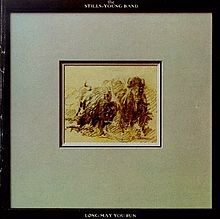
SOUNDTRACK: THE STILLS-YOUNG BAND: Long May You Run (1976).

I’ve known the song “Long May You Run” for a long time, but I never really realized it came from a non-Neil Young album.  The album is by The Stills-Young Band and the history of the album may be more interesting than the album itself (in sum: CSN&Y broke up, C&N made and album so S&Y made an album.  C&N were supposed to be on the S&Y album but they fought and S&Y removed their vocals).

So what we get is nine songs.  Five written by Neil Young and four by Stephen Stills.  The songs are played by Stills’ solo backing band and while the credits suggest that they played on each others’ songs, it doesn’t really seem like it.  It seems like you get 5 Neil Young solo songs and four Stephen Stills solo songs.

It’s also odd that the cover of the album shows buffalo running in the plains (nod to Buffalo Springfield, I’m sure) but so many of these songs are about water.  Maybe that disconnect feeds the whole thing.

By the way, “Long May You Run” is a catchy little country number that I never realized was about his car until recently.

Stephen Stills’ first song is the utterly unsubtle, possibly seductive in the 70s but hilariously outre in 2001 “Make Love to You.”  It’s full of 70s synths and has a very serious tone (despite the 70s synth).  And the lyrics, hoo boy:

Girl your body said everything and I know you knew/I wanna make love to you, make you feel all right/I wanna make love  to you, yes, it’ll take all night

Which is about as long as the shower you need to take after hearing that song.

“Midnight on the Bay” is a pleasant enough song from Neil.  It’s a bit too much into the 70’s-lite music genre for my liking, but it’s not too terrible.

The thing about Stephen Stills is I like his voice.  It’s unusual and unique and I like hearing him sing.  But man his lyrics are crazy.  I like the opening riff of “Black Coral” with its staccato piano.  Yet it seems like he’s got but one thing on his mind.  The song is ostensibly about being underwater:

Got to move slow/Take it easy down there/You’ve only so much air/When you get a little deeper/If you slow down/You might keep her/The sea, unforgiving and she’s hard/But she’ll make love to you/Show you glimpses of the stars.

But maybe that’s metaphorical.  Because when you go deeper, “I saw Jesus, and it made sense that he was there.”

“Ocean Girl” is sort of Neil’s answer to that song.  It’s got a very 70s wah wah sound and a very easy to sing chorus.  Consider it a catchy but inessential Neil song.  “Let It Shine” is also Neil’s song (and there’s more stuff about his cars here–so you know he’s really into it).  It’s a more substantial song than most of the rest although it has a very easy feel.

“12/8 Blues” (love the title) feels like an Eagles song (“Life in the Fast Lane” to be specific, although they both came out in the same year.  Hmm).  It’s fairly generic (like the title) but I like it (crazy time signatures are my thing, man).

“Fontainebleau” is an interesting angsty Neil song that I think would have done very well with CSN&Y.  I never really paid attention to the lyrics before, but it’s fairly interesting and the guitar solos are soft but cool.

The final song goes to Stills.  “Guardian Angel” feels like a combination of all of his other songs, and it’s probably his best on the disc.   It’s got the slinky 70s vibe of  the first song, the staccato piano and, interestingly a chorus that would sound great with the 4 part harmony of CSN&Y.  It also rocks harder than anything on the record (which isn’t saying all that much).  The end has a cool extended instrumental section which I rather like as well.

So this is a weird little hybrid record.  There’s some good stuff for Neil Young fans, although it’s far from essential.  I actually don’t know much about Stills’ solo work so I don’t know how this compares, but he does seem a little one-track here.

[READ: November 4, 2011] “He’ll Take El Alto”

I don’t read Gourmet magazine.  I’m not a foodie and it seems like it’s just a food magazine.  But here’s the second article in Gourmet by a writer that I really like.  The first of course would be David Foster Wallace’s “Consider the Lobster.”  Is Gourmet more than just recipes?  Does it often have contributions from respected authors?  Am I missing out?

This issue is the Latino issue, so it deals with food from Cuba, El Salvador, Puerto Rico and the Dominican Republic.  And Junot Díaz is our resident Dominican, so he’s given the task of talking up the cuisine.

Unlike Wallace’s essay, which was about a trip to the Maine Lobster Festival, Díaz’s essay is about how upper Manhattan (known as El Alto) has become a hotbed for Dominican food.

Díaz explains how when Dominicans first arrived in New York, there were no restaurants.  Dominicans had to eat Cuban food to approximate their home food.  But now that there are vast enclaves of Dominicans living in El Alto, there are excellent restaurants everywhere (the sure sign that a culture has made it is when you have people from other cultures as your waitstaff).

Díaz revel as his own and his friends’ and acquaintances’ preferences for favorite Dominican restaurants.  As this article is four years old and most of the places seem to be holes in the wall (which everyone knows serves the best food, even if they don’t last very long), I’m not going to bother saying which places they are or checking to see if they are still extant).  Okay, well, Malecon is still around, anyhow. (more…)

Read Full Post »

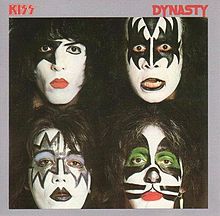
SOUNDTRACK: KISS-Dynasty (1979).

I was pretty excited to buy this album when it came out–a new Kiss album that wasn’t solo albums!  Woo hoo!  And the fact that it was disco?  Well, even though I said I “hated disco,” I didn’t really know what disco sounded like then (and really, aside from the middle “I Was Made for Lovin’ You” it’s not really a disco record) and plus my other favorite band was the Village People (and really, that makes a lot of sense–tw0 bands in over-the-top costumes talking about sexuality that I totally didn’t understand).

So, this album is hard for me to be critical about because it was such an essential part of my childhood, especially “I Was Made for Lovin’ You.”  I love it, and yet I can listen critically and appreciate that it’s really not that good.

But I’ll move on to the other songs.  “Sure Know Something” and “Magic Touch” really don’t seem that out of place chronologically with, say, the Kiss solo albums–they sound an awful lot like something off of Paul’s album.  So, despite the sort of slinky 70’s bass on “Sure Know Something”, they can’t have been that much of a surprise.  The guitar solos are short but have some interesting Ace sounds (I like the harmonics on “Magic Touch”).  It seems that while the other guys were embracing disco, Paul was keeping the Kiss sound alive.

Then there’s the Ace songs.  “2,000 Man” made total sense as an Ace song. I had no idea it was a Rolling Stones cover until fairly recently (and I like Ace’s version much better).  “Hard Times” feels like the sequel to “New York Groove.”  Not the music so much although maybe a little, but the lyrics–now that he’s in the city here’s what happened–the gritty reality. It’s one of Ace’s great, lost songs.  And check it out, Ace sings on three songs here!  (Guess having a #1 hit wasn’t lost on the Kiss powers).  “Save Your Love” has a cool descending chorus and a nice bass feel to it.  Ace certainly wins on this record.

Peter got only one song, “Dirty Livin'”.  In fact, this is the only song that Peter had anything to do with (his drums were re-recorded by Anton Fig).  It reminds me (in retrospect) of the Rolling Stones disco era even more than “2,000 Man,” the backing vocals remind me of something like “Shattered.”  I always liked this guitar solos on this (cool feedback).  Although I liked the song (along with the rest of the album), I don’t think it holds up very well.

Gene only gets two songs.  It amuses me how little he has to do with these late 70s albums even though he is always the leader of the band.  I always liked “Charisma” (I had to look the word up back then) even though it is, admittedly, rather discoey and really not very good.  It is fun to ask “What is my…charisma?”  But “X-Ray Eyes is the better Gene song on this record.  It harkens back to earlier Kiss songs and even has a bit of menace in it.

So, Dynasty was a huge hit for the band.  And they even got to mock it in Detroit Rock City the movie.  Cynical marketing ploy or genuine fondness for disco?  Who would ever know.

[READ: November 1, 2011] “The Brief Wondrous Life of Oscar Wao”

Readers of this blog know that after finding an author I like, I will try to read everything that he or she has written.  Close readers will know that if a writer is reasonably young and reasonably unpublished, I will try to read his or her uncollected work as well.  Well, I really enjoyed Oscar Wao the novel, so I decided to see what else Díaz had written. There’s really not a lot, to be perfectly frank.  There’s his short story collection Drown and a few fiction pieces published here and there (mostly in the New Yorker) and a few non-fiction pieces as well.

So this “short story” from the New Yorker (with the same title as the novel) is in fact an early, mostly the same, version of the Oscar story in the novel.  The thing here is to note the date: 2000(!).  The novel came out in 2007.  So, Junot had been working with this character for easily five years (giving time for the publishing industry to get a book out and all). The remarkable thing the is just how accomplished and polished this piece is and how much of it was used in the novel.

I’m curious to know whether this was written as a short story (it’s quite a long short story) or if it was always intended as a part of a novel.  Interestingly, when you read this story by itself and you realize that it is pretty much all of Oscar’s story in the novel, you realize just how little of Oscar is actually in the novel.  The novel is about Oscar, obviously, but it is really about his family and the fukú that was placed on them by the Trujillo clan.  Oscar is sort of the touchstone for the fukú, and the person whom the narrator knows most intimately but his story is also brief. (more…)

Read Full Post »

SOUNDTRACK: PUBLIC ENEMY-Fear of a Black Planet (1990).

NPR recently broadcast a PE show from the All Tomorrow’s Parties Festival.  I didn’t know that PE was still touring, so that was a surprise to me.  The show was largely a celebration of Fear of a Black Planet, which meant that I had to go back and listen to the original.

Man, is this a solid album.  The lyrics pack a punch even twenty years later and what is perhaps more amazing is that the sound collages that Terminator X created, which were something of an oppressive sonic assault are now fairly mainstream-sounding (forward thinking or what?).

What I like about this (and most PE) albums, is that  they have little skits between songs, but unlike most rap skits they’re not one-not jokes that you listen to once and then skip every future time.  A wonderful skit (for lack of a better word) is “Incident at 66.6 FM” in which we hear an amazing amount of racist epithets thrown at PE apparently on the radio.  Or the rather disturbing “Meet the G That Killed Me.”  “Anti-Nigger Machine” is a great collage of samples like “Think” and James Brown and a dozen more songs.

“Can’t Do Nuttin for Ya, Man!” is a (sort of) comic song from Flav that is catchy as anything. While “Reggie Jax” is a confusingly titled song that has nothing to do with baseball, but everything to do with funk.

Of course, this disc has some of PE’s best songs as well.  From the awesome “911 is a Joke” to one of the best rap songs ever, “Welcome to the Terrordome” (my favorite story of this song is when I was wearing a  Welcome to the Terrordome shirt and my philosophy professor asked me quite pointedly, “What in the hell is a terrordome.”  That was a fun conversation).  “Terrordome” is still amazing–powerful, musically intense and for all of its lyrical acuity, it still has funny moments….boing.

And of course, “Burn Hollywood Burn” is an amazing critique of the movie industry (and it’s catchy too).  I got Black Caesar back at the crib, right Lar?

I’ve always been a little confused by “Pollywannacracker.”  Not lyrically, but vocally, as Chuck’s (is it really Chuck?) voice is treated in a surprisingly tinny way.  I liked the song more on this listen than any other, I guess in the past it just kind of snuck by me.

The album is a little front loaded with greatness.   “Power to the People” is another powerful song, but it’s not quite as memorable as the other tracks.  “Fear of a Black Planet” has some really cool sounds on it (where did they get that “black man, black woman, black baby” sample?).   “Revolutionary Generation” is a great track in which Chuck and Flav stand up for black women: “R-E-S-P-E-C-T, my sister’s not my enemy.”  Not your average rap subject.

And the last couple of proper songs, “B Side Wins Again” and “War at 33 1/3” are fast paced and furious, but they don’t really have much in the way of a hook.  Nevertheless, lyrically they are really great, and I love to hear Chuck D flow that quickly.

The biggest surprise for me is the censored version of “Fight the Power” (the song that got me into PE in the first place, thanks Spike).  It’s really surprising to me that PE allowed their music to be bleeped–unless it was just for a deliberate radio play (which I can accept).  Although they also list a title as “Leave This Off You Fu*Kin Charts” (did I buy a Columbia House version or something?)

This is an amazing album, one that still sounds fresh and sadly, is still relevant.

[READ: October 15, 2011] Between Parentheses

I never expected to get so addicted to Roberto Bolaño.  And despite his death, there is no shortage of works coming out in English (that is one of the advantages to reading a translated author–even death doesn’t cease the available materials).  Indeed, this year alone, New Directions is publishing Between Parentheses, and Tres and FSG is publishing The Third Reich (a collection of non fiction, a collection of poetry and a novel respectively).

When I really get into an author, I fall for his or her works, not necessarily him or her as a person (heck, some author are downright jerks).  But there are some authors that I want to know about, personally.  Bolaño is a pretty polarizing figure–he seems obnoxious, his works don’t shy away from very specific opinions, and sometimes it’s unclear what kind of views Bolaño himself has in his works (or if he’s even telling the truth about his so-called truths).  One thing in particular is the constant use of the word “faggot.”  It is used often in 2666 (and I know that is a translator’s choice, but still) and used derogatorily.  Now, clearly the context is everything for something like that.  But it seems to speak badly of Bolaño.  And yet, when reading these essays he is not homophobic in the least.  He is obviously well aware of institutionalized homophobia in Latin America, and he is obviously not supportive of it.

But that’s just one interesting thing about this book.  So let me back up. (more…)

Read Full Post »

SOUNDTRACK: COLIN STETSON: “Horn of Plenty” (interview, NPR’s All Things Considered) (2011).

I’ll be mentioning some recordings by Stetson shortly, but as an introduction to this man and his bass saxophone, this ten minute piece from NPR is absolutely essential.  I had listened to his recent album and NPR has two concerts from him that are downloadable.  I enjoyed the music, but after listening to this interview it gave me so much more appreciation for what the man is doing.

For a lot of classical and jazz, knowing what the author “meant” can help.  Knowing that The Moldau is a river makes Bedřich Smetana’s piece all the more interesting and moving.  Similarly, knowing that “Judges” is about horses… well, holy crap yes it is.

More importantly, knowing how he does what he does–circular breathing: taking air in through your nose while breathing out through your mouth (try it…it’s not possible) allows Stetson to essentially never have to stop playing.  (Tenacious D has a very funny version of this called “Inward Singing,” although it lacks the gravitas of Stetson.)

Also, the bass saxophone weighs twenty pounds nad is almost as tall as him.  The picture is preposterous.  Who even thinks of making music with such a thing.  And yet he does.  Unsettling music, sure, but music nonetheless.   Listen to this interview and be amazed.

[READ: 2010-2011 and beyond] Natasha Wimmer

Many readers don’t read anything that was written in a different language.  And those of us who do probably give little thought to the translator.  Until recently I didn’t give much thought about them either.  Often I assumed that if I didn’t like a book, it was the author not the translator.  And that could be true, but it may also not be so easy a judgment.

Natasha Wimmer has translated many of Roberto Bolaño’s English publications (she has not translated them all–see below–and, she has also translated other writers).  But she has famously translated The Savage Detectives which rocketed her to prominence, and then she managed his unwieldy 2666.  She has also recently translated Between Parentheses, the book I am currently reading.

Between Parentheses is a collection of newspaper columns, essays and pseudo-fictions.  It is a far cry from the convoluted masterwork that is 2666 and yet Wimmer has made this collection of essays utterly readable (I’ll review the book proper when I finish it).  Again, obviously the work is Bolaño’s and he deserves the credit.  But as I’m reading these newspaper articles, I am aware that they were written in Spanish.  And yet the word choices that Wimmer uses, from idioms to real seventy-five-cent words make the essays flow, give them real impact and really convey the kind of writer that Bolaño was.  Let’s take just one example picked not at random but because it uses a real seventy-five-cent word and it mentions David Foster Wallace (can I go a week without mentioning him?).  In “All Subjects with Fresán”, Bolaño states that he and Rodrigo Fresán spend much of their time talking about various subjects;  he lists 30.  Number 22 is “David Lynch and the prolixity of David Foster Wallace.”  I have no idea what word Bolaño used in Spanish (he has an amazing vocabulary, so I’m sure it was a Spanish 75 cent word) but how many translations would have used the word prolixity?  [Okay I had to look it up, he uses “palabrerío” which Collins translated as “verbiage, hot air.”  How much more outstanding is “prolixity”!–Oh, and as if Bolaño wasn’t prone to palabrerío himself]. (more…)

Read Full Post »

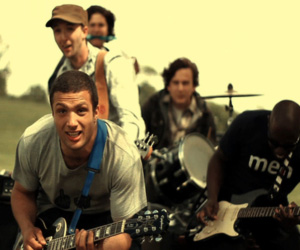
SOUNDTRACK: COSMO JARVIS-“My Day” (2011).

I learned about Cosmo Jarvis through NPR.  The DJs called it a love it AND hate it song.  But I find that I mostly love it.  The video is a blast to watch, but even without the video, the song is quite catchy and fun.  It’s a half punk song and half folkie/trad song.

So who the hell is Cosmo Jarvis?  Well, he was born in NJ, but is really from England.  He’s a filmmaker and musician and he’s had a hit with the song “Gay Pirates” that Stephen Fry raved about on his Twitter feed!  “Gay Pirates” is a fun shanty, but “My Day” is a full-on punk blast.

The song laments the state of things today and talks about how things were back in “my day” (which is of course funny since he’s 21).  The verses are a kind of folkie/storytelling style (but with electric guitars) and the end of each verse has a guitar riff that sounds traditional to me.  But when the chorus jumps in, it’s heavy, rocking, screaming punk.

Okay so the song is nearly 8 minutes long, which is probably overkill.  There’s a fairly lengthy instrumental bridge about 5 minutes in which features guitar and tin whistle solos.  And then the final 2 minutes are just fast metal screams of “My Day” with some wild soloing.  Yes, it’s too much (I’ll bet the single mix is awesome), but it’s still an enjoyable song.  Even without the video.

But you should watch the video, if only because it’s what the guys from Jackass would do if they were in a band and lived in the English countryside.

[READ: July 15, 2011] The Corrections

My company recently asked us if we had read any books over the summer.  I was able to pony up this review for our company newsletter.  I’ll be fleshing it out, but it’s pretty apt.

I’d put off reading this for a number of years, and I wish I had read it sooner.  It’s a very detailed look at one family: Elderly parents, thirty-something kids, and a few grandkids.  The depth of character development is amazing (and includes even depth of characters that the main characters interact with).  It’s a long book but it is very rewarding—comic scenes, moving scenes and one or two shocking moments.  It’s also the first time I’ve read a book where I thought, “even though I like this character, I think it would be better for everyone if he died.”  It’s an unnerving thing to think, but Franzen really makes you think about how family members impact one another.

It took me forever to start reading this book, obviously.  I wasn’t really interested in Franzen when all of the Oprah commotion came out, so I blew off this book entirely.  I’ve recently grown more interested in him.  But rather than reading his novels, I had decided to read all of Franzen’s New Yorker pieces.  (And even though I wanted to read Freedom when it came out, I felt that I should read this one first).  I wasn’t hesitant about reading it, I think I just wanted time to devote to it.  Much like I needed time to devote to writing up this post.  It’s been well over two months since I finished the book.

The Corrections is a wonderful, engaging story about three generations of the Lambert family (and many of the people they interact with).  The matriarch and patriarch of the family, Enid and Alfred, live in the midwestern town of St. Jude.  They have three children: Gary, a banker in Philadelphia who is (more or less unhappily) married with three children; Chip, a former school teacher and current playwright who sponges off of his younger sister while he tries to live the high life in New York City; Denise, a very successful chef who also lives in Philadelphia.  She has no children.  Gary’s children play a small but significant part in the story, keeping the three generations aspect working very well.

I found the first chapter a little slow and somewhat off-putting.  I read an excerpt from the novel in the New Yorker, which was a piece about Chip.  So I was surprised that the book opened with an older couple.  The chapter deals with Alfred and Enid.  Alfred’s dementia is hitting their household quite hard but Enid just feels that Alfred isn’t trying very hard.  Because Enid has very little in her life, she wants nothing more than to have her whole family together “one last time” for Christmas.  Enid and Alfred are long-married and this chapter picks up in the middle of a typical day.  So it takes a few pages to get up to speed.  Of course, once I did, I felt that the whole family was completely real and believable. (more…)

Read Full Post »

SOUNDTRACK:THEM CROOKED VULTURES-Live on Austin City Limits, Feb 13, 2010 (2010).

This set from Them Crooked Vultures is outstanding. I really like the album, but in a live setting these three (technically 4) guys are on fire.  They extend the songs a bit but are always tight as a drum.  Josh Homme is a great front man, even if he’s not that animated.  He shares guitar duties with Alain Johannes who is not on the album, but who gets some great sounds out of his guitar.

Dave Grohl is in his drum-pounding glory back there.  Man, he hits the drums hard.  And he seems to be really enjoying himself .

 And the biggest surprise (sort of, but not really) is John Paul Jones.  He fits in perfectly with the two younguns, and he really shows them how it’s done.  His bass work is phenomenal: fast, furious and accurate to a fault.  He also plays keyboards, an LED pulsing 12-(at least) string bass and a fascinating purple electric slide guitar contraption on “Nobody Loves Me and Neither Do I”.   Matt Rosoff from cnet explains this guitar here:

It looked like some sort of slide guitar with an electronic screen. I’d never seen anything like it before, so I did a little digging and found out from a March interview in Bass Player that it’s a custom-made axe created by Hugh Manson, who has been Jones’ tech for some time and who owns a renowned guitar shop in England. It’s essentially laid out like a lap slide guitar, modified so Jones can sling it over his shoulder and carry it around on stage, and with two extra bass strings at the bottom.

So what about that rectangular screen? According to a forum post on the EMG pickups site, it’s a MIDI controller that Jones can use to trigger stage lights. I imagine it could also be used to trigger various effects, similar to the modified Korg Kaoss controller that Manson built into a guitar for Muse’s Matt Bellamy.

If you’re already a fan of the band, you really need to check out this live show; they are amazing.  And if you’re not a fan, you will be after this show.  This is how I first heard  them and I was blown away.

You can watch the show online on PBS.

[READ: July 27, 2011] Five Dials Number 20

I didn’t expect to get caught up to Five Dials issues so quickly (has it really been 20 weeks already?).  This is the most recently releases issue!  They aren’t getting published as often as I expected.  Which is fine.  But the funny thing with this issue is that there were several printing errors in the initial run of this issue.  I don’t know if this has happened before, but it seemed so noticeable to me, that I had to wonder how it slipped by everyone.  The most obvious was that the front page had many ƒƒƒƒ characters (these were also evident in the Word Cloud later on).  There’s a word missing from the fiction “the thin cold stillness you got [  ] this part of the country” and there’s a crazy typo in the Fiction story later on. The errors have now been fixed.  But, the letter to the editor (and this has not been fixed) promises us a picture which isn’t there. “Here’s a photo of Doni at the reading – he did a brilliant job.”  I’ll assume they were partying too hard at the Port Eliot Festival to make sure  the issue was launch-ready

CRAIG TAYLOR-A Letter from the Editor: On Cable Street and General Interests
There were some serious race riots on Cable Street back in 1936.  Indeed,the head of the British Union of Fascists, Mosley, and his aggressive supporters were turned back by a noisy crowd (Irish women throwing fishy potatoes at them).  The rest of the magazine he says is general Interest, an anachronistic term from the 20th century before all magazines had to specialize in something.  I mentioned in my introduction that there was a photo error here.  Doni Gewirtzman performed a reading at the launch of Five Dials 19.  They couldn’t out the picture there, so they added it here.  Perhaps in Issue 21? (more…)

Read Full Post »

[WATCHED: August 22, 2011] “The Calamity Song”

I woke yesterday to the news that one of my favorite bands had made a music video which was a tribute to one of my favorite books, Infinite Jest. Colin Meloy was a reader during the Infinite Summer project (one of the more high profile readers, although he didn’t really contribute beyond the first week).  When I saw him at BEA, I asked him if he finished the book and he said that indeed he had. Weill according to this story from The New York Times, Colin liked the book so much that he wanted to use one of the great scenes from the book as the basis of a music video.  And since The Calamity Song has the line “In the Year of the Chewable Ambien Tab” which is an allusion to Infinite Jest‘s Subsidized Time, well why not use that as the song.

The video was directed by Michael Schur (a huge Infinite Jest fan) who is a major figure behind Parks and Recreation. The video is a bare-bones retelling of the Eschaton sequence from the novel. For those who have not gotten to that scene yet, Eschaton is a game of global annihilation played on a tennis court. There are strategic places you are supposed to hit from across the court (so it’s a physical game, not just an academic one) with your 5 megaton tennis balls.   The scene is challenging to read because there’s so much going on, but the video does a very good job of giving you the essence.

Sure, diehards will have lots to quibble about (it’s raining, not snowing; Ann Kittenplan (the girl who gets hit with the ball) is totally hot–not so much in the book; and the scene doesn’t end with someone’s head crashing through a computer monitor).  Most of the quibbles are addressed in the Times article but some are easily answered anyhow–it was filmed in two days, it’s a flat screen monitor (you can’t put your head through that), and why not have a hot Ann Kittenplan, it’s a music video, right?   (more…)

Read Full Post »

SOUNDTRACK: RA RA RIOT-Live at the Black Cat, Washington DC,  October 12, 2008 (2008).

I really like Ra Ra Riot’s album The Rhumb Line, and this concert is basically a showcase for that album.  There’ s an interview at the end of the show (all downloadable from NPR), in which the  band says that critics raved about their live show as much as their album.

I don’t really hear that the show is more energetic than the album (maybe visually they are wild), but it did sound fantastic.  It’s amazing to hear a rock band that is dominated by strings–the cello and violin are often louder than the guitar (but not in a competing/drown you out kind of way,  more of a strings do the melodies and the guitar adds bulk to the sound).

I always enjoy hearing a band that is grateful to their audience for showing up (this is most evident in young bands, who seem so much more genuine about their love of the audience) and Ra Ra Riot are certainly that .  They seem genuinely surprised at the turn out, and they play a great set accordingly.

There are two songs that aren’t on the album here “A Manner to Act” and the encore “Everest.”  They both feel like they came off the album, which bodes well for their second album, Orchard, which just came out in May.  Ra Ra Riot also do a great cover of the obscure Kate Bush song “Suspended in Gaffa.”  At the end of the show they tack on a cover of “Hounds of Love.”  Lead singer Wesley Miles has a wonderfully strong voice and he can reach some pretty high notes–not soprano or anything like that, just strong enough to be able to pull off a Kate Bush cover.

This is a great show.  And when you read about the tragedy they suffered just as they were starting to take off, their obsession with death may not be so surprising.  I’m looking forward to Orchard.

[READ: 1995 and August 18, 2011] Microserfs

After reading Life After God and thinking about Microserfs, I looked up Coupland’s bibliography and saw that indeed Microserfs came next.  And I was really excited to read it.  I have recently watched the JPod TV show and I knew that JPod was a kind of follow-up to Microserfs, so I wanted to see how much of it rang true.  And I’ve got to say that I really rather enjoyed this book.

While I was reading this, I started taking notes about what was happening in the book.  Not the plot, which is fairly straightforward, but about the zeitgeisty elements in the book.  And, since I’m a big fan of David Foster Wallace, I was also noting how many zeitgeisty things this book had in common with Infinite Jest.  I’m thinking of tying it all together in a separate post, maybe next week.  But I’ll mention a few things here.

My son also loved the cover of this book because it has a Lego dude on it and he has been really getting into Lego lately.

So Microserfs is the story of a bunch of underpaid, overworked coders who work for Microsoft.  The book is written as the journal of Daniel Underwood (Coupland still hadn’t really branched out of the first person narrative style, but the journal does allow for some interesting insights).  The story begins in Fall 1993.  I felt compelled to look up some ancient history to see what was happening in the computer world circa 1993 just for context.  In 1991, Apple released System 7.   In 1993, Windows introduced Windows NT, Intel released the first Pentium chip, Myst was released and Wired magazine launched.  In 1994, Al Gore coined the term Information Superhighway.  Yahoo is created.  The Netscape browser is introduced.  So we’re still in computer infancy here.  It’s pretty far-seeing of DC to write about this.

Daniel works at Microsoft with several friends.  Daniel is a bug tester, Michael (who has an office, not a cube) is a coder, Todd (a bodybuilder) is a bug tester.  There’s also Susan (smart and independent), Abe (secret millionaire) and Bug Barbecue (an old man–he’s like 35).  The five of them live in a house on “campus.”  There’s also Karla (a type A bossyboots who doesn’t like seeing time wasted) who works with them but lives up the street.

As the story opens, Michael has just received a flame email from Bill Gates himself and has locked himself in his office.  This leads to a very funny scene and ongoing joke in which the office mates feed slide two-dimensional food under his door and he vows to eat only things that are flat. (more…)

Read Full Post »

« Newer Posts - Older Posts »