Feeds:
Posts
Comments

Archive for the ‘Ben Lerner’ Category

augSOUNDTRACK MT. WOLF-“Hex” NPR’S SOUTH X LULLABY (March 19, 2016).

mtwolfMt Wolf breaks with the tradition of the Lullaby by playing their song in a hotel room!  This is the band’s single.

It’s a 6-minute beautiful song notable for singer Sebastian’s Fox’s soaring falsetto.  His voice is really quite amazing.

The second guitarist plays the quiet melody and then Fox plays a kind of solo over the top of it. After the initial falsetto of the first verse, the second verse shows the range of his voice, as he starts a little lower before soaring the heights once again.  The band has a female backing singer who actually sings high notes that are lower than his.

By four and a half minutes the songs starts to rocks out (and no doubt the room next door starts to wonder WTF)

The feel reminds me a bit of Sigur Rós, with that kind of soaring intensity.  This is definitely a love it or hate it song, but I think it’s quite beautiful.

[READ: February 10, 2016] “The Grand Shattering”

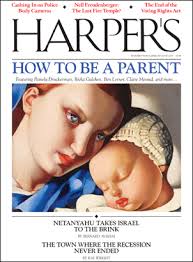
The August 2015 Harper’s had a “forum” called How to Be a Parent.  Sometimes these forums are dialogues between unlikely participants and sometimes, like in this case, each author contributes an essay on the topic.  There are ten contributors to this Forum: A. Balkan, Emma Donoghue, Pamela Druckerman, Rivka Galchen, Karl Taro Greenfeld, Ben Lerner, Sarah Manguso, Claire Messud, Ellen Rosenbush and Michelle Tea.  Since I have read pieces from most of these authors I’ll write about each person’s contribution.

Anyone who reads this blog knows I don’t know poets very well. A. Balkan is a poet whom I had never heard of.

Imagine my surprise to find out that his essay was the most dramatic and exciting and went in directions that I never would have guessed.

He says that when his twin daughters were born, he and his wife were exhausted from all the work.  So his family and friends invited them t0 a cabin where they could relax and have other take care of the kids for a couple of days.

Sounds ideal.  Except that on their second day there, a tornado came through and destroyed the cabin they were staying in (for real!)  Fortunately they were not in it. (more…)

Read Full Post »

augSOUNDTRACK MAREN MORRIS-“I Wish I Was” NPR’S SOUTH X LULLABY (March 18, 2016).

marenMaren Morris was a buzz artist at SXSW.  I listened to about 45 seconds of her single “My Church” and determined it was way too country for me.  So I wasn’t really looking forward to this Lullaby.

However, Morris’s sound strips down nicely.  Although she still sings with a rich country twang, she also adds levels of soul to her singing (particularly after the guitar solo).  There’s two guitars (Morris in rhythm), and her two supporting dudes singing very nice harmonies.

And the setting for this video is quite lovely–the chirping insects would agree.

[READ: February 10, 2016] “Curling Parents and Little Emperors”

The August 2015 Harper’s had a “forum” called How to Be a Parent.  Sometimes these forums are dialogues between unlikely participants and sometimes, like in this case, each author contributes an essay on the topic.  There are ten contributors to this Forum: A. Balkan, Emma Donoghue, Pamela Druckerman, Rivka Galchen, Karl Taro Greenfeld, Ben Lerner, Sarah Manguso, Claire Messud, Ellen Rosenbush and Michelle Tea.  Since I have read pieces from most of these authors I’ll write about each person’s contribution.

Druckerman’s name sounded familiar.  It turns out she wrote the book Bringing Up Bébé in 2012.  The book compares the child-rearing practices of middle class parents in France with those of the United States.  She says that US parents tend to have a more anxious, labor-intensive child-centric style of parenting.  And that today, college educated American mothers spend nine more hours per week on child care than they did in the mid-1990s.  This style has taken hold in most countries.  Except France. (more…)

Read Full Post »

augSOUNDTRACK: HOLLY MACVE-“Sycamore Tree” NPR’S SOUTH X LULLABY (March 16, 2016).

macveHolly Macve (pronounced Mac-vee) is a 20-year-old songwriter from County Galway. At the time of SXSW she only had some demos available.

For this Lullaby, it’s just her and her acoustic guitar.  Her low notes seem surprisingly low somehow (I ‘m guessing she plays very cleanly so her notes stand out).

But the thing that stands out most is her voice.  The song’s melody is pretty standard, but she often jumps octaves and nearly creaks her voice while getting there–it’s unsettling and charming at the same time.  She sounds very old school country to me.

Also notable is the length of this song.  It seems like a simple folk song with a pretty standard verse structure.  In good Irish tradition, it also tells a story.  But the slow pace seems to really stretch out the music.  The chorus seems a few lines longer than one might expect (I do love the past and future mixed together in the lyrics).  When she gets to a third part, which takes the song in a rather unexpected direction with very high notes, it’s unclear how long this song might just wind up being.

Macve has a lovely sound, and I enjoyed this song as a lullaby, but I think she’s too far into the country realm for my liking.

[READ: February 10, 2016] “Notes on Some Twentieth-Century Writers”

The August 2015 Harper’s had a “forum” called How to Be a Parent.  Sometimes these forums are dialogues between unlikely participants and sometimes, like in this case, each author contributes an essay on the topic.  There are ten contributors to this Forum: A. Balkan, Emma Donoghue, Pamela Druckerman, Rivka Galchen, Karl Taro Greenfeld, Ben Lerner, Sarah Manguso, Claire Messud, Ellen Rosenbush and Michelle Tea.  Since I have read pieces from most of these authors I’ll write about each person’s contribution.

I have enjoyed Rivka Galchen’s works.  Indeed, I have tried to write about everything she’s written.  One of the things I especially like about her is that she always defies expectations.  So, in this Forum, while everyone else is writing about being a parent, Galchen writes about writers who were or were not parents.

She lists dozens of writers and states their parental status.  I will not go through them all because it would be exhausting (and would basically just duplicate what she wrote). (more…)

Read Full Post »

augSOUNDTRACK: LUCIUS-“Dusty Trails” NPR’S SOUTH X LULLABY (March 15, 2016).

luciusI’m kind of mixed on Lucius. I love the vocals of Jess Wolfe and Holly Laessig, they are genuinely amazing.  But their music is often a little too poppy, too dancey for me.  So this stripped down version is just perfect.  It’s probably my favorite song of theirs now, (I haven’t even heard the original, yet).

The visuals of this lullaby are pretty awesome too.  The guitar players in the background, Jess and Holly stand on a bridge in electric blue body suits and shocks of red hair.  The image of party and dance is so contrary to the lovely music that they play.

The song starts as a kind of folkie, almost country song. The two guitars play nicely together.  And the women sing kind of gently, but with those harmonies intact.  Once they get to the chorus, though, Jess and Holly start belting out their song with their power and harmony.

And when they get to the middle section of “We’ll be alright,” the vocals are just amazing–powerful and loud and right on key.

The guitars drop out for a near a capella section–just a low drum keeping time–and they keep it up beautifully.  This song is a little too loud and intense to be a lullaby, but it’s great nevertheless.

[READ: February 10, 2016] “The Grand Shattering”

The August 2015 Harper’s had a “forum” called How to Be a Parent.  Sometimes these forums are dialogues between unlikely participants and sometimes, like in this case, each author contributes an essay on the topic.  There are ten contributors to this Forum: A. Balkan, Emma Donoghue, Pamela Druckerman, Rivka Galchen, Karl Taro Greenfeld, Ben Lerner, Sarah Manguso, Claire Messud, Ellen Rosenbush and Michelle Tea.  Since I have read pieces from most of these authors I’ll write about each person’s contribution.

I especially appreciated that the introduction which says “This forum…is not prescriptive but descriptive: not ‘how you should’ but ‘how we have.'”  Which is probably the best kind of advice a mother or father could give.”

I have enjoyed Sarah Manguso’s works.  Her last book talked a lot about her becoming a parent so this essay seemed right up her alley.

She begins by saying she never wanted to be a mother.  To her “mother” was a giving up of your self.  You couldn’t be a writer and a mother. And those writers who were mothers, she was sure that they gave up more of their writer-hood to have more motherhood. She says her fantasy at 23 when her friends were getting married was that she’d move upstate with them and seduce their neighbor’s children. (more…)

Read Full Post »

harp septSOUNDTRACK: JOSÉ GONZÁLEZ-Tiny Desk Concert #436 (April 29, 2015).

joseI really like José González.  The Swedish singer is one of the most soft-spoken singers I know.  His guitar playing is gentle and quiet (although more complex than it seems at first) and most of his songs sound, well, kind of the same.  But it’s more of a “I know what I’m getting” from him rather than an ”all his songs sound the same” vibe.

It’s fun watching his sing these songs because he barely moves, he barely even seems to raise his voice.  He is so mellow.

For the first song, “Open Book” he is accompanied on (lovely) backing harmonies by just one fellow (sometimes NPR forgets to include the band members in the credits).

On the second song, “With The Ink Of A Ghost,” three more guys come in and add more beautiful harmonies and a xylophone and a clarinet solo.

The final song, “Every Age” features the percussion of a tambourine and the clarinet player slapping his thigh and snapping his fingers…that’s the kind of raucousness you get from José González.

It’s a delight.

[READ: April 16, 2015] “The Weight”

This is an excerpt from 10:04 Lerner’s latest novel.

As with many excerpts, it’s not clear if the entire novel is about what the excerpt is about or if there’s a lot more going on.

This excerpt focuses on the narrator (in first person) as he welcomes an Occupy Wall Street protester into his house. The protestor has been in Zucotti park for a few weeks.  We learn that “civilians” have been offering protestors showers and food via Craigslist.  The protester took the narrator up on his offer.

The story stays in the apartment.  It begins in the kitchen with the narrator musing that he has never actually made food for another human being before (he’s making the guy some tofu and veg stir fry as a warm meal).  He realizes that people have made him food a lot, but he has never reciprocated. He gets mixed feeling about his–not helping people in the past but doing something good now (even if it is nothing compared to what this guy is doing). (more…)

Read Full Post »

krausSOUNDTRACK: THE FLAMING LIPS-The Terror (2013).
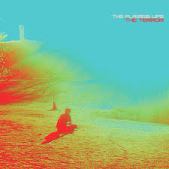
terror After the distortion heavy and heaviness of At War with the Mystics and Embryonic (to say nothing of their other experimental releases), I wasn’t sure what to expect from an album called The Terror.  Yet with a title like that the album is far more invested in psychological terror than in pummeling you with scary noises and music.  The album is more unsettling and spooky with existential dread.

Wayne Coyne has always been a pretty optimistic guy–weird, sure, dealing with feelings of dread, sure, but never so dark and insular.  But I learned that before recording this album and most likely as an impetus to record it,  Coyne separated from his partner of 25 years, Michelle, and Lips multi-instrumentalist Steven Drozd temporarily relapsed into addiction.

In an interview, Drozd says the album is like a crisis of life confidence.  He also says that the uniformity in sonic style was intentional: “Instead of writing songs and then figuring out sounds, we’d write the other way around: create sounds then make songs out of those sounds.”

So the vocals are quite low in the mix, and there is not a lot of “music” in the album.  Rather there are layers of sounds–swishing synths, spiraling noises, percussion effects that seems to almost cover up the vocals, giving it a very claustrophobic effect.  “Look… The Sun Rising” opens the disc.  It is primarily percussion with some noisy sounds and really sharp piercing guitars (that play noisy counterpoint to the soothing chorus of Oh Oh Ohs).  And yet after all of that noise and chaos, the very lovely “Be Free, A Way” surfaces as a quiet introspective song.  There are gentle keyboard notes (not unlike on Yoshimi) that propel this song along.  “Try to Explain” is a pretty song with some unusual sound effects swirling around it (The Lips can’t so straight up pretty, right?).  And yet lyrically, this song, along with the rest, is very dark indeed.

“You Lust” is a 13 minute (!) invocation about various forms of lust.  It opens with the couplet: “You’ve got a lot of nerve/A lot of nerve to fuck with me.”  The middle of the song is a kind of Pink Floydian keyboard workout.  It’s a  lengthy jam that’s kind of samey, but I’ll bet if you can really sit (with headphones) and close your eyes and focus it’s pretty intense.  After about ten minutes of that repetitive claustrophobia, some lightening occurs with sprinkled keyboard notes.

“The Terror” is primarily in Coyne’s falsetto, and it seems gentle until the mechanized noises come bursting forth.  “You Are Alone” is the shortest thing here, under 4 minutes of squeaking noises.  And again, a lovely melody despite the title.  I feel like this song summarizes the album pretty well.  In it, Coyne sings “I’m not alone” while a deeper voice replies, “you are alone.”  Whose voice will ultimately win?

  “Butterfly, How Long It Takes to Die” returns to that abrasive guitar of the earlier tracks, but the main body of this 7 minute song is just bass, keening keyboards and Coyne’s whispered voice.  There’s a recurring synth line that is magical and/or creepy depending on your frame of mind.  It, along with many of the other songs, have a kind of coda that links the songs.  This one is mostly just choral voices, but it twists the ends of the songs in a different direction. “Turning Violent” is a quiet track, in which Coyne sounds nearly defeated until the second half of the song grows louder and more animated with layers of vocals.  The disc ends with “Always There…In Our Hearts” which seems to offer some hope…maybe.  There’s signs of uplift in the melody, and when the drums kick in at the end, it seems to propel the song into a more intense frame of mind.

And lyrically, despite all of the darkness that is always there in our hearts, there is a light peeking out: “always therein our hearts a joy of life that overwhelms.”

Although most reviewers find this album unremittingly bleak, I find the music to be beautiful in an aching sort of way–a beautiful way to deal with pain (better than getting the same tattoo as Miley Cyrus, anyway).

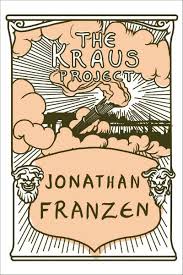
[READ: October 31, 2014] The Kraus Project

The title page of this book read: The Kraus Project: Essays by Karl Kraus translated and annotated by Jonathan Franzen with assistance and additional notes from Paul Reitter and Daniel Kehlmann.

So just what is this thing anyhow?  Well Karl Kraus was a German writer (1874-1936) whose main contributions to letters were some essays and a newsletter Die Fackel (The Torch).  The authors compare the newspaper (favorably) to a blog (while also complaining about what blogs have done to letters).  He started Die Fackel in 1899 and he continued to direct, publish, and write it until his death.  He used the paper to launch attacks on hypocrisy, psychoanalysis, corruption of the Habsburg empire, nationalism of the pan-German movement, laissez-faire economic policies, and numerous other subjects.  For the first ten or so years, Kraus was the editor, accepting contributions from around the German speaking word.  But in 1911, he became the sole contributor to the newsletter.

He also wrote many essays (he did not care much for fiction), including the two main ones that compression this book: “Heine and the Consequences” (1910) and “Nestroy and Posterity” (1912).  The book also includes two follow up essays: “Afterword to Heine and the Consequences” and “Between Two Strains of Life: Final Word to Heine and the Consequences” (1917) and a poem: “Let No One Ask…” (1934).

The essays themselves are quite brief.  Despite the first coming in at 135 pages, note that the left pages are all in German (so reduce 135 by half), nearly all of the English pages are filled with footnotes (reduce by half again) and some of the footnotes run for several pages.  So the essay could be said to be about 25-30 pages.

The same is true for all of the pages in the book.  The left sides are in German (except the footnotes) and most pages are split in half because of the footnotes.  Which means that Franzen and friends write far more than Kraus did.  Ultimately, this book is actually three things: It is a collection of Kraus’ essays with Franzen’s fine translation; it is an explication of Kraus’ attitude and about life in Germany during Kraus’ life and finally it is an insight into Franzen as a young man living in Germany and why Kraus was so appealing to him.

The first part: Kraus’ essays. (more…)

Read Full Post »
SOUNDTRACK: THOU-“Something in the Way” (2011).

Sometimes you hear a  cover version and you really don’t know what to think.  Maybe you hate it from the very beginning.  And then maybe it does something and you kind of hate it a little more.  And then suddenly it turns the corner and who knows what they’re doing.

This song opens almost ponderously slowly.  I guess it’s not that much different from the original , but it feels so really slow.  And then, when they get to the “something in the way” part, the band kicks in with really heavy squalling feedback and cookie monster vocals shouting “Something in the Way.”  And I kind of didn’t like anything.  But then came the surprise.  the “oooh” part was sung very straight and melodically.  The song reverts back to the original slow vocals section and you realize that the singer sounds an awful lot like Cobain himself. And the second time when the chorus comes in, you expect it and while you may not like the cookie monster vocals, the juxtaposition to the sweet “oohs” is strangely cathartic.

Not for everyone by a long shot, but very interesting nonetheless, especially the way the feedback squalls and wheedles.

Thou has done a number of Nirvana covers evidently.  There’s a cover of “Anuerysm” in this live show (in which they acknowledge that the fans aren’t there to see them).  The music is spot on, but man, those vocals are hard to handle.

[READ: June 29, 2012] “The Golden Vanity”

As yesterday’s story was about “the husband,” today’s story is about “the author” (have short story writers run out of names?).  The author has just written a very successful book in which the main character tries very hard not to be nervous in social situations.  The author himself gets nervous in social situations.  When people know he wrote the book they scrutinize him to see if he gets awkward in social situations…which makes him more awkward…etc.  It’s a pretty funny concept.

The opening section has the author meeting the librarian.  He’s put in an awkward situation because his hands are full when she waves.  So he gets emabrassed and scowls.  Then he thinks she assumes he is scowling at her.  He gets through the encounter with advice from his shrink.

The next scene jumps quickly (I wonder what happened to the librarian) to his medical condition.  The author has to have his wisdome teeth out.  He spends a lot of the story wondering is he should have a local or a twilight anesthetic (which costs $3,000 more and calls for an I.V.). He wonders aloud a lot to his friend Liza, who tolerates his neuroses and enjoys talking about them, even though she says things like “We’re not talking about this again.”

The evening before the surgery (he of course chose the I.V.) he went on a date.  Well, not really a date (he liked to say that), but friends going out together with a single woman there to meet him.  Naturally this made him nervous too.  But he and Hannah hit it off (lots of drinks helped).

There’s a whole section devoted to waiting room art which I appreciated quite a bit.  Who decies what to buy?  It’s not like the doctors would come out and look on it and admire it, right?  This sort of melds with a discussion about the preserved letters of famous writers.  Do libraries buy emails?  Do they buy the letters of young writers as a security upon further greateness?  These ideas are pretty theoretical yet the way it is written keeps it inetersting. (more…)

Read Full Post »

« Newer Posts