Feeds:
Posts
Comments

Archive for the ‘Alice Munro’ Category

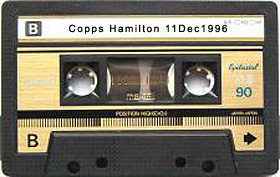
SOUNDTRACK: RHEOSTATICS-Copps Coliseum, Hamilton, ON (December 11 1996).

This is the final show on Rheostatics Live in which the band is opening for The Tragically Hip.

For this show, the intro music is also from The Wizard of Oz, but this time it’s Judy singing “Somewhere Over the Rainbow.”  It’s just one verse before fading out and then guitars fading in for Martin to play “A Mid Winter Night’s Dream.”

Turns out that this setlist is similar to the one from Buffalo with a lot of new songs.  Although there are a few older/more popular songs in places.

The new songs include “Fat” which sounds great of course.  I gather they are maybe sharing a microphone because at the end Dave says “See you in the next song, Martin.”  “Okay, Dave.”  This leads into a perfect version of “All the Same Eyes.”

Martin says “We are the Rheostatics.”  Dave says “We are the Rheostatics, not to be confused with The Howell Brothers (?).  They couldn’t make it but we got their jackets.  It’s nice of you to come out early.  We’re playing selections from our new record. Get it before it’s reduced to clear.”  (You can hear someone laugh on tape).

This is a segue into the single “Bad Time to Be Poor.”  It’s followed by another Tim song, “Claire” with the acoustic guitar opening in place.  There’s another lengthy guitar solo, although it’s not quiet as exciting as some of the other ones.  But Martin was saving up for a spirited version of “California Dreamline.”

They end their set with a rough rocking “Feed Yourself.”  During the spoken part, they slow things down to just a bass and washes of guitar.  It’s a pretty intense ending and a good preparation for The Tragically Hip.

[READ: June 25, 2017] The Story of Canada in 150 Objects

In celebration of Canada’s 150th year, Canadian Geographic and The Walrus created this special issue–a fun way to describe many elements of Canadian culture through “objects.”

The objects are grouped in vague categories.  Some have just a few words written about them while others get a few pages.  Some are humorous, some are more serious.  Most are happy or amusing, some not so much.  And all of it together paints a diverse and complex portrait of the country–as well as teaching this person from South of the border a number of things I did not know.

It’s with comic pride and humility that the first object is politeness (which is not an object at all, of course).  The amusing thing about this article about “politeness” is that while the author of it is very pleased to be so polite, he also can’t wait for his fellow Canucks to forget to be polite so he can rub it in with a extra smarmy “You’re Welcome.” (more…)

Read Full Post »

SOUNDTRACK: SARAH SISKIND-Tiny Desk Concert #23 (July 27, 2009).

sarahsI don’t know much about Sarah Siskind.  She is a country-ish singer who seems to have gained some fame once Bon Iver started covering her song “Lovin’s for Fools.”  She tells a pretty interesting story about how he came to learn her song (by looping it–thereby missing out on the words to the second chorus.  And yes she did wonder why he didn’t play that chorus).

She plays three songs in this Concert. I like her guitar work, especially on the first song, “Falling Stars.”  But there’s something about either her voice or her delivery that I just don’t really like. I’ve listened a few times ow and I have grown to appreciate her style, but it’s just a matter of personal taste that I don’t really care for her.

Listen for yourself.

[READ: January 17, 2014] “The Bear Came Over the Mountain”

One thing that I like so much about Alice Munro is that her stories are so timeless.  This story was originally published in 1999 (wonder why they didn’t re-publish that first story which I wrote about yesterday), but there are no real indicators of when it was written.  (There are some clues to the time frame of the story, but it was clearly not set in the late 90s).

This is a straightforward but fairly complex story, with a lot of emotional heft.  A married couple, Grant and Fiona, have been together for a long time.  Fiona had always written notes to herself, but Grant sensed recently that the notes were becoming somewhat alarming.  Instead of books to read or appointments to keep, she was writing “cutlery” on the kitchen drawers. Then she started forgetting normal things–like how to drive home or that something which she thought had happened last year had actually happened 12 years ago. Not major problems, but causes for concern.

And so, Fiona was sent, at first temporarily, to Meadowlake.  And Grant was not to show up for the first month–they found that patients settled in better if they were not reminded of their house and old life.  After a month of wondering about her and thinking about her, Grant goes to Meadowlake, excited to see Fiona.  But when he arrives she is not in her room–the touching reuniting scene will not be enacted as he pictured.  And the nurse seems rather impatient with him when he asks where she is. (more…)

Read Full Post »

2014-01SOUNDTRACK: NOBEL PRIZE PLAYLIST-CBC Radio 3 (2013).

cbcIn honor of Alice Munro’s Nobel Prize, CBC radio has a playlist of “Literary Music.” Now, I have made many literary playlists over they years myself (including “My Baby Loves a Bunch of Authors” by Moxy Fruvous which is not included here), but this one consists of a few bands that I don’t know (and two that I do).

  • Library Voices–“Generation Handclap”
  • The Darcys–“Pretty Girls”
  • Kathryn Calder–“Right Book”
  • AroarA–“#6”
  • Arkells–“Book Club”
  • Dan Mangan–“Road Regrets”
  • John K. Samson–“When I Write My Master’s Thesis”

Samson is the only artist I know well, although I know Dan Mangan a little.  It’s a good listen and I’m sure if you scrutinize the lyrics you’ll find their literary worth.

Listen here.

[READ: January 18, 2014] “Her Big Break”

I’ve been a fan of Alice Munro for a while, and I’m always happy to see her in the New Yorker.  Strangely, I have never read any of her collected short stories.  Maybe some day….

When Munro won the Nobel Prize for Literature, I imagined she’d get a lot more press.  And then I realized that it’s a literature prize.  And she’s Canadian.  So, perhaps a few columns in Canada’s The Walrus is all she’ll get.

But this article, which is really entirely this below letter and a brief introduction, explains that on November 18, 1976, Charles McGrath, a fiction editor at The New Yorker, sent Alice Munro her first acceptance letter from the magazine for her story “Royal Beatings.”  Soon after this, she signed a first-reading agreement with the magazine, which I gather means that they will see any of her short stories before she can send them anywhere else.

I am including this letter in its entirety because I assume that most people, like me, have never actually seen an acceptance letter from a magazine for a piece of fiction (I have several rejections).  But even if you have seen an acceptance letter, I can’t imagine that it will every be as thoughtful and considerate as this one.  i also love that as recent as 1976 The NEw Yorker was kind of prudish about their fiction.  I mean, now, the cursing is rampant, but back then the fiction was a more genteel breed.

I have not read “Royal Beatings,” but you can bet I’ve added it to my short list. (more…)

Read Full Post »

I Just Read About That favorite Alice Munro just won the Nobel prize for Literature!alice I love this picture (from 2009).

Munro is the 13th woman (shocking) and 2nd Canadian born writer to win the Prize.

Read about it at the CBC.

Fantastic news.

Read Full Post »

aug2013SOUNDTRACK: JIM GUTHRIE-Tiny Desk Concert #294 (August 10, 2013).

jimgI was unfamiliar with Guthrie before this set and I almost didn’t play it because of his mustache–he just looks so country to me.  But then I read that he and his band drove 9 hours from Ontario just to do the show (which is 11 minutes long, so that’s pretty crazy).  But the set is really good.

The three songs come from Guthrie’s new album Takes Time (his first solo album in ten years).  And I was hooked…not right from the start, but 15 seconds into “The Difference a Day makes” when the guitar plays the chorus riff.  There is something so… Canadian about the melody line.  It reminds me of Neil Young, Sloan, Rheostatics, even Kathleen Edwards, all of these great Canadian songwriters who play with slightly different melodies.  The fact that he sings “doubt” and “out” with an Ontario accent solidifies it.  It’s one of my favorite mellow songs of the year.  “Before & After” sounds a bit like  Barenaked Ladies mellow song, like something  written by Kevin Hearn.  I tend to not like the Hearn songs, but I thin kit’s that I don’t like Hearn’s voice, because I like this song quite a lot.

Guthrie has a delicate but strong voice–I can’t imagine him screaming, but he conveys a lot.  Especially in the final song, the more mellow (and minor key) “Like a Lake.”  I’ve heard Tiny Desk shows that go on for five or six songs.  I wish that Bob and Robin had let them play for ten more minutes. Now I’m off to find his records.  Check it out.

[READ: September 10, 2013] 3 book reviews

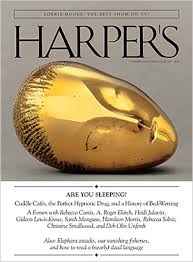
Tom Bissell reviewed three new books in the August 2013 issue of Harper’s.  I like Bissell in general and since I’ll probably wind up writing about these when they get collected anyway, why not jump the gun here.  Especially when there’s three good-sounding books like these.

sagamoreThe first is Peter Orner’s Last Car Over the Sagamore Bridge.  I know Orner from McSweeney’s mostly, where I’ve read a few of his things  But one of the stories that Bissell mentions from this short story collection sounds familiar and yet it doesn’t seem to be something I’ve read.  Hmmm.  Well anyhow, he says that Orner’s previous book (with a title that Bissell assumes he had to fight to keep–The Second Coming of Mavala Shikongo) was a great piece of fiction about Africa, and that his previous collection Esther Stories was also very solid.

This book is a little stranger—bundled into 4 sections, it includes more than fifty “stories” and is all of 200 pages.  (Sounds like just the kind of thing I can get into).  Bissell suggests that the stories have a layer of remove, like someone telling a story about someone telling a story.  Or, if they were about a bank robbery, the story would actually be about someone describing having once met the guy who sold the robbers their ski masks.  But the real selling point for me was this pithy description of the collection: imagine Brief Interviews with Hideous Men written by Alice Munro.   That sounds hard to pass up. (more…)

Read Full Post »

SOUNDTRACK: BAND OF HORSES-Live on KEXP , April 13, 2006 (2006).  

Band of Horses played KEXP in 2006.  They had been around since 2004 but their debut came out in 2006.  Since they are a Seattle band, they are treated as yet another Seattle band, which is kind of funny as they would be huge not long after this release (okay technically in 2007).  This show takes place about a month after the debut album came out (although the DJ says they’ve been playing them for a while).

I did not know that many of them were in a band called Carissa’s Weird (nor had I heard of that band), but thanks to the KEXP DJ for bringing that up.  I also found out that “Wicked Gil” is about baseball player Gil Meche.  The band sounds great–not quite as polished as on record, which is to be expected of course, but the vocals all sound great and the band is very tight.  They also play “Part One,” “The Great Salt Lake” and “The Funeral.”

It’s fun to hear a band before they became famous.

[READ: September 3, 2012] “Amundsen”

I read this story a day or two before I got laid off.  Unsurprisingly I didn’t feel like posting about it then.  But now it’s time.

This story is  about a young woman, Vivian Hyde, who is to be the new teacher at a rural santitorium.  She has traveled from Toronto to work at the ward where the girls have TB.  She has a B.A. and wants to work on her M.A, but she thought she’d earn some money for a time, first.  The story is set during the war, and the nurses are doing their wartime duty.

The first girl she meets, Mary, is the daughter of one of the employees who lives there.  She doesn’t have TB and does not participate in the studies that the TB girls do.  Vivian likes her but the headmaster, Dr. Fox, scolds the girls and sends her away so that Vivian can get settled in.

Munro is wonderful with details, like when the doctor asks is he knows anything about  tuberculosis:

“Well I’ve read–“

“I know, I know. You’ve read The Magic Mountain.”

[This is novel by Thomas Mann from 1924 that dealt with TB.  I love how Vivian does not respond to his comment one  way or the other]. (more…)

Read Full Post »

SOUNDTRACK: LAMBCHOP- “2B2” (2012).

I don’t have much exposure to Lambchop.  I know of  them mostly as a slow, country-type band.  And that’s why I haven’t listened to them much.  So I picked one song from their latest album, Mr. M, to talk about (because they are associated with Five Dials, see below).

And, indeed, they are slow.  I wouldn’t say country so much as roots, maybe, traditional folk or something.  It’s certainly slow.  This song reminds me in someways of Tindersticks, although a very stripped down Tindertsicks.  Of course, what I like about Tindertsicks is that they are not stripped down.  So this song kind of leaves me a little flat.  I like it, but I’ve already got music that’s like this ti listen to.

I’ll bet though, that it would make great background music to an engaging story (see below).  I wonder what song they chose to remix.  It’s be crazy if I picked it.

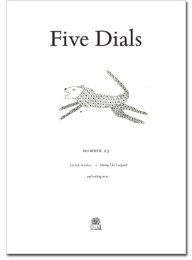
[READ: May 3, 2012] Five Dials 23

Five Dials 23 was recently released with quite little fanfare.  That may be because it is like an appetizer for the soon to be released Issue 24 which promises to be very large.

Five Dials 23 contains only one piece (and an Letter from the Editor).  The piece is by Javier Marías, whom I’ve read and enjoyed and have put on my list of authors to explore more.

CRAIG TAYLOR-“On That Fiction Feeling and Lambchop”

Craig Taylor’s introduction wonderfully encapsulates why I prefer to read fiction to non-fiction.  I have friends who say they only like to read non-fiction because at least they’re learning something (or some variant of that).  And while it’s compelling to argue that you learn stuff from fiction too, it’s not always easy to prove.  So Taylor’s Letter from the Editor is where I can point people in the future:

I remember it happened when I read part of Runaway by Alice Munro, specifically the three linked short stories ‘Chance’, ‘Soon’ and ‘Silence’. I remember the names of the North London streets I was compelled to walk – from Messina Avenue to Woodchurch Road to Greencroft Gardens – just to free myself from the sensation that had blossomed within me after I set down the book. During that walk, the neighbourhood seemed raw and responsive. I was unsettled, but in the best possible way; I was in the midst of experiencing the kind of sadness that can only be induced by fiction, which is more potent sadness than most. Also in this jumble of sensation brought on by Munro was a vow to live better, to somehow dodge the mistakes of her characters. There was a bit of a ‘what the hell am I doing with my life?’; a bit of a ‘pay attention to the details’; a bit of an ‘appreciate life more’. In short, the great inner churning that comes at the end of a few extraordinary pieces of fiction.

The details aren’t relevant, it’s the overall mood and idea that he conjures that is.  Although he mentioned Munro, he begins to talk about The Leopard by Tomasi di Lampedusa.  How this debut (and only) novel has left a strong impact not only on him and many more who have read it but also on Marías.  And that that it was Marías’ essay is about: The Leopard.

The second half of his introduction talks about the next issue and that a 10″ vinyl album will be released with it.  It will feature a double A side with author Hollis Hampton-Jones reading from her novel Comes the Night, while backed by Lambchop.  The other side features a remix of a song by Lambchop from their Mr. M album.  The end of the Letter from the Editot is given over to Hampton-Jones and her remembrance of the recording session.  (It’s very cool).

EMILY ROBERTSON and TUCKER NICHOLS drew the cool pictures of leopards.

JAVIER MARÍAS-“Hating The Leopard

This essay, translated by Margaret Jull Costa,talks about the novel The Leopard and how as a novelist, Marías hates it, even though as a reader, he loves it.

I love the surprising way he opens this: There is no such thing as the indispensable author or novel.”  Because even if the best novelist in the world never wrote, the world woul dnot be different.  I also love this insight, which I actually used recently when talking about Ulysses to someone (yes, I’m that guy) that books which “aspired to being ‘modern’ or ‘original’… leads inevitably to an early senescence or, as others might say, they become ‘dated.’  …. They can sometimes seem slightly old-fashioned or, if you prefer, dated, precisely because they were so innovative, bold, confident, original and ambitious.”  But he quickly points out that The Leopard does not fall into this dated category.

Before explaining why The Leopard has stayed with him, he gives some basic background about its publication and near lack of publication.  Indeed, Tomasi di Lampedusa (how do you say that last name?) died before it was published (but not before receiving several rejection letters).  What’s especially surprising is why he wrote the novel in the first place: “the relative late success of his cousin, the poet Lucio Piccolo…led Lampedusa to make the following comment in a letter: ‘Being absolutely certain that I was no more of a fool than he, I sat down at my desk and wrote a novel.'”  Nothing inspires like jealousy!  He also wrote because he was a solitary person.  He was married, but he seems to spend a lot of time alone.  He wanted the book published but not at the expense of his heirs (that’s nice).

Marías talks a bit about why he finds the book so extraordinary (although he says that so much has been written about the novel that he is reluctant to add more).  But one thing that impressed upon him was how the book is about preparing for death, but how, “Death stalks the book not in any insistent way, but tenuously, respectfully, modestly, almost as part of life and not necessarily the most important part either.”  As far as hating the book, Marías feels that perhaps some novelists have earned the right to hate it.

I always enjoy Five Dials.  I can only hope that my posting about it here can get more people to check it out.  Now to see why my library doesn’t have a  copy of The Leopard.

For ease of searching I include: Javier Marias.

Read Full Post »

SOUNDTRACK: LAVENDER DIAMOND-“New Ways of Living” from Score! 20 Years of Merge Records: The Covers (2009).

This song plays around with the Destroyer original a little bit more than some of the other covers have.  Lavender Diamond’s lead vocalist is a woman, Becky Stark, so her voice is different from Dan Bejar’s.  Of course, Bejar’s voice is kind of high-pitched so it’s not that different.  The original also has a female backing vocal on all of the Lie-Dee-Dies, which Lavender Diamond supplies by herself.

The Destroyer version is softer, a bit more delicate (especially the ending section which is washes of strings and gentle keyboards).  Lavender Diamond’s version is primarily piano, and that starkness somehow makes the song more intense.  So yes,  I find myself enjoying the Lavender Diamond version a wee bit more.  I hadn’t heard much by Lavender Diamond before (I knew that Becky Stark was on the Decemeberists’ Hazards of Love album).  But I think it’s time to investigate her stuff a little bit more.

[READ: April 5, 2012] “Train”

I had put off reading this story for a little while because it was pretty long (12 pages in Harper’s which is quite long for a Harper’s story).  Not only was it justifiably long, it was thoroughly enjoyable.

The story was set up in an unexpected way (especially for Munro whose stories tend to be pretty straightforward).  It opens with a man jumping off a train (I also tend to think of Munro as writing about women, so a male protagonist is also something of a surprise).

So Jackson hops off of a train.  It was going slow, but it hurt more than he expected.  After he gets his bearings, he realizes that he is closer to civilization than he realized–indeed, there’s a woman out milking a cow.  The woman turns out to be Belle (the cow is Margaret Rose).

After years of reading different kinds of stories, there were so many different ways this meeting could have gone (most of them badly).  But Munro tends to not write about physical violence, so this meeting goes pretty well–it’s not even all that awkward because Belle is a sweet, almost naive, woman.

Belle lives by herself, although that is a recently development.  Her mother passed away a few months ago after decades of needing a lot of physical help.  Her father has been dead for many years–he was hit by a train.  He used to take care of Belle’s mother, but once he died, the responsibility was all hers.

She was also more or less supported by the Mennonites who live up the road.  The introduction of them is wonderful, as it is how Jackson sees them: “Over the hill came a box on wheels, being pulled by two quiet small horses….  And in the box sat half a dozen or so little men.   All dressed in black with proper black hats on their heads.”

Of course, these little men are the Mennonite children who look after her.  Jackson pities Belle, although she neither seeks it nor really deserves it.  She seems quite content with her situation.  He decides to stick around and fix up her house for her (which is in bad need of repair).  He imagines that he can work for her for a few months and then maybe help the Mennonites a bit and then continue on his way. (more…)

Read Full Post »

SOUNDTRACK: BIDINIBAND-The Land Is Wild (2009).

Dave Bidini was a driving force behind Rheostatics.  Although when I think of the band, I think of Martin Tielli’s wackiness and Tim Vesely’s hits, which kind of makes Bidini the sort of stable, middle of the road guy.  But I don’t think that’s right either as Bidini has both a wacky side and a hit-making side.  But this “solo” project focuses mainly on Bidini’s storytelling skills.  Most of the songs are little narratives, which is always enjoyable.

“Desert Island Poem” is actually a story of the dissolution of the Rheostatics–when they survived a plane crash in Drumhella and ate the drummer.   “Memorial Day” surprises because of the clarinet solo (which works wonderfully).  “We Like to Rock” and “Song Ain’t Any Good” are the other kind of song that Bidini writes–songs about playing music.  These kind of songs are always dopey and “We Like to Rock” is no exception–I think I ‘d like it more if it weren’t so tinny sounding.  “Song Ain’t Any Good” is kind of funny, especially if you get through the whole song, although I don’t know if multiple listens are rewarded.

On the other hand, “The Land is Wild” is a great song about Bidini’s other passion: hockey.  This is a lengthy (nearly 7 minute) story about Bryan Fogarty, a young hockey player who was a star at 21 but a forgotten addict by 31.  It’s a sad, cautionary tale about how the hockey establishment all but ignored him as he wasted away.   “How Zeke Roberts Died” is a very similar song,  it’s an 8 minute biography of Liberian singer Zeke Roberts.  This song has lead vocals by a variety of singers.

“Last Good Cigarette” is a delightful ditty about smoking with famous people (and it is super catchy–ha-cha!).  “Pornography” is a funny political song about George W. Bush that is also quite catchy.  And the wonderfully titled, “The Story of Canadiana and Canadiandy” is about living close to America.

Although the album is mostly folky and kind of mellow, “Terrorize Me Now” shows some of Bidini’s more wild guitar noises.  And the final song, “The Ballad of 1969” is a great song that is reminiscent of the kind of highs that the Rheos would hit.  There’s a bonus untitled song [later called “The List (Killing Us Now)”] which is a simple song of people who have aggrieved him.  It’s funny, especially in the live context it is given.

While not as great as a Rheostatics album, this release is like an extension of the band.  Bidini has a new album out which I haven’t heard yet, but I’ll certainly be checking it out.

[READ: March 5, 2012] “Haven”

Munro is back (talk about prolific!) and she has created a darkly claustrophobic house in which to place the young protagonist of this story.

The story is set in the seventies.  The protagonist is from Vancouver, but her parents are heading off to Africa for a year so they have sent her to live with her Uncle Jasper and Aunt Dawn.  Despite this mission to Africa, they are not going there for a missionary purpose, they are going there to teach (and haven’t come across many heathen).  They’re also Unitarian.  Uncle Jasper, on the other hand, insists on saying grace before meals and gets on the protagonist when she starts eating before the prayers.

It turns out that Uncle Jasper is the man of the house.  Aunt Dawn does not begin eating her meal until the discussion of grace is over (after receiving an invisible nod from Jasper).  More examples of her deference are given, but the quote that sums up Aunt Dawn (whether she said it or not) is “A Woman’s most important job is making a haven for her man.”  Although, given that, Jasper does show her some affection: a gift and some closeness towards the end of the story. (more…)

Read Full Post »

SOUNDTRACK: THE FEELIES-Crazy Rhythms (1980).

Not too many albums start out with clicking blocks and quiet guitars that build for a minute before the actual song kicks in.  Not too many albums sound like early Cure sung by Lou Reed and not too many albums are called Crazy Rhythms when the thing that’s crazy about them is their vocals and guitars.  But that’s what you get with The Feelies debut.

In addition to the blocks, the opening song also features some sh sh sh sounds as a rhythm (techniques used by The Cure on Seventeen Seconds, also 1980).  There’s two guitar solos, each one vying for top spot in different speakers and, yes, the rhythms are a little crazy.

The album feels like it is experimenting with tension–there’s two vocalists often singing at the same time, but not in harmony.  There are oftentimes two guitars solos at the same time, also not in harmony.  The snare drum is very sharp and there’s all manner of weird percussion (all four members are credited with playing percussion).

That early-Cure sound reigns on “Loveless Love” as well, a slow builder with that trebly guitar.  There’s a lot of tension, especially with the interesting percussion that plays in the background.  And there’s that whole Lou Reed vibe in some of the vocals.

But not every song sounds like that, “Fa Cé-La” is a punky upbeat song with two singers trying to out sing the other.  “Original Love” is another short song, it’s fast and frenetic and fairly simple. It’s as if they couldn’t decide if they were going to be The Velvet Underground or New Wave punks.

The next surprise comes from their choice of covers: “Everybody’s Got Something to Hide (Except for Me and My Monkey”).  It goes at breakneck speed with some surprising pace changes after the chorus.  And a wonderful ringing percussion that makes the song sound even more tense than it is.  “Moscow Nights” is a more traditional song (although the backing vocals seem very spartan.

“Raised Eyebrows” is almost an instrumental, until the last-minute when the seemingly random vocals kick in.  And the final track, “Crazy Rhythms” seems to combine the speed of the faster tracks with the insanity of the other tracks.  It’s a pretty amazing debut, really heralding an age of music.

  It’s a shame it took them 6 years to make another (very different sounding) record.

[READ: February 8, 2012] “To Reach Japan”

I love Alice Munro’s stories, but I found this one a bit confusing.  Now, I admit that i read this under poor circumstances (while I was supposed to be attending a company-wide presentation), so that may have led to my confusion. But it felt like there was some questionable juxtapositions of the timeline in this story.

It opens simply enough with Greta and her daughter Katy waving goodbye to Peter (the husband and father) as they pull away from the train station.

The story immediately jumps back to Peter’s mother and how she fled on foot from Soviet Czechoslovakia into Western Europe with baby Peter in tow.  Peter’s mother eventually landed in British Columbia,where she got a job teaching.

The second time jump comes a few paragraphs later.  It seems like we’re back in the present, but the section opens, “It’s hard to explain it to anybody now–the life of women at that time.”  This describes how it was easier for a woman if she was a “poetess” rather than a “poet.”  But I’m not exactly sure when that was.  Presumably when Greta (who is the poet) was younger, but how long ago was that?  In Toronto, even?

The story jumps back to the present to say why Greta and Katy are on the train and Peter isn’t.  They are going to housesit for a month in Toronto while Peter goes to Lund for a summer job.

Then it jumps back to when Greta was a poetess and actually had poems published.  The journal was based in Toronto, but there was a party in Vancouver for the editor.  So she went.  And she had a lousy  time among the local literati.  She gets drunk and sits in a room by herself, but soon enough a man approaches her and offers to take her home. There is the potential for something more to come of it but it never materializes.  But she never forgot the man’s name: Harris Bennett, journalist. (more…)

Read Full Post »

« Newer Posts - Older Posts »