Feeds:
Posts
Comments

Archive for the ‘Artists’ Category

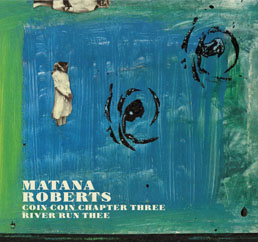
fakeSOUNDTRACK: MATANA ROBERTS-Coin Coin: Chapter 3 Mississippi Moonchile [CST110] (2015).

cst110cover_258x242I felt like the first Coin Coin disc was way too long, so imagine my surprise to discover that the whole Coin Coin series is planned as a 12 chapter collection!

Unlike the previous 2 chapters, this album was created entirely by Roberts.  She is credited with playing saxophone, Korg Monotron and a 1900s upright piano.  But like the others, the tracks bleed into each other and seem to end indiscriminately.

This disc also quotes from The Star Spangled Banner, Beautiful Dreamer, The Pledge of Allegiance, My Country ‘Tis of Thee, Lift Every Voice and Sing and All the Pretty Horses.  As well as samples from Malcolm X and a field recording of a travel through Mississippi, Louisiana Tennessee and NYC.

The first song, “All is Written” is 10 minutes long.  She sings quietly and starkly (voice breaking) while spoken words overlap behind her voice (and the saxophone and drones).  Her singing is at times pained and strained—aching with the truth of her words.  As “The Good Book” begins, the spoken word continues but the main sound is an industrial throbbing.  Near the end, a new metallic sound comes screeching in and then resolves into a kind of drone while angelic voices takes over for song three, “Clothed to the Land, Worn by the Sea” which is more pleasant.

“Dreamer of Dreams” resumes some spoken word and synth noises while two overlapping tracks of sax solos play.  “Always Say Your Name” has some more drones and a wild sax solo.  “Nema Nema Nema” experiments with analog synth noises while she sings a pretty melody with other voices circulating behind her.  “A Single Man o’War” has a high pitched drone. which is accompanied by several three note chants.

“As Years Roll By” is spoken words, with drone and church bells.   And lots of “Amens.”  “This Land is Yours” has lots of voices speaking and overlapping.  It ends with someone singing “come away with me come away,” which segues into “Come Away” with a noisy background and spoken voices talking about Zanzibar.  Then there is a keening, pained voice singing the middle. “JP” is a speech about he slave trade.

Although this album is difficult, it is more manageable than her other releases in this series.  But manageability clearly isn’t her plan, she is making a statement and it is exciting and frightening to listen to.

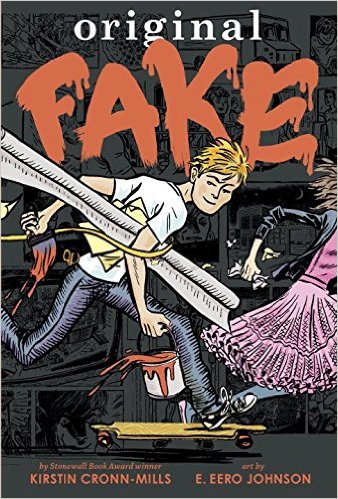
[READ: August 10, 2016] Original Fake

You should never judge a book by its cover.  But I really liked the cover of this book a lot.  And the title was intriguing, so I grabbed it off the new book shelf.

And what a great, fun story it was.

The book opens with Frankie sneaking into his school at 6:30 AM.  No one else is there except maybe the janitor.  He is sneaking into the school to do a small amount of vandalism. But the vandalism is not your typical vandalism.  On the school hallway is a mural that is currently being painted.  Frankie is an artist but he was not asked to paint the mural (no one really knows he does art).  The mural is a of a lake and farm fields and all that.  And he has decided to tag the mural.  He has painted a water-skiing abominable snowman giving the hang loose sign in the corner of the lake.  “He’s maybe six inches tall, and I kind of put him close to a rock so he’d blend in, but if you get close, its pretty obvious he doesn’t belong. He’s completely amazing.”

Amid the telling of the scene is a drawing of Frankie painting the snowman–this book is full of illustrations by Johnson.  Most of the illustrations complement the story but a couple actually tell the story, too. (more…)

Read Full Post »

 quirkSOUNDTRACK: PACHA: Affaires Étrangères [CST090] (2012).

pachaPacha has the second of three discs released as part of Constellation’s Musique Fragile 02 set.  Pacha is the solo work of percussionist Pierre-Guy Blanchard and this disc is made of rhythm-heavy instrumentals, propelled by Middle-Eastern synth lines and sprinkled with guitar, bass and oud along with the odd looped field recording. It’s like electronic music with an Arabic pop fixation.  And the instrumentation is really interesting:

“L’Aeroport De Charlo” is mostly thumping drums and a buzzy synth.  There are some synth solos with distinctively Middle Eastern tones.  I like the way the basic rhythm alters throughout the nearly 5 minute track.  About half way through it turns to nearly all percussion a great rumbling drumming with one middle eastern instrument playing over the top (it sounds like a buzzy clarinet).   “Macedonian Mind” has some great, complex drumming behind a simple synth riff.  The music feels slightly menacing as the synths are quite buzzy, but the drums are just a lot of fun.   The middle of the song uses that Middle Eastern sound with a melody line (I can’t tell if its voice or instrument or what) that works perfectly with the main Rockies riff.

“Modern Malaise” opens with a vocal choir, singing while there’s a simultaneous, seemingly unrelated bass line.  And then a very cool funky section with more great drums and a kind of sneaky sounding riff.  As the song progresses some spacey synths enter the song amid a clatter of echoing drums before it all resolves to that initial cool riff.  In “La Gare De Podgorica” slow synths play over some complex drumming with a bunch of what sounds like hand drums.  “Tunel” has some great hand drumming and low droning synths.   And then comes the most middle eastern sounding riff of the disc.  This track is my favorite–catchy and funky with some great hand drumming.  The keys sound very later 60s.

“Ankara” is a fast song with complex hand drumming and an almost drone with vocals samplings, and a lot of the instrument listed below (Omar Dewachi plays saz and oud) and a warbly synth line.   It is one of the longest songs on the disc and has the most going on it.  “Starcevo” opens with some deep hand drums and what sounds like violins or maybe sampled voices or both.  It’s kind of a disconcerting track with the drums the only thing keeping things steady.  “Le Soviet” is played on a bunch of synths with a kind of carnivalesque feel to the sound.  There’s a Middle Eastern riff and some interesting solos that sound almost classical.

From the Constellation site:

Blanchard received a BA in music in 2003, majoring in percussion performance, and then escaped the ‘new music’ trajectory by traveling extensively and immersing himself in Middle Eastern and Balkan traditions, studying under various masters and playing with a wide range of regional groups. During his periods back in Canada he performed as guest percussionist for Black Ox Orkestar … has also performed regularly with Sam Shalabi’s jazz/psych/arabic orchestra Land Of Kush.  … Constellation re-sequenced and remastered the Affaires Étrangères CD-R for vinyl and is proud to be giving this album a more substantial life. It marks Blanchard’ first attempt at a definitive musical statement of his own and we think it succeeds wildly.

.

fragileMusique Fragile Volume 02 is the second in our series of limited-edition, artwork-intensive box sets featuring three full-length albums by three different artists, available on heavyweight vinyl and as a digital bundle. The vinyl set will be limited to 500 hand-numbered copies, lovingly designed and hand-assembled:

[READ: October 31, 2016] Quirk’s Quest 1

This story threw out so much disconnect for me that I never really determined if I liked it.

The artwork is adorable–the characters look like Fraggle Rock creatures–soft and furry with big round ping pong ball eyes.  Even the bad guys (much taller with four eyes) don’t look all that fierce.

And yet.

In the first 30 pages, these monsters kill and eat some of the cute Fraggle Rock creatures. What?!

This book looks ostensibly like a children’s book.  It is really cute.  But the diary entries of the Captain are written in a cursive that even I had a hard time reading (particularly because the captain’s named is Quenterindy Quirk and he is sailing on the H.M.S. Gwaniimander (hard enough to read that, imagine trying to figure it out in cursive!).

So just what’s it about? (more…)

Read Full Post »

jack SOUNDTRACK: KANADA 70-Vamp Ire [CST089] (2012).

vampKanada 70 is the first of three discs released as part of Constellation’s Musique Fragile 02 set.  The set is primarily electronic instrumentals, highlight little known bands or collaborations.

From the Constellation site:

Kanada 70 is the home-recording project of Toronto’s Craig Dunsmuir, who started giving away CD-R micro-releases under this moniker in 2006. There have been over two dozen K70 titles issued since then… where the repetitive and cyclical nature of mostly loop-based tracks is conditioned by the fact that Dunsmuir plays and punches everything by hand; returns of phrase contain odd stutters and variations, intention and accident collide, and there’s an organic immediacy throughout. Vamp Ire spans a wide range of influences, from abstract techno, industrial and noise music to prog-rock, African funk, no wave and metal. The hardest part was selecting only 45 minutes worth!

There are fifteen tracks on the disc.

“Ignore Dub I” a droning keyboard and analog synth noodling.  There’s some ringing metal sounds too. For a  song with dub in the title there is no dub or bass or drums, it’s just an electronic soundscape.  “Mou” is one of my favorite tracks on the disc, with an interesting pulsing synth line and a cool noisy descending bass riff.  It’s only a minute and a half but it’s really neat.  “Krankqui” has a slow, pulsing bass line which plays under a quiet series of notes.  “Molle” has a neat retro sound.  It begins with some noisy staticy percussive sounds and out of the rumble comes a neat  outerspacey echoing guitar or synth riff. It seems like it could lead some where but since its only 2 minutes long.  It sets up something interesting and then disappears just as quickly.

“Delivery” is a fun piece with a high-pitched series of rapid notes.  This track is the longest on the disc and after a series of 2 minute songs a four minute track feels really long.  “Gnaer” runs through a series of repeated guitar lines, kind of staccato and fractured. With some of the chords being unconventional it sounds a little like 1980s King Crimson.  “Errora High II” is a series of rumbling noises–more effects than song.  About half way through an interesting riff comes out of the noise sounding like an 80s sci-fi movie.

“Chimura” has a series of guitar lines which overlap and make an interesting fugue of music.  At only a minute and a half this song feels like it has much more to explore.  “For T.O. (Perish)” is primarily drums and percussion, playing a  simple rhythm.  Of all the songs to be 4 minutes, this is certainly the least interesting–it’s all just a simple drumming rhythm with no real diversion.  “Annoyo I”  is a slow bass piece.  About 30 seconds in a series of horn blasts plays a staccato melody over the bass.  “Redrag” is a bunch if high pitched synth notes.  The song adds some staccato guitar licks and it eventually resolves into a kind of fast, inelegant guitar solo.

“Thumas” has a great riff and sounds like it could be any kind of jam band introduction (including some wha wah guitars in the background).  Why are the best songs the shortest?  “Redsidled” is a series of guttural noises that sound like car horns over a series of crashing percussion.  “Scorpi” features repeated noises with a series of sound effects whizzing through the background.  “Doubles” has  harmonics and echoed percussion.  I like the way the echoed guitar runs through a series of creaky notes to make this song spacey and grounded at the same time.  The drum beat is simple but cool and the background guitar make this whole song one of the better ones on the disc.

fragileMusique Fragile Volume 02 is the second in our series of limited-edition, artwork-intensive box sets featuring three full-length albums by three different artists, available on heavyweight vinyl and as a digital bundle. The vinyl set will be limited to 500 hand-numbered copies, lovingly designed and hand-assembled.

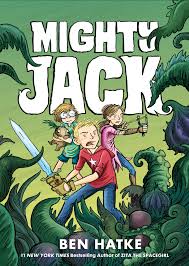
[READ: October 30, 2016] Mighty Jack

Ben Hatke continues to make me very happy with his books.

When the blurb on the back said that Jack’s job was to stay at home and watch his autistic sister, Maddy, I was afraid that this story was going to have a Message.  But it doesn’t.  It doesn’t exactly address her autism at all, which is great–it doesn’t make a big deal out of it, which allows the story to flow naturally.

Indeed, Maddy’s autism isn’t spelled out exactly, she is just introverted and doesn’t really speak.  Until, that is, jack comes across some magic beans.

I love that Hatke is playing with the jack and the Beanstalk story without retelling the story at all.  So he is touching on a lot of things without explicitly using those story parts. (more…)

Read Full Post »

bibSOUNDTRACK: THE BEATLES-Live at the Hollywood Bowl (2016).

beatlesThis disc was released this year.  It is technically the soundtrack to the film Eight Days a Week: The Touring Years.  But regardless of the film, these are newly mastered recordings from two Beatles concerts at the Hollywood Bowl in 1964 and 1965 (which were released in 1977).  This disc has 7 songs from 1965 and 6 from 1964 (not including the four bonus songs).

The concerts were legendary for the shrill screams that the audience made during these shows–so loud that the recordings were practically inaudible and, apparently, even the band members had a hard time hearing each other.  Sounds like a nightmare, frankly.

Well, George Martin’s son has used some technology to make these recordings listenable.  They have reduced the shrill screams to a kind of low-level, high-pitched sound and, even better, they have fleshed out the band so they don’t sound like they are playing in a tin can.

Here’s some fascinating things about that Hollywood Bowl Concerts. Tickets cost $5.50 in 1964 and $3 in 1965.  WHAT?  In 1965, the band played for 33 minutes.  That’s it–not sure how long they played in 1964.

The band had no monitors on stage–those things that musician are always pointing at and asking the mixer to turn up.  So on many shows they couldn’t even hear themselves.  The fact that their harmonies are so good is really impressive.  The notes suggest that the open roof of this show meant that the shrill crowd noise was somewhat dissipated allowing them to hear each other a little better for these shows.

Evidently the track listing for this disc consists of the best original recordings from the two shows.  I’m not sure why they’re not played in sequential order, but whatever.  Perhaps the energy of the opening “Twist and Shout” (all 90 seconds of it) is a pretty great way to start.  While the band is spot on in their playing (sometimes it’s easy to forget that they are laying instruments as well as singing, since the voices are the big thing) you can hear Paul’s voice straining on “Can’t Buy Me Love” (which is cool).  Or John saying he thinks the next song “Things She Said Today” is on the new album over here.  This song–quieter and less dancey sounds pretty great and you can kind of hear the audience paying attention to it, so that when the band gets to the loud part the crowd really erupts.

I’m surprised at how many covers the band plays.  I realize these songs are picked from two set lists, but there are dozens of serious hits that they could have played instead of say “Roll Over Beethoven” or, and this is the most surprising thing to me, ending their 1964 set with “Long Tall Sally” rather than one of their huge hits.

It’s funny how crazy the crowd goes for Ringo when he sings lead on “Boys.”

I enjoy hearing them talk about their films–one we made in black and white, the other in color.  “Hard Days Night” sounds great but even more impressive is “Help!”.  John intros the song by saying, “we’d like to do another film song from a different film–coz we’ve made two.”  “Help!” is really impressive the way the band launches right into their harmonies on that first note–it sounds incredible all the way through the song.  Even when John strains hard at the end.

There’s not a lot of stage banter, but I did enjoy this one from 1964: “This next song is an oldie, some of you older people might remember it.  It’s from last year.  It’s called “She Loves you.”  I like hearing the rocking guitar line more prominently and the fact that they don’t go “ooooh” during the first time it’s supposed to appear, but when they do the next time, the crowd goes nuts.

As the disc ends, Paul asks, “We all hope you enjoyed the show.  Have you enjoyed the show?”  Apparently they have.

I’m not sure why the final four songs are listed as “bonus tracks.”  The inclusion of “I Want to Hold Your Hand” can’t be a bonus!  But the four songs (two from 1964 and two from 1965) also sound great.  The harmonies on “Baby’s in Black” are fantastic.

John Lennon said the fans didn’t come to listen, they came to love.  Regardless, the band played wonderfully and gave a great performance.  It’s nice to be able to hear it.

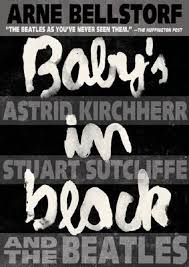
[READ: March 10, 2016] Baby’s in Black

This story is about The Beatles before they became THE BEATLES.

I didn’t know all that much about the early Beatles.  I knew that they were in Germany (although I don’t really know why, and I still don’t). But I didn’t know about all of the trials and excitements that happened to them there.

What I loved about this story is that while it is about The Beatles, it’s actually about Stuart Sutcliffe and his girlfriend Astrid Kirchherr and their impact on the nascent Beatles.

The story begins with Astrid’s ex boyfriend Klaus Voormann running to Astrid to tell her about this band that he just heard down at the Reeperbahn.  He said they all dressed the same and they really rocked (or whatever they would have called it back then).

The Reeperbahn was sketchy place at the best of times, so it was unlikely that anyone other than sailors and thugs would have seen this band iinitially.  But Klaus was so insistent that Astrid agreed to go.  And she was mesmerized by them.  She was especially taken with bassist Stuart Sutcliffe (although none of the fans knows their names at this point).  The band consisted of John, Paul, George, Pete Best on guitar and Stuart on bass. (more…)

Read Full Post »

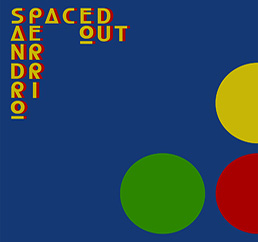
secret-2SOUNDTRACK: SANDRO PERRI-Spaced Out EP [CST101] (2013).

cst101cover_258x242Sandro Perri, plays jazzy music and sings in a gentle falsetto. I really enjoyed his album Impossible Spaces a lot.  This 10″ EP is composed  of 3 remixes from that album.  I happen to really dislike remixes that basically take one aspect of a song, add drums to it and repeat for 5 minutes.  Most dance remixes are pretty inane.  These are a step above that.

The three tracks are Love & Light (Larry Gus – Panamix), Wolfman (Le Révélateur – Sky Mix), and How Will I? (Imugem Orihasam – Outlook Mix).

The original of Love and Life is a pretty, jazzy number with some great sounding drums and synth notes.

The remix opens with some really fast clicking and some cool wild bass synth.  Then Perri’s voice is manipulated into a kind of repeating note.  Once the song starts properly there’s a cool drums beat and repeats of Perri singing “hey” along with his voice played low in the mix.  And that’s Brett much it.  It’s simple but insanely catchy/dancey.  The song pauses in the middle and then resumes with new vocal snippets The Constellation site says the remix “employs over 500 samples extracted from the song’s stems. The result is an intricate, dense, exuberantly satisfying groove-based track that chops and channels the woozy rhythmic complexity and mellifluous vocal of the original.”

“Wolfman” is a ten minute track that I love–it has so many components and different styles. But this remix strips away pretty much all of it.  It is basically 5 and a half minutes of drums with some wavering synth lines.  About 3 minutes in some ooh oohs from the original track come in, but it’s so removed from the track that I almost wonder why bother.  Well, Constellation is there to tell us: Roger Tellier-Craig (Fly Pan Am, Pas Chic Chic), reworks “Wolfman” as a beautifully building swarm of layered loops and long delays – an homage of sorts to Perri’s own Polmo Polpo sound palette.”  And if that’s what you are expecting, he does it well.

I also love the original of “How Will I.”  This version is very strange.  The music is stripped almost all away with just some occasional sprinkling of piano and rumblings of low notes in the background.  There are additions of synths and percussion but otherwise it is largely a stripped down song.  What I loved about the original was the music—the flutes and everything–and it’s all gone.  I do love at 7 minutes when the bass rumbles through the song, but otherwise its pretty samey.  Constellation tells us: “Japanese producer Imugem Orihasam (Fragil) extrapolates a sweet and loose abstract-House vibe from the original, bringing the highly detailed swing of the song’s live drum tracks to the fore, allowing Perri’s vocal to unfurl against a minimal, skittering, plunderphonic arrangement.”

So, this is not a release I would play very much.

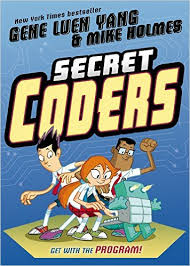
[READ: October 3, 2016] Secret Coders: Paths and Portals

Secret Coders ended with a  pretty big cliffhanger.

Hopper and Eni are on to something big at their school, Stately Academy.  They have just discovered a robot which (through their own programming) has opened up a portal to a secret underground lab. But it is the lab of Mr Bee.  Oh, and that bully Josh has decided he wants to help them.  Hopper says no way, but Josh doesn’t give up.  However, he’s kind of a coward and a little dumb and Hopper is really quite mean to him back.

Eventually they all start working together–Josh has mad typing skills.  And the beginning of the book shows the trio learning to write a program for the Robot Turtle to run. Coding isn’t a terribly exciting thing to watch, but Yang and Holmes do it in a cool way that makes it rather enjoyable.  Even (or maybe especially) when the kids screw up.

But they do succeed.  Which leads to an even more secret room with dozens of robot turtles off all sizes  And that’s when Mr Bee reveals a bit about himself and Stately Academy. (more…)

Read Full Post »

secretSOUNDTRACK: CLUES-Endless Forever 7″ [CST064] (2009).

  cluesClues was a band who played rock songs that fused a lot of different styles–often within one song.  They released one album which was fantastic and then basically went on hiatus (that was six years ago).  This 7″ was a tour artifact that Constellation has made available.

It has two songs–a band-made remix of one song from the album and a demo of another album track..

“Ledmonton (Endless Forever Version)” is an unusual but fun song with lots of different sections.  All of them sound unrelated to each other and yet each part is quite catchy and it works wonderfully as a whole.  This remix doesn’t change the song all that much.  It makes it a little softer and fuzzier.  “You Have My Eyes Now (Demonstration Version)” feels like a demo compared to the final version, but it’s really full sounding–just not as full as the album.

This release is more for completists of the band or, since they put out one album and disbanded, any fan of their recorded output might just enjoy this.

[READ: October 1, 2016] Secret Coders

Beloved artist/author Gene Luen Yang came back in 2015 with a new series called Secret Coders.

There is a kind of introductory section that implies the whole story is a lot more meta than it might at first seem–but it is not resolved yet so it’s hard to be sure of that.

The story opens on middle-schooler Hopper.  She is very unhappy to have moved to this new town and a new school.  In addition to missing everyone back home, the sh cool is decidedly weirdo.  There are birds with four eyes, the groundskeeper’s doors are locked and the custodian Mr Bee is really mean.   Plus the whole place looks haunted and there are huge numbers painted all over the buildings (but not in any actual order).

Hopper is pretty abrasive. In fact I’d say she’s downright unlikable–I find her rather offputting, myself.  Of course, she’s also unhappy and the first people that she meets make fun of her (and throw pudding at her), so she is quite snippy with people.  But she’s also not afraid to stand up for herself, which is cool.  When she learns who threw the pudding at her, she fights back–not realizing that the guy is a huge basketball player.  But he doesn’t fight her.  Rather, he chooses to walk away. (more…)

Read Full Post »

orcsSOUNDTRACK: AVEC LE SOLEIL DE SA BOUCHE-Zubberdust! [CST106] (2014).

cst106cover_258x242Avec le soleil sortant de sa bouche (With the sun out of his mouth–no translation for Zubberdust) is the creation of former Fly Pan Am bassist Jean-Sebastien Truchy.  With this album he has created a fascinating hybrid of near Krautrock repetitions with some King Crimson guitar lines and time signatures.  And interesting sung almost operatic male vocals.  Technically the disc has four songs, but songs 1 and 3 are extended suites broken into chapters.

“Face à l’instant” (Face Now parts I-IV) is the first suite.  This disc opens like Ministry–with an aggressive, fast, pounding guitar riff for 8 bars, a sharp pause and continuation of same.  After four measures of that, a quirky quiet instrumental takes over and at about a minute the heavy guitars return. Part 2 of the song starts with a funky, slightly off-kilter sounding guitar line and whistling.   About a minute into this secretion the song shifts to a quiet sequence of overlapping riffs and sounds.  About 5 minutes in, the voices start singing in wordless chants–it’s strangely catchy and slightly militaristic at the same time.  The song builds with voices until it climaxes with a stop.  Then a complex drumming pattern begins Part 3. The guitars lines resume and there are several vocals sections (I assume singing in French) that add a lot of tension to the song.  Midway through this part the song stops and that aggressive introductory guitar pummeling resumes, this time changing keys and not letting up.  New sounds and super heavy drumming are added as this brings part three to a climax.  Part 4 returns to quieter playing (and sounds a bit like Fly Pan Am in the way the guitar line as intersect.  The final section continues with the vocals and rhythms of the other three and then ends with some dramatic keyboard chords playing us out.

“Super pastiche fantastique” (Super fantastic pastiche) is the other suite.  It opens with some complex drumming and then several sequences of notes–guitar and synth that meld nicely.  Part 1 is just 3 minutes and by the end some electronic noises start overtaking the melodies.   Part 2 opens with the same melody but the electronics have been replaced by a wah-wahed guitar and more synth lines.  The song is complex and repetitive, with the only non-repeating part being the singer’s voice (no idea what he’s even saying).  The second half of part 2 (which is 7 minutes in total) ends with some sung vocals (not unlike David Byrne).  Part 3 is a 90 second interlude of very quick tinkling strings that are overwhelmed by noise and static and thudding drums.  The end of the track seems to be building up to part 4 which picks up the momentum into a great instrumental motif–intertwining guitars and electronics all with a cool bass line underneath.  After 2 and a half minutes the  song drops to drums and a funky guitar line with all kind of noises and static and voices working as transition to the cool bass line that comes in around 3 minutes.  As the song careens towards the end, the pace picks up and you can hear some intense screaming of vocals way in the distance.  The song cleans up and plays that great fast riff right up until the end when it abruptly ceases.

Tracks 2 and 4 are weird pastiches of sound. “Déja hier…” (Already yesterday…) is a four-minute song.  Interesting music plays very quietly in the background before it gets overwritten by conversation and static.  You can occasionally hear the song being played behind the noise, but it’s mostly just a weird kind of muffled noise.  “À partir de dorénavant” (From now) is similar.  You can hear a distant muddy drum and what sounds like la dinner party–tons of conversations going on at once.  It seems like the disc is going to end with 3 minutes of this, but a keyboard melody begins to slowly overtake the din.

The last minute or so is this interesting sci-f sounding synth line with warbling effects and an interesting, mellow bass.  Although it’s nowhere near as complicated as the rest of the album, it’s a cool way to end and almost feels like a segue into something else.

This album has a whole lot of styles and genres blended together into a (mostly) very cool mix of sounds.  I like it a lot, although I’ll probably skips tracks 2 and 4 most of the time.

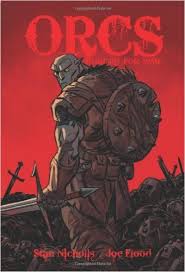
[READ: June 15, 2016] Orcs: Forged for War

This book was a little hard to learn about because Stan Nicholls has written several novels in the Orcs series.  So when you look up his books you get a confusing list of the series and other things.  This book is not part of the series, but it is part of the overall Orcs arc. It comes just before the First Blood Trilogy.

In the intro, Nicholls tells us lot more about his whole Orcs oeuvre.  He points out that unlike Tolkien (whom he loved) his Orcs are not mindless brutes. In fact, in his books, the orcs are the heroes and the humans are the ones who have along and messed things up.  He says that anyone unfamiliar with his orcs books should have no trouble following this book.

And that is true to a degree.  One thing that it behooves an author/artist to do is to make sure that everyone understands who all of the characters/races are in his/her book.  He does give a brief summary in the intro, but that doesn’t really help because there’s no visual guide.

Humans are divided into two camps.  The Manifold (Manis) pursue ancient pagan ways.  The Unity (Unis) are monotheistic.  They are both fanatics but the Unis have more bigotry and demagoguery.

This book opens with the Unis fighting the Manis.  And then the Orcs enter the fray but it’s not always clear whose side the Orcs on, if any. Regardless of which side they are on, they are willing to fight and kill whomever (there is much much bloodhsed and a shocking amount of vulgarity in the book). (more…)

Read Full Post »

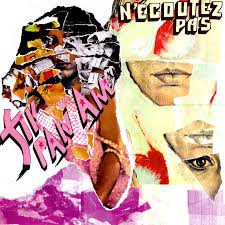
clowns SOUNDTRACK: LE FLY PAN AM: N’écoutez pas [CST031] (2004).

flypanam31N’écoutez pas (Do Not Listen) was the third and final full length album from Constellation’s Fly Pan Am (or in this case Le Fly Pan Am).  There are several short tracks on the disc as well as two 11 minutes songs

“Brûlez suivant, suivante!” (Burn Next, Next!) Opens the disc and hints that it’s going to be a standard rock album—4×4 drums and a dense buzzy electric guitar.  And even when the song proper starts, there’s chanted worded in French and some noisy guitar—its very far from the bass and funky glitchy stuff of previous albums.  The song has very conventional element—a drum break where one might clap along and what sounds like people singing lalalalalala, but all under a veneer of noise and decay that makes it anything but poppy.  There’s a deep voice speaking insistently in French and way in the background a person screaming.  So, really it’s rather unconventional, but within a relatively “normal” framework.  “Ex éleveurs de renards argentés” (Ex breeders silver foxes) is the noise of completely detuned guitars getting plucked and strummed for 30 seconds until a piano plays a chord and all else stops.  It seems like a song will begin but, no, more noises—industrial waves and cars honking takes over.  And then a cacophony of voices begins talking all over each other (including a couple in English).  It’s all over after about 2 minutes.

“Autant zig-zag” (As much zig-zag) is a totally apt name for this song.  This is the first 11 minute track.  After a minute or so introduction, the song comes in with a propulsive bass (not funky at all like the last album) and the song feels like it’s ready to rock.  And it does.  It keeps up this rhythm for a bit and then shifts to a new part with wordless vocals.  There’s even a call and response section with sung words and ooh ooohs as response.  The song shifts to a kind of pummeling section that continues for several minutes until the end.  It contains pretty much everything the band does.  “Buvez nos larmes de métal” (Drink our metal tears) is a noise collage with dramatic movie soundtrack type music played behind the static and distant voices and noises.

“Pas à pas step until” (Step by Step until) has a commanding one, two, three, pause, four, riff going on that is at once catchy and noisy.  The song proper comes in with whispered singing and a wild bass line.  Alexandre St-Onge contributes his wonderful chaos to this song which has some really catchy backing vocals in it

“…” opens side two with what sounds like a voice repeating Fly Pan Am over an over amidst the sound of someone else chewing.  It segues into “Très très ‘retro'” “Very Very ‘Retro’” is the other 11 minute song.  It has two guests, Dominique Petrin on vocals and Tim Heck on electronics.  The song opens with a high-pitched bass and some great counterpoint rhythms.   There’s more hidden vocals throughout the song  Around three minutes in, the bass gets funky.  This runs on for several minutes with some interesting sound effects thrown in until there’s a loud pop and silence.   And then another pop and organ music takes over.  At about 9 minute the song resumes the funky bass line. Again, the band has crammed a lot of stuff into this song.

“Vos rêves revers” (Your dreams setback) has a nice bass sound with some ringing guitar notes.  There’s whispered vocals that sing a melody of sorts.  It’s a fairly conventional song—catchy and bouncy with vocals and everything (true they are whispered and hushed vocals but they do follow a melody line).  At about 4 minutes (of 6), the songs crashes unto itself with the drums and the guitars seeming to fall apart

“Ce sale désir éfilé qui sortant de ma bouche” (This dirty tapered desire coming out of my mouth) has a deep echoing drum kick which keeps a beat.  In the distant background a keening voice kind of follows the melody.  The disc ends with “Le faux pas aimer vous souhaite d’être follement ami” (The false not love you madly want to be friend).  It’s a one minute song with sliding guitars and rock drums which propel this to as close to punk as the band has gotten.  There’s chanting and excitement and fun and then the whole song unravels after about 40 seconds at the end with a sloppy piano denouement.

And that was it from this avant-garde band. The members went on to make lots of other music, Jonathan Parant went on to form Feu Thérèse. Felix Morel has played drums with all kind of interesting bands including Et Sans.  Roger Tellier-Craig has been in Et Sans and Set Fire to Flames among others.  And Jean-Sebastian Truchy has played in several bands including Avec le soleil sortant de sa bouche.

[READ: February 6, 2016] City of Clowns

In the afterword to this book, Alarcón explains how it as written.  He lived in Lima, Peru for a year, teaching.  But while he was there, he had writer’s block.  So he moved to a farmhouse in the middle of America–pure solitude.  And there he wrote the story “City of Clowns” (which I read back in 2013 in the New Yorker) in English.  Sheila Alvarado talked to him about turning the book into a graphic novel.  And so it was completed (after much labor, he says) in a slightly condensed Spanish edition to be released in Spain.  And then, eventually, it was translated into English again, from the Spanish graphic novel.

Since the story really doesn’t change from the short story version, I’m going to put my original comments here:

It opens with Oscarcito going to the hospital because his father died the night before.  He finds his mother mopping floors because his father’s bill was unpaid.  And in that very first paragraph, she introduces her son to Carmela—the woman whom his father left them for.  She was mopping the floor with Oscarcito’s  mother.  He is confused and enraged by this.

His half brothers are also there.  He had never met them before, preferring to stay away from his father’s other life.  But he saw them in front of him and clearly saw that they were related to him.  But the most galling thing was that although he was the oldest of all the children, they were clearly the chosen children—after all, his father stayed with them.

Then we learn about his father’s life.  He was born in Cerro de Pasco and moved to Lima when his young family was still young.  He worked hard in semi-legitimate businesses and then brought his family to the city.  Young Oscarcito, age 8, loved it.  But his mother hated missing her family in Cerro de Pasco.  And now they were living with his father who was practically a stranger. His father worked hard and succeeded, but he was rarely home.

Between flashbacks to his father’s story we see that Oscarcito is now a reporter for the local newspaper and he has been asked to write about the clowns that are prevalent around the city.  Oscarcito is on a bus when a clown approaches.  The clown is pelted by water balloons but still manages to climb aboard the bus and peddle his wares—gaining a few coins for his “act.”  Oscarcito is not interested in the subject and puts it off.

So he travels to his mother’s house to see how she is doing, but a neighbor there tells him she has been living with Carmela since his father got sick.  His mother was embarrassed by this and asked the neighbor not to say anything to him.

His mother had been a cleaning lady since they moved to Lima.  She worked for the Azcártes, a wealthy local family who treated her very well and treated Oscarcito practically like their own son.  Oscar was even sent to a nice school where he was welcomed until they realized where he was from.  Gangs would steal anything from anyone, and were called Piranhas.  And that became Oscar’s nickname at school.  And soon he was made fun of by just about everyone, but especially by one boy.

A flashback then shows that Oscarcito went to work with his father doing construction on a few occasions—they worked very hard on expansions of people’s houses—working hard and working well and making good improvements.  But all the while, they were waiting patiently until they could rob them of all of their fine things.

So when he found his father was working for the father of the boy who made fun of him, he wanted in, and he stole the boy’s suit.

Finally, after putting off his article for ages, Oscarcito meets and interviews a clown.  And that clown tells him how he started and invites him along.  And Oscarcito does.  He finds that he likes the anonymity of the job.

All of the threads come to a head as the story reaches its close—where Oscar will confront his mother and deal with his newfound joy at being a clown.

The ending was very powerful and I enjoyed this story immensely.

There are few details from the original story that have been changed (and I amended my comments accordingly).

There is also an extra scene added of him dating a girl named Carla who walked on stilts.  There’s an erotic moment which is really interesting and which brings a whole new level of fascination to Oscar’s clown life.

Obviously the biggest change is Alvarado’s illustrations.  She does an excellent job recreating these scenes much as I imagined them.  I really  enjoyed the way she worked within the mens’ professions–putting words on bricks as his father was laying them, hanging papers up to dry with text on them, and using excellent distinctions of black and white to show the different settings in Oscar’s life.

The biggest change I think is the depiction of Oscar in his clown suit.  It’s nothing like I imagined and is all the better for it.  Alarcón says that now this is “its true and definitive form” of the book, and I imagine that this is what I will think of when I think of the story.

For ease of searching, I include: Daniel Alarcon.


Read Full Post »
coin2 hiddenSOUNDTRACK: MATANA ROBERTS-Coin Coin: Chapter 2 Mississippi Moonchile [CST098] (2013).

The first chapter of this series was a sprawling disc of free-form jazz and spoken word.  It was interesting and strange with a powerful message (not always elegantly delivered).  It felt too long, but I think it was done live which would make it more understandable as a long presentation.

Chapter 2 is quite different.  It is much shorter, but it has 18 tracks that flow seamlessly (and often without apparent logic) into each other.  Most of the songs are quite short as well.

“invocation” is a sultry jazz number (Matana Roberts plays saxophone).  There’s also piano, trumpet, double bass and drums.  One thing that I didn’t like about the first chapter was Robert’s “poetry slam” deliver of her spoken words.  This album more or less erases that all together with the inclusion of Jeremiah Abiah on “operatic tenor vocals.”  I don’t know what he’s saying (if anything) most of the time, but his voice soars above the jazzy din.

“humility draws down blue” starts in the middle of a trumpet solo and lasts for a minute and a half.  “all nations” is only 8 seconds long and seems to coincide with a vocal line from Abiah.  “twelve sighed” settles things down some.

The first real change comes with “river ruby dues,” which opens with a gentle piano motif, and Abiah’s vocals.  Roberts’ sax solo plays throughout.  There are somewhat recognizable motifs played throughout the album.  I was sure I heard parts of “Pop Goes the Weasel.”

“amma jerusalem school” also opens with a new melody–a four note sax line–without a doubt the prettiest melody of the disc.  About mid-way through the song, Roberts begins speaking/reciting.  There’s a lot going on in her saga.  When that ends, more instrumentals continue and “responsory” has a lovely falsetto singing section.

This half of the album has been fairly conventional jazz: rather pretty with some nice melodies—far more conventional than Chapter 1.

Although by “the labor of their lips,” things have become a bit more avant-garde.  But even that doesn’t last too long and by “was the sacred day,” a pretty melody has resumed and more spoken word comes in, this time in stream of consciousness.  It’s a story of childhood with some happy and some sad details including: “they didn’t like black people at the hospital. you could use a room but no nurses would attend to you.” and the story of a woman getting whipped for not saying ‘sir.’   Interspersed through this tale is a sung line “I sing because I’m happy I sing because I’m free.”

‘woman red racked’ features Robert’s singing voice—pretty and pained—with some nice, deep backing voices accompanying.  Interestingly, this vocal part ends with them singing “Amen,” but the song is not over… a sax solo emerges from this and plays a kind of wild section with Abiah’s vocals until the end.

“thanks be you” is a spoken piece, a story told to a child about the past “there are some things I just can’t tell you about” which references a lot of childhood songs.  It ends with the repeated refrain “Mississippi is a beautiful place.”

This disc is only 48 minutes and it feels just about the right length,  “benediction” ends the disc with a quietly sung song with another singer accompanying her: their voices sound great together.

As with the first one, the narrative is a little unclear.  The main thrust of the story is obvious and effective, but it would be hard to diagram the story.  Nonetheless, her use of jazz and traditional sources (“red ruby dues,” “woman red racked” and “benediction” are based on traditional American folk songs), make for an evocative look into slavery from the point of view of one family.

[READ: March 20. 2016] Hidden

Having recently read the Resistance trilogy I am much more aware of France’s role in WWII.  But that could never have prepared me for this children’s book about the Holocaust.  (written by Loïc Dauvillier, translated from the French by Alexis Siegel with illustrations by Marc Lizano and Greg Salsedo).

The book opens on a little girl.  She wakes up in bed and hears her grandmother crying.  When she asks what’s wrong her grandmother tells her about the “nightmare she was having.”

And that nightmare is her story as a young Jewish girl in occupied France and how her life was brutally upended.  This is all told with fairly cute little characters with oversized heads.

I’ve never heard this story from the point of view of a child before.  Her grandmother was a little girl going to school.  She and her friends did everything that you’d expect little kids to do and the story starts out very sweetly.  Then one day she comes home and her father says that they must all be sheriffs–wear the yellow star on their lapel.  Once they stray doing that, she is effectively shunned.  But she has no idea why–why does everyone hate the sheriff? (more…)

Read Full Post »

goblinSOUNDTRACK: AURORA-Tiny Desk Concert #486 (November 9, 2015).

auroraAurora is a Norwegian singer (I was sure her accent was Irish, so I was pretty surprised).  She was just 19 when she recorded this.

Aurora is a beguiling performer to watch because her sincerity comes through with everything she does–from her hand gestures, to the power of her voice, to the intensity of her face, which only relaxes when the song is truly over.

All three songs are just her accompanied by an acoustic guitarist (who sings backing vocals).

“Runaway” is a beautiful song of despair: “I can’t take it anymore…but I kept running for a soft place to fall.”

Between songs she seems completely moved by her words.  Once she composes herself, she has a nice chat with everyone.  Then she says she’s going to scream a bit high, “is that fine?”  Interestingly, her loud is not as loud as many other singers who don’t ask permission.

aurora2“Murder Song (5,4,3,2,1)” begins with her beautifully singing “5,4,3,2,1.”  And then the song gets pretty dark and a little disturbing. For she is killed in the first line of the song, and she is so passionate about it she sways and moves her hands in time with the “Oh oh ohs.”  I think things somehow work out though–it’s a little hard to parse.

“Running with the Wolves” has a pretty spooky chorus of the two of them singing the title in falsetto.  She’s pretty intense as she sings this song, making varied emotional faces.  And the fact that she looks to be about 12 makes them seem even more intense.

I found watching her to be a bit disconcerting, and I’d love to know more about her.  There were many parts of her songs that I liked a lot.  And I’m curious to hear what she’d sound like with full instrumentation.

[READ: September 9, 2016] Nobody Likes a Goblin

I wrote this about Hatke’s previous picture book (which I loved), Julia’s House for Lost Creatures:

I don’t normally write about kids’ picture books (if I did my whole blog would be about them as we read so many).  But this one gets a special mention because a) it was published by First Second and b) I love Ben Hatke’s drawing style so much.

Hatke has drawn books for slightly older kids, but he also does sweet (and slightly weird) books like this for littler kids.

This book really shows that nobody likes a goblin (even if he is creepy cute). (more…)

Read Full Post »

« Newer Posts - Older Posts »