I didn’t know a lot of the music mentioned in this book, but like most people, I know and enjoy “Für Elise.” It’s an interesting choice of music to end such a crazy chaotic story, although I suppose there are some less than peaceful moments ion the song too. It’s a shame Bast never gets to play it.
I find the most engaging moments to be when the lone high note comes before the reintroduction of the initial melody. The middle, minor key section that sounds kind of menacing is also neat–a big switch from the delicate opening.
Why not take 3 minutes and enjoy it now:
[READ: Week of August 20, 2012] JR Week 10
The end is here. After endlessly interrupted conversations, the book has actually hit a period.
As the last week ended, Bast was being dropped off at the hospital by Coen. And the bulk of the end of the book takes place in the hospital. There are many similarities between this book and a big 60s/70s comedy romp, and here is another one–all the characters seems to pile into one location for a big finale. (Technically the finale happens at Bast’s house, but you get the idea). (more…)
I had seen St Vincent on Austin City Limits, and her juxtaposition of waif-singer with noise mongering guitar player blew me away. So I was a little disappointed when this album opened up with this gentle, practically 1950s sounding vocal and string line in “The Strangers.” It takes two and a half minutes, but the noise eventually comes and it totally changes the texture of the song. Of course now, “make the black hole blacker” is a fun thing to sing along with (and the lyrics in general are pretty great). “Save Me from What I Want” is another quiet song with a catchy chorus. “The Neighbors” has a great melody with interesting strings over the top of it. “Actor Out of Work” brings in some stranger sounds to the album.
There’s something interesting about the songs on this album, like the way “Black Rainbow” has these sweet string sections but for the end half builds a crescendo of tension. I also love that a seemingly delicate song can be called “Laughing with a Mouth of Blood.” Perhaps the strangest song on the disc is “Marrow” which has a strange horn section and the chorus: “H. E. L. P. Help Me Help Me.” “The Bed,” “The Party” and “Just the Same But Brand New” continue in this vein–like a Disney princess song with a horrible threat underneath: “Don’t Mooooove, Don’t Screeeam.” But that sense of princess who are slightly askew really resonates on this record. It’s not as willfully dissonant as her first record, but lyrically it’s a knife covered in cotton candy, it’s still a gem.
[READ: March 20, 2012] McSweeney’s #39
One of the bad things about having a job with actual work is not being able to write complex posts about compilation books. It’s hard to have your book open while bosses walk by. So, its been a while since I read this and I’ll do my best to remember it all. Incidentally, if you’re keeping track I skipped 38, but I’ll get to it.
Issue #39 is a hardcover and a pretty one at that. It has a front cover photo (as well as many interior photos) taken by Tabitha Soren. Yes, forty-somethings, THAT Tabitha Soren, from MTV who has a new career as a photographer.
This issue continues with the recent return of the Letters column (as the magazine and front matter become more serious the return of the Letters adds an air of silliness). (more…)
SOUNDTRACK: LAURA CANTRELL-“Cowboy on the Moon” from Score! 20 Years of Merge Records: The Covers (2009).
I only know Laura Cantrell because she sang “The Guitar” with They Might Be Giants. The original of “Cowboy on the Moon” is by Lambchop, who I also don’t really know.
Lambchop’s version is very country-sounding and the singer has a deepish voice. Laura Cantrell has a beautiful voice and sings this song quite faithfully. The strange thing is that her version reminds me so much of The Beautiful South’s “Don’t Marry Her” (although the original doesn’t…must be Cantrell’s voice).
It’s an enjoyable song (about watching the first space landing), even if it is a little too country for my tastes. Once again, I like the cover version better.
[READ: April 1, 2012] “Old Masters”
Lucky Peach is a magazine about food. And chefs. And recipes. And, apparently fiction. Like most McSweeney’s publications, there can usually be found a piece of fiction inside it somewhere. In this issue it is “Old Masters.”
Strangely, Bernhard does not get a bio in the back of the magazine–this is almost unheard of in McSweeney’sland. Equally as strange is how much I did not like this fiction.
It’s frankly hard to even know what to do with this fiction, and it’s hard to know why it was included in this magazine. It is not about food at all. It is about art. Tangentially.
What it is really is a rant. A repetitive rant. A repetitive rant that seems to build in anger. A repetitive rant that seems to build in anger until it just stops. A repetitive rant that seems to build in anger until it just stops, but which stops in a location that one might not have expected from the opening. (more…)
[RANTED: January 29, 2012] What is it with Busses?
I don’t often post things that are just me blathering, but now that I’ve started swimming every day I have a lot of time to mull.
I’m more or less opposed to the Reality TV. It bothers me that writers and creative people have been given the shaft for ephemeral “stars” who are memorable only because of how annoying they are. But hey, the genre is here to stay (I’m already like 20 years too late to complain about it, I know). And, in fairness, there are a number of shows that I do enjoy (I still wish they were relegated to cable to get real shows back on the networks, but I guess cable is where all the real shows are now anyhow.
The shows that I like are the ones that celebrate creativity. Even though a friend pointed out, the participants are forced into being creative, and it’s more like art school than real art, these shows are as close to art on TV as you get most of the time. How likely are we to see craftsmen and craftswomen at the peak of their game on prime time TV (or even not prime time TV)?
So, the four reality shows that I watch are America’s Next Top Model, Project Runway, Work of Art and (newly added) Face Off. I don’t watch Top Chef because I don’t really believe in a show that I can’t experience the final product. If I can’t taste it, so I don’t trust who thinks it’s the best. Having said that I loved the Japanese Iron Chef (not so much the American one) because it was crazy and theatrical and wonderfully Japanese.
I realize that these shows are more like game shows than genuine reality TV. The real difference between these shows and game shows of old is that these shows take the Real-World approach and try to drive up drama by having them live together, or, more specifically, interact with each other in ways that are not normal. (Face Off doesn’t seem to do this and, as far as I can tell, Work of Art seems less inclined to focus on this aspect). But most “reality” shows seem to focus on the “drama” rather than the product, and I think that’s a real shame–leave that nonsense to Big Brother and The Real World. (more…)
Stop the presses… I just received an email that I was given a Versatile Blogger Award!
The super cool folks at tripsfor2 ranked me as one of 15 bloggers deserving this award. And just as I was fearing I would have to reduce my output, they rave about my output!
The rules of the award state that I must write some details about myself and also pass along this award to fifteen other bloggers. Since I just found that out, that will have to wait until probably next week, when I have a moment to think about it.
But in the meantime, I want to thank Hadi and Kathleen who have really wonderful posts about traveling (I swear, they’ve been everywhere) including, but not limited to some wonderful posts about aboriginal art. And the photos are really great. They are (just about) all by Hadi. I mean, check out the birds here and the hummingbird that attracted me to his photos in the first place (on a different site but the same folks).
This was a delightful way to start of 2012. As was a wonderful selection of short story recommendations from Karen Carlson over at A Just Recompense. She has given me a selection of really intriguing stories to read and I’m quite grateful for them. I hope to start those this week. Oh, and just when I thought that Karen was only about the books, a quick browse over to her site shows that she’s also a Project Runway fan. I’ll be checking in with her as the year progresses.
A final note, my wife has been taking beautiful pictures for over two years now. She posts a picture every day at her site The Fair View. For her end of the year post at her other blog Sew Buttons, she posted her favorite photos of the year. And while I’m biased (and even more because there’s several of my kids), I think she takes some really stunning pictures. So, if you like nature photos (and photos of other people’s kids, pop on over. And if you like what you see, spread the word. I know there’s a million photographers out there, but I happen to think she’s terribly under-recognized (she needs some work on the shameless self promotion side of things). (more…)
SOUNDTRACK: VAMPIRE WEEKEND: AUSTIN CITY LIMITS FESTIVAL 2010 (on Palladia TV 2011).
Like The Flaming Lips, Vampire Weekend only got two songs in this airing (this makes sense as they only had two albums out at the time). The two songs were “Cape Cod Kwassa Kwassa” and “Oxford Comma” (Palladia faded out the “fuck” in “Oxford Comma” which always seems so subtle I don’t think I’ve ever heard it censored before).
The band sounds great (something I’d wondered about as they seem like such a studio band–not that they use tricks or anything, but their music is so tight and sharp, it’s nice to know they can play it live, too). Although their live show is not all that exciting visually and they seem kind of dwarfed on the giant stage.
The real change comes from the vocals. Not big changes, but the singer seems to having a little fun on “Cape Cod” but hitting some really high notes which are almost out of tune.
It’s interesting that they chose to air two songs from their first album and none from their new album. Regardless, theirs was a good set and I’d love to see more.
[READ: November 6, 2011] “Visions Shared”
A while back I read a few old articles that I got from JSTOR, the online archiving resource. This month, I received some links to three new old articles that are available on JSTOR. So, since it’s the holiday weekend, I thought it would be fun to mention them now.
I have been fascinated by synesthesia ever since I first heard of it a few years ago. So when I saw that this article was not only about synesthesia, but was written from the point of view of an artist with it, I was really excited. Sadly, while Steen may be a good artist (it is actually really hard to tell from the pictures in my print out–why are they black and white?) she is not a very compelling writer.
The most fascinating thing that I got out of this article was that by 2001, people were still not entirely sure of synesthesia and its effects on artists. And that this is meant to be one of the first accounts from a synesthetic artist. As such, she goes over a lot of basic groundwork and tries her best to explain exactly what is happening when she experiences these sensations.
The details are of course fascinating–she sees colors when she has certain experiences and acupuncture in particular seems to be a major source for her art. In this respect I find her form of synesthesia less than satisfying because I am more interested in those who conflate words and sounds with colors, but beggars can’t be choosers. Nevertheless, these acupuncture sessions have resulted in a number of art pieces. In fact, she says she was painting these synesthetic colors long before she even knew she had synesthesia (her first painting, called “Orange Calipers” was actually synesthesia-inspired even though she didn’t “know” that at the time). (more…)
SOUNDTRACK: COLIN STETSON-New History Warfare, Vol. 2: Judges [CST075] (2011).
When you learn that Stetson played saxophone for Tom Waits, it makes perfect sense. The middle of the second song, “Judges” sounds like the instrumental break for any of Waits’ newer songs. Of course, once Stetson starts really wailing you realize that Stetson doesn’t need Waits’ lyrics to tell a story. With just one big-assed bass saxophone, Steston can say quite a lot. He plays with circular breathing, meaning that he doesn’t have to stop to take a breath, he breathes in through his nose and out through his mouth at the same time (this is of course impossible). The bass saxophone weighs some 20 pounds and is massive and Stetson makes it sound like everything from an oil tanker to a field of runaway horses. Oh, and he also has pretty melodies and songs that sound longing.
This disc is part two of a trilogy, but this is the first of his records that I bought (thanks to a release via the folks at Constellation–I wonder if they will redistribute Pt 1). There is a story that runs through these discs, although honestly, I’m not entirely sure what it is. But that doesn’t matter to me, what matters is Steston’s amazing skills.
There are evidently a couple of overdubs on this disc, but for the most part it is just him and his saxophone (and 24 microphones). The microphones were placed all over the room, on the instrument itself (to pick up the clacking of the keys) and even on his throat (when he makes those “voices muffled by a pillow” sound, that’s the throat mike picking up voice–singing while he is playing (which is impossible)).
The album features a couple of spoken word sections by Laurie Anderson, whose clipped, non-inflected voice gives this otherworldy music an even more otherworldy feel. And there’s two songs sung by Shara Worden. Other than that, it’s just the man himself.
Prepare to be amazed by this man’s talent. But also prepare to be a little frightened by what you hear. This is not timid music by any stretch. There’s some scary stuff on this record, especially if you listen in the dark. More especially if you listen loud (which you absolutely must do to hear all the nuances). On first listen, this may sound like a noisy jazz record, but the more you get into it, the more amazing it becomes.
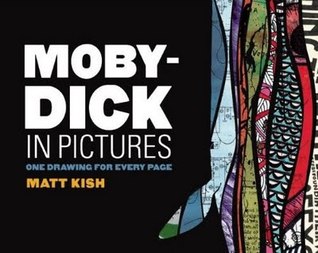
[READ: October 11, 2011] Moby Dick-in Pictures
Matt Kish has accomplished an amazing thing. He has drawn a picture a day (more or less) to accompany every page of the 552 page paperback version of Moby-Dick. He takes a small passage from each page and renders an image for it. One thing this book is not is an illustrated version of Moby-Dick. It doesn’t purport to be. You won’t get the whole story from this book. It’s not a cheat sheet for high school students. If you haven’t readMoby-Dick, this will give you a taste for the story–almost like a preview for a movie. And hopefully it will compel people to read the original. If you have read Moby-Dick, this is a wonderful companion. Not only will the pictures give you fascinating insights into the story (and into Kish, of course), but seeing sentences excised from the book to stand alone makes you aware of the book in ways you just aren’t when you’re reading it as a novel.
Kish admits he is not an artist, which while not false modesty, is certainly selling himself short. He has an awesome style of illustration. I am especially excited by his vast pictures with small details (lots of pages where there are small circles with lines in them or, for instance, the details on Queequeg’s face) and when he uses bold lines to create vast, weighty iconic pictures. Here’s one example of his awesome use of multiple straight lines. I mean, it’s gorgeous.
But I also love the whole conceit that an artistic shortcoming for him has turned out to be an absolute boon. Kish says he cannot render the human form and so he made the conscious decision to make the seamen more like avatars than people. It’s daring and a little odd, but it works wonders. I admit that I was a little less than excited by the very first page of the book–I was disconcerted by Ishmael and his utter lack of features. (I actually like the way he is rendered later in the book better–call it an artistic growth). But by the time her gets to Queequeg, or the gorgeous Tashtego it’s obvious that his decision was genius. Just take a look at the marvel that is is Ahab (left). First off, the colors are amazing. As are the details of the whale in the corners. But look at him–he’s a metal machine–shiny and tough–part ship, part whale. Look at the awesome shading and detailing of the blue “coat” that he’s wearing. He’s even got the badge of Moby-Dick on his belt! And then there’s the pegleg–the most beautifully drawn pegleg ever. It’s really stunning.
Now you’re also noticing that there’s all kinds of diagrams behind Ahab. Kish used to work at a bookstore and he hated seeing old pages of books thrown away (he has since become a librarian, which makes sense–although as I librarian I learned that librarians are actually quite cavalier about throwing away old books once they are beyond use). So he brought these pages home. And, given the density of the layers of meaning in Moby-Dick, he decided to draw his pictures on these old pages. So on virtually every page you can see something in the background. Most of the time they are these circuital diagrams, which are wonderful. But there are several drawings where the found pages are pages of text from books. And I have to say if these were serendipitous findings then he has amazing fortune. Some of the pages tie in so perfectly it is wonderful.
Like the page that is headed “Cetology” and is from what, a textbook on whales? Or several other pages that I wish I had taken notes on, because they were really wonderfully chosen. He even has a drawing on a title page of Moby-Dick. I have to ask, did he really find that or did he buy it for the project? (more…)
This is the final Fall Music song I’m going to mention. “Replicate” was Robin Hilton’s song of choice for the fall, and I can see what he liked about it–there’s a lot of unusual sounds going on (in many ways it reminds me of Sparks or maybe sort of early Depeche Mode, although no one in the discussion mentioned them). It opens with a series of staccato string notes over a repeated lyrics (“it’s gonna, it’s gonna, it’s gonna…happen soon”). The strings build and build, but they stop before any major climax; they are replaced by a fast, kind of spazzing keyboard melody with more repeated vocals, (“it’s gonna, it’s gonna, it’s gonna…happen soon”). The staccato notes come back and both sounds build to another near-climax.
Until the chorus comes in with its supremely catchy but very cold “oohs”. Even the end builds but does not quite achieve the climax one would expect, although it is still satisfying.
It’s a very clinical song, cold and detached (the instrumental break has wood blocks that sound like a woodpecker banging a tree on a winter’s day). But the vocals are so warm, that they disarm the song of its coldness even if the chorus is “Will it replicate inside our bodies now?” At first I really didn’t like the song, but after a couple of listens, I really heard what Robin Hilton enjoyed. And I would like to hear more from them.
The video is pretty neat too:
[READ: September 19, 2011] “Animal Art”
This article was probably the most “academic” and “scientific” of them all five of the JSTOR articles I read. And by that, I mean, that it was researched and tested and full of abbreviations and as a result it reads very dry. Which is a shame (well, actually it’s not a shame, the scientific requirements are essential for there to be an academic article published)–what it needs is a cool popular version to lighten it up a bit (and it needs better pictures as well).
The article looks at the bowers of the bowerbird. The bowerbird is a family of 20 species of bird found in New Guinea and Australia. Bowerbirds are noted and named for the bowers that the males construct to win a mate (see photo at right). What’s interesting is that the different species of bowerbird construct similar nests but do things quite differently (some “glue” the sticks of their nest together with either spittle or insect secretions while others weave their sticks together). But they are all very particular about the nests they build:
When I shifted the position of a decoration, the bower owner either restored it to the original position or else discarded it in the forest. Decorations changed from day to day as birds replaced wilting flowers and rotting fruit with fresh ones.
The articles sets out to discover whether the traits that the male bowerbird develop in their nests are inherited or are learned. Diamond believes that they are learned because birds that are not very far apart use different techniques, but immature birds are often seen observing the adult birds to presumably learn from them. The nests are built by the males, but, similarly, the immature females go with the adult females to inspect the nests, thereby learning what traits to most look for in a nest.
But what seems to have inspired this paper was the bowerbirds’ proclivity for choosing colors to decorate their nests: most use flowers and mosses from the surrounding area, arranging them in beautiful colors. What Diamond did was to take colored poker chips (a series of uniform shape, size and texture) with varying colors to see if the bowerbird would choose based on color (his scientific conclusion is that it’s really impossible to tell because who knows what other variables are at play, but his more satisfying conclusion. is that the birds decorate by color.
So, Diamond put the poker chips in front of their bower (on the moss “mat” that looks like a welcome mat). And with one group of birds:
Within 10-30 minutes [three birds] picked up all chips regardless of color and discarded the in the forest.
While for a different group of birds, they quickly discarded any white chips (and one bird discarded the yellow chips as well). There was a marked preference for colors in this order: Blue>purple>orange>red>lavender>yellow>white. While these birds not only embraced the chips and used them for their decorations, other birds stole chips from their rival makes’ nests:
When I placed three chips of each color at bower W6, bird W5 stole within 3hr all blue, orange and purple chips, two red chips and no yellow, lavender or white.
(Poor W6 bird–he really has nothing). But the study shows that the birds hate the white chips! He even created a chart that showed that most of the birds kept 100% 0f the blue chips, and most of the purple chips while dismissing almost entirely the yellow chips; none of them kept any white ones. (One bird in the study seemed to be quite a pig–this is the one who stole from W6–he kept far more than the other birds, including 100 % of orange an 66% of yellow–i wonder if the females thought he was a gaudy show off?)
Incidentally, this study was done in 1986, so it does not account for the more recent discovery that bowerbirds will basically use any old crap to build their nests, provided it is colorful. Many people find this sad, but the birds don’t seem to mind. In the article, the author says that one of the birds came up to his colleague, stood on his shoe, and tried to steal the blue docks that he was wearing. Here’s a picture of a bowerbird with a whole bunch of blue clothespins.
SOUNDTRACK–SUPER FURRY ANIMALS-“Let the Wolves Howl at the Moon” (From the Basement) (2007).
[DISCLAIMER: This post was published on September 6th see that post for details].
Continuing this exploration of the From the Basement series, I found this unlikely video from Super Furry Animals. SFA have never been big here (well, that had a fluke hit but that doesn’t count). I have no real idea how big they’ve been back home. So maybe it’s not a surprise that they are playing here.
SFA were a bunch of crazy psychedelic indie rockers. Their early albums are totally nuts (like the EP Llanfairpwllgwyngyllgogerychwyndrobwllantysiliogogogochynygofod (in space)). But over the years, they have mellowed considerably. This song is the final track from Hey Venus!, an album that returned the Furries to their more rocking roots. Despite the album’s overall rockingness, this song is the mellow ender to the album.
This live version is very good, with Gruff Rhys sounding in fine form. Visually, it’s more interesting than say Neil Hannon’s in that there are five of them, but they’re not exactly putting on a crazy show. What’s nice is the chance to see just what the recording space looks like (there’s lots of wide shots) and to see just which hairy Welshmen are making which sounds.
This is a wonderful song that could easily have been on anyone’s mellow folkie playlist. The album version has a little bit more going on, but it’s not missed in this someowhat stripped down form.
[READ: August 29, 2011] 3 Book Reviews
After last month’s tour de force about one title, this month returns to Zadie’s typical 3 books/month schedule.
The first book is Ian Thomson’s The Dead Yard: A Story of Modern Jamaica. Zadie makes the amusing observation that this book, a very good and very well researched cultural study of Jamaica was written by a white Scotsman; she notes that a sense of remove from the culture was probably essential in order to create this book.
Thomson offers historical context for the dangerous world that Jamaica occupies now (it’s not all “Jah, ganja mon” in the country. In fact, five people are murdered every day (on this island of 3 million). Fascinatingly, there is much racism in Jamaica—people seen as too black are often looked down upon in favor of lighter-skinned people. Because of this, respect is very important. Indeed, any kind of disrespect can cost you your life—just about everyone packs a gun (hence the stat above. Of course this racism also may be why the Jewish, Indian and Chinese Jamaicans are thriving while the majority black are not.
Zadie says the only place where Thomson falls flat is in his utter dismissal of dancehall music (he likes reggae but can’t stand dancehall). He dismisses Sean Paul and although Zadie’s not a huge fan of Sean Paul, she finds this dismissal a poor oversight possibly due more to his age (culture being a young person’s game) than anything else. I especially enjoyed her dissection of one of Sean Paul’s videos. (more…)
There’s a fascinating release history behind this EP (which mostly means fans wind up with three copies of “Stanley Kubrick.” First it came out as EP with 4 tracks (which I ordered on import). Then it was released in the US as EP+2 with two songs from the Fuck the Curfew EP (which was not released in the US) and finally in 2000 it was reissued again as EP+6 with ten songs in total (compiling 1997’s 4 Satin, 1998’s No Education = No Future (Fuck the Curfew), and 1999’s EP–I didn’t buy this version because by then I had the original imports).
“Stanley Kubrick” is a slow burner with a great repeated mournful guitar. It’s one of their best songs. “Christmas Song” is a slow, upbeat track with a very pretty melody. “Burn Girl Prom Queen” opens with some really quiet guitar. After about 90 seconds, a brass band kicks in adding amazing horns over the simple guitar melody. It’s my favorite track on the disc. “Rage: Man” is the first song on the album where Mogawai’s noise tendencies really come to the fore. Once again, it’s a simple slow melody (with piano). About two minutes in, the song is bombarded with noise guitars that take over the song but don’t obscure the melody. There’s also a noisy guitar solo played over the noise. Soon enough all the noise ends, and the simple, harmonic’d guitar comes back and the song ends peacefully. It’s a great example of Mogwai dynamics.
The other two tracks, “Rollerball” and “Small Children in the Background” come from the other EP as I mentioned. It’s odd to squeeze in songs from a different release, but Mogwai don’t sound terribly different on these early EPs, so these songs work well together.
Despite their length, Mogwai EPs are pretty uniformly wonderful.
[READ: June 1, 2011] Five Dials Number 8 bis
After publishing Five Dials Number 8, they quickly rushed out this addendum to the issue, which they’ve called Five Dials 8 bis. According to the introduction: “The definition of ‘bis’ is a passage to be repeated, so here is a small bis for our eighth issue.”
It’s only 9 pages long and really only contains one long piece. Primarily, this is a memento of their Paris-issue release party, which they held in Paris (duh). The opening pages includes scans of postcards (“One of our volunteers waded into conversations and asked attendees to write down their own thoughts on Paris. We’ve reprinted five of our favourites.”) The editor’s letter, which explains all about the party and this issue, is not credited to anyone, so I can’t so who is responsible. [This lack of proper crediting is the one major flaw with this publication–just saying illustrations by, and then not saying which is whose, or not including the date of publication is maddening].
The big article is by Guy de Maupassant (translated by Siân Miles). (more…)
 SOUNDTRACK: LUDWIG VAN BEETHOVEN-“Für Elise”
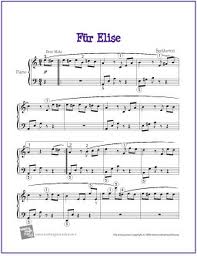 I didn’t know a lot of the music mentioned in this book, but like most people, I know and enjoy “Für Elise.” It’s an interesting choice of music to end such a crazy chaotic story, although I suppose there are some less than peaceful moments ion the song too. It’s a shame Bast never gets to play it.















 I Just Read About That...